Want more images or videos?
Request additional images or videos from the seller
1 of 6

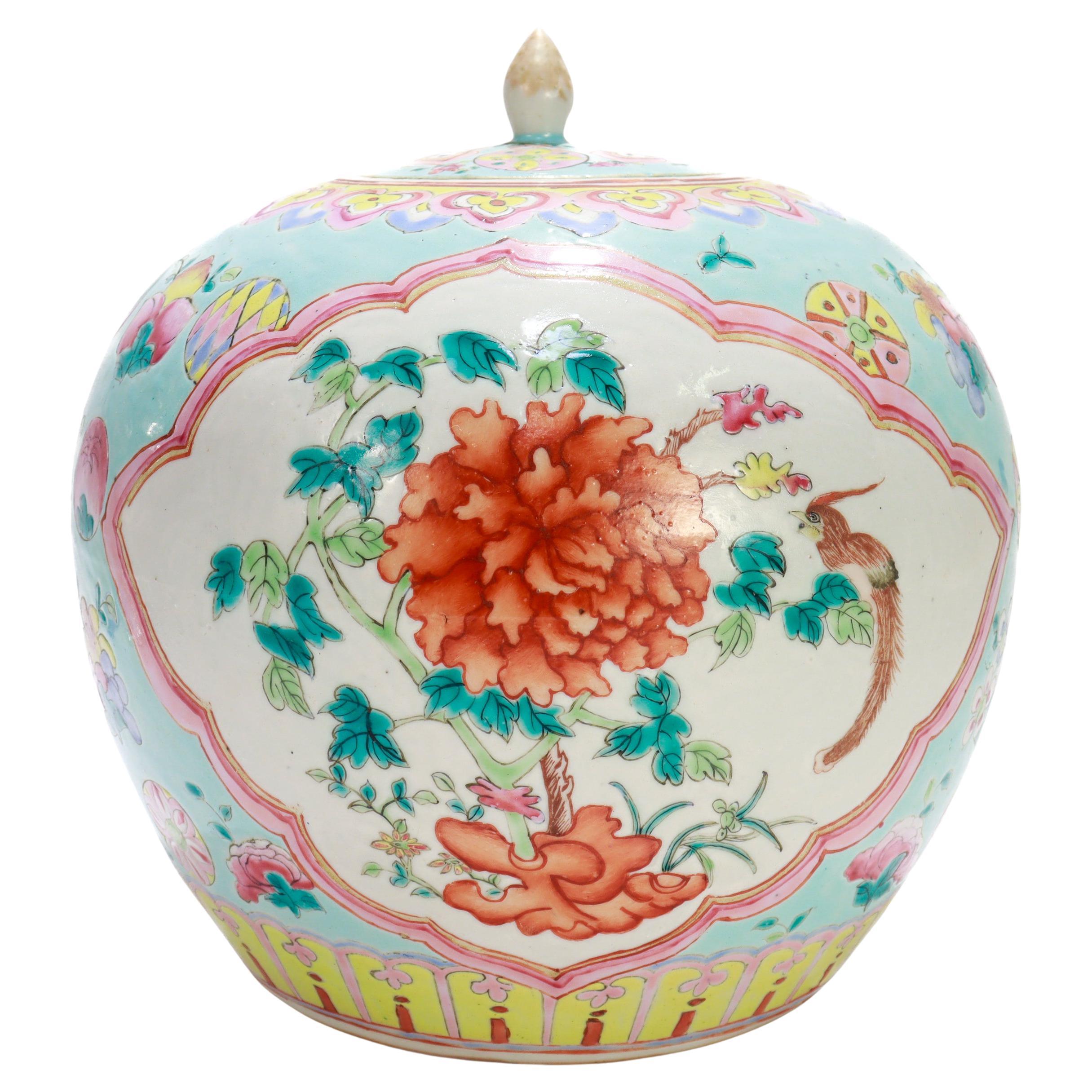
Chinese Export Porcelain Famille Rose Temple Jar, American Market, Monogrammed

$8,000
£6,021.28
€7,044.53
CA$11,314.23
A$11,491.80
CHF 6,622.39
MX$138,746.50
NOK 76,925.39
SEK 77,567.21
DKK 52,660.15

About the Item

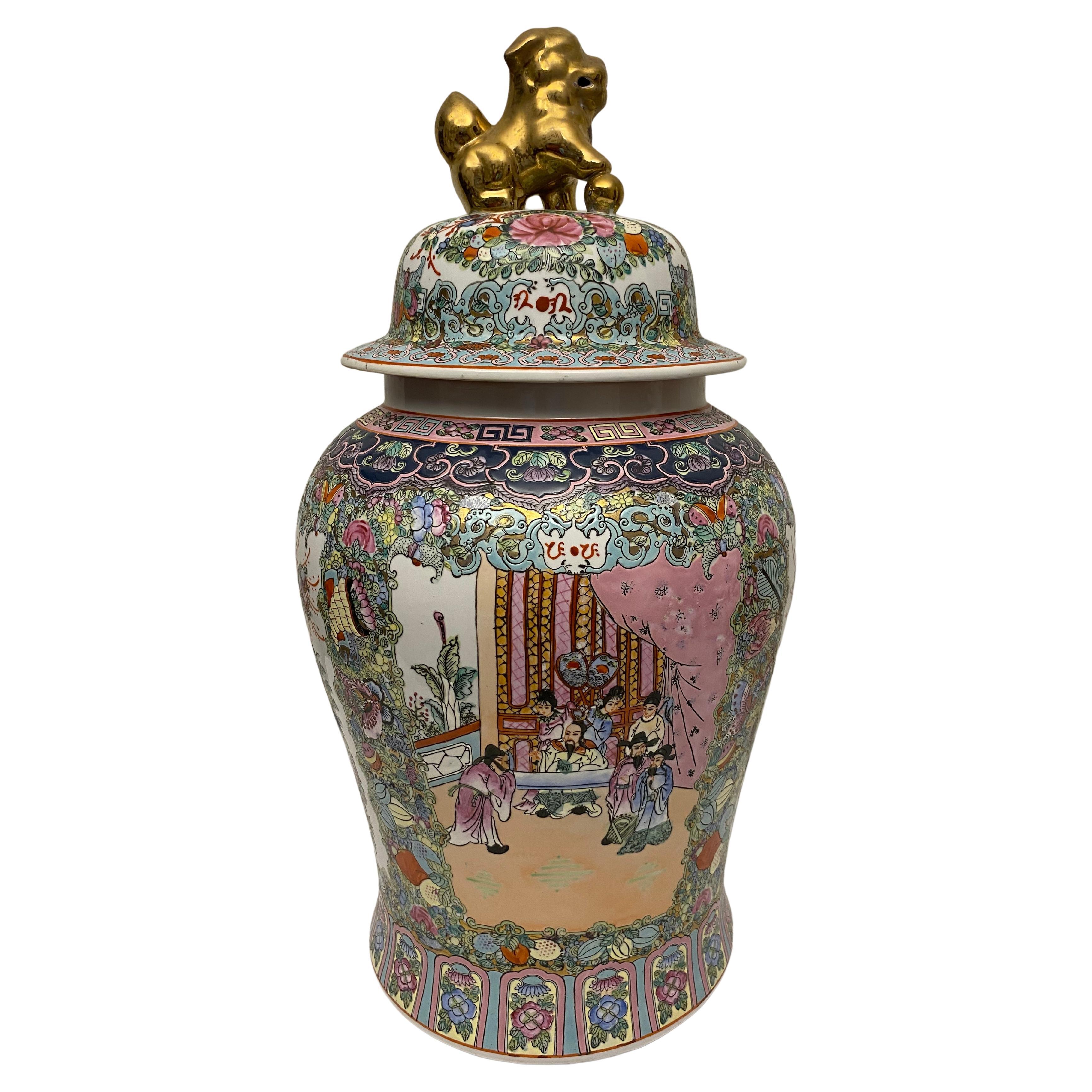
Chinese Export Porcelain Famille Rose Temple Jar, American Market, Monogrammed This large Chinese export porcelain temple jar and cover is of baluster form, painted in famille rose enamels with continuous panels of figures in palace interiors and garden courtyards. Ladies and officials in rose, blue and celadon robes gather about a seated dignitary; screens, balustrades, blue rockwork and plantain give depth to the scenes. The panels are divided by narrow bands of butterflies and flowers on a gilt ground, with a broad band of peonies, chrysanthemums and butterflies around the shoulder and a matching band at the foot. The domed cover is painted en suite with further figural scenes and is surmounted by a gilt bud finial. The dense figural decoration, dominated by rose and puce and worked over the whole surface without a reserved ground, is of the type long known in the American trade as Rose Mandarin, the richest of the Canton famille rose patterns and the one reserved for the largest and most expensive pieces. Set into the decoration on each side is a gilt cipher, WFA, within an oval white reserve. Monograms of this kind were added at Canton to special order, the initials sent out with the commission and painted by the enamellers before firing, and they mark the jar as a private commission rather than a stock piece. By the Daoguang period that business was overwhelmingly American: the British armorial trade had largely ended a generation earlier, and it was the merchants of Boston, Salem, New York and Philadelphia who continued to order porcelain to their own initials. The jar was made for an American client, though the family bearing the cipher has not been identified. At twenty-six inches, jars of this scale were made as ornamental furniture for the hall, the stair landing or the chimneypiece rather than for any practical use, and they were usually ordered in pairs. Surviving examples that retain their original covers, as this one does, are considerably scarcer than the jars alone. Dimensions Height: 26 inches (66.0 cm) Diameter: 14 inches (35.6 cm) Marks Unmarked. Painted on each side with a gilt cipher, WFA, within an oval reserve. Provenance Earle D. Vandekar of Knightsbridge Condition Good antique condition, the enamels strong and the figural painting crisp. A chip to the neck has been restored, the repair discreet. Chipping and glaze loss around the foot rim, and light rubbing to the gilding, particularly on the shoulder band and the finial. Historical Context Porcelain was among the first goods American merchants sought when the Empress of China opened the trade at Canton in 1784, and by the second quarter of the nineteenth century Chinese export wares had become a fixture of prosperous households along the eastern seaboard. Decoration was carried out in the enamelling shops of Canton, close to the foreign factories, on white porcelain brought down from Jingdezhen: an arrangement that let a merchant order a dinner service, a garniture or a monogram to his own specification and take delivery within a season. The Rose Mandarin and Rose Medallion patterns of the Daoguang period were the most successful of these designs, and they continued to be shipped to America in quantity until the Opium Wars and the opening of the treaty ports redrew the trade. (Ref: NY10837-iuma)
  • Dimensions:
    Height: 26 in (66.04 cm)Diameter: 14 in (35.56 cm)
  • Style:
    Chinese Export (Of the Period)
  • Materials and Techniques:
  • Place of Origin:
  • Period:
  • Date of Manufacture:
    1840
  • Condition:
    Repaired: chip and small hairline on neck invisibly repaired. Wear consistent with age and use.
  • Seller Location:
    Downingtown, PA
  • Reference Number:
    Seller: NY10837-iuma1stDibs: LU861045984552

More From This Seller

View All
English Imari Japan Pattern Porcelain Potpourri Vase, Possibly Coalport

English Imari Japan Pattern Porcelain Potpourri Vase, Possibly Coalport

Located in Downingtown, PA

English Imari Japan Pattern Porcelain Potpourri Vase, Possibly Coalport This large footed potpourri vase and cover is decorated on each side with flowering plants growing in a Chine...

Category

Antique 1820s English Regency Vases

Materials

Ceramic, Porcelain

Chinese Export Porcelain Bottle-form Rose Medallion Vases

Chinese Export Porcelain Bottle-form Rose Medallion Vases

Located in Downingtown, PA

Chinese Export Porcelain Rose Medallion Bottle Vases A Pair, Guangzhou (Canton), China, Qing Dynasty, Daoguang–Xianfeng period, circa 1830–1860 This pair of bottle-form vases exemp...

Category

Antique 1820s Chinese Chinese Export Vases

Materials

Porcelain

Chinese Export Porcelain Group of Batavia-ware Urns & Covers

Chinese Export Porcelain Group of Batavia-ware Urns & Covers

Located in Downingtown, PA

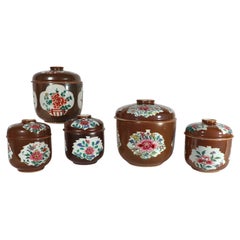
Collection of Five Chinese Export 'Batavia-ware' and Famille Rose Jars and Covers Qianlong Period, China, Circa 1750s This handsome collection of five graduated covered jars is a magnificent and rare example of mid-18th-century Chinese Export porcelain, illustrating the highly successful fusion of Chinese ceramic technology and European market demand during the height of the global trade era. ________________________________________ Description and Aesthetic Medium: Porcelain with underglaze brown glaze and overglaze Famille Rose enamels. Period: Qianlong (1736–1795). Origin: Jingdezhen kilns, China, made for the European export market. The collection comprises two large, two medium, and one small jar, intended to be displayed together as a garniture—a decorative set prized for mantelpieces and cabinets in opulent European interiors. • The 'Batavia' Ground: Each piece is characterized by a luxurious, deep chocolate-brown glaze covering the exterior, a distinctive aesthetic known historically as "Batavia-ware" or descriptively as café au lait. This rich, monochrome ground was achieved by bathing the porcelain in an iron-rich slip before glazing and firing. • The Famille Rose Reserves: The dark ground provides a dramatic backdrop for finely painted, leaf-shaped reserves (panels). These panels are adorned with exquisite floral sprays executed in the vibrant Famille Rose palette (meaning "pink family"), which was introduced to China from Europe in the early 18th century. The opaque enamels—dominated by the rose-pink created from colloidal gold—allow for subtle shading and realism, brilliantly depicting the peony (mudan), the Chinese flower of wealth, nobility, and honor. • The Covers: The domed covers maintain this contrast, with a high, lustrous brown glaze broken by Famille Rose floral sprays that echo the motifs on the body. ________________________________________ Historical Context: Global Trade and Naming The name "Batavia-ware" is a crucial historical reference, even though the porcelain was manufactured in the kilns of Jingdezhen. 1. The Dutch East India Company (VOC): Batavia (modern-day Jakarta, Indonesia) served as the fortified administrative and trading headquarters of the Dutch East India Company (VOC) in Asia. 2. The Trade Route: Porcelain destined for the European market was collected from various Chinese ports and then centrally transshipped through Batavia. This particular style became famously associated with that major transit port among Western collectors, hence the name, which links the sophisticated manufacturing of China to the powerful trade infrastructure of the Dutch. 3. 18th-Century Opulence: Garnitures like this were highly desirable statements of wealth and worldliness in 18th-century Europe. Their acquisition signified participation in the exotic, global market and a cosmopolitan taste capable of appreciating the high technical and artistic quality of Chinese porcelain. The successful combination of the deep, rich brown glaze—which evokes a feeling of luxurious Eastern lacquer or polished wood—with the delicate, luminous European-inspired Famille Rose palette represents a brilliant convergence of East-West artistic demands at the height of the Qianlong Emperor’s reign. ________________________________________ Dimensions Largest Jar: 7 1/2 inches high x 7 1/2 inches diameter; Second Jar: 7 1/4 inches high x 6 1/2 inches diameter; Third Jar: 5 1/2 inches high x 5 inches diameter; Pair of Smaller Jars...

Category

Antique 1750s Chinese Chinese Export Jars
Materials

Porcelain

18th-century Chinese Export Porcelain Famille Rose Wine Cooler

18th-century Chinese Export Porcelain Famille Rose Wine Cooler

Located in Downingtown, PA

Elegant Tableware: Chinese Export Famille Rose Porcelain Wine Cooler Circa 1775 A finely potted and well-preserved Chinese Export porcelain vessel, functioning as either a wine co...

Category

Antique 1770s Chinese Chinese Export Planters, Cachepots and Jardinières

Materials

Ceramic, Porcelain

Chinese Export Porcelain Famille Rose Snuff Box- European subjects

Chinese Export Porcelain Famille Rose Snuff Box- European subjects

Located in Downingtown, PA

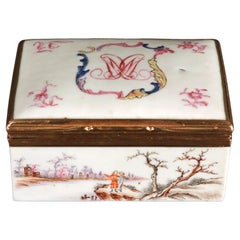
East Meets West: Rare Chinese Export "European Subject" Porcelain Snuff Box Circa 1750–1760 A superb mid-18th century Chinese Export porcelain snuff box, finely painted in famille rose and puce enamels, featuring rare "European Subject" decoration. The rectangular box, after a European silver form, features a slightly domed cover and is fitted with its contemporary chased gilt-metal (ormolu) mounts and hinge. The exterior walls are painted with a continuous frieze of European figures—gentlemen in 18th-century frock coats...

Category

Antique Mid-18th Century Chinese Export Snuff Boxes and Tobacco Boxes

Materials

Porcelain

You May Also Like

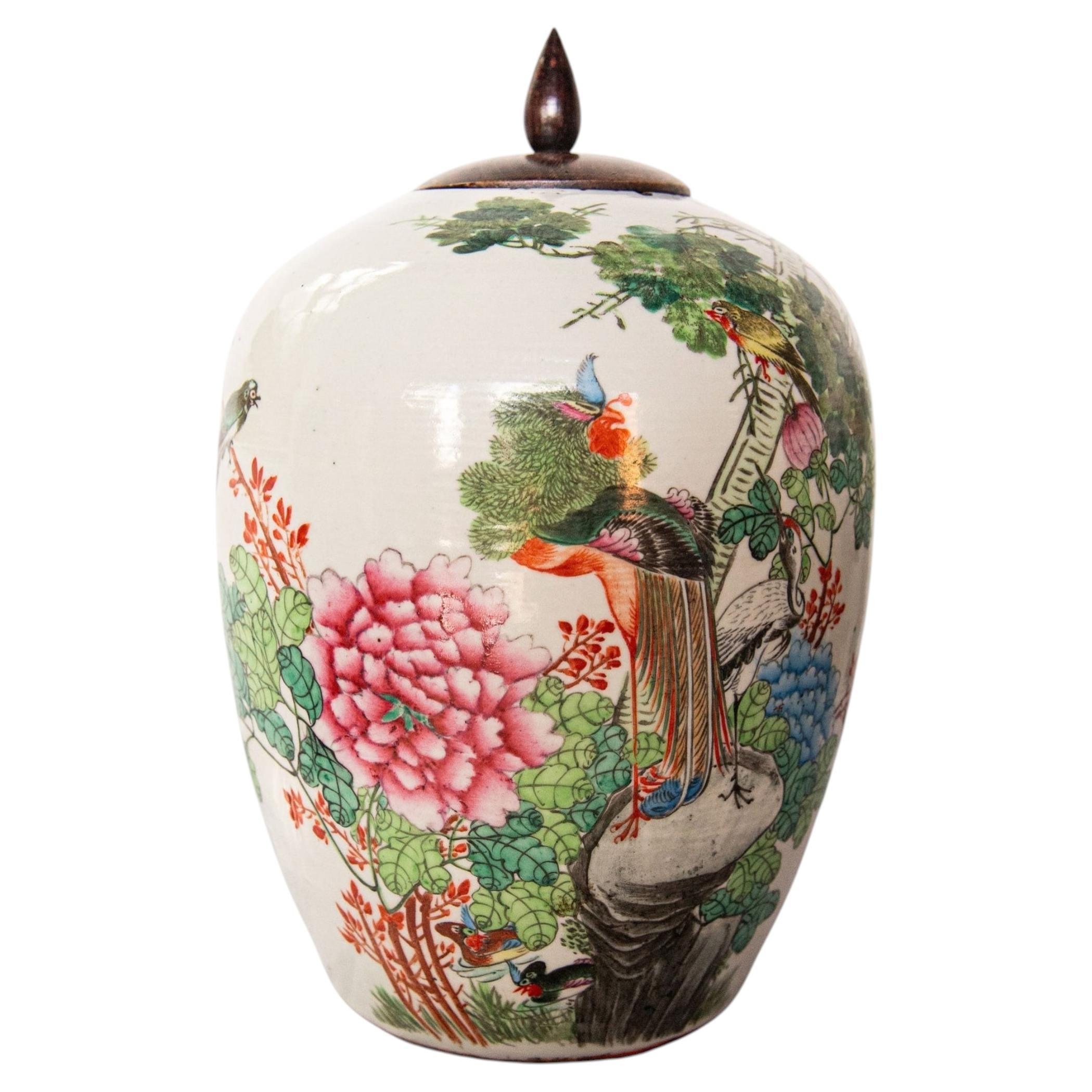
Chinese Famille Rose Porcelain Lidded Jar in the Qing Style

Chinese Famille Rose Porcelain Lidded Jar in the Qing Style

Located in Wichita, KS

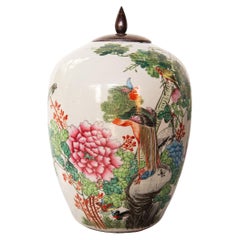
A Chinese famille rose porcelain jar featuring traditional phoenix and peony decoration with calligraphic script to the reverse. The palette reflects classic Qing dynasty motifs, exe...

Category

Early 20th Century Chinese Export Jars

Materials

Porcelain, Wood, Paint

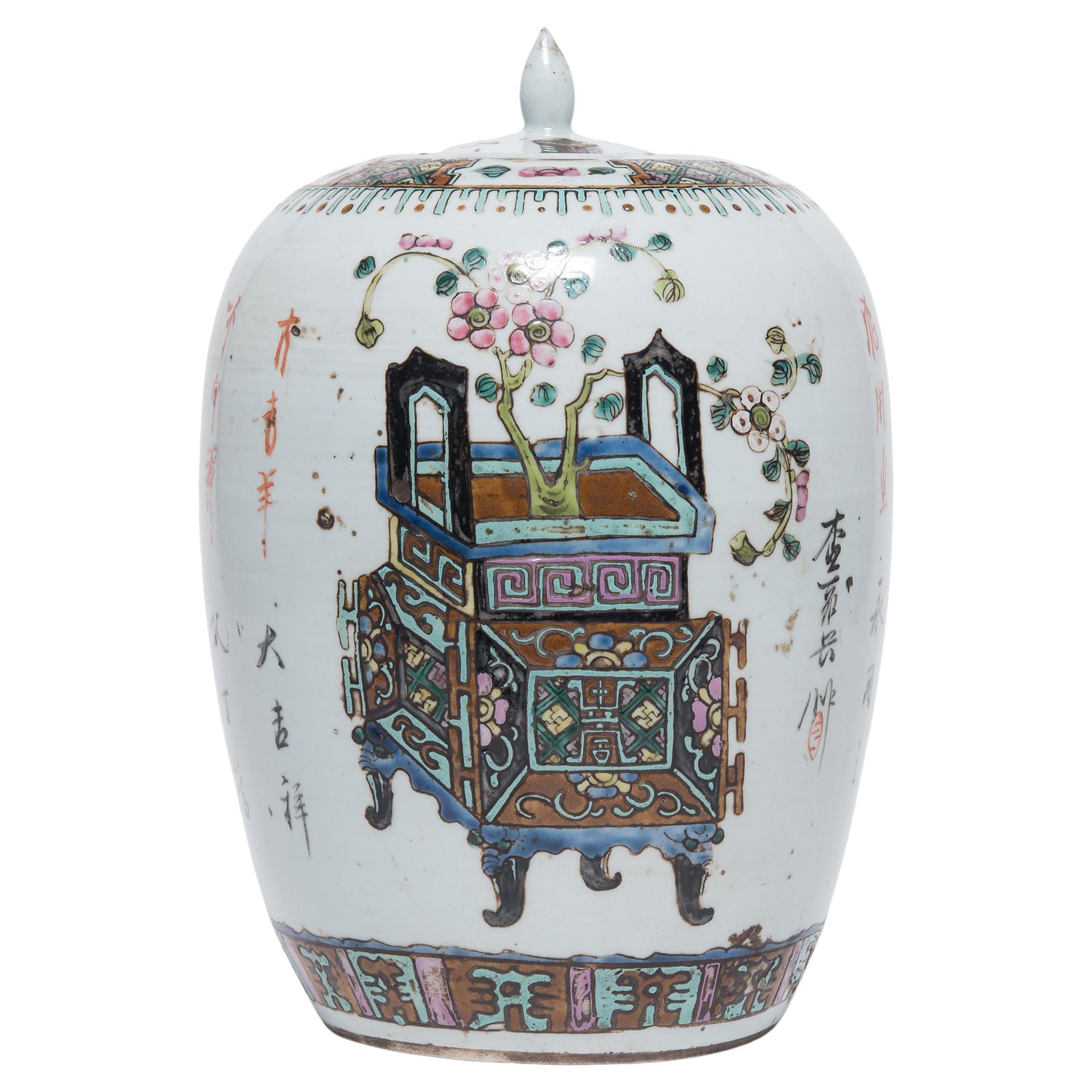
Chinese Famille Rose Ginger Jar with Ancient Censers, c. 1900

Chinese Famille Rose Ginger Jar with Ancient Censers, c. 1900

Located in Chicago, IL

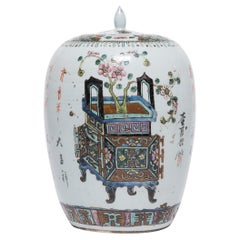
Beautifully commemorated on this oval ginger jar, censers have been used for thousands of years in Chinese culture as a part of funeral rites or prayer offerings. Filled with dried a...

Category

Early 20th Century Chinese Chinese Export Jars
Materials

Porcelain

Chinese Famille Rose Ginger Jar with Ancient Censers, c. 1900

Chinese Famille Rose Ginger Jar with Ancient Censers, c. 1900

Located in Chicago, IL

Beautifully commemorated on this oval ginger jar, censers have been used for thousands of years in Chinese culture as a part of funeral rites or prayer offerings. Filled with dried aromatic plants and essential oils, the censer issued fragrant smoke that forged a connection to the spiritual realm. This late Qing-dynasty jar...

Category

Early 20th Century Chinese Chinese Export Ceramics

Materials

Porcelain

Chinese Famille Rose Baluster Jar with Ancient Censers, c. 1900

Chinese Famille Rose Baluster Jar with Ancient Censers, c. 1900

Located in Chicago, IL

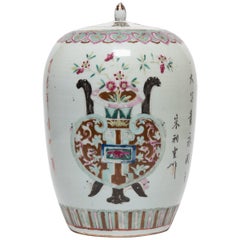
Beautifully commemorated on this lidded baluster jar, censers have been used for thousands of years in Chinese culture as a part of funeral rites or prayer offerings. Filled with dried aromatic plants and essential oils, the censer issued fragrant smoke that forged a connection to the spiritual realm. This late Qing-dynasty jar...

Category

Early 20th Century Chinese Chinese Export Ceramics

Materials

Porcelain