
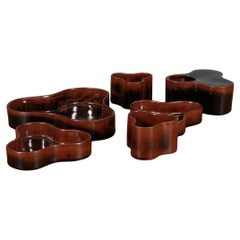
Tue Poulsen 1960s Glazed Stoneware Six Vases and Bowl Set
By Tue Poulsen
Located in Esbjerg, DK
Tue Poulsen six vases and a bowl. Glazed stoneware. H. 6/3 B. 20/8 cm
Category
Vintage 1960s Danish Scandinavian Modern Ceramics
Materials
Stoneware
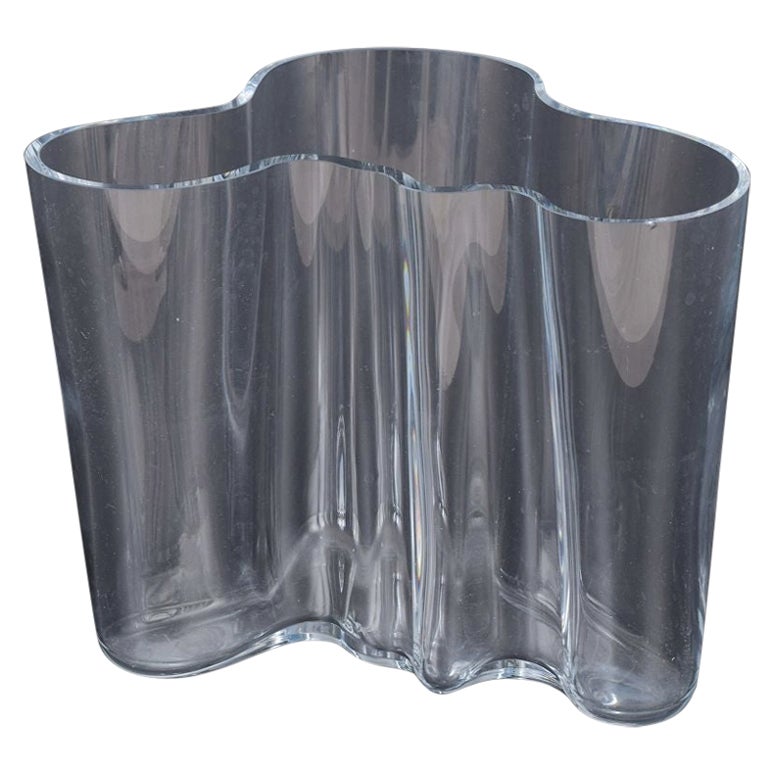
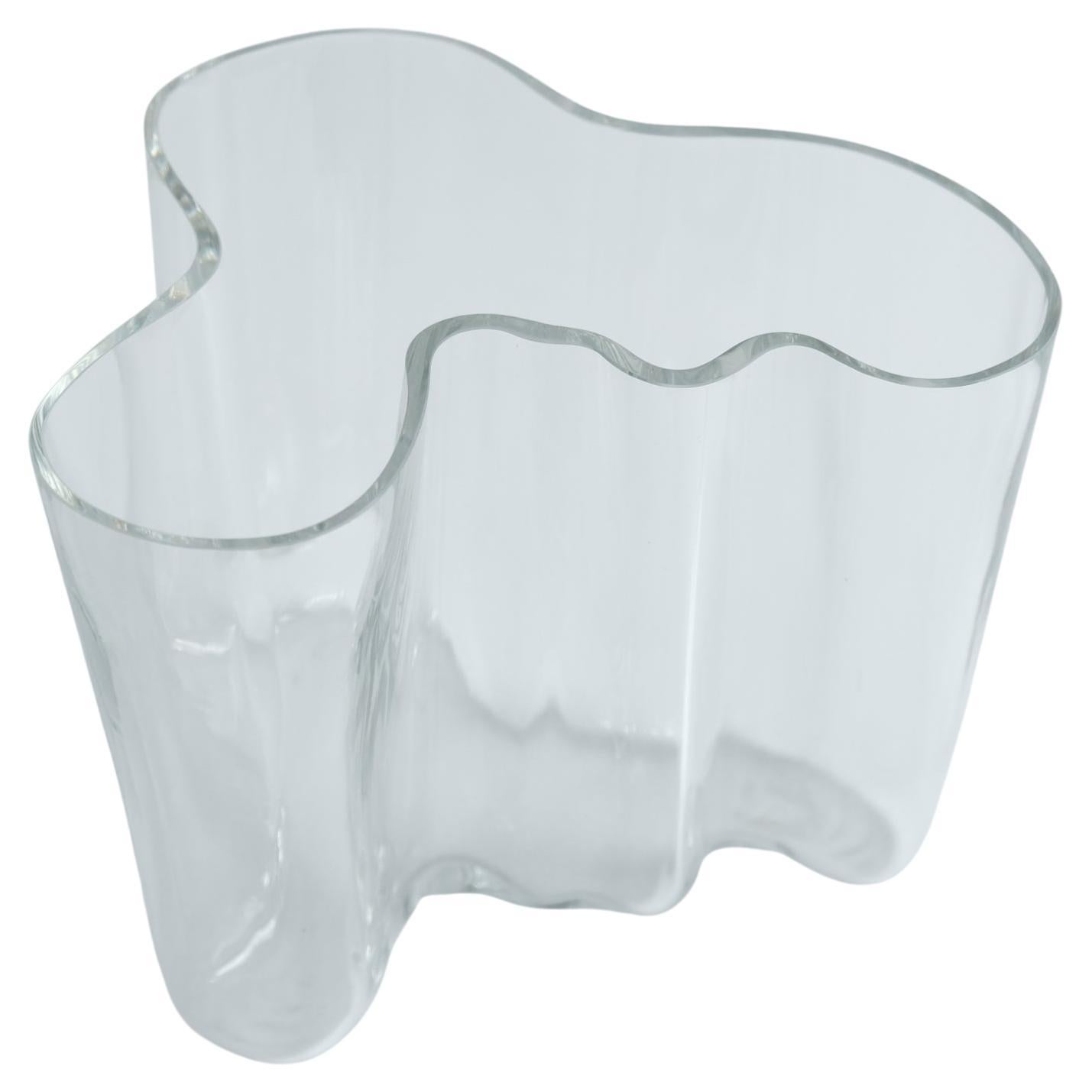
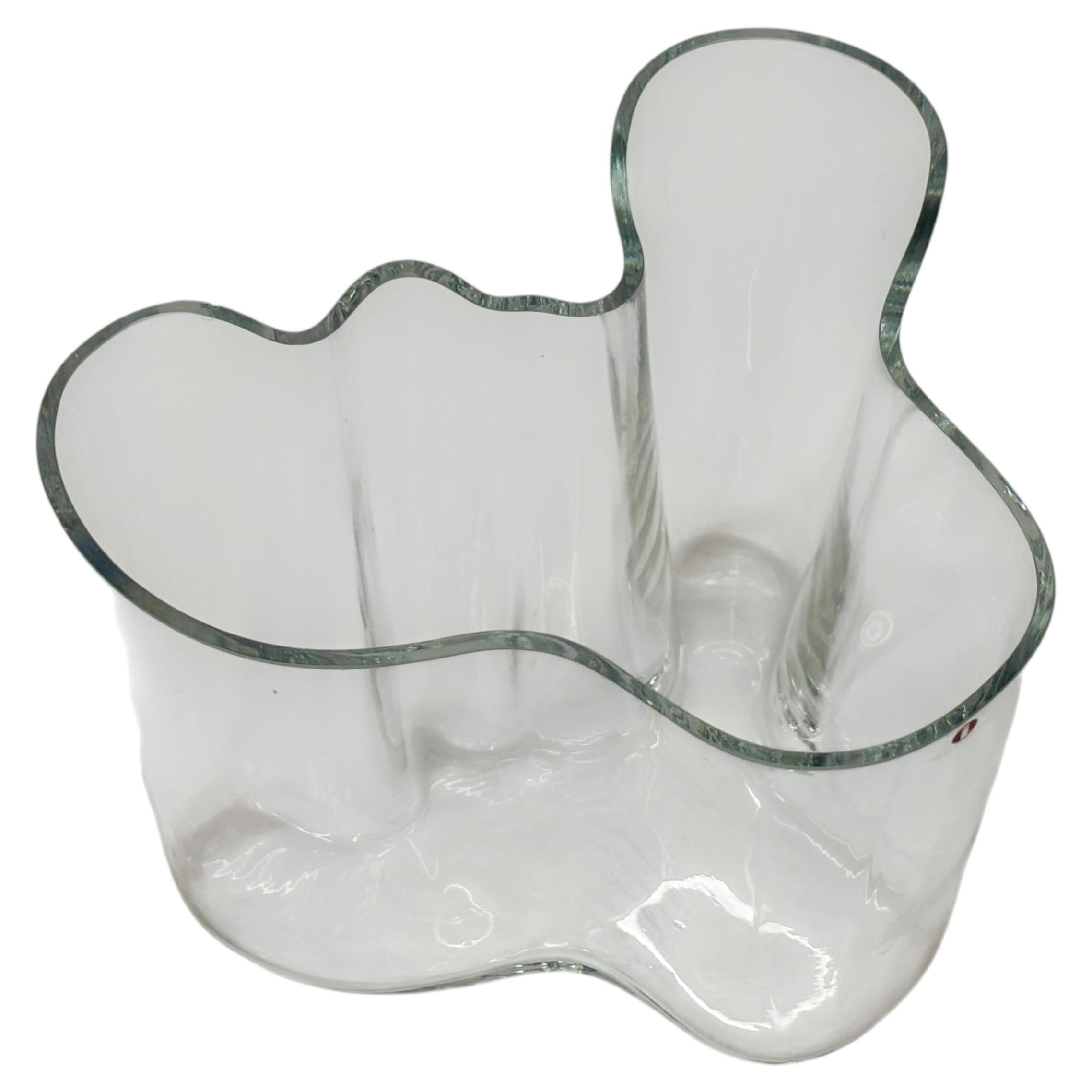
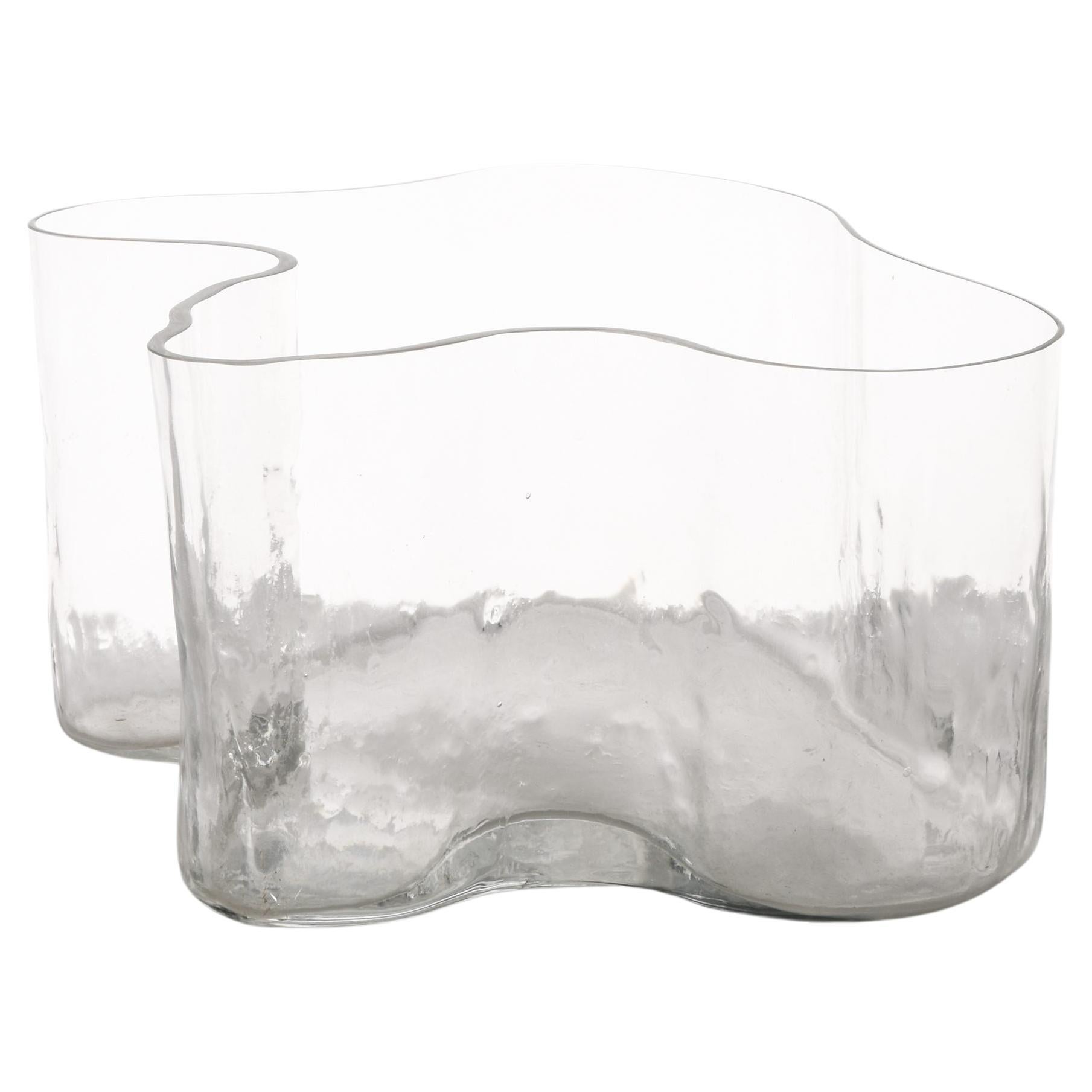
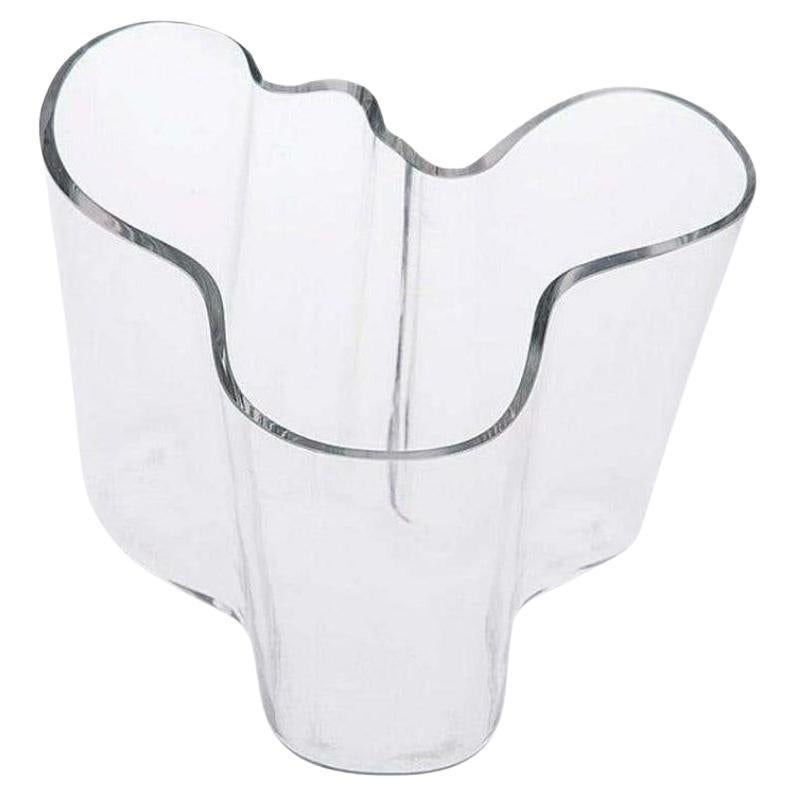
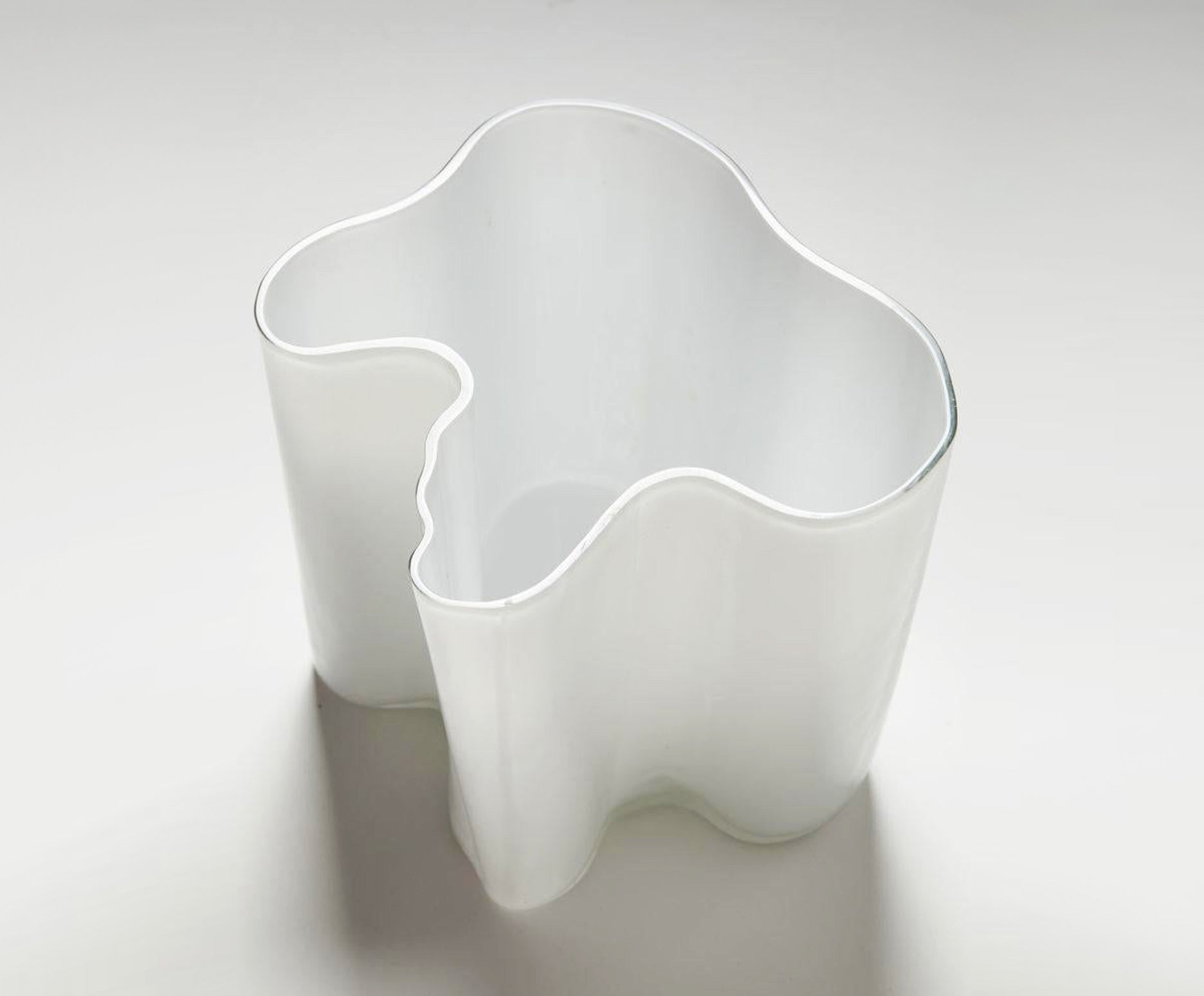
When Finnish architect and designer Alvar Aalto (1898–1976) designed the curvilinear Savoy vase in 1936 for the eponymous luxurious restaurant in Helsinki set to open the following year, he created one of the most well-known glass objects of the 20th century.
The Savoy vase — commonly referred to as the “Aalto vase” — won first prize at 1936’s Karhula-Iittala Glass Design Competition, held to determine which works would be included in the Finnish Pavilion at the 1937 Paris World Expo. This very first vase was taller than the subsequently produced models and was executed in a wooden mold that was burned away during production.
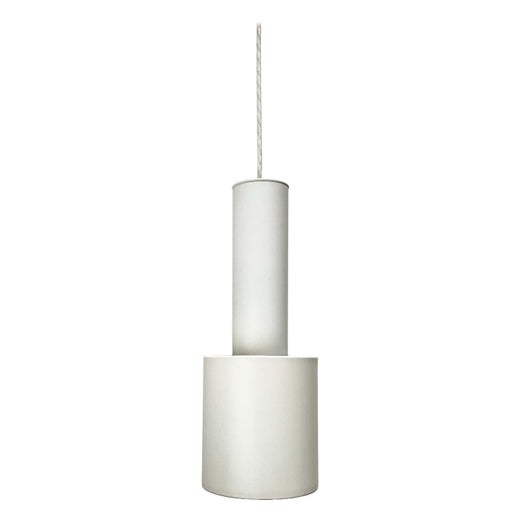
Aalto’s inspiration behind the vase remains unclear, although it has been speculated that the design is based on waves or the Finnish landscape. The abstract biomorphic shape of the vase was designed to spread out any flowers placed inside and to support the stems in the folds of the glass facing in different directions rather than keep them bunched together in a central opening. The vase, which was included in the interior design commission for the Savoy (shared with his designer wife, Aino) that included the couple’s celebrated Golden Bell pendant light, was not the only revolutionary design Aalto created during his lifetime. He was a pioneer of Scandinavian modernist design as well as Finland’s most important architect of the 20th century. Aalto created or cocreated with Aino some of the most revered buildings in the Northern Hemisphere, such as the Paimio Tuberculosis Sanatorium (1928–33) in Paimio, Finland, and the Villa Mairea (1939) in Noormarkku, Finland.
The Savoy vase never made any money for Aalto because it belonged to the Finnish glassworks factory that sponsored the 1936 competition. The factory’s modern iteration, Iittala, still produces the piece today. Each Savoy vase is mouth-blown and can be found in various sizes and colors.
An architect and designer, Alvar Aalto deserves an immense share of the credit for bringing Scandinavian modernism and Nordic design to a prominent place in the global arena. In both his buildings and his vintage furniture — which ranges from chairs, stools, tables and lighting to table- and glassware — Aalto’s sensitivity to the natural world and to organic forms and materials tempered the hardness of rationalist design.
Relatively few Aalto buildings exist outside Finland. (Just four exist in the United States, and only one — the sinuous 1945 Baker House dormitory at M.I.T. — is easily visited.) International attention came to Aalto, whose surname translates to English as “wave,” primarily through his furnishings.
Instead of the tubular metal framing favored by the Bauhaus designers and Le Corbusier, Aalto insisted on wood. His aesthetic is best represented by the Paimio armchair, developed with his wife, Aino Aalto, in 1930 as part of the overall design of a Finnish tuberculosis sanatorium.
Comfortable, yet light enough to be easily moved by patients, the Paimio chair’s frame is composed of two laminated birch loops; the seat and back are formed from a single sheet of plywood that scrolls under the headrest and beneath the knees, creating a sort of pillow effect. Aalto’s use of plywood had an enormous influence on Charles and Ray Eames, Arne Jacobsen, Marcel Breuer and others who later came to the material.
Concerned with keeping up standards of quality in the production of his designs, Aalto formed the still-extant company Artek in 1935, along with Aino, whose glass designs were made by the firm. In the latter medium, in 1936 the Aaltos together created the iconic, undulating Savoy vase, so-called for the luxe Helsinki restaurant for which the piece was designed.
Artek also produced Aalto pendants and other lighting designs, many of which — such as the Angel’s Wing floor lamp and the Beehive pendant — incorporate a signature Aalto detail: shades made of concentric enameled-metal rings graduated down in diameter. The effect of the technique is essential Alvar Aalto: at once precise, simple, and somehow poetic.
Find a collection of vintage Alvar Aalto stools, vases, dining tables and other furniture on 1stDibs.
Tue Poulsen 1960s Glazed Stoneware Six Vases and Bowl Set
By Tue Poulsen
Located in Esbjerg, DK
Tue Poulsen six vases and a bowl. Glazed stoneware. H. 6/3 B. 20/8 cm
Stoneware

Bertil Vallien Vase for Kosta Boda
By Kosta Boda, Bertil Vallien
Located in Esbjerg, DK
Bertil Vallien vase in art glass. Made by Kosta Boda. Signed.
Art Glass
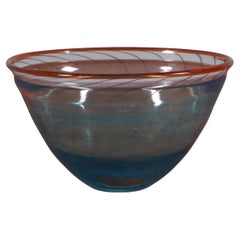
Kjell Engman Art Glass Vase for Kosta Boda, 1960s Scandinavian Modern
By Kosta Boda, Kjell Engman
Located in Esbjerg, DK
Kjell Engman vase in art glass. Made by Kosta Boda. Signed.
Art Glass
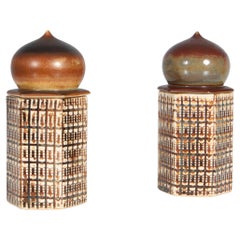
Haico Nitzsche for Danish Soholm Sculptural Pair of Vases, 1970s
By Søholm Stentøj, Haico Nitzsche
Located in Esbjerg, DK
Haico Nitzsche pair of vases in glazed ceramic.
Ceramic
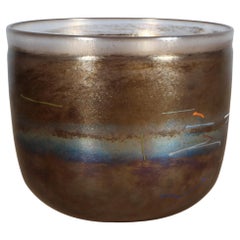
Bertil Vallien Art Glass Vase by Kosta Boda, Scandinavian Modern
By Bertil Vallien, Kosta Boda
Located in Esbjerg, DK
Bertil Vallien vase in art glass. Made by Kosta Boda.
Art Glass
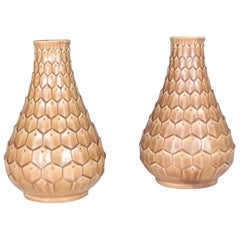
Ewald Albin Filip Dahlskog Pair of Earthenware Vases, Sweden, 1960s
Located in Esbjerg, DK
Ewald Albin Filip Dahlskog, pair of vases made off earthernware.
Earthenware
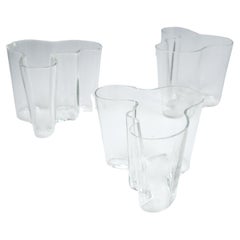
Set of 3 Alvar Aalto Savoy Vases Model. 3030 in Clear Glass, Iittala 1960-70s
By Iittala, Alvar Aalto
Located in Helsinki, FI
A set of three iconic Savoy vases by Alvar Aalto for Iittala, dating from the 1960s to the early 1970s. The vases are in good condition, presenting only slight markings to the base c...
Blown Glass
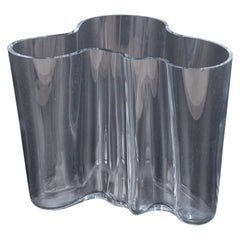
Alvar Aalto for Iittala. Organically shaped Savoy vase, 1960s/70s.
By Alvar Aalto
Located in København, Copenhagen
Alvar Aalto for Iittala, Savoy Vase, 1960s/70s. Organically shaped glass vase, known as the Savoy Vase, designed by Alvar Aalto and produced by Iittala. The iconic form with soft, fl...
Art Glass
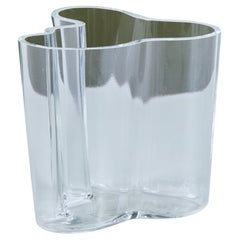
Alvar Aalto for Iittala Petite Glass Vase
By Alvar Aalto, Iittala
Located in Los Angeles, CA
A petite 'Savoy' vase from Alvar Aalto’s collection of blown glass vases for Iittala of Finland. This design has four irregular lobes with undulating sides that make this vase perfec...
Blown Glass
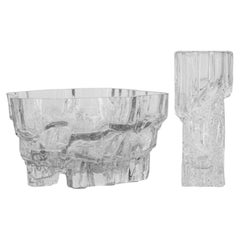
A Set Of Tapio Large Wirkkala for Iittala Ice Glass Vases, Finland 1970
By Iittala, Tapio Wirkkala
Located in Rijssen, NL
A wonderful and rare set of clear, molded ice glass vases by Tapio Wirkkala for Iittala, circa 1970s. With their very interesting shape and texture, the vases create a beautiful whol...
Glass
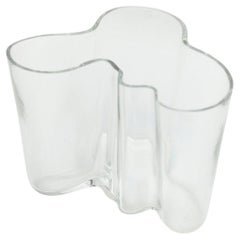
Alvar Aalto Savoy Glass Bowl, Mid-Century Modern, Finland, Circa 1960
By Alvar Aalto
Located in Barcelona, ES
Glass designed by Alvar Aalto, circa 1960. Manufactured in Finland. In original condition, with minor wear consistent with age and use, preserving a beautiful patina. Hugo Alvar He...
Glass
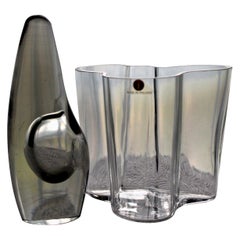
Tiny Alvar Aalto "Savoy" & Timo Sarpaneva "Orkidea" Ittala Vases
By Ittala
Located in Sharon, CT
The Sarpaneva "Orkidea" -Bud vase is 5 3/8" x 2" x 2". The Aalto "Savoy" is 3 9/16"x 4 7/16" x 3 3/4". Probably the smallest sizes these celebrated vases were produced in.
Glass
A power couple before the term existed, the influential pair made work that still resonates today.
Andrew Duncanson, founder of the Stockholm- and London-based gallery Modernity, weighs in on the masters of mid-century furniture and decorative arts.