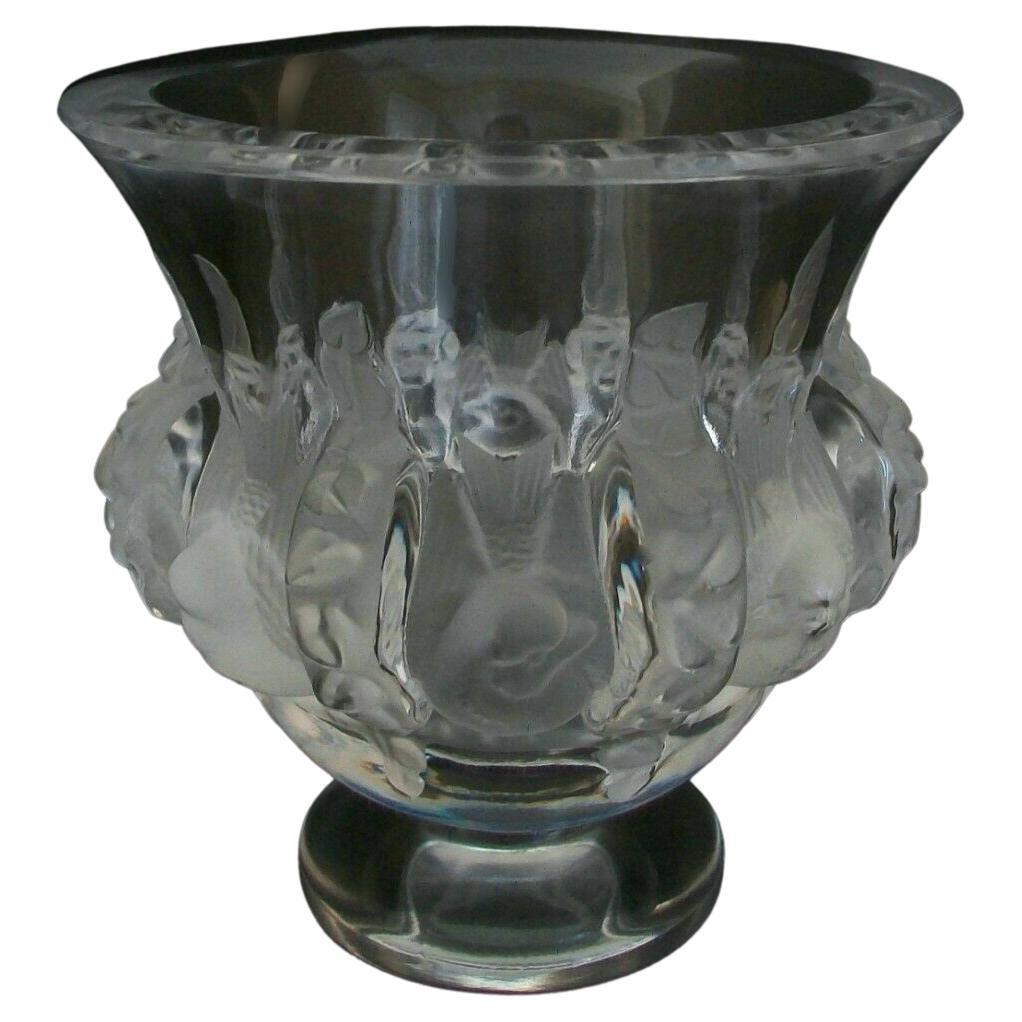
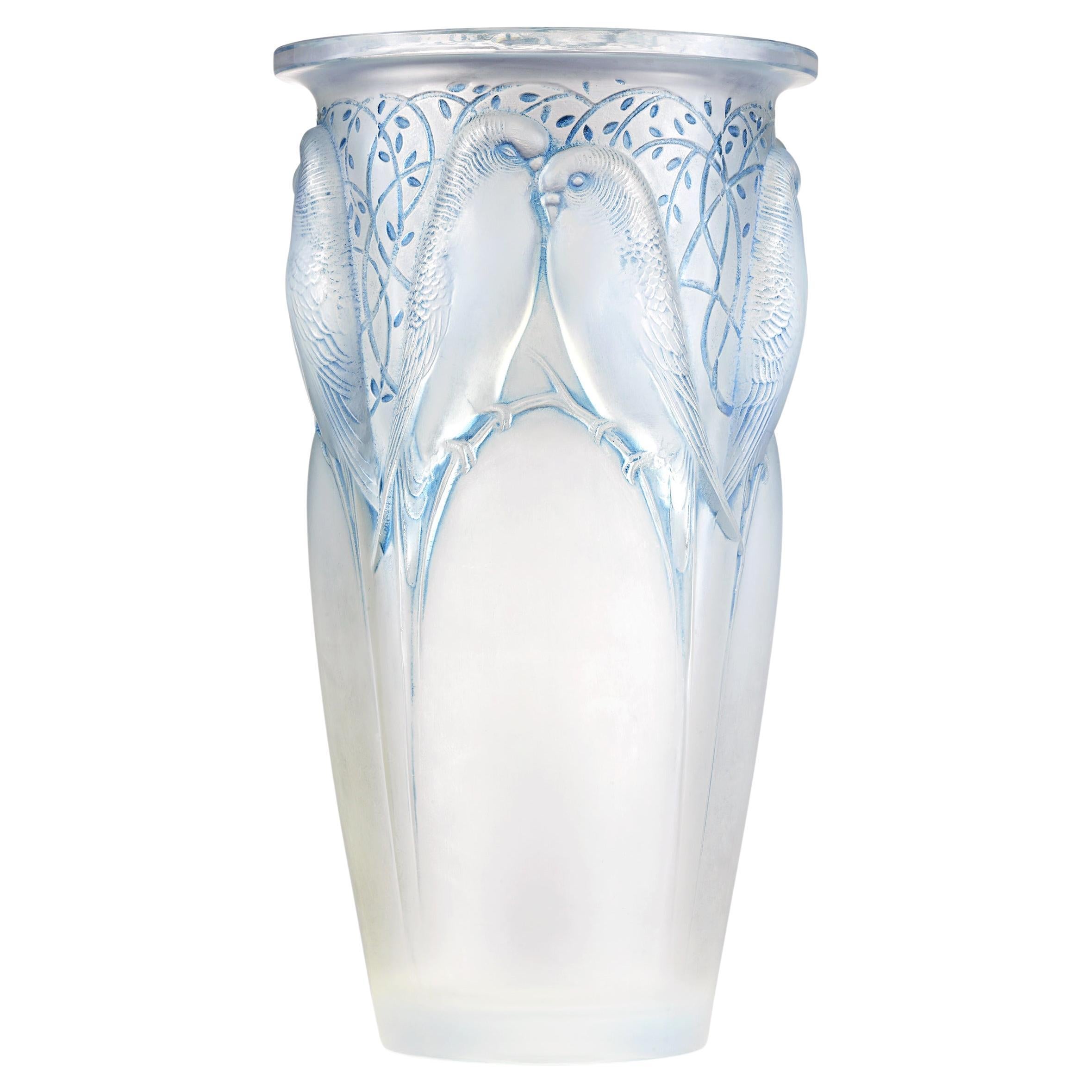
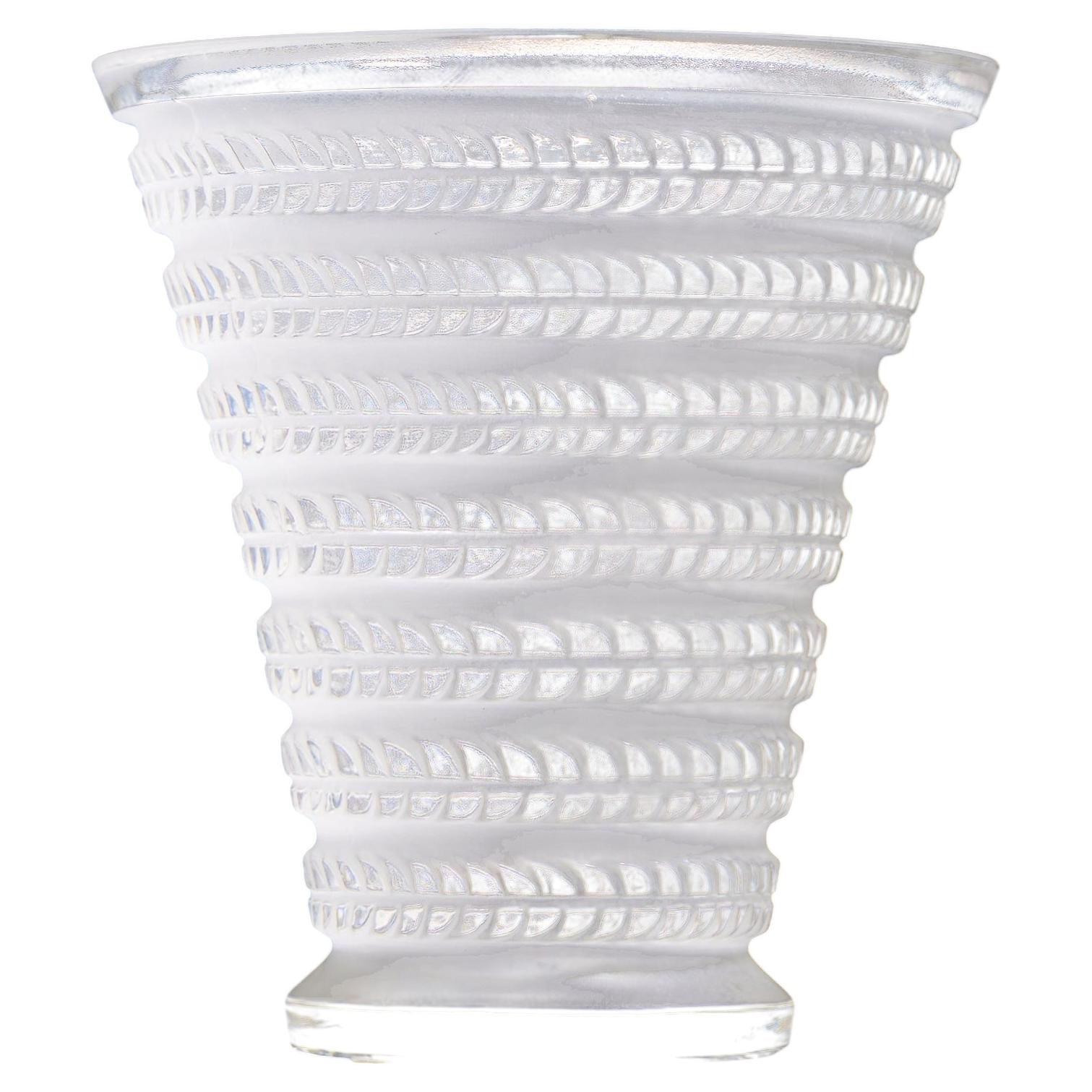
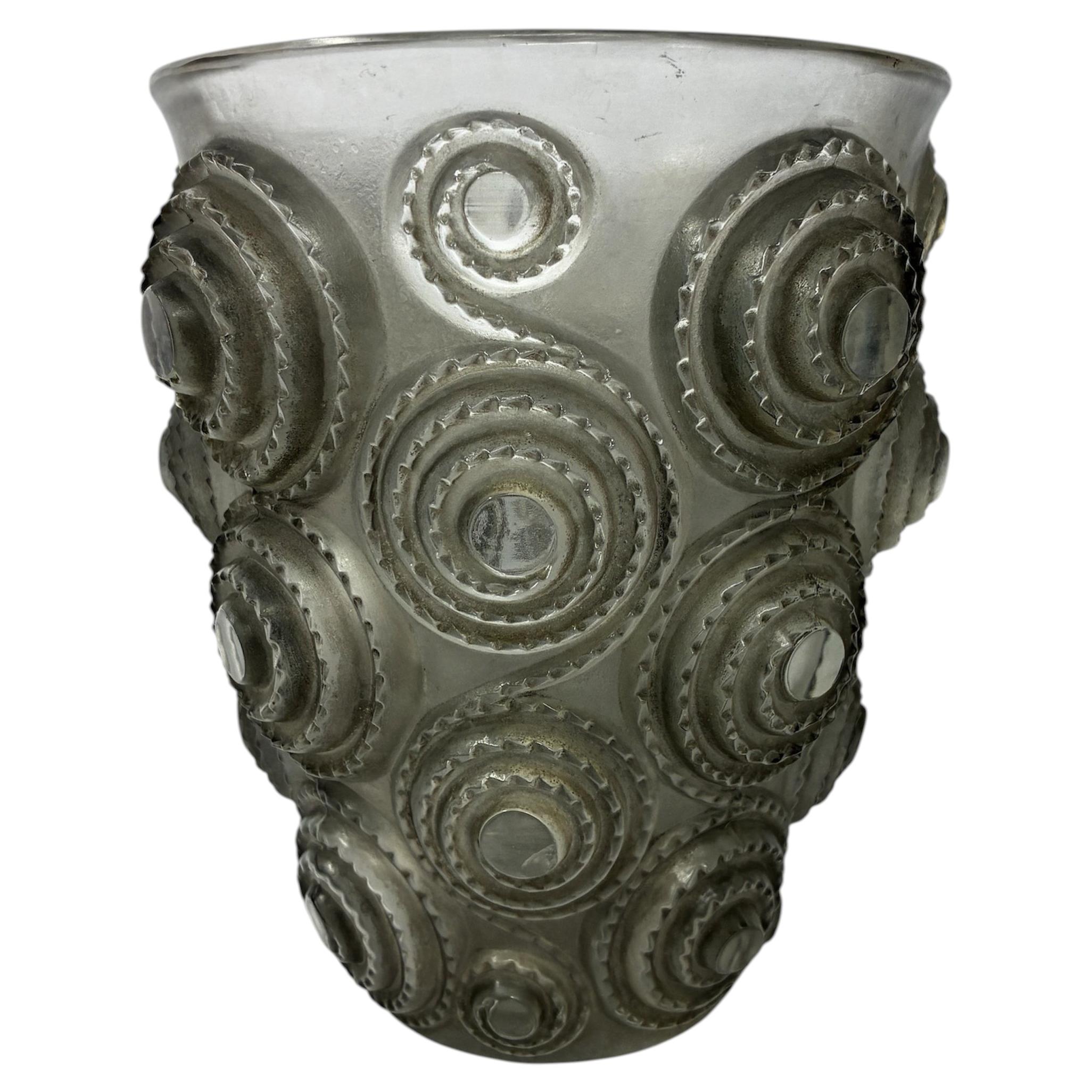
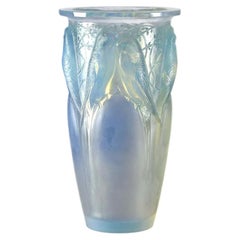
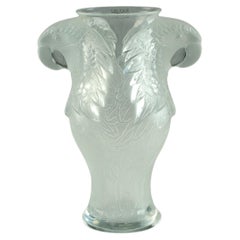
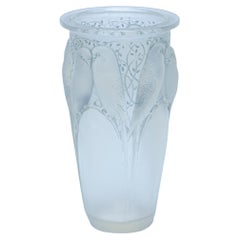
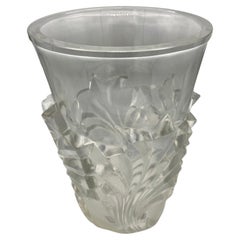
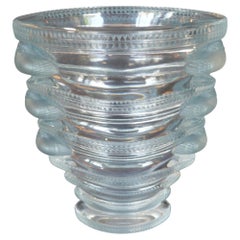
A very fine and well detailed French Art Deco clear glass vase decorated with applied frosted and lightly stained rams as handles, the surface with excellent hand finished detail, signed R.Lalique France
Thibet
Catalogue Number: 1083
Signature Identification: “R. Lalique France” acid etched signature to the base
Date Introduced: 1931
Dimensions: 20 cm High
Felix Marcilhac Catalogue Raisonné Page 472
ADDITIONAL INFORMATION
Height: 20 cm
Width: 24 cm
Depth: 12 cm
Condition: Excellent Original Condition
Circa: 1925
Materials: Clear and Frosted Glass
Book Ref: R.Lalique – Catalogue Raisonné by Felix Marcilhac
Page No. 426
SKU: 6866
ABOUT
Thibet Vase
René Lalique, French 1860 ~ 1945
René Lalique was born in Aÿ-en-Champagne in the Marne region of France. Some years later, the Lalique family moved to Paris but continued to spend holidays in Aÿ. René remained deeply attached to his birthplace throughout his life.
René Lalique was one of the most influential figures in the Art Deco movement, particularly renowned for his exceptional contributions to decorative glass. Initially a celebrated Art Nouveau jeweler, Lalique transitioned to glassmaking in the early 20th century, where he left a lasting legacy. By the 1920s and 1930s, his name had become synonymous with Art Deco elegance, innovation, and craftsmanship.
Lalique's Art Deco glass pieces were characterized by a distinct fusion of artistic beauty and industrial techniques. Unlike the ornate, nature-inspired flourishes of Art Nouveau, his Art Deco works featured cleaner lines, geometric patterns, and stylized motifs. However, his fascination with the natural world—especially flora, fauna, and the female form—remained a recurring theme. Birds, nudes, flowers, and animals were frequently depicted with a new modern clarity, often in symmetrical or repetitive designs that epitomised the Art Deco style.
Lalique revolutionised glassmaking by mastering the use of mold-pressed glass, a technique that allowed for detailed surface textures and a level of repetition that made his work more widely available while still retaining artistic quality. He experimented with frosted, opalescent, and colored glass, enhancing the tactile and visual appeal of his creations. His use of contrasting matte and polished finishes added depth and sophistication, making even mass-produced pieces feel luxurious.
Among his most famous Art Deco works are perfume bottles, vases, car mascots (hood ornaments), and dining sets. Perfume bottles made for Coty and other luxury brands exemplified the union of fine design and practical function. Lalique’s vases, such as the "Bacchantes" or "Formose" designs, displayed his technical mastery and imaginative vision. His car mascots—crystal representations of animals, nudes, and birds—were mounted on luxury automobiles and remain iconic collectibles today.
What set Lalique apart was his ability to blur the boundaries between fine art and commercial design. He brought beauty to everyday objects, democratising luxury through innovative production while maintaining the highest standards of artistry. His factory in Wingen-sur-Moder, France, became the hub for producing both bespoke and commercial pieces, and it still operates today under the Lalique brand.
René Lalique's Art Deco glass continues to captivate collectors, historians, and designers. His work stands as a testament to the era’s values—modernity, elegance, and a harmonious balance between art and industry. Whether through a delicate perfume bottle or a monumental coloured vase, Lalique’s legacy remains etched in the luminous medium he mastered so exquisitely.