Want more images or videos?
Request additional images or videos from the seller
1 of 15

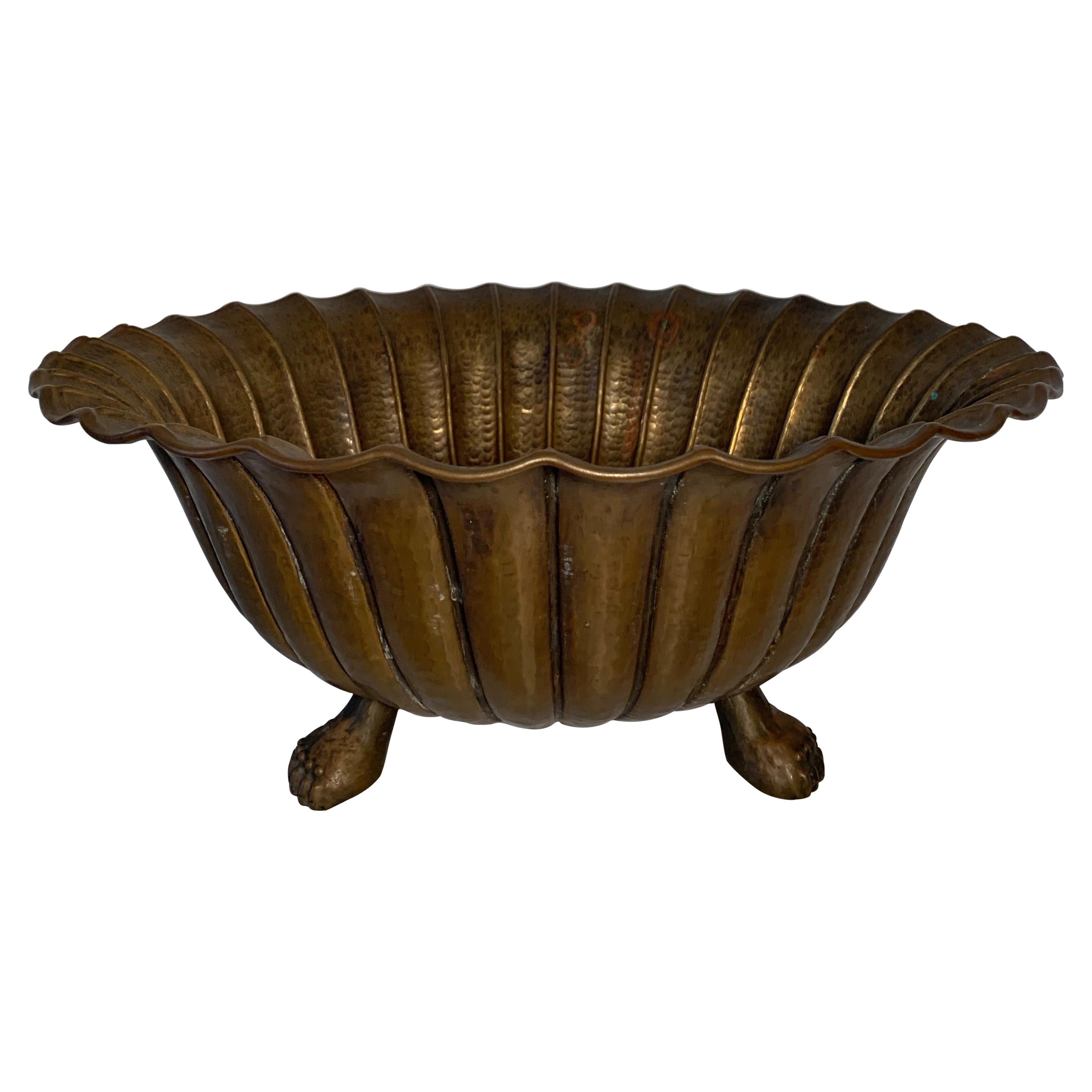
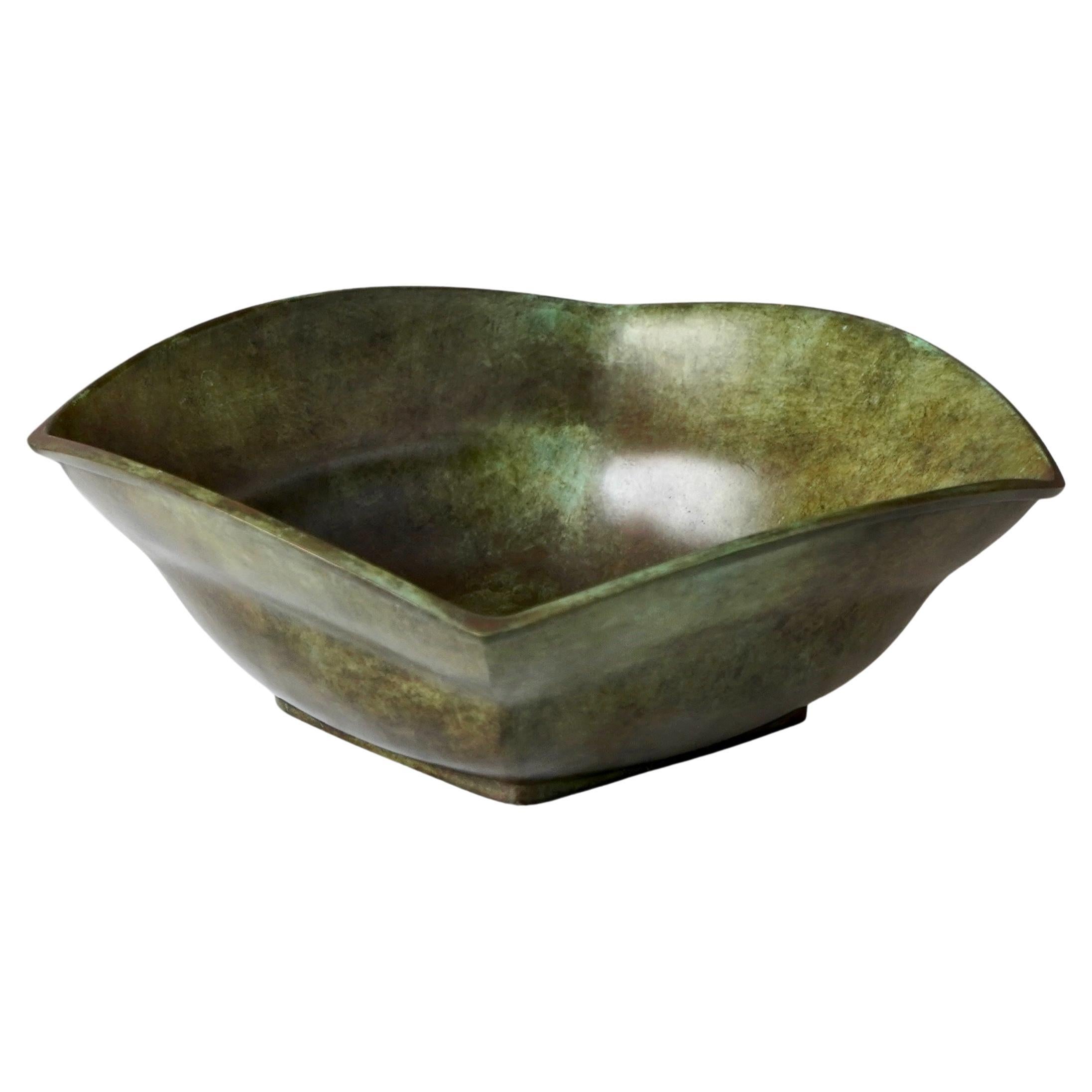
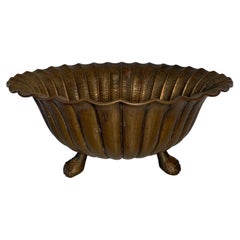
Egidio Casagrande, Italian Modernist Monumental Brass Vessel, Ca. 1930s–1940s

$4,500
£3,363.74
€3,929.84
CA$6,330.32
A$6,406.77
CHF 3,673.46
MX$77,706.11
NOK 42,720.90
SEK 43,485.75
DKK 29,377

About the Item

Italian Modernism EGIDIO CASAGRANDE Monumental Vessel Brass Circa 1950s DIMENSIONS: Height: 7.25 in (18.42 cm) Diameter: 25 in (63.5 cm) ABOUT A monumental Modernist brass vessel by Italian designer and master metalworker Egidio Casagrande (1911–1962), created in the 1930s–1940s. Executed in repoussé, the piece showcases Casagrande’s exceptional craftsmanship, with richly worked surfaces and a commanding sculptural presence. Casagrande is celebrated for his work in both design and cinema, having created intricate metal elements and armor for classic Hollywood productions such as Ben-Hur and The Ten Commandments. This vessel reflects the same attention to detail and dramatic sensibility that defined his broader body of work. The piece retains a beautiful natural patina, enhancing the depth and character of the brass, and bears an embossed maker’s mark on the underside. It remains in very good condition, with minor, age-appropriate wear consistent with its period. A striking and rare statement object, ideal as a centerpiece or decorative focal point in a sophisticated interior. EDIGIO CASAGRANDE Born in Italy in 1911, Casagrande trained in traditional metalworking techniques, developing a deep understanding of historical forms and handcraft processes. His work reflects a synthesis of classical inspiration and modernist sensibilities, often characterized by bold forms enriched with finely worked textures. In the mid-20th century, Casagrande expanded his practice internationally and became closely associated with the film industry. He is best known for designing and fabricating metal elements, armor, and decorative objects for major Hollywood productions, including Ben-Hur (1959) and The Ten Commandments (1956). His contributions played a key role in achieving the visual authenticity and grandeur of these epic films. Alongside his cinematic work, Casagrande produced decorative and functional objects—vessels, lighting, and ornamental metalwork—that are now appreciated as collectible examples of Italian modernist design. His pieces often demonstrate a commanding presence, combining architectural scale with meticulous handcraft. Egidio Casagrande passed away in 1962, leaving behind a legacy as a highly skilled artisan whose work continues to be valued by collectors of both modern design and film-related decorative arts.
  • Creator:
  • Dimensions:
    Height: 7.25 in (18.42 cm)Diameter: 25 in (63.5 cm)
  • Style:
    Art Deco (Of the Period)
  • Materials and Techniques:
    Brass,Cast
  • Place of Origin:
  • Period:
  • Date of Manufacture:
    Circa 1930s-1940s
  • Condition:
    Wear consistent with age and use. We make our best effort to provide a fair and descriptive condition report. Please examine photos attentively for they are an important part of the description. Send us a message to request more details or discuss price.
  • Seller Location:
    New York, NY
  • Reference Number:
    1stDibs: LU2819349347522

More From This Seller

View All
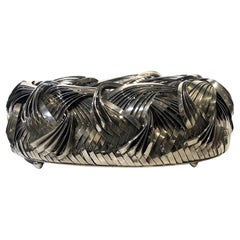
Alessandro Calderoni, Italian Novecento Double-Tier Silver Centerpiece, ca. 1940

Alessandro Calderoni, Italian Novecento Double-Tier Silver Centerpiece, ca. 1940

Located in New York, NY

Hallmarks: S.A. Calderoni, Milano, 800. Weight: 160.14 troy ounces (5 kg 794 g), including non-silver material. DIMENSIONS: Overall height: 12inches Bottom vessel dimensions: Length: 21 inches Depth: 18.5 inches Height: 7.5 inches Top vessel dimensions: Length: 12 inches Depth: 9.5 inches Height: 9.7 inches This magnificent formal centerpiece was created around 1940 in Milan, Italy by S.A. Calderoni, a famous Italian firm of fine jewelers and silversmiths that was established in 1898 and achieved its greatest fame during Italian Art Nouveau and Novecento periods. The company also manufactured items by special private orders and commissions, and was a supplier to the court of the last Italian King, Victor Emmanuel III. The outstanding artistic design in the style of Novecento and its generous proportions combined with a remarkable handmade rendering make this magnificent centerpiece not simply a functional object but a true masterpiece of applied arts. This luxurious hand-hammered silver centerpiece consists of two parts: - The smaller footed bowl...

Category

Vintage 1940s Italian Art Deco Centerpieces

Materials

Silver

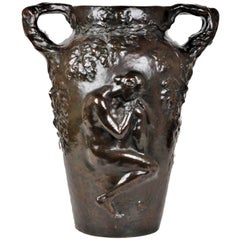
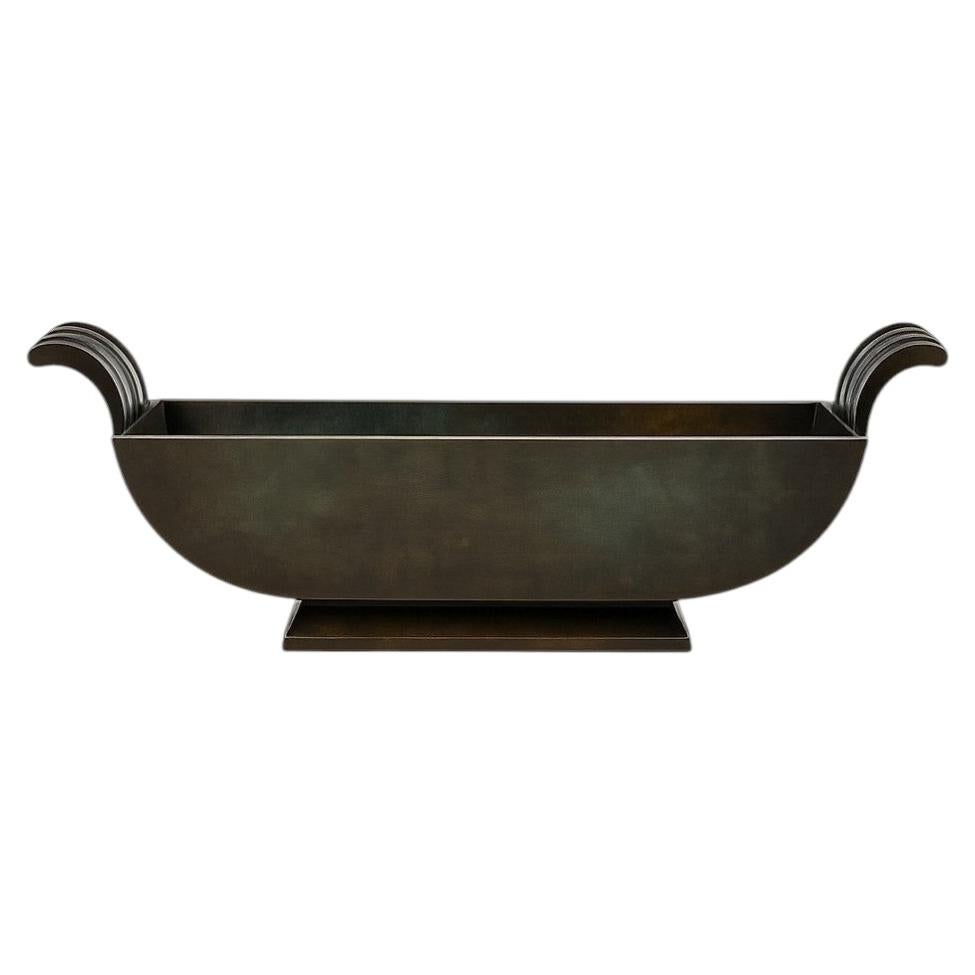
Alfonso Canciani, Viennese Secession Orientalist Bronze Vase, c. 1910

Alfonso Canciani, Viennese Secession Orientalist Bronze Vase, c. 1910

By Alfonso Canciani

Located in New York, NY

Alfonso Canciani (Italian-Austrian, 1863-1955) was a famous Italian-Austrian sculptor of the period of accession to the Viennese Secession. Son of a stonemason, after a realist period he managed to establish himself as a leading sculptor of the Viennese Secession. In fact, he worked in Vienna, where he had enrolled in 1886 at the Academy of Fine Arts, then at the Higher School of Sculpture and finally at the Special School, where he obtained the Rome prize for the sketch for Dante's Monument. He developed a notable business obtaining important prizes and numerous commissions. First among the sculptors of the Viennese capital, he was invited to join the Association of the Viennese Secession, of which Klimt was magna pars, after the exhibition of Dante's group in 1900 at the Secession exhibition, and obtained the most important Austrian artistic prize, the Kunstlerlpreis. This same work, presented in 1910 in Berlin, at the Great Art Exhibition, also received an important recognition here. He obtained the Rome prize in 1896, exhibited successfully in Munich and in 1899 at the III International Art Exhibition in Venice. In that period he made some statues of saints for the cathedral of Santo Stefano in Vienna, the monument to Wagner, the bust of Nietzsche for the University, the scepter and the gold chain of the University Rector, figures of Italian poets ( Petrarch, Boccaccio, Tasso, Ariosto). He submitted a sketch for the official monument to Empress Elizabeth, which was then built in Austrisn Gföhl and Pula. At the time of his accession to the Secession, he dedicated himself to decorating the facade of the Artaria house in Vienna in collaboration with the architect Max Fabiani. He later abandoned the symbolist decorativism of the Jugendstil for a more concentrated and vigorous style, approaching the Belgian sculptor Constantin Meunier for the theme of work, and preferring to exhibit at the Künstlerhaus. In Vienna, he was generous with advice and help with the Italians and in particular with his fellow citizens (such as the Brazzanese Luigi Visintin, then a university student). After the First World War, he returned to Italy and lived in Friuli, penalized by the fact that the Habsburg Empire had by now disappeared. Instead of large-scale public monuments, he then devoted himself to engraving medals (e.g. for Benedict XV and for the Italian mission in Vienna in 1919) and to designing funeral monuments (examples in Mali Lošinj and Trieste) and portrait busts (of Generals Carlo Caneva and Antonio Baldissera in Udine, sculptures of the War Memorial of Corno di Rosazzo). After all, he had already executed the Bab grave monument in the Döblinger cemetery in Vienna in 1909. He taught in Trieste from 1920 until 1935, at the local school of industrial art, where he had Marcello Mascherini...

Category

Vintage 1910s Austrian Jugendstil Vases
Materials

Bronze

French Beaux Arts, Patinated Bronze Figural Vase by A. Bofill, Ca. 1900

French Beaux Arts, Patinated Bronze Figural Vase by A. Bofill, Ca. 1900

By Antoine Bofill

Located in New York, NY

Antoine Bofill (Spanish-French, 1875-1925) was a Spanish artist and member of the Animalier movement of the 19th century. Best known for his small, decorative bronze sculptures, Bofi...

Category

Antique Early 1900s French Beaux Arts Vases

Materials

Bronze

Japanese Art Deco Ikebana Chromed Metal Basket, ca. 1930s

Japanese Art Deco Ikebana Chromed Metal Basket, ca. 1930s

Located in New York, NY

Art Deco Ikebana Basket Chromed Metal Japan, ca. 1930s ABOUT Ikebana is the Japanese art of of beautifully arranging cut stems, leaves, and flowers in vases and other containers t...

Category

Vintage 1930s Japanese Art Deco Planters, Cachepots and Jardinières

Materials

Metal

Charles Vital-Cornu, French Art Nouveau Bronze Sculptural Floral Vase, 1900s

Charles Vital-Cornu, French Art Nouveau Bronze Sculptural Floral Vase, 1900s

By Charles Vital-Cornu

Located in New York, NY

Charles Vital-Cornu (French, 1851 - 1927), Jouffroy’s and Pils’ pupil, he acquired a skillfulness mastery in carving marbles and producing bronzes. He used several patinas in his production. Indeed, if his pieces' embodiments are often golden-brown colored, the hollow part are darker. His figures, hands, faces, and bodies are of a great quality. Charles Vital-Cornu had participated in numerous annual ‘‘Salons’’ organized in Paris by ‘‘la Société des Artistes Français’’ where he got several awards, such as a mention of Honor in 1880 and 1881, a third class medal in 1882, a travelling grant in 1883, a second class medal in 1886, a bronze medal at the 1889 World Fair and, finally, a silver medal at the 1900 World Fair at the Grand palace...

Category

Antique Early 1900s French Art Nouveau Vases

Materials

Bronze

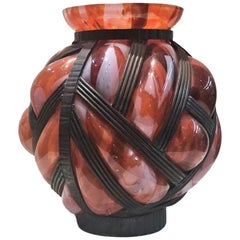
French Art Deco Art Glass and Wrought Iron Flower Vase, circa 1920s

French Art Deco Art Glass and Wrought Iron Flower Vase, circa 1920s

By Charles Schneider

Located in New York, NY

Although unsigned, this Art Deco masterpiece in red and white art glass and wrought iron most probably by Charles Schneider. Charles and Ernest Schneider were a generation younger...

Category

Vintage 1920s French Art Deco Vases

Materials

Wrought Iron

You May Also Like

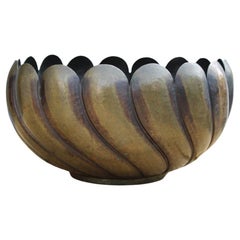
Large Brass Planter, Italy, Mid-20th Century

Large Brass Planter, Italy, Mid-20th Century

Located in New York, NY

Large circular brass planter featuring a polished and hammered surface. The rim is decorated with repoussé half-sphere elements, lending the piece a sculptural yet refined appearance.

Category

Mid-20th Century Italian Mid-Century Modern Planters, Cachepots and Jard...

Materials

Brass

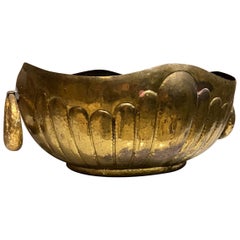
Italian Designed Egidio Casagrande Hammered Brass Footed Bowl

Italian Designed Egidio Casagrande Hammered Brass Footed Bowl

Located in Los Angeles, CA

A monumental Egidio Casagrande Italian hammered footed bowl in brass. A rare and handsome bowl patinated to perfection. A compliment to any shelf or...

Category

20th Century Italian Mid-Century Modern Decorative Bowls

Materials

Brass

Footed bronze bowl in a classic form. Art Deco style, ca. 1940s

Footed bronze bowl in a classic form. Art Deco style, ca. 1940s

Located in København, Copenhagen

Footed bowl in a classic form. Cast and turned bronze with warm patina. Material: Bronze Dimensions: H. 4 cm, D. 15 cm Mark: “BRONCE” underneath Period: Circa 1940, Art Deco style C...

Category

Vintage 1940s Danish Decorative Bowls

Materials

Bronze

1950s Egidio Casagrande Hammered Brass Centerpiece Bowl Italy

1950s Egidio Casagrande Hammered Brass Centerpiece Bowl Italy

Located in Chula Vista, CA

Egidio Casagrande Exquisite Italian Hand Hammered Brass Bowl ITALY 6.75 h x 22 w x 13 d Made in Italy. Stamped underneath. One handle has been reprodu...

Category

Vintage 1950s Italian Mid-Century Modern Decorative Bowls

Materials

Brass