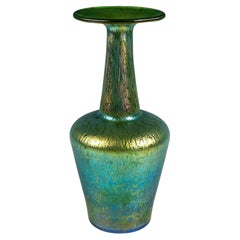
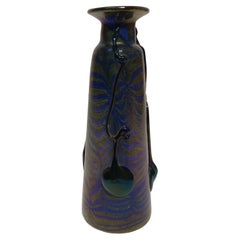
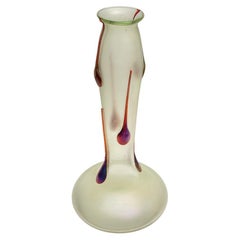
By Loetz Glass
Located in Ciudad Autónoma Buenos Aires, C
Logistics and International Shipping
We provide a comprehensive export service so that your only concern is enjoying your acquisition.
• Door-to-Door Service: Pieces located in our Argentina galleries are shipped directly to your address via air freight.
• Simplified Customs Management: We handle the processing of export permits and the payment of customs duties. You will receive your purchase without additional paperwork or surprise costs.
• High-Security Packaging: Following FedEx international standards, each piece is protected in custom-made wooden crates, designed to withstand 1-meter impacts and ensure the integrity of the object during transit.
• Note for shipments to the USA: To comply with shipping company regulations and ensure delivery at the destination, a valid tax ID (EIN, SSN, or ITIN) is required.
• Domestic US Shipping: For those pieces available in our United States storage, logistics are managed through 1stdibs.
Personalized Restorations
Our team of expert artisans offers restoration services tailored to your aesthetic preferences and design needs:
• Cabinetry and Polishing: We perform polishing work on woods, allowing for transitions from light to dark tones (including deep black finishes).
• Upholstery: We reupholster chairs and armchairs with fabrics or leathers of your choice, guaranteeing a high-quality finish.
• Lighting: We adapt ceiling lamps by shortening smooth rods to adjust them to the height of your rooms.
• Metal Treatment: * Restoration of chromed or silver-plated bronze pieces to their original state.
o Chroming or silver-plating services for bronze objects.
Personalized Quotes: We would be delighted to advise you and provide a quote for any intervention according to your personal taste.
Loetz
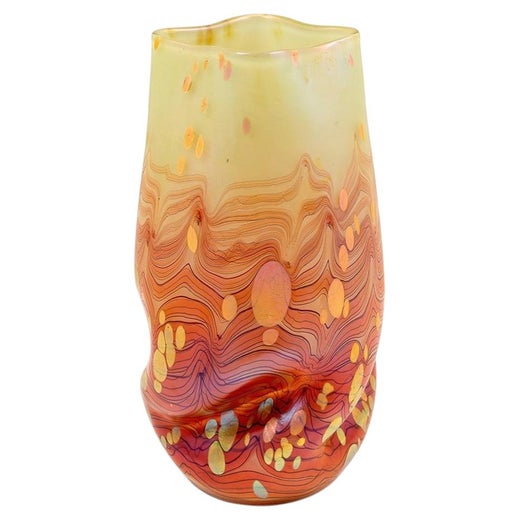
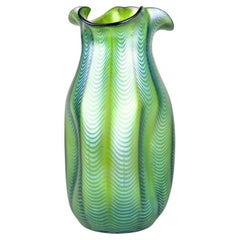
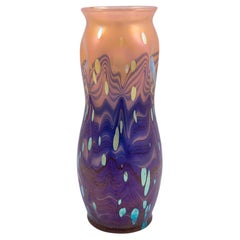
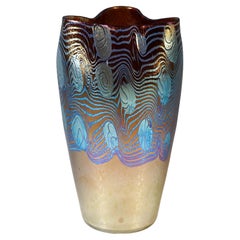
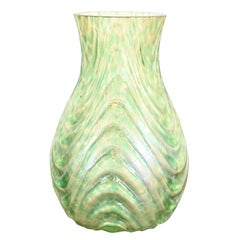
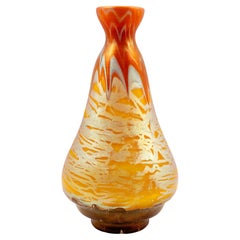
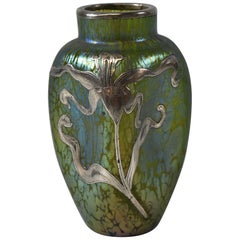
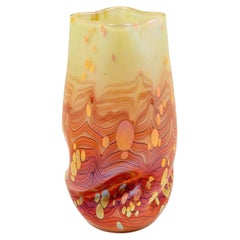
The glass factory, originally founded in 1836 by Johann Baptist Eisner, was taken over. Loetz was the premier Bohemian glass works during this period. It was located in Klostermühle, near Rejštejn in the Sušice district in South-West Bohemia, which belonged to the Austro-Hungarian Empire until 1918. Susanna Loetz, widow of Glass entrepreneur Johann Loetz in 1852. She renamed the company "Glasfabrik Johann Loetz Witwe", a name that was retained until all activities were stopped in 1947. In 1879 it passed to Max Ritter von Spaun. Under his guidance, together with director Eduard Prochaska, the glassworks flourished as never before and enjoyed its most successful period. Von Spaun and Prochaska concentrated on the development of innovative glass types and new production techniques. Their first successful speciality was a glass type simulating semiprecious stones. It is often called "Marmoriertes Glas" ("marbled glass"). The range contained Onyx (red/brown), Karneol (red/pink) and later Malachit (green). It was introduced in the second half of the 1880's. From the same period dates the Octopus glass, of which the decor resembles the tentacles of a cephalopod. The production of Marmorier-tes Glas was resumed in 1906, in different colours like yellow and white. Octopus, 1885-1890, 1885-1890, unknown, an Malachit, 1885-1890, unknown, The master glass-blowers of Klostermühle had already carried out experiments with iridescence in the first half of the 1890's, and they produced the Olympia, a classically inspired olive green type, in 1896. Similar, in variants of creta green, bronce or Olympia and averse to any redundant decoration was the Glatt decor. It highly contrasted with the more elaborate finishes of that time, but it constitutes a part of the production with a deep sense for taste and quality. Most of the pieces shown in the "Glatt" decors were manufactured for Max Emmanuel in London.
The glatt decor remained in use for many years. The Chiné decor had thin glass threads spun around the body in irregular patterns. It is not to be confused with the type of glass that was produced by Kralik. Loetz "Chiné" came in clear, opal, green and pink, Kralik "Chiné" in dark purple. The logical sequel to Chiné was the Pampas decor, green or cobalt blue, in which the threads almost disappeared in the surface, with iridised parts in between. Around the same time the dotted Papillon decor was introduced. The beautiful silver spots were employed on a wide array of models and quite effective on the gooseneck (water sprinkler) and sea shell...
Category
Antique Early 1900s Austrian Art Nouveau Glass