Modernist Rhythm: Stig Lindberg — Domino Series Conical Vase
Object: Conical Vase, Domino Series
Designer: Stig Lindberg (1916–1982)
Manufacturer: Gustavsberg, Sweden
Date: Designed 1954; produced 1955–1969
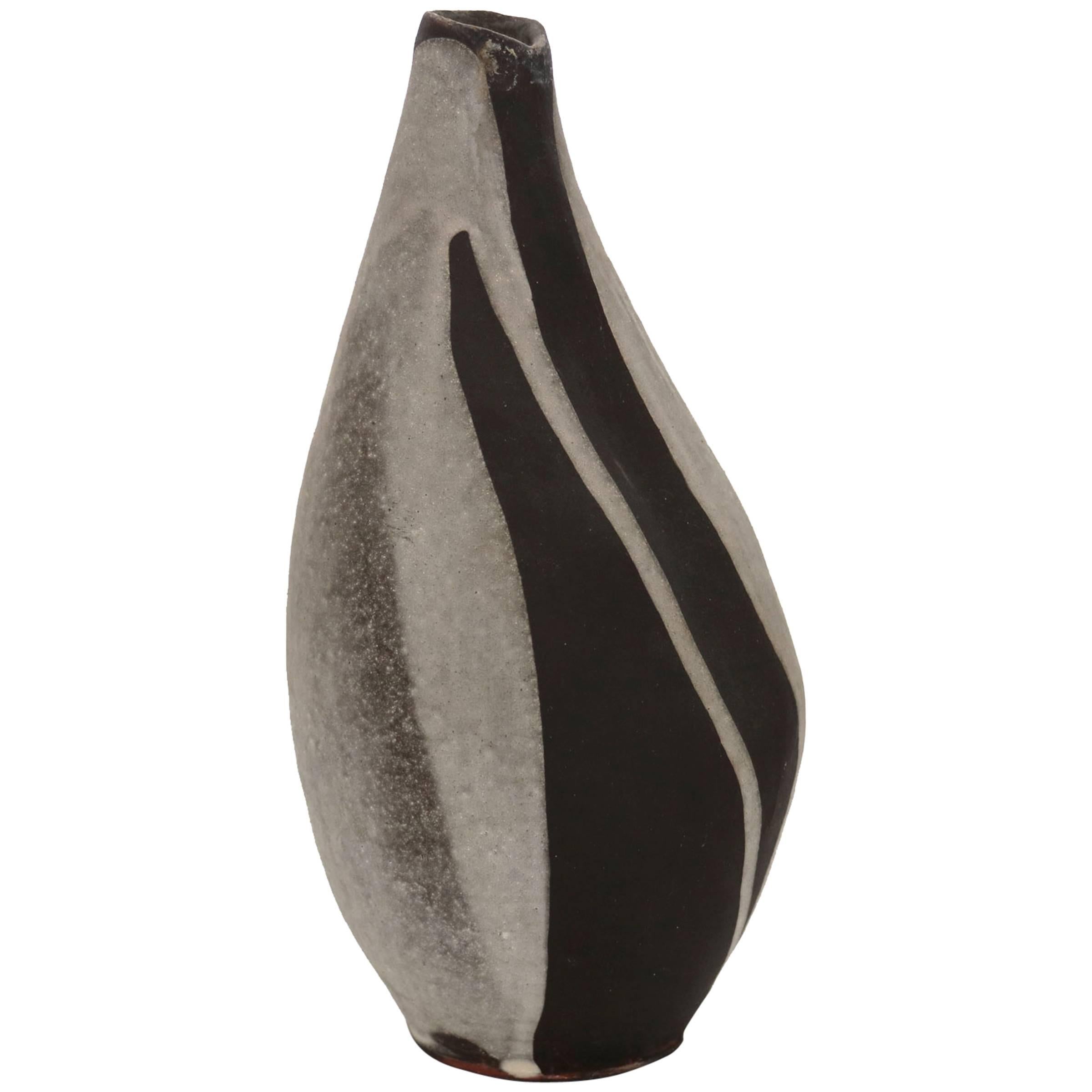
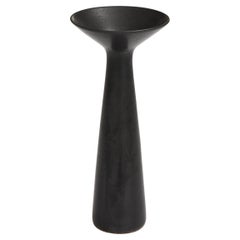
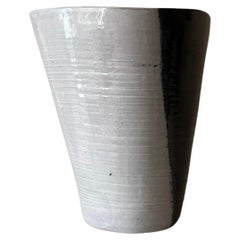
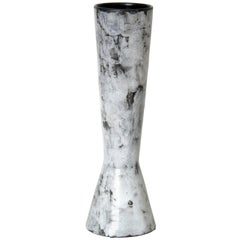
This striking conical stoneware vase is a quintessential object of mid-20th-century Swedish design, defined by its bold graphic pattern and austere minimalist form. Designed by Stig Lindberg for the Gustavsberg factory in 1954, it belongs to his celebrated Domino Series — a group of thirteen objects comprising seven vases and six dishes in conical, cylindrical, square, and spherical forms, all executed in a palette of black and white, or brown.
Design and Decoration
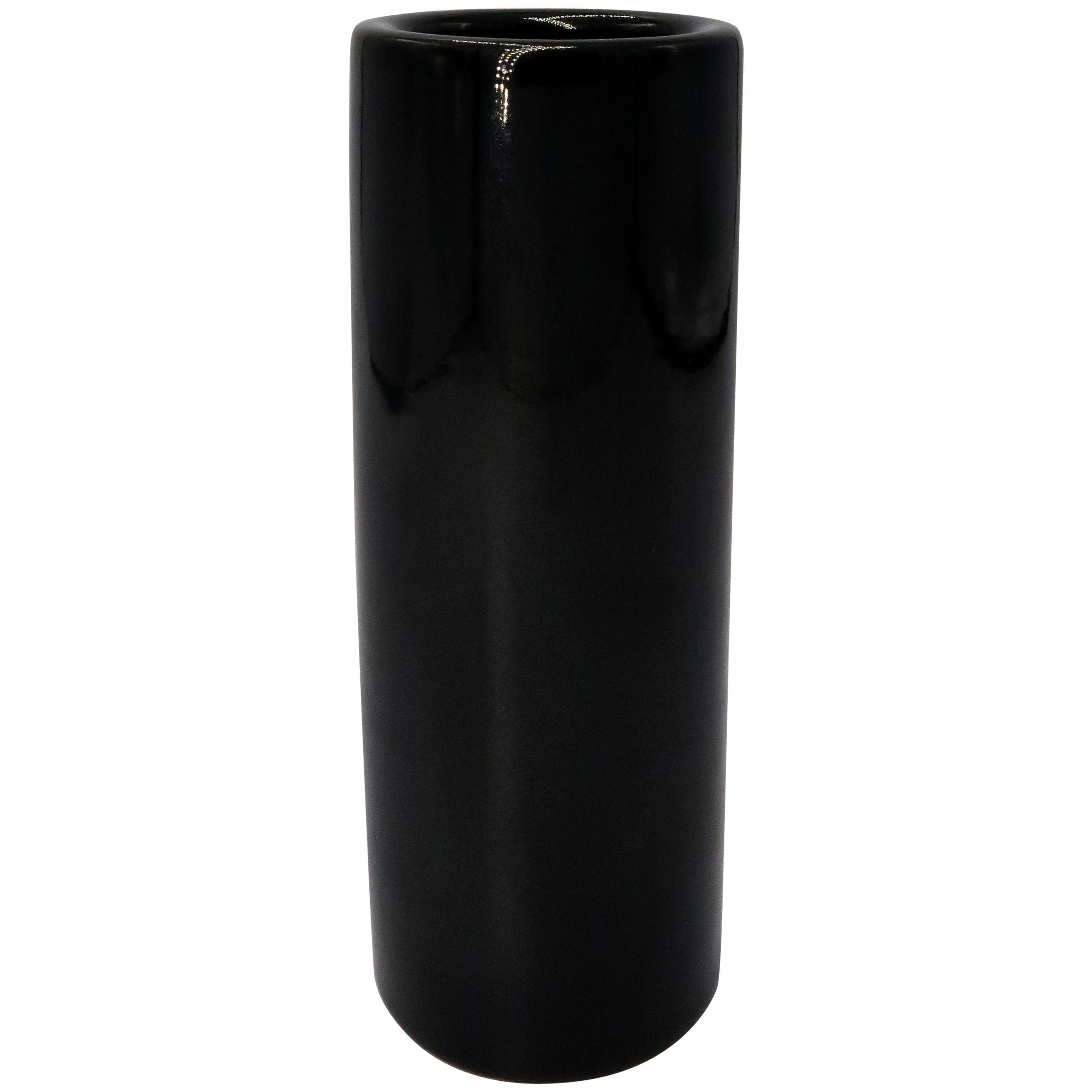
The vase's sleek cone tapers from a wide circular base to a narrow rim, a form of pure geometric discipline. Over this silhouette, Lindberg applied a dense field of thin raised white lines spiraling diagonally around the body against a deep black glossy glaze, creating an optical rhythm that is simultaneously ordered and kinetic. This technique — in which relief pattern and glaze color interact to create depth and movement — exemplifies the Swedish Modern commitment to endowing everyday objects with visual intelligence. The design achieves its effect through contrast alone, without any figurative or naturalistic ornament, a hallmark of Lindberg's Abstract Modernist vocabulary.
Medium: Stoneware with black glossy glaze and white linear relief pattern
Dimensions: 9¼ inches high × 3½ inches diameter at base
Mark: Stamped Gustavsberg (with anchor), Domino, Stig L, Sweden
Historical Context: The H55 Exhibition
The Domino Series was designed in 1954 and launched publicly at the H55 Exhibition (Helsingborg, 1955), a major international event dedicated to architecture, industrial design, and home furnishings that served as a watershed moment for Scandinavian design and marked Lindberg's international debut. H55 showcased a philosophy of beauty through utility to a mass audience — the foundation of what became known as Swedish Modern — and of all the works Lindberg presented there, the Domino line was met with the warmest reception from critics and the public alike, establishing it as an icon of the postwar design canon. The series remained in production until 1969.
Stig Lindberg and Gustavsberg
Lindberg (born Umeå, 17 August 1916; died Terracina, Italy, 7 April 1982) joined the Gustavsberg factory in 1937 under the mentorship of Wilhelm Kåge, succeeding him as Art Director in 1949 — a post he held until 1980. Over more than four decades he designed individual studio ceramics, factory tableware ranges, textiles, glass, plastic consumer goods, and children's book illustrations, a range of disciplines unmatched among his contemporaries. He was awarded the Grand Prix at the Milan Triennale in both 1951 and 1954, a Gold Medal at Cannes in 1955, and an honorary professorship by the Swedish Government in 1970, and his work is held in the permanent collections of the Museum of Modern Art, New York and the Art Institute of Chicago.
Collecting and Museum Context
The Domino Series is widely collected as one of the defining stoneware lines of postwar European ceramics, and examples are held in design museums throughout Scandinavia and in specialist collections internationally. The Gustavsberg Porcelain Museum, sited at the original factory outside Stockholm, maintains a permanent display of Lindberg's work.
(Ref: NY9429/imp)