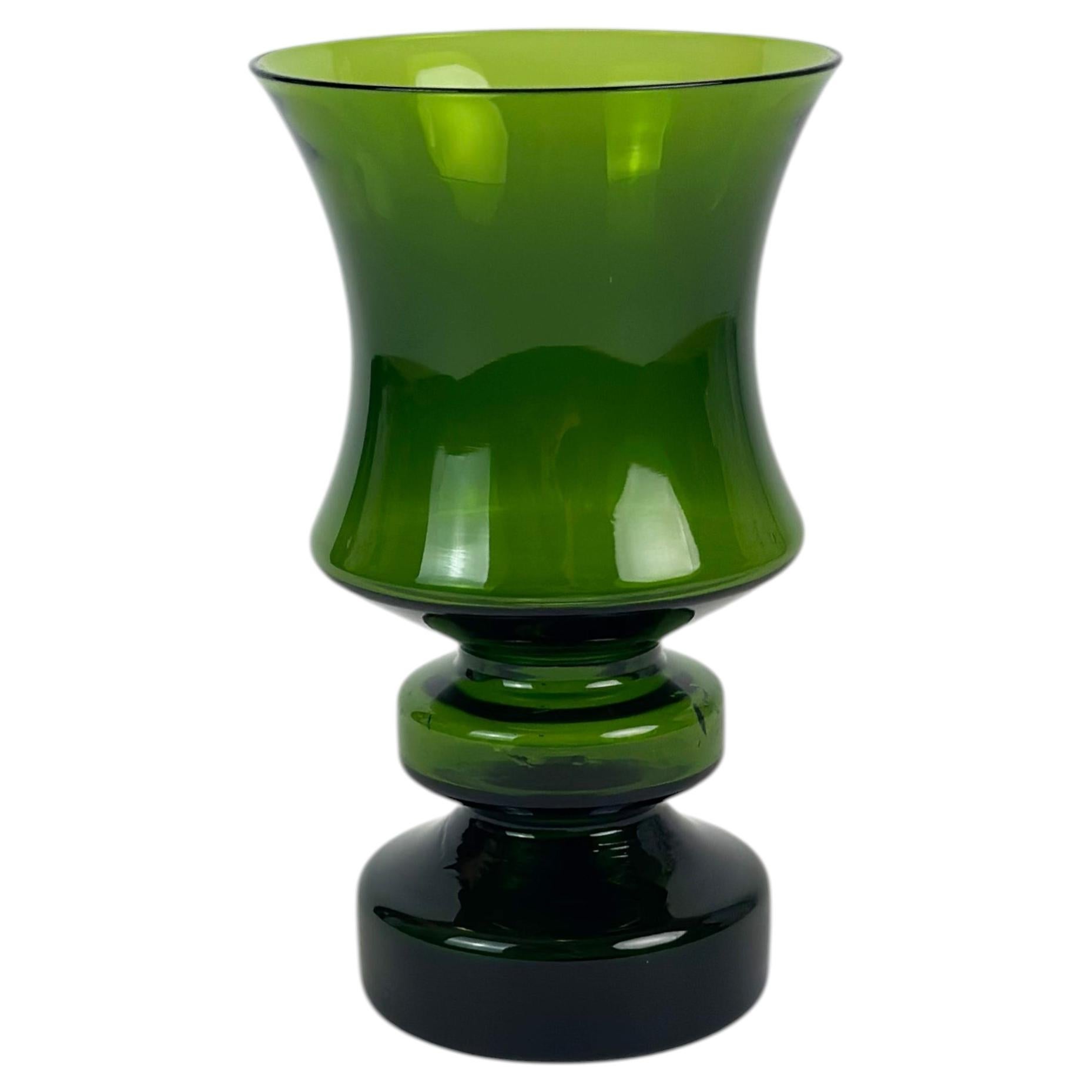
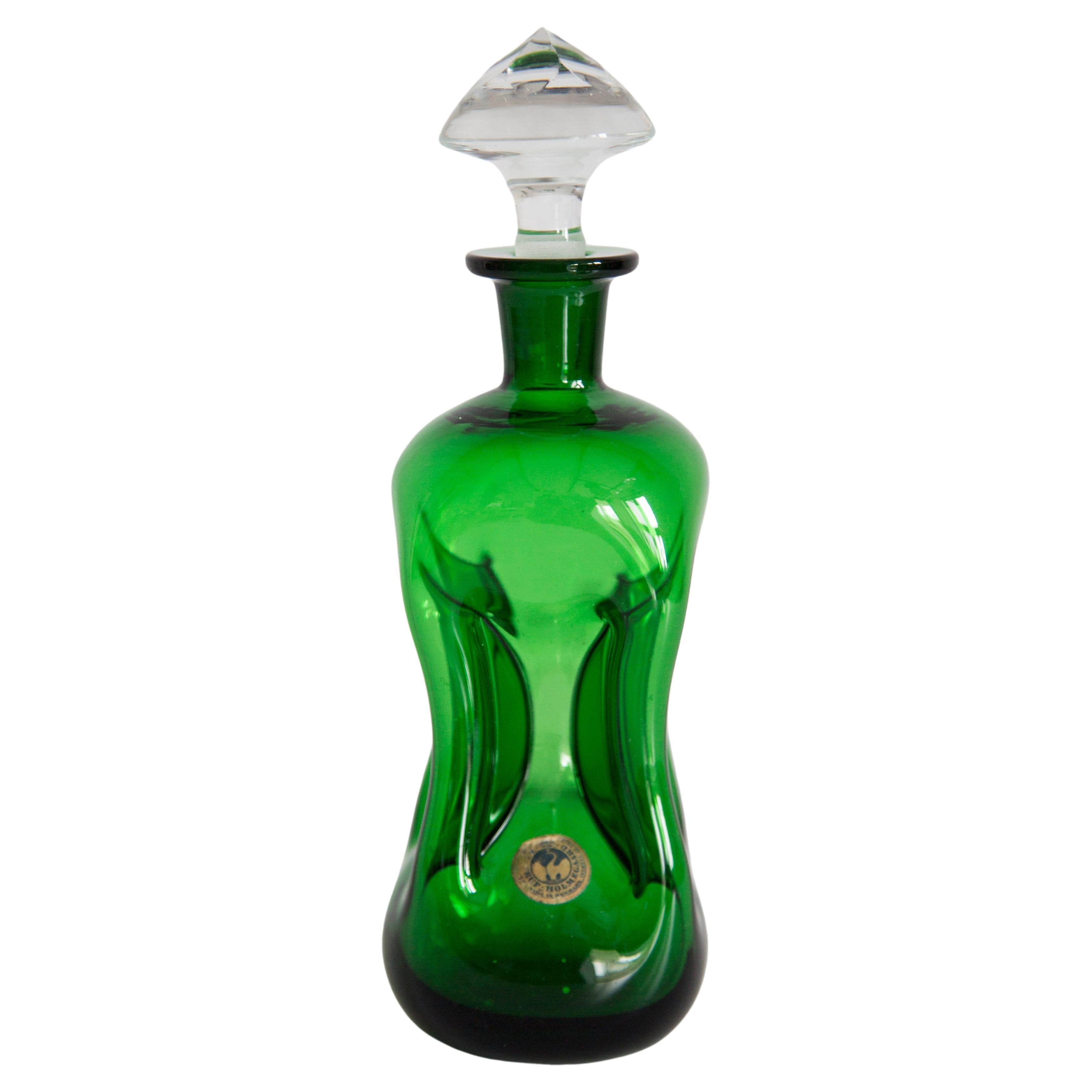
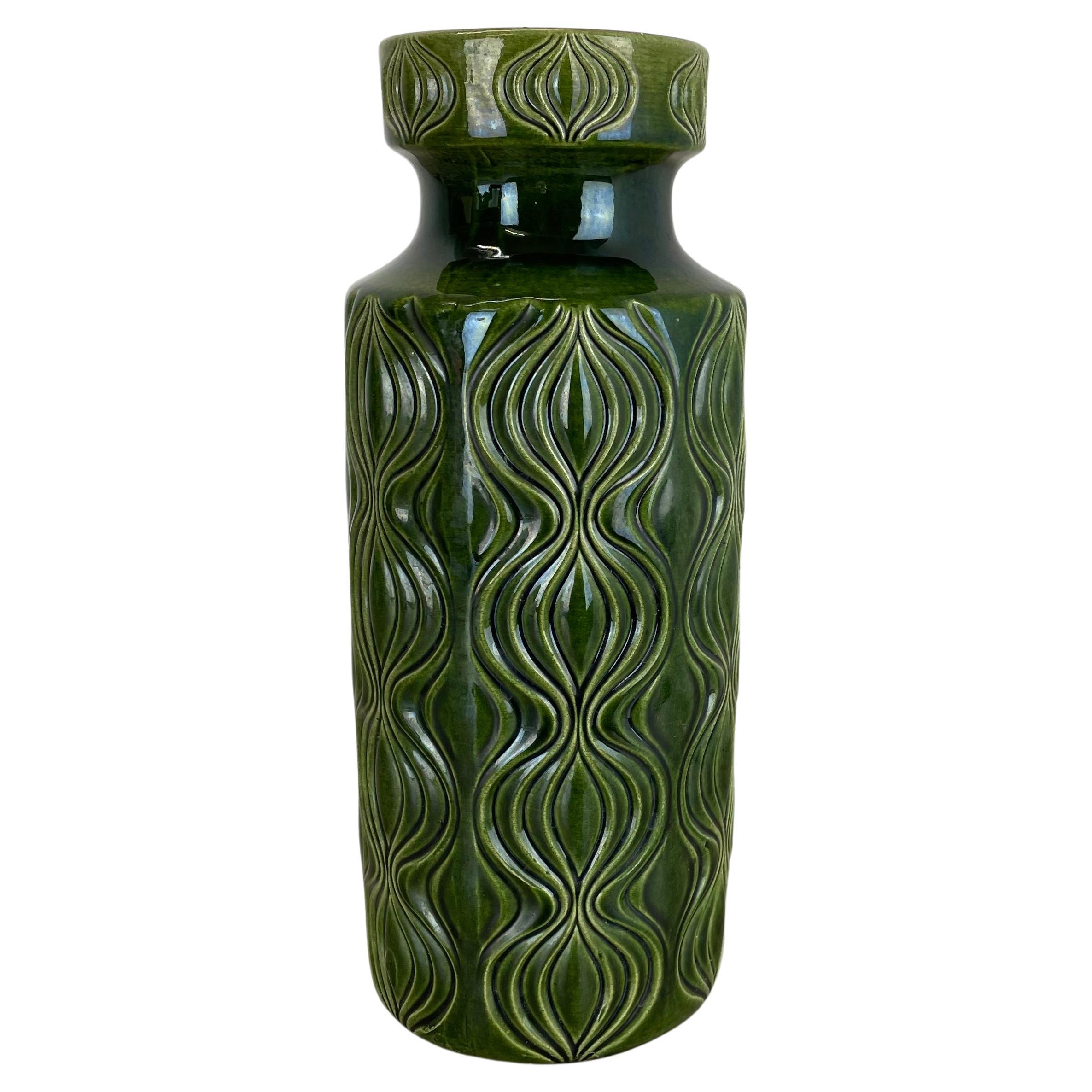
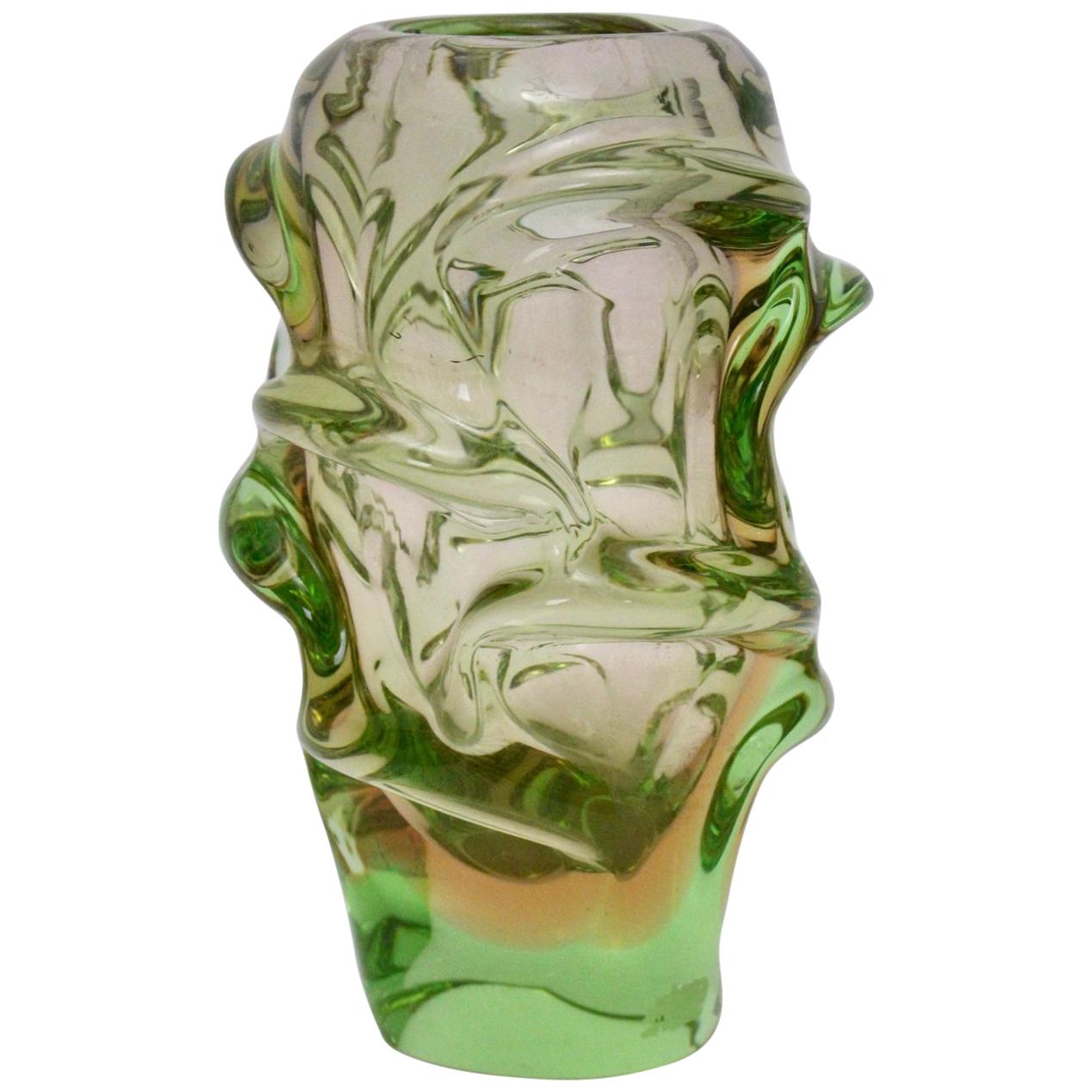
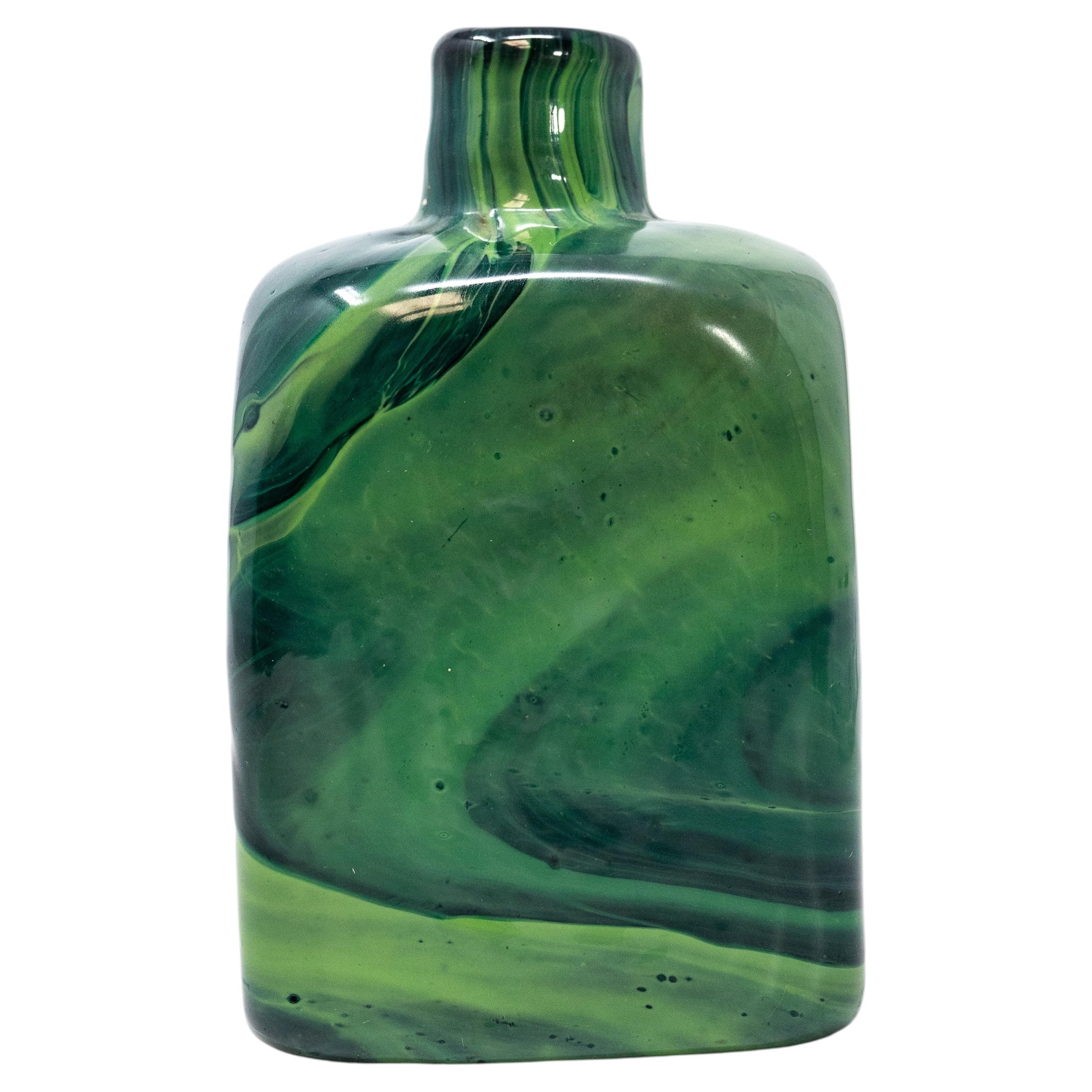
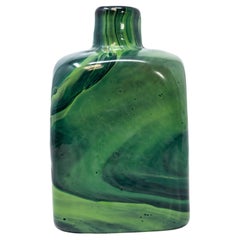
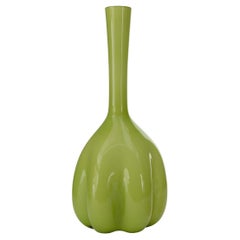
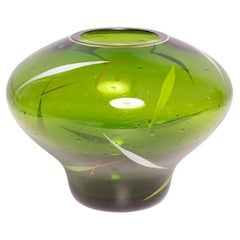
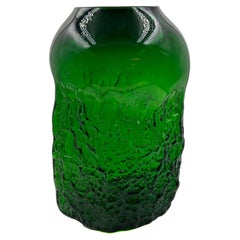
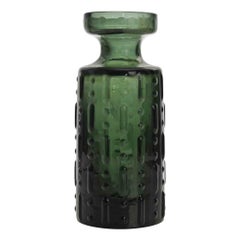
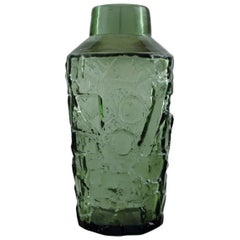
Sculptural Scandinavian art glass vase with a fitted lid, presented in a luminous moss-green tone and finished with a distinctive crackle-glass surface. Slightly taller and more vertically proportioned than its companion piece, this vase has a compact architectural silhouette composed of a rounded cylindrical body, softly defined shoulders and a domed lid. The matching lid completes the form and creates a unified sculptural presence.
The green glass is enriched by an organic network of fine crackled lines that travels across the entire surface. This effect is incorporated into the glass itself rather than applied as a painted decoration, giving the piece remarkable depth and visual movement. The color shifts subtly between olive green, moss, chartreuse and translucent forest green depending on the light, while the irregular fissures catch the illumination and create a delicate mineral-like effect.
The vase is consistent with the tradition of Scandinavian art glass, particularly the expressive glassmaking developed by Swedish factories and workshops during the twentieth century. Its restrained silhouette, emphasis on color, natural surface texture and lack of unnecessary ornament reflect the essential principles of Nordic design. The piece recalls the material sensibility associated with Swedish glass houses such as Kosta Boda and Pukeberg, although it is not attributed to a specific factory or designer because no visible signature or label is present.
The crackle-glass technique is created by exposing hot glass to sudden cooling, producing a controlled network of fissures within the surface. The glass is then reheated and finished through blowing and shaping, allowing the crackled structure to remain embedded in the vessel. The resulting texture appears spontaneous and organic, but requires careful control of heat, timing and movement from the glassmaker. In Swedish glassmaking, this technique became an especially effective way to emphasize the tension between fragility and strength, transforming the surface of the vessel into its principal decorative element.
The form occupies an elegant position between a functional vase and a decorative sculpture. The fitted lid emphasizes the architectural quality of the design, while the softly rounded body gives the piece a sense of balance and quiet monumentality. The slightly greater height creates a more vertical presence than the purple example, allowing the green vase to stand beautifully on its own while remaining visually related to its companion.
Within a collection of Scandinavian glass, this piece contributes a fresh and sophisticated chromatic element. Green is particularly important in Nordic decorative glass because it evokes moss, forest vegetation, mineral tones and the natural landscape that has long influenced Scandinavian design. Here, the color is not flat or uniform; it is layered, translucent and animated by the crackled structure beneath the surface.
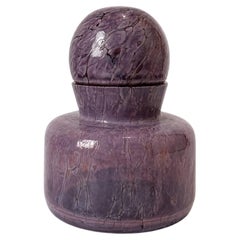
The vase can be displayed on a console, bookshelf, side table or cabinet, either as an individual sculptural accent or alongside the matching purple version. Together, the two pieces would create a refined study in color, texture and proportion, while remaining connected through their shared covered form and crackle-glass technique. The green example also works beautifully with clear glass, smoky glass, amethyst vessels and other works of Mid-Century Modern design.
The continuing importance of Scandinavian glass lies in its ability to unite craftsmanship, simplicity and material expression. This vase embodies that approach through a form that is clean and functional in conception, yet highly sculptural in its presence. Its visual interest comes from the relationship between the controlled geometry of the vessel and the unpredictable organic pattern of the crackled glass.
A refined Scandinavian lidded vase whose luminous green color, slightly taller proportions and distinctive crackled surface make it an exceptional addition to collections of Nordic design, Swedish art glass and Mid-Century Modern decorative objects.
9:07 AM
Ask for approval