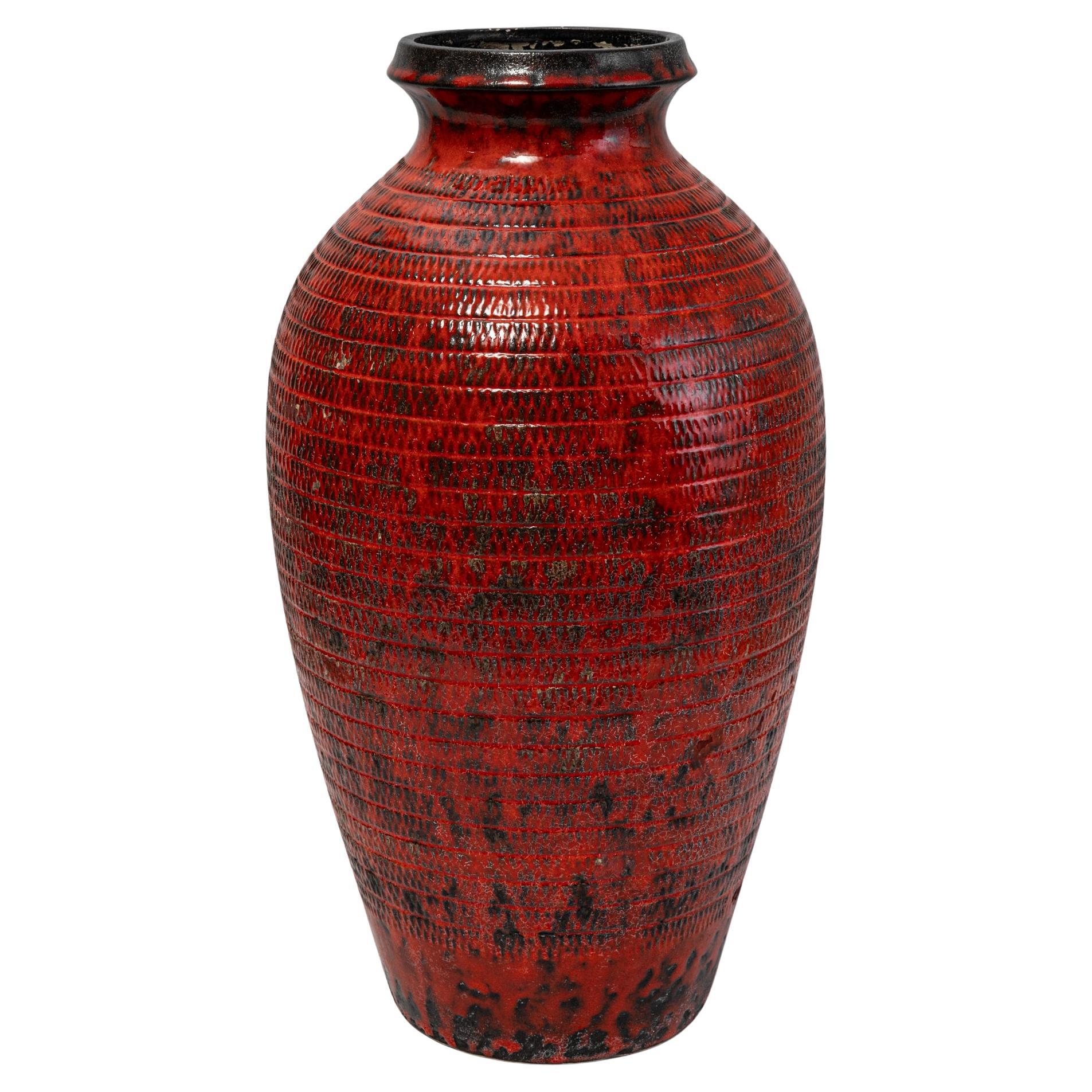
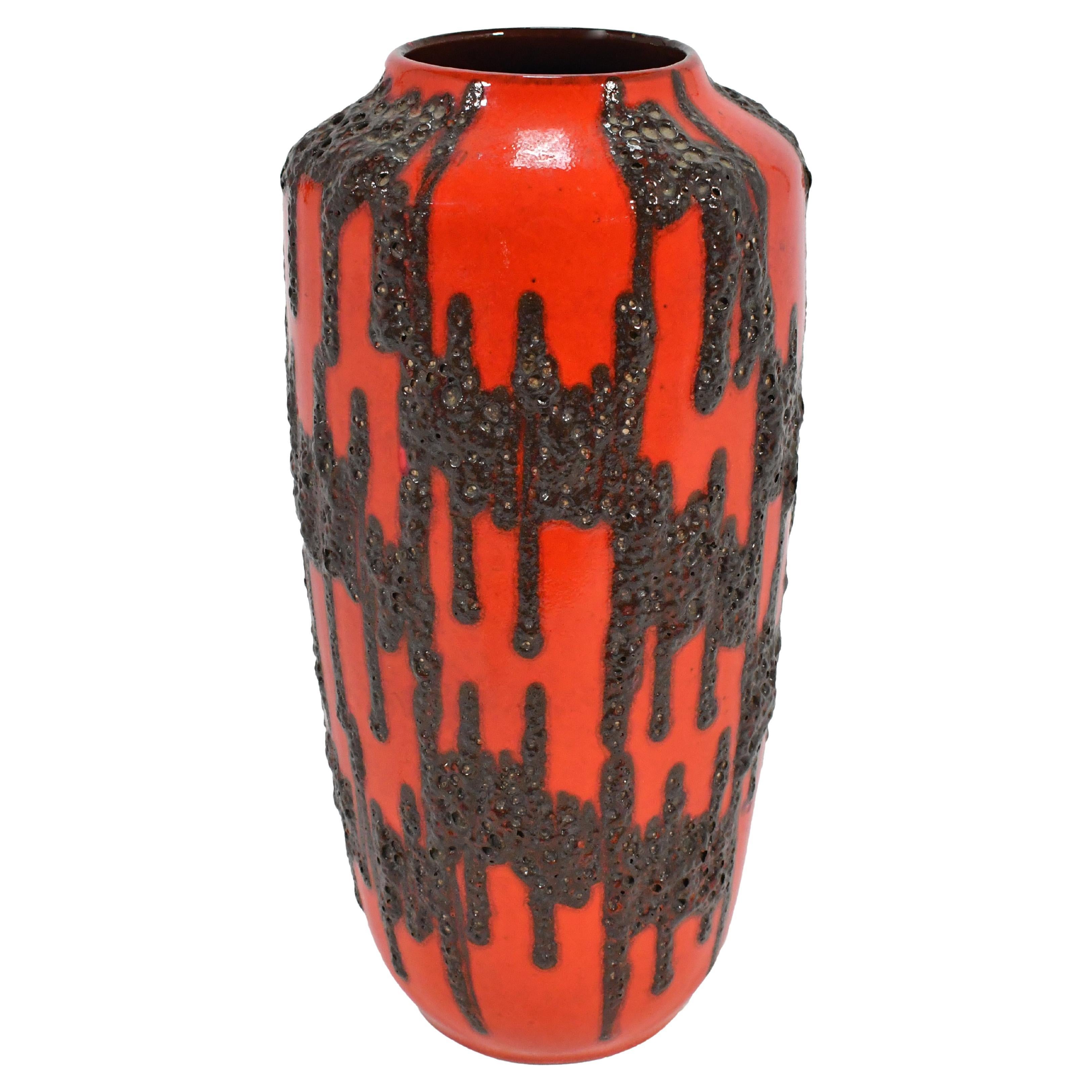
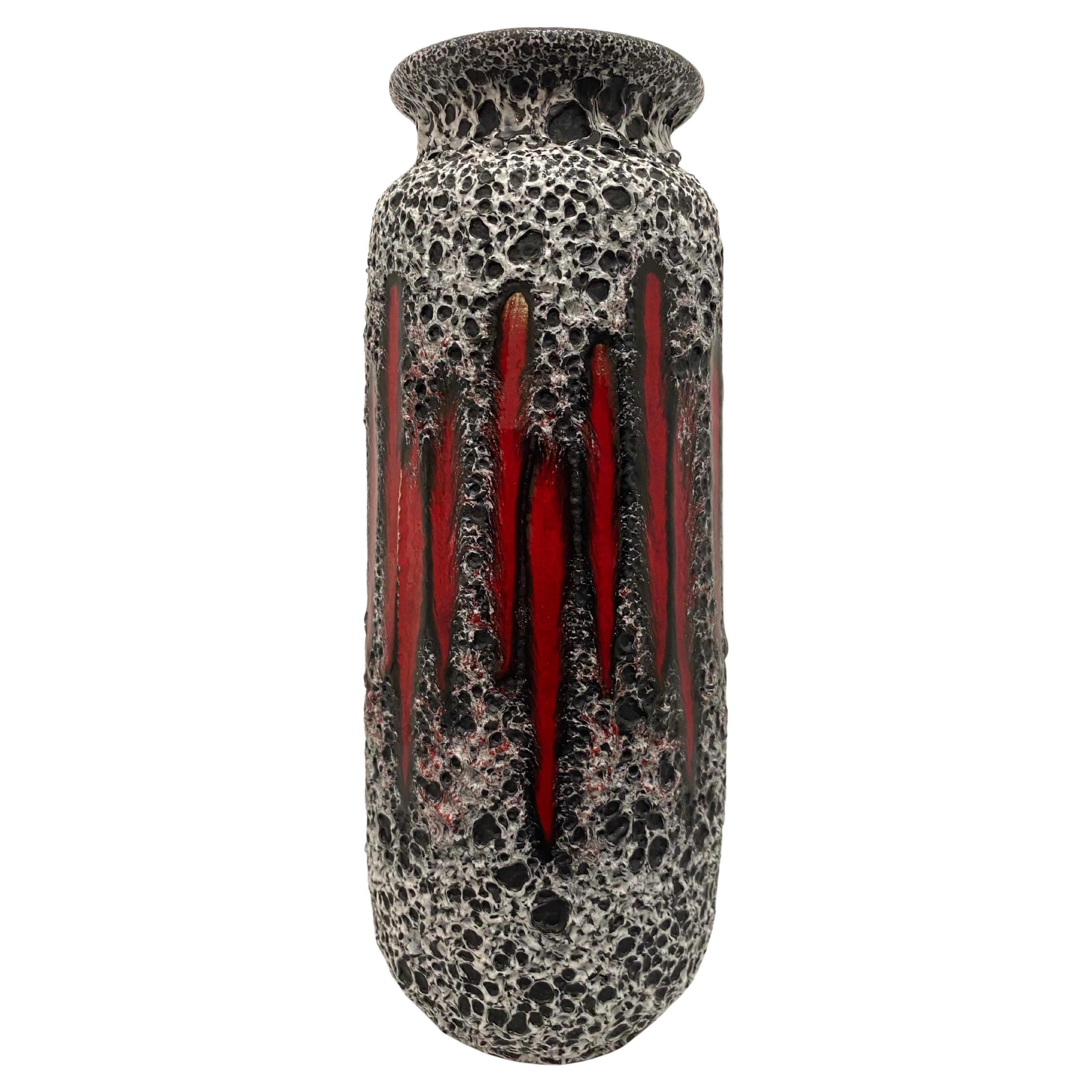
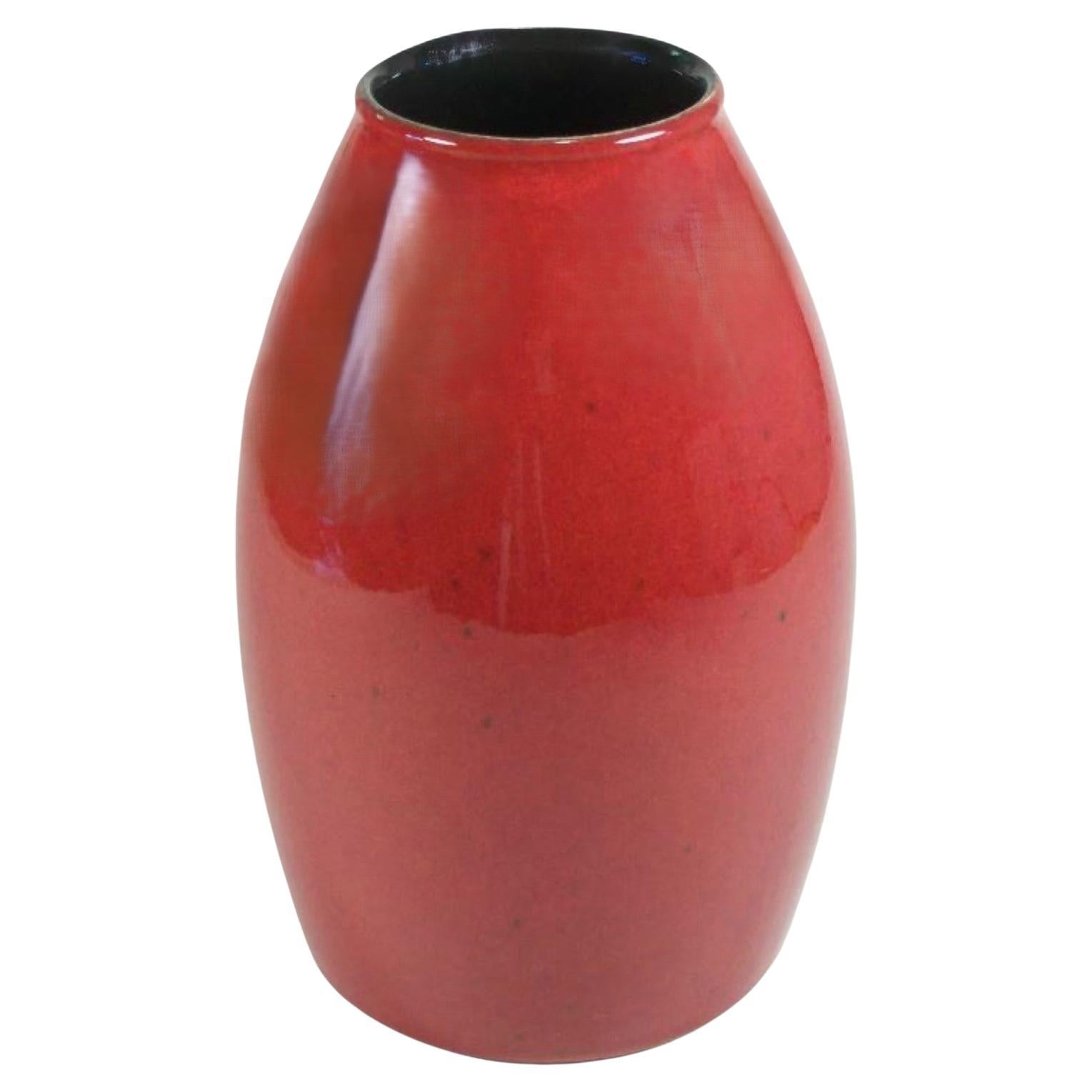
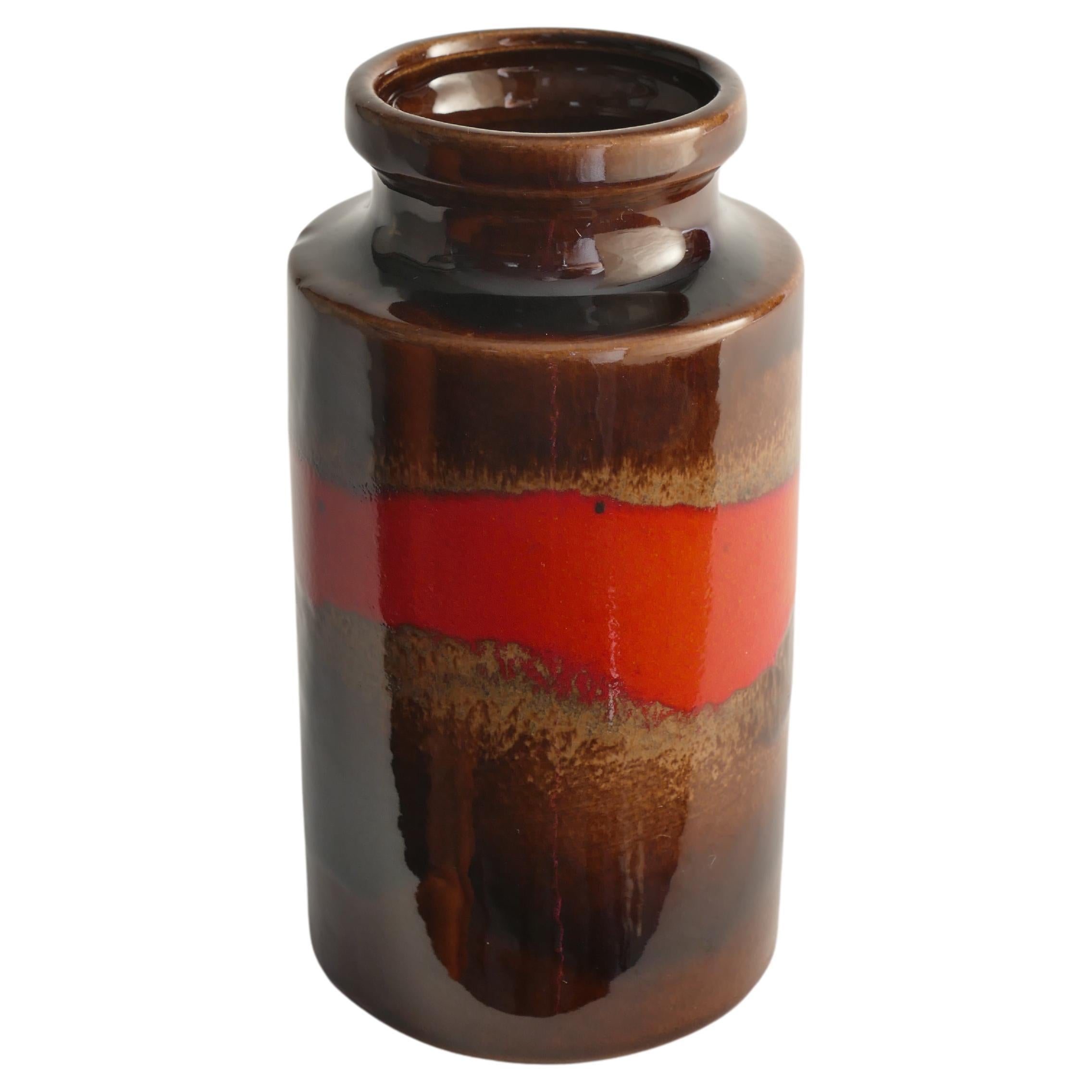
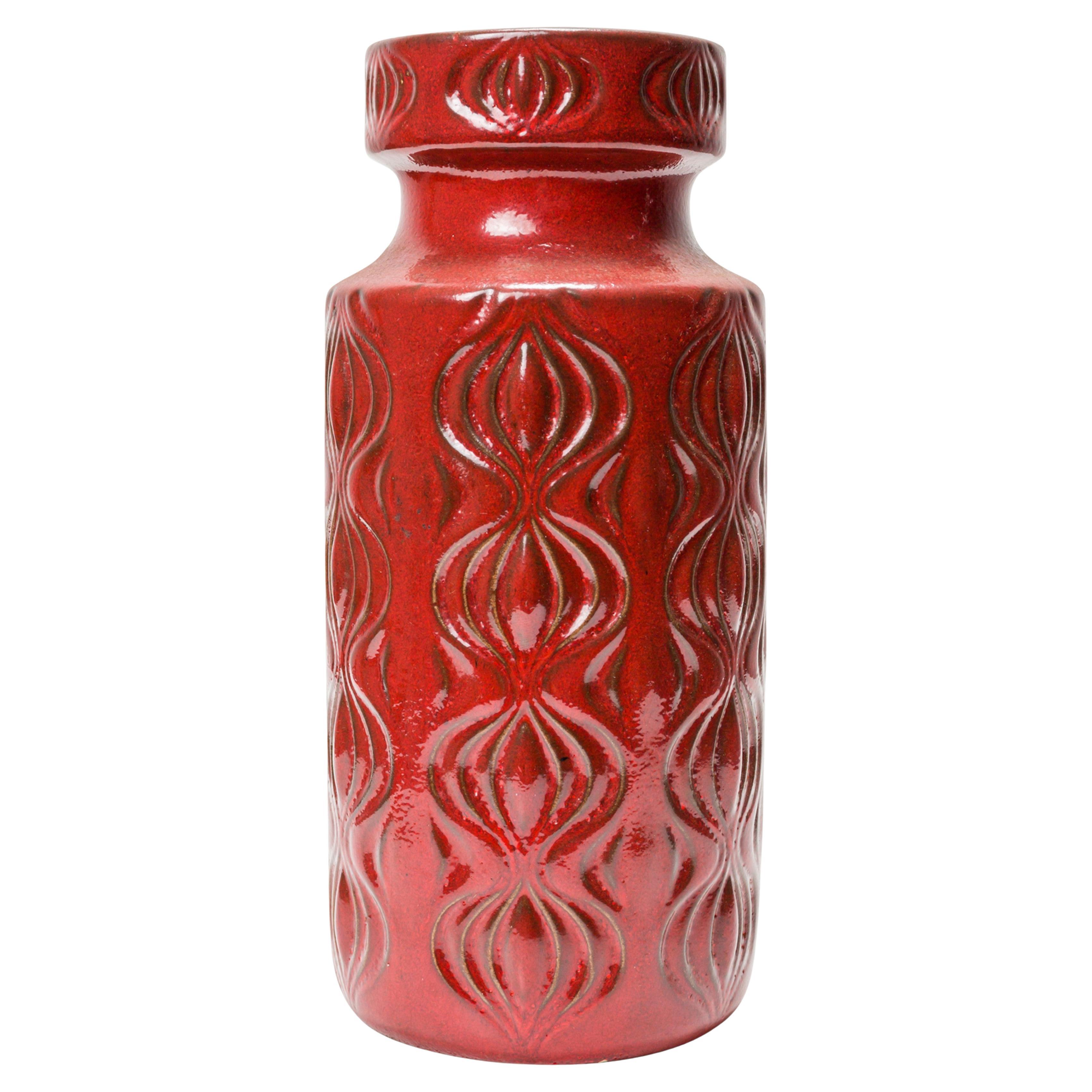
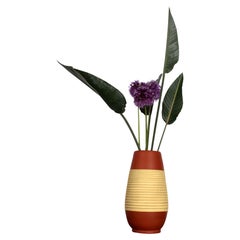
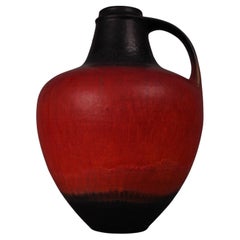
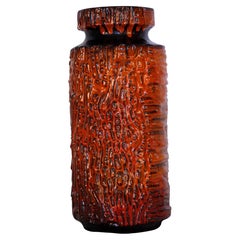
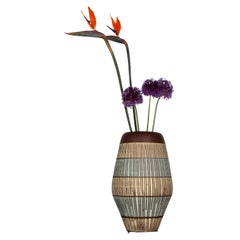
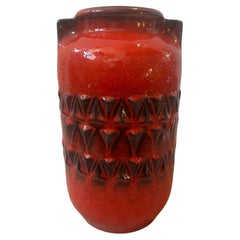
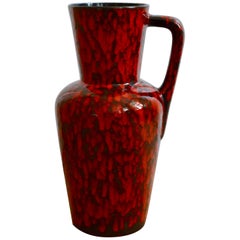
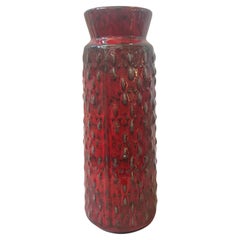
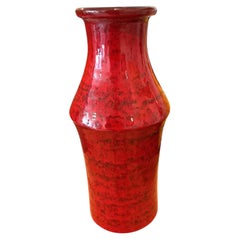
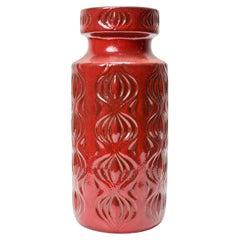
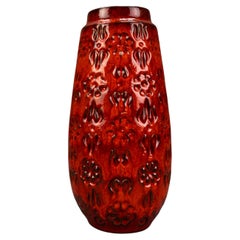
a striking RED FAT LAVA FLOOR VASE no. 284-47
by SCHEURICH
Scheurich originated from a joint venture initiated in 1928 by Alois Scheurich and his cousin Fridolin Greulich in the small town of Schneeberg, situated near the Czech border in Saxony. The venture involved the wholesaling of glass, porcelain, and ceramics. In 1938, the business was relocated to the market community of Kleinheubach in the northeast corner of Bavaria. Ten years later, the partners initiated the production of household ceramics, which were sold under the name Scheurich & Greulich. In 1954, the partnership was dissolved, and Alois proceeded to establish Scheurich GmbH & Co. KG proceeded to continue production independently.
In 1955, the celebrated designer Heinz Siery was recruited by Scheurich as the company's lead form designer. In addition to designing an extensive range of shapes, he played a pivotal role in developing a successful overarching production strategy. This strategy involved producing a wide array of simple forms that could be produced cheaply and decorated in a variety of glazes. This resulted in the creation of a diverse and economically adaptable range of pieces. This approach proved to be entirely successful, resulting in Scheurich's ascendency in the market by the late 1960s. The company's strategy of maintaining low prices in conjunction with an extensive range of appealing designs resulted in significant sales, with millions of units sold annually. The designs were adapted twice a year to align with changing consumer preferences.
Scheurich's product range included vases and flowerpots, in addition to ashtrays, piggy banks, candle stands, beer mugs, buffet clocks, wall reliefs and Christmas tree holders. It should be noted that, with a few exceptions, Scheurich did not produce kitchen clocks or lamp bases.
The most commercially successful vase models were produced in a multitude of glaze versions, collectively known as 'decors'. One such model was the Heinz Siery-designed vase, model 271-22, which was produced in 1959 and remained popular for decades, with a variety of changing glaze options. Another important designer of shapes was A. Seidel.
Notable motifs include Montignac (1972-1973; hand-painted), Amsterdam (onion motif/Zwiebeldekor; 1974-1975), Fabiola (dark brown-red overflow glaze), and Jura (fossil/snail motif).
Some designs were created specifically for export, and the bottom of these vases is inscribed with the designation "foreign," rather than "West Germany." Nevertheless, vases bearing the designation "foreign" also found their way onto the domestic market. These vases were fired at 1000 degrees Celsius and produced through the use of molds. The most extreme glazes and patterns were retained in West Germany, while red and orange vases demonstrated the greatest commercial appeal. By the late 1980s, shapes and color schemes had become more straightforward, and the work was no longer as attractive to collectors.
Manufacturer SCHEURICH
Design Period 1968 to 1978
Production Period 1968 to 1978
Country of Manufacture Germany
H / height: 47.8 cm ~ Gew. / weight: 4000 grs
DM max / diameter max : 23 cm ~ DM oben / diameter inner rim: 11.3 cm
MARKED: marked 284-47
:-: in very good condition :-: