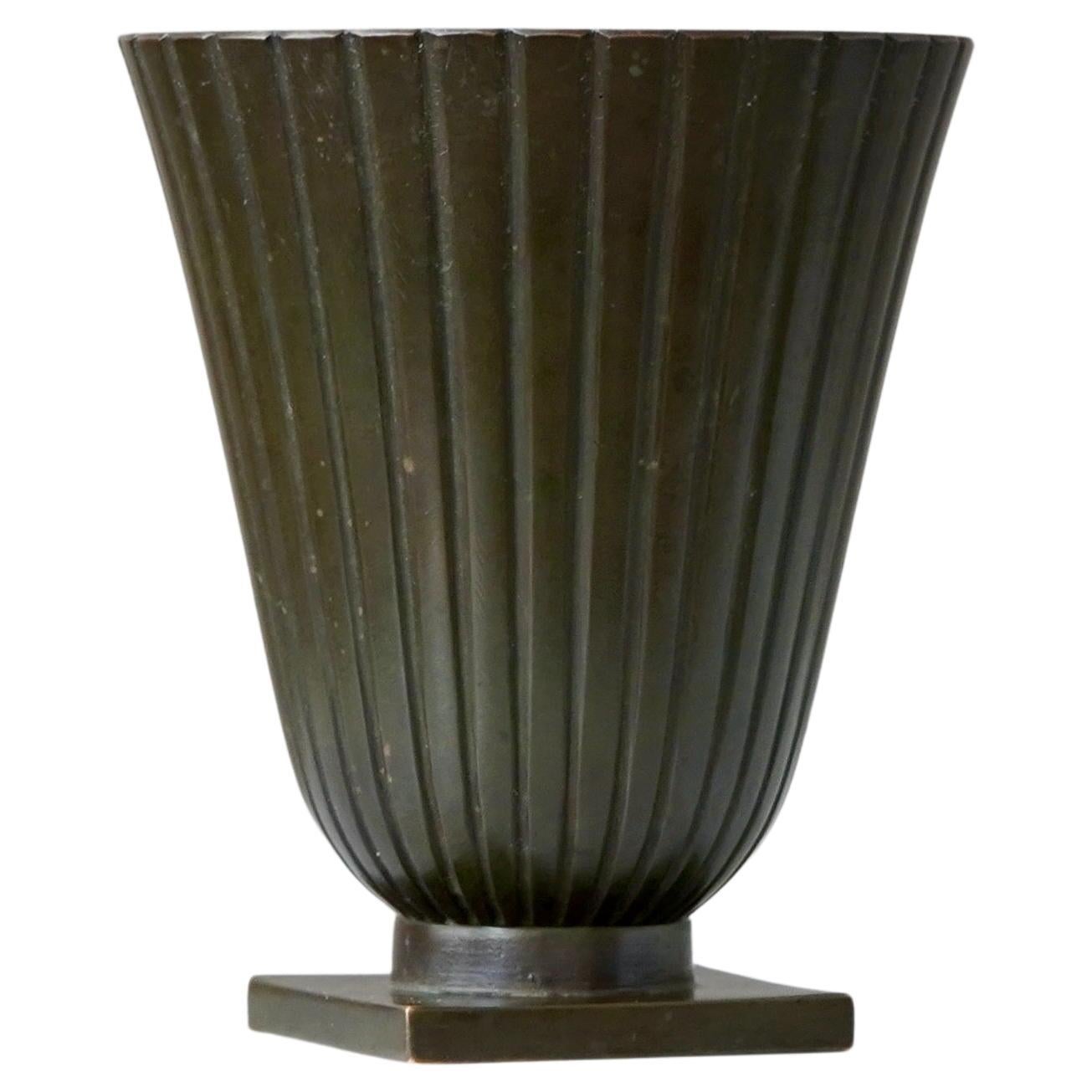
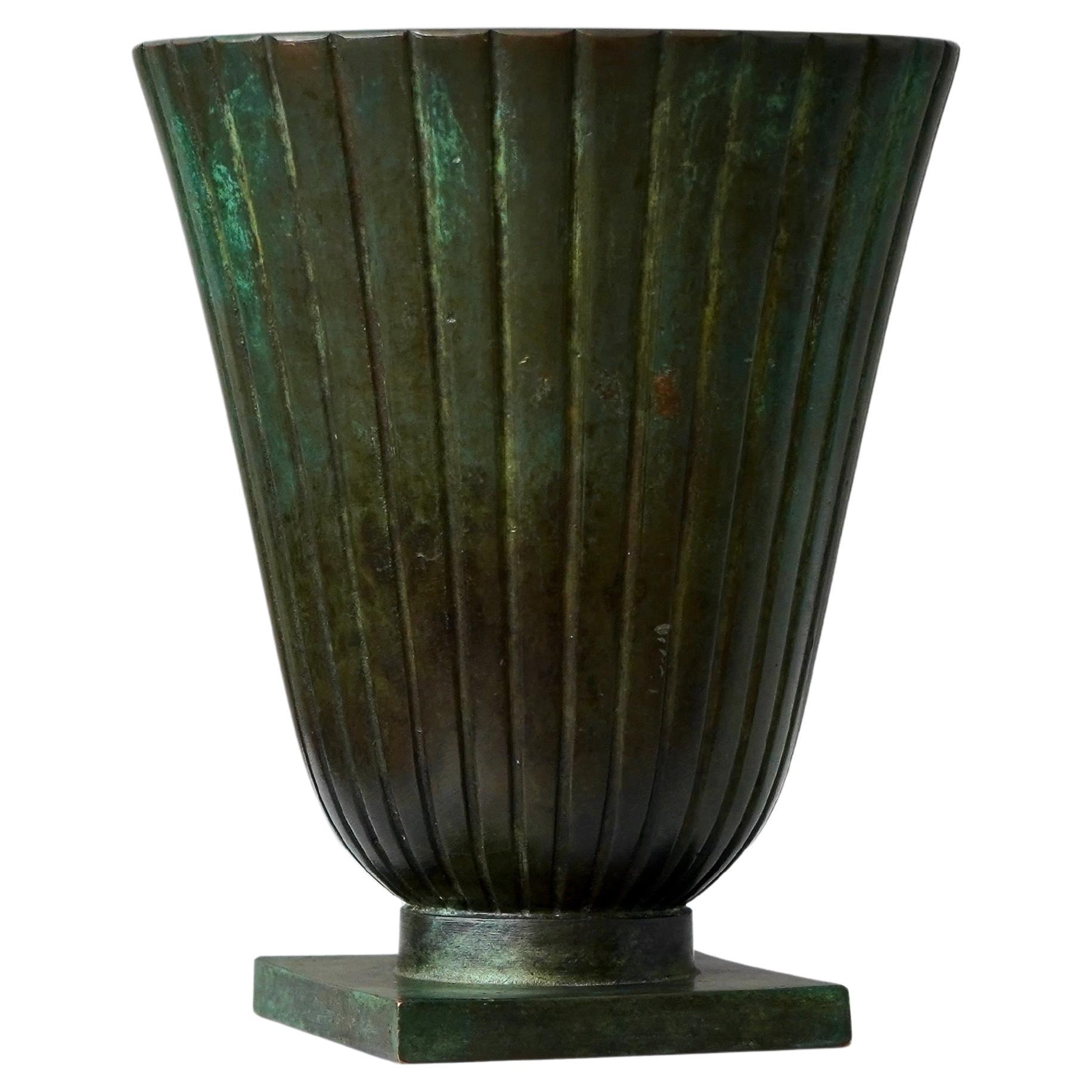
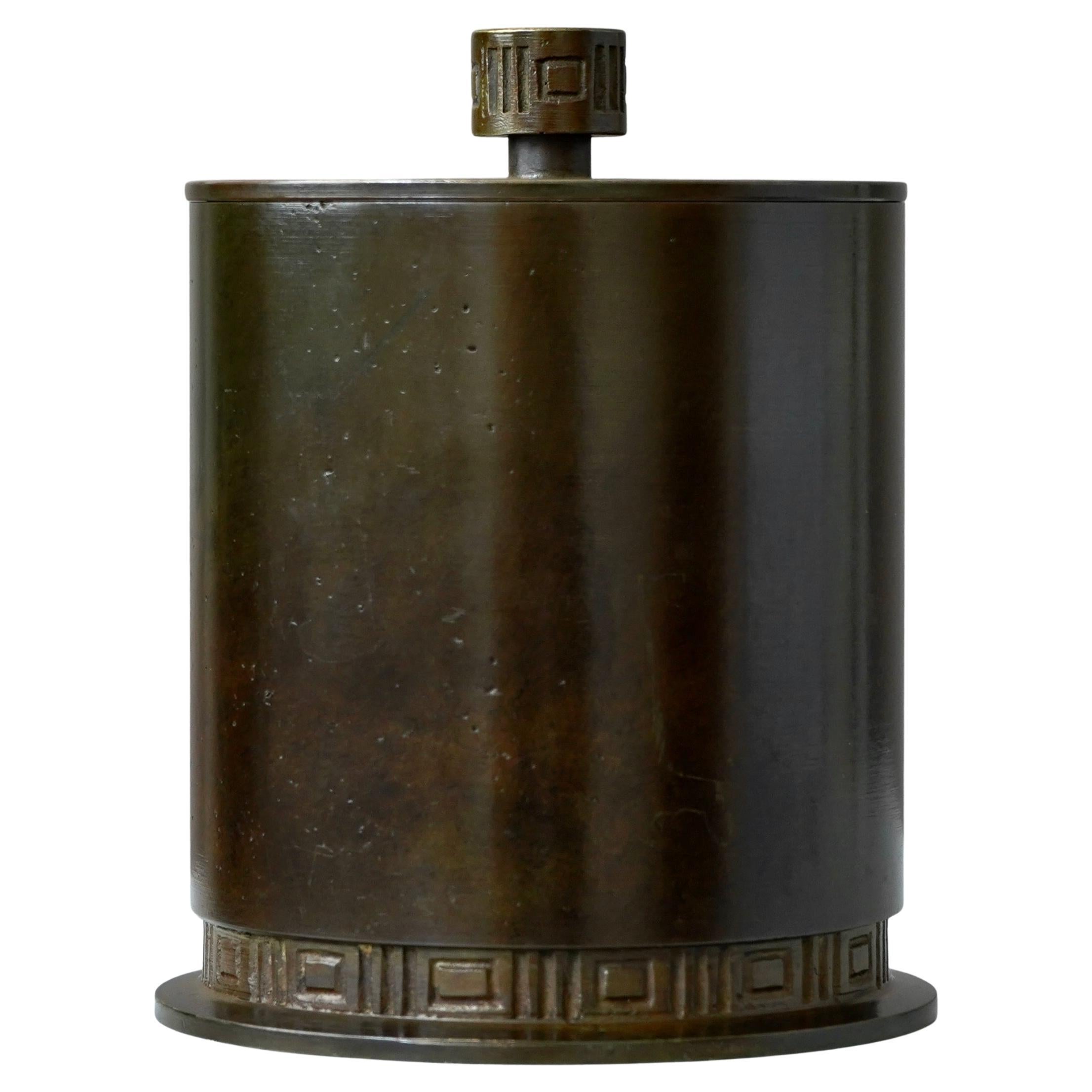
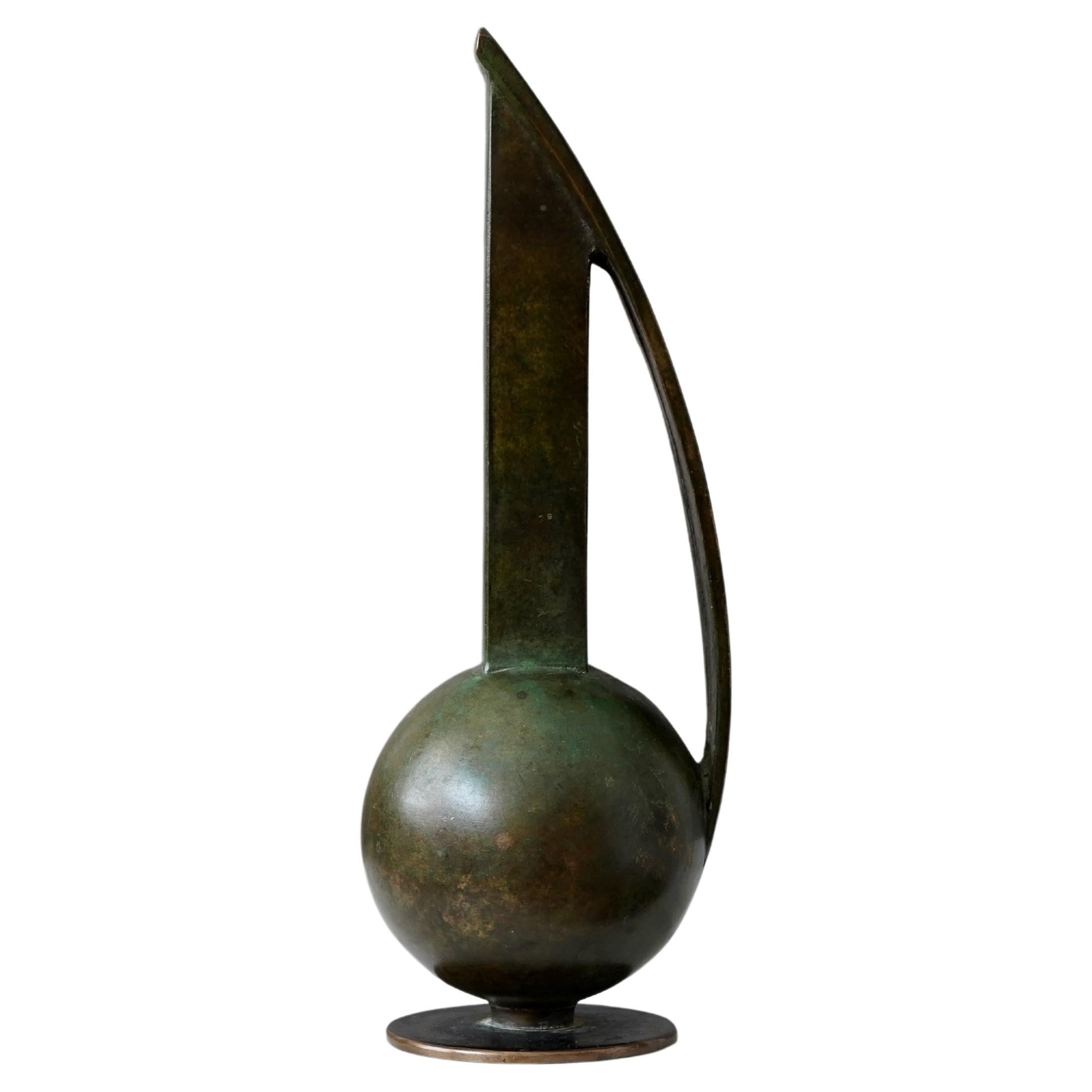
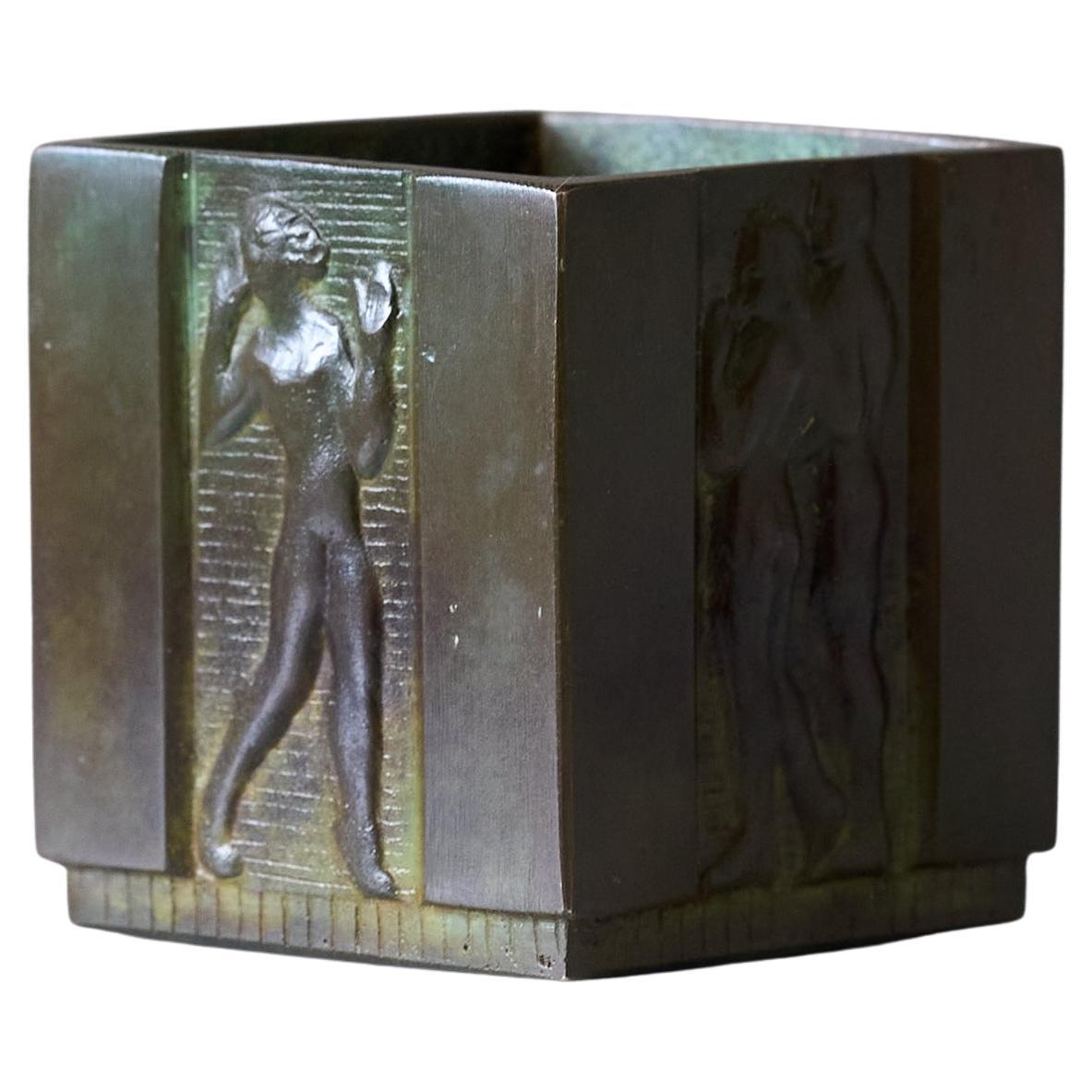
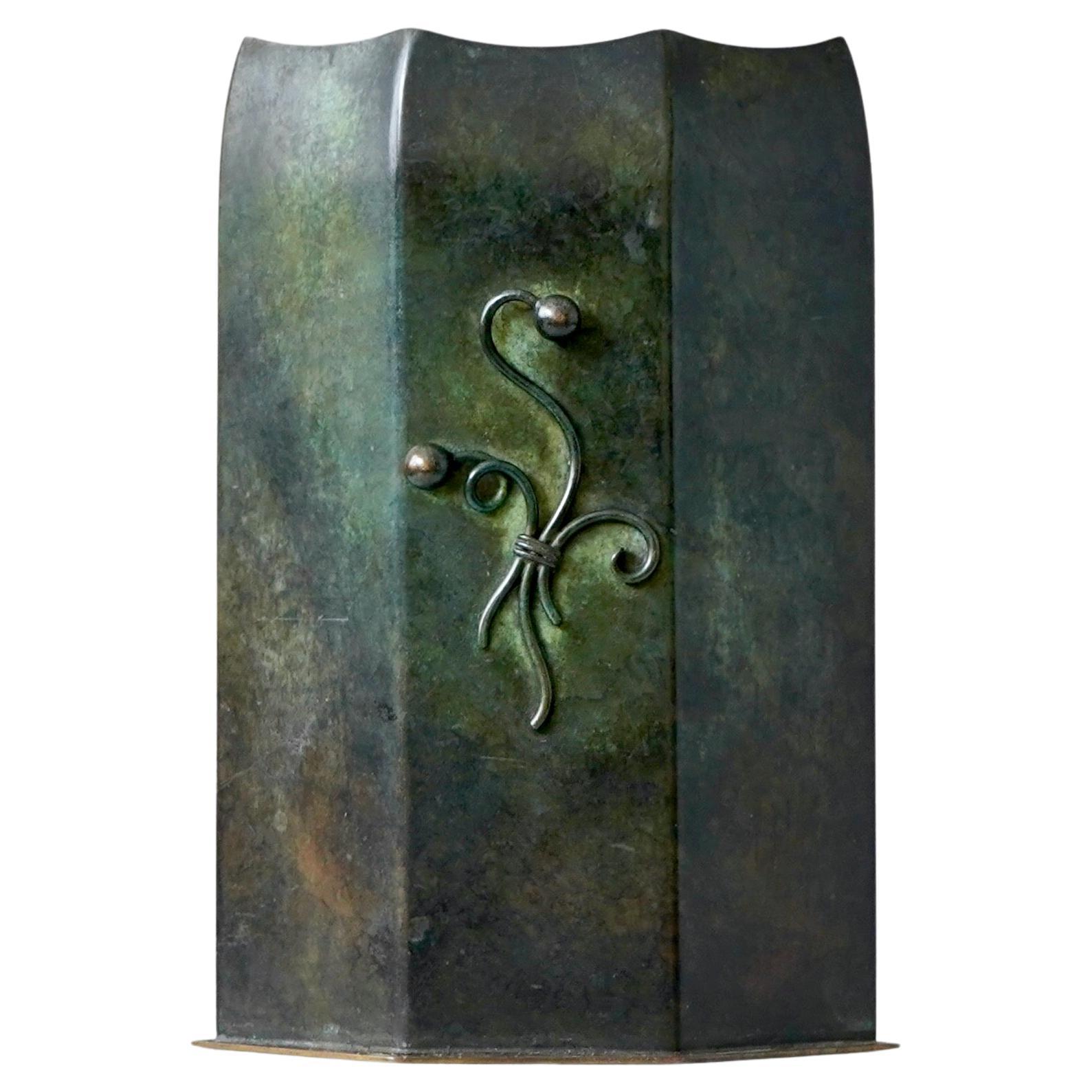
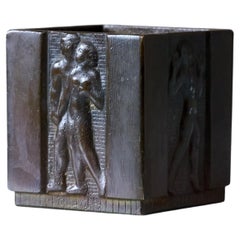
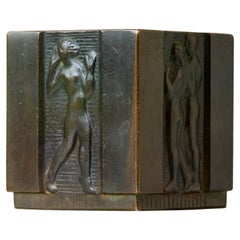
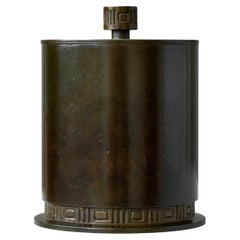
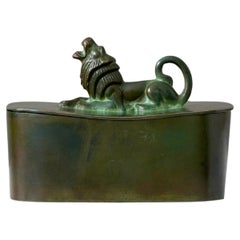
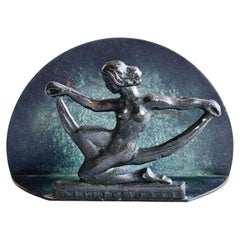
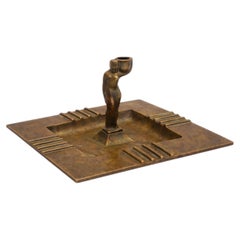
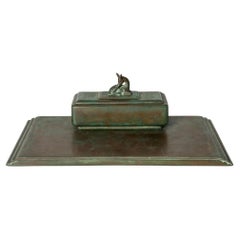
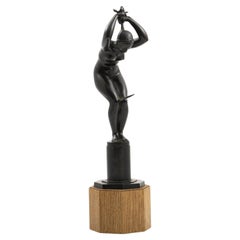
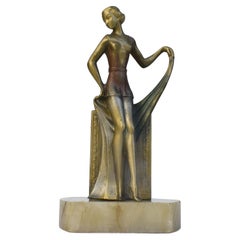
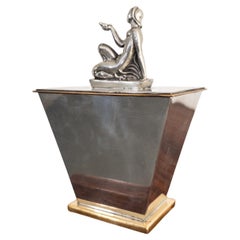
A beautiful small Art Deco / Swedish Grace bronze sculpture or match box holder with amazing patina.
Made by GAB Guldsmedsaktiebolaget, Sweden, 1930s.
Great condition, only some light scratches and wear to the patination.
Guldsmedsaktiebolaget (GAB) was founded in Stockholm in 1867 and soon became one of Sweden’s most important producers of decorative metalwork. From the beginning, the company combined industrial methods with artistic ambition, setting out to make finely crafted objects available to a wider audience. Its production ranged across materials — silver, nysilver (electroplated silver), pewter, and bronze - and the factory quickly became synonymous with quality Swedish craftsmanship.
In the early 20th century, GAB established itself as a leader in Swedish decorative arts. Under the artistic direction of Jacob Ängman from 1907 to 1942, the company embraced new styles and experimented with forms that bridged tradition and modernity. During this period, GAB produced a wide array of decorative objects: vases, bowls, trays, candlesticks, and ornamental vessels. Bronze, in particular, played an important role. Sculptural bronze objects, often with a restrained Nordic character, reflected the era’s search for timeless beauty rooted in craft tradition.
The 1920s and 1930s were especially significant, as Swedish design moved toward functionalism while retaining elements of classical elegance. GAB’s decorative pieces from this time often combined clean lines with carefully considered surface decoration, resulting in objects that were at once modern and richly tactile. Artists and designers such as Folke Arström, Sigvard Bernadotte, and Just Andersen contributed to the company, ensuring a diversity of styles that ranged from simple modernist bowls to more sculptural bronze works.
In the 1940s and 1950s, GAB continued to evolve, producing decorative objects that suited both private homes and public interiors. Bronze remained a material of choice for candlesticks, reliefs, and decorative vessels, often with patinated finishes that gave them warmth and depth. At the same time, silver and pewter objects reflected the mid-century taste for understated luxury. The company’s ability to blend industrial production with high artistic standards allowed GAB to remain at the forefront of Swedish decorative arts.
Though later decades saw structural changes and eventual decline, GAB’s legacy endures. Its decorative objects in bronze, silver, and pewter are today highly sought after by collectors, representing an era when Swedish metalwork stood proudly on the international stage. More than functional, these objects embodied a philosophy of beauty in everyday life - a testament to GAB’s role in shaping the modern Scandinavian aesthetic.