Want more images or videos?
Request additional images or videos from the seller
1 of 8

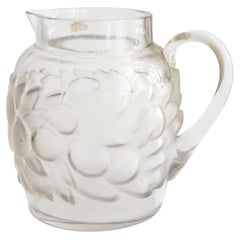
René Lalique for Cusenier, Carafe, France, 1930s

$1,487.24
£1,090.60
€1,250VAT Included
CA$2,061.21
A$2,070.76
CHF 1,194.43
MX$25,200.07
NOK 13,874.98
SEK 14,074.67
DKK 9,531.37

About the Item

Superb René Lalique Art Deco carafe created for Cusener. Handle in bronze scale iron oxidised decorations of foliage and berries. Signed "René Lalique pour Cusenier". Excellent condition. Some signs of use and slight deposits. Dimensions in cm ( H x L x l ) : 20.5 x 13 x 11.2 Secure shipping. Born in 1860 in Aÿ in Champagne, René Lalique was one of the greatest artists of his time, whether as a jeweler or master glassmaker. He marked the Art Nouveau and Art Deco periods with his unique style. Lalique is recognized as one of the most important jewelry designers and glass maker of the French Art Nouveau period, creating innovative pieces for Samuel Bing's new store in Paris, Maison de l'Art Nouveau. He began exhibiting his work under his own name as early as 1894, notably at the Salon des artistes français, 1897 and 1898. The great glassmaker Émile Gallé discovered him at the first one and praised him highly. His stand at the 1900 Universal Exhibition in Paris was a great success. While keeping sources of inspiration from the Art Nouveau woman, fauna and flora - including the peacock, various insects and sometimes a fantastic bestiary - he innovated by using materials barely used for jewelry at the time: glass, enamel, leather, horn, mother of pearl, often preferring semi-precious stones to precious stones. The introduction of volume in jewelry is facilitated by his knowledge in modeling. He designed his models, having them made by a team of chisellers, sculptors and enamellers that he carefully recruited. Many women from the nobility, the bourgeoisie and the entertainment world began to wear his extraordinary jewelry, such as the Marquise Arconati-Visconti, the Countess of Béarn, Madame Waldeck-Rousseau, and Sarah Bernhardt, for whom he created a stage costume in 1902 for the revival of the play Théodora at the Sarah-Bernhardt Theater. Lalique was the only modern artist whose client and friend Calouste Gulbenkian became. Gulbenkian acquired the famous Pectoral à la libellule (circa 1897-1898), a masterpiece much admired at the 1900 World's Fair, which he lent to the tragedienne Sarah Bernhardt. After the end of the First World War, Lalique's colorful and fantastic jewelry were no longer in fashion. The creator sensed this and decided to convert to the Art Deco style through glassware in 1920. Thus, the neo-classical and geometric Art Deco replaces Art Nouveau. According to Olivier Mauny, former CEO of Lalique, his creations paved the way for an industrialization of art objects, because one of the best ways to include luxury and aesthetics in everyday life is to make everyday objects. He will create many objects such as vases, cups, candlesticks, perfume bottles, radiator caps for the Citroën 5CV (1925), decorations for the restaurant cars of the Côte d'Azur Pullman Express (1929), decorations for the dining room of the first class of the Normandie liner (1936), fountains for the Champs-Élysées. A century later, the name Lalique still makes people dream, evoking the brilliance of jewelry, the magic of light through transparency and crystal.
  • Creator:
    René Lalique (Manufacturer)
  • Dimensions:
    Height: 8.08 in (20.5 cm)Width: 5.12 in (13 cm)Depth: 4.41 in (11.2 cm)
  • Style:
    Art Deco (Of the Period)
  • Materials and Techniques:
  • Period:
  • Date of Manufacture:
    1930
  • Condition:
    Additions or alterations made to the original: Slightly reduced carafe lip by master glass artisan. Wear consistent with age and use. Superb René Lalique Art Deco carafe created for Cusener. Handle in bronze scale iron oxidised decorations of foliage and berries. Signed "René Lalique pour Cusenier". Excellent condition. Some signs of use and slight deposits. Dimensions in cm ( H.
  • Seller Location:
    PARIS, FR
  • Reference Number:
    1stDibs: LU8131233002212

More From This Seller

View All
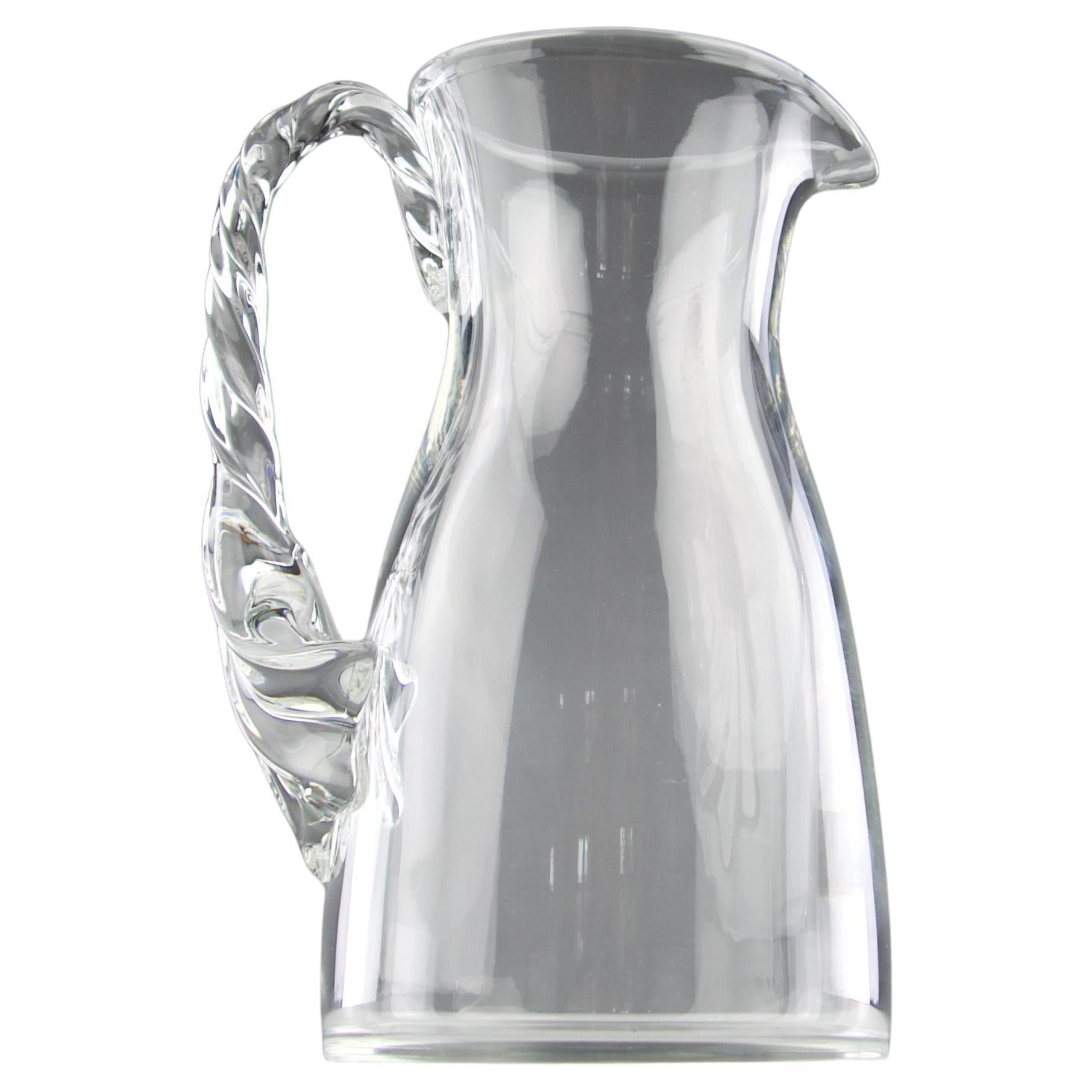
Lalique, "Fréjus" Carafe, 1960s France

Lalique, "Fréjus" Carafe, 1960s France

By Lalique

Located in PARIS, FR

Superb Lalique France "Fréjus" carafe with twisted handle decorations. 2 available. In excellent condition. Signed Lalique France Dimensions in cm (H x W x D): 24 x 16 x 12.9 Se...

Category

Vintage 1960s French Mid-Century Modern Pitchers

Materials

Crystal

Lalique, "St-Hubert" Decanter, France 1980s

Lalique, "St-Hubert" Decanter, France 1980s

By Lalique

Located in PARIS, FR

Beautiful St-Hubert decanter by the Lalique Maison. Stopper with decorations of oak tree leaf. Signed Lalique France. In very good condition. Secure shipping. The Lalique Maison was created by René Lalique who was one of the greatest artists of his time, whether as a jeweler or master glassmaker. He marked the Art Nouveau and Art Deco periods with his unique style. Lalique is recognized as one of the most important jewelry designers and glass maker of the French Art Nouveau period, creating innovative pieces for Samuel Bing's new store in Paris, Maison de l'Art Nouveau. He began exhibiting his work under his own name as early as 1894, notably at the Salon des artistes français, 1897 and 1898. The great glassmaker Émile Gallé discovered him at the first one and praised him highly. His Stand at the 1900 Universal Exhibition in Paris was a great success. While keeping sources of inspiration from the Art Nouveau woman, fauna and flora - including the peacock, various insects and sometimes a fantastic bestiary - he innovated by using materials barely used for jewelry at the time: glass, enamel, leather, Horn, mother of pearl, often preferring semi-precious stones to precious stones. The introduction of volume in jewelry is facilitated by his knowledge in modeling. He designed his models, having them made by a team of chisellers, sculptors and enamellers that he carefully recruited. Many women from the nobility, the bourgeoisie and the entertainment world began to wear his extraordinary jewelry, such as the Marquise Arconati-Visconti, the Countess of Béarn, Madame Waldeck-Rousseau, and Sarah Bernhardt, for whom he created a stage costume in 1902 for the revival of the play Théodora at the Sarah-Bernhardt Theater. Lalique was the only modern artist whose client and friend Calouste Gulbenkian became. Gulbenkian acquired the famous Pectoral à la libellule (circa 1897-1898), a masterpiece much admired at the 1900 World's Fair, which he lent to the tragedienne Sarah Bernhardt. After the end of the First World War, Lalique's colorful and fantastic jewelry were no longer in fashion. The creator sensed this and decided to convert to the Art Deco style through glassware in 1920. Thus, the neo-classical and geometric Art Deco replaces Art Nouveau. According to Olivier Mauny, former CEO of Lalique, his creations paved the way for an industrialization of art objects, because one of the best ways to include luxury and aesthetics in everyday life is to make everyday objects. He will create many objects such as vases, cups, candlesticks, perfume bottles, radiator caps for the Citroën 5CV (1925), decorations for the restaurant cars of the Côte d'Azur Pullman Express (1929), decorations for the dining room of the first class of the Normandie liner...

Category

Vintage 1980s French Art Deco Pitchers
Materials

Crystal

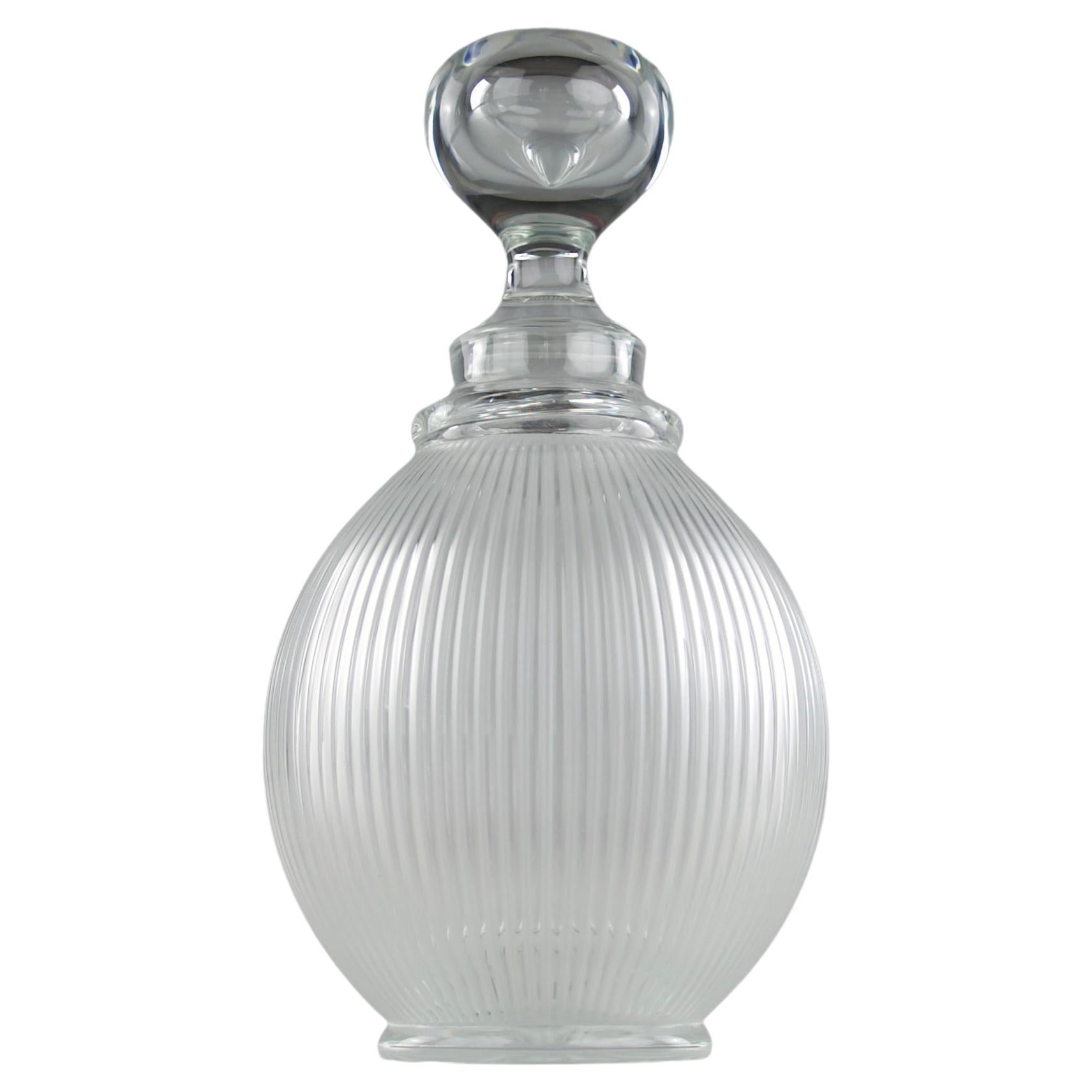
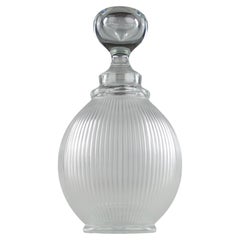
Lalique, "Langeais" Decanter, France 1990s

Lalique, "Langeais" Decanter, France 1990s

By Marc Lalique, Lalique

Located in PARIS, FR

Beautiful Lalique "Langeais" decanter. Dimensions in cm ( H x D ) : 24.5 X 12.5 Secure shipping. This model was created by Marc Lalique in 1976. The Langeais service is inspired b...

Category

1990s French Modern Crystal Serveware

Materials

Crystal

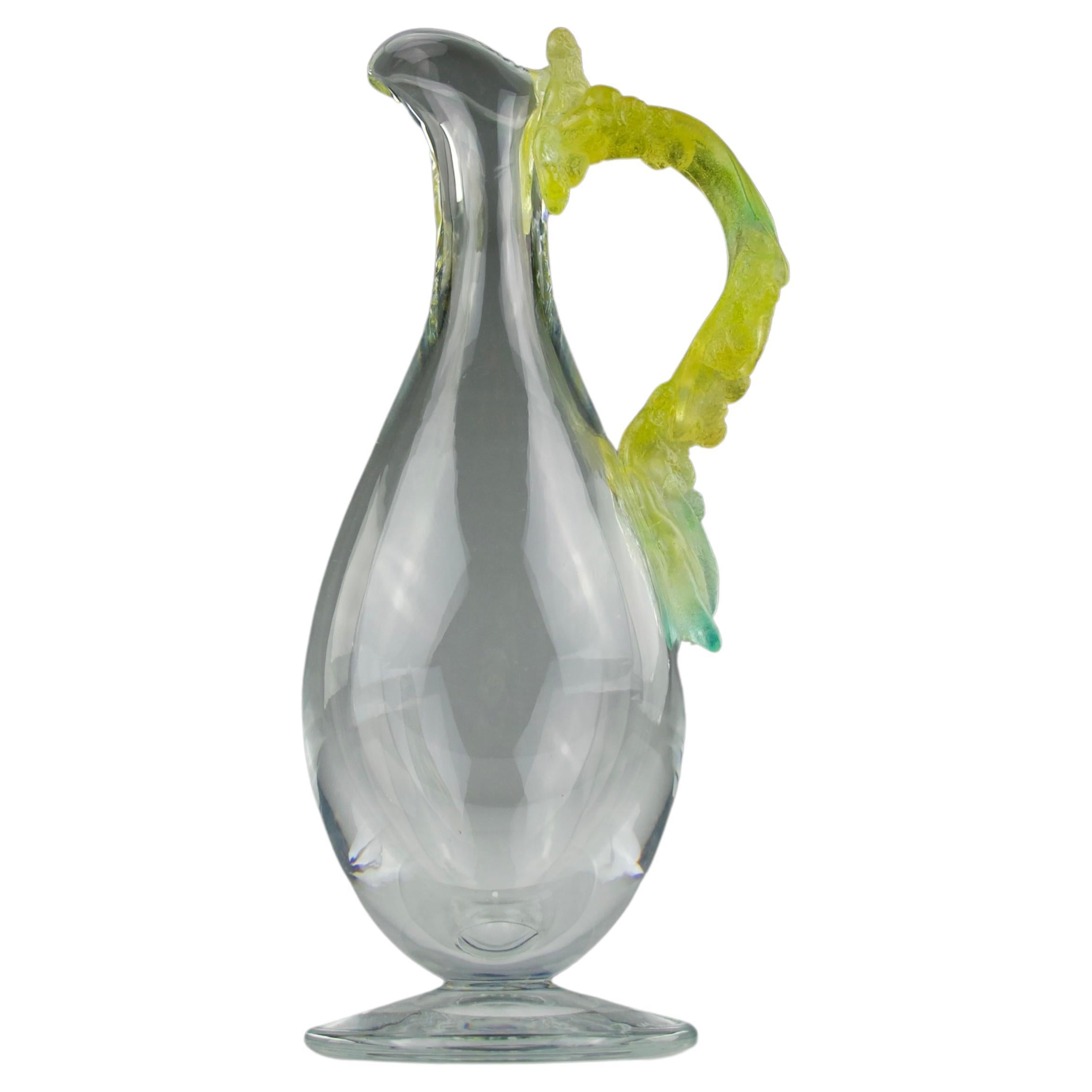
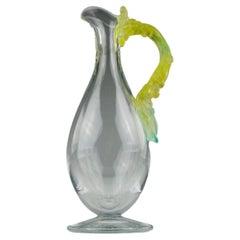
Daum France, Carafe, 1980s

Daum France, Carafe, 1980s

By Daum

Located in PARIS, FR

Beautiful Daum France carafe. Handle in glass paste of green and yellow hues and decorations of foliage and berries. Body in Daum Crystal. Signed Daum Fr...

Category

Vintage 1980s French Art Nouveau Pitchers

Materials

Crystal

René Lalique, Oleron Vase, France 1927

René Lalique, Oleron Vase, France 1927

Located in PARIS, FR

Superb "Oleron" René Lalique bijoux vase. Spherical vase with a concave base, short truncated conical neck, and flat rim, featuring a design of intertwined fish standing out against ...

Category

Vintage 1920s French Art Deco Vases

Materials

Glass

Lalique France, "Clos-Vougeot" Decanter, 1970s

Lalique France, "Clos-Vougeot" Decanter, 1970s

By Lalique

Located in PARIS, FR

Superb Lalique France "Clos-Vougeot" decanter, France 1970s. In excellent condition. Dimensions in cm ( H x D ) : 29 x 13 Secure shipping.

Category

Vintage 1970s French Mid-Century Modern Glass

Materials

Crystal

You May Also Like

René Lalique Blidah Opalescent Glass Pitcher, Art Deco, France, circa 1931

René Lalique Blidah Opalescent Glass Pitcher, Art Deco, France, circa 1931

By René Lalique

Located in Lisbon, PT

An elegant René Lalique “Blidah” glass pitcher, model No. 3177, created in France during the Art Deco period, circa 1931. Designed as an orangeade pitcher, the Blidah model combines...

Category

20th Century French Art Deco Pitchers
Materials

Crystal

R. Lalique Molded Glass Decanter in the 'Selestat' Pattern

R. Lalique Molded Glass Decanter in the 'Selestat' Pattern

By René Lalique

Located in West Palm Beach, FL

R. Lalique molded glass decanter in the 'Selestat' pattern. Of colorless glass with applied black glass band, undersides with molded R. Lalique. Literature: Felix Marcilhac Reference...

Category

Vintage 1970s Barware

Materials

Glass

Rene Lalique Glass 'Six Tetes' Decanter

Rene Lalique Glass 'Six Tetes' Decanter

By René Lalique

Located in Chelmsford, Essex

Rene Lalique clear and frosted glass Six Tetes decanter. This pattern features six heads around the neck. Each has a different expression. There is a clear glass pattern running down...

Category

Vintage 1910s Barware

Materials

Glass

Lalique Crystal Phalsbourg Decanter

Lalique Crystal Phalsbourg Decanter

By René Lalique

Located in Philadelphia, PA

A Lalique crystal Phalsbourg pattern Decanter, France -  circa 1980s In the Art Nouveau style, a tear-drop shaped transparent bottle with an elongated floral pattern stopper finishe...

Category

Vintage 1980s French Art Nouveau Bottles

Materials

Crystal

Art Nouveau Cut Glass Carafe With Silver Mount, by Robert Macher, Vienna 1900

Art Nouveau Cut Glass Carafe With Silver Mount, by Robert Macher, Vienna 1900

By Viennese Manufactory

Located in Vienna, AT

Art Nouveau clear glass carafe with conical body, finely cut feather leaf tendrils spiraling up from the lower rim, cut ground star, smooth silver mount with J-shaped, curved handle,...

Category

Antique Early 1900s Austrian Art Nouveau Sterling Silver

Materials

Silver