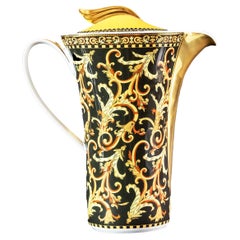
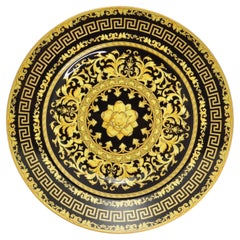
German Rosenthal Porcelain Tea Pot Model Barocco by Versace
By Rosenthal, Versace
Located in Vilnius, LT
German Rosenthal porcelain tea pot. Model: Versace Barocco. Stamped on the bottom.
Mid-20th Century German Porcelain
Porcelain
Subversive, maximalist and unabashedly seductive, Gianni Versace’s (1946–97) designs infused high fashion with an entirely new ethos. “I don’t believe in good taste,” the legendary Italian couturier once explained. Instead, he had a sexy good time with fashion — as he did with life. Today, vintage Versace clothing, handbags and other accessories look astonishingly fresh and freshly relevant.
More than any designer before him, Versace mined celebrity, music and Pop art for inspiration. In fact, the New York Times noted in 1997 that the fashion industry “is now driven by contemporary culture because Mr. Versace made it that way.”
Insiders consider his 1991/1992 Autumn/Winter runway show — which featured supermodels Christy Turlington, Cindy Crawford, Naomi Campbell and Linda Evangelista lip-synching George Michael’s “Freedom! '90” — the moment when the two worlds of fashion and pop culture became one, changing both forever.
Versace was born in Reggio di Calabria, Italy. His mother was a successful dressmaker who employed more than 40 seamstresses. As a child, little Gianni marveled at her workshop, which would become a university of sorts, where he learned the exceptional construction techniques that were at the foundation of his creative expression.
In 1972, at age 25, Versace moved to Milan to work in fashion. He launched his first collection — and his label — in 1978, with his older brother Santo managing the business concerns. Soon, sister Donatella, whom Gianni dressed and took to discos when she was still a child, joined the family venture, where she had a creative role and managed enormously popular ready-to-wear lines such as Versus.
Vintage Versace — and Gianni Versace Couture, which debuted in 1989 — has become catnip for modern fashion enthusiasts who seek out the now-iconic house codes that originated in the designs of the 1980s and 1990s. His glamorous and seductive apparel — the clingy skirts and slender, strappy party dresses, as well as the erotic magazine ads that publicized them — looms large, but Versace’s art and historical influences were also vast.
Versace was an art collector, and he took on commissions to create costumes for theatrical performances during the 1980s and spoke of looking to numerous cultures for inspiration. This adventurous spirit of design resulted in his creating jewel-toned prints rooted in Grecian motifs, Etruscan symbols, the Italian Baroque and Andy Warholʼs Marilyn Monroe. There were slinky dresses in Oroton, his patented chain-mail textile that draped like satin, and leather bondage ensembles. Sex sold, for both women and men. Wrote the late curator Richard Martin, “[Versace] became the standard-bearer of gay men’s fashion because he eschewed decorum and designed for desire.”
Following Versace’s tragic murder in 1997, Donatella took over the role of artistic director and continued to evolve the house codes with a twist of her feminine and feminist perspective. Today, Santo Versace is chief executive officer of Versace and Donatella is its chief creative officer.
Browse an extraordinary collection of vintage Versace evening dresses, handbags, day dresses, accessories and more on 1stDibs.
While the Rosenthal Porcelain Factory grew from humble decorating roots — as many pottery companies do — it eventually built a list of universally revered designer and artist partners that included Andy Warhol and Salvador Dalí. And after securing an enviable position as a top manufacturer of serveware and dominating the porcelain and bone china markets, Rosenthal expanded into furniture production, working with influential designers Verner Panton, Luigi Colani and Günther Ferdinand Ris and Herbert Selldorf.
German-born Jewish businessman Philipp Rosenthal founded the company in 1879 in Bavaria. It began as his modest workshop where he painted porcelain and encountered success with porcelain ashtrays. Rosenthal hired the best designers and clay modelers he could find. Adolf Oppel designed figurative Art Nouveau pieces, while Eleonore (Lore) Friedrich-Gronau produced decorative objects, namely her graceful porcelain dancer figurines, for the company.
Dinnerware, though, would be a Rosenthal mainstay. Between 1904 and 1910, Rosenthal produced its renowned dinnerware lines such as Donatello, Darmstadt and Isolde. These were introduced as unornamented white pieces — only later were they given their underglaze designs.
Rosenthal founder Philipp, a Catholic of Jewish ancestry, resigned in 1934 as the company’s president due to pressures owing to discriminatory German laws that took shape during the rise of the Nazi regime. Rosenthal died in 1937, and the family fled to America. The company would not regain its footing until 1950 when Rosenthal’s son, Philip, joined the firm and, in 1958, became chairman and dubbed Germany’s “China King.” At its peak, the company had 10,000 employees.
In the 1950s, Rosenthal’s modernist dinnerware was a significant part of the brand’s offerings, and by 1961 they introduced the famed Rosenthal Studio Line. Although furniture designers and ceramicists would lead the list of individuals working with Rosenthal — among them Tapio Wirkkala, Max Weber and Lisa Larson — the company eventually reached out to fine artists, not only Dalí and Warhol but Sandro Chia and Kenny Scharf. Rosenthal also collaborated with fashion designers Gianni Versace and Donatella Versace.
In a daring move in 1972, the company diversified into furniture, collaborating with some of the giants of mid-century modern design. The revolutionary Sunball chair, an icon of Space Age seating crafted by Selldorf and Ris, was among Rosenthal’s stellar successes in this venture.
On 1stDibs, find vintage Rosenthal ceramics, porcelain, tableware, seating and more.

German Rosenthal Porcelain Tea Pot Model Barocco by Versace
By Rosenthal, Versace
Located in Vilnius, LT
German Rosenthal porcelain tea pot. Model: Versace Barocco. Stamped on the bottom.
Porcelain

German Rosenthal Porcelain Coffee Pot Model Barocco by Versace
By Versace, Rosenthal
Located in Vilnius, LT
German Rosenthal porcelain coffee pot. Model: Versace Barocco. Stamped on the bottom.
Porcelain

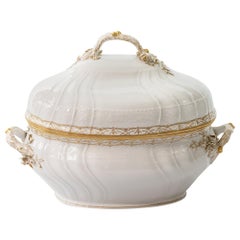
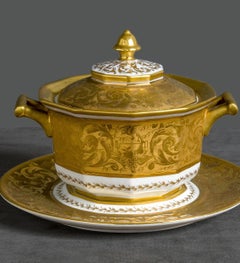
Antique Handmade Porcelain Soup Tureen by KPM
By KPM Porcelain
Located in Vilnius, LT
Antique KPM oval porcelain soup tureen is handmade with glazed relief ornament surface. It is hand painted with gold and decorated with molded flowers bouqets on the handles. Measu...
Porcelain

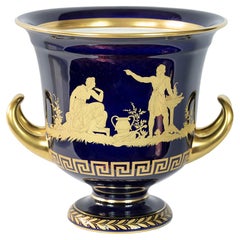
Large German Hutschenreuther Porcelain Empire Style Vase
Located in Vilnius, LT
Large german Hutschenreuther porcelain empire style cobalt blue vase with handles and hand painted in gold decor. Decorated with mythological sc...
Porcelain

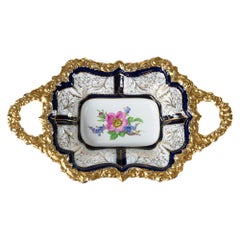
Meissen Porcelain Deep Cabinet Plate with Handles
By Meissen Porcelain
Located in Vilnius, LT
Meissen Porcelain deep cabinet plate with handles. This piece is hand painted in cobalt blue with floral motive in the center and richly decorated gold ...
Porcelain

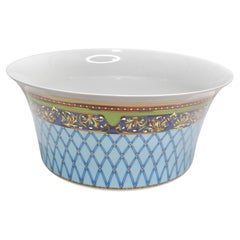
Versace Rosenthal 1990s Russian Dream Porcelain Bowl
By Versace
Located in Scottsdale, AZ
Do not miss out on the Versace Rosenthal 1990s Russian Dream Porcelain Bowl – a luxurious and artful addition that brings opulence to your dinner table or barware collection. Crafted...

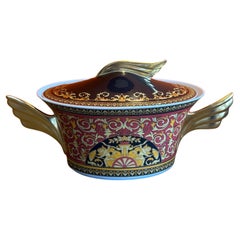
Porcelain Red "Medusa" Tureen / Serving Bowl with Lid by Versace for Rosenthal
By Rosenthal, Versace
Located in San Diego, CA
A beautiful porcelain red "Medusa" tureen / serving bowl with lid by Versace for Rosenthal, circa 1990s. The piece is in very good vintage condition with no chips or cracks and measu...
Porcelain

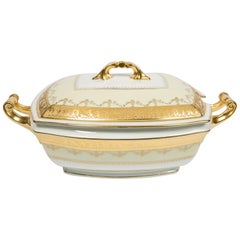
European Porcelain Soup Tureen Neoclassical
By Royal Epiag
Located in Katonah, NY
This lovely soup tureen is decorated with two finely wrought gold bands of raised silhouettes of children in a celebratory procession. It is joyous! Some of the children play musical...
Porcelain

Camille Le Tallec Gilded Porcelain Tureen Empire-Style Set
Located in Roma, IT
Camille Le Tallec Gilded Porcelain Tureen Empire-Style Set Spectacular set of ornately gilt service plates hand-painted by Le Tallec of France Important and magnificent Empire-styl...
Porcelain

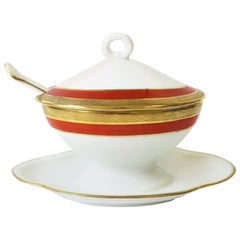
Richard Ginori Italian Porcelain Condiment Dish & Spoon
By Richard Ginori
Located in New York, NY
A beautiful vintage Italian white and gold porcelain condiments dish or vessel with lid and spoon by designer Richard Ginori, circa mid-20th century, Italy. Lid has loop handle detai...
Porcelain
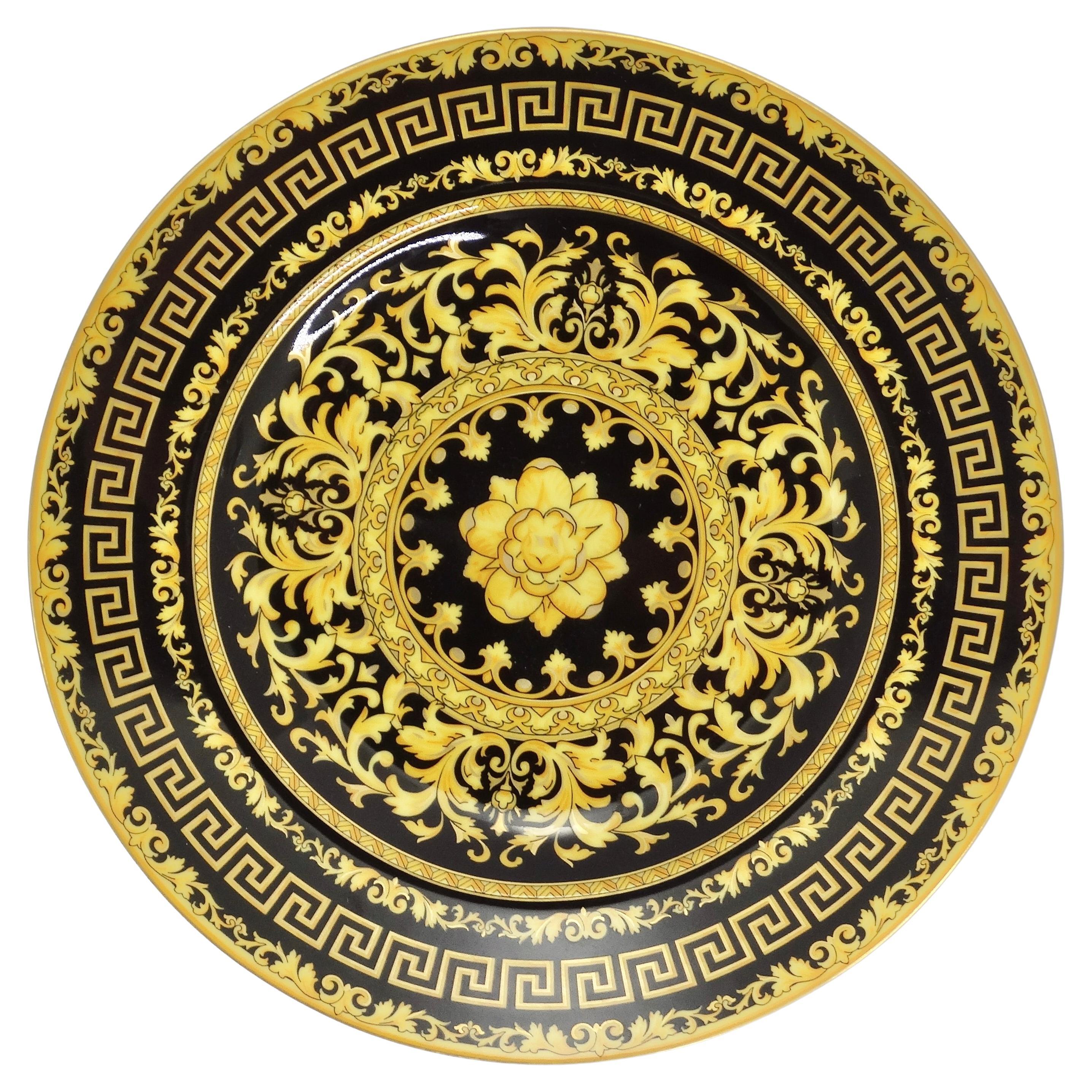
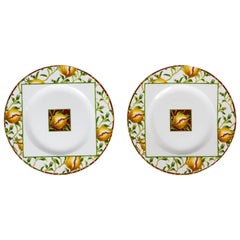
Versace Rosenthal 1990S Porcelain Floral Gold Plate
By Rosenthal, Versace
Located in Scottsdale, AZ
Introducing the Versace Rosenthal 1990s Porcelain Floral Gold Plate, a classic dinner plate that encapsulates the timeless elegance of Versace's signature style. This exquisite piece...