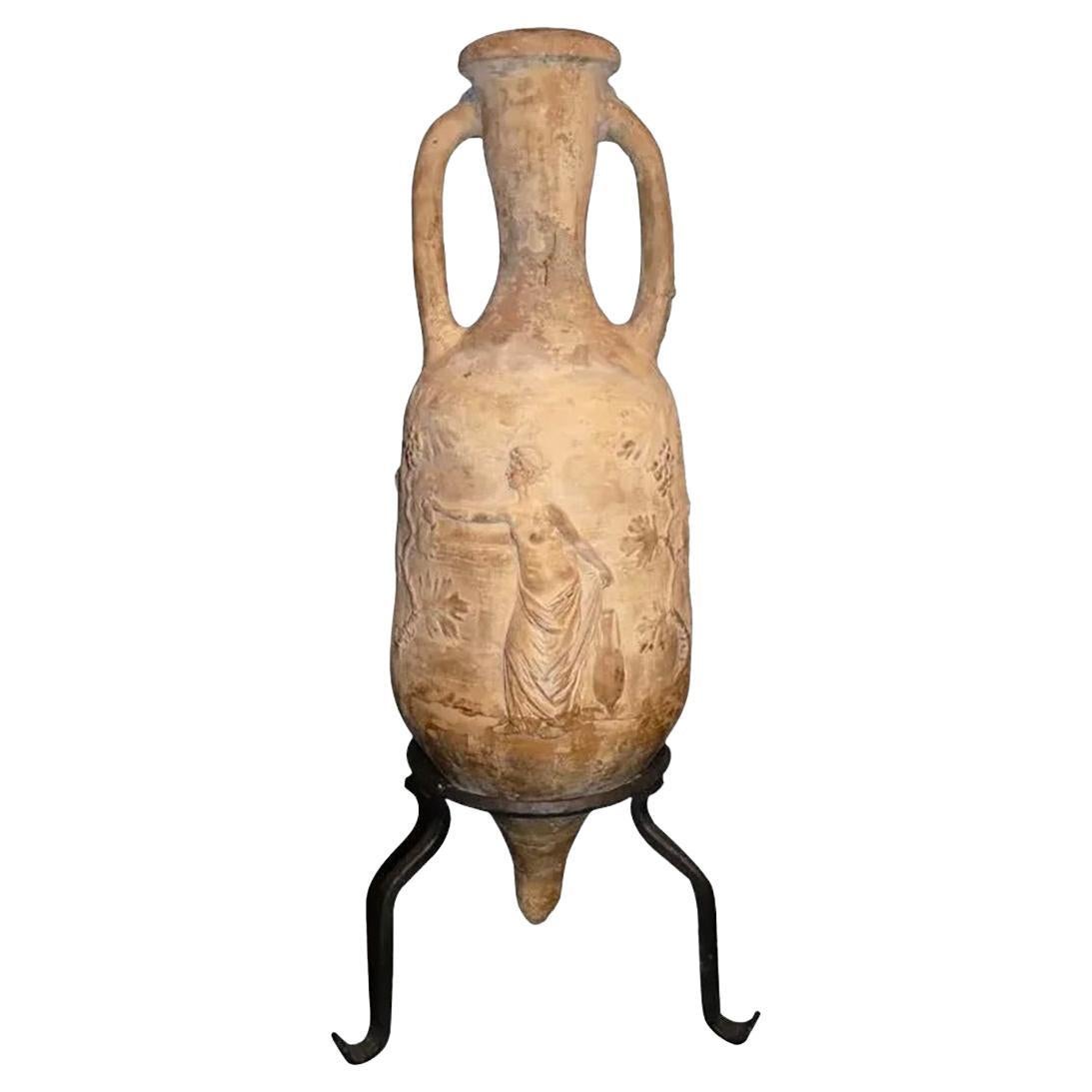
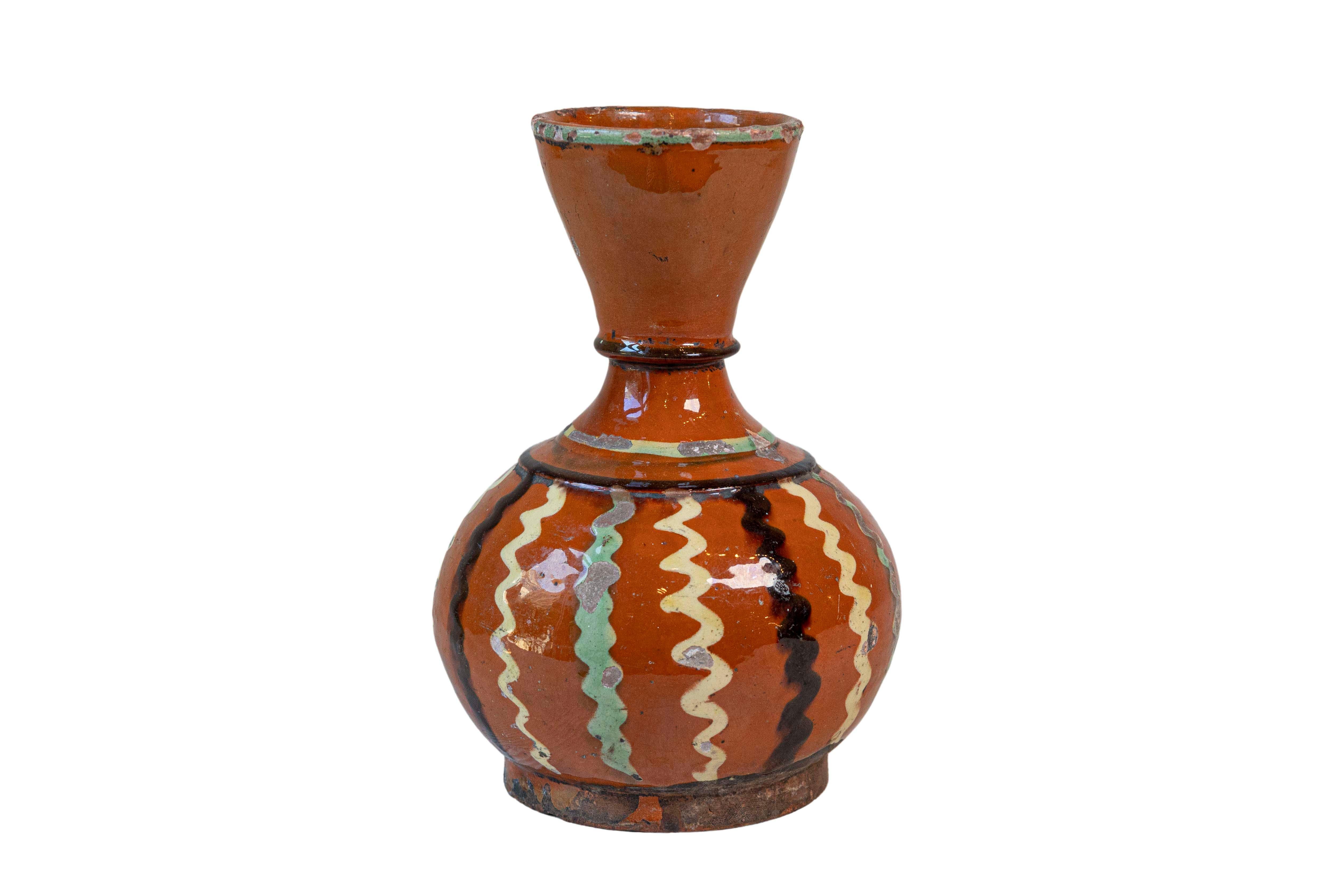
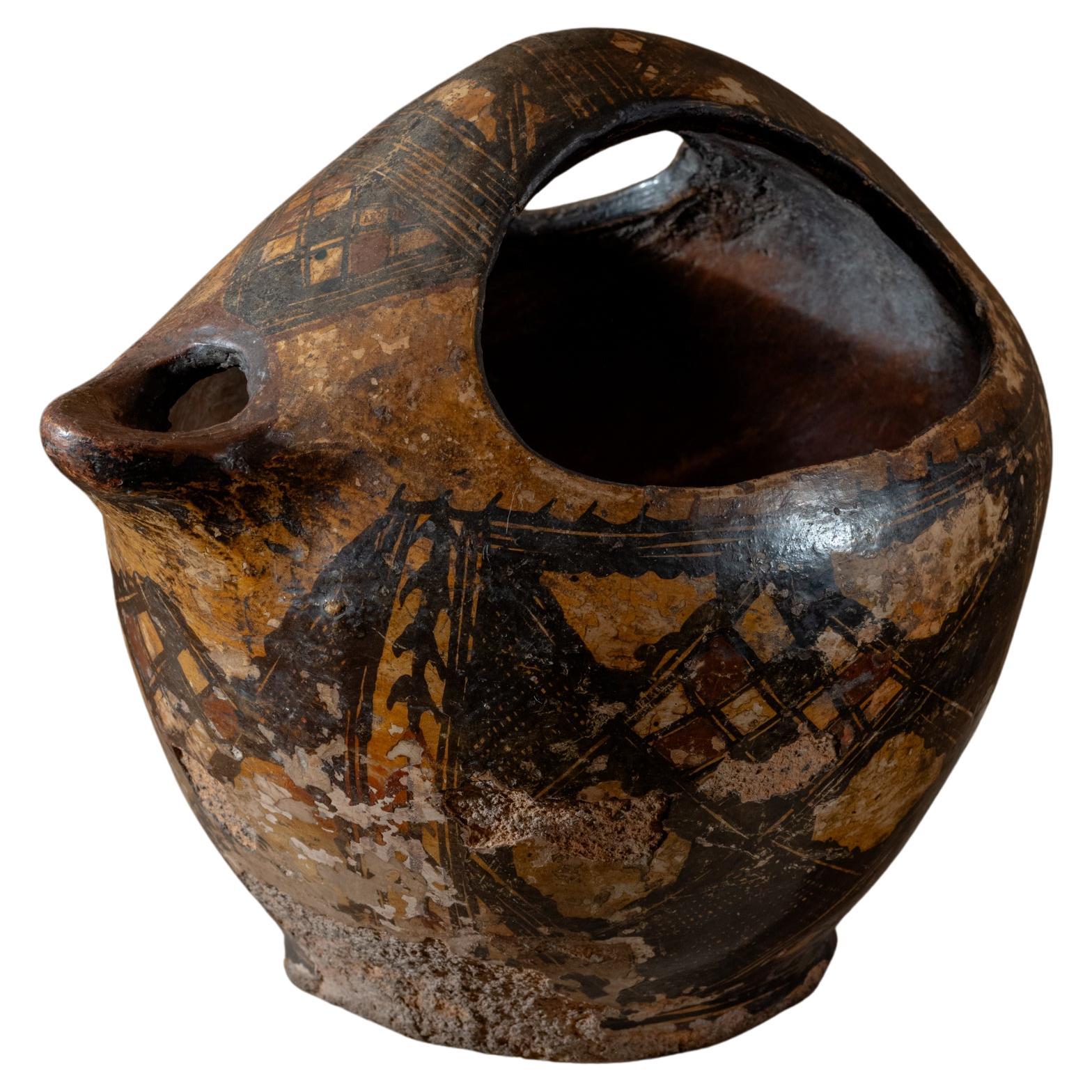
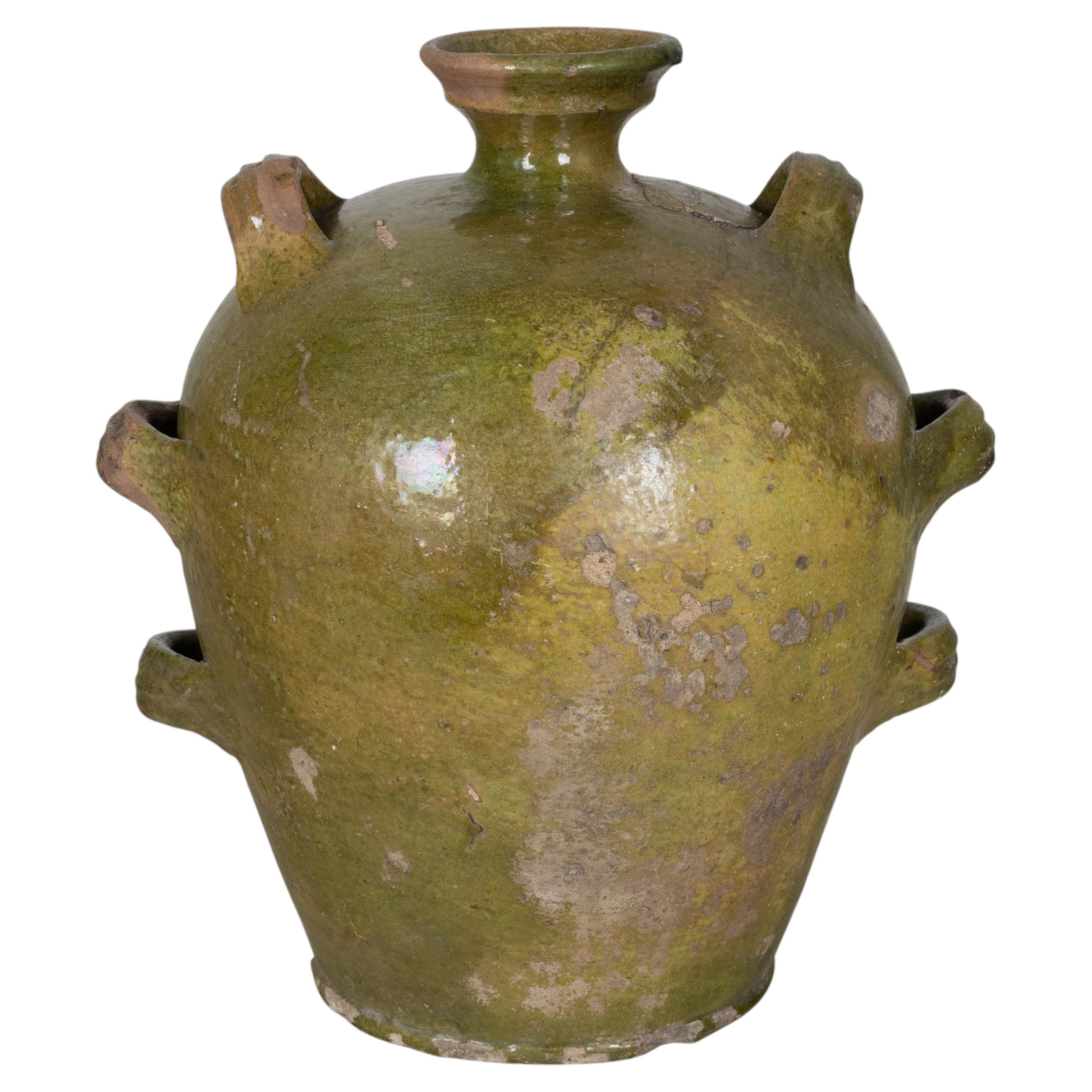
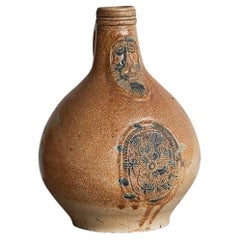
This remarkable antique ceramic jug, likely from the late 18th century stands as a testament to symbolic craftsmanship and cultural interweaving. Its white-glazed body, adorned with intricate blue hand-painted motifs, showcases a rich tapestry of imagery: two armored knights flank a central coat of arms crowned by a noble eagle, evoking themes of protection, authority, and divine oversight. A sphinx, emblematic of riddles and ancient wisdom, is also depicted- a nod to the Jewish people’s historical sojourn in Egypt and the enduring significance of that epoch in Jewish memory. A goat as representative of the Devil to make Adam and Eve to sin and take a forbidden fruit in Paradise. Clusters of various fruits embellish the design, symbolizing abundance and the promise of the land.
Prominently featured are two Stars of David, affirming a deep connection to Jewish identity and heritage. The jug’s sculpted handle, fashioned as a coiled snake descending toward a human face-possibly representing Adam-recalls the Genesis narrative of the fall, the serpent, and the origins of humanity. This interplay of symbols suggests a narrative arc of struggle, survival, and spiritual endurance, potentially representing the journey of the Jewish people from Eden through exile and beyond.
The jug’s substantial capacity-holding up to five liters of liquid-indicates its intended use for wine or water, both integral to daily life and ritual. Its distinctive shape, featuring a wavy, ornamental opening, hints at Mediterranean origins, likely Spain or Italy, where such design elements were prevalent in ceramic art of the period. This stylistic attribute, coupled with the painted date of 1527, adds another layer to its historical context.
The year 1527 holds significance in Jewish history. In that year, Hayyim ben David Schwartz, a notable Jewish printer, obtained permission to print Hebrew books in the Kingdom of Bohemia from Ferdinand I, Holy Roman Emperor . This development marked a pivotal moment in the dissemination of Jewish texts and learning in Europe. Additionally, 1527 saw the first mention of Lyozna, a settlement that would later become a significant center of Jewish life . These events underscore a period of cultural resilience and intellectual flourishing within the Jewish diaspora.
Altogether, this jug is more than a utilitarian object; it is a richly layered cultural artifact. Its amalgamation of Jewish symbolism with regional European artistry encapsulates a narrative of identity, endurance, and the intermingling of traditions across time and geography.
The Jug is very large and its weight is 4 kg.