Want more images or videos?
Request additional images or videos from the seller
1 of 11

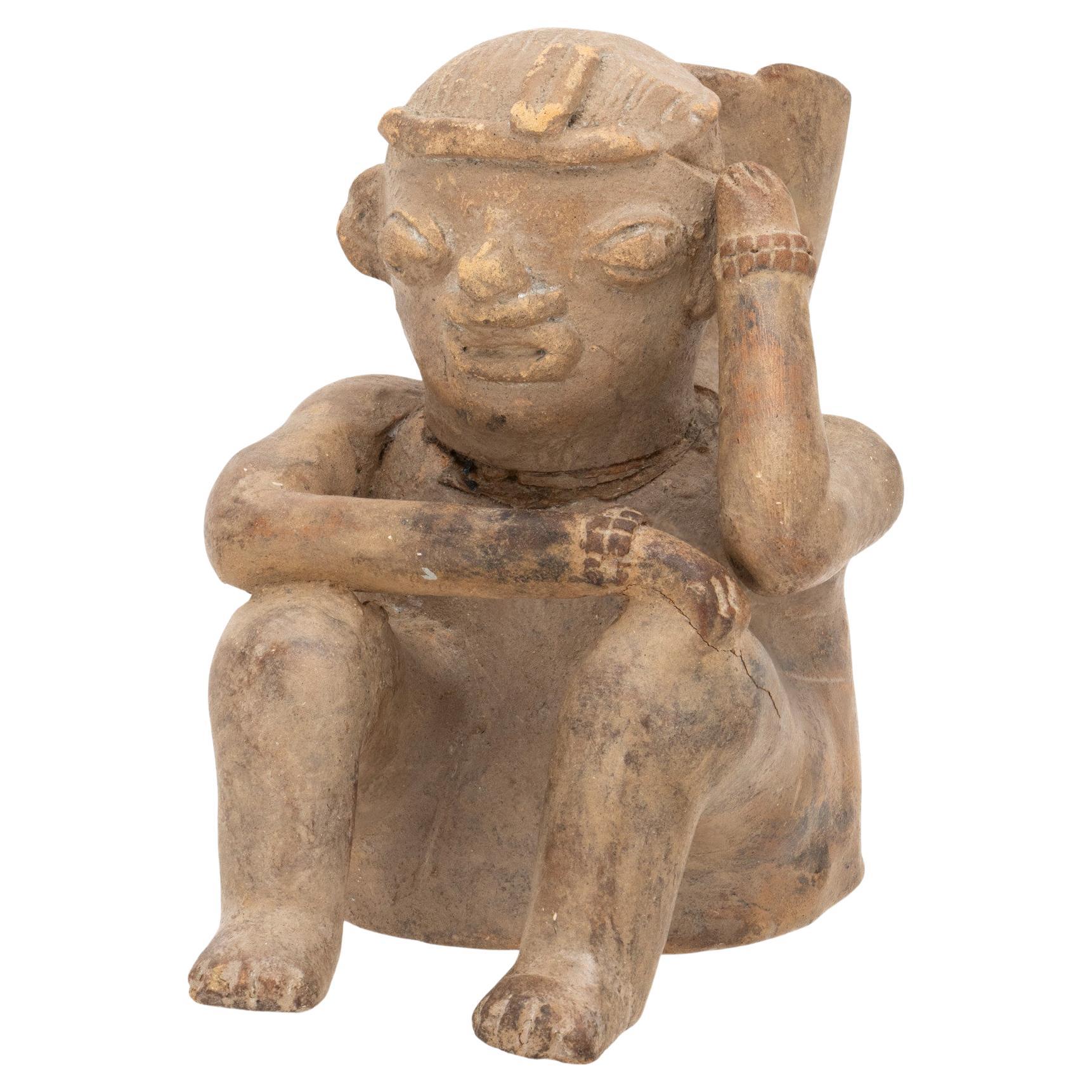
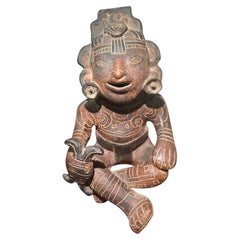
Cinerary Urn. Oaxaca. AD 600–1000. Terracotta. 23 cm high.

$17,735.14
£13,094.56
€15,000VAT Included
CA$24,635.03
A$24,744.41
CHF 14,347.50
MX$301,907.54
NOK 166,041.66
SEK 170,367.39
DKK 114,373.84

About the Item

Cinerary Urn Oaxaca AD 600–1000 Terracotta 23 cm high Provenance: Private collection, Paris, France. Condition: Good state of preservation. Description: Cylindrical terracotta urn, the front decorated with an anthropomorphic figure. The figure is shown seated and facing forwards, with both hands resting on the knees and a pronounced compositional symmetry. The face is characterised by severe features, almond-shaped eyes, large circular ear ornaments and a distinctive bifurcated beard terminating in volutes. An elaborate headdress frames the head, with two descending lateral elements decorated with parallel incisions. The torso is dominated by a large ornamental pectoral of radial design, occupying much of the frontal surface. Some examples of this type, representing members of the Zapotec elite, belong to the group conventionally known as ‘companion’ urns. This term derives from their placement within tombs, where they were positioned alongside the principal deity invoked as protector of the deceased. It has also been suggested that such figures may represent the deceased’s closest ancestors, accompanying and guiding their relative on the journey to the underworld. The precise function of these vessels remains uncertain. Zapotec urns commonly feature a cylindrical receptacle or ‘chimney’ at the back, concealed behind the elaborate figural decoration. Traces of offerings have been discovered within some examples, including incense, indicating their probable ceremonial and funerary use. The Zapotec culture developed in what is now the Mexican state of Oaxaca, particularly in the Central Valleys. Oaxaca is characterised by its mountainous landscape and considerable ecological diversity, ranging from temperate forests in the higher elevations to tropical environments in the lower regions. Agriculture formed the basis of the Zapotec economy. They developed sophisticated irrigation systems that enabled the large-scale production of crops, particularly maize. One of the culture’s most significant achievements was the development of a writing system whose use endured for more than a thousand years in Mesoamerica. Although literacy appears to have been restricted to particular social groups, Zapotec inscriptions survive on a wide variety of materials, including bone, shell, pottery and stone. Writing probably also appeared on perishable materials such as wood, cotton textiles, paper and animal hides. The system employed glyphs to record historical events and dates and was probably used extensively by the ruling classes to preserve dynastic history, administer resources and labour, and commemorate military conflicts. The Zapotecs are particularly renowned for their mastery of stone carving and for the sophisticated decorative schemes employed in their architecture. Relief sculpture and mural painting constitute some of the most remarkable surviving manifestations of pre-Hispanic Mexican art. Representations of warriors and captives are especially prominent, reflecting the importance of warfare within Zapotec society. Among the best-known examples are the figures conventionally referred to as the ‘Danzantes’, which depict individuals in attitudes associated with captivity, sacrifice or submission. In its later phases, Zapotec architecture was characterised by increasingly elaborate decoration, including mosaic-like compositions, panels and geometric fretwork. Zapotec society was highly stratified, with a ruling class whose authority was probably founded upon a theocratic conception of power. The elite reinforced its position through political alliances and marital exchanges between ruling families and the local authorities of territories incorporated into its sphere of influence. Beneath the aristocracy were merchants and specialised craftsmen, while a large agricultural population formed the base of society. The Zapotecs frequently buried their dead within the domestic sphere, beneath the floors of houses or in nearby areas. Some burials consisted of relatively simple pits without associated architecture, while others were housed in sophisticated tombs incorporating carved jambs and lintels, vestibules, funerary chambers and polychrome murals. The ballgame also possessed considerable ritual and symbolic importance. Detailed stone reliefs depicting players appear alongside images of priests, offerings and jaguars, an animal of profound significance throughout Mesoamerican religion. Sacrifice likewise appears to have played an important role in religious life, as demonstrated by numerous reliefs depicting dying or sacrificed figures, most famously those of the ‘Danzantes’ at Monte Albán. The earliest Zapotec settlements were established along riverbanks, where conditions were favourable for maize cultivation. Early villages consisted of small groups of dwellings in which much of everyday life and production took place. The most important urban centre was Monte Albán, strategically established on the flattened summit of a mountain overlooking the surrounding valleys. It developed rapidly into a monumental ceremonial and political centre extending over several kilometres around its principal plaza. The site includes two ballcourts and numerous monumental structures, while residential areas extended down the surrounding slopes. Domestic compounds incorporated living quarters, small cultivated areas, water-storage facilities and spaces used by specialised craftsmen. Numerous decorative and architectural elements at Monte Albán reveal connections with Teotihuacan, while Mixtec objects and offerings discovered in certain buildings attest to later cultural and religious interaction. From around AD 800, Monte Albán entered a period of decline and changing regional relationships. In subsequent centuries, the political landscape of Oaxaca became increasingly fragmented, while Zapotec and Mixtec communities continued to interact and compete until the Spanish conquest.
  • Dimensions:
    Height: 9.06 in (23 cm)Width: 8.27 in (21 cm)Depth: 7.88 in (20 cm)
  • Style:
    Pre-Columbian (Of the Period)
  • Materials and Techniques:
    Terracotta,Molded
  • Period:
  • Date of Manufacture:
    600-1000 AD
  • Condition:
    Wear consistent with age and use. Minor losses.
  • Seller Location:
    BARCELONA, ES
  • Reference Number:
    Seller: 220066141stDibs: LU10999251560332

More From This Seller

View All
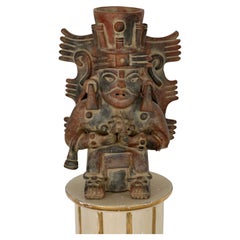
Incense Burner. Maya, AD 300–600. 29.5 cm. Terracotta .

Incense Burner. Maya, AD 300–600. 29.5 cm. Terracotta .

Located in BARCELONA, ES

Incense Burner Maya AD 300–600 Terracotta 29.5 cm Condition: Good condition. Provenance: Private collection, Barcelona, Spain. Documentation: Accompanied by a thermoluminesce...

Category

Antique 15th Century and Earlier Pre-Columbian Antiquities

Materials

Terracotta

Huaco with Ai Apaec. Moche, Peru, c. AD 200–800. Terracotta. 22.5 cm high.

Huaco with Ai Apaec. Moche, Peru, c. AD 200–800. Terracotta. 22.5 cm high.

Located in BARCELONA, ES

Huaco with Ai Apaec Moche, Peru c. AD 200–800 Terracotta 22.5 cm high Condition: Good state of preservation. Provenance: Private collection of Remy Rey, London, United Kingdom....

Category

Antique 15th Century and Earlier Peruvian Pre-Columbian Antiquities

Materials

Terracotta

Anthropomorphic idol. Mezcala, State of Guerrero, Mexico. 350-100 BC. 20 cm.

Anthropomorphic idol. Mezcala, State of Guerrero, Mexico. 350-100 BC. 20 cm.

Located in BARCELONA, ES

Anthropomorphic idol type M16 Mezcala, State of Guerrero, Mexico 350 - 100 BC Stone Height 20 cm and 24 cm with the stand. Condition Good state of preservation, no restorations....

Category

Antique 15th Century and Earlier Mexican Pre-Columbian Antiquities

Materials

Stone

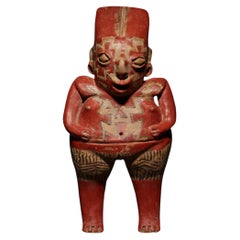
Female Figure. Chupícuaro, Guanajuato, México. 400 BC – 100 AD. 27.5 cm.

Female Figure. Chupícuaro, Guanajuato, México. 400 BC – 100 AD. 27.5 cm.

Located in BARCELONA, ES

Female figure Chupícuaro, Guanajuato, México. 400 BC – 100 AD. Terracotta. Height 27.5 cm Condition: In a good state of preservation and intact; the only condition issues are lo...

Category

Antique 15th Century and Earlier Mexican Pre-Columbian Antiquities

Materials

Terracotta

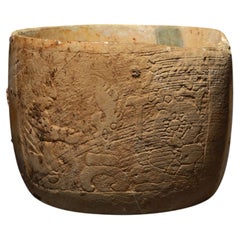
Cylindrical vase with figurative reliefs. Maya, 600 - 900 AD. 12 cm D. Alabaster

Cylindrical vase with figurative reliefs. Maya, 600 - 900 AD. 12 cm D. Alabaster

Located in BARCELONA, ES

Cylindrical vase with figurative reliefs Maya, Classic Period, 600 - 900 AD. Alabaster (Tecali stone). Diameter 12 cm and height 9.5 cm. Condition In good condition, it has a ver...

Category

Antique 15th Century and Earlier Pre-Columbian Ceramics

Materials

Alabaster

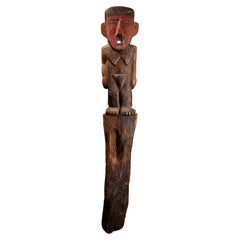
Funerary Post with female figure. Chimu, Peru, 1st Millennium AD. Wood. 106 cm.

Funerary Post with female figure. Chimu, Peru, 1st Millennium AD. Wood. 106 cm.

Located in BARCELONA, ES

Funerary Post with female figure Chimu, Peru, 1st Millennium AD. Wood Height 106 cm Provenance - Jean Pierre Cottier and Fiorella Cottier-Angeli Collection, Geneva, Switzerland. ...

Category

Antique 15th Century and Earlier Peruvian Pre-Columbian Antiquities

Materials

Wood

You May Also Like

Mid-20th Century Mesoamerican Zapotec Style Terracotta Effigy Vessel

Mid-20th Century Mesoamerican Zapotec Style Terracotta Effigy Vessel

Located in Rødding, DK

A striking mid-to-late 20th-century terracotta effigy vessel, hand-built in the traditional revival style of pre-Columbian Mesoamerican ceramics. This piece heavily references the ic...

Category

20th Century Mexican Pre-Columbian Figurative Sculptures

Materials

Clay

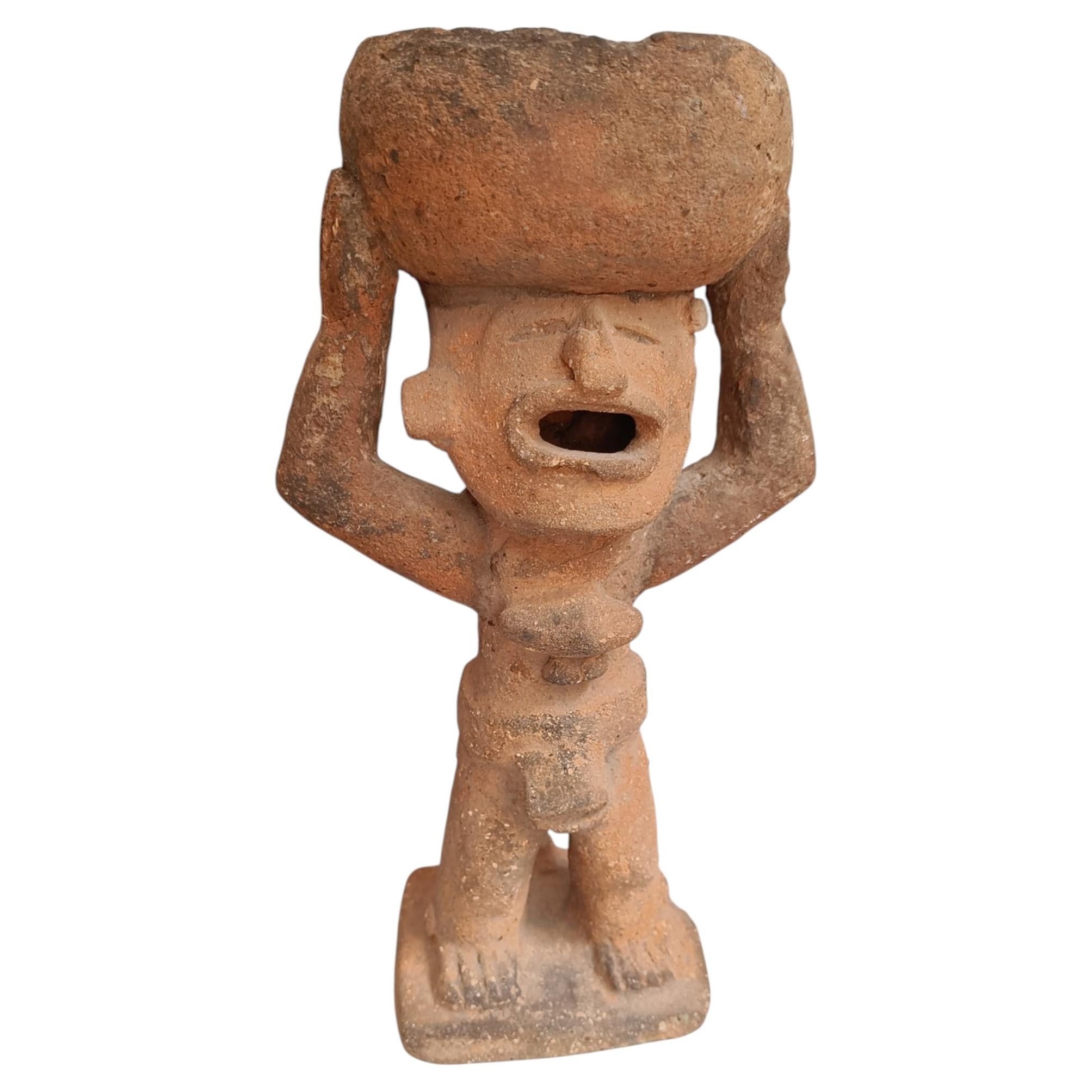
Pre Columbian Rare Central Mexican Terracotta Figure with Bowl C. 600–1200 CE

Pre Columbian Rare Central Mexican Terracotta Figure with Bowl C. 600–1200 CE

Located in London, GB

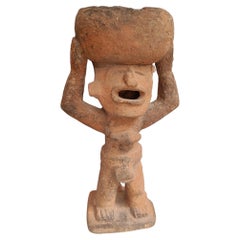
Pre Columbian Rare Central Mexican Terracotta Figure with Bowl A Pre-Columbian terracotta figure from the Central Highlands of Mexico, depicting a standing figure holding a large bow...

Category

Antique 15th Century and Earlier Mexican Antiquities

Materials

Pottery

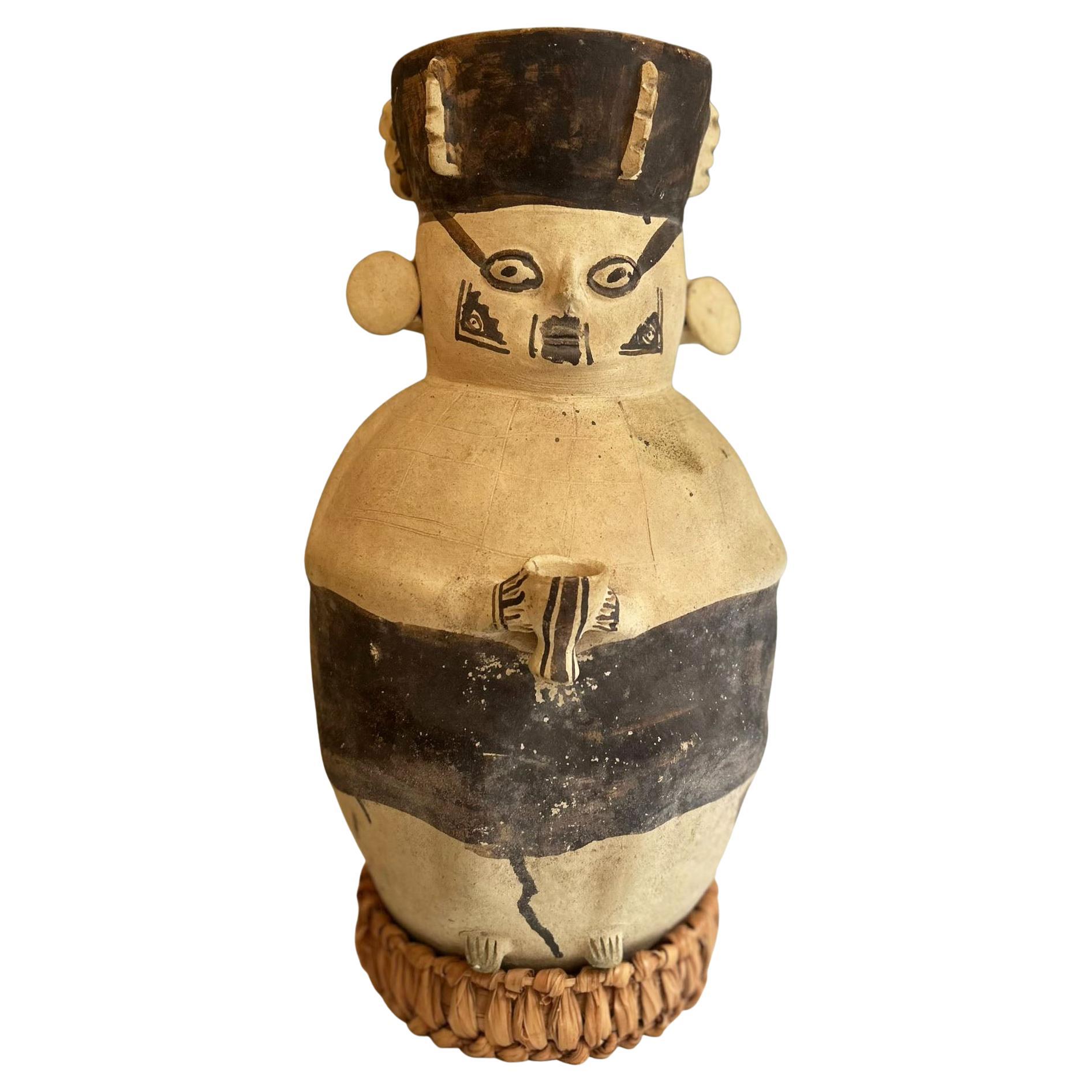
Pre Columbian Large Chancay  Cuchimilco Urn South American Antiques

Pre Columbian Large Chancay Cuchimilco Urn South American Antiques

Located in London, GB

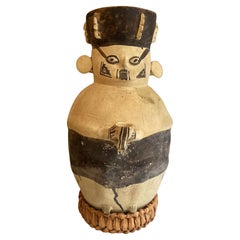
Large Chancay Anthropomorphic Urn Vessel Pre-Columbian, Central Coast of Peru 1000–1450 CE An imposing and characterful Chancay culture ceramic urn, fashioned in the form of a sty...

Category

Antique 15th Century and Earlier Peruvian Antiquities

Materials

Wool

Pre-Columbian Earthenware Incensario, El Chanal, Colima, Western Mexico

Pre-Columbian Earthenware Incensario, El Chanal, Colima, Western Mexico

Located in Point Richmond, CA

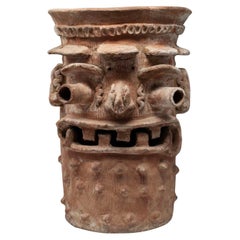
Pre-Columbian Earthenware Incensario, El Chanal, Colima, Western Mexico A large incense burner/brazier depicting the rain god Tlaloc from the El Chanal area in Colima. This would be...

Category

Antique 15th Century and Earlier Mexican Pre-Columbian Jars

Materials

Terracotta

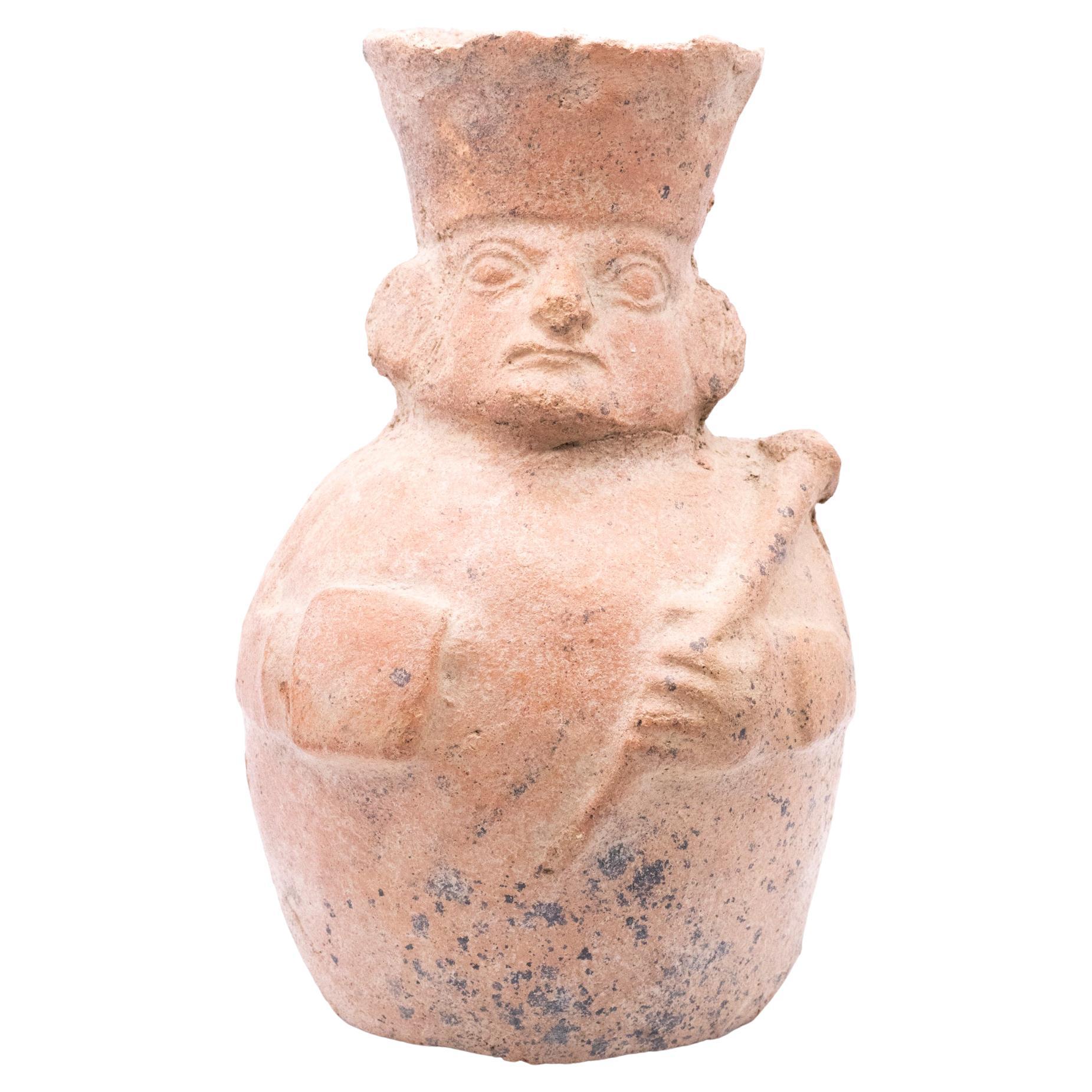
Peru Pre Inca 100-700 Ad Moche Pre Columbian Personified Vessel in Earthenware

Peru Pre Inca 100-700 Ad Moche Pre Columbian Personified Vessel in Earthenware

Located in Miami, FL

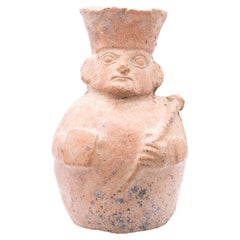
Rare pre Hispanic Moche culture, pre-Inca earthenware vessel. A beautiful interesting piece, created in the southern Peru region around the 100-700 AD by the Moche culture. This rare early period...

Category

Antique 15th Century and Earlier Peruvian Pre-Columbian Antiquities

Materials

Earthenware, Pottery

Large Decorative Pre-Columbian Style Figure – 20th Century

Large Decorative Pre-Columbian Style Figure – 20th Century

Located in Madrid, ES

Impressive Pre-Columbian style figure from the 20th century, crafted in homage to ancient Mesoamerican art. The piece showcases stylized facial features and traditional ornamentation...

Category

Vintage 1950s Figurative Sculptures

Materials

Terracotta