Want more images or videos?
Request additional images or videos from the seller
1 of 21

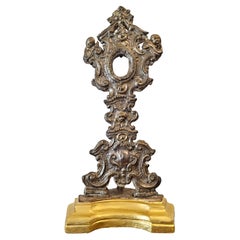
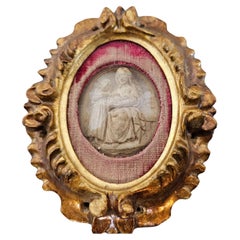
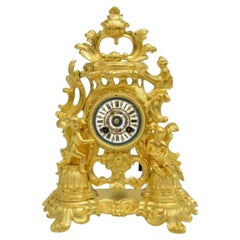
Fine 19th Century European Gilt Bronze Ormolu Monstrance Reliquary

Price:$2,000
$3,350List Price

You May Also Like

More From This Seller

View All
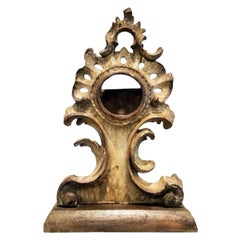
Important Early 18th Century Italian Carved Monstrance Reliquary Tabernacle

Important Early 18th Century Italian Carved Monstrance Reliquary Tabernacle

Located in Forney, TX

Important and historic, acquired from the estate of legendary American businessman, the late T. Boone Pickens, we're proud to offer this exceptional carved giltwood reliquary - monstrance from the early 18th century. Elaborately hand carved in period Rococo - Rocaille taste, with superb scrollwork, openwork, fanciful acanthus leaf and shell, ornate detailing, polychrome painted warm pastel colors, now beautifully distressed, muted tones, with remnants of gold gilded accents. Pieces such as this were used in early churches for convenient exhibition or public display of some object of piety and other important religious relics...

Category

Antique Early 18th Century Italian Rococo Religious Items

Materials

Giltwood

18th/19th Century Italian Baroque Silvered Metal Altar Monstrance Reliquary

18th/19th Century Italian Baroque Silvered Metal Altar Monstrance Reliquary

Located in Forney, TX

A stunning antique Italian Baroque style silvered metal gilded wood monstrance reliquary. circa 1770-1820 Handmade in Italy in the late 18th / early 19th century, commissioned by the church to display an important religious relic, sculptural painted wood form, mounted with decorative silver repousse metal facing, open oval window where the philatory relic was once housed, rising on a gold gilt painted shaped plinth base. Dimensions: (approx) 17" High, 8" Wide, 5" Deep, 1.25lbs History: Reliquaries (also referred to as a shrine or châsse in French), are containers used to protect and display relics. A portable reliquary may be called a fereter, and a chapel in which it is housed a feretory. A monstrance, also known as an ostensorium (or an ostensory), is a vessel used in Roman Catholic, Old Catholic, High Church Lutheran and Anglican churches for the display on an altar of some object of piety, such as the consecrated Eucharistic host during Eucharistic adoration or Benediction of the Blessed Sacrament. It is also used as reliquary for the public display of relics of some saints. The use of reliquaries became an important part of Christian practices from at least the 4th century, initially in the Eastern Churches, which adopted the practice of moving and dividing the bodies of saints much earlier than the West, probably in part because the new capital of Constantinople, unlike Rome, lacked buried saints. Relics are venerated in the Oriental Orthodox, Eastern Orthodox, Roman Catholic and some Anglican Churches. Reliquaries provide a means of protecting and displaying relics. While frequently taking the form of caskets, they range in size from simple pendants or rings to very elaborate ossuaries. The relics were enshrined in containers crafted of or covered with gold, silver, gems, and enamel. These objects constituted a important form of artistic production across Europe and Byzantium throughout the Middle Ages. Many were designed with portability in mind, often being exhibited in public or carried in procession on the saint's feast day or on other holy days. Pilgrimages often centered on the veneration of relics. The faithful often venerate relics by bowing before the reliquary or kissing it; those churches which observe the veneration of relics distinguish between the honor given to the saints and the worship that is due to God alone. Sixteenth-century reformers such as Martin Luther opposed the use of relics since many had no proof of historical authenticity and objected to a cult of saints. Many reliquaries, particularly in northern Europe, were destroyed by Calvinists or Calvinist sympathizers during the Reformation...

Category

Antique Early 19th Century Italian Baroque Sculptures and Carvings
Materials

Metal

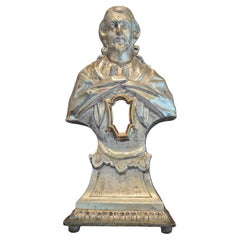
Antique Italian Carved Silvered Gilt Wood Altar Reliquary Bust Sculpture 18th C.

Antique Italian Carved Silvered Gilt Wood Altar Reliquary Bust Sculpture 18th C.

Located in Forney, TX

Italy, late 18th century, church altar reliquary, hand carved solid wood, gesso, and silver leaf, in Baroque taste, finely detailed figural bust form, with hollowed central relic com...

Category

Antique Late 18th Century Italian Baroque Religious Items

Materials

Gold Leaf, Silver Leaf

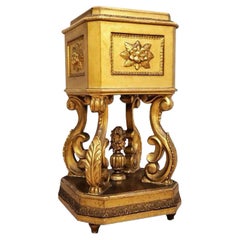
19th Century Rococo Baroque Gilt Pedestal Stand

19th Century Rococo Baroque Gilt Pedestal Stand

Located in Forney, TX

A 19th century Italian late Baroque elaborately carved giltwood pedestal stand from the estate of legendary American businessman, T. Boone Pickens. Exceptionally executed, exotic...

Category

Antique 19th Century Baroque Pedestals

Materials

Upholstery, Giltwood

Fine French Louis XV Rocaille Style Sevres Porcelain Gilt Bronze Ormolu Clock

Fine French Louis XV Rocaille Style Sevres Porcelain Gilt Bronze Ormolu Clock

Located in Forney, TX

A stunning fine quality Napoleon III Second Empire Period (1852-1870) doré bronze (gilt bronze ormolu) shelf clock with signed Japy Freres eight-day time and strike movement. Born in Paris, France in the third quarter of the 19th century, exceptionally executed in luxurious 18th century Louis XV Rocaille taste, the curvacious sculptural case...

Category

Antique 19th Century French Rococo Table Clocks and Desk Clocks

Materials

Bronze