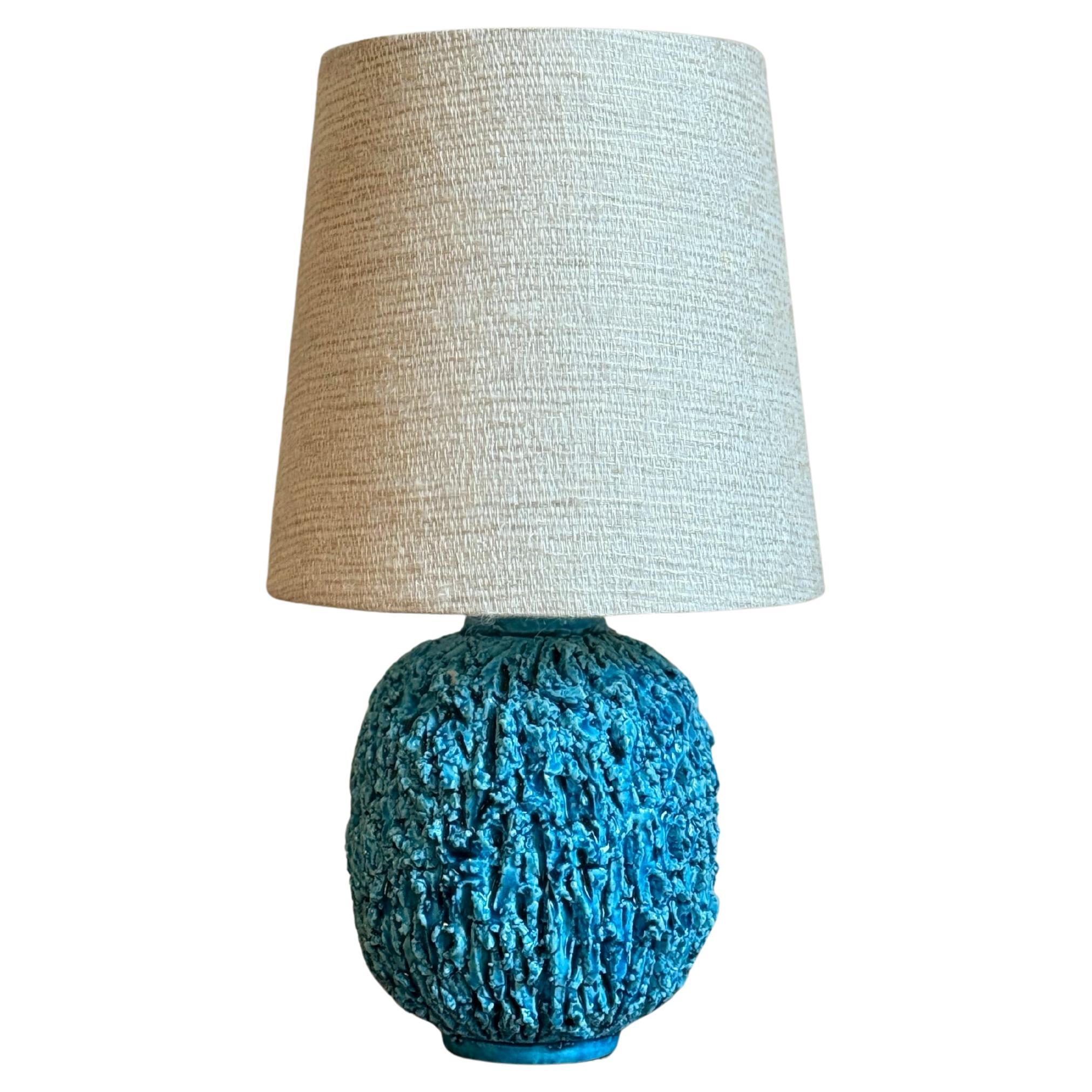
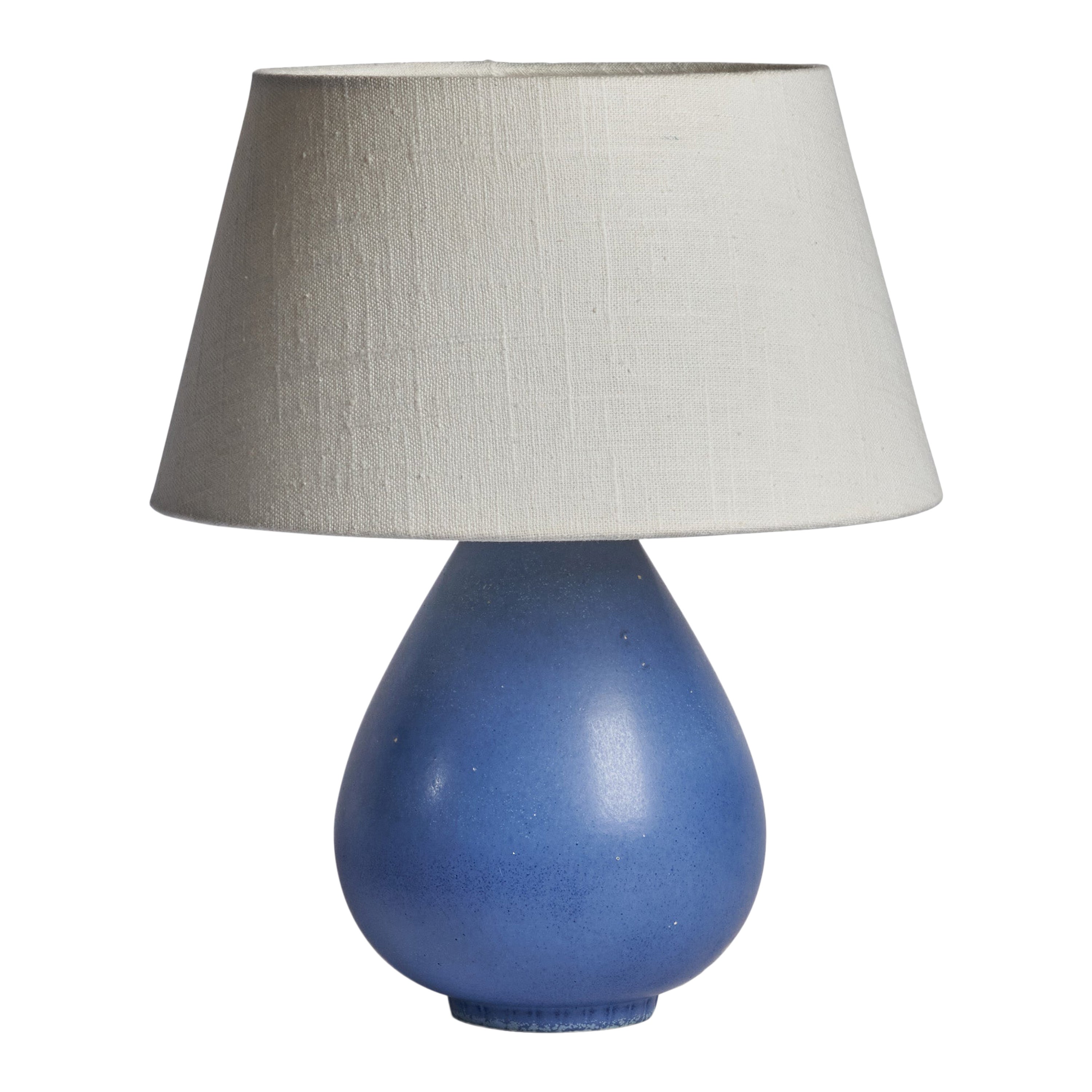
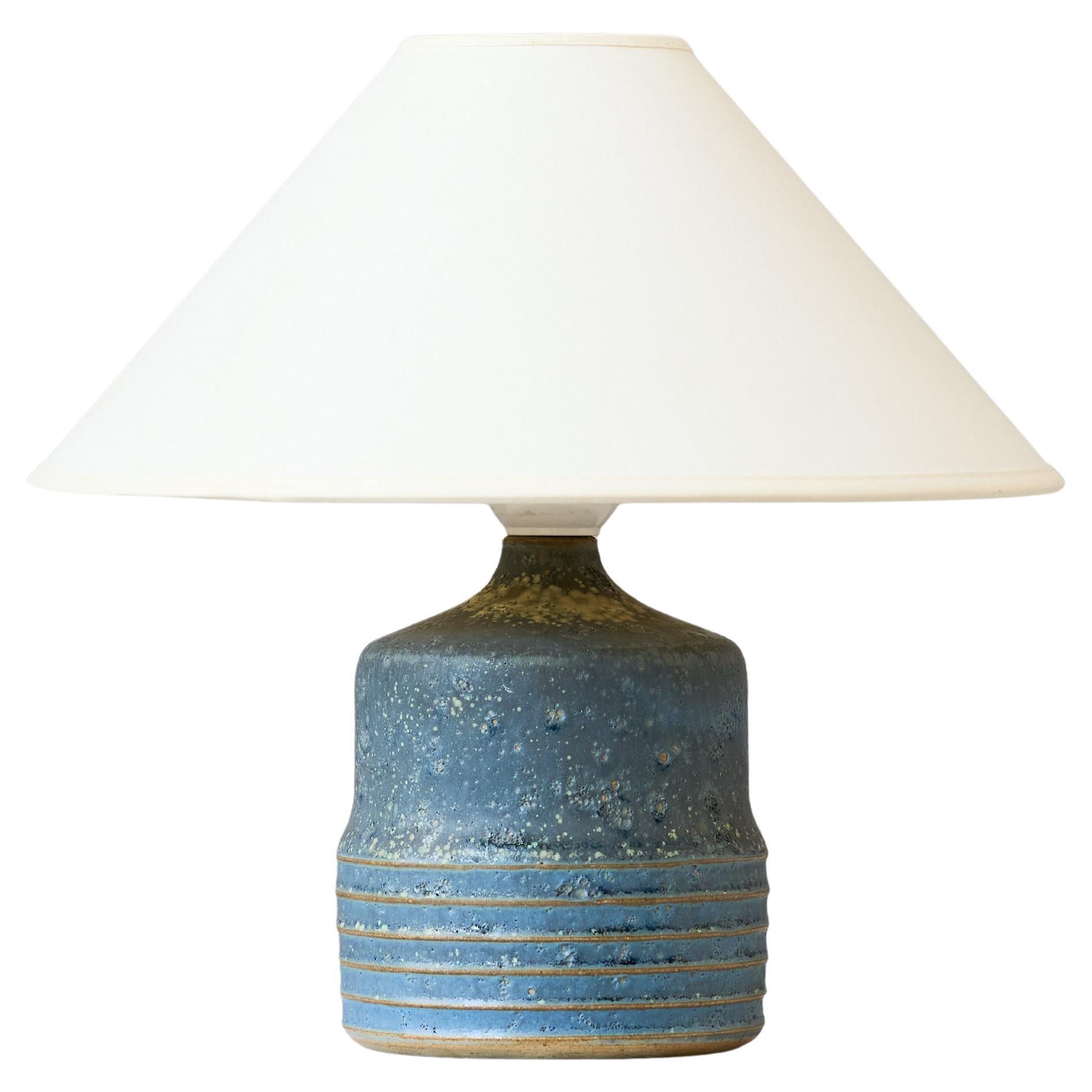
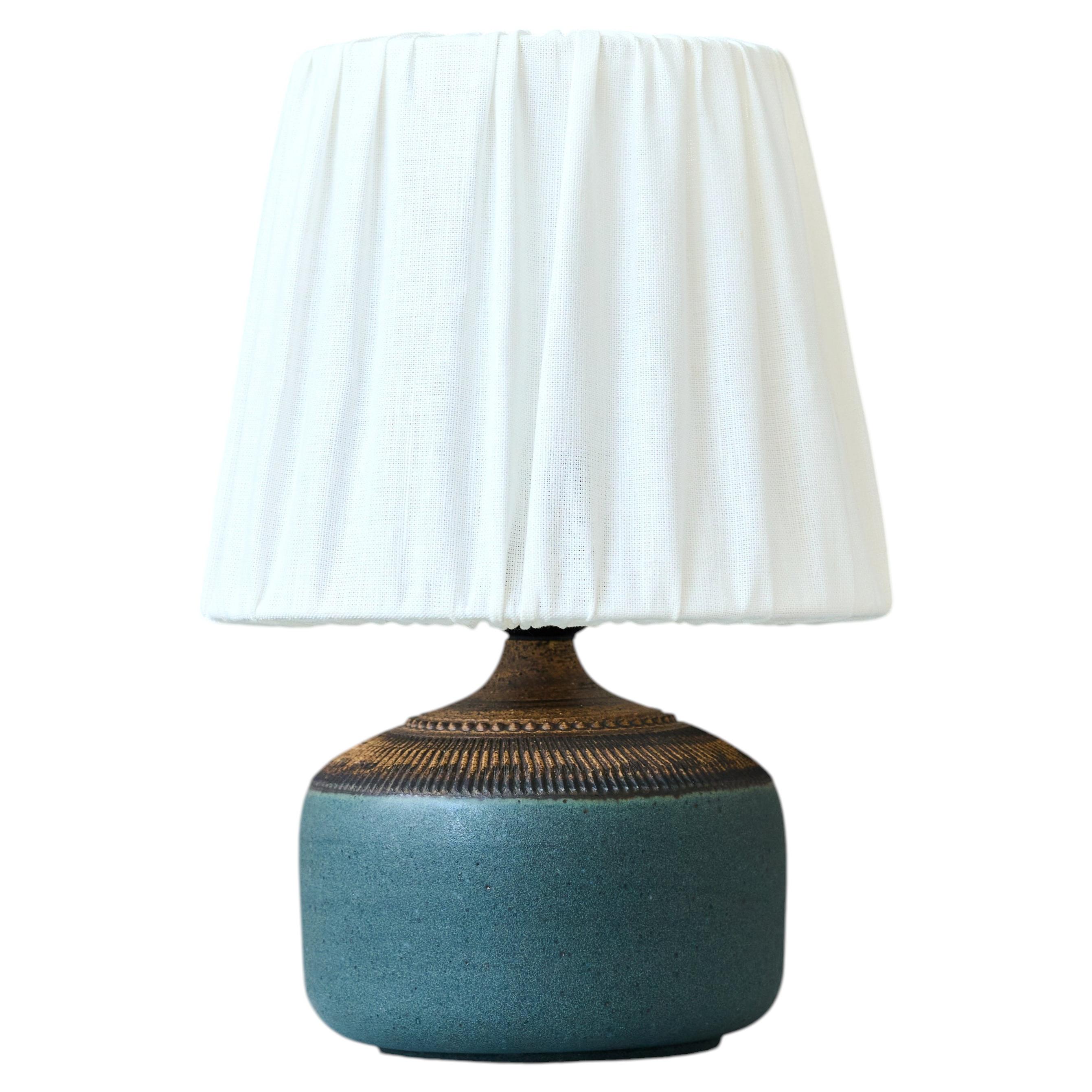
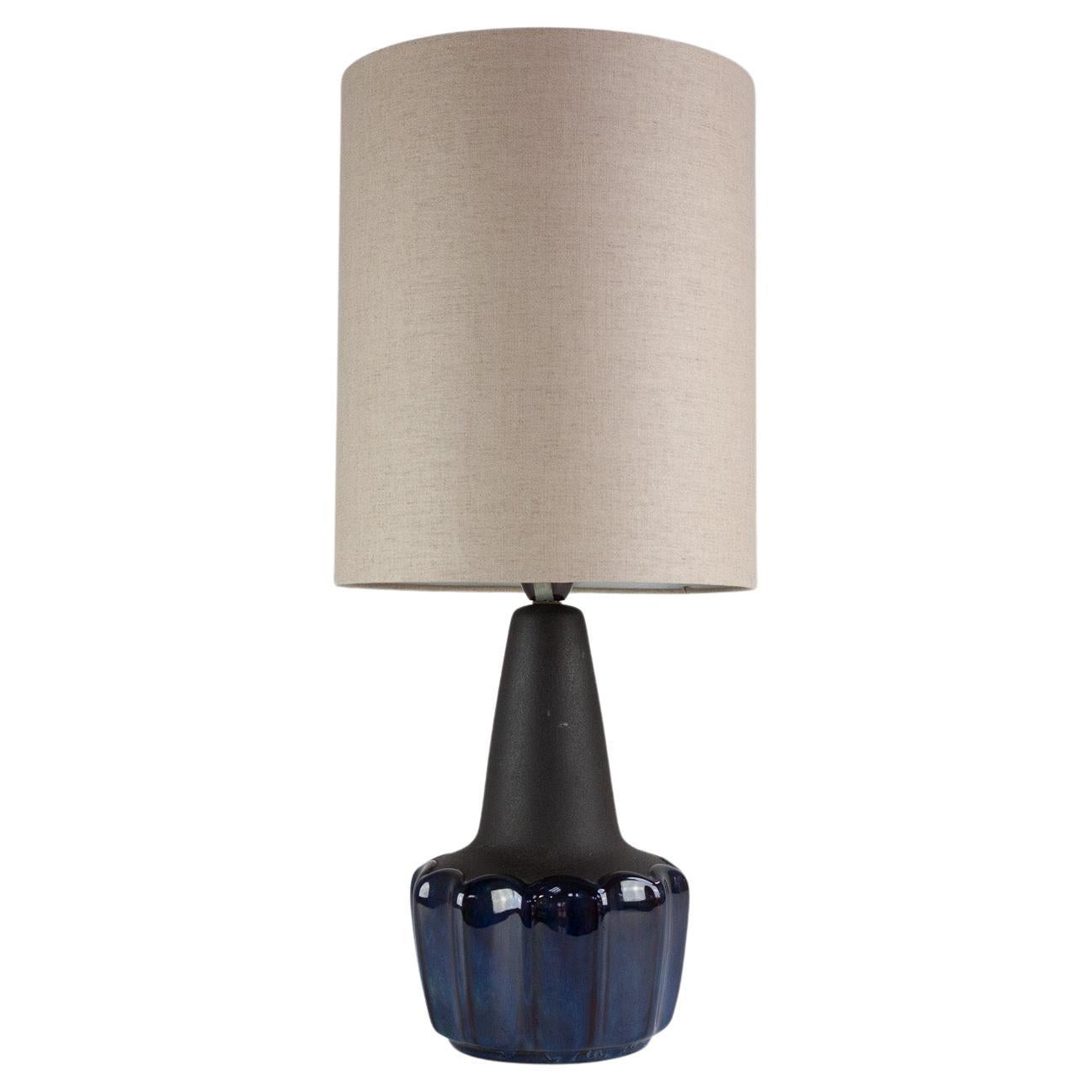
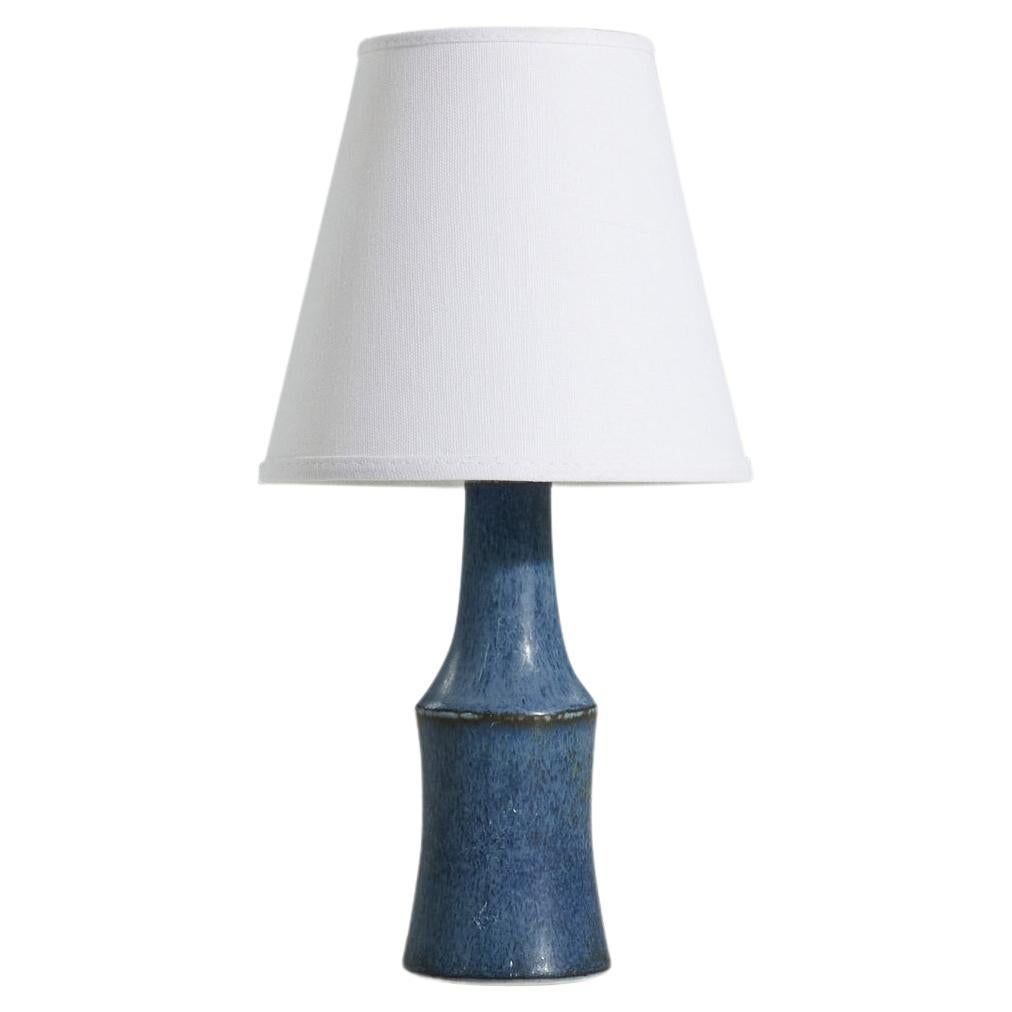
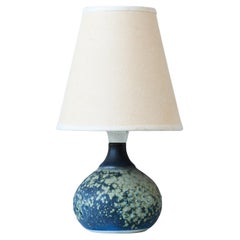
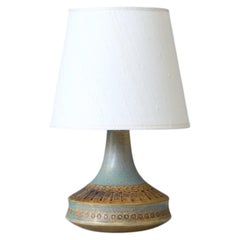
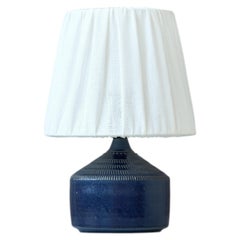
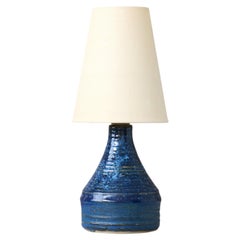
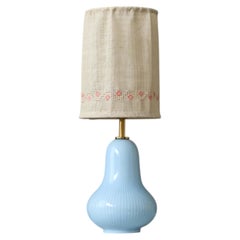
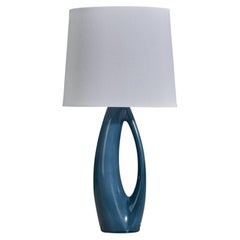
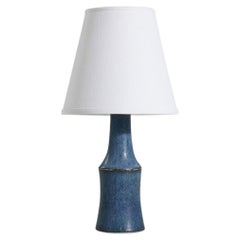
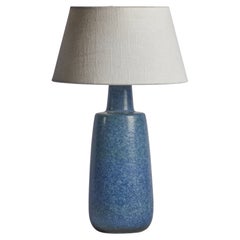
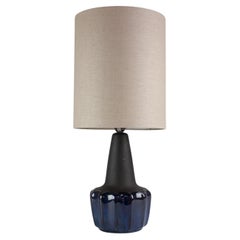
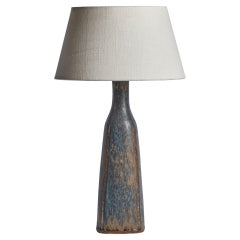
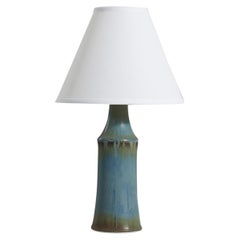
A beautiful mid-century stoneware table lamp with amazing hare's fur glaze.
Designed by Carl-Harry Stålhane and handmade at Rörstrand, Sweden, 1950s.
Great original condition. No chips, cracks och crazing.
Signed with makers mark.
Sold without lampshade.
Dimensions of the lamp (without the shade):
Height (incl. the socket): 23 cm (9.1 in.)
Diameter: 7,7 cm (3 in.)
Light source: E14 screw bulb (E12 screw bulbs fit with an adapter that we send with the lamp).
Switch on the white cord. European electrical plug (but we can change it for an American if you'd like).
Carl-Harry Stålhane (1920–1990) was one of Sweden’s foremost ceramic artists and designers, a creative force whose work helped define the international image of Scandinavian ceramics during the twentieth century. Renowned for his refined stoneware, innovative glazes, and exceptional sense of form, Stålhane combined artistic sensitivity with technical mastery, creating works that remain among the most admired achievements of modern Swedish design. Throughout a career spanning more than four decades, he transformed both industrial and studio ceramics, establishing himself as one of the leading figures of post-war ceramic art.
Born in Mariestad, Sweden, in 1920, Stålhane studied at the School of Arts and Crafts in Stockholm, now Konstfack, where he received a comprehensive education in design and applied arts. His talent was recognised early, and in 1939, at just nineteen years of age, he joined Rörstrand, one of Sweden’s most prestigious ceramic manufacturers. What began as a junior position would develop into a lifelong association with the company and one of the most influential careers in Scandinavian ceramics.
During his early years at Rörstrand, Stålhane worked under the artistic leadership of Gunnar Nylund, whose influence helped shape the factory’s modern direction. While learning from Nylund’s example, Stålhane quickly developed a distinctive artistic voice of his own. His ability to unite elegant form with technical innovation soon established him as one of the factory’s most important designers, and he eventually succeeded Nylund as artistic director.
Throughout the 1940s and 1950s, Stålhane designed a wide range of tableware, decorative ceramics, and artistic stoneware that contributed significantly to Rörstrand’s international success. His industrial designs embodied the ideals of Scandinavian modernism, combining practicality, beauty, and craftsmanship. Yet even in factory-produced wares, his work displayed an unusual refinement, characterised by balanced proportions and a deep understanding of ceramic form.
It was in stoneware that Stålhane achieved some of his most enduring artistic accomplishments. His vessels are distinguished by their graceful silhouettes, subtle asymmetries, and harmonious proportions. Rather than relying on elaborate decoration, he allowed form itself to become the primary means of expression. This disciplined approach reflected a belief that true beauty emerges through simplicity, balance, and respect for materials.
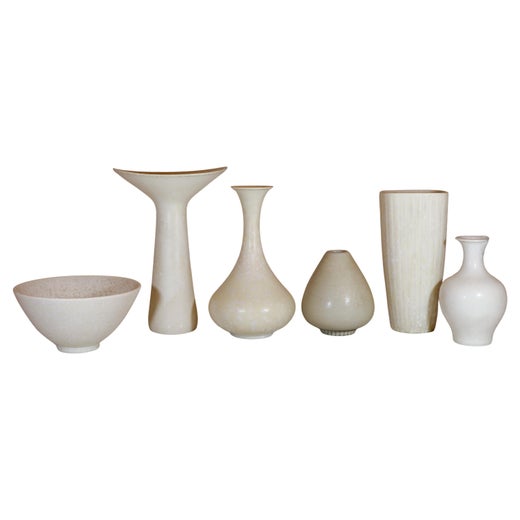
Equally important was his mastery of glaze. Stålhane developed a rich palette of surfaces ranging from soft matte finishes to luminous crystalline effects. His glazes often feature muted earth tones, pale blues, moss greens, warm browns, and delicate greys, colours that complement the purity of his forms without overwhelming them. The interaction between shape and surface became one of the defining qualities of his work, creating objects that reward close observation through their subtle complexity.
During the 1960s and 1970s, Stålhane increasingly devoted himself to unique and limited-edition stoneware. These works reveal an artist at the height of his creative powers, exploring ever more refined relationships between volume, texture, and glaze. Many of his later vessels possess an almost architectural quality, demonstrating an extraordinary command of proportion and visual balance. Though often minimalist in appearance, they convey a quiet emotional depth that has become a hallmark of his mature style.
Following his departure from Rörstrand, Stålhane established his own studio in Lidköping, where he continued to produce ceramics of exceptional quality. Freed from the constraints of industrial production, he was able to pursue a more personal artistic vision while maintaining the technical standards that had distinguished his work throughout his career. His studio pieces from this period are now regarded among the finest examples of Scandinavian ceramic art.
Stålhane’s influence extended far beyond his own production. Through his leadership at Rörstrand and his example as an artist, he helped shape the direction of Swedish ceramics during a period of remarkable international success. His work was exhibited widely, acquired by major museums, and celebrated by collectors around the world. Alongside figures such as Gunnar Nylund and Berndt Friberg, he helped establish Sweden as one of the leading centres of ceramic innovation in the twentieth century.
When Carl-Harry Stålhane died in 1990, he left behind a body of work that continues to define the highest standards of Scandinavian ceramic design. Today his ceramics are represented in museum collections worldwide and remain highly sought after by collectors. Their enduring appeal lies not in dramatic gestures or fashionable effects, but in an extraordinary commitment to proportion, craftsmanship, and artistic restraint. Through his mastery of form and glaze, Stålhane created ceramics of timeless elegance, securing his place among the great masters of modern ceramic art.