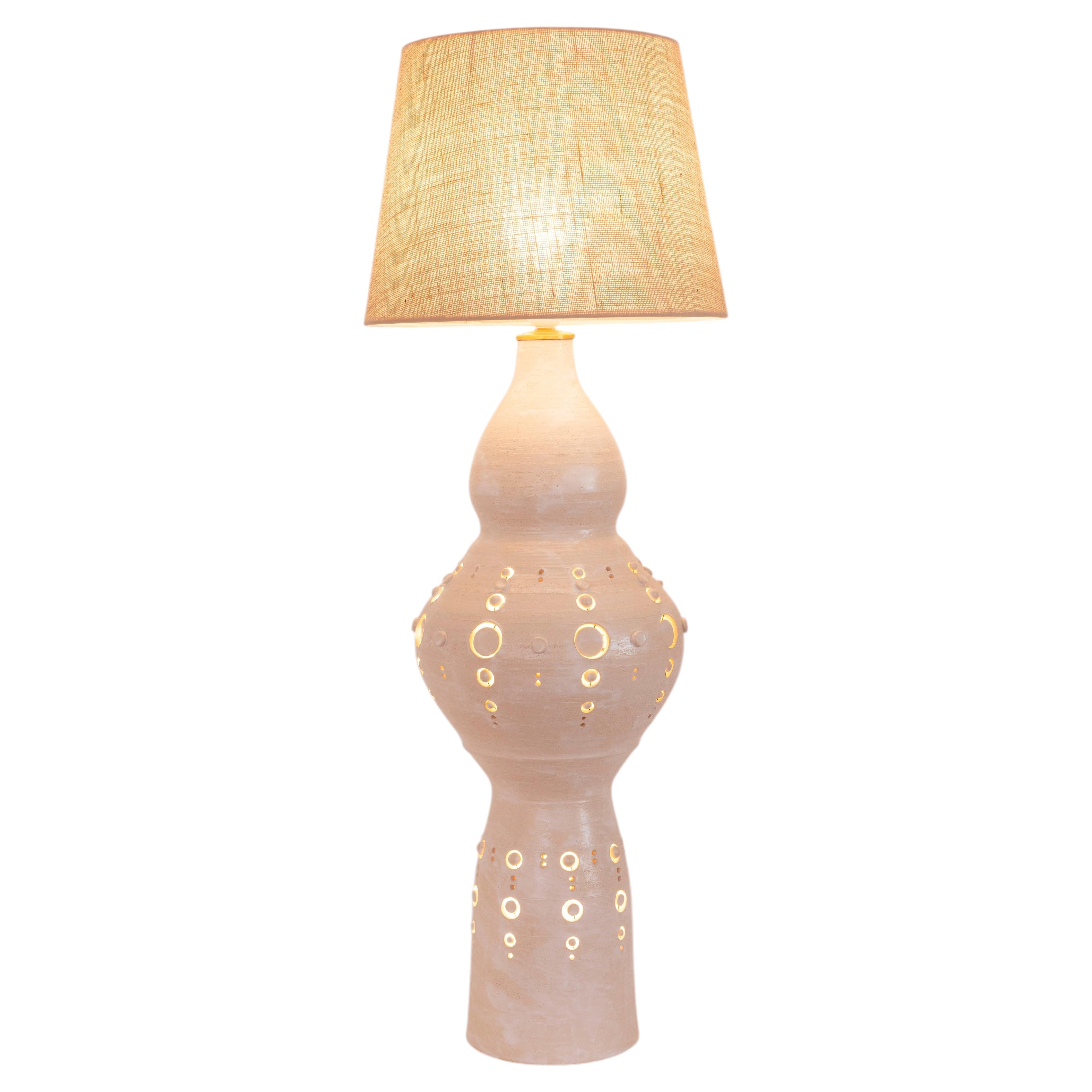
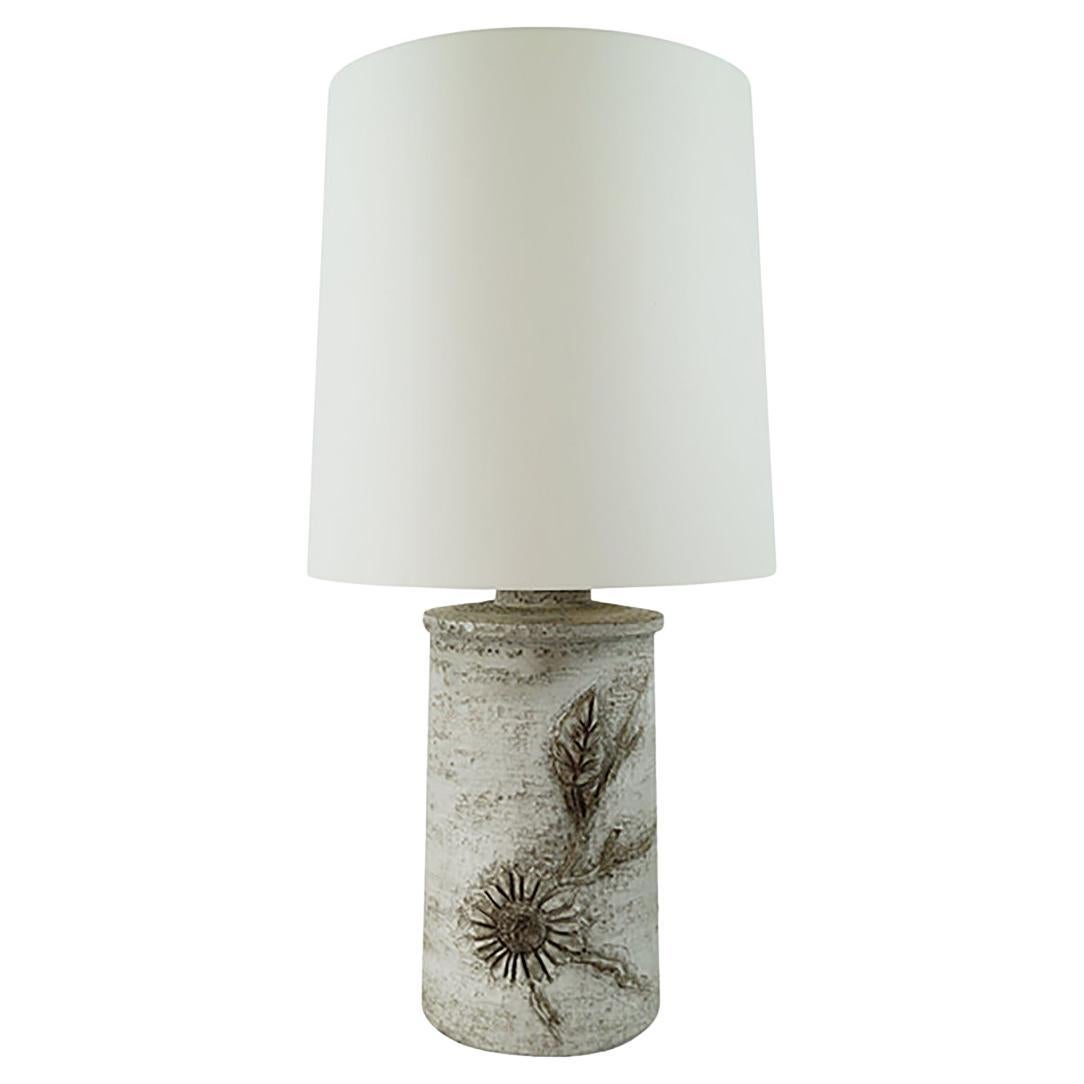
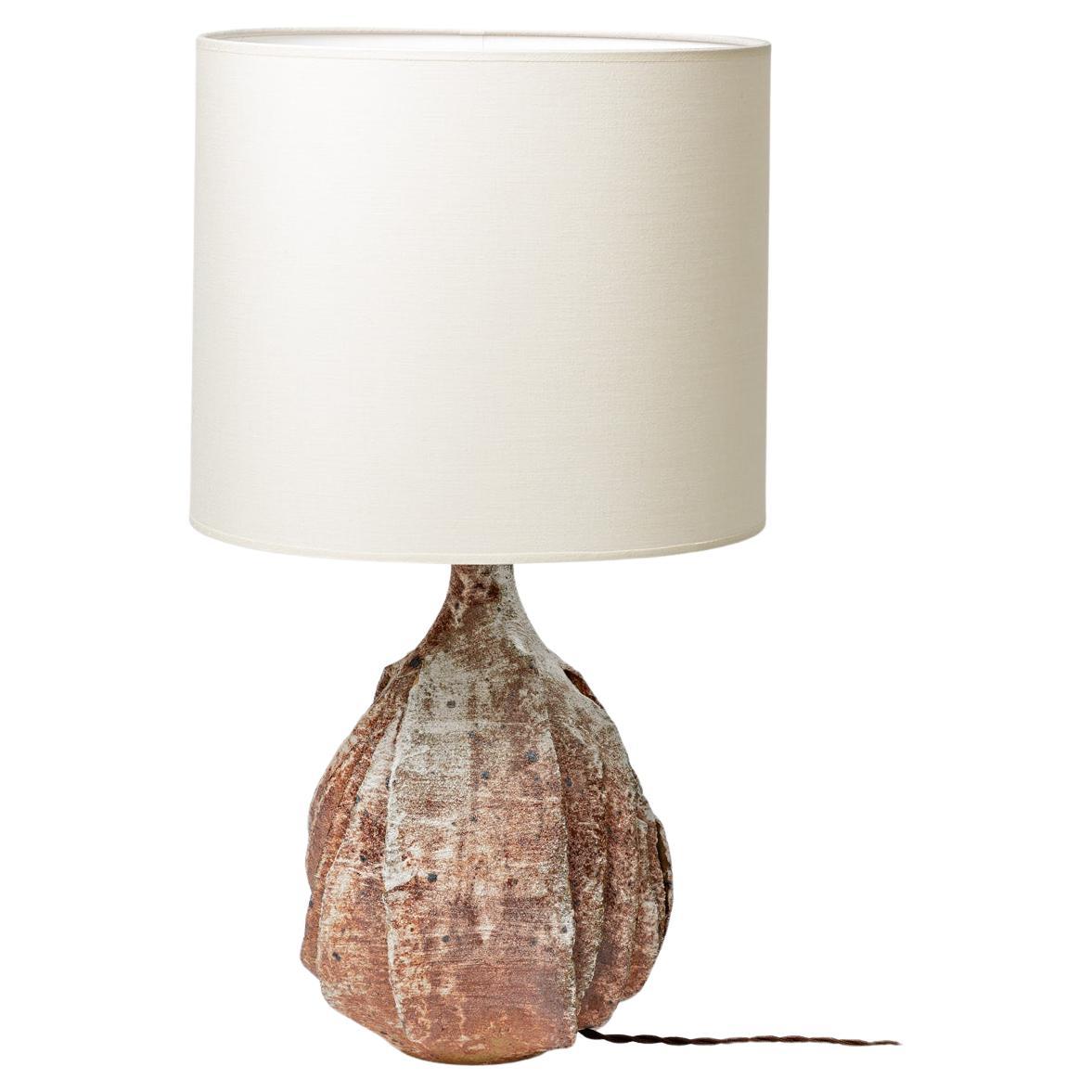
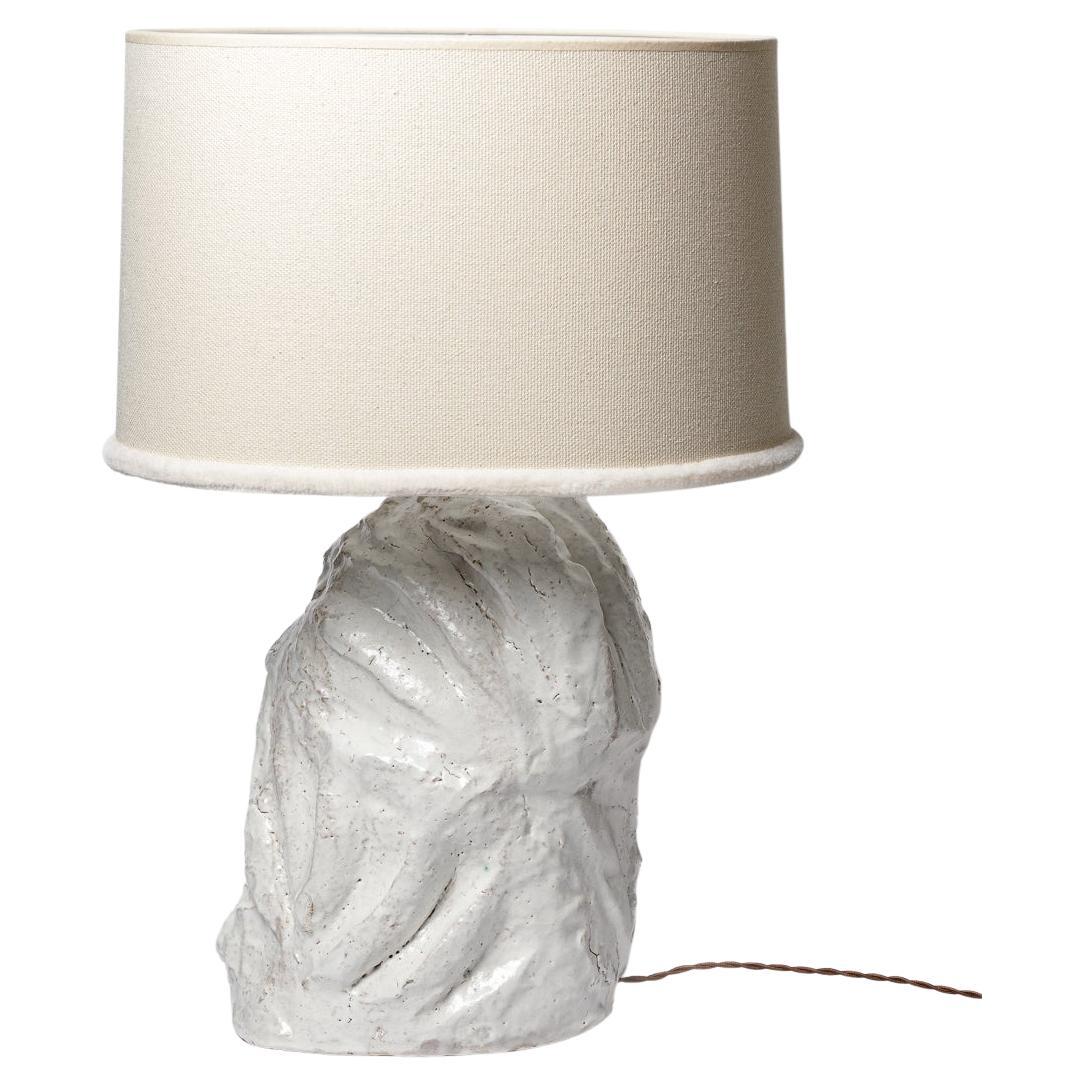
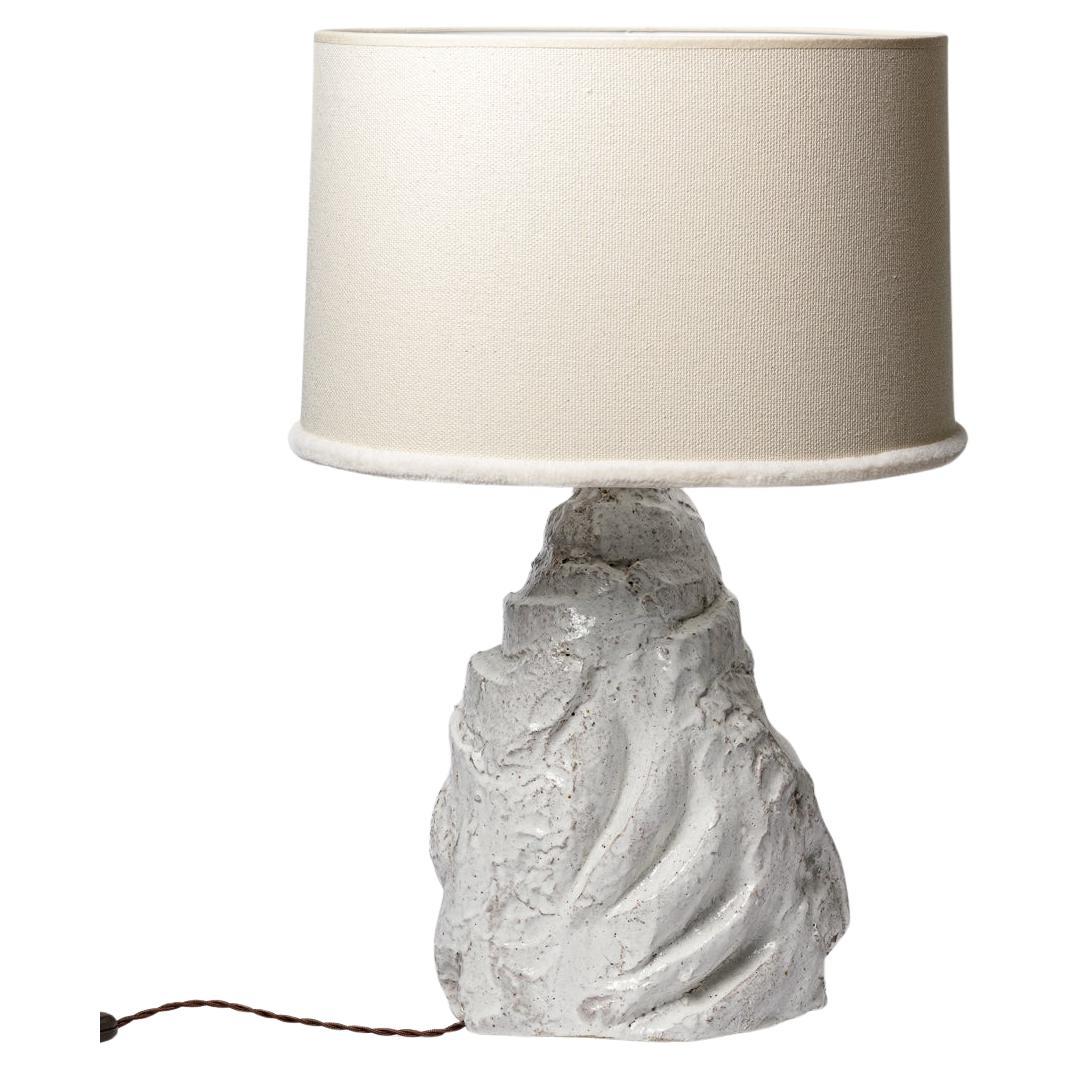
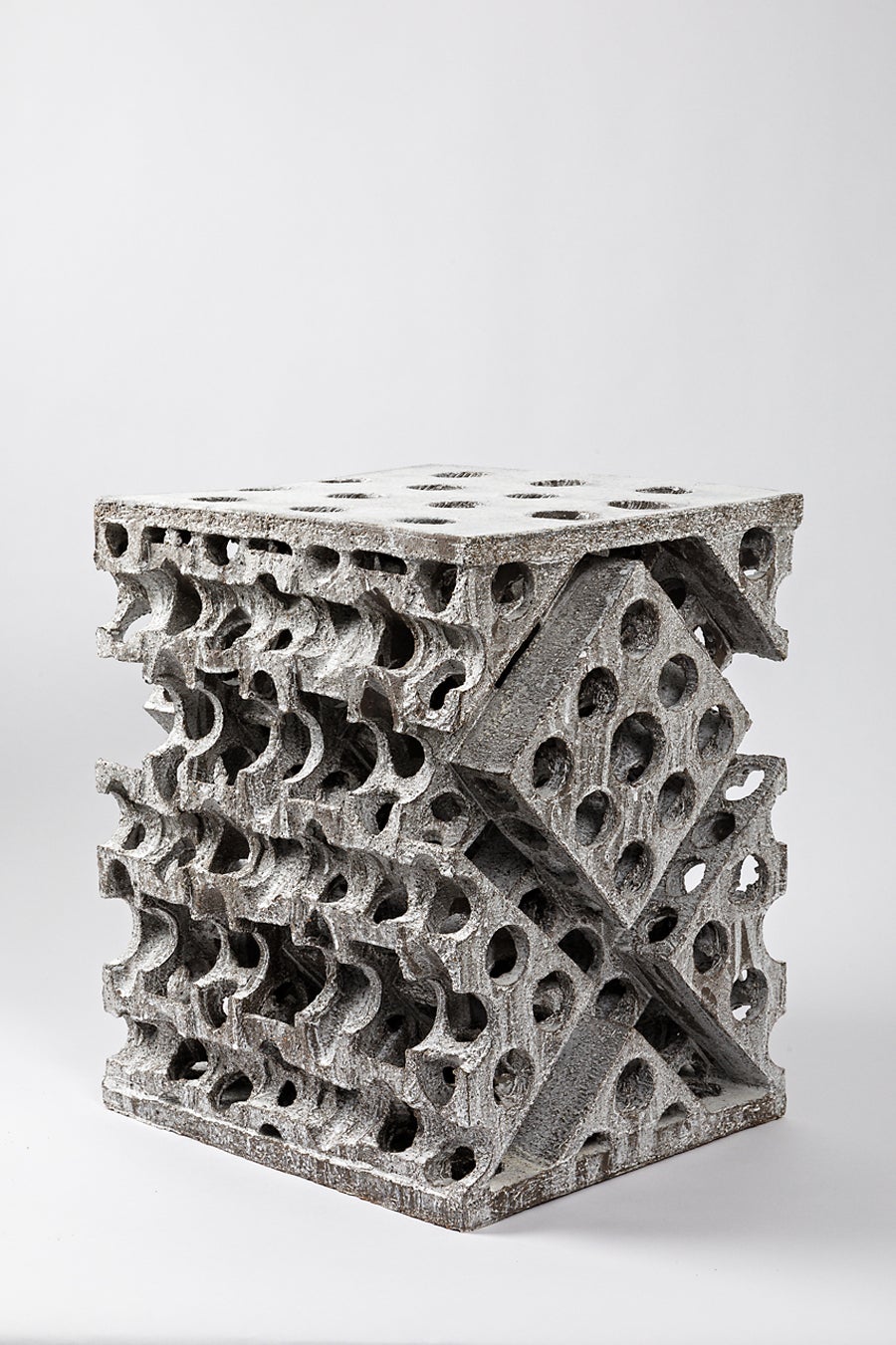
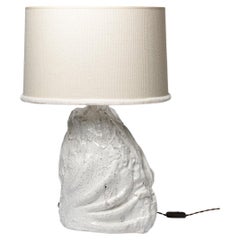
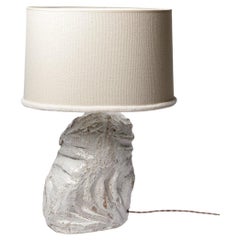
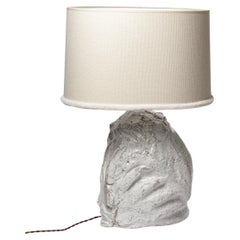
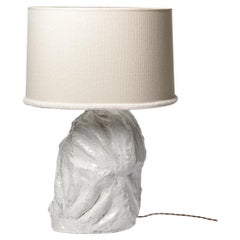
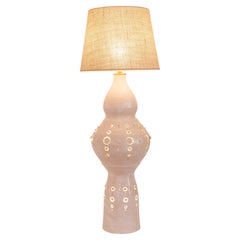
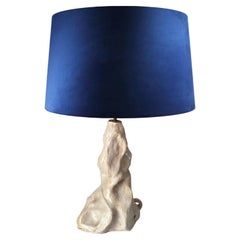
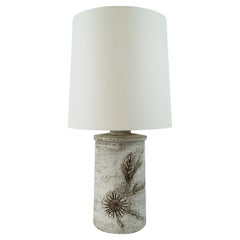
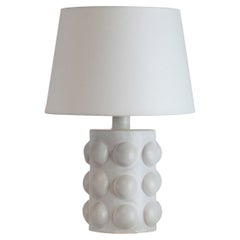
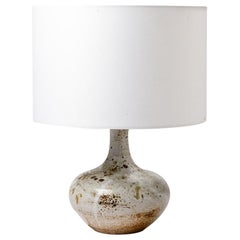
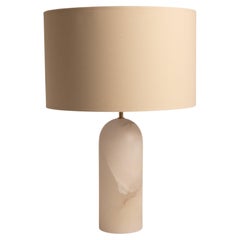
White glazed stoneware lamp base by Hervé Rousseau.
Artist signature under the base. 2022.
H : 13.4 x 9.8 x 5.9 inches (ceramic only).
H : 16.3 inches (ceramic and electrical system).
H : 23.6 x 14.9 x 12.6 inches (ceramic, electrical system and lampshade).
Sold with a European electrical system.
Référence 12.
-
Born in 1955 in France, lives and works in Boisbelle, France.
Hervé Rousseau learned wheel-throwing with Augusto Tozzola in Arcueil. In Paris, in 1978, he produced utilitarian pieces at the Atelier de l’Herbe Rouge, then in 1979 undertook a residency with Jacky Coville in Biot before spending a year throwing in Montreal, Canada.
Returning to France in 1981, he settled in Boisbelle with Josette Miquel and, between 1985 and 1986, built a large, three-chamber, horizontal Japanese kiln. His travels to Togo, Morocco, and Mali in the 1990s, along with his meeting in 2005 with Japanese potter Ryoji Koie, opened the way toward simple forms and a liberated gesture, where the hand precedes thought.
From 1997 onward, he sculpted his first “blocks,” shaped on the wheel and by fist, scarified with imprints of thumb, palm, and foot. The clay he chooses is wild, neither washed nor filtered, recalling a primitive material into which he immerses his whole body, turning the shaping process into a physical and poetic struggle.
For Rousseau, as for Lavoisier, “nothing is created, nothing is lost, everything is transformed.”
The fusion between human strength and the energy of raw earth gives rise to vibrant pieces, charged with intensity, which come alive during wood firing and reveal archaic, tectonic colors.
In his garden in Boisbelle, vases, large pawns, torsos, “inhabited” rocks, menhirs, and steles converse like a tribe, paying tribute to the forces of nature and the elements. His contemporary work conveys a palpable energetic tension and rigorous simplicity, reflecting both the humility and the nobility of this druid-like craftsman’s gesture. Hervé Rousseau’s works are held in French public collections such as the Musée des Arts Décoratifs, Sèvres, and Cluny, as well as in international museums in Germany, England, and China.