Table Mirror by Uno & Östen Kristiansson for Luxus of Sweden, 1960s
By Östen Kristiansson
Located in Dallas, TX
A large teak table mirror by Uno & Östen Kristiansson for Luxus, Sweden, 1960s.
Category
Vintage 1960s Table Mirrors
Materials
Teak
Without question the greatest architect the United States has ever produced, Frank Lloyd Wright and his philosophy of “organic architecture” — of buildings that exist in harmony with their natural surroundings — had a profound influence on the shape of modern life.
Wright gave us some of the most elegant and iconic buildings in America: residences such as Fallingwater, in rural Pennsylvania, the Robie House in Chicago, and Taliesin, Wright’s own home; and masterful institutional structures that include the Unity Temple in Oak Park, Illinois, the Johnson Wax headquarters in Racine, Wisconsin, and the Guggenheim Museum in New York. Whenever possible, Wright designed the furniture for his projects, to ensure an affinity between a building’s exterior and interior.
Wright’s wooden chairs and tables for his “Prairie Houses” of the early 1900s have sleek, attenuated forms, influenced by both the simplicity of traditional Japanese design and the work of Gustav Stickley and other designers of the Arts and Crafts movement.
For Taliesin and several residential projects, Wright designed severely geometric chairs that are marvels of reductivist design. He revisited many of these forms in the 1950s in furniture licensed to the North Carolina firm Henredon, adding a decorative frieze-like element to the edges of tables and stools. Owing to a cross-licensing agreement between Henredon and Heritage at the time, Wright's lines of the era are usually labeled Heritage-Henredon.
The works on 1stDibs also show how happily Wright embraced new forms and materials. His desks and chairs for Johnson Wax have a streamlined look and use tubular steel to the same effect as designer Warren McArthur, who collaborated with Wright in the interiors of the Arizona Biltmore Hotel. For the Price Tower (1956) in Oklahoma, Wright designed angular wooden desks as well as upholstered pedestal chairs made of chromed steel — audacious furniture for his tallest completed building project.
The beauty of Frank Lloyd Wright’s furniture designs is that while many of us wish we could live in one of his houses, his vintage sofas, storage cabinets and armchairs connect us directly to his architecture, and to the history he made.
Table Mirror by Uno & Östen Kristiansson for Luxus of Sweden, 1960s
By Östen Kristiansson
Located in Dallas, TX
A large teak table mirror by Uno & Östen Kristiansson for Luxus, Sweden, 1960s.
Teak
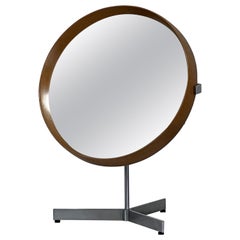
Oak Table Mirror by Uno & Östen Kristiansson for Luxus of Sweden, 1960s
By Luxus of Sweden
Located in Dallas, TX
An oak table mirror by Uno & Östen Kristiansson for Luxus, Sweden, 1960s. Rosewood version available separately.
Oak
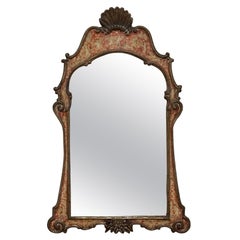
Max Kuehne Mirror, 1940's
By Max Kuehne
Located in Dallas, TX
A large and impressive mirror by Max Kuehne, 1940's. Wonderfully detailed and hand painted.
Wood
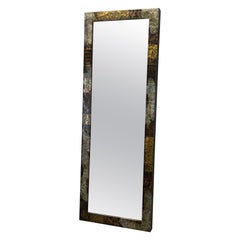
Monumental Paul Evans Patchwork Mirror
By Paul Evans
Located in Dallas, TX
A monumental and rare full length mirror by Paul Evans for Directional. Patchwork of brass, copper and bronze with a beautiful patina.
Brass, Copper
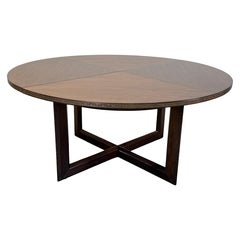
Frank Lloyd Wright Taliesin Game Table
By Frank Lloyd Wright
Located in Dallas, TX
Frank Lloyd Wright for Henredon 'Taliesin' dining or game table. Mahogany table, concentric square pattern bookmatched with embossed copper "Taliesin" detail around the edge and carv...
Mahogany
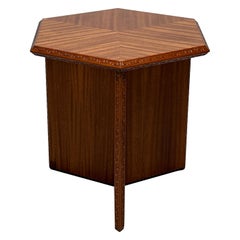
Frank Lloyd Wright for Henredon Hexagonal Table
By Frank Lloyd Wright
Located in Dallas, TX
A mahogany hexagonal lamp table designed by Frank Lloyd Wright for Henredon. Smaller version available separately.
Mahogany
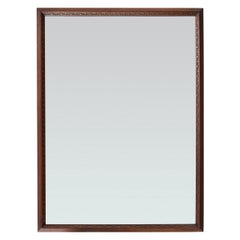
Taliesin' Edge Mirror by Frank Lloyd Wright for Heritage Henredon
Located in Sagaponack, NY
A mahogany mirror with a 'Taliesin' carved border.
Wood
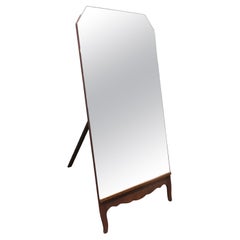
Art Deco Cheval Dressing Mirror from a Gents Outfitters
Located in Godshill, Isle of Wight
Art Deco Cheval Dressing Mirror from a Gents Outfitters This is a very practical wide French dressing mirror, the mirror has an easel stand an...
Oak
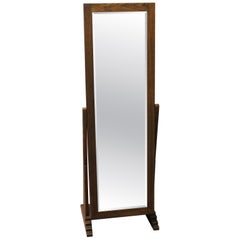
Odeon Style Early 20th Century Cheval Mirror This is a well designed mirror
Located in Godshill, Isle of Wight
Odeon Style Early 20th Century Cheval Mirror This is a well designed mirror, it stands on a stepped Oak stand and the mirror is slotted on to this so that it can be angled very ea...
Oak
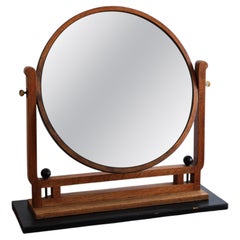
Art Deco Modernist Large Table Vanity Mirror
Located in London, GB
Large modernist table vanity mirror, Dutch c 1930’s Exceptional adjustable mirror in oak with nice ebonised ball and trim detailing on a rectangular stepped base, very much in the A...
Oak
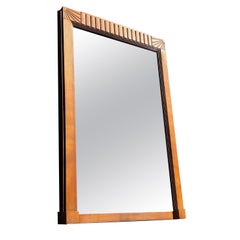
An important ART-DECO Architectural MODERNIST Wall MIRROR, France 1930
Located in PARIS, FR
An important rectangular wall mirror, Art-Deco, Modernist, Bauhaus. A beautiful, sculptural, bright wood frame is surrounding an authentic silver mirror from the early thirties. The ...
Mirror, Wood
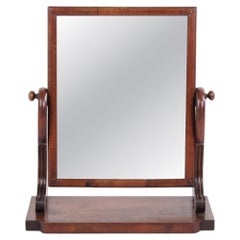
Mahogany Table Mirror from the 19th Century
Located in Lejre, DK
Table mirror crafted in mahogany dating from the 19th century. The mirror features an adjustable glass and reflects the craftsmanship of the period. — Period: 19th century — Material...
Mahogany