Wool Historical Memorabilia

9 Results
to
5
3
9
2
1
3
6
4
1
1
113,006
1,010
502
378
182
4
3
3
2
1
9
9
9
1
1
Material: Wool
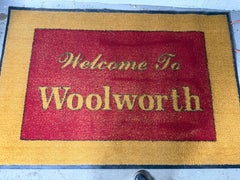
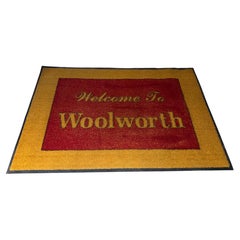
Extremely Rare "Welcome to Woolworth" rug / welcome mat / Woolworth Dept. Store

Extremely Rare "Welcome to Woolworth" rug / welcome mat / Woolworth Dept. Store

By Woolworth Department Store

Located in Buffalo, NY

Extremely Rare "Welcome to Woolworth" rug / welcome mat . Salvaged from Woolworth Dept. Store.. I can't imagine very many of these survived ? This one saved and has been rolled up i...

Category

1950s American Mid-Century Modern Vintage Wool Historical Memorabilia

Materials

Wool, Rubber

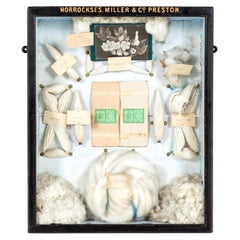
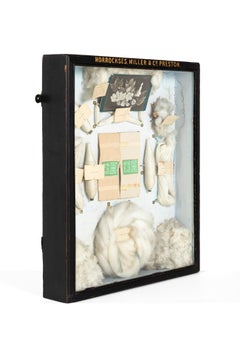
English 19th Century Wool Sampler Display Case In Glass with Makers Badge

English 19th Century Wool Sampler Display Case In Glass with Makers Badge

Located in Faversham, GB

A charming late 19th century wool sampler display case by Horrockses, Miller and Co. of Lancashire. The glazed ebonised case displays a selection of cotton and original textile samp...

Category

1890s British High Victorian Antique Wool Historical Memorabilia

Materials

Wool, Glass, Pine, Giltwood, Paint

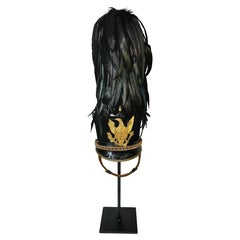
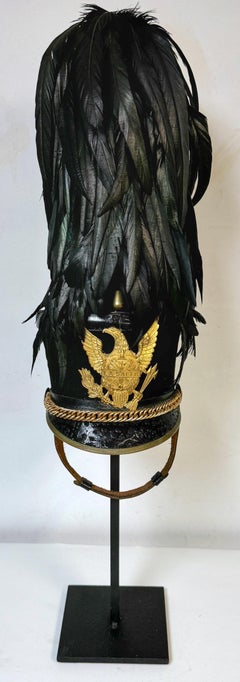
Full Dress La Salle Cadet 'Tar Bucket' Dress Hat/Shako, and Stand

Full Dress La Salle Cadet 'Tar Bucket' Dress Hat/Shako, and Stand

Located in West Palm Beach, FL

Full Dress La Salle Cadet ``Tar Bucket`` Dress Hat/Shako and Stand USA, Late 19th Century/Early 20th Century This nearly pristine 'Tar Bucket' Dress Hat/...

Category

20th Century American Wool Historical Memorabilia

Materials

Metal, Brass, Iron

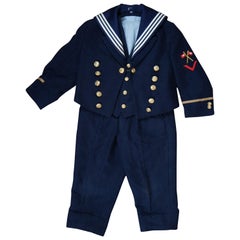
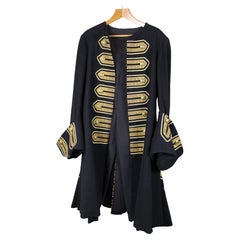
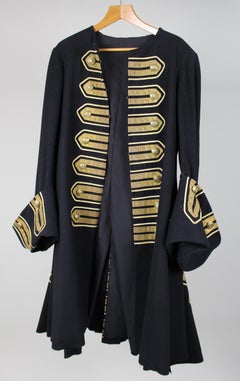
Decorative Vintage Ceremonial Wool Coat with Gold Braid Trim, 20th Century

Decorative Vintage Ceremonial Wool Coat with Gold Braid Trim, 20th Century

Located in Worcester, GB

Decorative Vintage Ceremonial Wool Coat with Gold Braid Trim, 20th Century A striking and well-made vintage ceremonial coat, inspired by 18th-century European military and regimenta...

Category

Mid-20th Century European Wool Historical Memorabilia

Materials

Wool

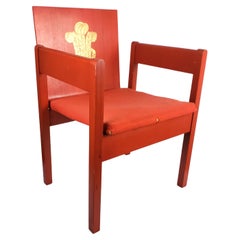
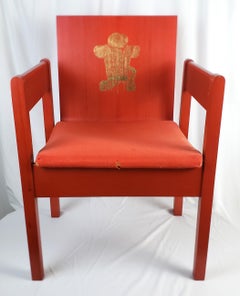
Mid-Century Investiture Chair Designed by Lord Snowden for Prince Charles 1969

Mid-Century Investiture Chair Designed by Lord Snowden for Prince Charles 1969

By Remploy

Located in Hamilton, Ontario

This chair was designed by Lord Snowden in 1969 and produced by Remploy for the Investiture ceremony of Prince Charles, and done in the period Mid-Cetury Modern style. The chair is made of ash with a bentwood back and painted in a bright red with Prince of Wales styled feathers on the back in gilt. These chairs are known as 'investiture chairs...

Category

Mid-20th Century English Mid-Century Modern Wool Historical Memorabilia

Materials

Wool, Bentwood

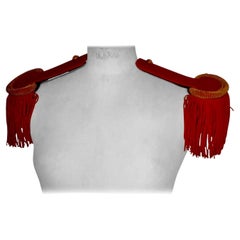
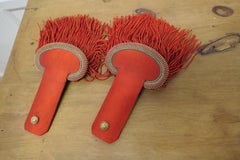
19th Century French First Officer’s Uniform Red Epaulettes

19th Century French First Officer’s Uniform Red Epaulettes

Located in Godshill, Isle of Wight

19th Century French First Officer’s Uniform Red Epaulettes Good pair of French Officers Epaulettes made in Red Silk and lined in black velvet, the f...

Category

Late 19th Century Federal Antique Wool Historical Memorabilia

Materials

Wool

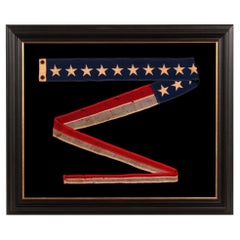
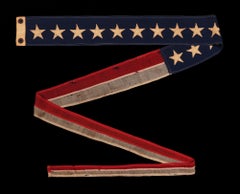
Commission Pennant with 13 Stars, like for Private Vessel, Ca 1892-1910

Commission Pennant with 13 Stars, like for Private Vessel, Ca 1892-1910

Located in York County, PA

Commission pennants are the distinguishing mark of a commissioned U.S. Navy ship. Flown at the topmast, the typical American format is a long blue field, usually with a single row of white stars, although sometimes with their total divided into two rows, followed by two long stripes, red-over-white. A ship became commissioned when this pennant was hoisted. Flown during both times of peace and war, the only time the pennant is not flown is if a flag officer or civilian official was aboard and replaced it with their own flag. Sometimes the owners of private ships mimicked the use of Navy signals. Some seafaring men would have served in the Navy and become privy to various practices in that capacity. Others flew them purely for stylistic reasons, either on a regular basis or while the boat was dressed for special occasion. Hudson River steamers regularly flew pennants of this nature, as evidenced by period photography as well as the paintings of artists such as John and James Bard...

Category

Late 19th Century American Antique Wool Historical Memorabilia

Materials

Wool

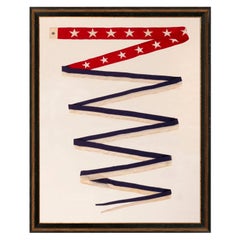
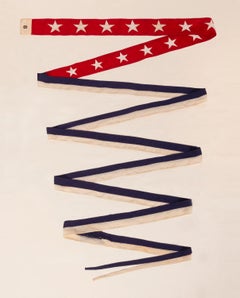
U.S War Department Commissioning Pennant with 13 Stars

U.S War Department Commissioning Pennant with 13 Stars

Located in York County, PA

EXTREMELY RARE U.S. WAR DEPARTMENT COMMISSIONING PENNANT WITH 13 STARS, A REVERSAL OF THE U.S. NAVY COLOR SCHEME, TWENTY-FOUR FEET ON THE FLY, SP...

Category

20th Century American Wool Historical Memorabilia

Materials

Wool

Related Items
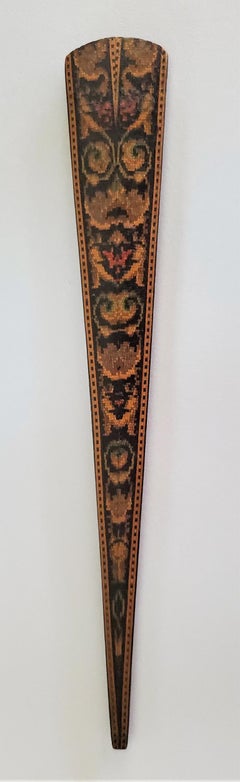
Rare 19th Century English Tunbridgeware Hair Pin or Slide

Rare 19th Century English Tunbridgeware Hair Pin or Slide

Located in Dallas, TX

PRESENTING an EXTREMELY UNIQUE and RARE 19C British Tunbridgeware Hair Pin/Bobbin or Slide. This slide is unlike any of it’s kind we have seen before, it is a VERY RARE survivor. From circa 1860 – 80 and made in Tunbridge Wells, England. Made of walnut with gorgeous marquetry inlay on the entirety of the front with classic Tunbridgeware micro-mosaic all over the front. The rear is walnut. The marquetry inlay appears to be various different woods, namely, maple, walnut and satinwood. Would have been worn in a Lady’s hair bun with the micro-mosaic facing forward. This would have belonged to a VERY ELEGANT LADY in the mid to late 19th Century. Tunbridge ware is a form of decoratively inlaid woodwork, typically in the form of boxes, that is characteristic of Tonbridge and the spa town of Royal Tunbridge Wells in Kent in the 18th and 19th centuries. The decoration typically consists of a mosaic of many very small pieces of different coloured woods that form a pictorial vignette. Shaped rods and slivers of wood were first carefully glued together, then cut into many thin slices of identical pictorial veneer with a fine saw. Elaborately striped and feathered bandings for framing were pre-formed in a similar fashion. There is a collection of Tunbridge ware in the Tunbridge Wells Museum and Art Gallery in Tunbridge Wells. The famous makers of Tunbridge ware were in the Tunbridge Wells area of Kent; their most notable work was from circa 1830-1900. Early makers of Tunbridge ware, in Tunbridge Wells in the mid-18th century, were the Burrows family, and Fenner and Co. In the 19th century, around 1830, James Burrows invented a technique of creating mosaics from wooden tesserae. Henry Hollamby, apprenticed to the Burrows family, set up on his own in 1842 and became an important manufacturer of Tunbridge ware, employing about 40 people. Edmund Nye (1797–1863) and his father took over the Fenner company when William Fenner retired in 1840, after 30 years in partnership with him. Thomas Barton (1819–1903), previously apprenticed at the Wise factory, joined the Nyes in 1836, and worked as Nye’s designer; he took over the business in 1863 and continued there until his death. In Tonbridge (near to Tunbridge Wells), George Wise (1703–1779) is known to have had a business in 1746. It continued with his son Thomas, and Thomas’s nephew George (1779–1869), who took over in 1806. In its early years the company made articles such as workboxes and tea caddies with prints of popular views; later items had pictures created from mosaics. Their workshop in Tonbridge, Wise’s Tunbridge Ware Manufactory, was next to the Big Bridge over the Medway; the building was demolished in 1886 to widen the approach to the bridge. Tunbridge ware became popular with visitors to the spa town of Tunbridge Wells, who bought them as souvenirs and gifts. Articles included cribbage boards, paperweights, writing slopes, snuffboxes and glove boxes. At the Great Exhibition of 1851, Tunbridge ware by Edmund Nye, Robert Russell and Henry Hollamby was shown; Edmund Nye received a commendation from the judges for his work. He exhibited a table depicting a mosaic of a ship at sea; 110,800 tesserae were used in making the picture. The manufacturers of Tunbridge ware were cottage industries, and they were no more than nine in Tunbridge Wells and one in Tonbridge. The number declined in the 1880s; competent craftsmen were hard to find, and public tastes changed. After the death of Thomas Barton in 1903 the only surviving firm was Boyce, Brown and Kemp, which closed in 1927. Marquetry was an old technique which was continued by Nye and Barton to create images such as birds or butterflies. ‘Green Oak’ as caused by the fungus Chlorociboria aeruginascens. Stickware and half-square mosaic was invented by James Burrows in about 1830: a bunch of wooden sticks of different colours, each having triangular or diamond-shaped cross section, were tightly glued together; in the case of stickware, the resulting block was dried, then turned to form an article such as the base of a pincushion. For half-square mosaic, thin slices were taken from the composite block, and applied to a surface. Tesselated mosaic, was a development by James Burrows of half-square mosaic; it was adopted by George Wise and Edmund Nye. Minute tesserae were used to form a wide variety of geometric and pictorial designs. Many sorts of wood were used for the various colours; about 40 were in regular use. Only natural colors were used; green was provided by “green oak”, produced by the action of fungus on fallen oak. Designs for articles were often taken from designs of Berlin wool work.

Category

Late 19th Century English High Victorian Antique Wool Historical Memorabilia

Materials

Satinwood, Walnut

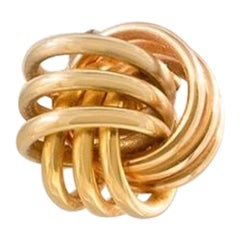
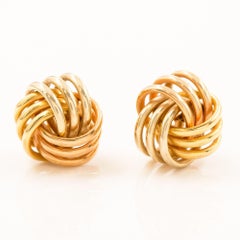
14K Yellow Gold Love-Knot Earrings, Vintage Late 20th Century

14K Yellow Gold Love-Knot Earrings, Vintage Late 20th Century

Located in Shippensburg, PA

PAIR OF 14K YELLOW GOLD LOVE-KNOT EARRINGS Item # C104606 A pair of 14k yellow gold love-knot earrings. Specifications: Composition: 14 karat yellow gold All items are rigorously ...

Category

20th Century Wool Historical Memorabilia

Materials

Gold

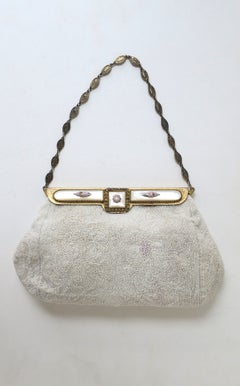
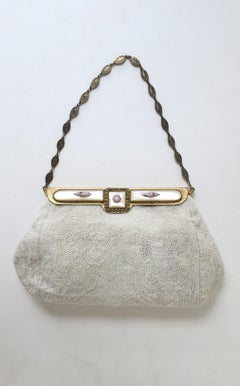
Vintage White Beaded Handbag, Mid-20th Century

Vintage White Beaded Handbag, Mid-20th Century

Located in New York, NY

A beautiful vintage white beaded handbag with brass hardware decorated with Lucite in a Mother-Of-Pearl style, pastel enamels and marcasite details...

Category

Mid-20th Century European Wool Historical Memorabilia

Materials

Brass, Enamel

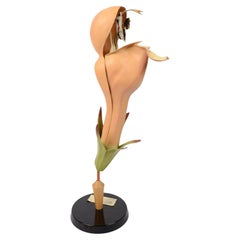
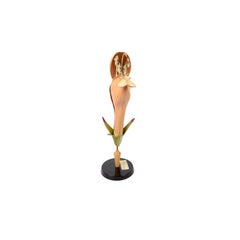
1930s Germany Botanical Model of the Lamium Purpureum Flower

1930s Germany Botanical Model of the Lamium Purpureum Flower

Located in Milan, IT

Educational model of the Lamium purpureum L. (false purple nettle) flower made of painted papier mâché with a Bakelite base from the 1930s, German ma...

Category

1930s German Vintage Wool Historical Memorabilia

Materials

Parchment Paper

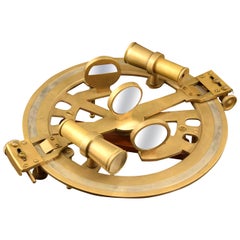
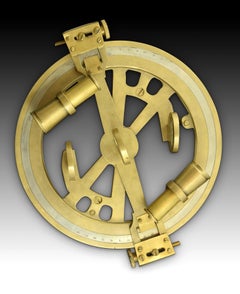
Circular Sextant, Decorative Piece, 20th Century

Circular Sextant, Decorative Piece, 20th Century

$142 / item

H 4.34 in W 7.88 in D 7.88 in

Circular Sextant, Decorative Piece, 20th Century

Located in Madrid, ES

The sextant is an instrument that allows to measure angles between two objects such as two points of a coast or a star, traditionally the sun of the earth and the horizon. Knowing th...

Category

Late 20th Century Spanish Other Wool Historical Memorabilia

Materials

Metal, Other

La Chinoise
La Chinoise

La Chinoise

$1,723

H 29 in W 20 in D 0.1 in

La Chinoise

By Kiyoshi Awazu

Located in London, GB

Original Japanese film poster used in Japan when the film was first shown in 1967. This film was directed by Jean-Luc Godard and starred Anne Wiazemsky, Juliet Berto, Jean-Pierre Le...

Category

1960s Japanese Vintage Wool Historical Memorabilia

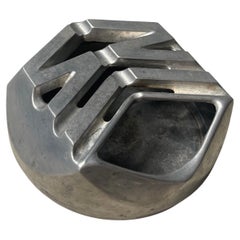
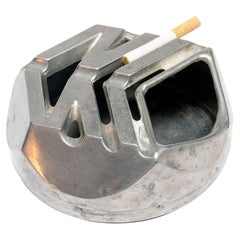
20th Century Space Age Decorative Aluminium Ashtray in two piece, Scandinavia

20th Century Space Age Decorative Aluminium Ashtray in two piece, Scandinavia

Located in Milano, IT

Sculptural ashtray - Metallic brutalist - Decorative Coffee table object With the habit of smoking drastically decreasing all over the world according to statistics, all kinds of p...

Category

1960s Italian Space Age Vintage Wool Historical Memorabilia

Materials

Aluminum

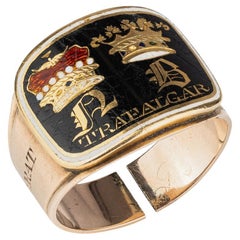
A Gold And Enamel Mourning Ring For Lord Nelson By John Salter, England, 1806

A Gold And Enamel Mourning Ring For Lord Nelson By John Salter, England, 1806

Located in Royal Tunbridge Wells, Kent

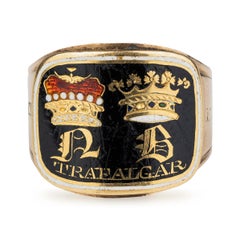
An extremely rare ring that commemorates the naval hero, Horatio Nelson, who died in 1805 at the Battle of Trafalgar, fighting against the Napoleonic forces. Dr William Nelson, the admiral's brother, ordered 58 mourning rings for family and friends and every admiral and post-captain who fought at the Battle of Trafalgar . The ring is inscribed on the bezel ‘Trafalgar’; outside the hoop with Nelson’s motto in Latin, ‘Let him who earned it bear the palm [of victory]’, adopted by Nelson from a poem ‘Ad Ventos’ written in 1727 by John Jortin (1698-1770). Inside is the inscription ‘Lost to his country 21 October 1805, aged 47’. The initials N and B stand for Nelson and Bronte. Admiral Nelson was given the title of Duke of Bronte in 1799 by the King of Sicily and in 1801 became a Viscount. The two coronets above the initials refer to these titles. Tthe motto Palmam qui meruit ferat ("let him who has earned it, bear the palm") was added to his coat of arms in 1798 after the Battle of the Nile. Nelson was buried with full honours in St Paul's Cathedral. His cortege consisted of 32 admirals, over a hundred captains, and an escort of 10,000 soldiers. This ring is an example of only fifty-eight that were made by Nelson's jeweller John Salter in 1806. Thirty-one were for Nelson's close family and friends, the rest for pall-bearers and other dignitaries (see The Nelson Dispatch, vol.3 pt.XII, oct.1990). Three similar examples of this ring are held extremely prestigious museums in the capital. One is in the Greenwich National Maritime Museum in London, another in The British Museum in London and another in the collection of the Victoria & Albert Museum, London, exhibited in the Jewellery Gallery, case 23, no. 8. The ring has a particularly special provenance, arguably like no other mourning ring of Admiral Nelson’s. The ring belonged to the Reverend Alexander John Scott. The Reverend Alexander John Scott (1768-1840) was a British naval chaplain. He was appointed to the flagship H.M.S. Victory in 1803 where he served as private secretary to Lord Nelson. He was with Nelson when when he was shot on the quarter-deck of the Victory at the battle of Trafalgar on the 21st October 1805. Scott attended his dying chief in the cockpit of the flagship, receiving his last wishes. He refused to leave Nelson's body until it was brought back to England and placed in the coffin to lie in the Painted Hall Greenwich. The ring, lock of hair and music book were passed down by the direct descendants of the Reverend Alexander John Scott's family and eventually gifted to the previous owners. The music book was a personal possession of the Reverend which gives watertight provenance of the person who owned the ring. It is not clear exactly what Admiral Nelson’s last words really were although Scott documents Nelson’s last words to be “God and my country“. However, it is also recorded that a statement during his last hours was "Thank God I have done my duty.” Perhaps these two statements uttered in the last moments sound similar when mumbled by a feeble dying man. Nonetheless, it is noteworthy is that Scott remained by Admiral Nelson’s side as he died and his version is probably the most reliable. The lock of hair is reputedly that of Lord Admiral Nelson. Without a DNA test there can be no conclusive proof of such. However, given that Reverend Alexander John Scott was with Nelson from the moment he was shot on the quarter-deck of H.M.S. Victory until the moment he was placed in his coffin, there is no reason to believe it is not a lock of Nelson’s hair. It is difficult to overstate the significance and rarity of Nelson’s mourning rings. With only fifty-eight made, the vast majority of them were given to close family members and only a few were given to close friends. A close friend who receives a morning ring...

Category

19th Century English Antique Wool Historical Memorabilia

Materials

Gold, Enamel

Large and Extremely Rare Terrestrial Globe by Newton

Large and Extremely Rare Terrestrial Globe by Newton

By Newton Globes - Planer & Newton

Located in Lymington, Hampshire

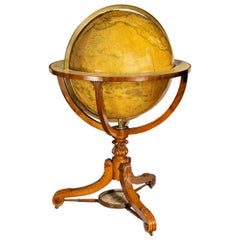
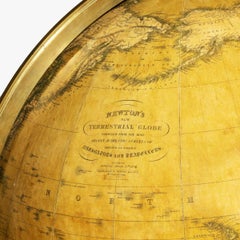
A large and extremely rare 24-inch terrestrial globe by Newton Our most magnificent and rare globes were a pair of 24-inch Newton globes. These too were updated in 1852 (terre...

Category

Mid-19th Century English Antique Wool Historical Memorabilia

Materials

Mahogany

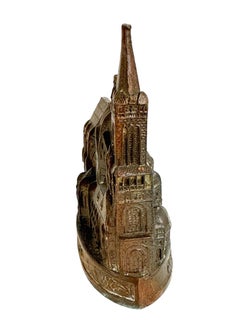
Aachen Cathedral Souvenir Building Architectural Model vintage German 1930s

Aachen Cathedral Souvenir Building Architectural Model vintage German 1930s

Located in Nuernberg, DE

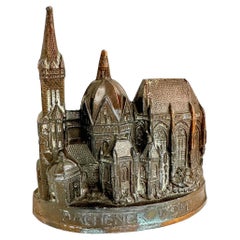
A decorative building sculpture as a souvenir. Some wear with a nice patina, but this is due to age. Made of metal. This item was purchased as a souvenir at a Grand Tour in Europe an...

Category

1930s Italian Art Nouveau Vintage Wool Historical Memorabilia

Materials

Metal

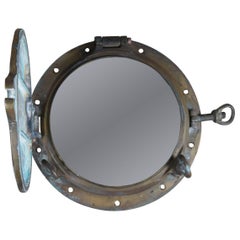
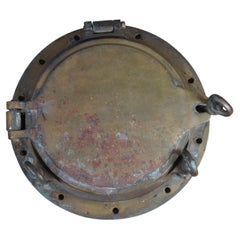
Extremely Rare Antique Solid Brass Maritime Ships Porthole Storm Cover Window

Extremely Rare Antique Solid Brass Maritime Ships Porthole Storm Cover Window

Located in Dayton, OH

Extremely unique original antique heavy solid brass maritime Ship's Porthole or Hatch. A rare find with storm door, swing plate and barking plate. Its very ...

Category

Early 20th Century Wool Historical Memorabilia

Materials

Brass

Previously Available Items
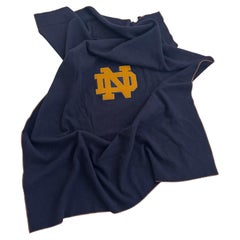
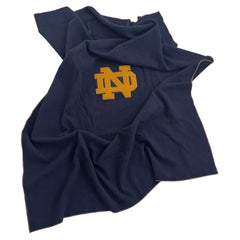
Vintage Blue & Gold Notre Dame University "Fighting Irish" Wool Stadium Blanket

Vintage Blue & Gold Notre Dame University "Fighting Irish" Wool Stadium Blanket

Located in San Diego, CA

Super cool vintage blue and gold Notre Dame University "Fighting Irish" wool stadium blanket, circa 1970s. The blanket is 100% thick navy blue wool with a subtle gold edge trim and t...

Category

Mid-20th Century English Mid-Century Modern Wool Historical Memorabilia

Materials

Wool

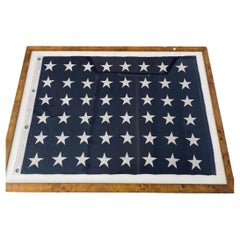
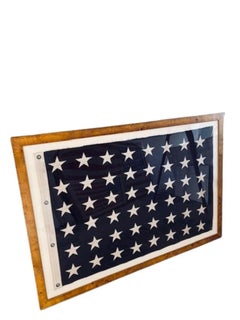
United States Navy 48 Star Union Jack, circa 1912

United States Navy 48 Star Union Jack, circa 1912

Located in Nantucket, MA

Antique United States Navy 48 Star Union Jack, circa 1912, a scarce early, World War I era US Navy Jack with 48 embroidered stars on a cobalt field, flown on the bow of Navy, Coast G...

Category

1910s American Other Vintage Wool Historical Memorabilia

Materials

Wool

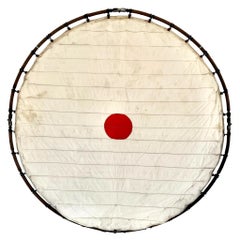
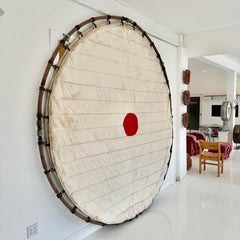
Fireman's Life Saving Machine, 1907 USA

Fireman's Life Saving Machine, 1907 USA

Located in Los Angeles, CA

Although it may resemble a trampoline, this is an extremely rare fire safety net designed to catch those leaping from burning buildings. The net was patented in 1887 by Thomas F. Bro...

Category

Early 1900s American Antique Wool Historical Memorabilia

Materials

Metal

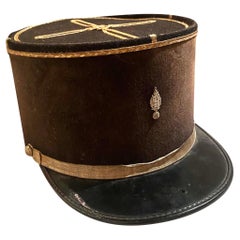
Vintage French Fireman Officers Kepi Hat

Vintage French Fireman Officers Kepi Hat

Sold

H 4.25 in W 9.25 in D 7 in

Vintage French Fireman Officers Kepi Hat

Located in Denver, CO

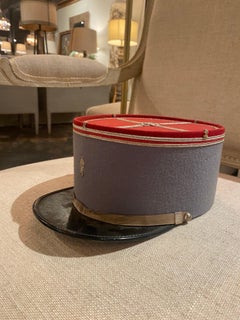
This is a vintage French Kepi/Hat was acquired on a buying trip to France in 2019. In black felt with black plastic peak, gold braid. Made by Balsan Paris,...

Category

1970s French Charles X Vintage Wool Historical Memorabilia

Materials

Leather, Wool, Felt, Plastic

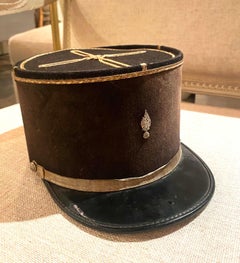
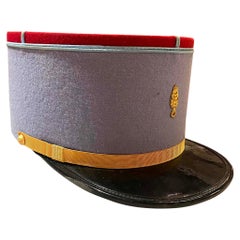
Vintage French Military Academy Officers Kepi Hat

Vintage French Military Academy Officers Kepi Hat

Located in Denver, CO

This rare Vintage French Military Academy Officers hat was acquired on a buying trip to France in 2019. The French Army Saint Cyr Officer Kepi is an...

Category

1970s French Charles X Vintage Wool Historical Memorabilia

Materials

Leather, Wool, Felt, Polyester

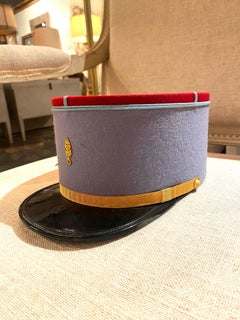
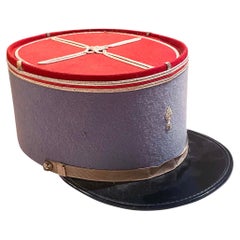
Vintage French Military Academy Officers Kepi Hat

Vintage French Military Academy Officers Kepi Hat

Located in Denver, CO

This rare Vintage French Military Academy Officers hat was acquired on a buying trip to France in 2019. Gold braid runs around the top of the Hat with...

Category

1970s French Charles X Vintage Wool Historical Memorabilia

Materials

Leather, Wool, Felt, Polyester

Antique Historic American Double Blue Star Flag, circa 1917

Antique Historic American Double Blue Star Flag, circa 1917

Located in Nantucket, MA

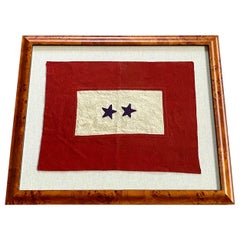
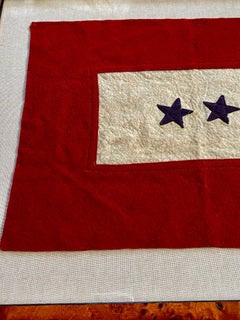
Antique historic American double blue star flag, circa 1917, a World War I flag honoring two family members in service. The flag is hand crafted of wo...

Category

1910s American Other Vintage Wool Historical Memorabilia

Materials

Wool

38 Star Antique American hand sewn Flag, Colorado Statehood, circa 1876-1889

38 Star Antique American hand sewn Flag, Colorado Statehood, circa 1876-1889

Located in York County, PA

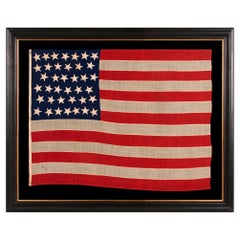
Entirely hand sewn, 38 Star, antique American flag of the Indian wars period, with a Squarish profile and a canton that is taller than it is wide, similar to U.S. infantry and artillery battle flags, and with an especially graphic presentationof stars; made in the era when colorado was the most recent state to join the union, 1876-1889 38 star antique American flag, with an array of interesting and visually impressive features. Entirely hand sewn, note how the flag’s dimensions appear near-to-square, when compared to most of its counterparts. Also note how the canton is slightly taller than it is wide. These traits mimic the visual aspects of infantry and artillery battle flags of the 18th- early 20th centuries, that were basically square in shape, with cantons that were far more narrow than what one would expect. U.S. Army regulations of 1861 (opening year of the Civil War), for example, specified that both regimental and national colors be 6 x 6.5 feet. This shape maximized the surface area of the textile when carried on foot. Favorable for ground use, it allowed the flag to be as large as possible, in order to maximize its visibility as a Signal, yet at the same time not drag on the ground. At approximately 3.5 x 4.5 feet, this particular flag has a similar appearance, yet is significantly smaller. Entirely hand sewn, it measures approximately 3/5 of the scale of a regulation, infantry battle flag. Note how the stars, while roughly arranged in rows of 7-6-6-6-6-7, are spun in all directions on their vertical axis, and how their placement within each row is grossly inconsistent. Two of the most notable occurrences of variation can be seen at the beginning of the third row, where enough space was left to easily add another star (not possible elsewhere), and in the final row of 7, where the 4th and 5th stars from the hoist, practically touch. The flag has terrific presentation as a result of the above features, stronger and more unusual than most examples of the time. The stars of the flag are made of cotton and are double-appliquéd, meaning that they are applied to both sides of the blue canton. The canton and stripes of the flag are made of wool bunting. There is a narrow binding along the hoist, made of either linen or hemp, with three, tiny, hand sewn, whip-stitched grommets. Remnants of hemp rope are present in the top and center grommets. Colorado became the 38th state on August 1st, 1876. This was the year of our nation’s 100-year anniversary of independence. Per the Third Flag Act of 1818, stars were not officially added until the 4th of July following a state's addition. For this reason, 37 was the official star count for the American flag in 1876. Flag-making was a competitive venture, however, and few flag-makers would have been continuing to produce 37 star...

Category

Late 19th Century American Antique Wool Historical Memorabilia

Materials

Wool

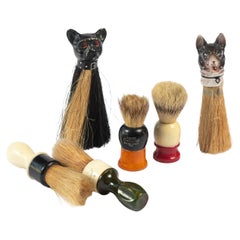
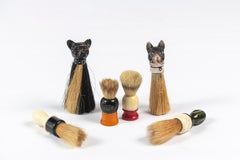
Collection of Six Unique Vintage Shaving Brushes

Collection of Six Unique Vintage Shaving Brushes

Located in San Francisco, CA

Collection of 6 unique vintage shaving brushes, two with dog handles, 6" tall and 2" round, two with celluloid handles are 5.5" tall and 2" round...

Category

Mid-20th Century American Art Deco Wool Historical Memorabilia

Materials

Goat Hair, Bakelite, Wood

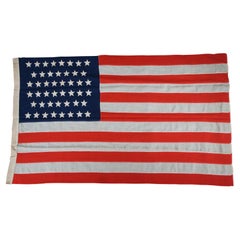
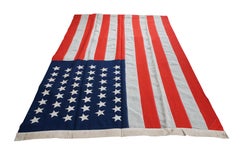
Antique 46 Star WMH Horstmann Company United States of America Flag 83"

Antique 46 Star WMH Horstmann Company United States of America Flag 83"

By Horstmann

Located in Dayton, OH

Antique forty six star large wool American flag by Horstmann Company, circa 1908-1912. Horstmann firm was founded by William H. Horstmann (1785-1850), who had immigrated to Philadelphia from Germany. Horstmann bought out a local swordmaker in 1828 and thereafter entered the military goods field. The firm benefitted from the Civil War, becoming the largest military goods supplier in the nation by 1864. WILLIAM H. HORSTMANN & SONS, Manufacturers of Dress Trimmings and Military Goods. 5th & Cherry Streets, Philadelphia, PA. This house was founded, in 1815, by William H. Horstmann, a native of Cassel, in Germany. He had learned the trade of silk-weaving in France, and, emigrating to the United States in the above-mentioned year, established himself in Philadelphia as a manufacturer of fringe, laces and trimmings of various kinds. He married the daughter of Frederick Hoeckly, a German settler in Philadelphia, and also a manufacturer of fringe, coach-lace and tassels. He devised several improvements in this trade, especially by introducing varieties in the styles and patterns of this class of goods, there being at that time only two patterns used in the trade, which were known as the Jefferson pattern and the Monroe pattern. In 1824, he introduced into this country from Germany the use of plaiting or braiding machines, and about the same time he was the first to introduce into this country the use of the Jacquard loom, for weaving patterns in textile fabrics. His location was in the first instance at No. 50 North Third street, but within a short time he removed to a store next to the Harp and Crown tavern, afterwards known as the City hotel, and continued his business within a short distance of this point for many years. In 1828, he commenced the manufacture of military trimmings as a special department, and this branch has grown to most important proportions, Horstmann's military goods being in demand throughout time country. The firm have also executed large Government contracts in this line for the War and Navy Departments. In 1831, he established a branch house in New York city, and about the same time erected a factory at the corner of Germantown road and Columbia avenue. The factory was continued here until time erection of the extensive building at Fifth and Cherry streets, where the works, salesrooms and offices of time firm now are. This massive structure is six stories high, and extends 140 feet on Fifth street and 200 on Cherry street, and reaches back to Race street. The separate departments into which the business is divided are thirty in number. More than 1000 distinct looms and machines are in use in the building, many of them very costly and some invented and used exclusively by this firm, the motive power being supplied by a steam engine of fifty horse power. The area covered by the works is about 11,000 square feet. Time number of hands employed is very large, about 500. When the erection of a vast factory at this point was first proposed, a strong opposition was made by time holders of the neighboring property. The ancient German Lutheran Church and burying ground, since removed, stood opposite the site, and a bill was introduced into the Legislature to forbid the use of a steam engine within 100 yards of any place of worship. The interests which such a bill would have affected injuriously, especially those of several newspapers, roused a strong opposition to it, and it failed to become a law. In 1845, William H. Horstmann, the founder of the house, retired from the business, and his two sons, William and Sigmund, assumed the management and it was under their direction that the new building, above described, was erected. The goods produced by this house are of almost endless extent and variety. They include goods woven from all the various textile fibres—cotton, wool, silk, etc.—in every style, color and pattern, and are used for an infinite number of purposes. Narrow woven goods are time staple production, made up into material for dresses for both sexes, for use in daily life, and for regalia for ""societies;"" for the costumes of the stage, the upholstering of houses and of carriages, the uniforms of soldiers, together with equipments for the same, and for funeral purposes. The raw material used in the manufacture is to a great extent very costly, and their store rooms often hold as much as $200,000 worth of goods in an unworked state. There are two rooms devoted to power looms in the factory, one for coach lace and one for other styles of weaving, in which about 250 of these machines are constantly running. The braiding machines in the coach lace room are very noteworthy. The cord to be covered with braid is drawn through an opening in time middle of a flat, circular, metallic plate, about 15 inches across. Up to a point on this cord, about a foot above the plate, the threads of the braiding material converge, like the ribs of a tent-roof, and there weave in and out and out and in, as the coating of braid grows, and time covered cord rises and is wound away above. The weaving is accomplished by the motion of the spools below that carry the different threads of the braid. These spools stand in uprights, which are carried round and amongst each other in curved slots in the above-mentioned broad metallic plate. All but two of these spools run in and out among each other, with a swift, easy and intricate motion, mind so rapid that time eye can hardly follow it, while one or two special spools run steadily round and round among time twisting spools with the most extreme swiftness. Many other machines, displaying equally ingenious mechanism, are used in the factory. The various details of equipment manufactured and supplied by this house are also important, both for their number and the superior quality of the manufacture. The one article of swords may be taken as an instance. This trade grew naturally and immediately out of the established army and navy goods department of the works, it being necessary that the sword itself should be furnished together with the sword-belt and other trappings all complete. Every part of the sword and trappings, with the exception of the blade, is made on the premises. The blades are almost all imported from the ancient German sword-blade emporium of Solingen, where, it is said, swords have been made ever since the year 1147, when Count Adolphus of Berg brought home from the East and established there the business of forging Damascus blades. There is in this department a stock of some thousands of blades, of many different patterns and sizes, ready to be set and finished. Any style or sword can be had from this warehouse, from the plainest kind up to a presentation sword...

Category

1910s American Classical Vintage Wool Historical Memorabilia
Materials

Wool

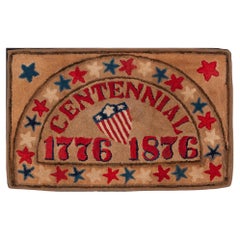
1876 Centennial Hooked Rug with Stars and Shiled

1876 Centennial Hooked Rug with Stars and Shiled

Located in York County, PA

WOOL HOOKED RUG, MADE FOR THE 1876 CENTENNIAL OF AMERICAN INDEPENDENCE, WITH STARS AND A PATRIOTIC SHIELD Wool hooked rug with a wonderful, patriotic theme, made for the 100th ann...

Category

Late 19th Century American Antique Wool Historical Memorabilia
Materials

Wool

38 Star American Flag, Stars in Notched Pattern, ca 1876-1889

38 Star American Flag, Stars in Notched Pattern, ca 1876-1889

Located in York County, PA

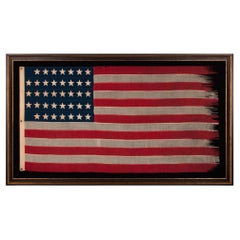
38 HAND-SEWN STARS IN A "NOTCHED" PATTERN, ON AN ANTIQUE AMERICAN FLAG WITH BEAUTIFUL WEAR FROM HAVING BEEN EXTENSIVELY FLOWN, MADE AT THE TIME WHEN COLORADO WAS THE MOST RECENT STATE TO JOIN THE UNION, 1876-1889 38 star Antique American flag, made during the period when Colorado was the most recent state to join the Union. The stars are arranged in what is known as a "notched" pattern, in which two spaces were left open along the hoist end, in the first and last rows, in anticipation that two more Western Territories would soon join the Union. The latter 19th century was a time of when much of the land in and about the Continental Divide was formalized into states, and there was continual speculation about which ones would be accepted next, and with what boundaries. The stars of the flag are made of cotton and are double-appliquéd (applied to both sides) with a lineal, treadle stitch. The canton and stripes of the flag are made of wool bunting that has been pieced with treadle stitching. The canton was constructed from five separate lengths of fabric, which is an unusual feature, though hardly unknown. To each of these a row of stars was sewn. This manner of construction is sometimes encountered and tends to be an early trait, at least when it occurs in flags of this scale and smaller. When encountered, it also seems to have been preferred in flags meant for maritime use. While the feature does not by any means guarantee this fact, it is a reasonable, educated guess, based upon my examination of many other examples. A flag with a 5-piece canton, such as this, would have been less likelihood to stretch, with increased structural integrity. The alternative is that this was simply an example made when there were at least five pieces of leftover fabric, of a reasonable size to made individual rows, and that what it actually demonstrates is the careful conservation of scarce resources. There is a sailcloth canvas binding along the hoist, with 3 brass grommets, evenly spaced. Perhaps the best feature of the flag is the evidence it displays of having been extensively flown, with the fly end whipped out from wind exposure. While many flags display damage from a combination of having been flown, exposure to the elements, various mishaps, and improper storage, very few exhibit wear such as this, which is both endearingly and visually attractive. This one shows its age beautifully, whipped out along the fly end, with losses that convey an element of movement, that most flags don’t capture in the state in which they survive. Colorado became the 38th state on August 1st, 1876. This was the year of our nation’s 100-year anniversary of independence. Per the Third Flag Act of 1818, stars were not officially added until the 4th of July following a state's addition. For this reason, 37 was the official star count for the American flag in 1876. Flag-making was a competitive venture, however, and few flag-makers would have been continuing to produce 37 star flags, when their competitors were making 38’s. It is for this reason that 38 and 13 stars (to represent the original 13 colonies...

Category

Late 19th Century American Antique Wool Historical Memorabilia
Materials

Wool