1890s Musical Instruments

9 Results
to
1
6
3
9
2
1
1
1
12
174
324
97
106
123
49
11
6
7
21
11
19
25
27
6
5
6
6
3
2
2
4
2
1
1
1
9
9
9
1
1
1
1
Period: 1890s
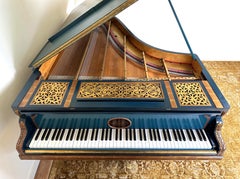
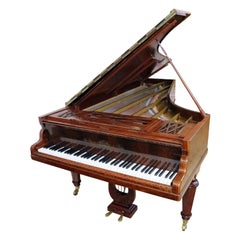
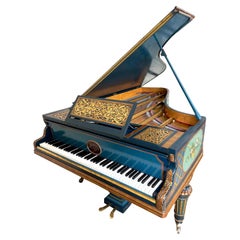
Erard Parallel-Strung Grand Piano with Bench, Paris, 1895

Erard Parallel-Strung Grand Piano with Bench, Paris, 1895

By Sébastien Érard, Maison Erard

Located in Littleton, CO

Please note: We are available to directly assist with coordinating pickup and delivery by trusted professionals experienced in transporting historic and concert-grade pianos. This b...

Category

French Romantic Antique 1890s Musical Instruments

Materials

Metal

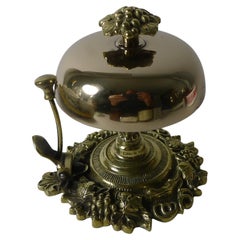
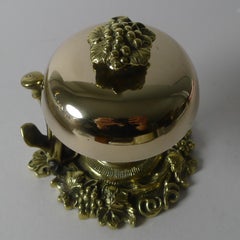
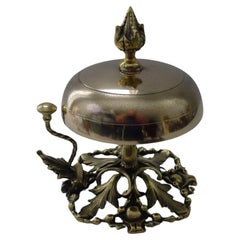
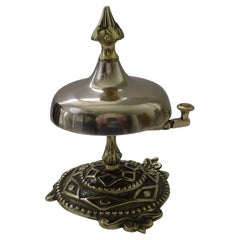
Antique English Polished Brass Counter / Desk Bell c.1890

Antique English Polished Brass Counter / Desk Bell c.1890

Located in Bath, GB

A wonderful and highly decorative desk or counter bell, my favourite kind with the more unusual clapper to the side rather than the ones you ring from the top. The hinged clapper is ...

Category

British Late Victorian Antique 1890s Musical Instruments

Materials

Brass

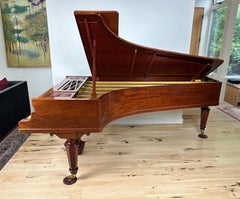
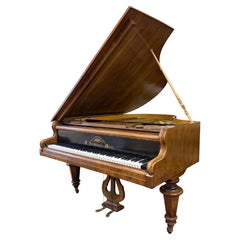
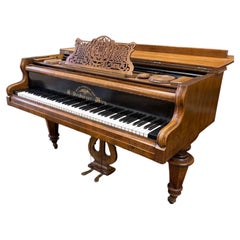
Austrian Grand Piano by A. Neuburger, Walnut, Circa 1898

Austrian Grand Piano by A. Neuburger, Walnut, Circa 1898

By Wien

Located in Wheat Ridge, CO

A. Neuburger, Wien – Late 19th Century Austrian Grand Piano An exceptional and rare late 19th century Austrian grand piano by A. Nerburger, Wien, bearing the coveted “Gold Medaille” designation, indicative of international exhibition recognition and superior craftsmanship. This elegant instrument embodies the refinement and technical excellence of Viennese piano making during the height of the Austro-Hungarian Empire. Crafted in a richly figured walnut veneer with a warm, lustrous patina, that pairs well with the ivory and ebony keys, the case features beautifully rounded, sculptural lines and subtle carved detailing. The serpentine profile, molded edges, and finely turned legs terminating in brass casters reflect the romantic aesthetic of the period. The fallboard reveals the original gilded lettering set against a contrasting black ground, offering a striking visual accent. The interior showcases an ornately carved music desk panel, decorative soundboard elements, and period-correct brass hardware. The hinged lid opens on a traditional prop stick, revealing the instrument’s original harp and string configuration. A three-pedal lyre assembly with a distinctive carved support adds further architectural interest. Viennese pianos of this era are celebrated for their nuanced tonal character—clear, lyrical, and expressive—making them highly desirable among collectors, musicians, and interior designers alike. Beyond its musical merit, this grand piano stands as a sculptural statement piece, equally suited to a refined residential interior, boutique hospitality setting, or curated gallery environment. A rare opportunity to acquire a museum-quality example of Austrian piano...

Category

Austrian Empire Revival Antique 1890s Musical Instruments

Materials

Brass

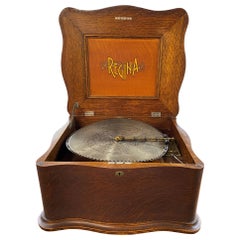
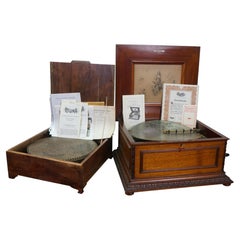
Antique Regina Double Comb 15.5" Music Box Player & 46 Records

Antique Regina Double Comb 15.5" Music Box Player & 46 Records

By Regina Company

Located in Dayton, OH

Antique late 19th century Regina music player including additional storage box with approx 46 records and paperwork. #35307, circa 1899. Songs Included: Adeste Fideles, Ave Maria, ...

Category

American Victorian Antique 1890s Musical Instruments

Materials

Oak

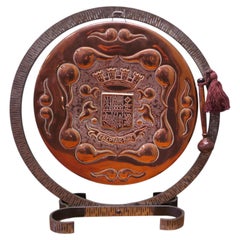
Hand Hammered Basque Copper and Iron Table Gong The copper Gong is suspended i

Hand Hammered Basque Copper and Iron Table Gong The copper Gong is suspended i

Located in Godshill, Isle of Wight

Hand Hammered Basque Copper and Iron Table Gong The copper Gong is suspended in an iron stand, the gong has the coat of arms of the Basque Country and the inscription *Zazpiak Bat*...

Category

Antique 1890s Musical Instruments

Materials

Copper

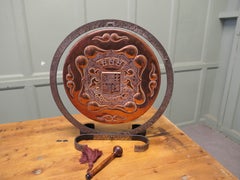
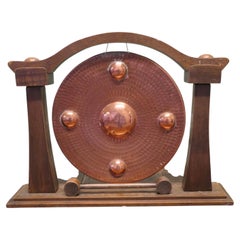
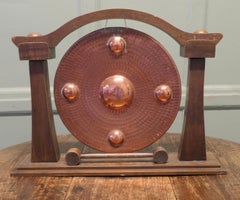
French Arts and Crafts Carved Copper Table Gong This is a lovely stylish piece

French Arts and Crafts Carved Copper Table Gong This is a lovely stylish piece

Located in Godshill, Isle of Wight

French Arts and Crafts Carved Copper Table Gong This is a lovely stylish piece, the Copper Gong is hand beaten in the Arts and Crafts style it hangs from a wooden frame which has c...

Category

Arts and Crafts Antique 1890s Musical Instruments

Materials

Copper

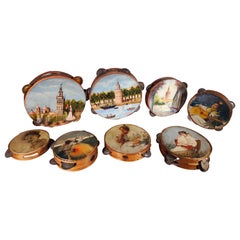
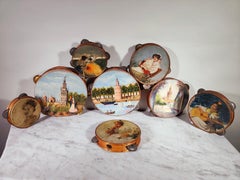
8 Tambourines xix Century

8 Tambourines xix Century

Located in Madrid, ES

8 Tambourines XIX Century 8 TAMBOURINS XIX CENTURY COLLECTION OF 8 ANCIENT TAMBOURINS PAINTED IN OIL AND SIGNS DIAMETER MEASUREMENTS: THE SMALLEST 16 CM A...

Category

Antique 1890s Musical Instruments

Materials

Bentwood

Related Items
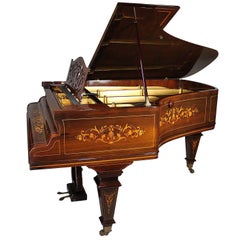
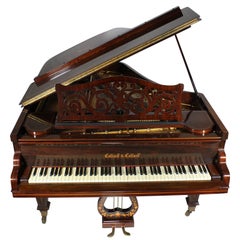
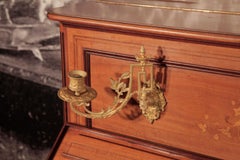
A Fine19th Century Louis XIV Style Collard & Collard Marquetry Baby Grand Piano

A Fine19th Century Louis XIV Style Collard & Collard Marquetry Baby Grand Piano

$68,750Sale Price|27% Off

H 40.25 in W 72 in D 55.5 in

A Fine19th Century Louis XIV Style Collard & Collard Marquetry Baby Grand Piano

By Collard & Collard

Located in Los Angeles, CA

A very fine Anglo-French 19th century rosewood, palisander, amboyna and satinwood marquetry (inlaid) art-case baby grand piano, the works by "Collard & Collard". The intricately ...

Category

English Neoclassical Revival Antique 1890s Musical Instruments

Materials

Bronze

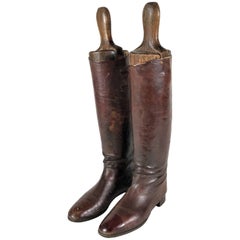
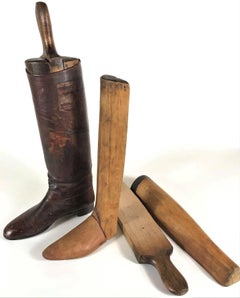
Antique Brown Leather Riding Boots with Trees, 1890s Austria

Antique Brown Leather Riding Boots with Trees, 1890s Austria

By Rudolf Scheer & Söhne

Located in Biebergemund, Hessen

A pair of exquisite decorative brown leather riding boots made by Austrian Imperial shoemaker Scheer - Purveyor of the imperial and royal court of the Austrian and Hungarian empire. ...

Category

Austrian Late Victorian Antique 1890s Musical Instruments

Materials

Leather

19th Century Pleyel French Upright Piano Hand Painted Decoration and Fluted Legs

19th Century Pleyel French Upright Piano Hand Painted Decoration and Fluted Legs

$8,002Sale Price|65% Off

H 44.89 in W 54.34 in D 20.87 in

19th Century Pleyel French Upright Piano Hand Painted Decoration and Fluted Legs

By Pleyel

Located in Sofia, BG

This rare upright piano was made by Pleyel in France in September 1871 according to the Pleyel Archives found at Musée de la Musique. The natural wood cabinet is beautifully decorated with hand painted floral garlands. The piano sides are square and it has fluted, columnar legs resting on original castors. The instrument...

Category

French Antique 1890s Musical Instruments

Materials

Brass

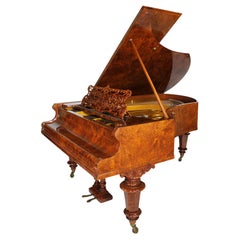
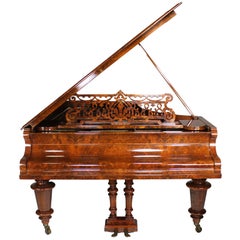
A German 19th Century Louis XVI Style Burr Walnut Bechstein Concert Grand Piano

A German 19th Century Louis XVI Style Burr Walnut Bechstein Concert Grand Piano

By Bechstein Piano Company

Located in Los Angeles, CA

A Very Fine German 19th Century Louis XVI Style Burr Walnut Bechstein Concert Grand Piano, Serial No. 5655. The beautifully crafted Grand piano, raised on three tapered barrel shaped legs, with an intricately carved ornate music desk and original keys. Circa: 1872. Length: 80 inches (203.2 cm) Width: 59 inches: (149.9 cm) Height (top closed): 38 5/8 inches (98.1 cm) C. Bechstein Pianofortefabrik C. Bechstein Pianofortefabrik AG (also known as Bechstein) is a German manufacturer of pianos, established in 1853 by Carl Bechstein. Before Bechstein Young Carl Bechstein studied and worked in France and England as a piano craftsman, before he became an independent piano maker. His first pianos were made for other companies. C. Bechstein C. Bechstein piano factory was founded on 1 October 1853 by Carl Bechstein in Berlin, Germany. Carl Bechstein set out to manufacture a piano able to withstand the great demands imposed on the instrument by the virtuosi of the time, such as Franz Liszt. In 1857, Hans von Bülow (Liszt's son-in-law) gave the first public performance on a Bechstein grand piano by performing Liszt's Piano Sonata in B minor in Berlin By 1870, with endorsements from Franz Liszt and Hans von Bülow, Bechstein pianos had become a staple in many concert halls and private mansions. By that time three piano makers, all of which were founded in 1853, became established as the industry leaders across the world: Bechstein, Blüthner and Steinway & Sons. In 1881 Bechstein began supplying pianos to Queen Victoria. A gilded art-case piano was delivered to Buckingham Palace, followed by several more Bechstein pianos to Windsor Castle and other royal residences. By January 1886 they were among the piano manufacturers holding a Royal Warrant as a supplier to the Queen. Several British embassies across the world acquired Bechstein pianos. In 1885, Bechstein opened a branch in London, that eventually grew to become the largest showroom and dealership in Europe. By 1890 showrooms had been opened in Paris, Vienna, and Saint Petersburg. On 31 May 1901, Bechstein Hall, built at a cost of £100,000, was opened next to the company's London showroom at 36-40 Wigmore Street. Between 1901 and 1914, C. Bechstein was the largest piano dealership in London. At that time, Bechstein was patronized by the tsars of Russia, the royal families of Spain, Belgium, the Netherlands, Italy, Sweden, Norway, Austria and Denmark, and other royalty and aristocracy. The list of royal clients of Bechstein may be found on the soundboard of vintage Bechstein pianos made before the Second World War. The list is part of the original Bechstein trademark logo; it can be seen under the strings in the center of a piano's soundboard. The signature of Carl Bechstein The years from the 1870s through 1914 brought Bechstein their most dramatic increase in sales. In 1880 a second Bechstein factory was opened in Berlin, and the third factory was opened in 1897 in Berlin-Kreuzberg. Production reached 3,700 pianos annually in 1900, and 4,600 in 1910, making Bechstein the largest German manufacturer of high-end pianos. At that time, about three quarters of production went to international markets, especially Britain and the Commonwealth, and Russia. Carl Bechstein died in 1900, and the Bechstein company continued to operate under the management of his sons. Between 1900 and 1914 C. Bechstein was one of the leading piano makers in the world, employing 1,200 craftsmen and workers by 1913 and making five thousand pianos per year. First World War C. Bechstein suffered huge property losses in London, Paris, and St. Petersburg during World War I. The largest loss was in London. Although the company's position in the United Kingdom was initially unaffected, with the company still listed as holding a Royal Warrant in January 1915, Warrants to both King George V, and his wife Queen Mary were cancelled on 13 April 1915. Bechstein was not the only musical concern to be affected by growing anti-German sentiment: there were earlier attempts, led by William Boosey, to boycott German music altogether. In 1915, despite being a Baronet and Privy Counsellor, Sir Edgar Speyer, who was then funding the Proms, was forced to leave the country. Following the passing of the Trading with the Enemy Amendment Act 1916 the British arm of the company was wound-up on 5 June 1916, all Bechstein property, including the concert hall and showrooms full of pianos, were seized as "enemy property" and closed. In 1916 the hall was sold as alien property at auction to Debenhams for £56,500. It was renamed Wigmore Hall, and then re-opened under the new name in 1917. All 137 Bechstein pianos at the Bechstein showrooms were confiscated too, and became property of the new owner of the Hall. After a dispute with his brother, Edwin Bechstein left the company and was paid off. Eventually the Bechstein factory resumed full-scale production during the 1920s. At that time, technical innovations and inventions of new materials and tools, as well as improvements in piano design and construction, had allowed Bechstein to become one of the leading piano makers again. The most successful models were the updated "A"-185 and "B"-208 grand pianos. The upright pianos became more popular after the war, and C. Bechstein were successful with its upright pianos Model-8 and Model-9, both of which have been considered the finest upright pianos. As the company was changed into a joint-stock company 1923, Edwin Bechstein and his wife Helene, bought themselves back into the company as shareholders. In 1930 the company collaborated with German electrical goods manufacturer Siemens under Nobel laureate Walther Nernst to produce one of the first electric pianos...

Category

German Louis XVI Antique 1890s Musical Instruments
Materials

Bronze

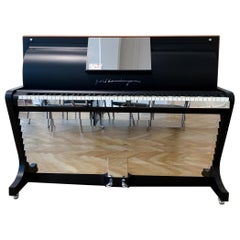
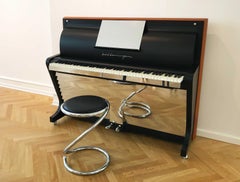
PH Upright Piano, Cognac Color Leather with Chrome, Modern, Sculptural

PH Upright Piano, Cognac Color Leather with Chrome, Modern, Sculptural

By Poul Henningsen

Located in Copenhagen, DK

- All prices are listed ex works. - 5 year guarantee. - We regularly crate, ship and install PH Pianos worldwide with full insurance. For those who want a traditional acoustic upright piano with one of the most iconic design silhouettes, the PH Upright Piano...

Category

Danish Bauhaus 1890s Musical Instruments

Materials

Chrome

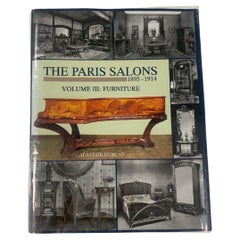
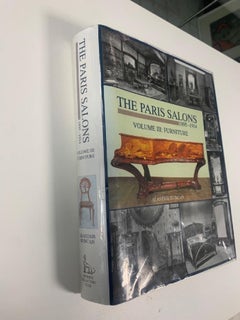
“The Paris Salons”, 1895-1914 Furniture ‘Book’

“The Paris Salons”, 1895-1914 Furniture ‘Book’

Located in Montelabbate, PU

This is the third in a multi-volume collection providing a visual catalogue record of the decorative arts of the Paris Salons. Included in this volume are reproductions of the catalogue illustrations of furniture at the Exposition Universelle of 1900, the annual Salons du Mobilier, and the celebrated 1903 and 1904 expositions of the Ecole de Nancy in the French capital. This chronological record clearly shows the revolution in furniture design that transpired in France at the turn of the century. The illustrations trace precisely the emergence of the art nouveau style in the 1890s, its high point between the 1900 Exposition Universelle and the 1903 Salons, its demise between 1905-1909, the return to period revivalism and the transitional art nouveau - art deco style of 1910-1912 with the proto - art deco style of the immediate pre-war years (1911-1914). Many examples of non-art nouveau works from the period are also included. Hundreds of these contemporary illustrations...

Category

1890s Musical Instruments

Materials

Paper

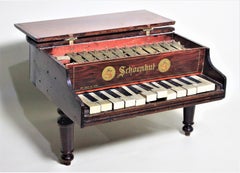
Liberace Autographed Vintage Schoenhut Toy Grand Piano

Liberace Autographed Vintage Schoenhut Toy Grand Piano

By Schoenhut

Located in Hamilton, Ontario

Made by the renowned American toy manufacturer in approximately 1920, this wooden toy baby grand piano has been autographed in two places by the legendary Liberace. The piano shows o...

Category

American Victorian 1890s Musical Instruments

Materials

Brass

Pierre-Paul Montagnac Modernist Piano

Pierre-Paul Montagnac Modernist Piano

$55,000

H 50 in W 56 in D 60 in

Pierre-Paul Montagnac Modernist Piano

By Pierre-Paul Montagnac

Located in Philadelphia, PA

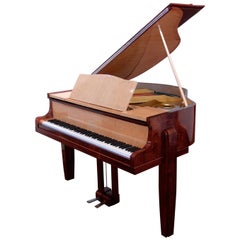
French Modernist Art Deco piano and bench by Pierre-Paul Montagnac, a variant of the model used in one of the luxe apartments, the Caen, on the great French oceanliner Normandie in 1935. Created in rosewood and sycamore, and carefully and correctly restored, including the fine Erard (#127208) instrument. 56” wide x 60” deep. Documented in numerous sources, including the July 1935 issue of Art et Decoration. Pierre-Paul Montagnac (1883-1961) Born in Saint-Denis, France on 9 May 1883, Pierre-Paul Montagnac was equally talented as a fine artist and a decorative artist. He was educated in both disciplines, studying with Eugene Carriére as well as at the Académie de la Grande Chaumiére, both in Paris. His inaugural exhibition was at the 1912 Salons – and at the 1920 Salon d’Automne he received a traveling scholarship. In 1918 he began working in the firm of André Mare and from 1922 collaborated with Maurice Dufrene at La Maîtrise, the famous design studio of Galeries Lafayette. From 1921 he exhibited at the Salons of la Société des Artistes Décorateurs, Salon des Architectes Modernes, and internationally, in Barcelona and Leipzig. He designed suites on the grand French oceanliners, l’Atlantique, Normandie and Pasteur. At the 1925 Paris International Exposition his work was in a standout class. At the 1937 Exhibition he organized the pavillion of the Artistes Decorateurs and personally won a Grand Prix. For the New York Exhibition in 1938, he was a member of the international jury, organized the group of Decorators, and, as architect, organized the exhibitions of jewelry and perfumes. He became a member of the Society of Modern Architects and executed important and numerous architecture and decorating projects including the luxury apartments on the great French oceanliners l’Atlantique, Pasteur, and Normandie. Vice President and then President of the Societe des Artistes Decorateurs from 1930-1938, he was also President of the Salon d’Automne and Vice President of the Committee of the Exhibition of Arts and Embellishments of Life; member of the steering committee of C.T.I. and Artistic Property, member of the Board of Directors of the Central Union of Decorative Arts. He was also an Officer of the Legion of Honor and received the Cross of War. MONTAGNAC was the son of an engineer and he had a taste for geometry and science that predisposed him to the rigors of architectural laws. Multi-talented, he worked independently as a painter – who had paintings acquired by the French government – while also working in the related fields of architecture and decoration. His work included homes, apartments, galleries, luxury shops, banks and the aforesaid oceanliners. As a designer/decorater, Montagnac had the taste for quality, luxurious furniture, using precious woods, bronze extensions, ivory inlays, mother-of-pearl, metal and coral. He advocated for a resolutely modern style and, free of all pastiches, focused on beautiful cabinetry, the challenges of furniture design, particularly from 1940 to 1945, captured all his attention. The tireless activity of Montagnac, whose varied works are represented in official museums and residences, was also recognized from a professional and social point of view. He was a remarkable organizer, devoted to the cause of art, to the defense of the trade and his colleagues. It was Montagnac who, in 1939, with Anatole de Monzie, took the initiative to found the ENTRAIDE to Artists (which provides support to talented young French artists). MOBILIER ET DECORATION, September/October 1953 ERARD An illustrious piano manufacturer, Sebastien Erard began building superior harpsichords in Paris in the mid-1700s, produced pianos for the French Court, and received a multitude of patents, many of which are still in use in piano manufacturing. Erard pianos were marketed as the finest pianos in the world and were owned by Queen Victoria, Franz Liszt, Chopin, Verdi, Ravel, and Felix Mendelssohn among many others. They continued to enjoy international success well into the 20th century. They were known for their unique sound quality, similar to the American square grand piano...

Category

French Art Deco Vintage 1890s Musical Instruments

Materials

Rosewood, Sycamore

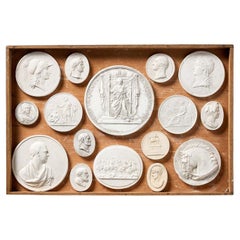
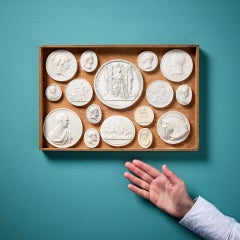
Collection of Antique Neoclassical Plaster Cameos

Collection of Antique Neoclassical Plaster Cameos

$930

H 0.79 in W 15.56 in D 10.24 in

Collection of Antique Neoclassical Plaster Cameos

Located in Wormelow, Herefordshire

A superb collection of 16 antique plaster cameos and intaglios of French and English origin presented in a wooden tray, supplied loose. These 19th century plaster cameos each display...

Category

English Neoclassical Antique 1890s Musical Instruments
Materials

Plaster, Wood, Pine

Erard Parallel-Strung Grand Piano, Paris, 1845

Erard Parallel-Strung Grand Piano, Paris, 1845

$45,000Sale Price|40% Off

H 37 in W 52 in D 95 in

Erard Parallel-Strung Grand Piano, Paris, 1845

By Sébastien Érard

Located in Littleton, CO

Please note: We are available to directly assist with coordinating pickup and delivery by trusted professionals experienced in transporting historic and concert-grade pianos. This Erard parallel-strung grand piano, crafted in Paris in 1845 (serial number: 18725), has been extraordinarily well-tended, restored and maintained, enduring today as not only a spectacular example of the pinnacle of 19th Century piano design - characterized by its innovative construction and exceptional sonoral qualities - but also as a premium instrument by the most advanced modern standards, concert-ready for world-class, discriminating performers and their audiences. Erard was a renowned piano manufacturer established by Sébastien Erard, and for much of the 19th Century, the company produced some of the most exquisite and innovative European pianos of the era. The sound produced by this parallel-strung grand piano is characterized by a clarity and transparency that distinguishes it from its contemporaries. The parallel arrangement of strings contributes to a more direct transfer of sound energy, resulting in a balanced and articulate tone across the instrument's registers. This piano's tone is beloved for its sweetness in the treble range and a robust quality in the bass, while also allowing for an especially nuanced and expressive interpretation of the musical repertoire of its era. The ebony and ivory keyboard is a testament to the meticulous attention Erard paid to the tactile experience of playing. Each key is precision-weighted, providing a responsive touch that allows the pianist to articulate a wide range of dynamics and expressiveness. An interior faux tableau latches to the outer case lid in an open position for maximum concert volume, and rests in a lowered position to maintain a softer, more muted experience. The year 1845 places this Erard instrument in the heart of the Romantic era, a period marked by a surge in musical creativity and emotional expression. Composer/performers like Chopin and Liszt were drawn to Erard grand...

Category

French Romantic Antique 1890s Musical Instruments
Materials

Wood

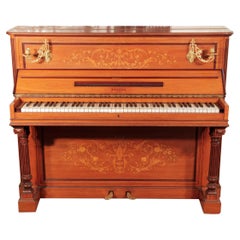
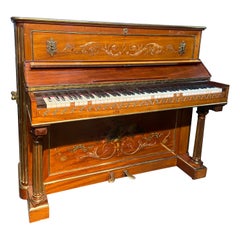
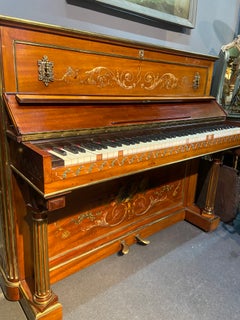
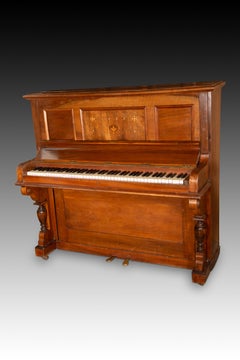
Upright piano. Towards the beginning of the 20th century.

Upright piano. Towards the beginning of the 20th century.

Located in Madrid, ES

Upright piano. Towards the beginning of the 20th century. Upright or wall piano with a wooden body with marquetry elements on the central panel of the uppe...

Category

European Other 1890s Musical Instruments

Materials

Other

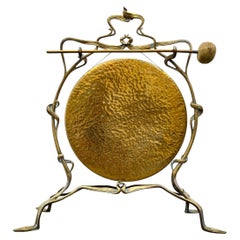
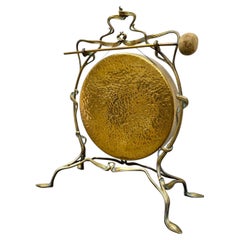
Rare Carl Deffner Jugendstil Hammered Brass Table Gong, Germany, circa 1900

Rare Carl Deffner Jugendstil Hammered Brass Table Gong, Germany, circa 1900

By Carl Deffner

Located in Antwerp, BE

This rare and highly decorative Art Nouveau dinner gong was created around 1900 by Carl Deffner of Esslingen, Germany, one of the leading manufacturers of artistic metalwork during t...

Category

German Art Nouveau 1890s Musical Instruments

Materials

Brass

Previously Available Items
Pair of speakers Elipson model “ 1401 " France, 1980s.

Pair of speakers Elipson model “ 1401 " France, 1980s.

By Elipson

Located in Lot/Drogenbos, BE

Pair of speakers model “ 1401 ” 4-way system, 3 speakers, power up to 80W. Custom-made stands. Manufactured by Elipson in France in 1986. Producer - Elispon. Model - 1401. P...

Category

French Antique 1890s Musical Instruments
Materials

Metal, Steel

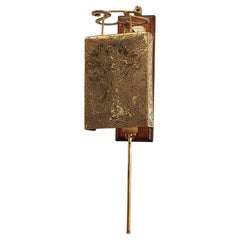
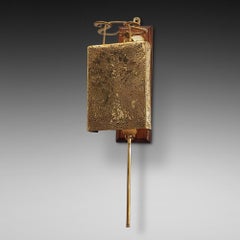
Arts and Crafts Brass and Oak Dinner Gong

Arts and Crafts Brass and Oak Dinner Gong

Located in Altrincham, GB

Arts and Crafts Rectangular Pitted Brass Gong on an Oak Wall Mounted Panel - 5.5"w x 8"d x 20"h when mounted

Category

English Arts and Crafts Antique 1890s Musical Instruments
Materials

Brass

Large Antique English Brass Desk / Counter Bell c.1890

Large Antique English Brass Desk / Counter Bell c.1890

Located in Bath, GB

A wonderful and highly decorative desk or counter bell, my favourite kind with the more unusual clapper to the side rather than the ones you ring from the top. The hinged clapper is ...

Category

British Victorian Antique 1890s Musical Instruments
Materials

Brass

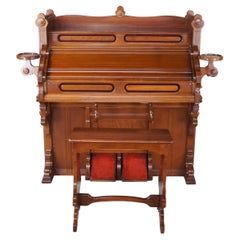
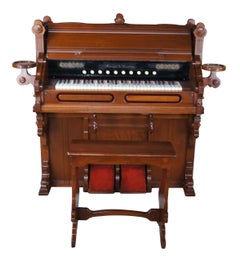
Antique Mason & Hamlin Victorian Eastlake Walnut Reed Chapel Pump Organ & Stool

Antique Mason & Hamlin Victorian Eastlake Walnut Reed Chapel Pump Organ & Stool

By Mason & Hamlin

Located in Dayton, OH

This reed organ was made by Mason & Hamlin in Boston, Massachusetts, cirfca 1890s. It is a parlor / Chapel model with a with a single keyboard, two knee swells, and two pedals. Made from walnut with burled and carved accents. Neatly flanked by candle holders along the outside of the body. Includes bench seat. The organ’s stop list is as follows: Dulciana Diapason Viola Dulce Viola Aeolian Harp Vox Humana Clarionet Oboe Voix Celeste Melodia Clarabella The story of Mason & Hamlin began in 1854 when two brilliant idealists sought to accomplish one goal: to make the world’s finest musical instrument. A mechanic and a pianist, Emmons Hamlin and Henry Mason committed to create an uncompromising instrument using only the finest materials and innovative techniques. Due to their dedication to quality, it was not long before Mason & Hamlin established a worldwide reputation for excellence that has lasted generations. Dimensions: stool 24...

Category

Eastlake Antique 1890s Musical Instruments
Materials

Walnut

Antique English Polished Brass Counter / Desk Bell, circa 1890

Antique English Polished Brass Counter / Desk Bell, circa 1890

Located in Bath, GB

A wonderful and highly decorative desk or counter bell, my favourite kind with the more unusual clapper to the side rather than the ones you ring from the top. The hinged clapper is ...

Category

British Late Victorian Antique 1890s Musical Instruments
Materials

Brass

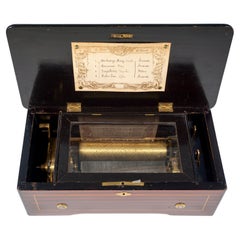
Etouffoirs En Acier Antique Cylinder Music Box 4 Melodies Geneva Swiss Ca 1900

Etouffoirs En Acier Antique Cylinder Music Box 4 Melodies Geneva Swiss Ca 1900

Located in Vienna, AT

Cylinder Music Bo in Wooden Cassette: 'Etouffoirs En Acier Soit À Spiraux' spring-loaded roller chime movement in rectangular veneered wooden case with a hinged, inlaid cover and a ...

Category

Swiss Victorian Antique 1890s Musical Instruments
Materials

Wood

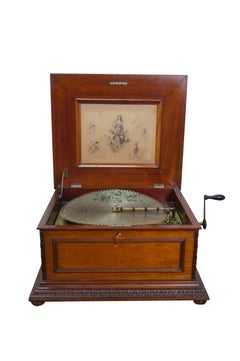
Regina Disc Music Box with Serpentine Case, circa 1899 & 10 Discs

Regina Disc Music Box with Serpentine Case, circa 1899 & 10 Discs

By Regina Music Box Co.

Located in Milford, NH

A great example of a Regina music box with short bedplate and double comb in a serpentine oak case, from the Regina Company in Rahway, NJ, Serial #500...

Category

American Antique 1890s Musical Instruments
Materials

Metal

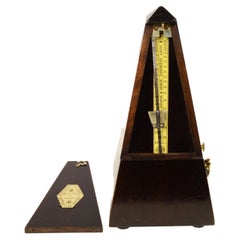
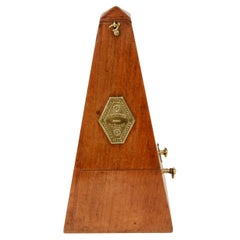
1890s Metronome System Johan Maelzel Antique Instrument Measure Music Tempo

1890s Metronome System Johan Maelzel Antique Instrument Measure Music Tempo

Located in Milan, IT

Metronome system Johan Maelzel (1772-1838) from the late 19th century. It is an instrument used to measure the tempo of music, the sound of the pendulum indicates the exact speed of ...

Category

Antique 1890s Musical Instruments
Materials

Wood

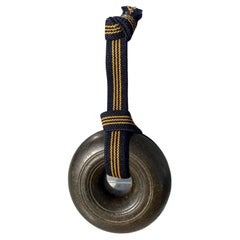
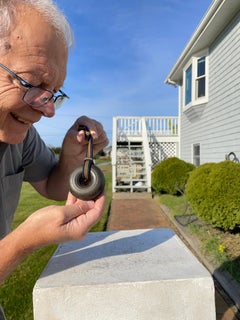
Japan Bronze Samurai 19th Century Horse Bell

Japan Bronze Samurai 19th Century Horse Bell

Located in South Burlington, VT

A one-of-a-kind rare Samurai horse accessory discovered from our recent Japanese acquisitions. This round donut shaped cast bronze bell was proudl...

Category

Japanese Meiji Antique 1890s Musical Instruments
Materials

Bronze

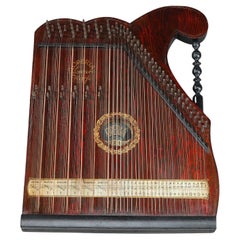
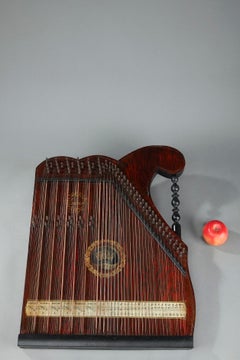
Painted Wood Table Zither

Painted Wood Table Zither

Sold

H 22.84 in W 17.72 in D 1.58 in

Painted Wood Table Zither

Located in Paris, FR

Table zither in painted wood. The handle is made of turned blackened wood. The rosette of the resonance box is decorated with a crown of oak leaves. The tablatures are indicated at t...

Category

German Antique 1890s Musical Instruments
Materials

Wood

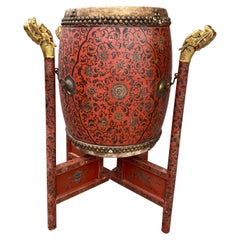
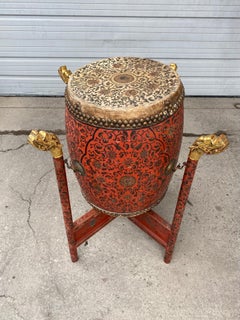
Large 19th Century Qing Dynasty Chinese Ceremonial Lacquered Drum, Dragon Stand

Large 19th Century Qing Dynasty Chinese Ceremonial Lacquered Drum, Dragon Stand

Located in Buffalo, NY

Large 19th century Qing Dynasty Chinese ceremonial lacquered drum, highly decorated, painted, gold gilded dragon head stand, hand decorated top and bottom animal skin, drum measures ...

Category

Chinese Qing Antique 1890s Musical Instruments
Materials
Animal Skin, Wood