Video Loading
Want more images or videos?
Request additional images or videos from the seller
1 of 9

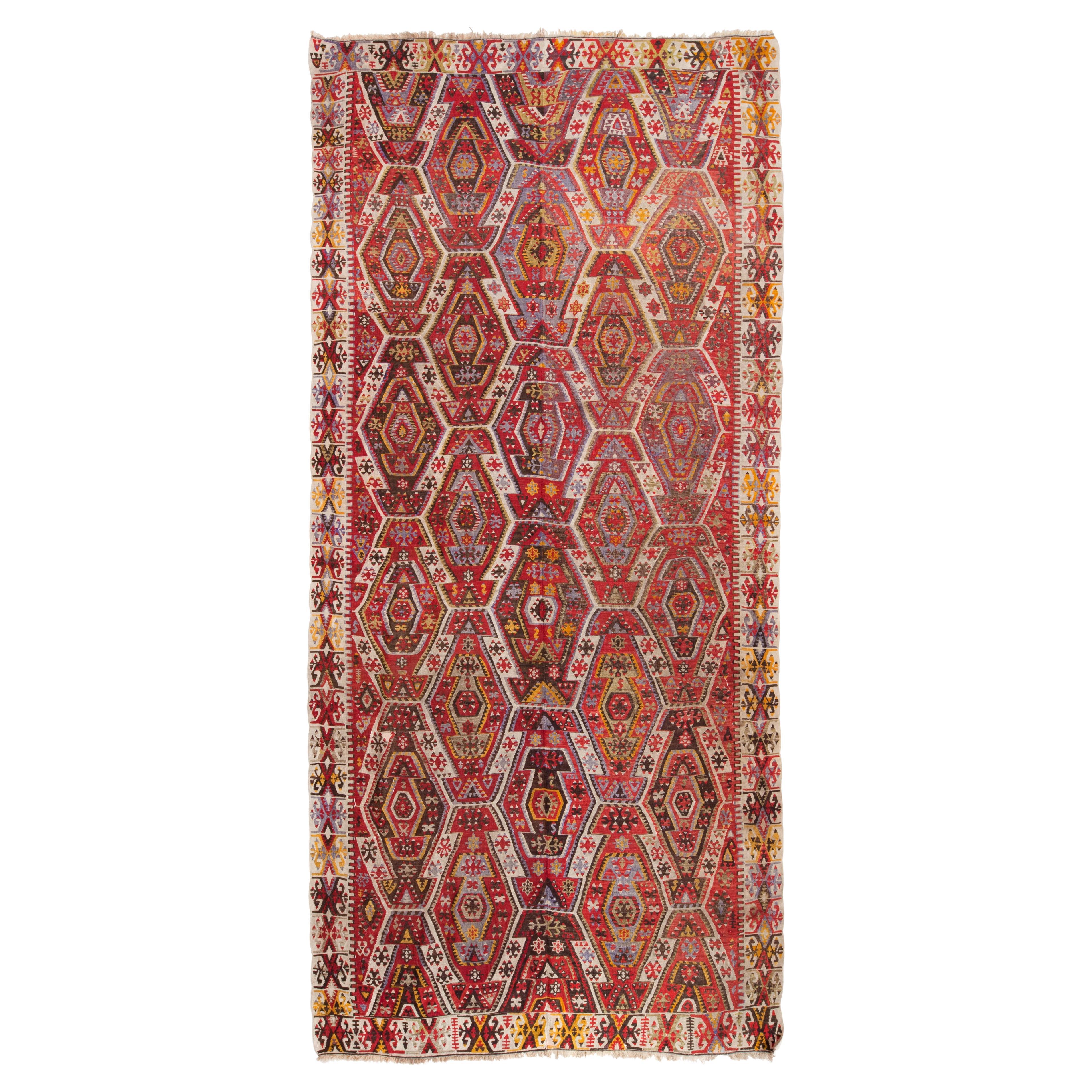
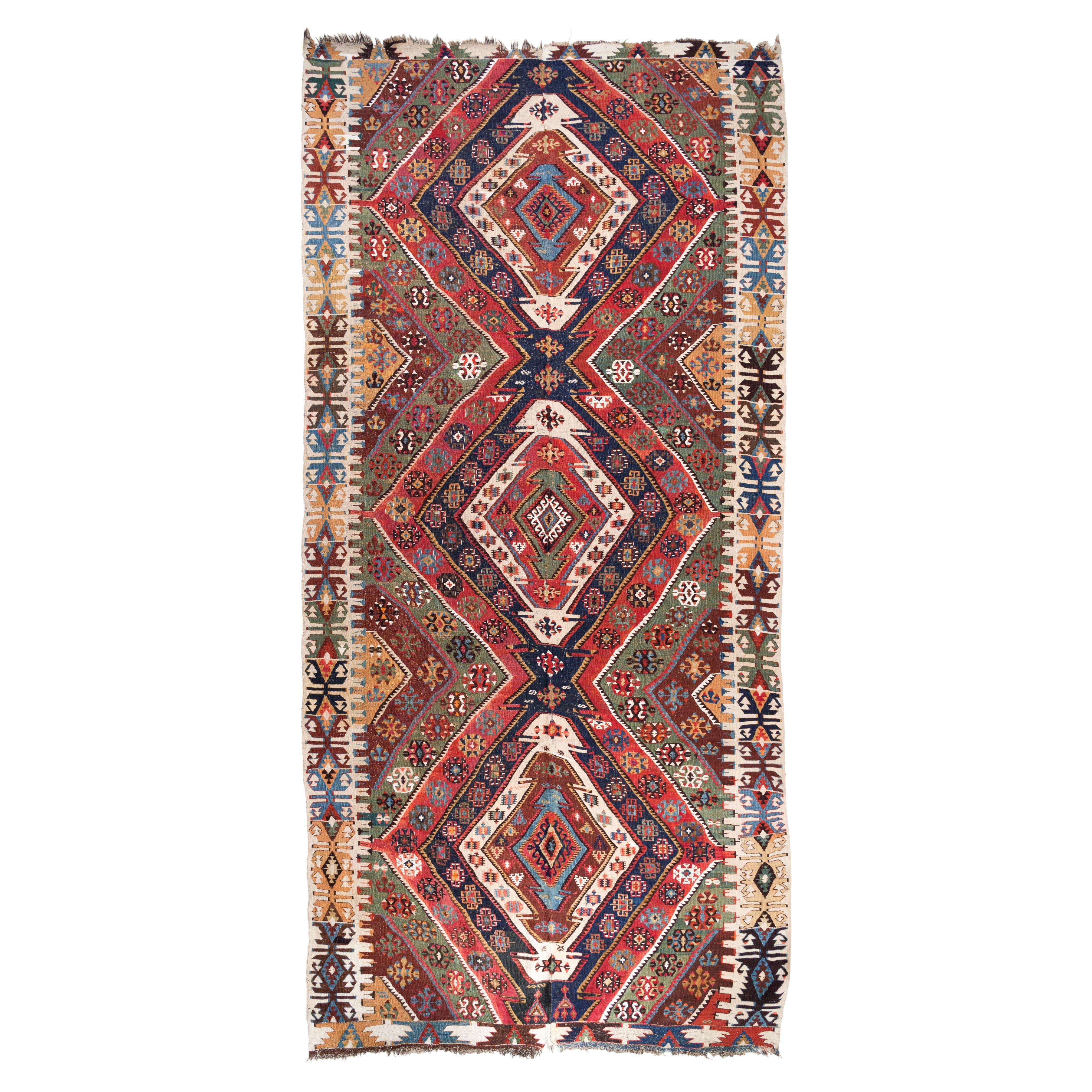
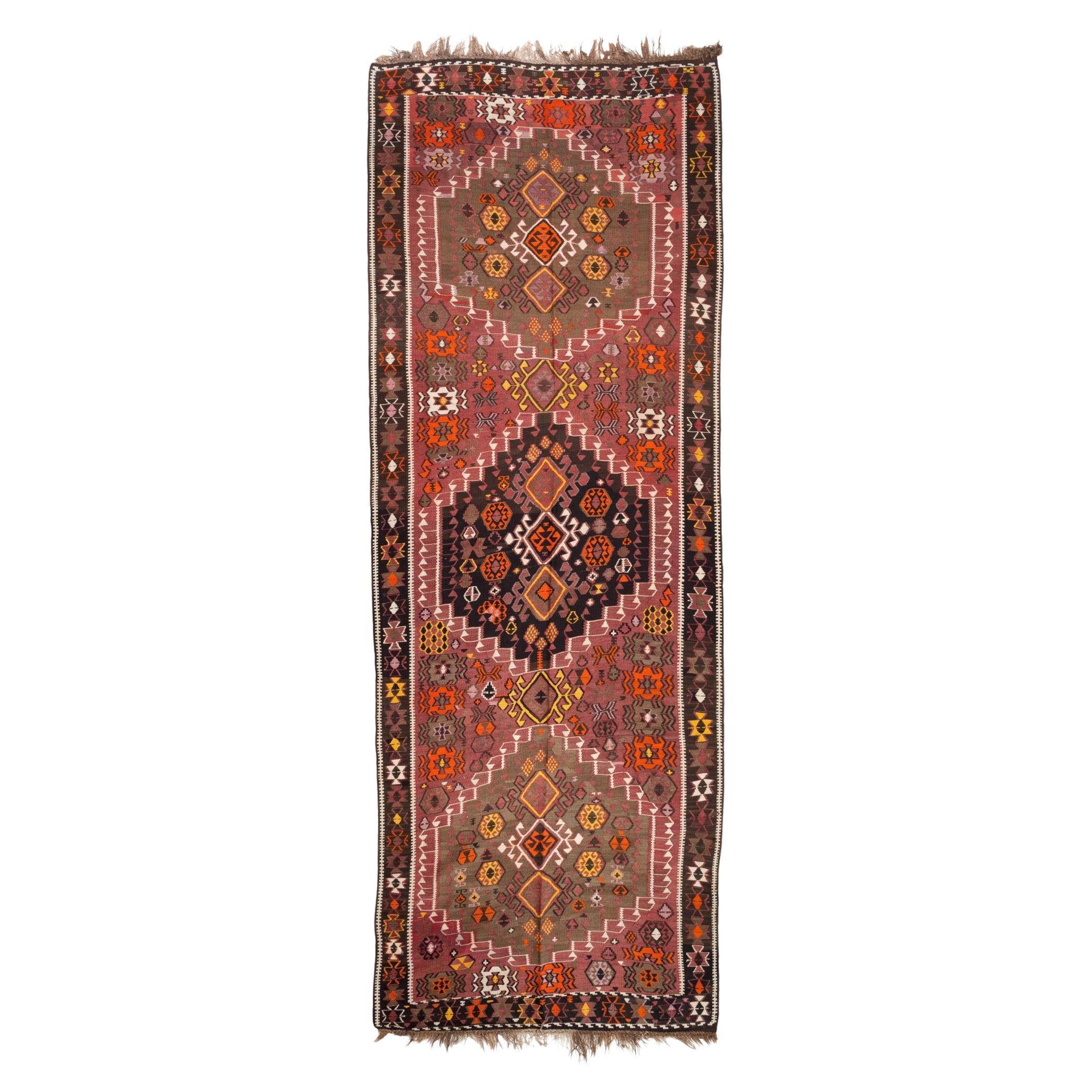
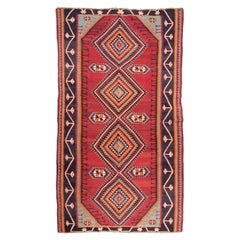
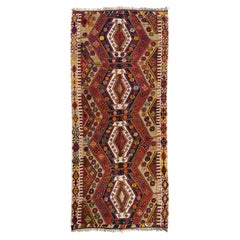
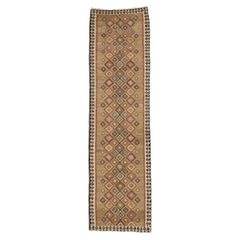
Antique Caucasus Verneh Kilim Natural Handwoven Runner Rug Caucasian Old Carpet

$14,400
$18,00020% Off
£10,877.86
£13,597.3220% Off
€12,684.04
€15,855.0520% Off
CA$20,439.35
CA$25,549.1920% Off
A$20,569.84
A$25,712.3020% Off
CHF 11,938.64
CHF 14,923.3020% Off
MX$249,792.57
MX$312,240.7220% Off
NOK 137,136.83
NOK 171,421.0420% Off
SEK 141,551.56
SEK 176,939.4520% Off
DKK 94,816.92
DKK 118,521.1420% Off

About the Item

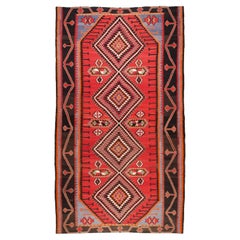
This is a large Antique Verneh Runner Kilim from the Caucasus region with a rare and beautiful color composition. Of the four countries that make up the Caucasus, Azerbaijan produces the most kilims, and the land has a long history of weaving. The nomadic tribes wove kilims and carpets as well as a wide range of storage bags and sacks, such as saffrash, khurgin, and chula, and donkey and horse trappings. Smaller bags for salt, utensils, and other items are also common. Not only are the Azerbaijani weavers prolific, but they also employ many techniques at the loom. These include slitweave- known locally by the word kilim, warp-faced patterning (jajim), supplementary weft (zili), weft wrapping (popularly known as soumak), and extra weft wrapping (verneh). Furthermore, flatweaves are defined by regional names such as palas and shadda, so it is possible to ascribe a variety of weaving names to particular provenances as follows: soumaks are made in Kuba, palas, and kilims in Hajikabul, zili in Khizy, verneh and zili in Kazakh, shadda, verneh and zili in Barda, jajim in Agjabedi, and palas and kilims in Jabrail.
  • Dimensions:
    Width: 63 in (160 cm)Length: 143.71 in (365 cm)
  • Style:
    Kilim (In the Style Of)
  • Materials and Techniques:
    Natural Fiber,Wool,Hand-Knotted,Hand-Woven
  • Place of Origin:
  • Period:
  • Date of Manufacture:
    circa 1900s
  • Condition:
    Wear consistent with age and use. Minor structural damages. Minor fading.
  • Seller Location:
    Tokyo, JP
  • Reference Number:
    Seller: 241121stDibs: LU8206238201452

More From This Seller

View All
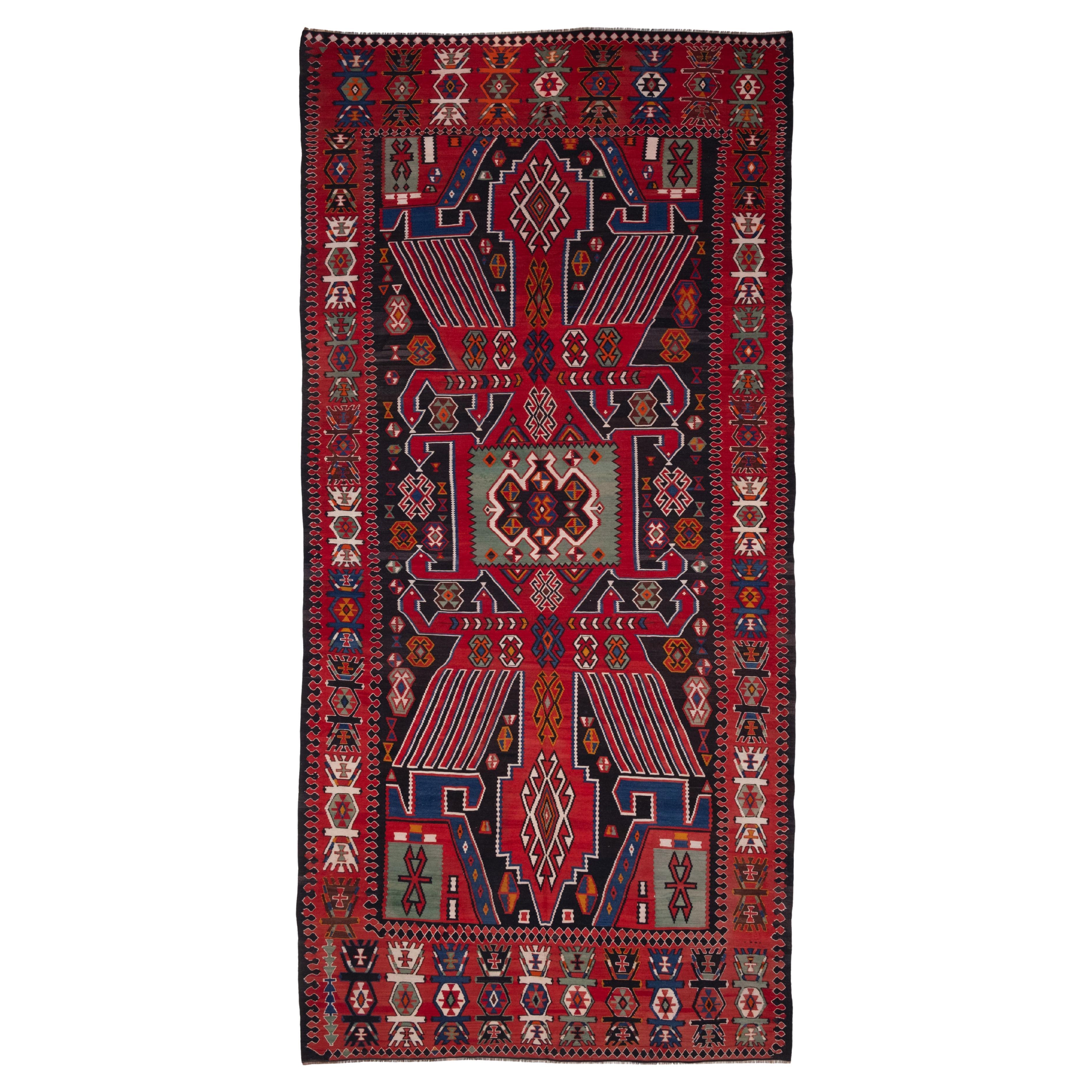
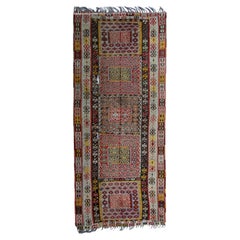
Antique Caucasus Talish Kilim Natural Handwoven Runner Rug Caucasian Old Carpet

Antique Caucasus Talish Kilim Natural Handwoven Runner Rug Caucasian Old Carpet

Located in Tokyo, JP

This is a large Antique Talish Kilim from the Caucasus region with a rare and beautiful color composition. Of the four countries that make up the Caucasus, Azerbaijan produces the m...

Category

Early 20th Century Caucasian Kilim Caucasian Rugs

Materials

Wool, Natural Fiber

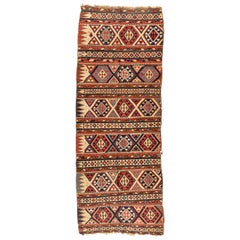
Caucasus Kuba Kilim Vintage Old Rug, Caucasian Natural Carpet

Caucasus Kuba Kilim Vintage Old Rug, Caucasian Natural Carpet

Located in Tokyo, JP

This is a large, Caucasian Old Kilim from the Kuba region with a red background and beautiful color composition. The large, continuous medallions with zigzag patterns have an impa...

Category

Antique Mid-19th Century Caucasian Kilim Caucasian Rugs

Materials

Wool, Natural Fiber

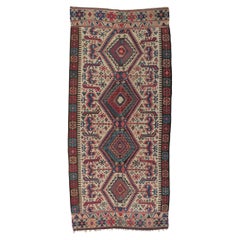
Caucasus Kuba Fine Kilim Vintage Old Rug, Caucasian Natural Carpet

Caucasus Kuba Fine Kilim Vintage Old Rug, Caucasian Natural Carpet

Located in Tokyo, JP

This is a Caucasian Old Kilim from the Kuba region with a red background and beautiful color composition. Kilim of Kuba, a city in Azerbaijan. It is located by the Caspian Sea, ne...

Category

Mid-20th Century Caucasian Kilim Caucasian Rugs

Materials

Wool, Natural Fiber

Antique Malatya Kilim Rug Old South Eastern Anatolian Turkish Carpet

Antique Malatya Kilim Rug Old South Eastern Anatolian Turkish Carpet

Located in Tokyo, JP

This is a South Eastern Anatolian antique Kilim from the Malatya region with a rare and beautiful color composition. Malatya is Turkey's main kilim production area, and there are many variations. This is one of them, a runner-type kilim. The thread is thin, and the weave is very fine and dense. Some metallic threads are used in this antique kilim, which is rarely seen in Anatolian kilims. Red, navy blue, and gray are the colors that determine the impression of this kilim. Other colors, such as brown, yellow, and light blue, are also used in the patterns. The wavy horizontal striped pattern, plain pattern, and lined motif pattern are woven together to create a kilim that looks like an obi. The pattern of the motif and the pattern of the wave are about the same amounts, giving a lively impression without getting busy. The deep shades of colors and patterns that are familiar to each other are unique to antiques. However, it still retains good coloring, which makes it hard to believe that it is an antique. The runner type is a good type to make this kilim unique. Also, for those who want to create a different kind of home, the use of runners is very effective. Malatya is a town built on one main street that continues for several miles. It is situated in the Tohmasuyu River basin, which is encircled by the high peaks of the eastern Taurus Mountains. This is a fertile agricultural region, particularly for apricots, and has been a prolific weaving area for many years. The modern town was established in 1838; old Malatya, which is close by, was once an important city in Armenia Minor. In Roman times it was important as a garrison town on the eastern frontier, and the settlement came under Ottoman rule in the early fifteenth century. Considering the number of kilims woven in this region there is a surprising lack of diversity in design, especially in the larger kilims; this is possibly a direct result of the Kurdish tribal tradition of weaving only one type of design. Small prayer rugs...

Category

Early 20th Century Turkish Kilim Turkish Rugs

Materials

Wool, Natural Fiber

Caucasia Kuba Old Kilim Rug, Vintage Caucasian Carpet

Caucasia Kuba Old Kilim Rug, Vintage Caucasian Carpet

Located in Tokyo, JP

This is a large, Caucasian Old Kilim from the Kuba region with a red background and beautiful color composition. Kuba kilims are often decorated with large abstract indented medal...

Category

Mid-20th Century Caucasian Kilim Caucasian Rugs

Materials

Wool, Natural Fiber, Cotton

Malatya Kilim Rug Old Vintage Eastern Wool Runner Anatolian Turkish Carpet

Malatya Kilim Rug Old Vintage Eastern Wool Runner Anatolian Turkish Carpet

Located in Tokyo, JP

This is Eastern Anatolian Old, Vintage Kilim from the Malatya region with a rare and beautiful color composition. This highly collectible antique kilim has wonderful special colors ...

Category

Mid-20th Century Turkish Kilim Turkish Rugs

Materials

Wool, Natural Fiber

You May Also Like

Handmade Carpet Antique Turkish Kilim Rug Traditional Tribal Runner Rug

Handmade Carpet Antique Turkish Kilim Rug Traditional Tribal Runner Rug

Located in Wembley, GB

This highly decorative antique Turkish Kilim has been constructed using the finest handspun wool dyed in muted red, brown and ivory colours, using organic vegetable dyes. Featuring t...

Category

Antique 1870s Turkish Rustic Central Asian Rugs

Materials

Wool, Cotton, Natural Fiber, Organic Material

Antique Shirvan Caucasian Kilim Flat Weave Rug, circa 1880s-1900s

Antique Shirvan Caucasian Kilim Flat Weave Rug, circa 1880s-1900s

Located in New York, NY

Kilim, a word of Turkish origin, denotes a pileless textile of many uses produced by one of several flat-weaving techniques that have a common or closely related heritage and are practiced in the geographical area that includes parts of Turkey (Anatolia and Thrace), North Africa, the Balkans, the Caucasus, Iran, Afghanistan, Pakistan, Central Asia and China. Kilims are generally woven with the slitweave technique. The slit refers to the gap left between two blocks of color. It is created by returning the weft around the last warp in a color area, and the weft of the adjacent color is later returned around the adjacent warp. The major difference between a kilim area rug and a carpet or a pile rug is that whereas the design visible on a pile rug is made by individual short strands of different color being knotted onto the warps and held together by pressing the wefts tightly, kilim designs are made by interweaving the variously colored wefts and warps, thus creating what is known as a flat-weave. Weavers pack the weft tightly to completely cover the warp and often favor diagonal patterns so as to avoid weakening the structure of the rug with vertical slits. It produces bold, sharp patterns that weavers enjoy creating with more freedom allowed than a plainweave. This is also why kilims are so closely associated with geometrical designs even though there are kilims with floral designs as well. This lovely antique Shirvan Caucasian Kilim...

Category

Antique 1880s Caucasian Kilim Caucasian Rugs

Materials

Wool

Handwoven Vintage Turkish Kilim Runner with Tribal Style

Handwoven Vintage Turkish Kilim Runner with Tribal Style

Located in Dallas, TX

78016 Vintage Turkish Kilim Rug, 04'02 x 15'00. ​Step into a realm of warmth and invitation, where intricate detail and textured elegance converge in this handwoven wool vintage Tur...

Category

Late 20th Century Turkish Kilim Turkish Rugs

Materials

Wool

Antique Rug, Handmade Carpet Oriental Rug Turkish Kilim Runner

Antique Rug, Handmade Carpet Oriental Rug Turkish Kilim Runner

Located in Wembley, GB

This handmade carpet colorful rug is a Turkish carpet rug has woven by very skilled weavers in Turkey, who used the highest quality wool and cotton. The flat-weave rug has a light or...

Category

Antique 1880s Turkish Kilim Turkish Rugs

Materials

Wool, Cotton, Organic Material

Vintage Rare Malatya Wool Kilim 4'10''x10'3''

Vintage Rare Malatya Wool Kilim 4'10''x10'3''

By Amara Rugs

Located in Torrance, CA

This striking handwoven wool kilim features bold geometric motifs and a strong tribal rhythm rooted in centuries-old weaving traditions. Woven entirely by hand using the flatweave te...

Category

Early 20th Century Turkish Kilim Turkish Rugs

Materials

Wool