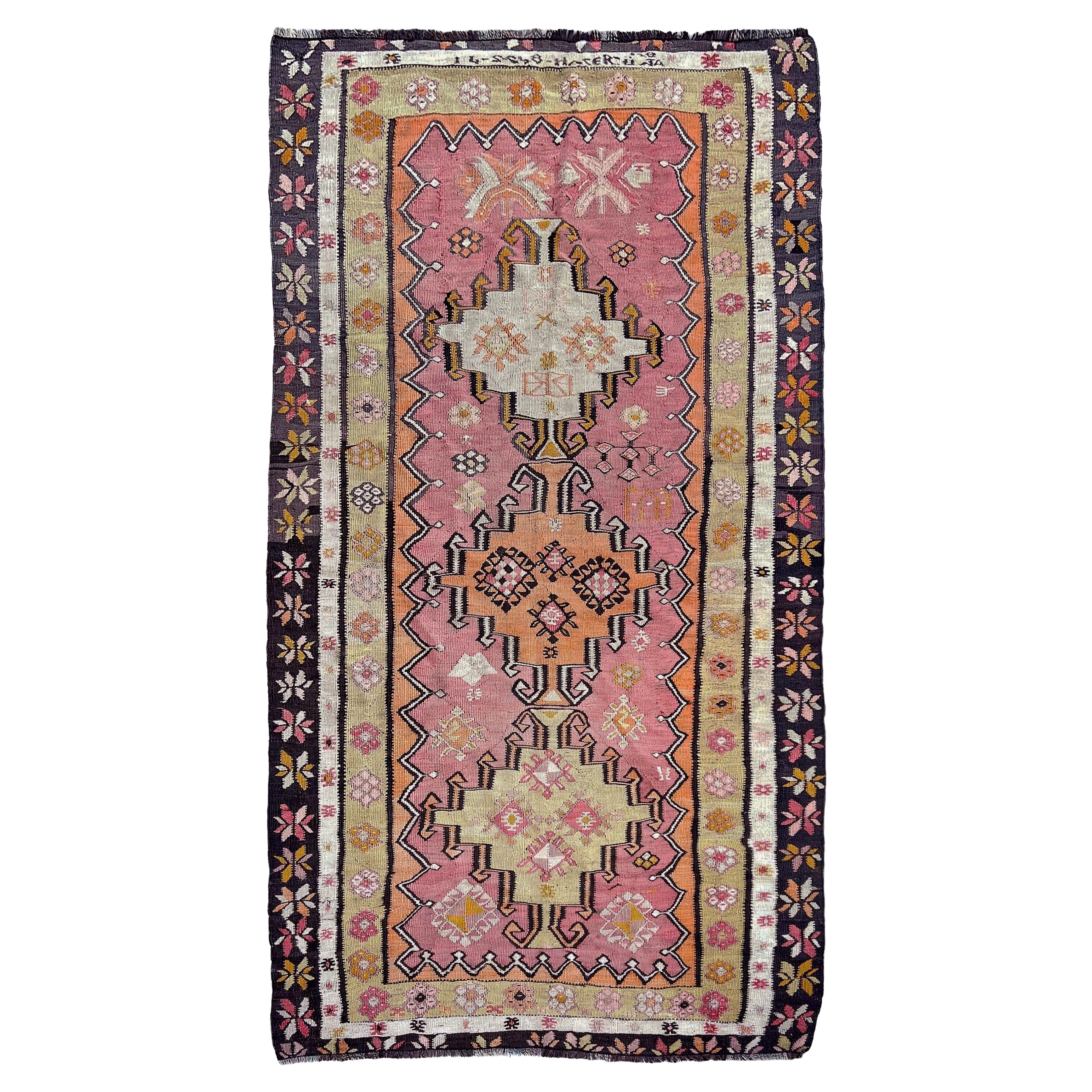
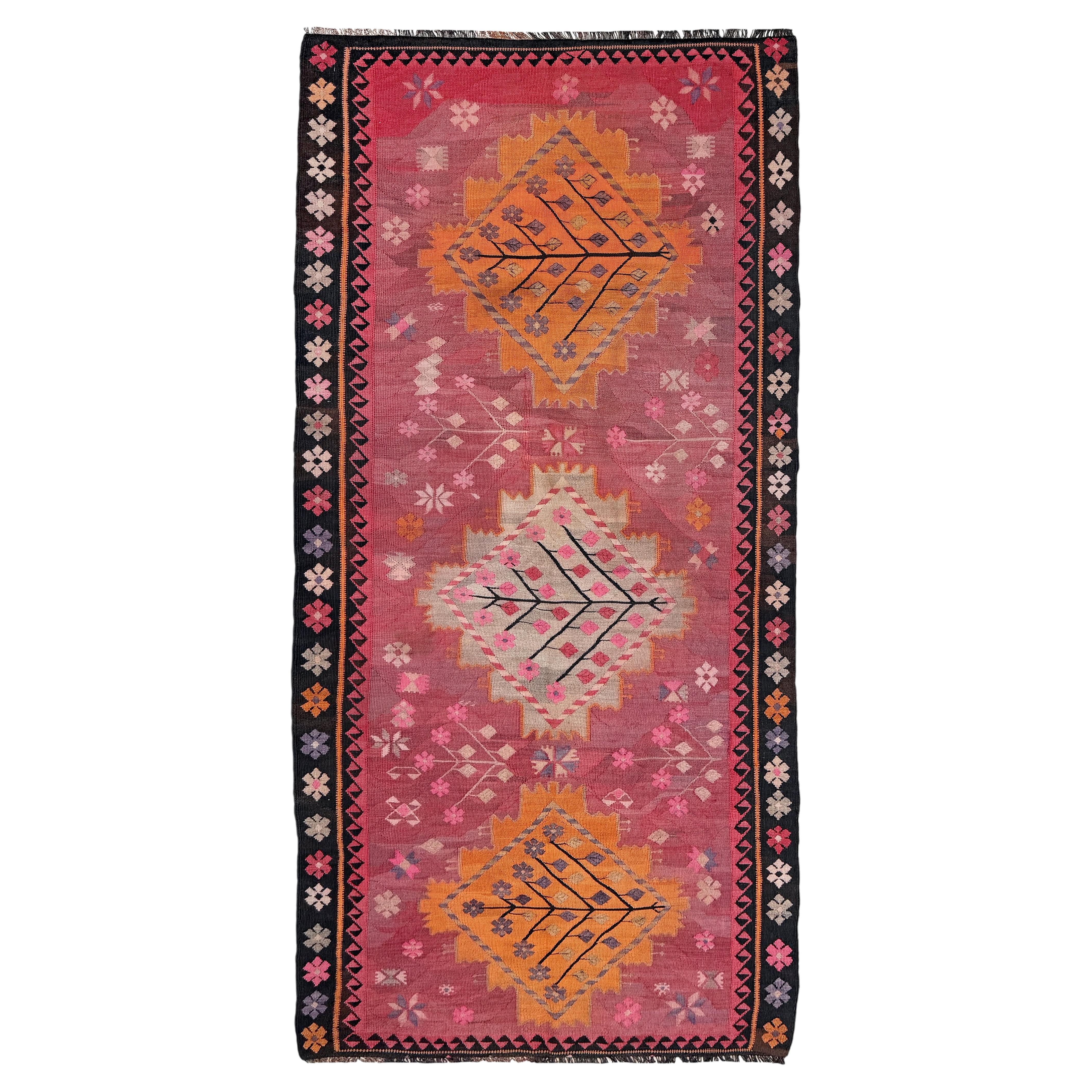
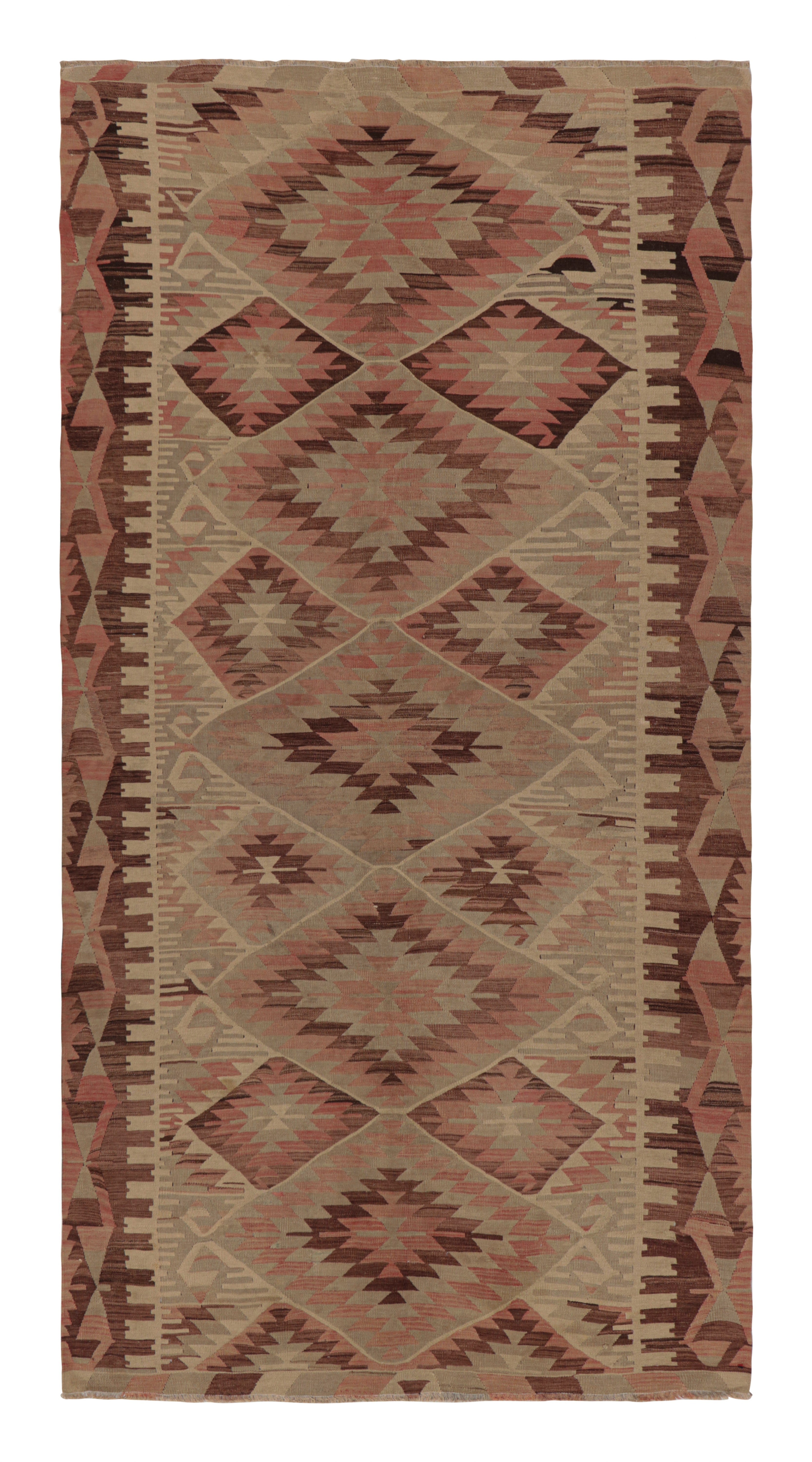
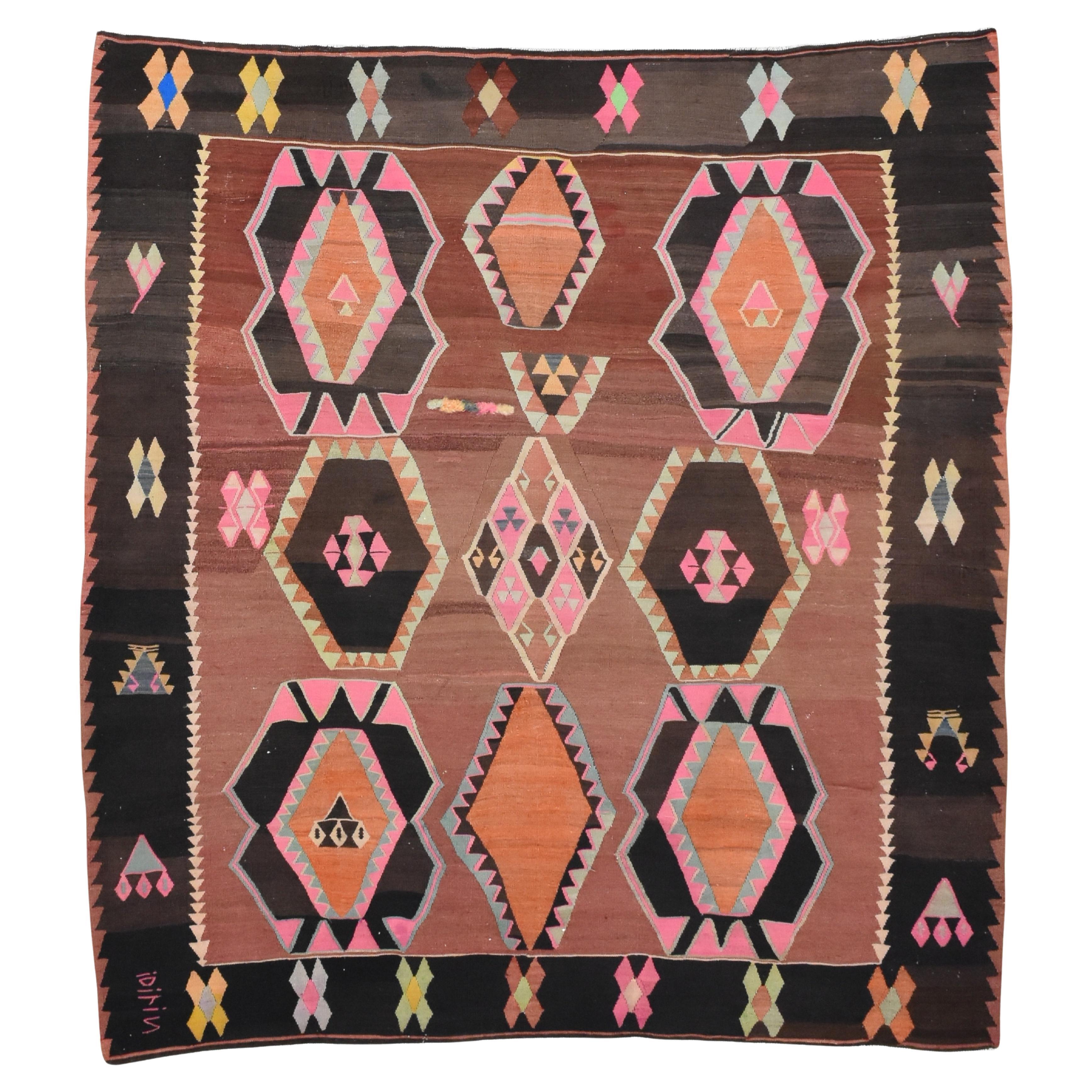
Antique Central Asian Arab Kilim, Circa 1900, Uzbekistan, 5'8" x 9'10", Wool, Earth Tones, Soft Neutral Carpet
Origin: Zarafshan Valley / Qashqadaryo region, Uzbekistan (Arab/Arabi tribal)
Circa: Circa 1900
Type: Kilim (flatweave) rug
Materials: Wool, naturally dyed and undyed
Dimensions: 5'8" x 9'10" (173 x 300 cm, or 68 x 118 inches)
Condition: Excellent — sturdy and hard-wearing throughout
Central Asia—a region lying at the heart of the famed Silk Roads and identified loosely with the landlocked post-Soviet ‘-stans’—has come in for scholarly reassessment in recent years. Revisionist histories reject the conventional view that the region is a mere highway to the economic boiler rooms and trading entrepots of the far and near east. Instead, Central Asia is increasingly seen as a wellspring of cultural, political, and military forces in its own right.
So too are its rugs. Recent scholarship has reappraised the Central Asia’s elusive kilims, including this rug, which is unmistakably bold and contemporary in its styling, but woven at the turn of the twentieth century by Arab emigres displaced across shifting borders.
Soft and muted warm tones
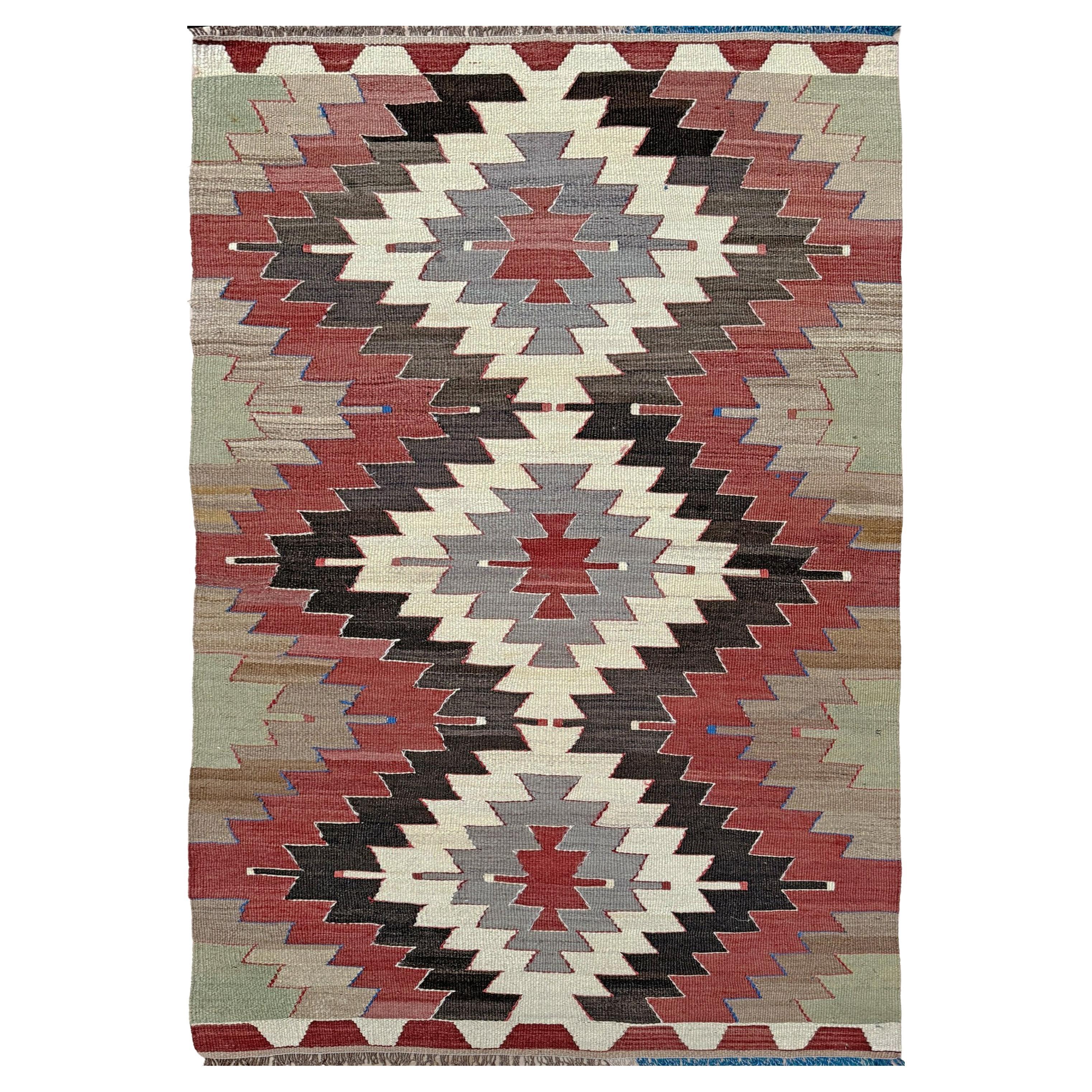
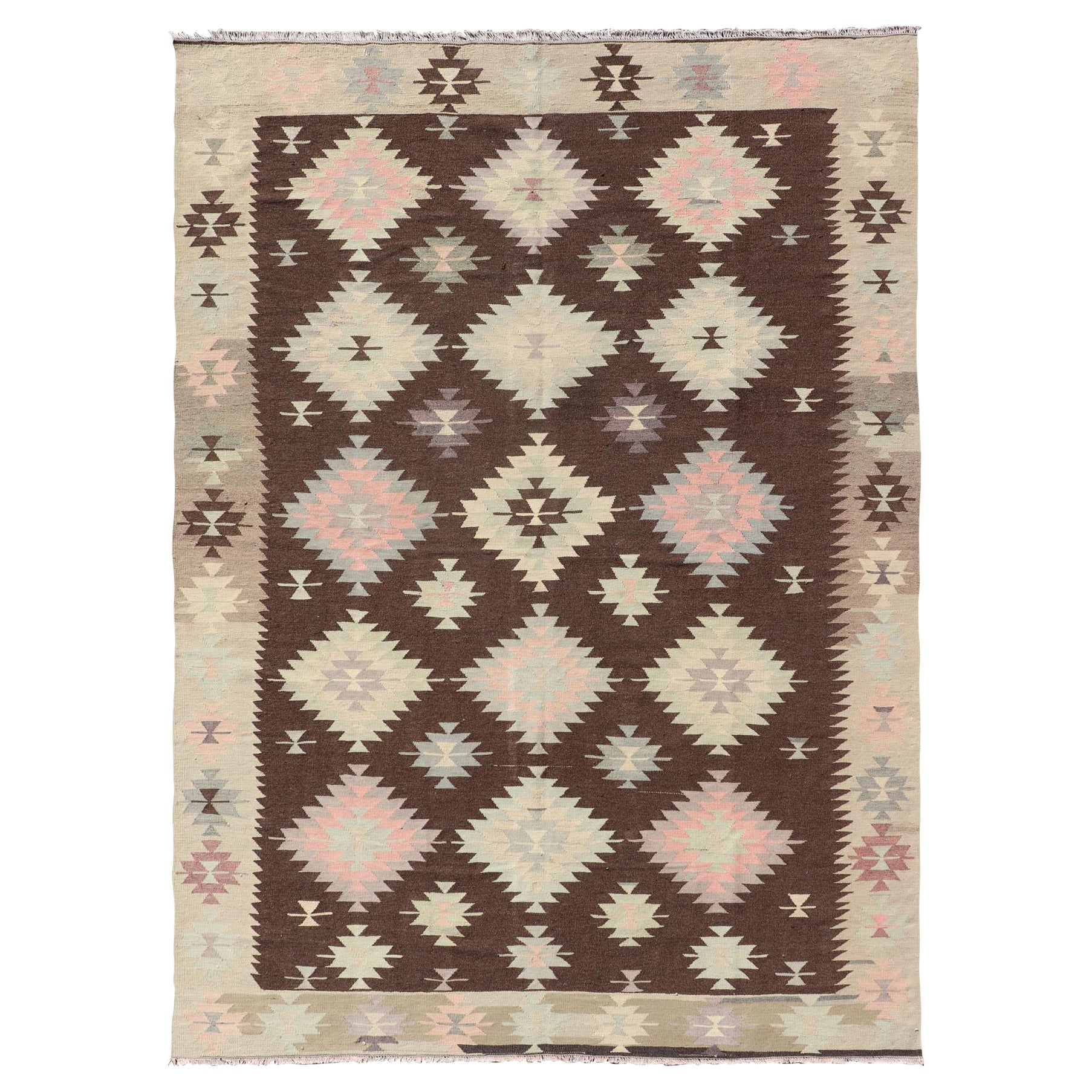
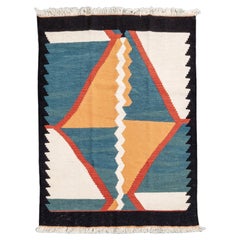
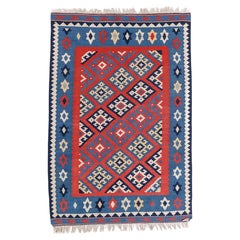
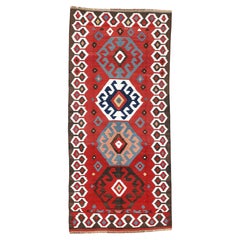
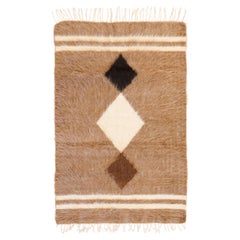
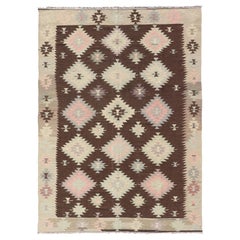
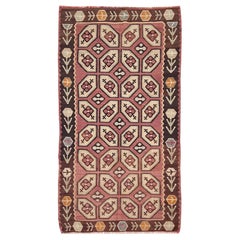
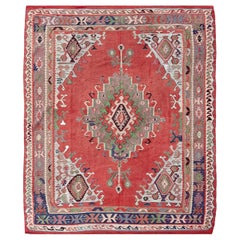
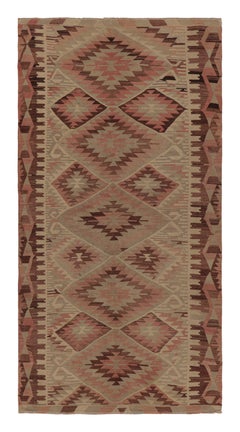
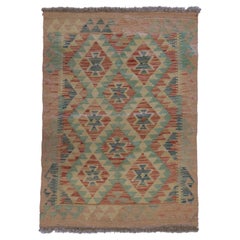
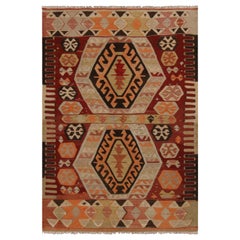
The rug sports a composition that is resolutely modern in its graphic abstraction. The field is populated with large oblong diamonds. Its simple motifs include hook (çengel) and pinwheel designs nested within hexagonal shields. The rug is surrounded on all sides by a generous border composed of wedges with gently undulating serrated edges.
Despite the weaver’s use of contrasting colors, age has muted the natural dyes, and the rug gives an overall impression of soft, diffuse warmth. Alongside blocks of undyed chalky beige wool, it exhibits pleasant medium tones of rose, faded indigo, and warm brown.
A history shaped by war, conquest, and commerce
This rug belongs to a desirable but obscure group of Central Asian weavings known as Arab or Arabi kilims. These rugs were as “popular and widespread in their day as blue jeans are in the modern world”, yet they were not exported commercially to the West, and they remain poorly documented in textile literature.
These rugs were woven by a small Arab minority that has resided in what is now Uzbekistan since Islam’s eruption across Eurasia in the seventh and eighth centuries. A larger Arab population emerged in the fifteenth century under Timur (aka Tamerlane, immortalized on the Elizabethan stage by Christopher Marlowe). The last great steppe conqueror, Timur was heir to Genghis Khan and succeeded in uniting under his banner an area stretching from central Anatolia (i.e., Turkey) in the west to the Punjab (i.e. India) in the east. After ransacking Damascus, Timur hoovered up local artisans, scholars, and craftsmen to contribute to a scientific and aesthetic revolution in his gleaming capital at Samarkand.
The weavers of this rug are likely descendants of these transplants. Over time, many settled into a semi-nomadic life in the Zarafshan Valley, north of Bukhara, and in the Qashqadaryo region bordering Afghanistan to the south (“A picture tells its story,” HALI Magazine, Issue 204, p. 46-53). In the 19th century, Uzbekistan’s Arab populations scattered to surrounding regions, most notably in northern Afghanistan. After centuries of relative stability in Samarkand and Bukhara, they were forced into flight by the oppressive tax policies imposed by Tsarist Russia as it expanded southward during the geopolitical contest with Britain known as the Great Game.
This rug was likely woven in Uzbekistan. Its color palette distinguishes it from mid-19th century Arab kilims, which tend to feature brighter colors, including orange and green, often in combination with wide white cartouches and double-arrow motifs.
Condition and Use
This rug is in excellent condition. Large, sturdy, and hard-wearing, it will withstand heavy use.