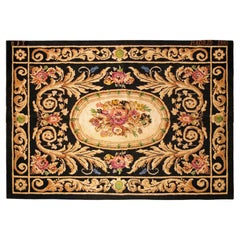
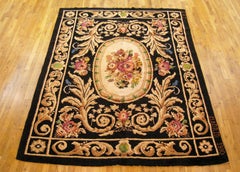
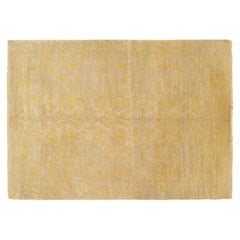
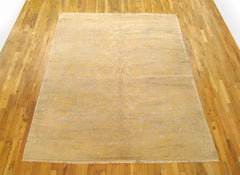
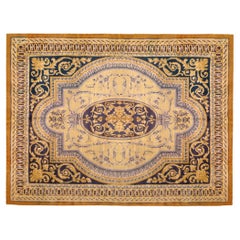
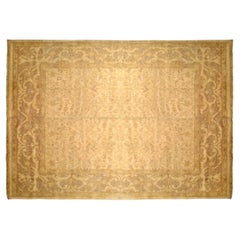
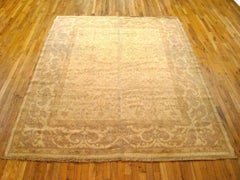
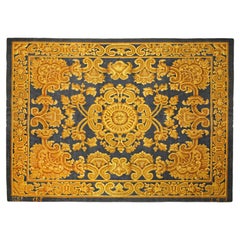
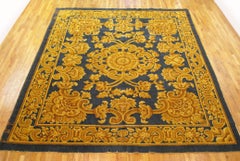
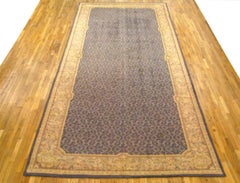
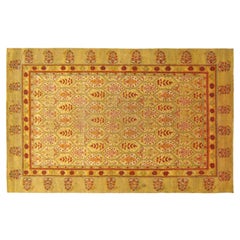
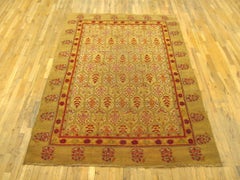
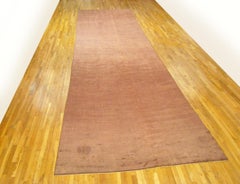
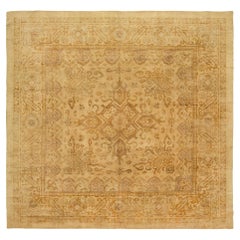
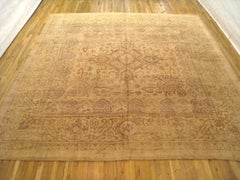
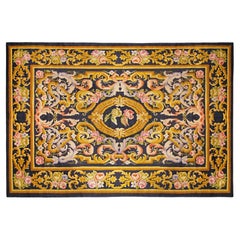
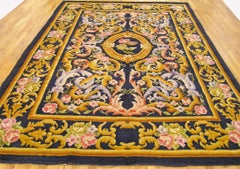
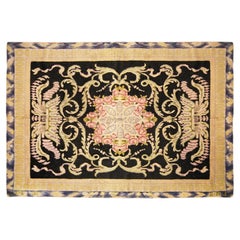
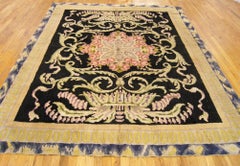
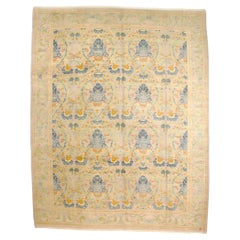
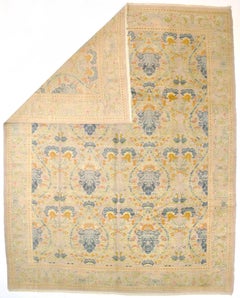
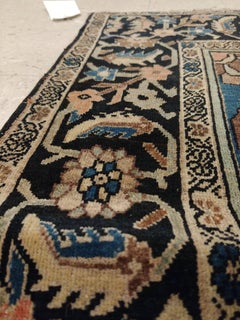
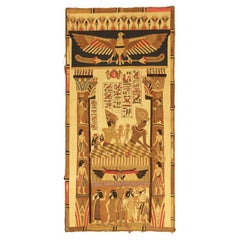
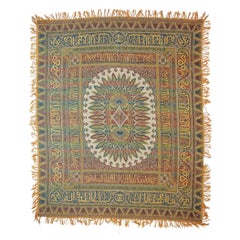
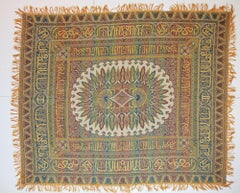
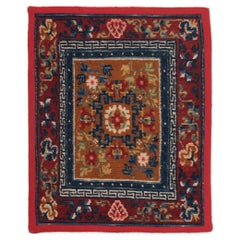
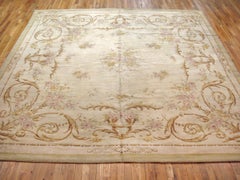
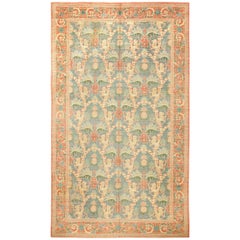
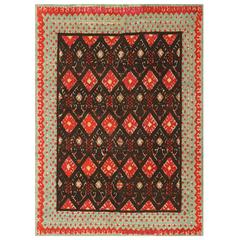
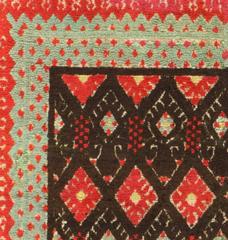
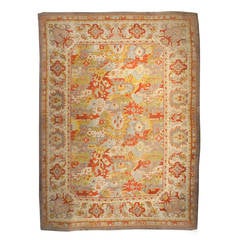
Spanish rugs although Spain is not generally thought of as a rug producing region, Spanish rugs represent the most venerable and honored tradition of rug production in Europe, going back to the time when much of Spain was part of the Islamic world. Still, Spanish rugs were not Moorish products; native Spanish weavers had already learned the technique of making rugs by the fourteenth century, and they have continued to do so up to the twentieth century.
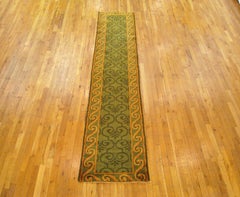
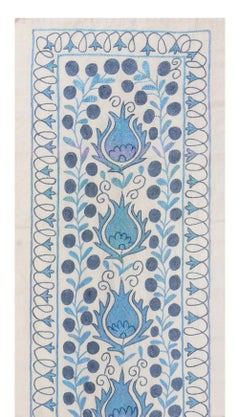
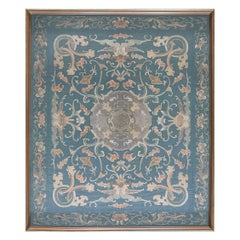
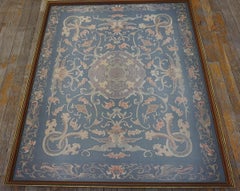
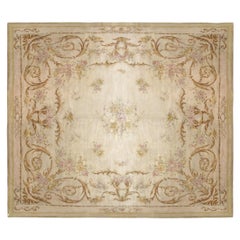
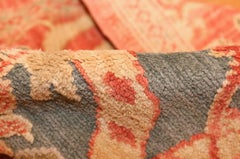
Spanish rugs have a weave like no other pile rugs; they are truly knotted, not looped, in staggered rather than superimposed rows. Their coloration has always been soft with dominant ivory grounds and pastel greens and yellows. Although some early carpets from Spain imitated those of Ottoman Turkey, they soon developed a distinctive, uniquely Iberian or European style of vine-scroll ornament. Early pieces are highly desirable to collectors, while nineteenth and twentieth century examples make excellent room-size decorative rugs.
During the Islamic occupation Spain was the first country in medieval Europe to make knotted pile rugs. Carpet weaving flourished from the 8th century through most of the 15th century. The earliest existing carpets made in the 15th century depict a multi-cultural lineage. Christian, Jewish, Muslim Arab and Berber populations co-existed for eight centuries and their combined artistic influence is reflected in their designs. By the 11th century...
Category
Early 20th Century Spanish Colonial Spanish Persian Rugs