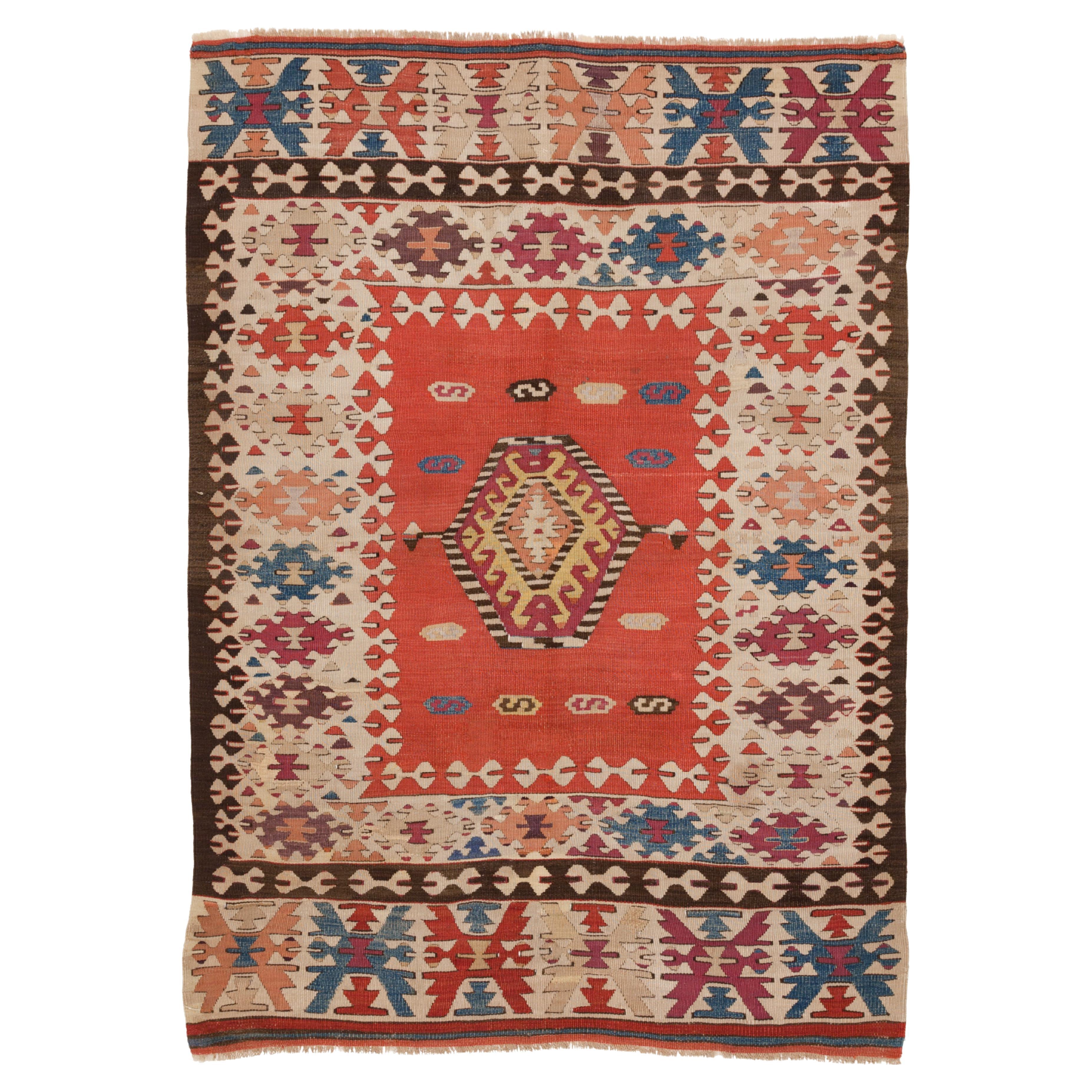
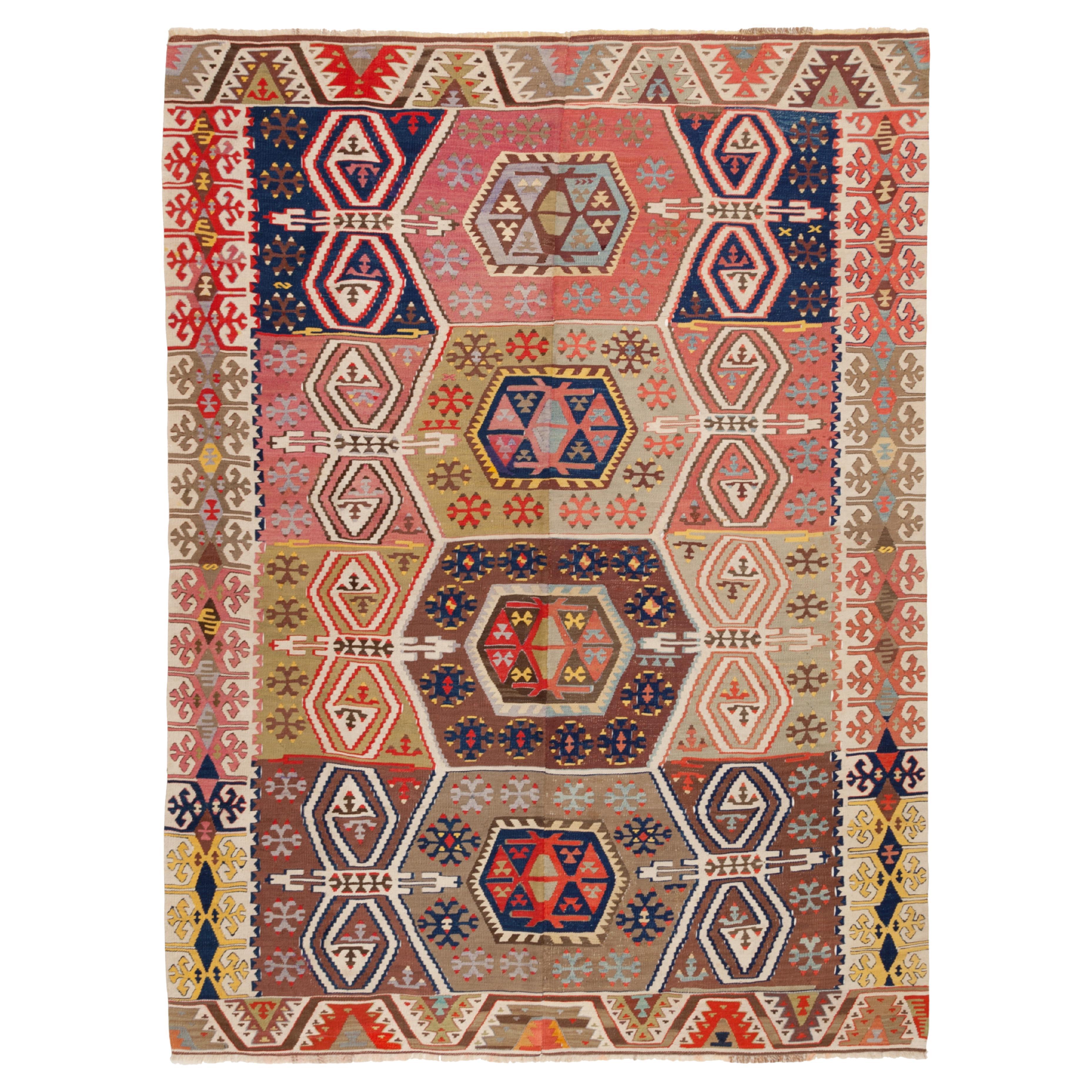
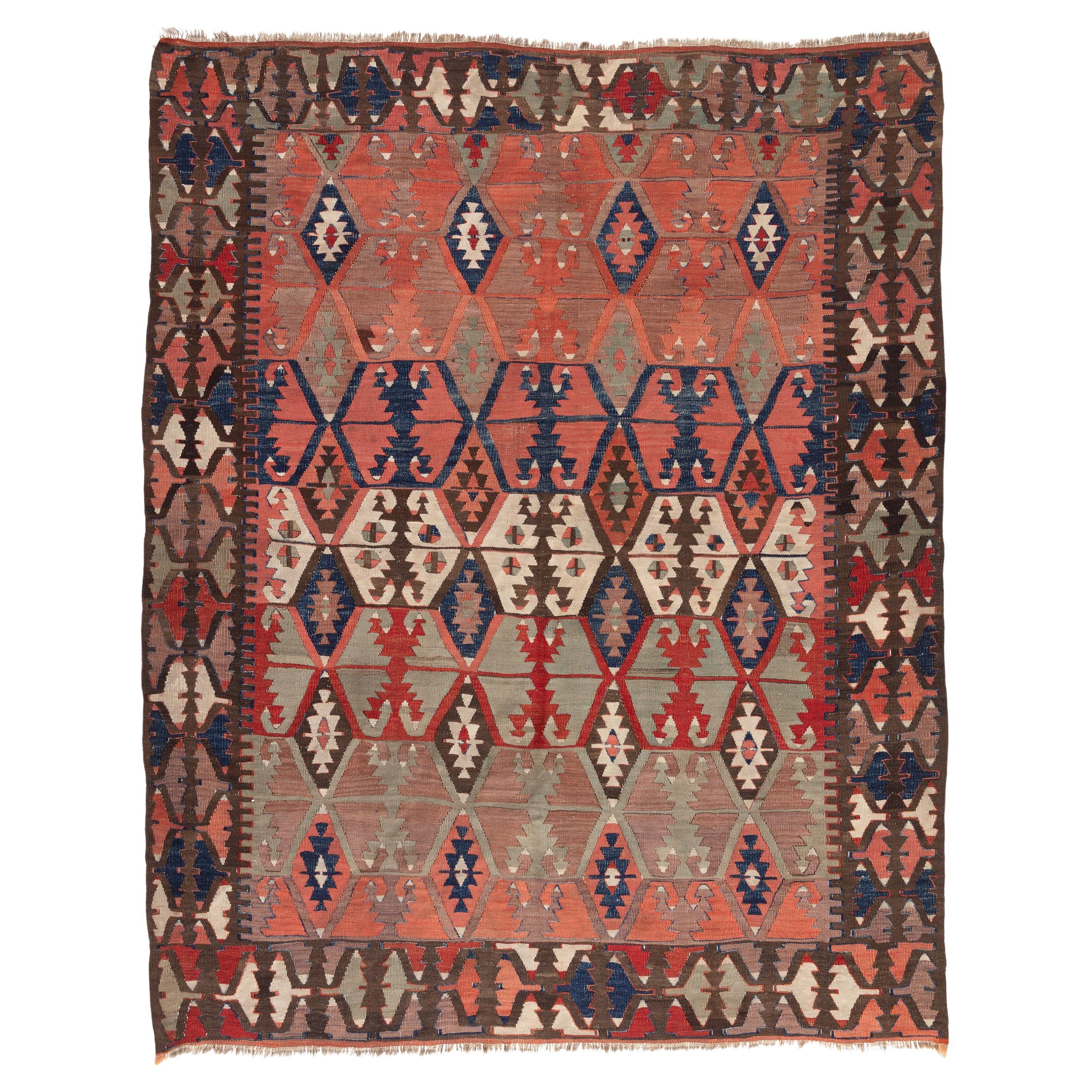
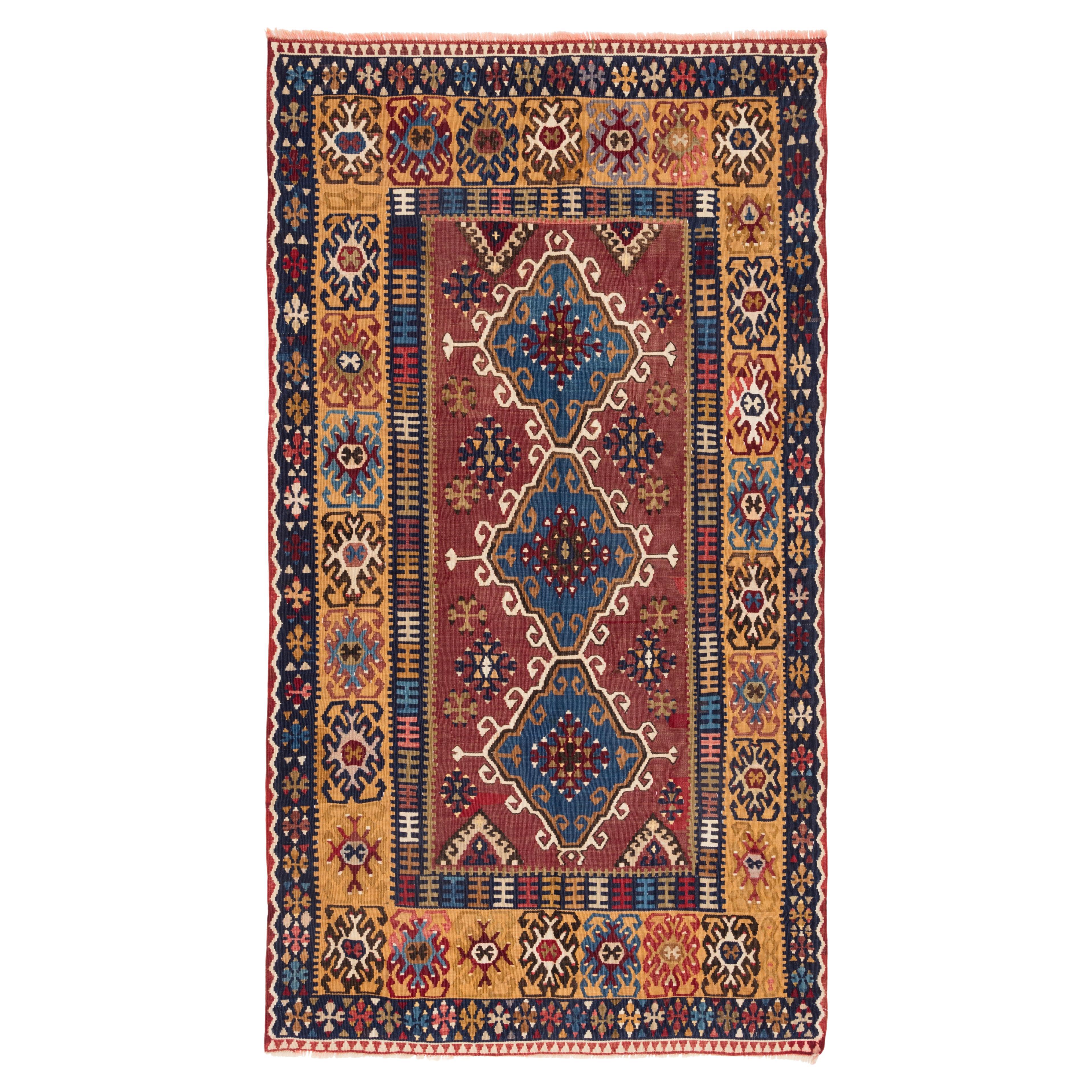
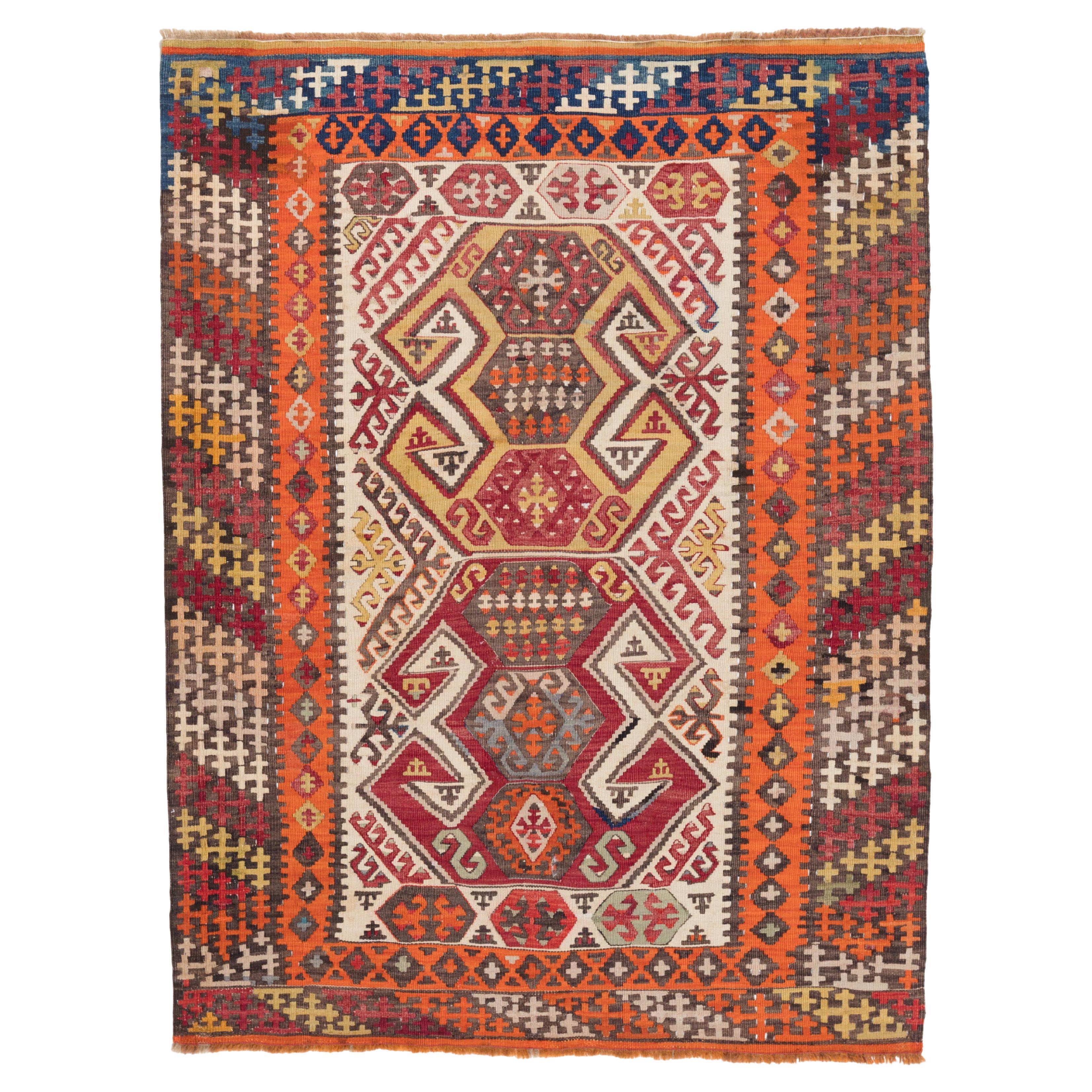
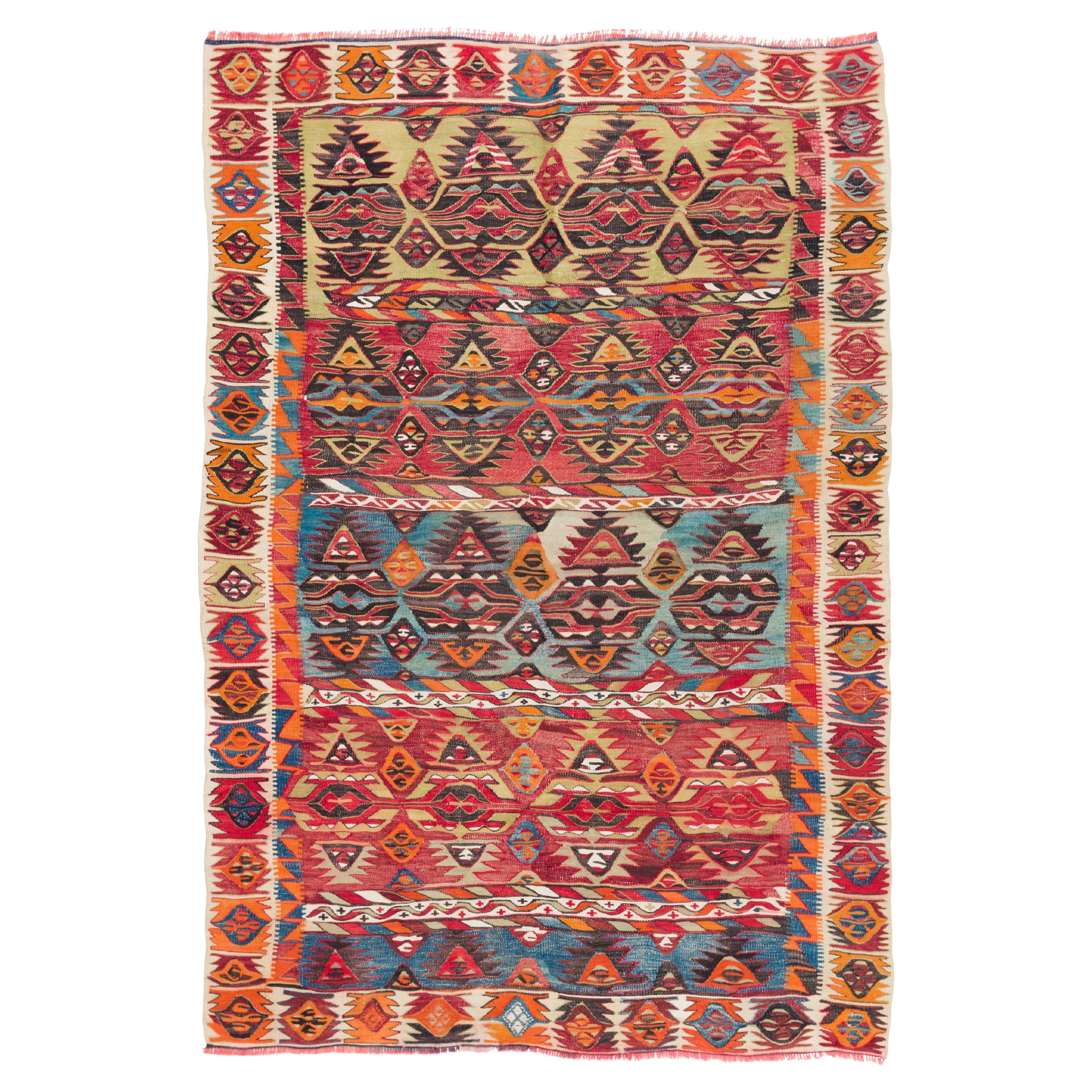
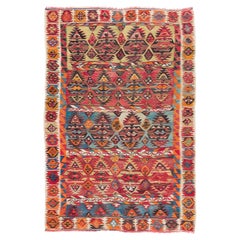
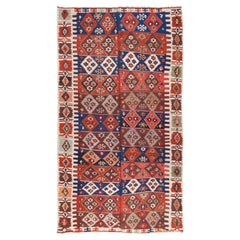
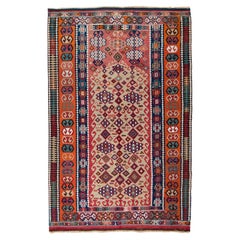
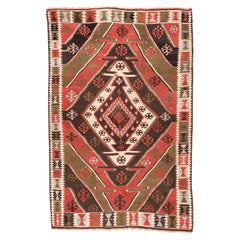
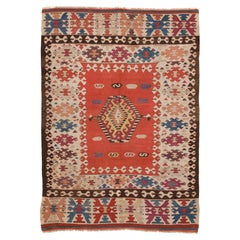
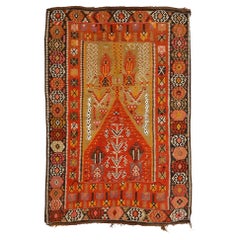
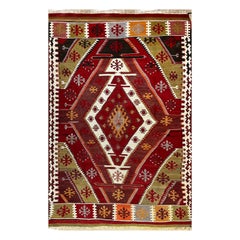
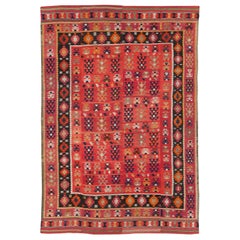
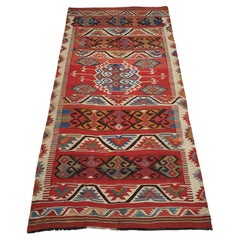
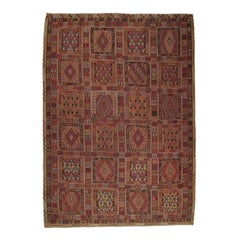
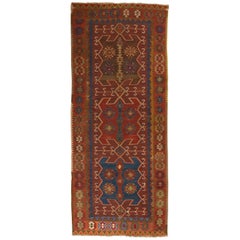
This is Central Anatolian Antique Kilim from the Aksaray region with a rare and beautiful color composition.
The beauty of the dyeing, the quality of the wool (thread), the splendor of the weave, and the age are all present in this old Anatolian kilim.
It is a very thin thread and has a very fine weave. Like a good quality fine gauge knit, the fine, thin, and strong weave is so smooth that it doesn't seem like wool. It has matured and grown even more glossy and soft.
The just contrasting hues of the field and border create a beautiful contrast. The field has a mihrab design, and the border has a leaf and vine design, making it a unique design.
In particular, all of the field's unique dyed colors are beautiful, with chic tones such as grape, khaki, or moss green, red with a unique bitterness and brightness, and dark gray that looks like it was originally black, all in very good condition. It's faded. The great appeal of this kilim is not only the quality of each color but also the chic old feel and unique atmosphere created by combining them.
This highly collectible antique kilim has wonderful special colors and textures that are typical of an old kilim in good condition. It is a piece that allows you to feel the beauty of Kilim-like colors and the texture of the old in the best condition.
As early as the 13th century Marco Polo noted, in his account of his travels to the region, that superlative rugs were to be found in the Konya area. Fortunately, the art of weaving good kilims has not died out even today, for there are small quantities of kilims still being made with hand-spun wool and mainly natural colors. As the capacity for such production is not large and prices remain high, it is unlikely that commercialism will corrupt these enterprises.
Konya, in south-central Anatolia, was the capital of the Seljuk Empire from the mid-eleventh to the thirteenth century and was in its prime during that period. Many of Konya's impressive buildings were constructed at that time by the Seljuk sultans in an architectural style reflecting Persian and Byzantine influence. Previously known as Iconium, this is one of the oldest urban centers in the world: according to Phrygian legend, Konya was the first city to rise from the waters after the great flood. Excavations here have revealed bones from the Bronze Age (c. 3000 BC). In the third century, the town was mainly occupied by the Greeks.
Konya has always been an important center for religion, culture, and trade, and also as a collection point for the many weaving centers nearby. The mystical order of the Whirling Dervishes was established in the town in the twelfth century by Mevlana Celal ad-Din ar-Rumi, an Afghan from Balkh, and a dervish festival is held in Konya during December. This festival is tolerated but has suffered government oppression since the time of Ataturk. During Ottoman times the dervishes were powerful, but Ataturk viewed the group as contrary to the modern development of Turkey, and many monasteries have now been turned into museums. Konya continues to be a very religious place and presently is becoming even more so.
Konya kilims feature the most varied compositions found in Anatolia, and there have been a great number of kilims made there over the centuries. Old Konya kilims still occasionally appear on the market today - but not necessarily in Konya itself. Although patterns are very diverse, they generally have much decoration covering the whole field of the kilim - a design format of large hexagonal motifs with extending hooked arms is a well-known characteristic. Again, a great variety of colors is used, most often of a lighter palette than in eastern Anatolia. Some very fine kilims have emerged, but in general, the kilims are of the medium-fine texture of weave, mostly made in slitweave technique with some çiçim. New kilims tend to be woven on thick warps. Konya kilims are made in all sizes, although there are fewer medium sizes. Ladik, Çumra and Eregli all lie close to Konya. Ladik is best known for its carpet production. It does, however, produce kilims that often have tulip motifs incorporated into the design. Weaving in Çumra has long since ceased, but the kilims that remain are very similar. Recent Eregli kilims are well made with good wool and tend towards the dark colors that greatly benefit from sun-fading.