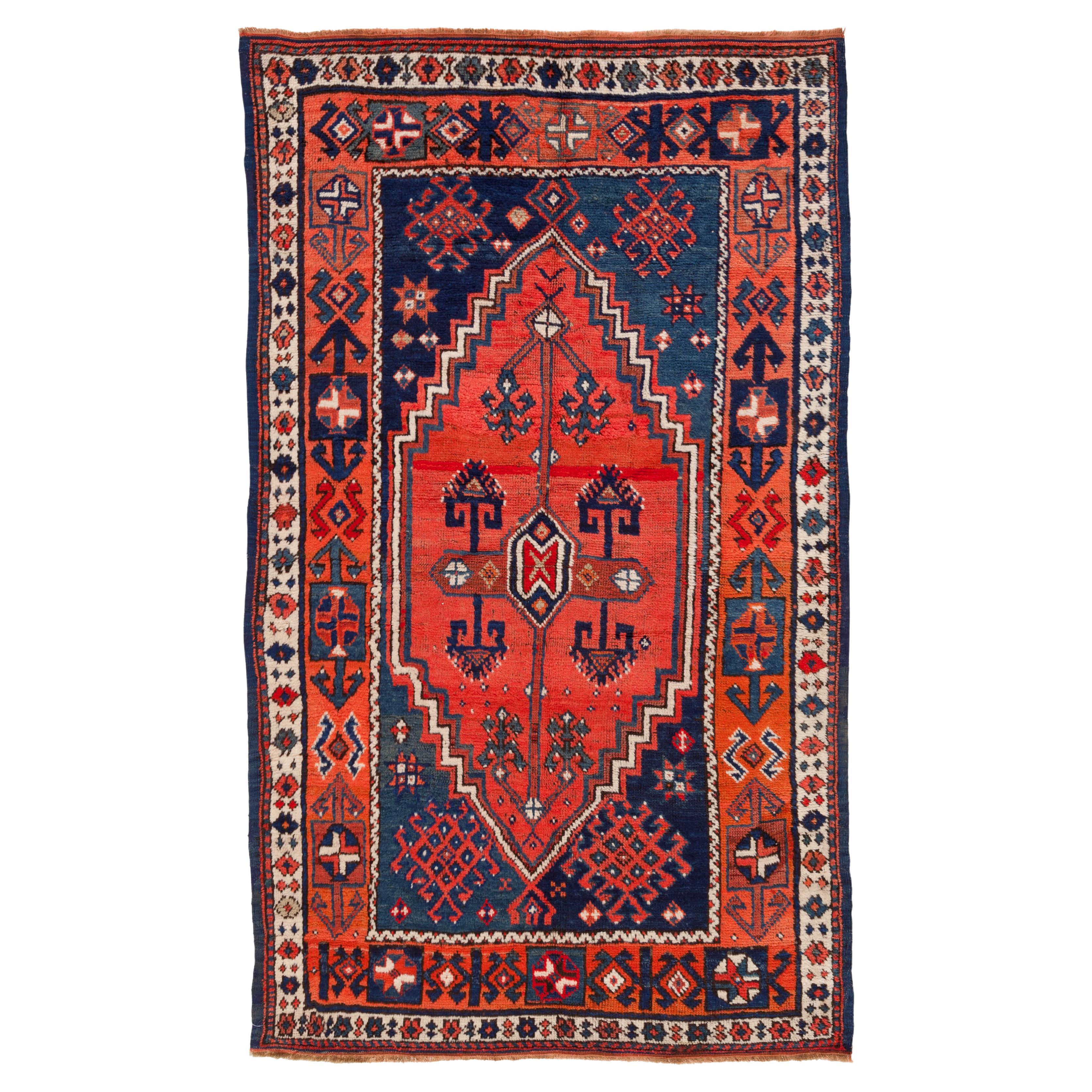
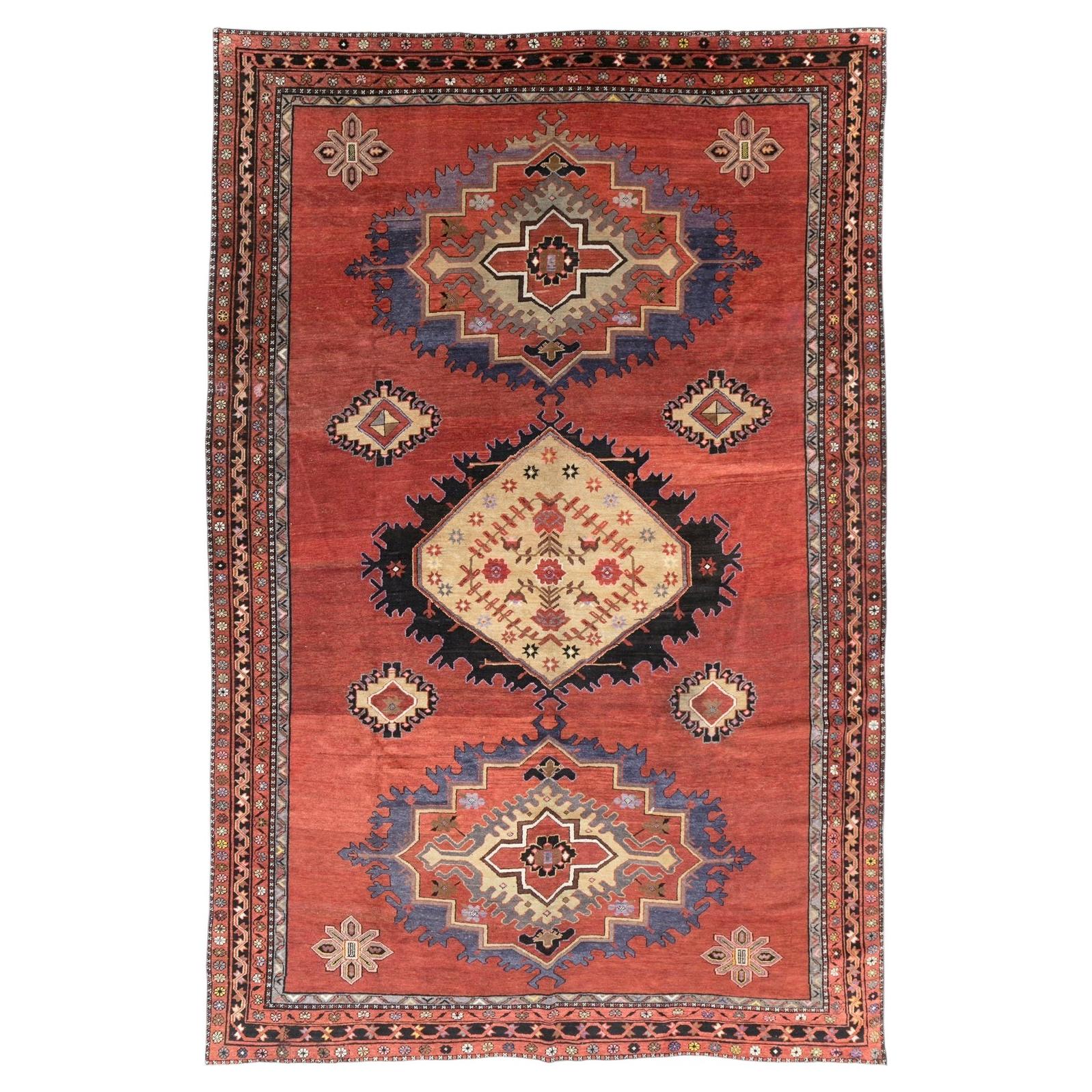
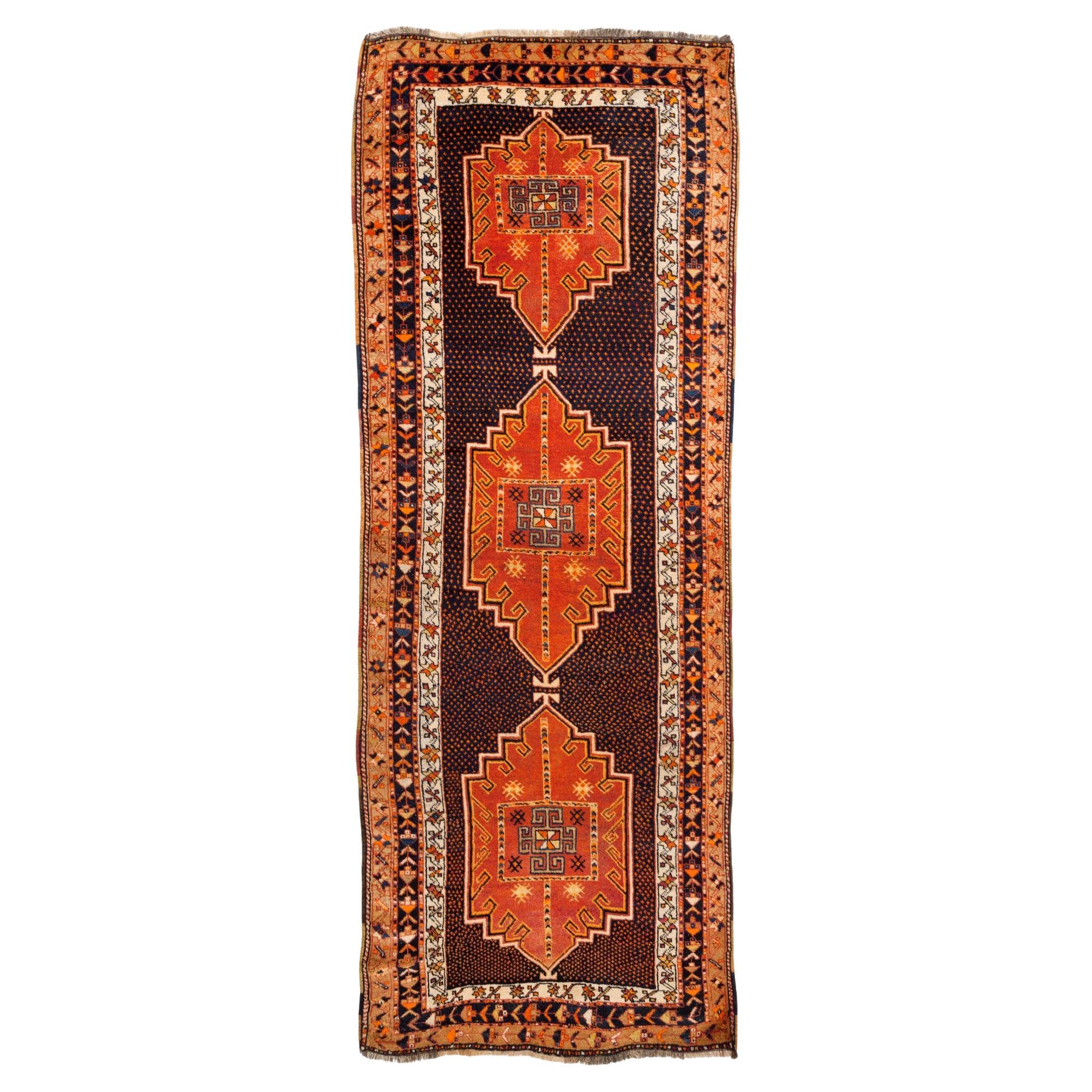
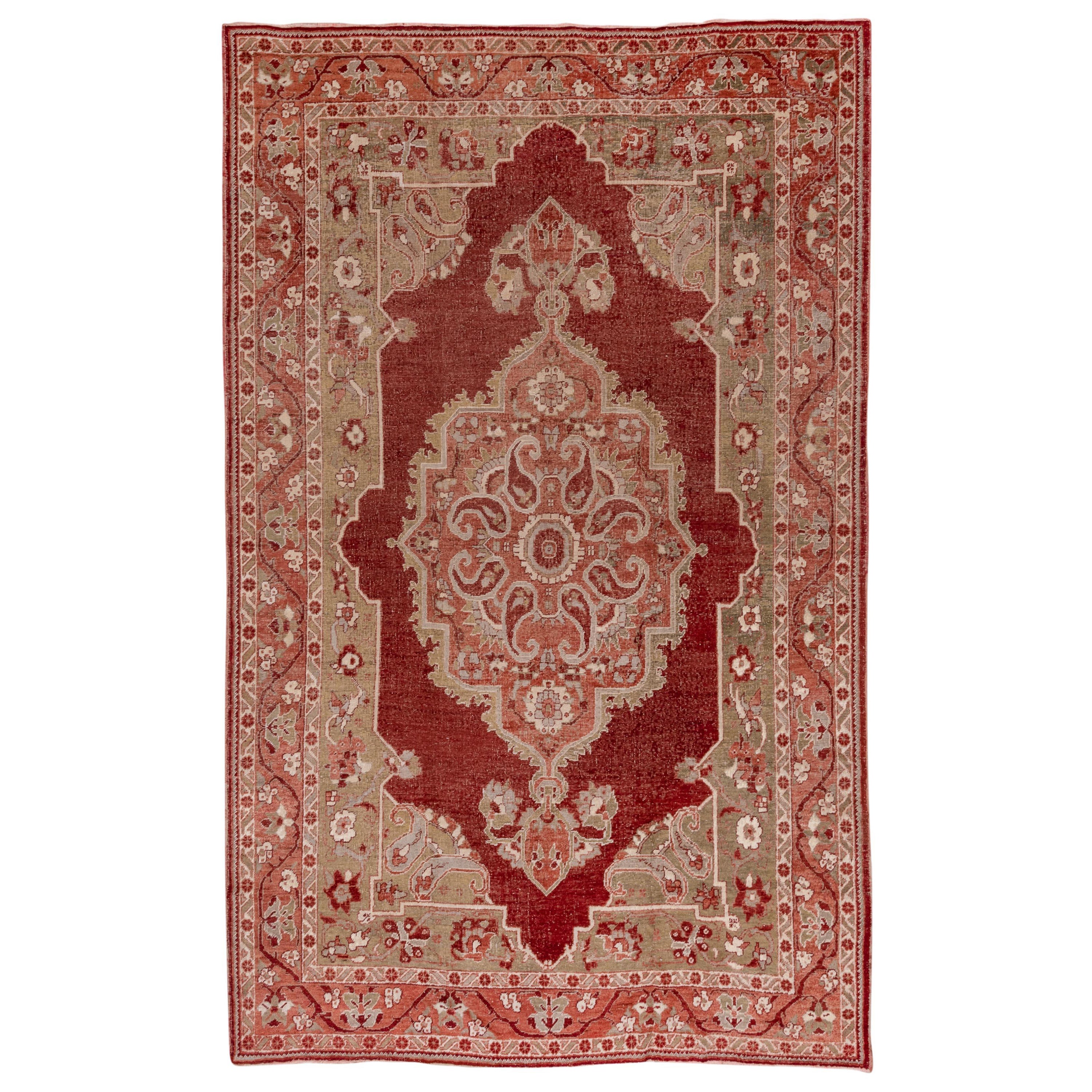
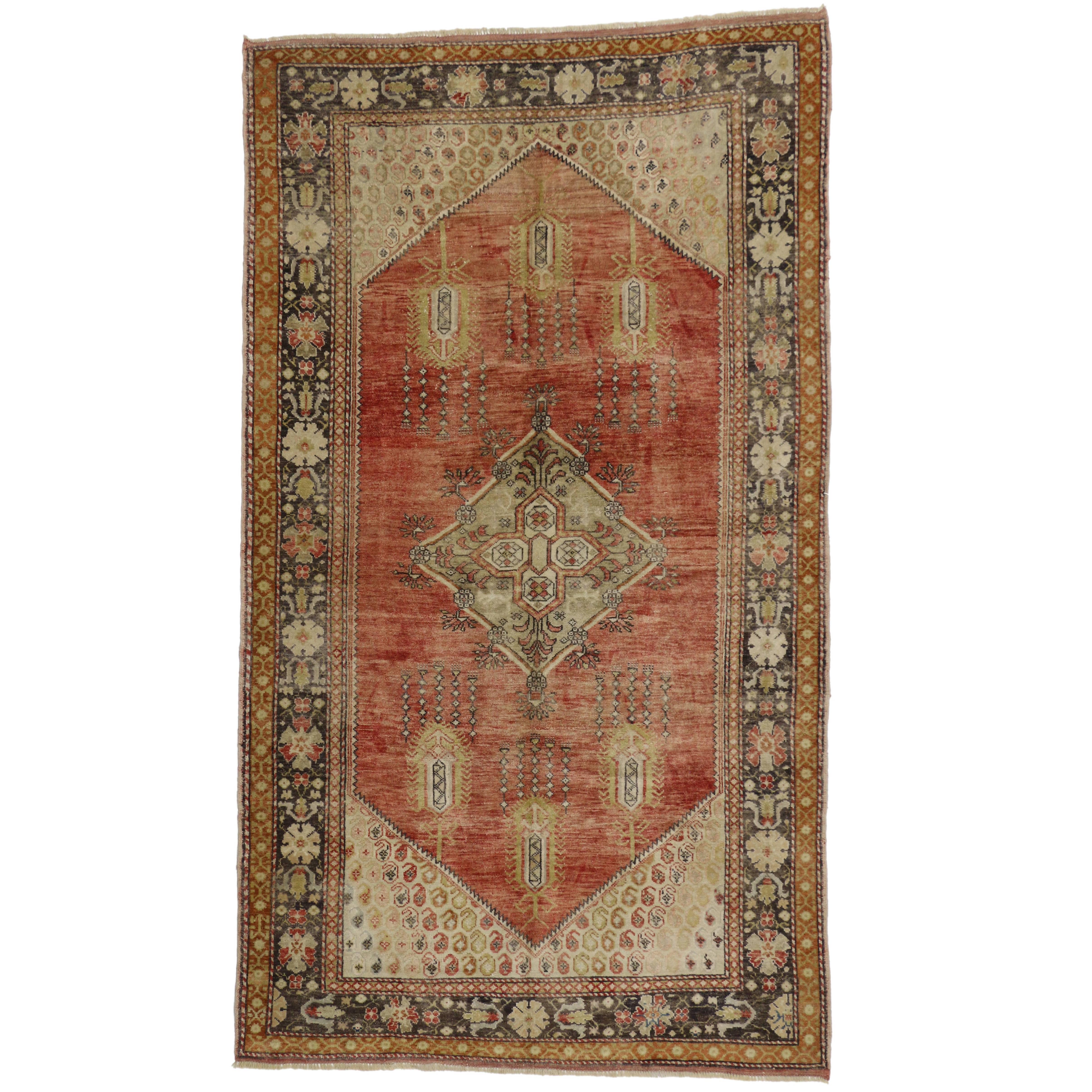
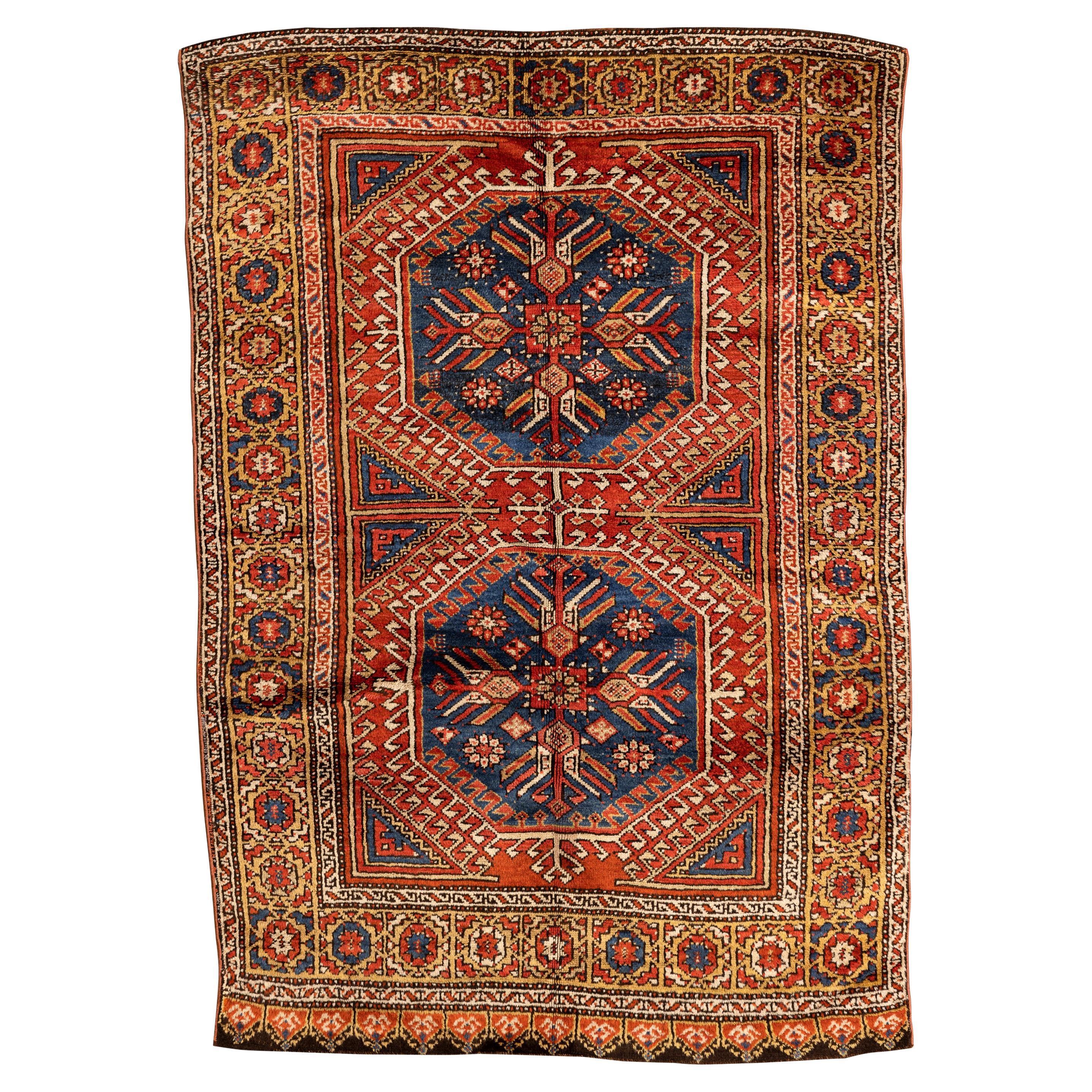
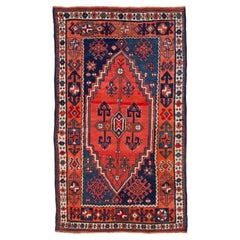
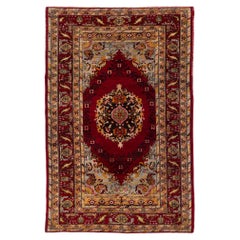
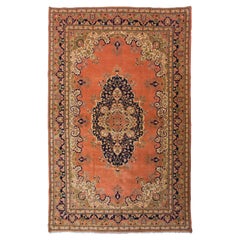
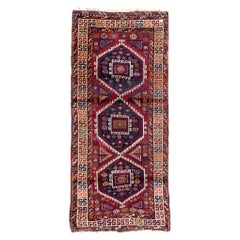
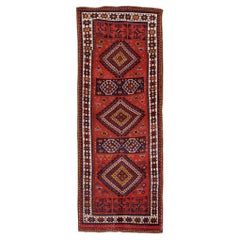
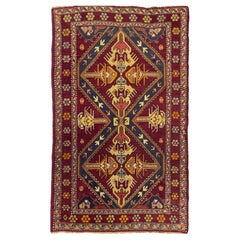
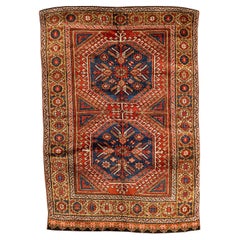
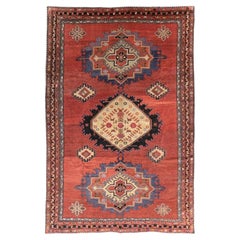
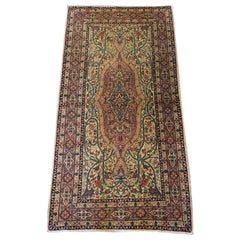
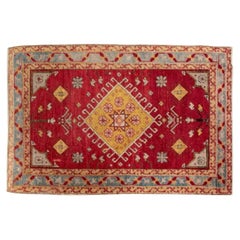
This is a Central Anatolian Antique Double Medallion Carpet from the Sivas region with a rare and beautiful color composition.
Sivas In the third century, Sivas was a Roman city known as Sebastea, the capital of Armenia Minor. Flourishing under Byzantine rule, Sivas reached a peak of prosperity under the Seljuks, only to be plundered in the fourteenth century by Tamerlane, as it was an important venue on the Persian and Iraqi trade routes. The Sivas region is inhabited by Turkish and Kurdish people, and until the genocide wrought by the Turks early this century, many Armenians dwelt there as well. Sivas gained certain fame as the site for the Sivas Congress of September 1919, convened by Mustafa Kemal, which, together with the Erzurum meeting in July, formulated the subsequent revolution and way to the War of Independence. The surrounding area is mainly agricultural, and Sivas itself is now a modern town with a railway station, which has helped to restore some of its former economic importance. Many prayer arch kilims come from here, as well as small kilims, and large kilims woven in two halves. The designs of the large medallion kilims are very similar to those of the Malatya area, featuring large oblong central medallions, with many varied smaller filler motifs such as stars or wolf tracks. Saf kilims are multiple prayer-arch flatweaves. This pattern is either made in a unidirectional form or can be double-ended. Both versions are woven here. The borders of the large kilims, particularly the medallion kilims, feature repeat hooked motifs in a single main border, whereas the smaller kilims often have multiple borders with differing motifs. Colors are of a lighter hue than other Kurdish weavings, particularly the reds, and greens. The standard of weaving varies a great deal and is mainly slitweave. The wool is of good quality but of variable fineness. Some çiçims (jijim) are woven in the Sivas area, as well as small prayer kilims and runners. Some kilims that are attributed to Sivas are woven in Sarkisla, a town further south-west, and these are very different and weaved, although the design compositions are fairly similar, consisting of rows of floating medallions that are usually of a hexagonal or hooked diamond form filling the field. These kilims often feature a red ground ornamented with browns, black, orange, and grey (faded aniline blue or purple), with two or three main borders. In the older kilims, blue, black, and sometimes green and yellow medallions occur, again on a red ground. Sarkisla kilims are, on the whole, loosely woven in slitweave and generally of a coarse texture, although sometimes the wool used for the warps is soft and silky, Many very large kilims come from this region. Some medium sizes are found, but very few small kilims.