Located in Long Island City, NY
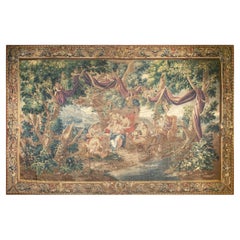
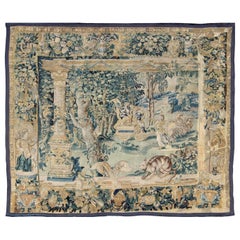
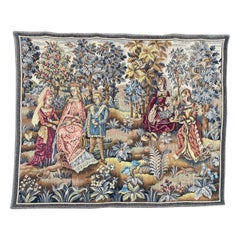
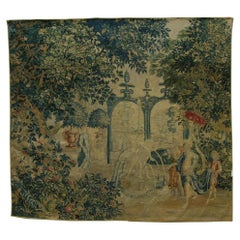
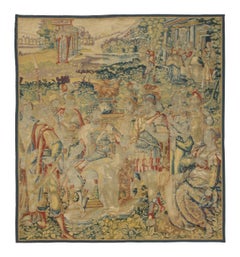
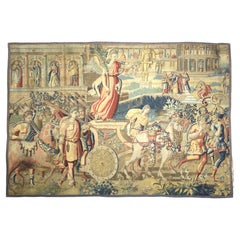
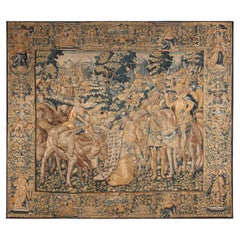
Woven in wool and natural silk circa 1600–1630, this 7x8 antique Flemish tapestry portrays a Roman imperial scene with finely detailed figures and classical ornamentation, representing a rare survival of early 17th-century European textile art.
On the Design:
This exceptional early 17th-century Flemish tapestry fragment, woven in Flanders circa 1600–1630 in an exquisite blend of wool and natural silk, illustrates a richly conceived episode from Roman imperial history. At the heart of the visual juxtaposition, an emperor presides from an elevated throne beneath a globe bearing the abbreviated motto Senatus Populusque Romanus (SPQR), surmounted by the imperial double-headed eagle—a powerful emblem of authority and sovereignty. To his left stands a second emperor wearing a laurel wreath, while senators, soldiers, attendants, and noble figures assemble around the throne in a scene of remarkable ceremonial grandeur. Classical architecture, flourishing gardens, and an expansive landscape create a theatrical backdrop that reflects the humanist ideals and monumental storytelling characteristic of the finest Flemish tapestry workshops.
Celebrated throughout Europe for their painterly sophistication, Flemish ateliers achieved extraordinary depth through meticulous weaving techniques, subtle tonal gradations, and luminous silk highlights that rivaled contemporary easel paintings. Every figure, architectural detail, and botanical element contributes to a visual juxtaposition of exceptional complexity and visual rhythm. Preserved as a monumental fragment, this tapestry retains the grandeur, historical significance, and artistic ambition of one of the most prestigious weaving traditions of the early Baroque period, making it a museum-caliber work of textile art and an exceptional acquisition for discerning collectors.
Condition:
This antique Flemish rug...
Category
Antique 1620s French Western European Rugs