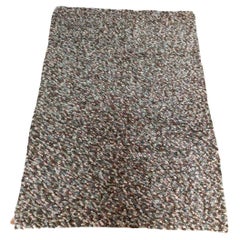
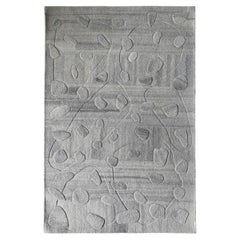
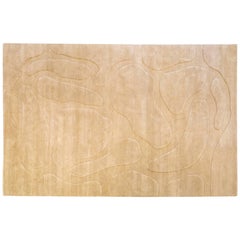
The La Fontaine rug, designed by Linde Burkhardt for Driade, is made of pure wool, is handmade, and measures 300 cm × 200 cm.
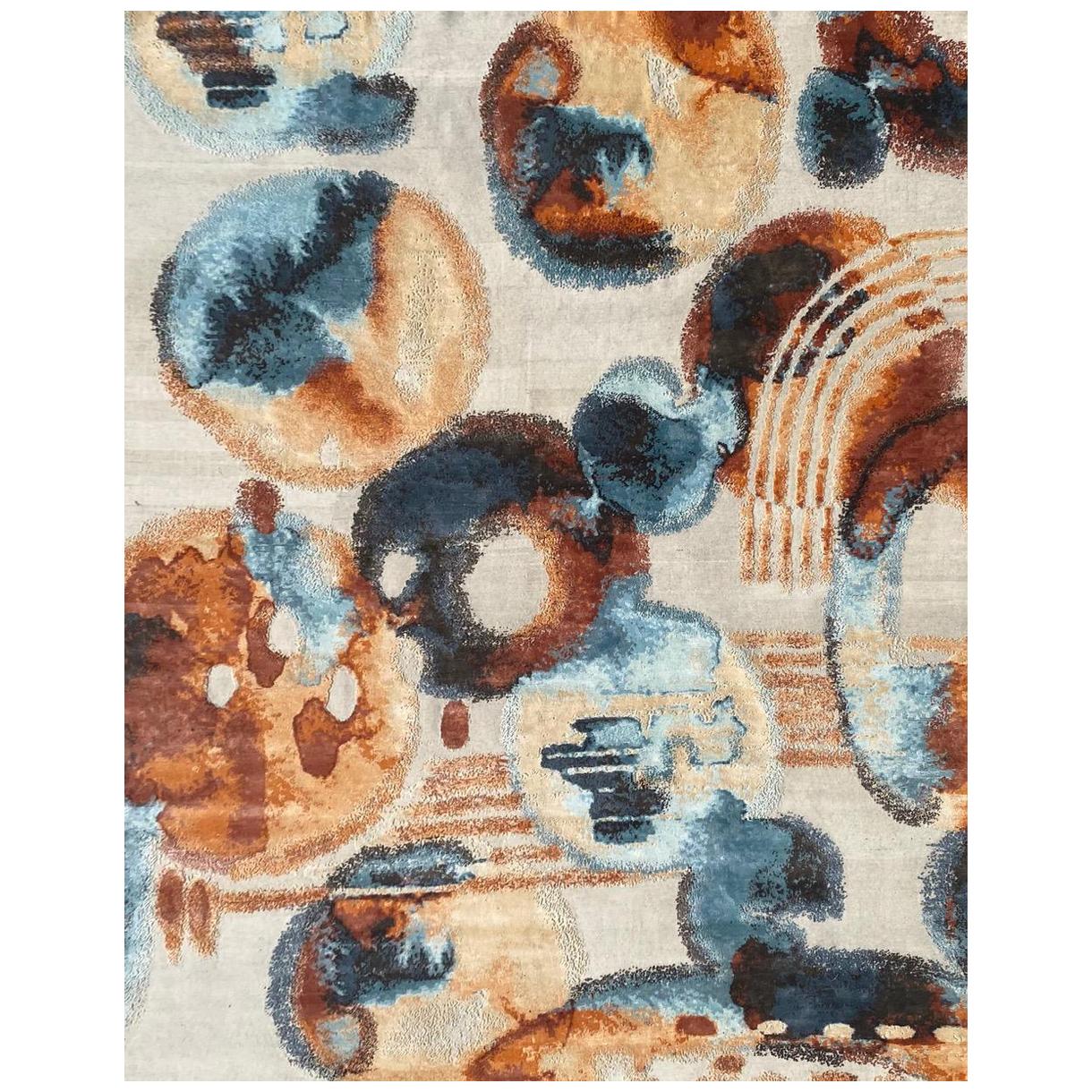
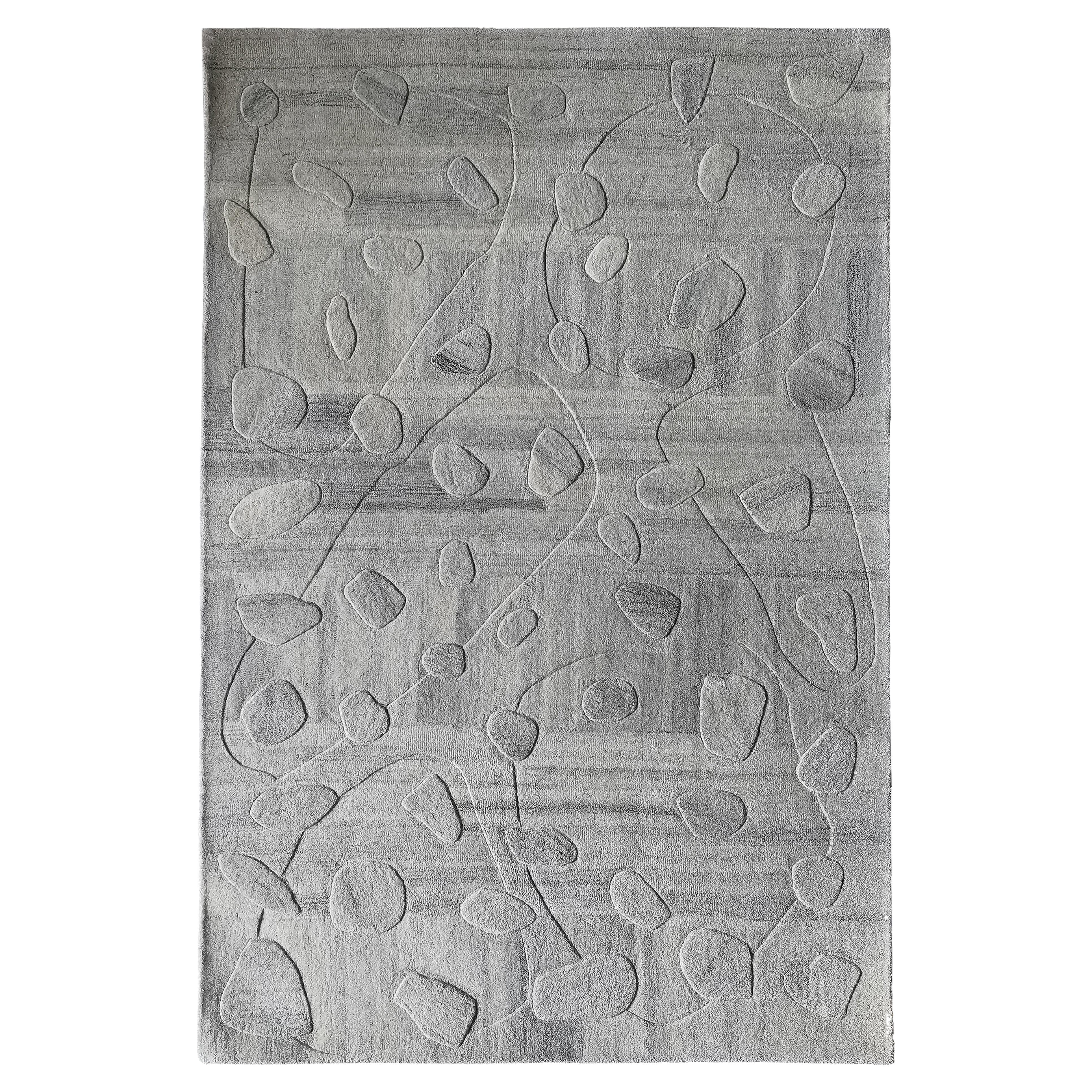
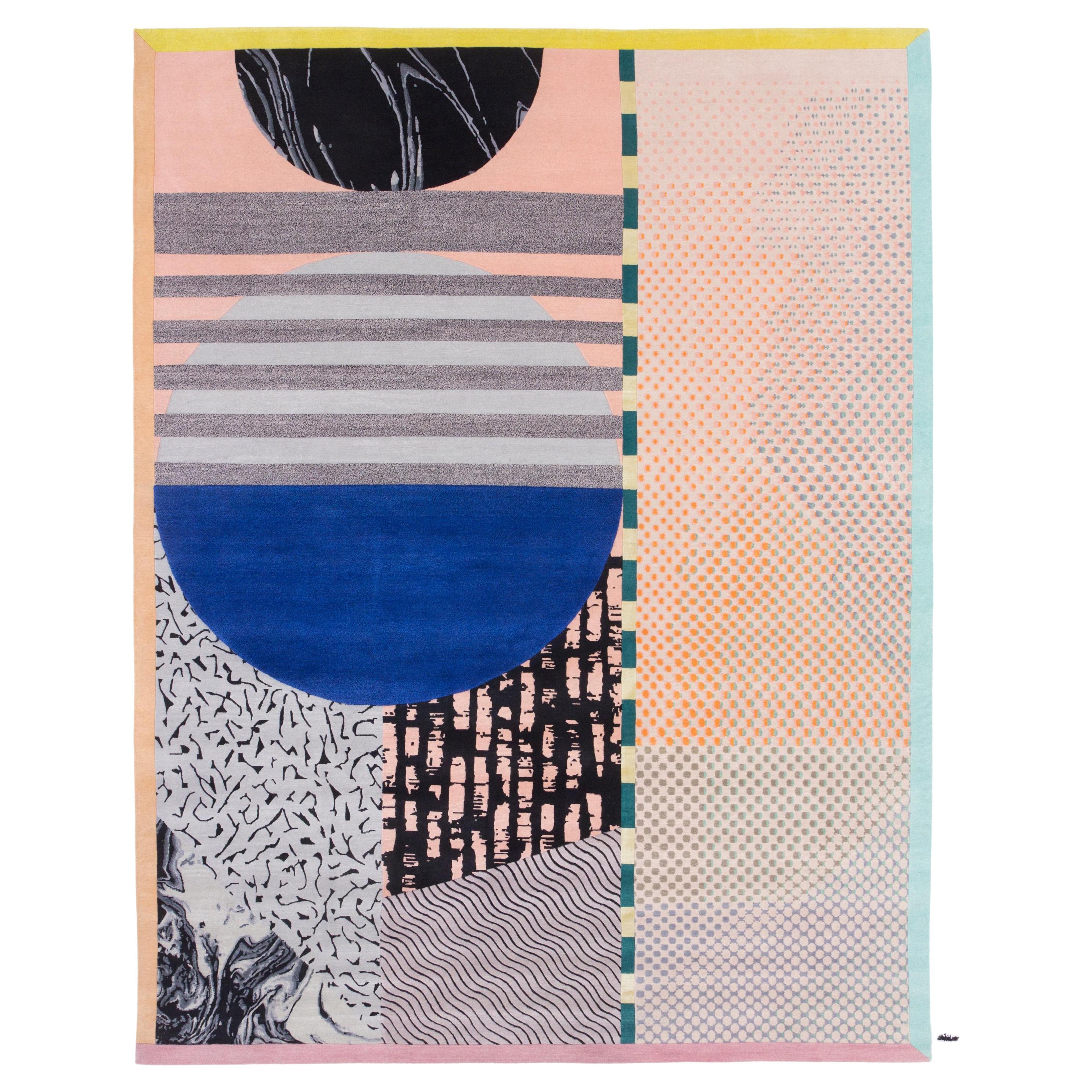
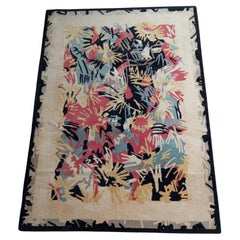
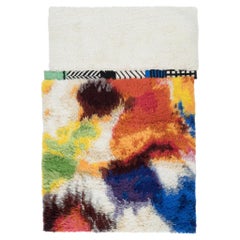
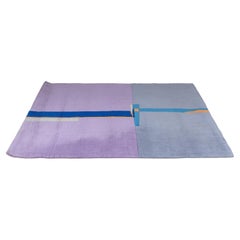
The surface is covered with a myriad of small, irregular shapes, arranged like brushstrokes of color. The palette combines shades of light blue, blue, pink, aqua, sage green, ivory, and beige, with subtle dark lines running through them to define the pattern.
The effect is reminiscent of Pointillism and abstract painting: there is no central motif, but rather a continuous, vibrant composition that invites the viewer to lose themselves in the multitude of chromatic fragments.
What makes La Fontaine unique is the contrast between the apparent randomness of the design and the great harmony of the whole. From a distance, it appears as a soft, sophisticated expanse of color; as you get closer, however, you discover a texture rich with small details and variations.
A designer rug, then, that goes beyond a mere decorative function and becomes a true work of art for the floor, capable of bringing color, movement, and personality to a room.
With original label. Published in Driade’s 2014 “laboratorio estetico” catalog; page 199.
Driade combines the craftsmanship excellence of Made in Italy with design innovation. Founded in 1968, building on a long tradition of craftsmanship and creativity.
Linde Burkhardt (born in 1937) is a German artist and designer whose work spans art, design, architecture, and public space. After completing his initial training at the Kunstgewerbeschule in Zurich, he studied painting in Berlin and continued his studies in Hamburg, where he studied under the painter Almir Mavignier.
His work is characterized by a particular openness to experimentation
A significant milestone in his career was the founding, in 1968, of the Urbanes Design group, together with architect François Burkhardt. The group explores the relationship between art, architecture, and everyday life, designing, among other things, plazas, playgrounds, movable elements, and installations integrated into public spaces.
Starting in the 1980s and 1990s, his work increasingly shifted toward the field of product design. He designs rugs, ceramics, tiles, ceramic and steel objects, and other items intended for production. He collaborates with leading Italian companies such as Driade and Alessi, translating his artistic vision into everyday objects. For Driade, he creates numerous rugs and a collection of ceramics; for Alessi, on the other hand, he experiments with the combination of ceramics and metal.
A particularly interesting aspect of his work is precisely the way in which he manages to convey Painting in Design. Rugs, for example, are not conceived simply as decorative elements, but as true pictorial surfaces: color, line, composition, and texture become tools for transforming space. Driade describes her artistic journey as a transition from painting and drawing to installations, and eventually to ceramics and object design.
In the case of La Fontaine, this characteristic is particularly evident: the rug can be interpreted as an abstract painting transferred to the floor, where the variety of colors and small marks creates a dynamic and vibrant surface.