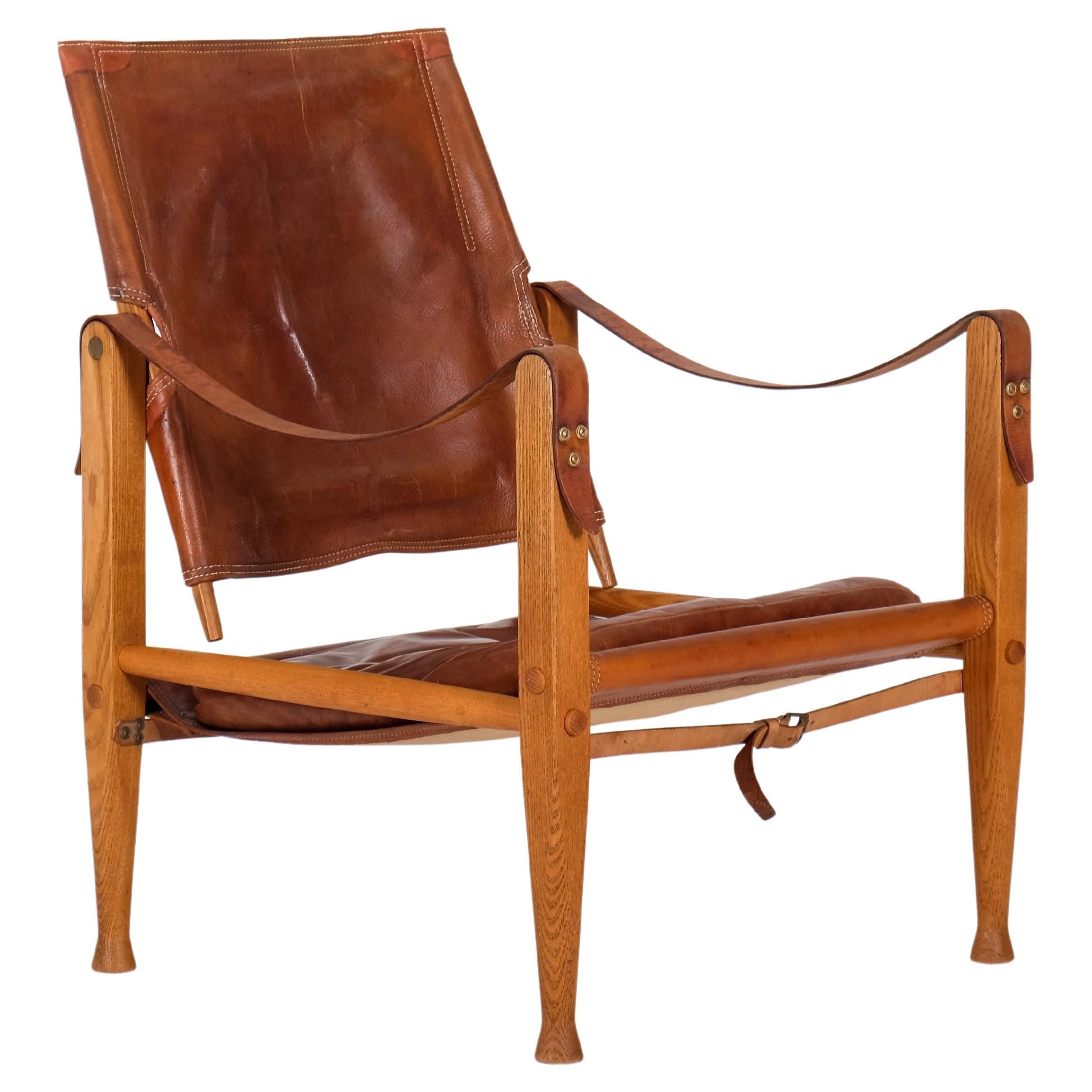
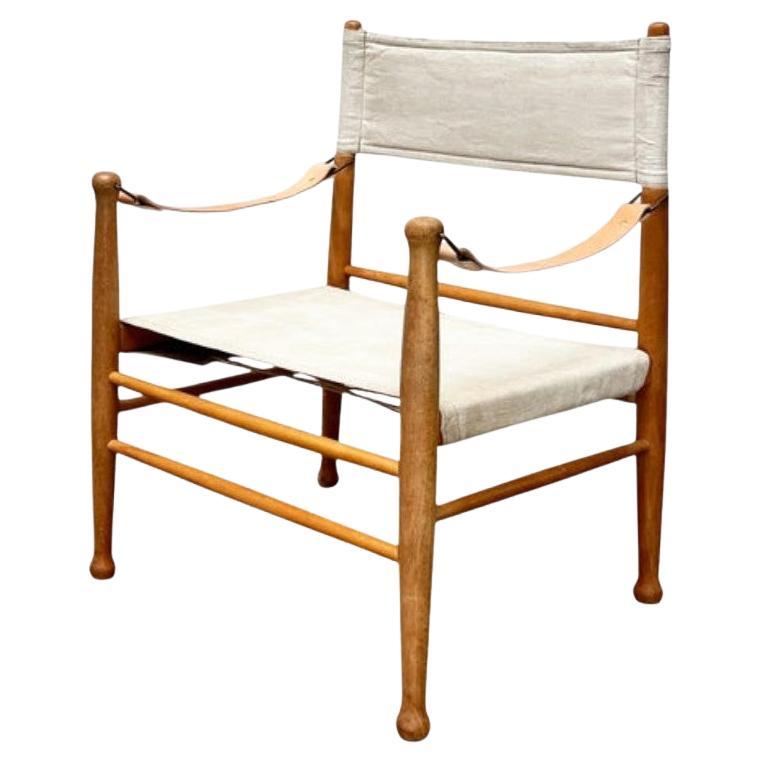
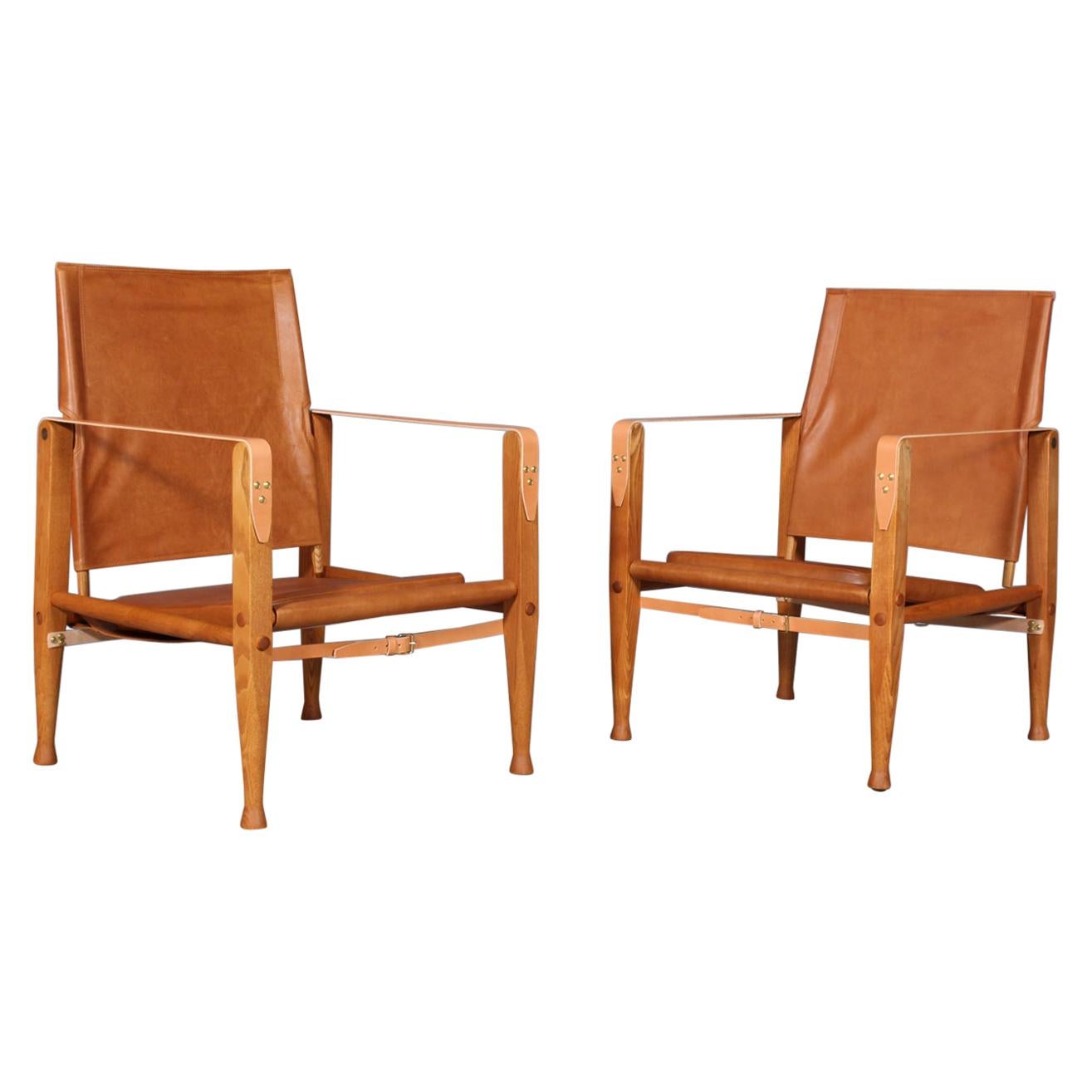
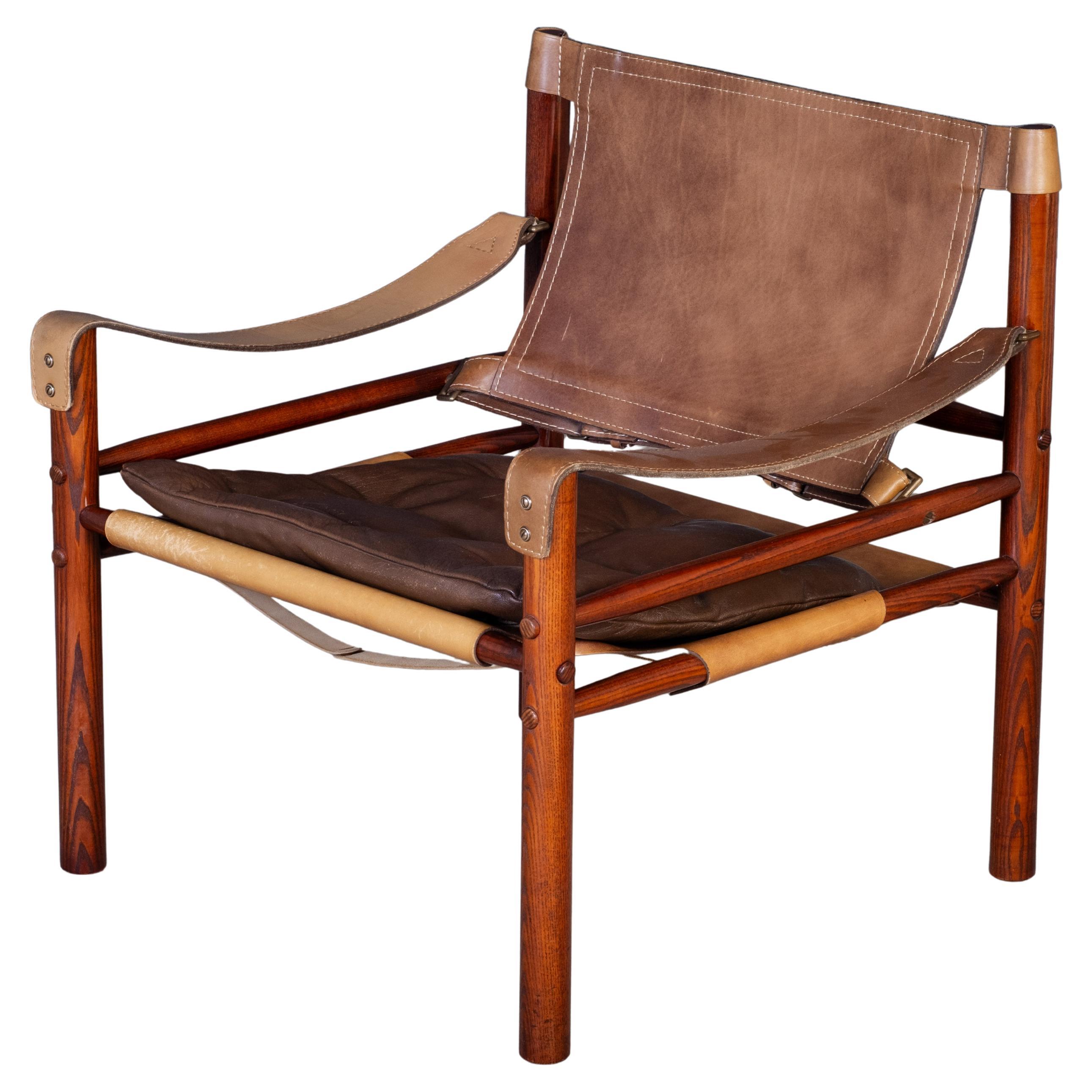
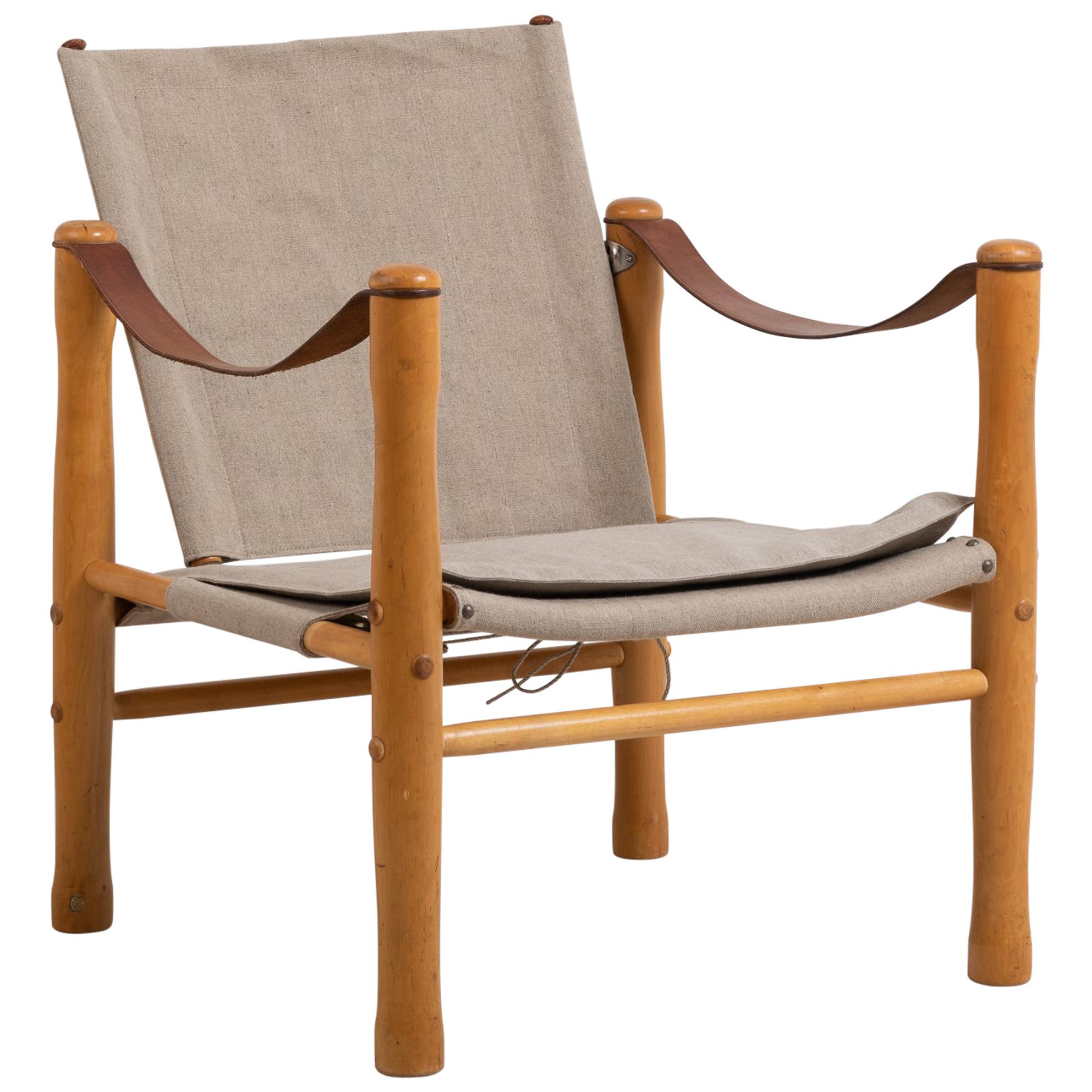
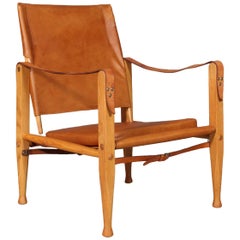
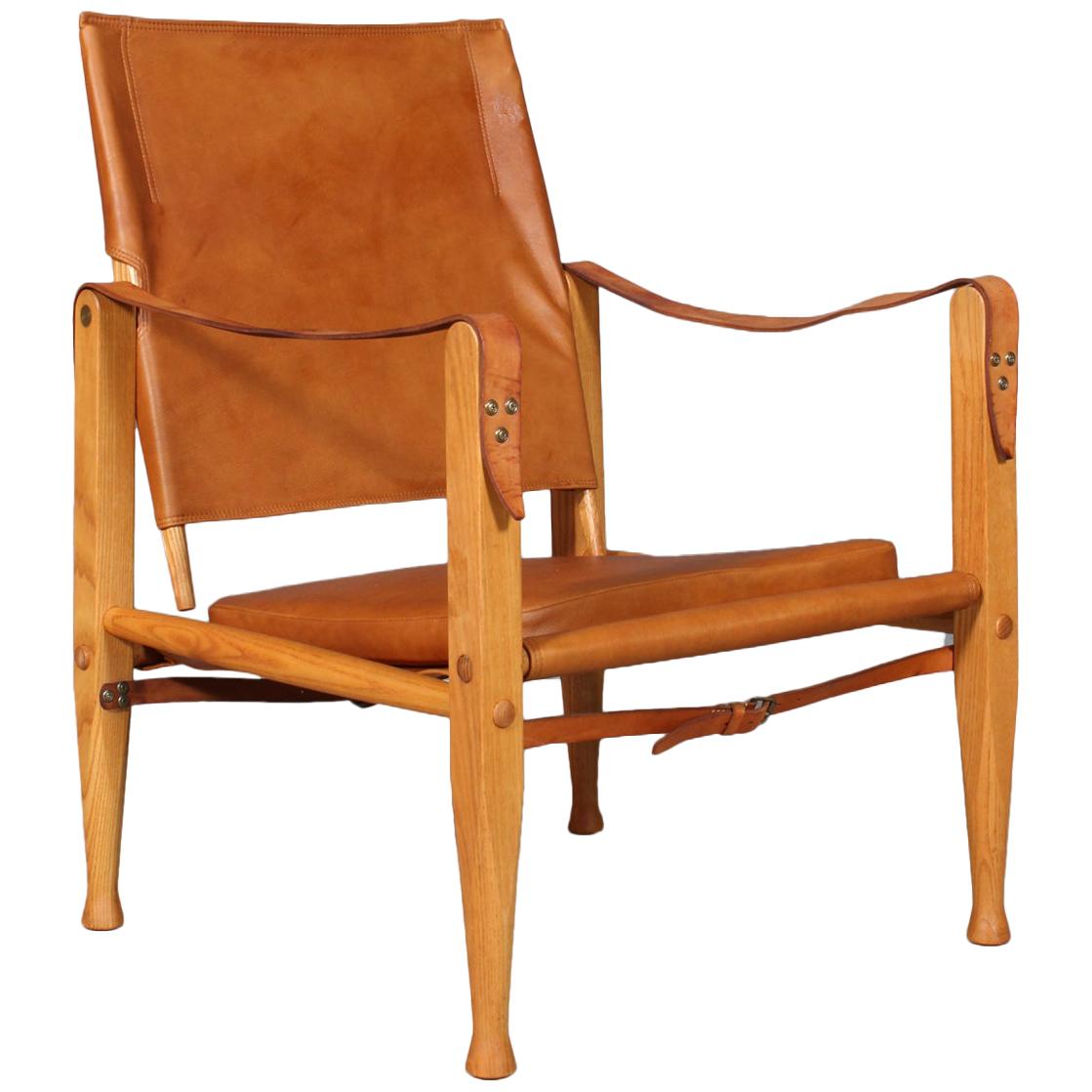
Kaare Klint Safari Chair, Rasmussen Edition
By Kaare Klint
Located in Stamford, CT
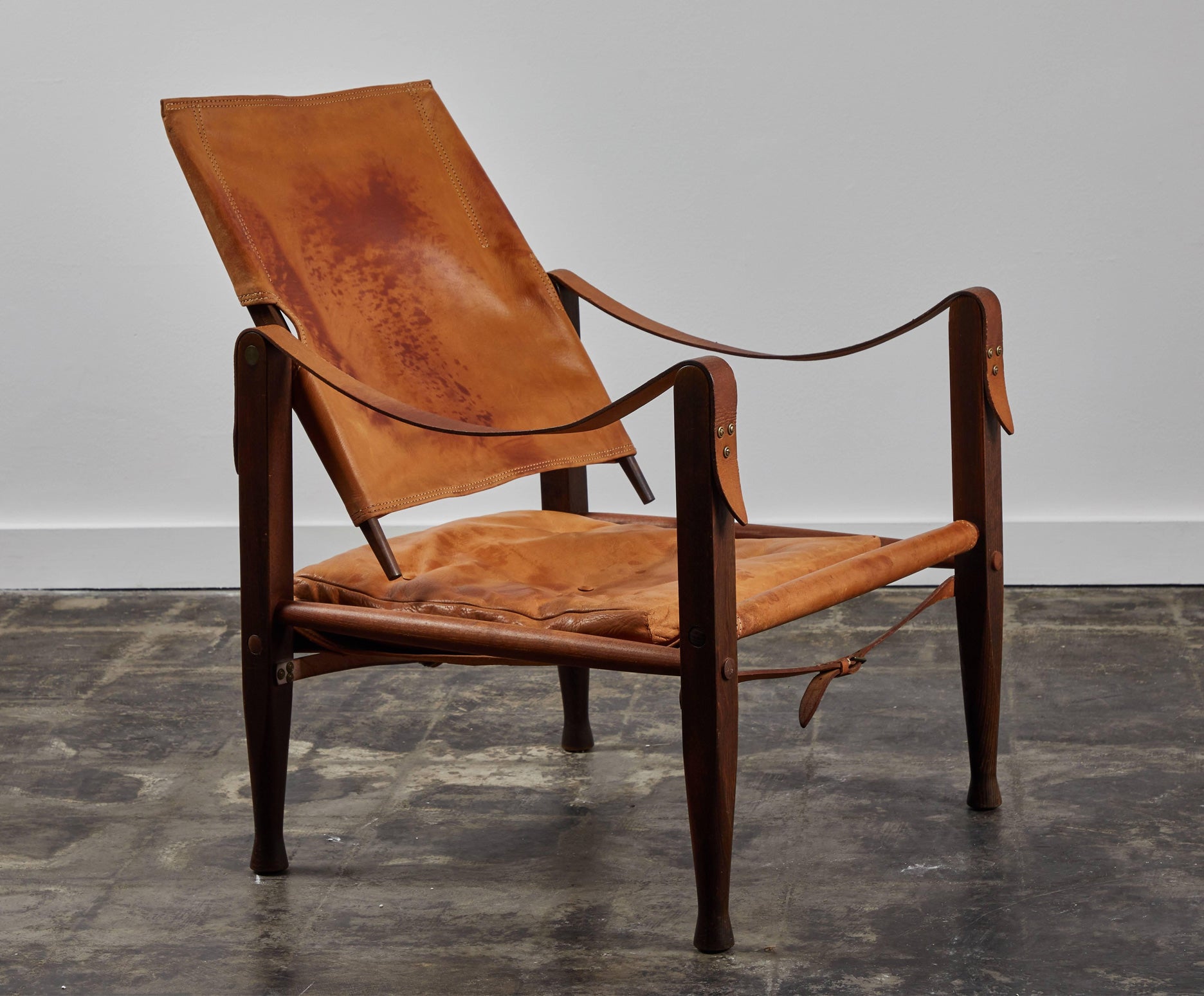
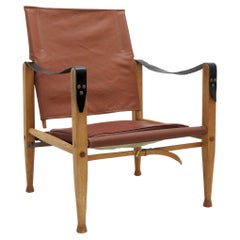
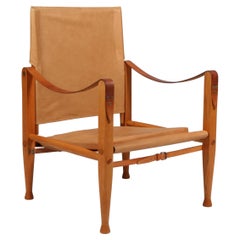
Kaare Klint Safari chair - Rasmussen Edition of canvas and leather. With later canvas.
Mid-20th Century Danish Mid-Century Modern Armchairs
Leather, Canvas
The Safari chair, created by legendary Danish designer Kaare Klint (1888–1954) in 1933, has roots in one of the earliest known examples of do-it-yourself furniture. Specific accounts vary, but Klint was inspired by an image of a Roorkhee chair (perhaps spotted in a travel guide) being used on an African safari.
Named for the headquarters of the Indian Army Corps of Engineers in Roorkhee, a city in Northern India, the Roorkhee chair was a military campaign chair that was popular with British officers during World War I. The chair’s maker, who was tasked in the late 19th century with developing lightweight, adaptable seating that could be quickly taken apart for the British military, remains unknown. The Roorkhee’s seat was made of stretched canvas while the armrests were leather straps, and it was probably the design’s practical simplicity that appealed to Klint, who is celebrated for having incorporated rigorous research on precedents, proportions and materials into his designs.
At the time of the Safari chair’s inception, Klint — whose start in design owes to the influence of his father, architect P.V. Jensen Klint, as well as a furniture-making apprenticeship at age 15 — was already playing a prominent role in the trajectory of Danish design. He was a professor at the Royal Danish Academy of Fine Arts in furniture design (a department he founded in 1924), where his students included Hans Wegner, Ole Wanscher and others. Through his own remarkable designs as well as his teaching, Klint became known as the “father of Danish modernism.”
Although Klint’s interpretation of the clever military campaign chair design is the most faithful to the original, other modern chairs based on the Roorkhee include Le Corbusier’s Basculant chair and the Wassily chair designed by Marcel Breuer.
The Safari chair’s flexible structure sees an integration of loose mortise-and-tenon joints that are strengthened when someone sits in it. As compared to vintage versions of the Roorkhee, it’s clear that Klint made important changes in designing his chair, such as an angling of the seat that better supports ergonomics. The chair was originally produced by Rud Rasmussen Snedkerier and exhibited at the Copenhagen Cabinetmakers’ Guild Exhibition in 1933.
Today, the solid wood Safari — made of Danish ash with a canvas or ox-hide seat and saddle-leather armrests — is manufactured by Carl Hansen & Søn. A seat cushion and footstool are available, and like its lightweight 1930s-era prototype, the chair can be assembled and taken apart without the use of tools.
Architect, teacher and furniture designer Kaare Klint is among the most important figures in Scandinavian modernism. Widely recognized as the father of modern Danish furniture, Klint sought to pay homage to historical furniture styles and prized functionality as essential to designing for modern living. He established the design school at Copenhagen’s Royal Danish Academy of Fine Arts, and his students became mid-century legends of cabinetry and furniture-making.
Klint prioritized functionalism and drew on an array of influences in his own work. Furniture experts will observe the influence of 18th-century English seating in his Red chair, while Klint’s iconic Safari chair had roots in campaign furniture. The other exemplary chairs, sofas and tables for which he is known bear the mark of Thomas Chippendale and Biedermeier furniture as well as Greek and Roman forms.
Klint's father was Peder Vilhelm Jensen-Klint, a formidable architect of his day. The younger Klint initially followed in his father’s footsteps, studying under him as well as distinguished architect Carl Petersen. Alongside Danish architect Ivar Bentsen, he headed the renovation of the Designmuseum Denmark in Copenhagen from 1920–26 (Klint also furnished the institution as part of the project). Around the same time, Klint helped found the furniture design school at the Royal Danish Academy. The impact of his role as an instructor there cannot be overstated — he mentored such esteemed cabinetmakers and furniture designers as Børge Mogensen, Hans Wegner and Ole Wanscher.
A prominent advocate of ergonomics, Klint valued comfort and functionality over style. Painstaking research went into each piece of sophisticated yet wholly unadorned furniture he designed, as he endeavored to build structures that took into consideration human proportions and scale. And like the Shakers, Klint believed that quality craftsmanship and good materials were integral to the design of durable furniture that was free of embellishment.
The humble grace of Klint’s style characterizes legendary seating designs that continue to charm today’s legions of mid-century modern enthusiasts. His Safari chair, Faaborg chair, Ravenna armchair and Propeller stool — as well as most of the seating created by Danish modernists generally — have warmed interiors and influenced furniture designers all over the world.
Find vintage Kaare Klint furniture and other Scandinavian modern furniture on 1stDibs.

Kaare Klint Safari Chair, Rasmussen Edition
By Kaare Klint
Located in Stamford, CT
Kaare Klint Safari chair - Rasmussen Edition of canvas and leather. With later canvas.
Leather, Canvas

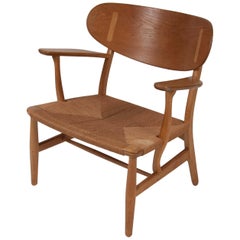
Hans Wegner Model CH22 Shell Back Paddle Armchair
By Hans J. Wegner
Located in Stamford, CT
Oak armchair with wide paddle form arms and sculpted and inlaid back. Also having a Danish paper cord seat. The chair was designed by Hans J. Wegner and manufactured by Carl Hansen &...
Papercord, Oak
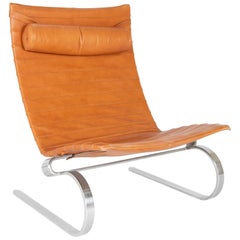
PK20 Easy Chair by Poul Kjaerholm Produced by E. Kold Christensen
By Poul Kjærholm, E. Kold Christensen
Located in Stamford, CT
A PK20 chair produced by Kold Christensen in Poul Kjaeholms iconic matte chrome finish. Leather is in great shape without staining and remains supple. E. Ko...
Chrome

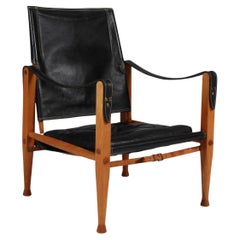
Safari Chair by Kaare Klint, 1969
By Kaare Klint, Rud Rasmussen
Located in Los Angeles, CA
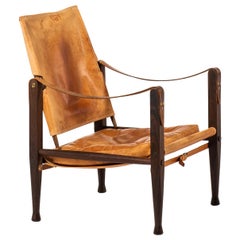
wonderful safari chair designed by Kaare Klint for Rud. Rasmussen’s Snedkerier, with patinated ash frame, seat, back, straps and loose cushion in leather, designed in 1933, produced ...
Leather, Ash

Kaare Klint Safari Chair Produced by Rud Rasmussen in Denmark
By Kaare Klint
Located in Limhamn, Skåne län
Rare safari chair designed by Kaare Klint. Produced by Rud Rasmussen in Denmark.
Brass

Kaare Klint Safari Chair by Rud Rasmussen, Ash Frame & Leather
By Rud Rasmussen, Kaare Klint
Located in Esbjerg, DK
Kaare Klint for Rud Rasmussen. Safari chair new upholstered with Vintage aniline leather. Straps maintained in the original patinated leather. Frame in solid ash. Model Safari ...
Leather, Ash

Kaare Klint Safari Chair by Rud Rasmussen, Ash Frame & Leather
By Kaare Klint, Rud Rasmussen
Located in Esbjerg, DK
Kaare Klint for Rud Rasmussen. Safari chair new upholstered with Vintage aniline leather. Straps maintained in the original patinated lea...
Leather, Ash

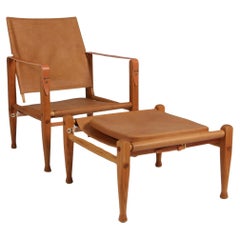
Kaare Klint for Rud Rasmussen, Safari Chair with ottoman
By Kaare Klint, Rud Rasmussen
Located in Esbjerg, DK
Kaare Klint for Rud Rasmussen. Safari chair new upholstered with Vintage aniline leather. With ottoman. Frame in solid ash. Model Safari chair, made by Rud Rasmussen.
Leather, Ash
Kaare Klint for Rud Rasmussen, Safari Chair, Original Leather, 1960s
By Kaare Klint, Rud Rasmussen
Located in Esbjerg, DK
Kaare Klint for Rud Rasmussen. Safari chair original patinated aniline leather. Straps maintained in the original patinated leather. Frame in solid ash. Model Safari chair, made b...
Leather, Ash