Located in BUNGAY, SUFFOLK
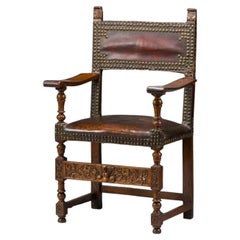
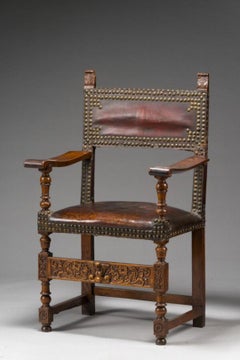
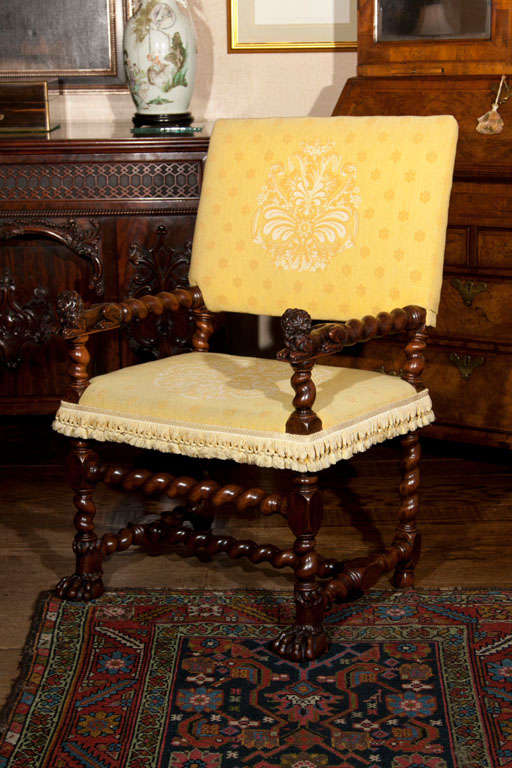
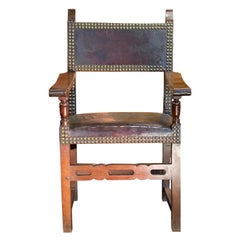
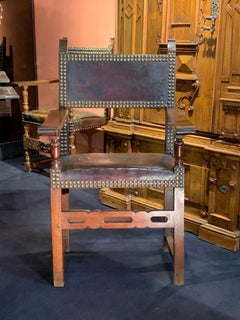
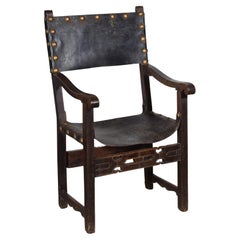
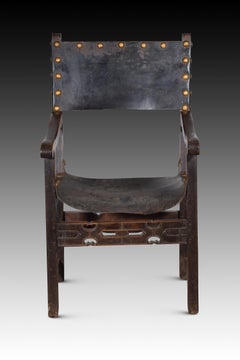
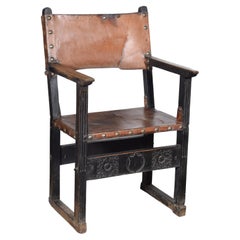
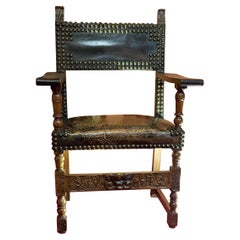
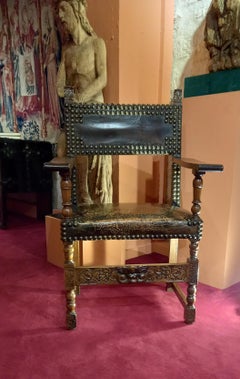
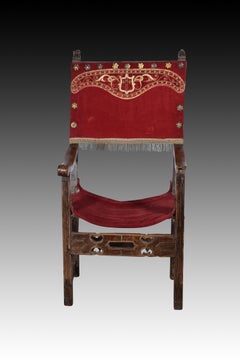
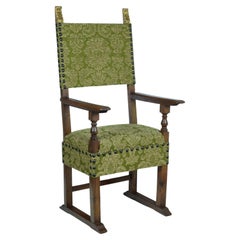
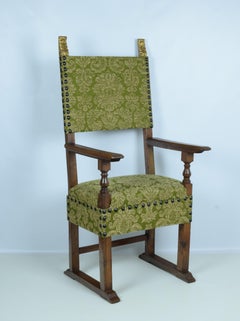
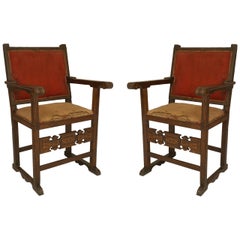
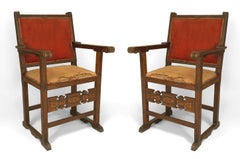
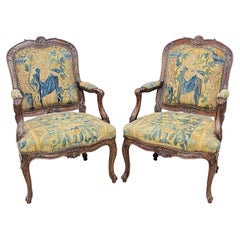
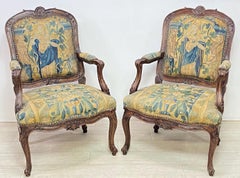
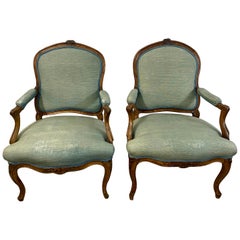
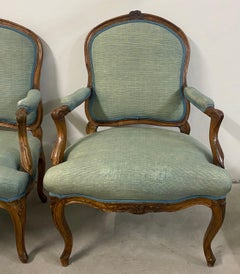
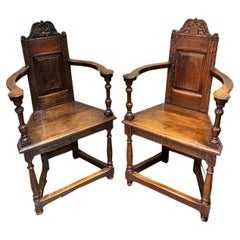
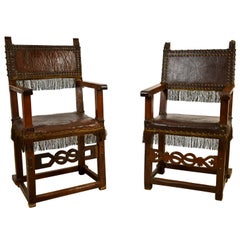
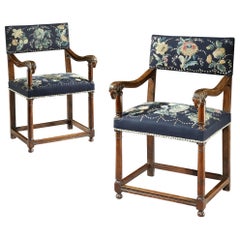
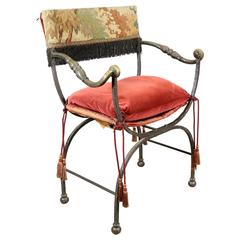
"This rare pair of upholstered open armchairs relate to examples in museum collections in France, the USA and the UK. Few pieces of Renaissance furniture featuring ram’s head motif arm terminals survive as the chairs would have been in the ownership of the elite symbolising leadership and authority. The condition of these armchairs reflects their age and use and they have a rich colour and lustrous patina.
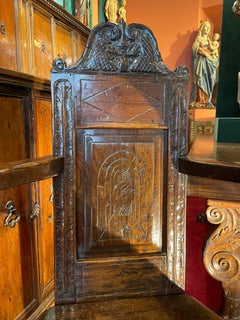
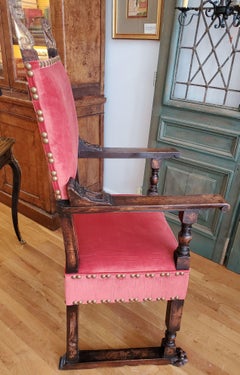
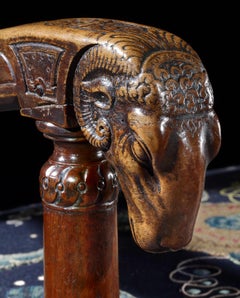
The form of these chairs is characteristic of a stereotypical Renaissance model. The upholstered section of the backs are upholstered in wool with applied 17th century floral needlework faced with gilded studs and supported by square section uprights. The channelled tablet and stylised rosette incised curved arms terminate in acanthus capped carved rams' masks and are supported by column turned uprights headed by an entrelac collar. The ram is a symbol of leadership and authority and it also determination, action, initiative, and Aries, the first sign of the Zodiac. The seats are upholstered in wool with applied 17th century needlework faced with gilded studs and supported by tapering column/ring turned front legs and square section back legs. Some of the stretchers with moulded detailing. Standing on front ball feet. Exceptional original colour and patina. Henri II 1550-60.
Condition: The chairs are both sturdy with exceptional colour and patina. One armchair with a splice on the rhs back leg and replaced but period front and lhs stretcher both bearing old nail marks, two other replaced stretchers and the back uprights bearing old nail marks indicating that they were upholstered at some point. The other armchair with an old repair to a break in the right back leg and an old patch near the end of the leg, replaced but period back and lhs stretcher, small patch to bottom of lhs arm where it meets the support. Old worm marks and some losses. Considering the age of the armchairs, these repairs and replacements are not unusual and consistent with the repairs on the related armchairs in museum collections. They suggest that the chairs either fell backwards at some point or someone leant back while sitting in them.
Back Height 107cm, 42in, Seat Height 59.5cm, 23½in
Width 60cm, 23½ in, Seat 59cm, 23¼in
Depth including arm 59cm, 23¼in, Seat 49cm, 19¼in
Provenance: Deaccessioned by The National Galleries of Scotland
Bearing an old transport label from Alain Moatti (French architect) to Mrs Katz, London
Literature: Related to :
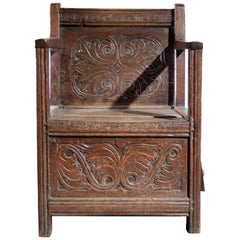
There are comparable armchairs in international museum collections dated to the second half of the 16th century. Most share the following characteristics with the above pair, the form, the ram's mask carved to the end of each arm, the curvilinear outline of the arm rests, the ring turned front legs as well as the plain square section back legs and plain stretchers.
1. Two stained glass windows...
Category
French Renaissance Antique 16th Century Armchairs