Want more images or videos?
Request additional images or videos from the seller
1 of 15

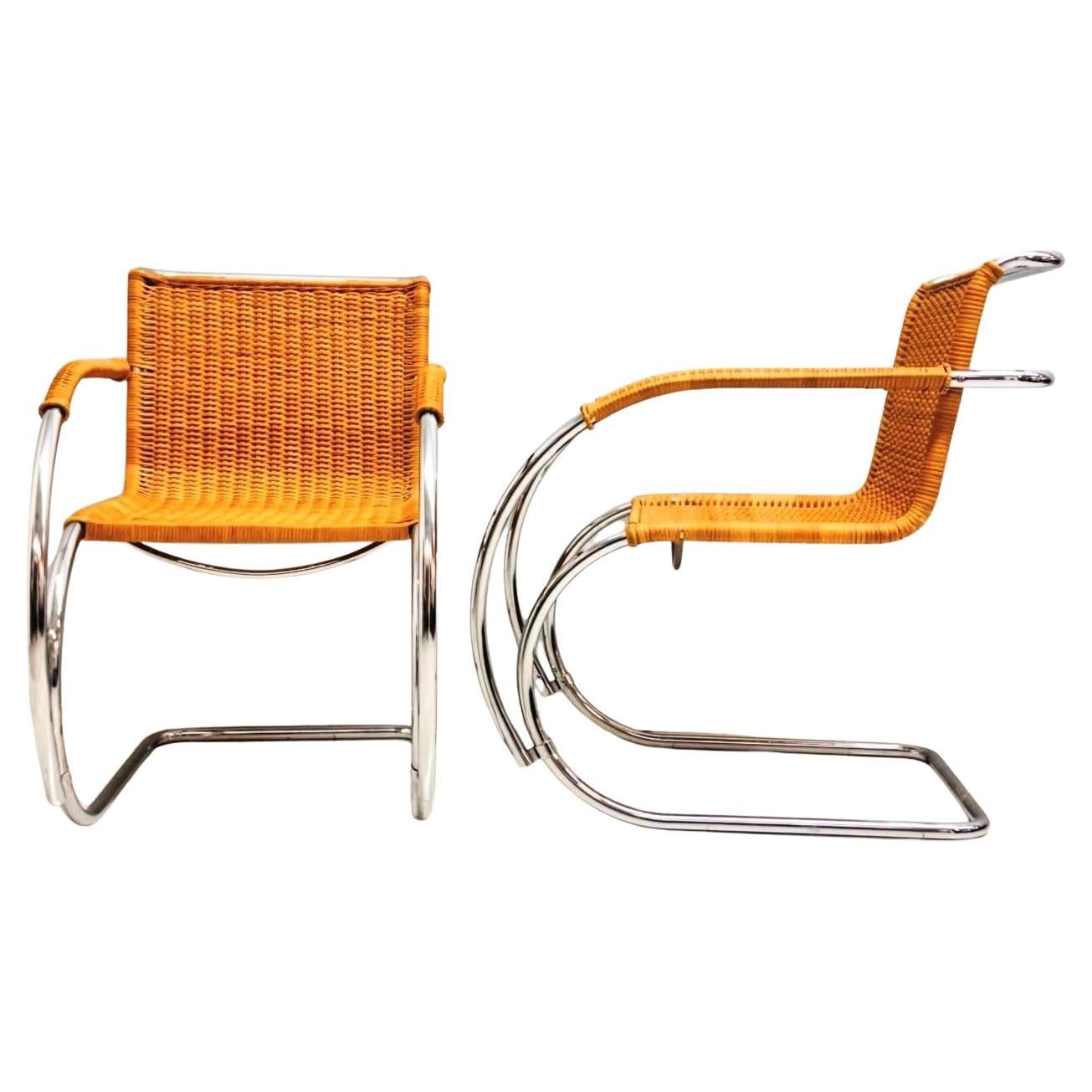
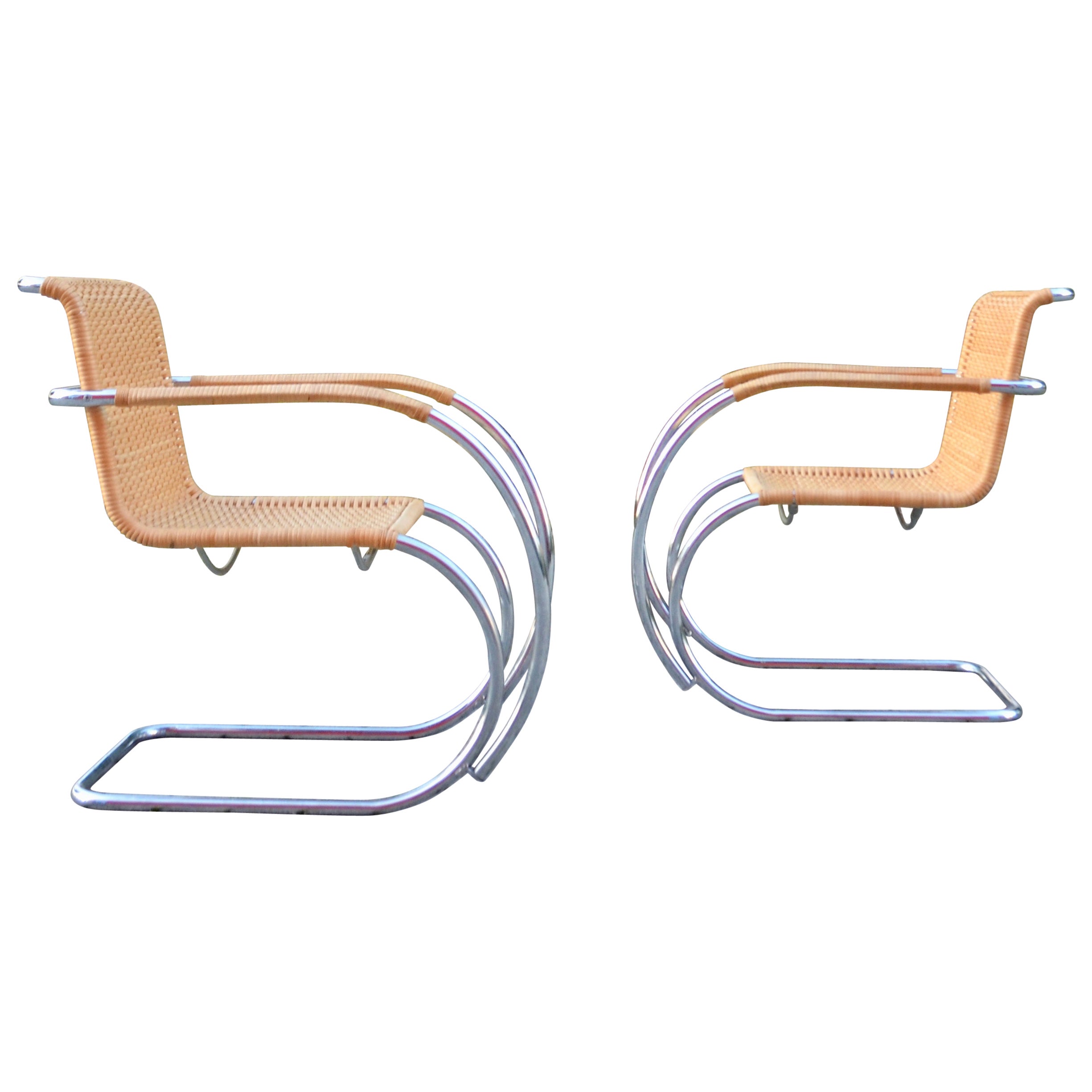
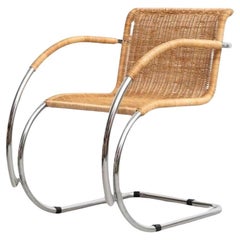
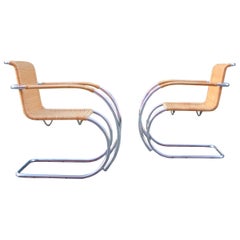
Vintage Wicker and Chrome THONET MR20 Ludwig Mies van der Rohe MR20 armchairs

$5,454.19per set
£3,950per set
€4,709.43per set
CA$7,572.23per set
A$7,711.50per set
CHF 4,426.73per set
MX$93,053.22per set
NOK 51,303.53per set
SEK 52,008.26per set
DKK 35,209.68per set

About the Item

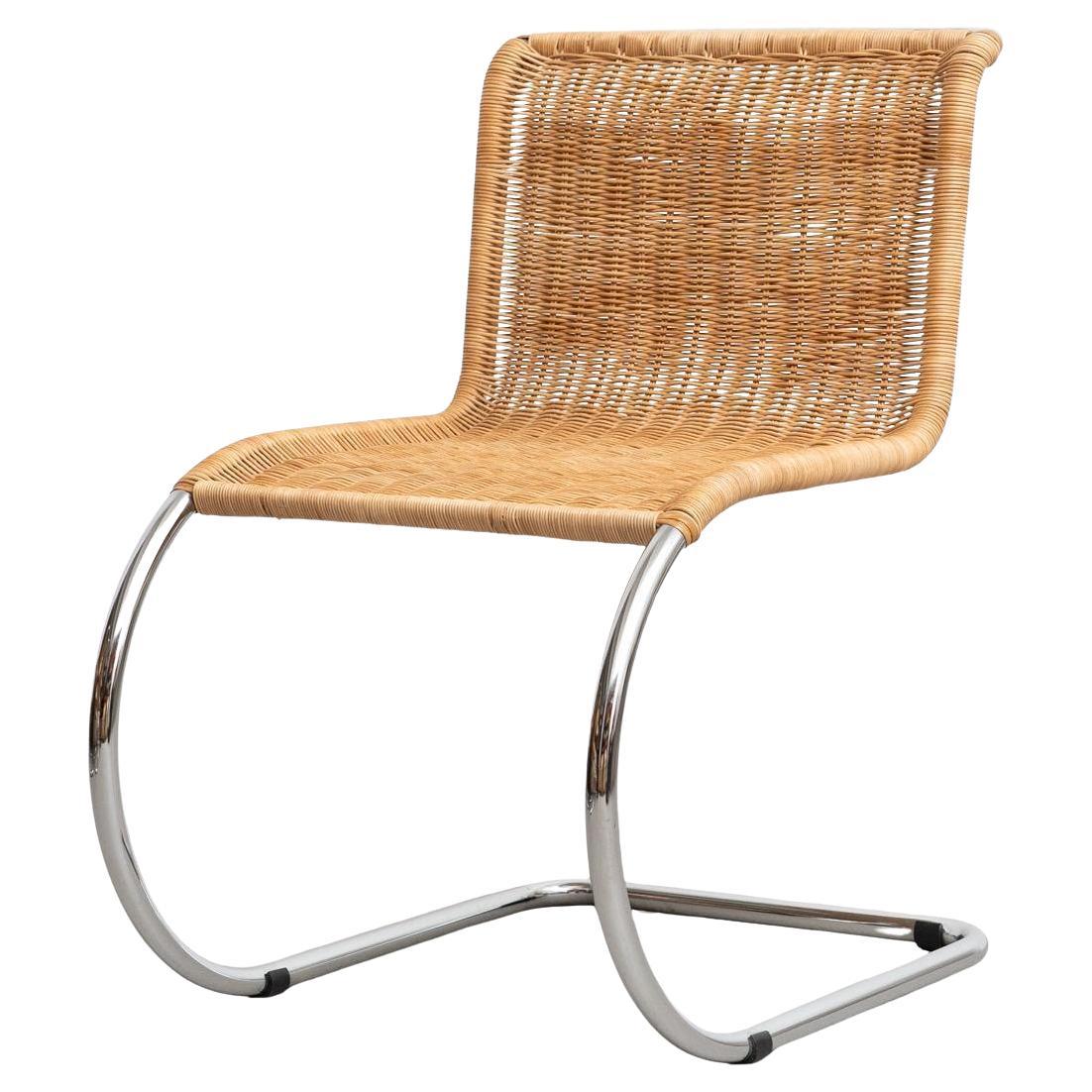
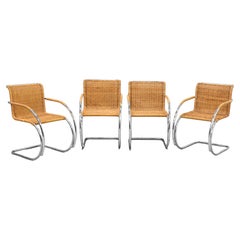
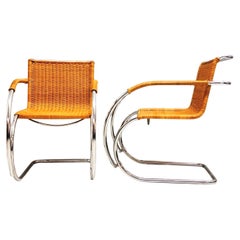
A pair of vintage natural cane, Wicker and chrome MR20 Ludwig Mies van der Rohe MR20 armchairs for Thonet. The MR20 (the armchair version of the MR10) is a hallmark of Bauhaus and Modernist design which blends industrial steel with the organic warmth of natural materials. The wicker version of the MR20 was the original version of the design and was introduced in 1927 at the Die Wohnung (The Dwelling) exhibition at the Weissenhof Estate in Stuttgart.   While Mies van der Rohe is credited with the structural design, it is widely accepted that his partner, Lilly Reich, was responsible for the use of cane. She sought to soften the 'cold' aesthetic of the tubular steel, making the chair more palatable for domestic use. Leather versions of the chair were introduced from around 1931 onwards.  Incidentally, the material is often referred to as 'wicker' or 'rattan', but it's technically 'natural cane'. Whilst the source is rattan, a species of climbing palm found in tropical regions, for the MR20 manufacturers use the outer skin of the rattan stalk which is stripped into thin, flexible ribbons. This specific part of the plant is called cane - 'wicker' is therefore not the material but instead refers to the box weave pattern. Official manufacturers Because the patent for the cantilever design expired long ago, many companies such as Alivar, Gavina, Stendig and Tecta have produced versions of the chair but these chairs were not produced under license and often lack the quality associated with the main manufacturers. These are as follows: 1927–1932 Josef Müller  1932 - 1990s Thonet  1960s onwards Knoll International, and later from 1996 to the present day, Knoll Studio Thonet production is usually identified by a label stuck to one of the cross stretchers under the seat, but where this is missing the chair can be identified by the collar that joins the leg to the arm rest. In the Thonet version this is a welded bracket with a single Allen key bolt screwed into the base of the arm rest tube. Likewise with Knoll, usually a Knoll International label from 1960's -1996 and thereafter a Knoll Studio and Mies van der Rohe signature engraved imprint in the base with additional production labels. Where the earlier Knoll International label is missing the chair can be identified by the collar that joins the leg to the arm rest. This is slightly different to the Thonet welded bracket version where the retaining bracket has screws that secures it to the frame and the base of the arm rest tube.  Unfortunately there are many copies in the market which were predominantly Taiwanese exports (1970s–90s) and these days, either contemporary Italian or Chinese reproductions. Many of these pieces were sold through department stores, rebadged by importers or falsely attributed later (and still to this day) by dealers.  Therefore, In the world of high end design Thonet pieces are the most sought after as their pedigree goes right back to 1932 and they had a more limited production period, and thereafter Knoll, with only these two companies considered to be the 'licensed' or 'official' manufacturers. The early Josef Müller versions are very rare chairs indeed; these were unmarked so if you ever see one for sale you would need to check the provenance very carefully.    .  These particular armchairs date from the 1980s and are in very good vintage condition with light signs of wear to the cane and chrome as you would expect given their age - these are highlighted in the photos. Both chairs also benefit from having the original Thonet production labels adhered to the front seat cross stretcher as shown in the photos.    To the collector van der Rohe’s designs epitomises the highest aspirations of modernism being practical, functional and comfortable; and it is a testament to his enduring ideals that many of his designs are still in production today over 70 years after they were first conceived.   Dimensions H 82cms x W 56cms x D 75cms Seat height: 44cms Arm height: 66cms
  • Creator:
    Thonet (Manufacturer),Ludwig Mies van der Rohe (Designer)
  • Dimensions:
    Height: 32.29 in (82 cm)Width: 22.05 in (56 cm)Depth: 29.53 in (75 cm)Seat Height: 17.33 in (44 cm)
  • Sold As:
    Set of 2
  • Style:
    Bauhaus (Of the Period)
  • Materials and Techniques:
    Cane,Chrome,Hand-Woven
  • Place of Origin:
  • Period:
  • Date of Manufacture:
    1980s
  • Condition:
    Wear consistent with age and use.
  • Seller Location:
    Highclere, GB
  • Reference Number:
    Seller: MR20W21stDibs: LU4278250047452

More From This Seller

View All
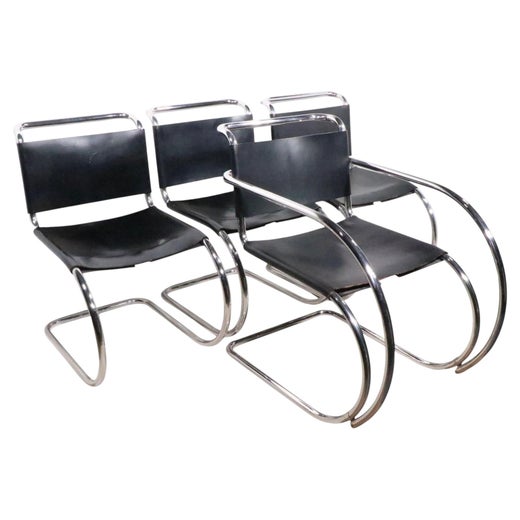
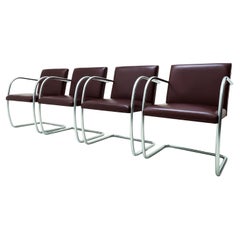
4 Vintage Ludwig Mies van der Rohe Knoll, MR50 BRNO leather dining chairs

4 Vintage Ludwig Mies van der Rohe Knoll, MR50 BRNO leather dining chairs

By Ludwig Mies van der Rohe, Knoll

Located in Highclere, Newbury

A set of 4 vintage Mies van der Rohe Knoll, MR50 BRNO tubular satin chrome and dark burgundy leather dining chairs. The price listed is for the 4 chairs as shown. Designed by Ludwig...

Category

1990s Italian Bauhaus Dining Room Chairs

Materials

Chrome

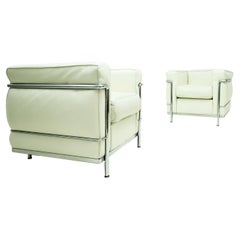
Pair Vintage Cassina Le Corbusier, Perriand and Jeanneret LC2 Leather Armchairs

Pair Vintage Cassina Le Corbusier, Perriand and Jeanneret LC2 Leather Armchairs

By Le Corbusier, Pierre Jeanneret, Charlotte Perriand Cassina, Cassina

Located in Highclere, Newbury

A pair of vintage original Le Corbusier, Perriand and Jeanneret LC2 Chrome and Ivory Leather lounge chairs for Cassina with labelled upholstery and serial numbers. The price shown is for both chairs. The LC2 chair, designed in 1928 by Le Corbusier, Pierre Jeanneret, and Charlotte Perriand, is a key piece in the evolution of modernist furniture. Originally part of a series created for the Villa Church (a private residence for a client in the Paris suburb of Ville-d'Avray), the LC2 epitomizes the collaborative spirit of the three designers. Its tubular steel frame and free form cushions marked a break from traditional designs, combining minimalist form with unexpected comfort. It was first presented in 1929 at the Salon d'Automne in Paris as part of a collection that would later be called the Equipement Interieur d’une Habitation (Interior Equipment for a Living). Alongside the LC2, the trio designed other iconic pieces, such as the LC1 Sling Chair, the LC3 Sofa, and the LC4 Chaise Longue. The LC4, in particular, is often considered one of the most innovative pieces in the collection, with its curved steel frame and adjustable reclining mechanism it was not just a chair, but a piece of furniture designed to enhance relaxation. As such it became a symbol of the modernist ideal—furniture that was as much about living comfortably as it was about making a design statement. The LC designs were created not just as individual works but as a broader vision for modern interiors, where furniture wasn’t just decorative but integrated into the living environment, serving both aesthetic and functional purposes. While the LC2 chair was part of this vision for the Villa Church, it wasn't designed specifically for that one space; rather, it was a part of an overall shift towards modernist furniture that transcended any one project. When compared to the Bauhaus metal chairs...

Category

Late 20th Century Italian Bauhaus Lounge Chairs

Materials

Chrome

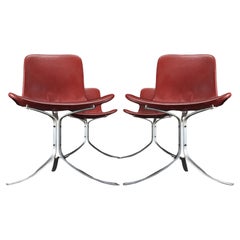
4 Poul Kjaerholm PK9 E. Kold Christensen chairs with seat height extensions

4 Poul Kjaerholm PK9 E. Kold Christensen chairs with seat height extensions

By E. Kold Christensen, Poul Kjærholm

Located in Highclere, Newbury

A set of 4 Danish Mid Century vintage leather and steel PK9 chairs designed by Poul Kjaerholm for E. Kold Christensen with additional bespoke, later designed, optional seat height extensions. These are a beautifully crafted set of chairs with a simple but striking form that have often been cited as Kjaerholm’s finest work; and for good reason… as the story goes Kjaerholm was inspired by a sand imprint of his wife’s behind from a day at the beach. Later, during the design process, Hanne Kjærholm sat in boxes of clay to find the most optimal and comfortable solution; so now you know. These also have the additional benefit of expertly crafted seat height extensions that can be used or not, depending on the height of your preferred table. Note that these are not original extensions as the chairs didn't ever have such additions as they were designed at a lower height to match Kjaerholm’s PK tables...

Category

Mid-20th Century Danish Mid-Century Modern Dining Room Chairs

Materials

Steel

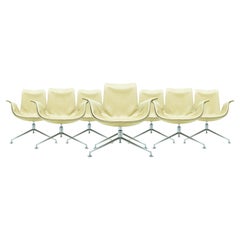
Preben Fabricius and Jorgen Kastlhom FK 6727-3G Lounge Chairs for Walter Knoll

Preben Fabricius and Jorgen Kastlhom FK 6727-3G Lounge Chairs for Walter Knoll

By Walter Knoll, Jørgen Kastholm & Preben Fabricius

Located in Highclere, Newbury

An exceptional set of 8 Danish Mid Century Preben Fabricius and Jørgen Kastlhom FK Lounge Chairs, model FK 6727-3G for Walter Knoll, in a light biscuit...

Category

Vintage 1960s German Mid-Century Modern Lounge Chairs

Materials

Aluminum

10 Preben Fabricius and Jorgen Kastlhom FK 6728 high back leather armchairs

10 Preben Fabricius and Jorgen Kastlhom FK 6728 high back leather armchairs

By Jørgen Kastholm & Preben Fabricius, Walter Knoll

Located in Highclere, Newbury

An exceptional limited edition set of 10 Danish Mid Century Preben Fabricius and Jørgen Kastlhom FK high back armchairs, model FK 6728-4G for Walter Knoll, in a cognac coloured leather with a white gloss shell and satin aluminium 4 star base. The price listed is for all 10 chairs as shown. Originally designed by powerhouse 1960s design team Preben Fabricius and Jørgen Kastholm in 1964, their ‘Tulip’ chair has become an icon of Mid Century Danish design. The actual original name for this chair that was produced by Kill International is ‘The Bucket Chair’ and it is still produced today by Walter Knoll under that name. Needless to say the name comes nowhere near close to portraying the beautiful and curvaceous lines it exhibits which is why over the years it’s often been referred to as the ‘Tulip’ or ‘Bird’ Chair. The original production name was the FK 6725 which relates to the chair with the fixed base and seat. Other production variants number from 6725-6729 and also have been produced in a 3 leg (3G), 4 leg (4G) or 5 star (5R) base and with or without castors. The original chair was produced with a fixed seat and base, but later versions had a rotating seat - and later still a 4 star and 5 star base with both a tilting and rotating seat. All production models had circular slides or castors fitted to the base of the feet so if you ever see a listing without one or the other they are missing in action. The FK high back armchair version, as shown here, has a leather pad and a gloss white shell and a 4 star rotating base. This was a special edition, as confirmed by email via Walter Knoll, and was therefore only produced in very limited numbers. The fine lines and contours found on the FK chair...

Category

1990s German Mid-Century Modern Dining Room Chairs

Materials

Aluminum

You May Also Like

Mies Van Der Rohe Weissenhof MR20 Armchair Bauhaus in Rattan and Tubular Metal

Mies Van Der Rohe Weissenhof MR20 Armchair Bauhaus in Rattan and Tubular Metal

By Ludwig Mies van der Rohe

Located in Barcelona, ES

Mies van der Rohe armchair mr20. Disegned circa 1928, manufactured in the 70s by unknown manufacturer. Frame tubular steel chromed. In good original condition, preserving a beautifu...

Category

Vintage 1970s Norwegian Mid-Century Modern Armchairs

Materials

Iron

Early Thonet  S533 RF  Cane Weißenhof Armchair Chair Mies van der Rohe Set of 2

Early Thonet S533 RF Cane Weißenhof Armchair Chair Mies van der Rohe Set of 2

By Ludwig Mies van der Rohe, Thonet

Located in Munich, Bavaria

These Cantilever vintage armchairs are Bauhaus classics and were designed by Mies van der Rohe and knowned by the name Weißenhof Chair.This pair were produced by Thonet with the Model name S533 RF. 3 license holders are producing this chair today. As well as Knoll International MR10. Tecta B42 and this 2 Thonet S533...

Category

Mid-20th Century German Bauhaus Chairs

Materials

Steel, Chrome

Ludwig Mies van der Rohe "MR10" by Thonet Set 3 Chair

Ludwig Mies van der Rohe "MR10" by Thonet Set 3 Chair

By Thonet, Ludwig Mies van der Rohe

Located in Firenze, FI

MR10 chairs, designed by Ludwig Mies van der Rohe and produced by Thonet in Germany in the 1960s. The structure is made of chromed tubular steel, bent with exceptional technical pre...

Category

Vintage 1960s German Bauhaus Chairs

Materials

Steel

Vintage Mies Van Der Rohe For Knoll Cantilevered Chrome And Rattan MR Chair

Vintage Mies Van Der Rohe For Knoll Cantilevered Chrome And Rattan MR Chair

By Ludwig Mies van der Rohe

Located in West Palm Beach, FL

This iconic vintage MR chair, designed by Mies van der Rohe for Knoll, is a masterful expression of Bauhaus modernism and timeless design innovation. The cantilevered tubular chrome ...

Category

20th Century American Mid-Century Modern Side Chairs

Materials

Chrome

Mies Van Der Rohe MR20 Chrome & Wicker Lounge Chairs, 1970s / sTENDIG

Mies Van Der Rohe MR20 Chrome & Wicker Lounge Chairs, 1970s / sTENDIG

By Stendig Co., Ludwig Mies van der Rohe

Located in Buffalo, NY

Mies Van Der Rohe MR20 Chrome & Wicker Lounge Chairs, 1970s. manufactured by Stendig... Classic Bauhaus / Modernist design,, Superior quality and construction.. Extremely comfortable...

Category

Vintage 1970s American Bauhaus Lounge Chairs

Materials

Steel, Chrome