Video Loading
Want more images or videos?
Request additional images or videos from the seller
1 of 21

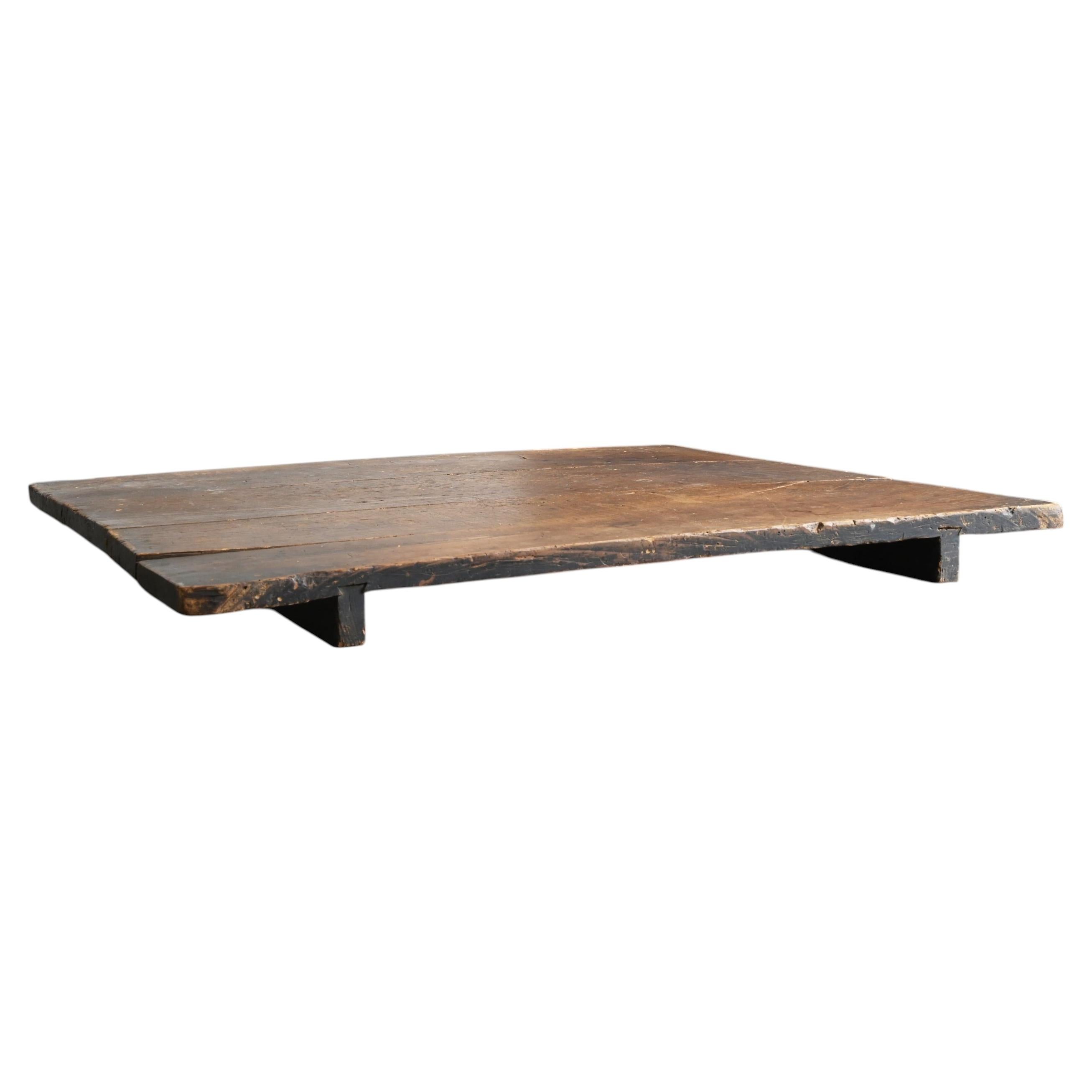
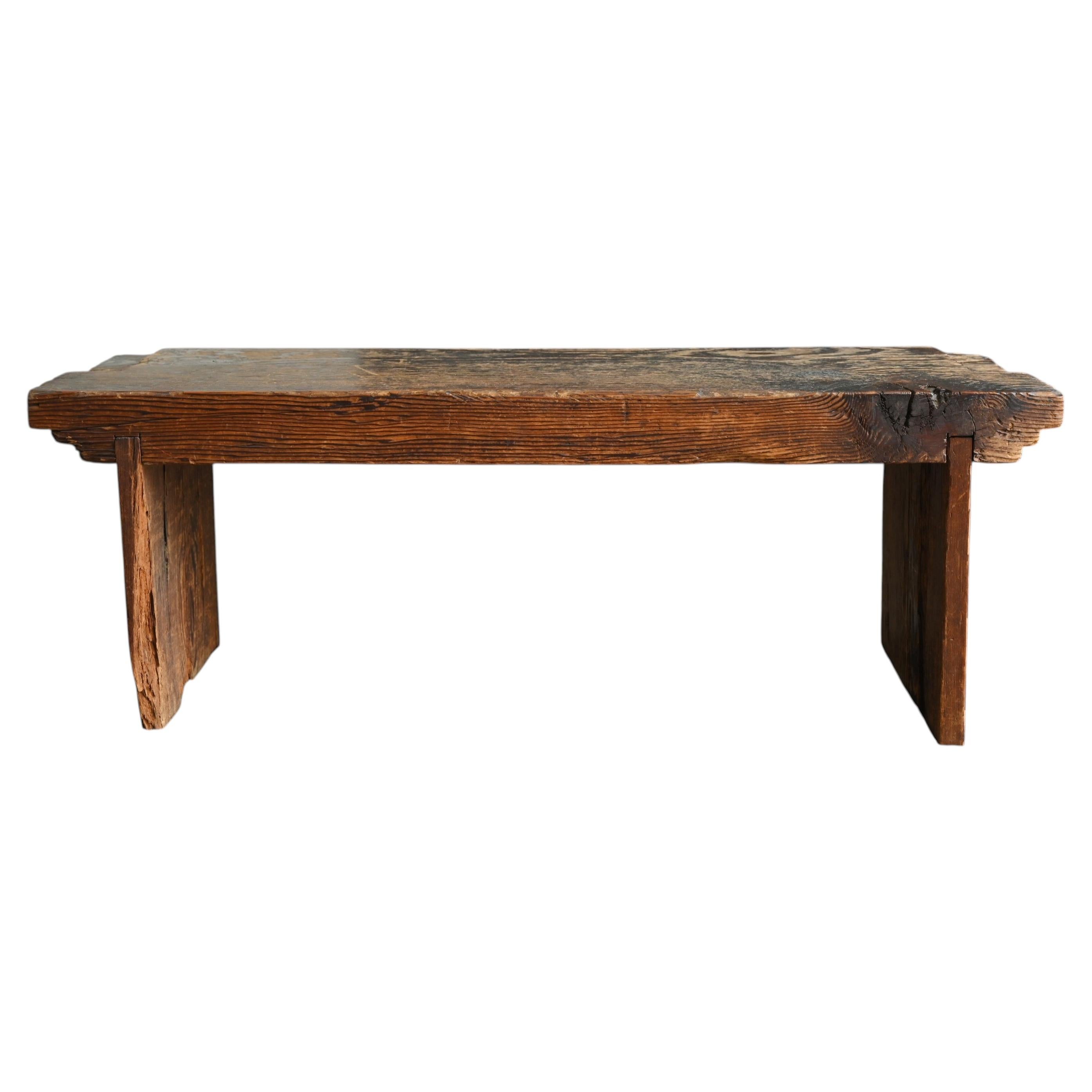
Japanese antique wooden bench / Early 20th Century / Rustic farmhouse work table

$900
£673.56
€787.28
CA$1,271.77
A$1,283.75
CHF 737.64
MX$15,560.55
NOK 8,537.86
SEK 8,720.94
DKK 5,885.15

About the Item

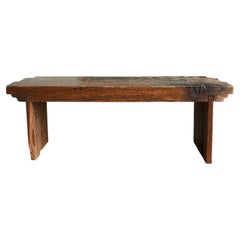
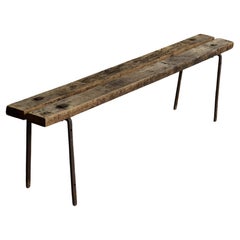
This is a wooden bench made in Japan between the Taisho era and the early Showa era, roughly one hundred years ago. It was used for many years in an old private house in Kanazawa City, Ishikawa Prefecture, and we were able to hear about it directly from the contractor who handled the demolition of that house. With old furniture the origin is usually lost altogether, so this is a piece with a reliable provenance whose place of use is clearly known. Beyond that, however, nothing further about its history is known. The top board is made of Japanese cedar (sugi). Over many long years the softer parts of the wood have worn away, leaving only the growth rings raised faintly as fine ridges. When you run your palm across it, those slight undulations come through clearly. It is the kind of surface that can only be born from being touched again and again by hands and tools, like a shallow uzukuri finish. For the legs, forked tree branches have been used just as they were. A branch that divides in two was split lengthwise down the middle, and the cut face was turned inward and set into the top board. It is a wonderfully generous way of making something, using the Y shape of the branch as it is. We do not know what kind of wood the legs themselves are, but square wooden pegs have been driven in from the top of the board, and a single cedar plank has been fitted between the legs, holding the whole piece firmly together. This method of using branches as legs can also be seen in the Kanto region, and we believe it was a design shared among farming villages throughout Japan. This is not the work of a furniture craftsman. It was most likely made by hand by someone in the village with a little skill in woodwork, or by a farmer themselves. Yet that is exactly what gives it a softness and a gentleness, an approachability that makes you want to reach out and touch it. Originally the legs were about 10 cm longer than they are now, and it is thought to have been used as a work table for farming. Looking closely at the edge of the top board, a number of small cuts have been carved into it, hinting at the days when something was being cut there. At the same time, it stood at just the right height for a person to sit down on. This is only our imagination, but perhaps there were also moments when someone who had finished a job sat here and caught their breath. As it was, it stood rather tall, so we cut the legs down so that it can be used comfortably as a chair or bench. The height is 44 cm and the width is 77 cm, dimensions on which an adult can sit at ease. Sitting on it, there is no wobbling and no uneasy creaking; the structure is solid. Place it in an entryway as a seat for putting on shoes. Set it beside a sofa as a side table. Or display a vase, a stone, or a vessel on top and use it as a stand just as it is. In a space of exposed concrete or white walls, the dry, faded color of the wood and its uneven outline stand out, quietly drawing the room together like an object. Regarding the condition: there are insect holes and traces of insect damage in the legs. These are all from an old period, and there are no insects present now. Elsewhere, small chips and fine scratches can be seen here and there, but they are within the range of the character that comes with age. The wood has not become thin or soft, so it can be used without any problem. This is a piece that quietly supported the simple daily work of a Japanese farming household for a long time. There is not another one the same. We would be delighted if you took to it together with the history and culture of everyday life in Japan. Size: W77cm x D31.5cm x H44cm Weight: 5.5kg Item No.: CH068 [Our Social Role] -------------------------------------------------------------------------------------------------------- We are a specialized team dealing in antiques and vintage items, comprised of stores based on three distinct brands. While focusing on Japanese items, we also offer a carefully curated selection of attractive goods from around the world-each evoking the culture and history of its country of origin. Unlike the traditional Japanese antique furniture and art that have been appreciated overseas until now, we shine a light on the tools and furniture that were used for many years in ordinary Japanese homes and farmhouses. These objects have gained a unique charm over time, their beauty deepened by the history accumulated through daily life. In today's world, however, many of these precious items are discarded during home demolitions. We are committed to reassessing their value and passing them on to future generations. Drawing from our extensive experience-having seen tens of thousands of items through direct purchases, markets, and auction houses-we carefully select and present only the most captivating pieces. This is something made possible only through the years of knowledge and expertise we have cultivated. Rather than focusing on the widely known facets of Japanese art and culture, we highlight the subtle beauty born from the everyday life of common people. It is this rediscovered beauty, steeped in history, that we strive to share with the world.
  • Dimensions:
    Height: 17.33 in (44 cm)Width: 30.32 in (77 cm)Depth: 12.41 in (31.5 cm)
  • Style:
    Taisho (Of the Period)
  • Materials and Techniques:
  • Place of Origin:
  • Period:
  • Date of Manufacture:
    Early 20th Century
  • Condition:
    Additions or alterations made to the original: The legs were shortened by about 10 cm by us so it can be used as a bench. Old insect holes and traces of insect damage are present in the legs; there are no active insects now. Small chips and fine scratches can be seen here and there.
  • Seller Location:
    Sammu-shi, JP
  • Reference Number:
    Seller: CH0681stDibs: LU5487251407732

More From This Seller

View All
Antique wooden low table from Korea / 20th century / Wabi-sabi style low table

Antique wooden low table from Korea / 20th century / Wabi-sabi style low table

Located in Sammu-shi, Chiba

This is a piece that is thought to be an old wooden low table made on the Korean Peninsula. Although its exact date cannot be stated with certainty, judging from its overall construction, the design of the legs, and the character of the wood, it can be understood as an old piece of common people’s furniture from the Joseon period. The tabletop appears to be made of a hardwood similar to oak or elm, while the legs appear to be made of a softwood such as pine or cedar. What makes this table especially interesting is the way it carries something of the atmosphere of Korean antique furniture...

Category

Early 20th Century South Korean Other Sofa Tables

Materials

Wood, Oak, Pine

Primitive Japanese Wooden Table with Drawer Japan, Early 20th Century

Primitive Japanese Wooden Table with Drawer Japan, Early 20th Century

Located in Sammu-shi, Chiba

An old Japanese low wooden table with a quiet, architectural presence. Its restrained proportions and low profile create a calm yet sculptural form, embodying the understated elegan...

Category

Early 20th Century Japanese Taisho Side Tables

Materials

Wood

Antique Japanese wooden work board / Wall-mounted object/ Wabi-sabi low table

Antique Japanese wooden work board / Wall-mounted object/ Wabi-sabi low table

Located in Sammu-shi, Chiba

This is a richly characterful wooden board that worked hard for many years in the Japanese countryside. It is thought to date from around 1880 to 1940, spanning the Meiji to early Sh...

Category

Early 20th Century Japanese Taisho Sofa Tables

Materials

Softwood, Cedar, Pine

Antique Japanese cedar writing desk / Meiji-Taisho era / Soot-darkened table

Antique Japanese cedar writing desk / Meiji-Taisho era / Soot-darkened table

Located in Sammu-shi, Chiba

This is an antique wooden table thought to have been used in ordinary homes and farmhouses in Japan sometime between the Meiji and Taisho eras. In Japanese, this type of furniture is...

Category

Early 20th Century Japanese Meiji Coffee and Cocktail Tables

Materials

Softwood, Cedar

Early-Mid 20th Century Japanese Wabi-Sabi Wooden Low Table / Display Stand TA140

Early-Mid 20th Century Japanese Wabi-Sabi Wooden Low Table / Display Stand TA140

Located in Sammu-shi, Chiba

This is a wooden low table made of sugi (Japanese cedar) or pine. It is thought to have been crafted from very old reclaimed timber — antique wood dating from the late 19th to early ...

Category

20th Century Japanese Showa Coffee and Cocktail Tables

Materials

Softwood

Antique Japanese wooden coffee table with a tasteful ink-wash pattern/Meiji

Antique Japanese wooden coffee table with a tasteful ink-wash pattern/Meiji

Located in Sammu-shi, Chiba

Long a beloved part of Japanese culture, the "fuzukue" (writing desk) originated as a piece of furniture for writing, literally meaning "a desk for writing," and has accompanied quie...

Category

Antique Late 19th Century Japanese Meiji Sofa Tables

Materials

Beech

You May Also Like

Japanese Antique Ash Wood Bench, 1950s - Japandi Wabi-Sabi

Japanese Antique Ash Wood Bench, 1950s - Japandi Wabi-Sabi

Located in Chiba, Chiba

A Japanese antique bench crafted from ash wood, dating from the 1950s. Its simple, unadorned form gives the piece a quiet, understated presence, allowing the natural character of the...

Category

Mid-20th Century Japanese Primitive Furniture

Materials

Wood

19th-Century Japanese Bench in Hinoki Wood

19th-Century Japanese Bench in Hinoki Wood

Located in Los Angeles, CA

A finely crafted 19th-century Japanese bench made from solid hinoki (Japanese cypress), prized for its strength, lightness, and naturally aromatic qualities. The bench features a lon...

Category

Antique 19th Century Japanese Rustic Furniture

Materials

Wood

Japanese Antique Wood Low Table , Primitive Low Table , Wabi Sabi

Japanese Antique Wood Low Table , Primitive Low Table , Wabi Sabi

Located in Katori-Shi, 12

This is an antique low table from the Taisho period. The table top is made of five pieces of Shurizakura wood with beautiful grain, and its rich expression captivates the viewer. In...

Category

Early 20th Century Japanese Taisho Antiquities

Materials

Wood

Monumental 18th Century French Oak Workbench, Primitive Console, Wabi-Sabi

Monumental 18th Century French Oak Workbench, Primitive Console, Wabi-Sabi

Located in BORGO, FR

Monumental 18th century French oak workbench with exceptional length and a striking primitive presence. This piece embodies the essence of wabi-sabi aesthetics, with a beautifully ti...

Category

Antique Late 19th Century French Rustic Industrial and Work Tables

Materials

Hardwood