Want more images or videos?
Request additional images or videos from the seller
1 of 21

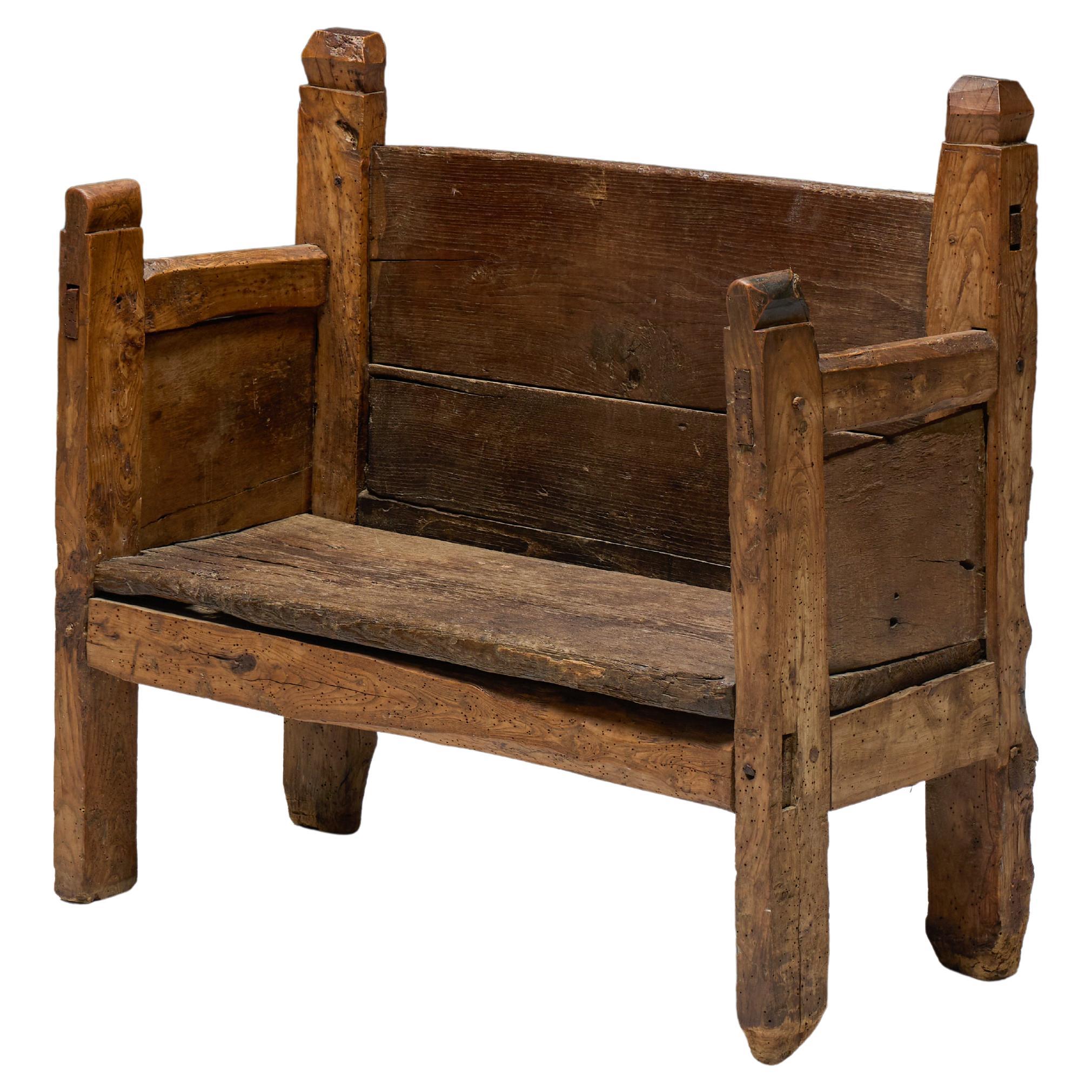
Tibetan Carved Wood “Tête a Tête” Love Seat, Tibet 19th Century

$13,250
£9,998.52
€12,799.40VAT Included
CA$18,705.44
A$18,770.83
CHF 10,947.38
MX$228,230.51
NOK 125,796.27
SEK 129,375.04
DKK 86,983.89

About the Item

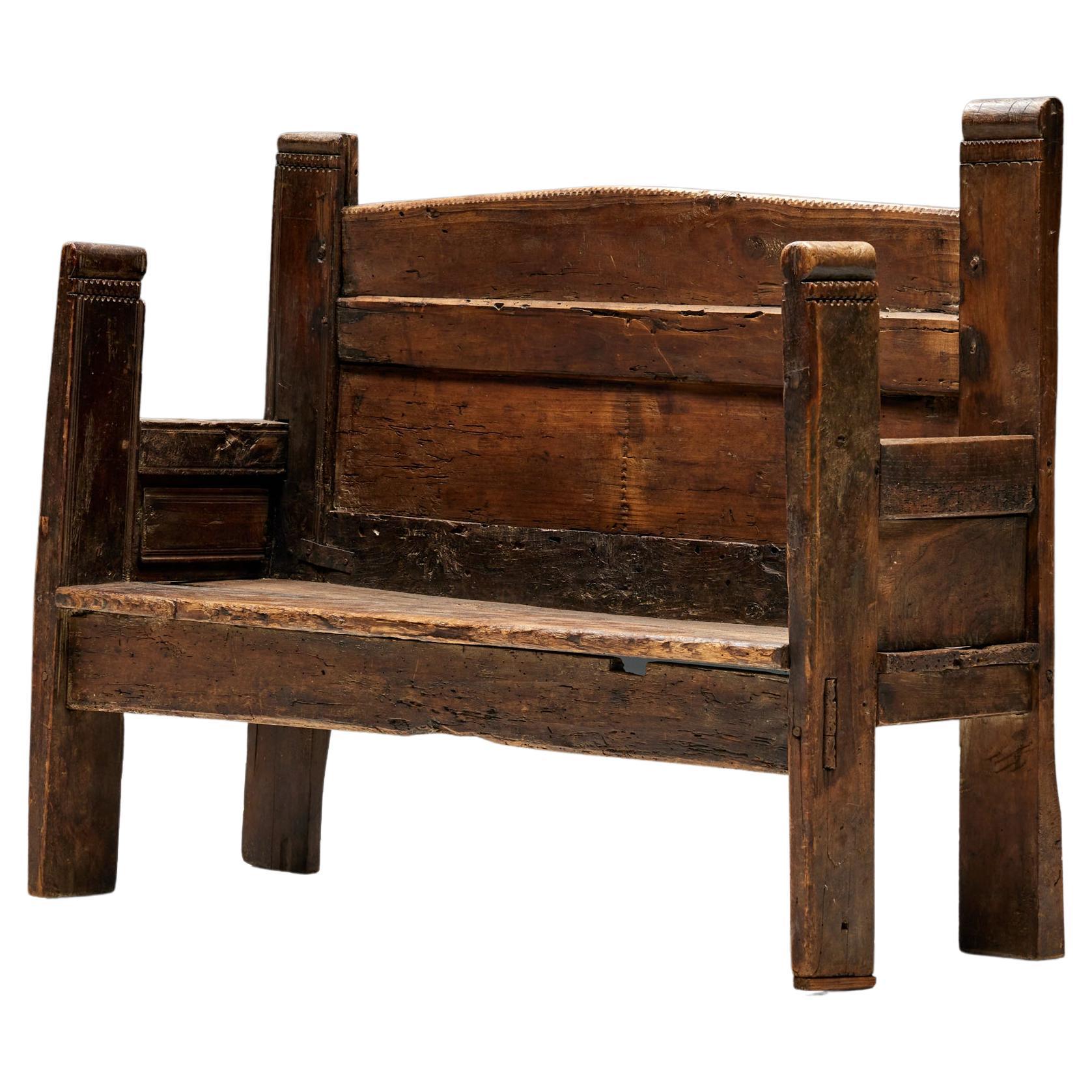
This so-called “tête a tête” bench from Tibet is a truly unique and historic piece. Furniture from Tibet generally brings to mind hand-painted wooden creations with religious and folk patterns and exceptional craftsmanship. This love seat from the 1800s is a much less decorated, but nonetheless an amazing piece to behold. There are two types of love seats, this form is known as a tête-à-tête, courting bench, or conversation bench. In this form, the two seats are arranged in an S shape, so that two people can converse while looking at each other and being within arm's reach, while at the same time typically retaining a modest barrier. The history of the love seat can be traced as far back as the late 1600s when this intimate seating arrangement for two first appeared. Unlike its Victorian counterparts in France and England, this present bench is made from a single, large tree trunk. The trunk was hollowed out and carved into this form, therefore there is no joinery or separate pieces. This gives it a very organic, rustic look that is effortlessly genuine. The backs are slightly bent, and the seats are quite smooth and reinforced, which shows that this bench wasn’t created to only be a decorative piece. It appears as if history got engrained into the beautiful solid wood, which creates a historic character. In the 21st century, love seats are prominent in homes not just because of their space-saving capabilities but because of their enduring style. The rough, organic character of this bench has never gone out of style, as the pioneering Brazilian architect and designer, José Zanine Caldas’s works can testify. This Tibetan bench is a great choice to make both a historic, and a contemporary statement. It is a true novelty. Condition: In good vintage condition. Wear consistent with age and use. The wood has chips and scratches. Dimensions: 41.33 in W x 19.68 in D x 30.31 in H 105 cm W x 50 cm D x 77 cm H Shipping: This seat will be packed and shipped with the greatest care to make sure you will receive the item in the gallery condition. Complimentary shipping within the Netherlands.
  • Dimensions:
    Height: 30.32 in (77 cm)Width: 41.34 in (105 cm)Depth: 19.69 in (50 cm)
  • Style:
    Other (Of the Period)
  • Materials and Techniques:
  • Place of Origin:
  • Period:
  • Date of Manufacture:
    19th Century
  • Condition:
    Wear consistent with age and use. The wood has chips and scratches.
  • Seller Location:
    Utrecht, NL
  • Reference Number:
    Seller: 202106731stDibs: LU2947326463062

More From This Seller

View All
Traditional Carved Norwegian Kubbestol, Norway 1800s

Traditional Carved Norwegian Kubbestol, Norway 1800s

Located in Utrecht, NL

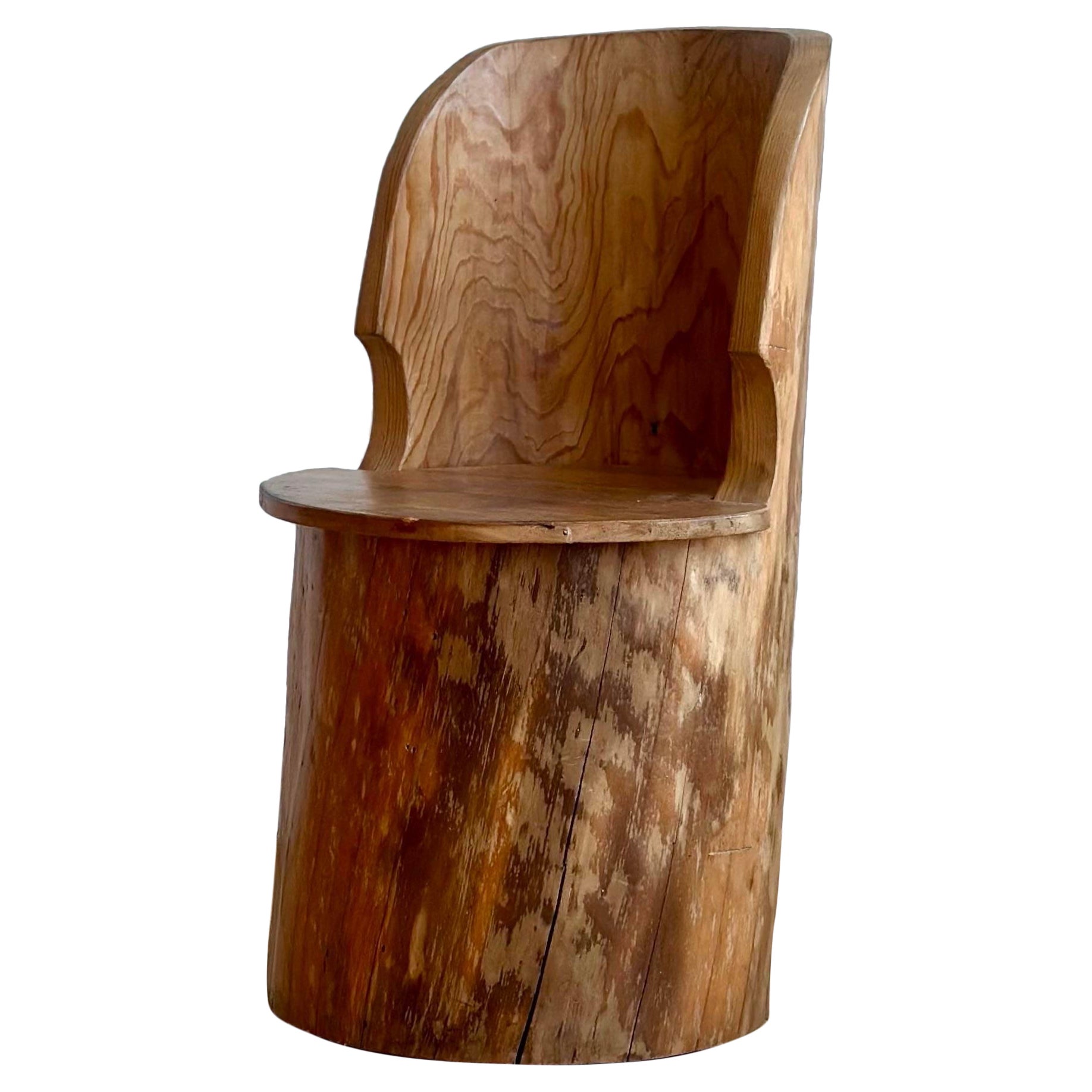
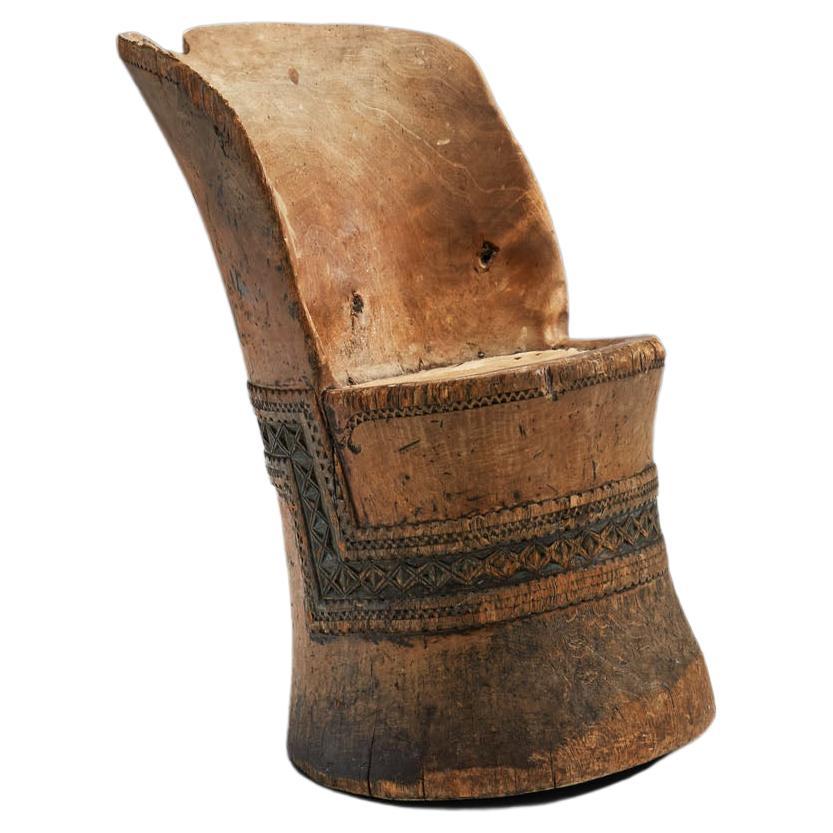
This “kubbstol” or “kubbestol” is a traditional Scandinavian chair made from a log. The kubbestol was quite common in some districts of Norway from about 1750 to 1960, where it was usually made from logs with significant girth and three to four feet in length. The tree trunk was hollowed out so that the base (from the seat down) would be cylindrical while the back of the chair continues upward from the seat in a curved shield that makes the chair both snug and comfortable. Most, but not all, kubbestols were decorated with carving, painting, or some combination of the two. This chair has beautiful folk patterns hand carved into it, with visible, raw craftsmanship. Carved and painted decorations would differ from district to district and styles changed over time. While the log is seemingly roughly shaped, this chair is surprisingly comfortable, as functionality has been historically important for Scandinavian furniture makers. The kubbestol was often placed next to the open-hearth fireplace or next to the bed, and it was reserved for the head of the household. Large, impressive farmhouses might have had several richly carved and painted kubbestols as a display of wealth and status. These days the log chair has become a symbol of Scandinavian roots for many families with ties to Norway, Sweden, or Denmark. The kubbestol is a reminder of our rural heritage and a time when most things in and around the home were made by hand from materials found in nature. Essentially a chair hewn from a tree trunk, this chair is as closely associated with Norway as Peer Gynt...

Category

Antique 19th Century Norwegian Brutalist Chairs

Materials

Wood

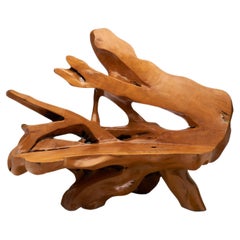
Handcrafted Teak Root Bench, Europe Late 20th Century

Handcrafted Teak Root Bench, Europe Late 20th Century

Located in Utrecht, NL

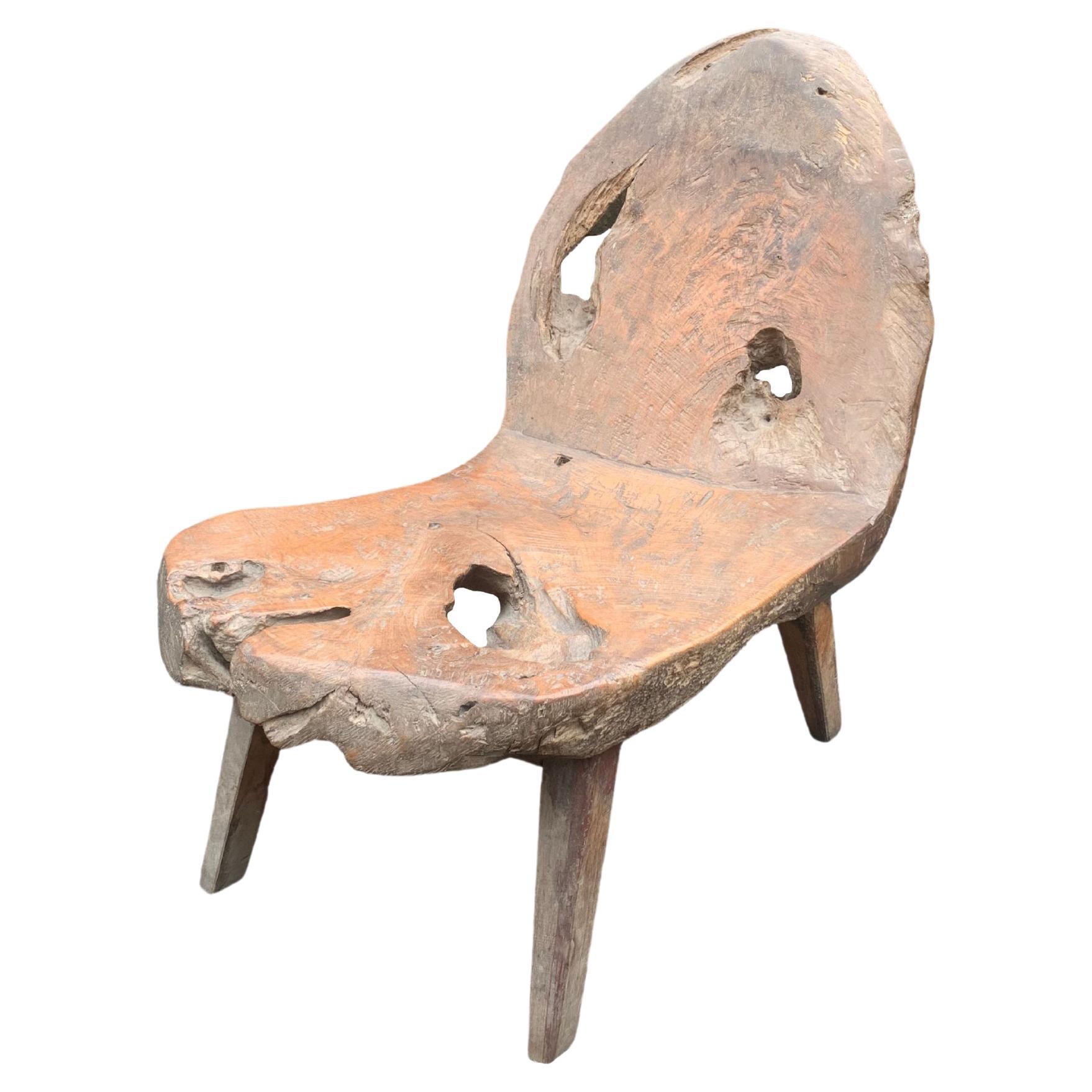
Inspired by the beauty of the natural root form, this organic teak bench is handcrafted from one piece of teak root. The root is painstakingly unear...

Category

Late 20th Century European Other Benches

Materials

Wood

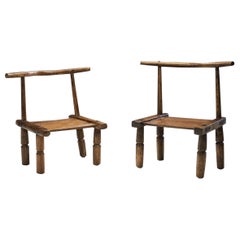
Hand Carved African Baule Tribal Chairs, Ivory Coast, Early 20th century

Hand Carved African Baule Tribal Chairs, Ivory Coast, Early 20th century

Located in Utrecht, NL

The Baule Tribe from the Ivory Coast of West Africa is well-known for their artistic tribal art, sculptures, and furniture. With a rich cultural history, their creations are also full of history both visually and in their execution. This beautiful pair of chairs is the visual epitome of the tribe’s talents. The thin, wooden yokes...

Category

Early 20th Century Ivorian Modern Chairs

Materials

Wood

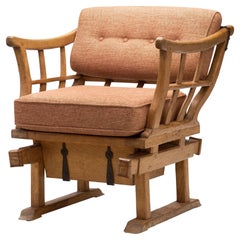
Solid Wood "Money Chair" with Upholstered Cushions, Europe late 19th century

Solid Wood "Money Chair" with Upholstered Cushions, Europe late 19th century

Located in Utrecht, NL

This chair is in many ways the definition of a unique piece both in visual terms and from a historic aspect. It hasn’t a single aspect that is usual, making it a fascinating and hist...

Category

Antique Late 19th Century European Modern Armchairs

Materials

Fabric, Wood

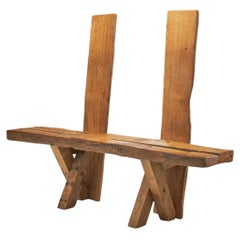
Jean & Sébastien Touret Oak Bench, France, 1950s

Jean & Sébastien Touret Oak Bench, France, 1950s

Located in Utrecht, NL

The term brutalism — which derives from the French word brut, meaning “raw” — was originally coined to describe an architectural style that emerged in the 1950s featuring monumental buildings, usually made of unornamented concrete, whose design was meant to project an air of strength and solidity. Similarly, in furniture design Brutalism inspired designers to create models with the same look of strength and style. This Jean & Sébastien Touret...

Category

Vintage 1950s French Mid-Century Modern Benches

Materials

Oak

Sculptural Solid Wood Armchair, Europe ca 1960s

Sculptural Solid Wood Armchair, Europe ca 1960s

Located in Utrecht, NL

This eye-catching chair has a lot of personality, recalling different design styles and eras, including the Arts and Crafts movement, the minimalistic pine models of Axel Einar Hjort...

Category

Vintage 1960s European Mid-Century Modern Armchairs

Materials

Wood

You May Also Like

Sculptural Ethnic Lounge Chair Made of Exotic Wood and Bamboo, 1980s–1990s

Sculptural Ethnic Lounge Chair Made of Exotic Wood and Bamboo, 1980s–1990s

Located in Manzano, IT

A striking ethnic lounge chair dating from the 1980s–1990s, handcrafted from exotic wood and featuring a beautifully curved bamboo seat and backrest. Its sculptural silhouette, high...

Category

Vintage 1980s Rustic Chairs

Materials

Bamboo, Rattan, Wood

Solid Teak Chair Hand-Carved from Madura Island, Java, Indonesia, c. 1900

Solid Teak Chair Hand-Carved from Madura Island, Java, Indonesia, c. 1900

Located in Jimbaran, Bali

This hand-carved teak wood chair originates from the Island of Madura, off the coast of Northeastern Java. It features a wonderful organic shape with angular legs. The mix of texture...

Category

Early 20th Century Indonesian Other Chairs

Materials

Wood, Teak

Sculptural Teak Bench Hand-Carved from Madura Island, Java, Indonesia, c. 1900

Sculptural Teak Bench Hand-Carved from Madura Island, Java, Indonesia, c. 1900

Located in Jimbaran, Bali

This hand-carved teak wood bench originates from the Island of Madura, off the coast of Northeastern Java. It features a wonderful curved shape with angular legs. A wonderful sculptu...

Category

Early 20th Century Indonesian Other Benches

Materials

Wood, Teak

Old Asian wooden bench/20th century/wooden chair

Old Asian wooden bench/20th century/wooden chair

Located in Sammu-shi, Chiba

The revised text is now complete, so please translate it faithfully into English. This is a bench that has been remade from old wooden tools created around the 20th century. The exac...

Category

20th Century Southeast Asian Other Benches

Materials

Oak

Antique Javanese Burl Wood Bench Hand-Carved Sculptural Seat, c. 1900

Antique Javanese Burl Wood Bench Hand-Carved Sculptural Seat, c. 1900

Located in Jimbaran, Bali

This exceptional antique Javanese bench is a striking fusion of function and sculpture. The gracefully curved seat has been hand-carved from a single solid block of burl wood, its or...

Category

Early 20th Century Indonesian Other Benches

Materials

Wood, Teak

Chinese Wooden Headrest, c. 1900

Chinese Wooden Headrest, c. 1900

Located in Chicago, IL

Made of Chinese northern elmwood, this smooth block of wood was once used by an upper-class woman as a headrest. The soft curve and height of the block not only supported her head an...

Category

Early 20th Century Chinese Rustic More Asian Art, Objects and Furniture

Materials

Elm