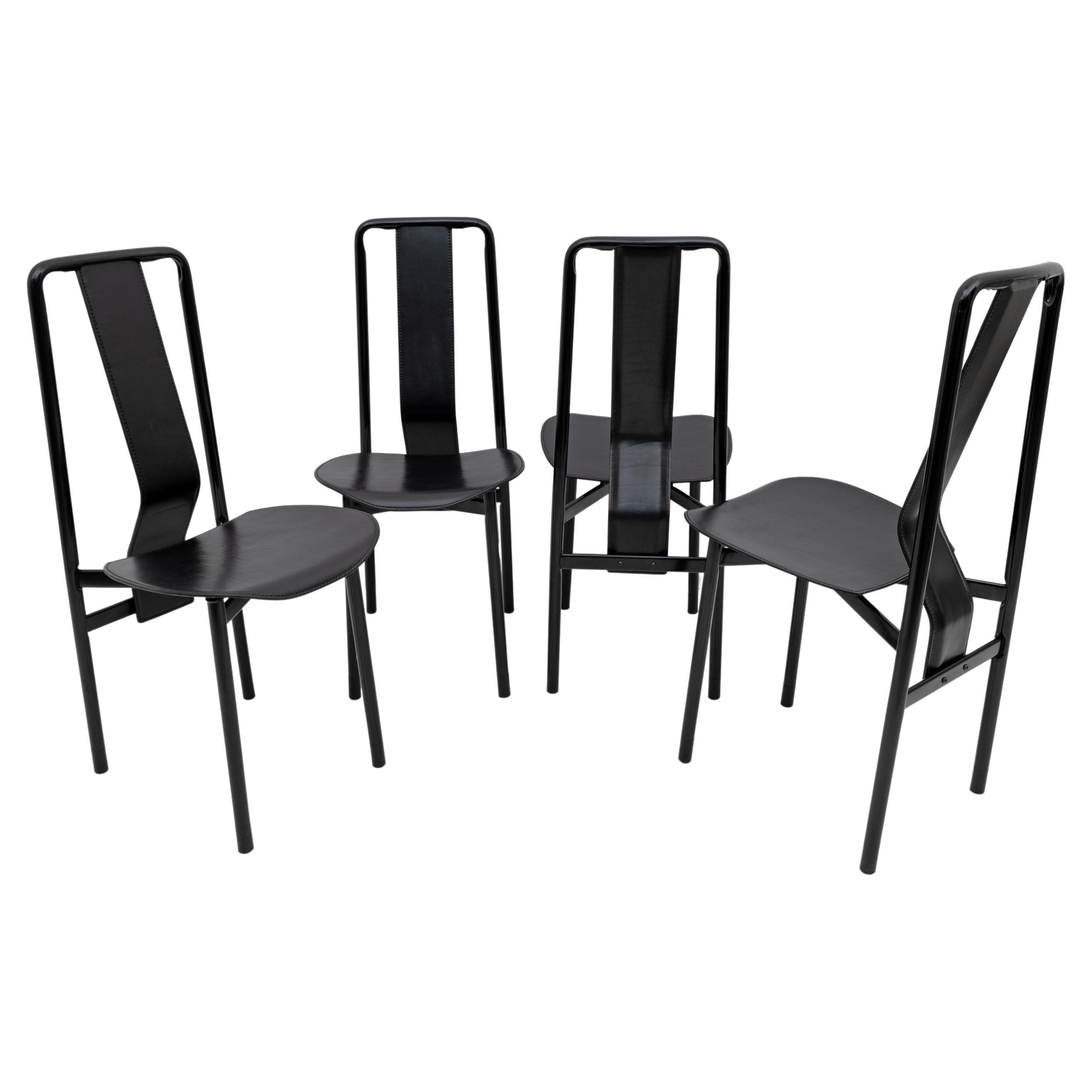
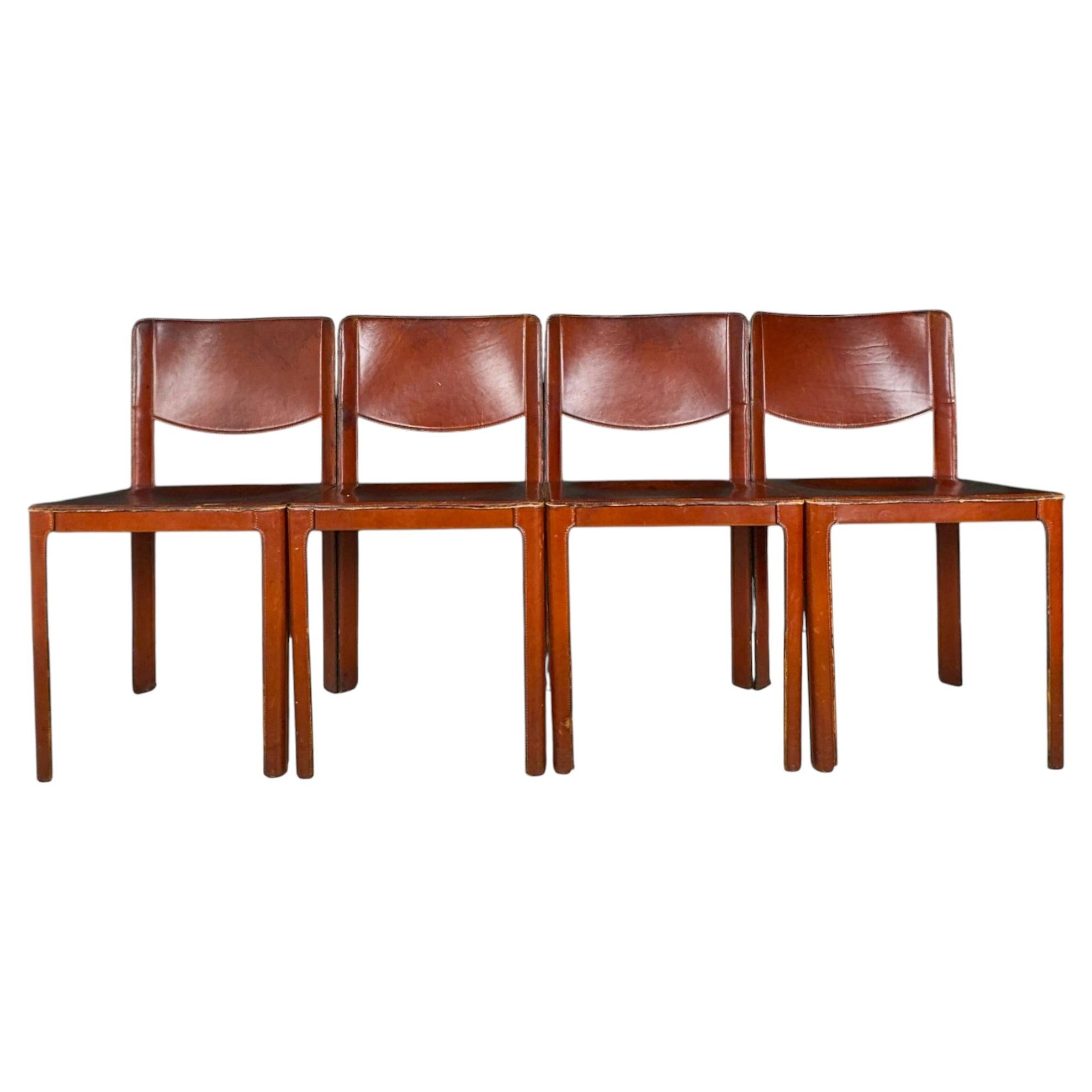
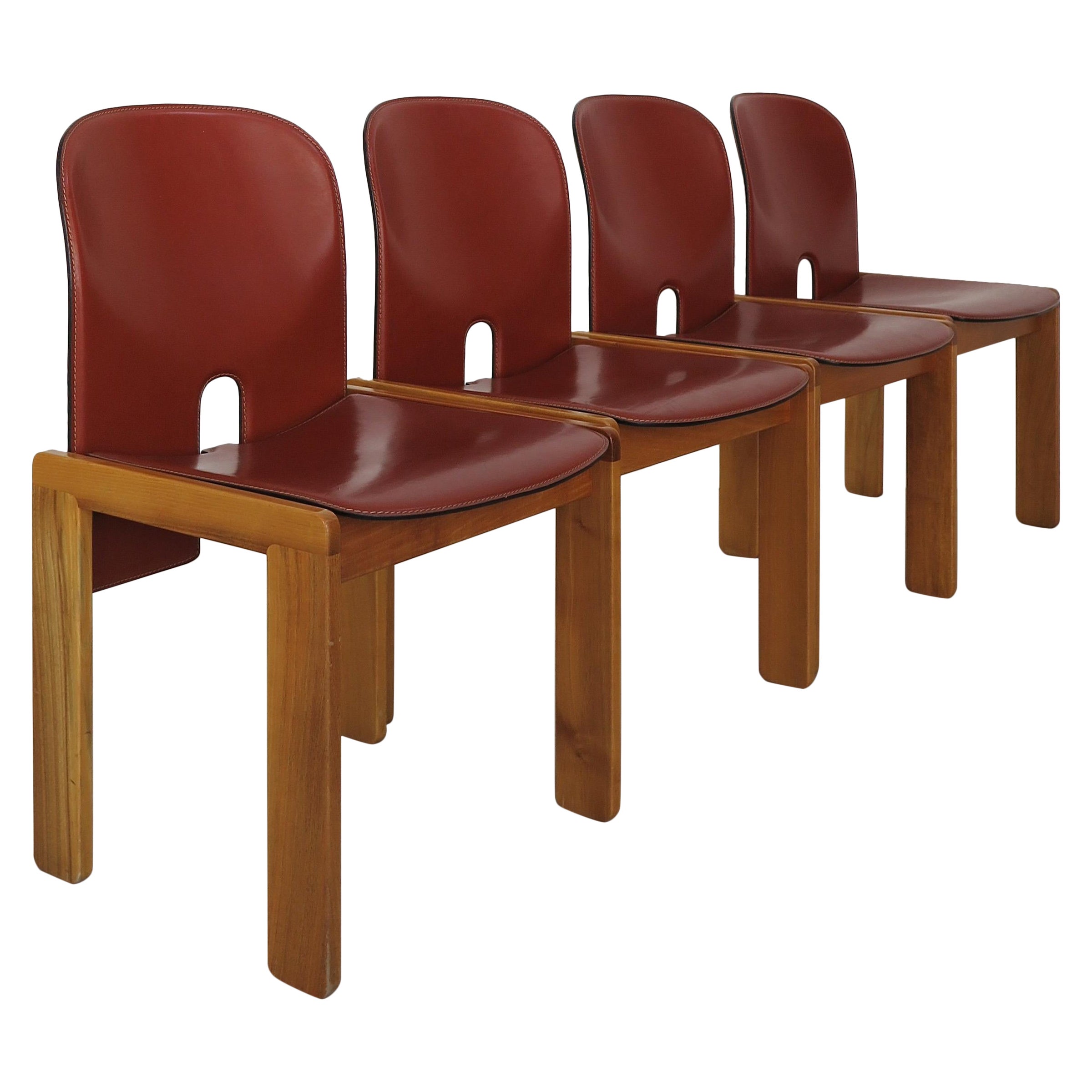
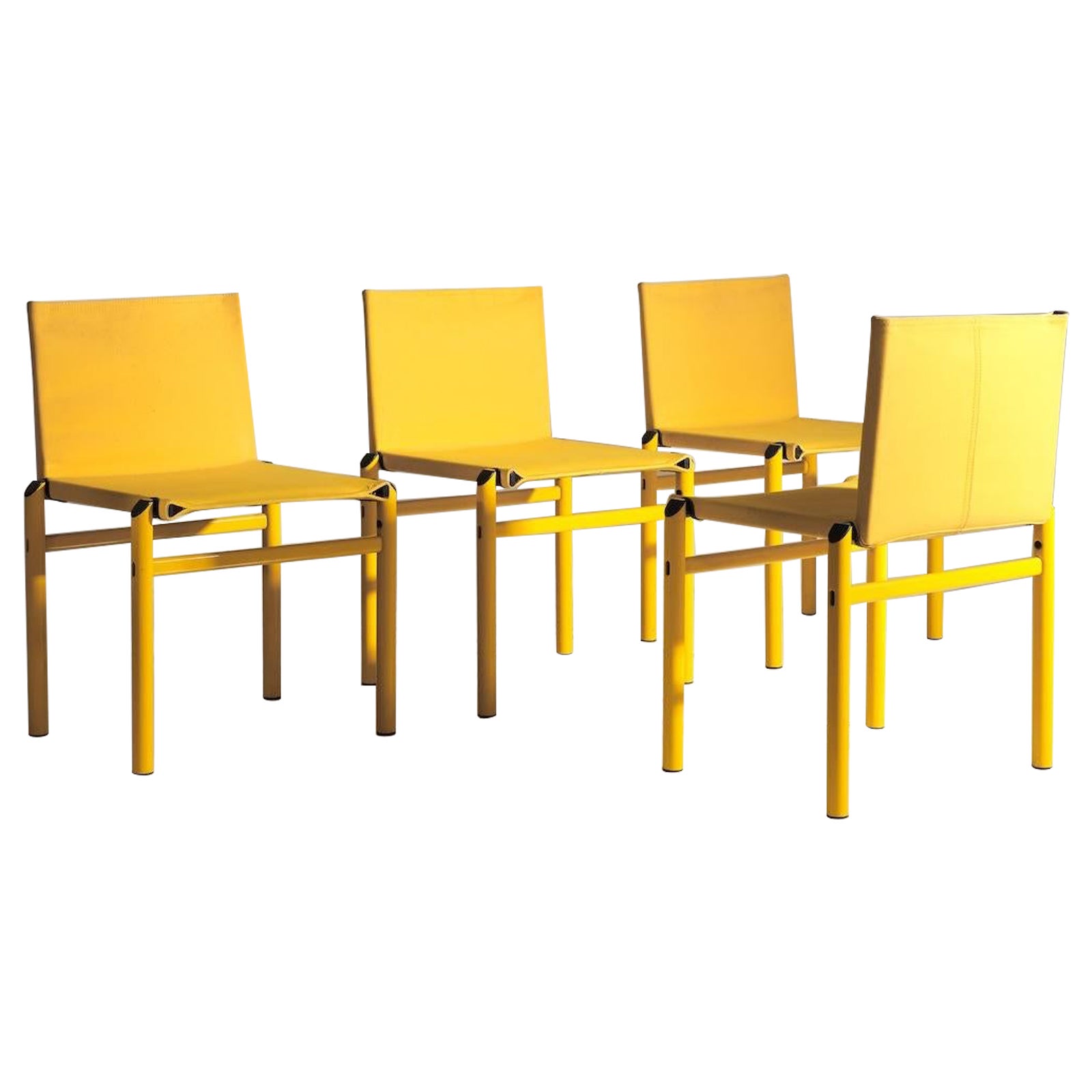
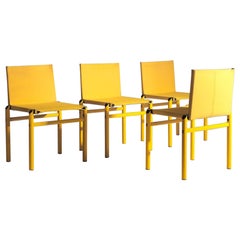
Afra & Tobia Scarpa, Four Mastro chairs
By Afra & Tobia Scarpa
Located in London, GB
c.1980s Iron legs, original yellow fabric W52 x H77 x D45 cm Seat height 44 cm
Category
Mid-20th Century Mid-Century Modern Dining Room Chairs
Materials
Iron
Carlo Scarpa was born in Venice in 1906 and became one of the leading figures of architecture and international design during the 20th century. At merely 21 years old — and still a student at the Academy of Fine Arts — Scarpa began working as a designer for master Murano glassmaker M.V.M. Cappellin. Within a few years, he completely revolutionized the approach to art glass.
In a short time, under the guidance of Scarpa, the Capellin furnace not only established itself as the top glass company, but above all it introduced modernity and international fame to Murano glassmaking. Scarpa created a personal style of glassmaking, a new vision that irreversibly changed glass production.
The young Scarpa experimented with new models and colors: his chromatic combinations, impeccable execution and geometric shapes became his modus operandi. Thanks to Scarpa’s continuous research on vitreous matter, Cappellin produced a series of high-quality glass objects, that saw the company revisiting ancient processing techniques such as the watermark and Phoenician decoration.
When he encountered the challenge of opaque glass, Scarpa proposed introducing textures of considerable chromatic impact, such as glass pastes and glazed glass with bright colors. Scarpa also collaborated in the renovation of Palazzo da Mula in Murano, the home of Cappellin. At the academy, he obtained the diploma of professor of architectural design and obtained an honorary degree from the Venice University Institute of Architecture of which he was director.
In 1931, Scarpa's collaboration with Cappellin ended, following the bankruptcy of the company because it was not able to withstand the economic crisis linked to the Great Depression. But Scarpa did not go unnoticed by Paolo Venini — in 1933, the young designer became the new artistic director of the biggest glass company in Murano.
Master glassmakers thought Scarpa's projects and sketches were impossible, but the passionate and curious designer always managed to get exactly what he wanted. Until 1947 he remained at the helm of Venini & Co., where he created some of the best known masterpieces of modern glassmaking. Scarpa’s work with Venini was characterized by the continuous research on the subject, the use of color and techniques that he revisited in a very personal way, and the development of new ways of working with master glassmakers.
At the beginning of the 1930s, "bubble", "half filigree" and "submerged" glass appeared for the first time on the occasion of the Venice Biennale of 1934. A few years later, at the Biennale and the VI Triennale of Milan, Venini exhibited its lattimi and murrine romane pieces, which were born from a joint idea between Scarpa and Paolo Venini.
In 1938 Scarpa increased production, diversifying the vases from "objects of use" to sculptural works of art. In the same year he laid the foundation for the famous "woven" glass collection, exhibited the following year. In the subsequent years, Scarpa–Venini continued to exhibit at the Biennale and in various other shows their the "black and red lacquers," the granulari and the incisi, produced in limited series, and the "Chinese," which was inspired by Asian porcelain.
Scarpa's creations for Venini garnered an international response and were a great success, leaving forever an indelible mark on the history of glassmaking. The last Biennale in which Carlo Scarpa participated as artistic director of Venini was in 1942. He left the company five years later.
The time that Scarpa spent in the most important glass factory in Murano would attach a great artistic legacy to the company. His techniques and styles were resumed in the postwar period under the guidance of Tobia Venini, Paolo's son. In the 1950s, after the departure of Scarpa, Fulvio Bianconi was the new visionary at the Biennials with Venini.
On 1stDibs, vintage Carlo Scarpa glass and lighting are for sale, including decorative objects, tables, chandeliers and more.
(Biography provided by Ophir Gallery Inc.)
Afra & Tobia Scarpa, Four Mastro chairs
By Afra & Tobia Scarpa
Located in London, GB
c.1980s Iron legs, original yellow fabric W52 x H77 x D45 cm Seat height 44 cm
Iron
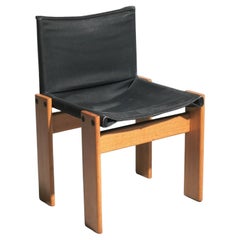
Afra and Tobia Scarpa for Molenti Set of Four Fabric 'Monk' chairs
By Molteni & C, Afra & Tobia Scarpa
Located in London, GB
Designed by Afra and Tobia Scarpa for Molteni in the 1970s, this set of four 'Monk' chairs is a timeless example of Italian modernist design. The chairs feature a solid oak frame wit...
Fabric, Oak
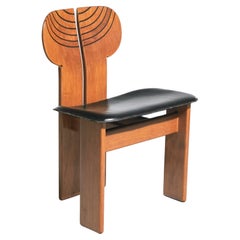
Afra and Tobia Scarpa 'Africa' Dining Chairs- four available
By Afra & Tobia Scarpa
Located in London, GB
Designed by Afra and Tobia Scarpa in 1975, these 'Africa' dining chairs is a masterpiece of Italian modernist design. The chairs feature a sculptural walnut frame with bold, angular...
Leather, Walnut
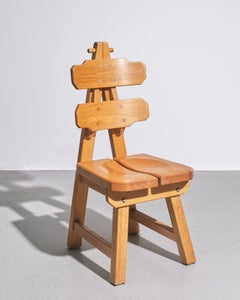
Set of Six Spanish Brutalist Dining Chairs c.1970s
Located in London, GB
This set of six Brutalist dining chairs was produced in Spain during the 1970s. Each chair features a robust solid oak frame, emphasizing the characteristic raw aesthetic of Brutalis...
Oak
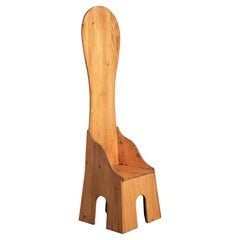
Italian Mario Ceroli Fratina Chair from the 1960s
By Mario Ceroli
Located in London, GB
A dramatic and sculptural ‘Fratina’ chair by Mario Ceroli, crafted in Italy in the 1960s. Made entirely from solid pine, the chair features bold, architectural lines and a towering b...
Pine
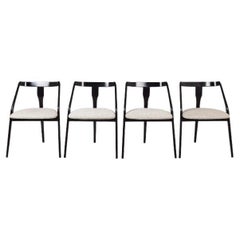
Mid-Century Set of 5 German Chairs in Wood with Black Frame
Located in London, GB
Mid-century design set of 5 German chairs, circa 1955. Wood, black frames, newly upholstered. Dimension: H 77 x W 55 x D 50 cm.
Wood
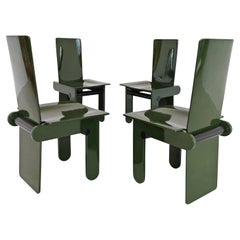
Set di sedie laccate verde inglese Carlo Scarpa per Gavina italia design anni 70
By Carlo Scarpa, Gavina
Located in Milano, Lombardia
Splendido set di 4 sedie scultoree disegnate nel 1974 da Carlo Scarpa per Gavina. Design futurista, forme geometriche e struttura insolita fanno di questa sedia un'icona del design i...
Wood, Bentwood
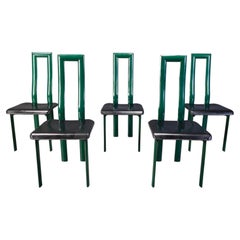
Italian Model Regia Dining Chairs by Antonello Mosca for Ycami, 1980s, Set of 6
By Ycami Collection
Located in Leuven, Vlaams Gewest
Italian Model Regia Dining Chairs by Antonello Mosca for Ycami. Green aluminum frames with black leather seats. Timeless post modern design. Good condition 1980s - Italy Dimens...
Metal
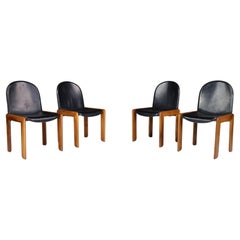
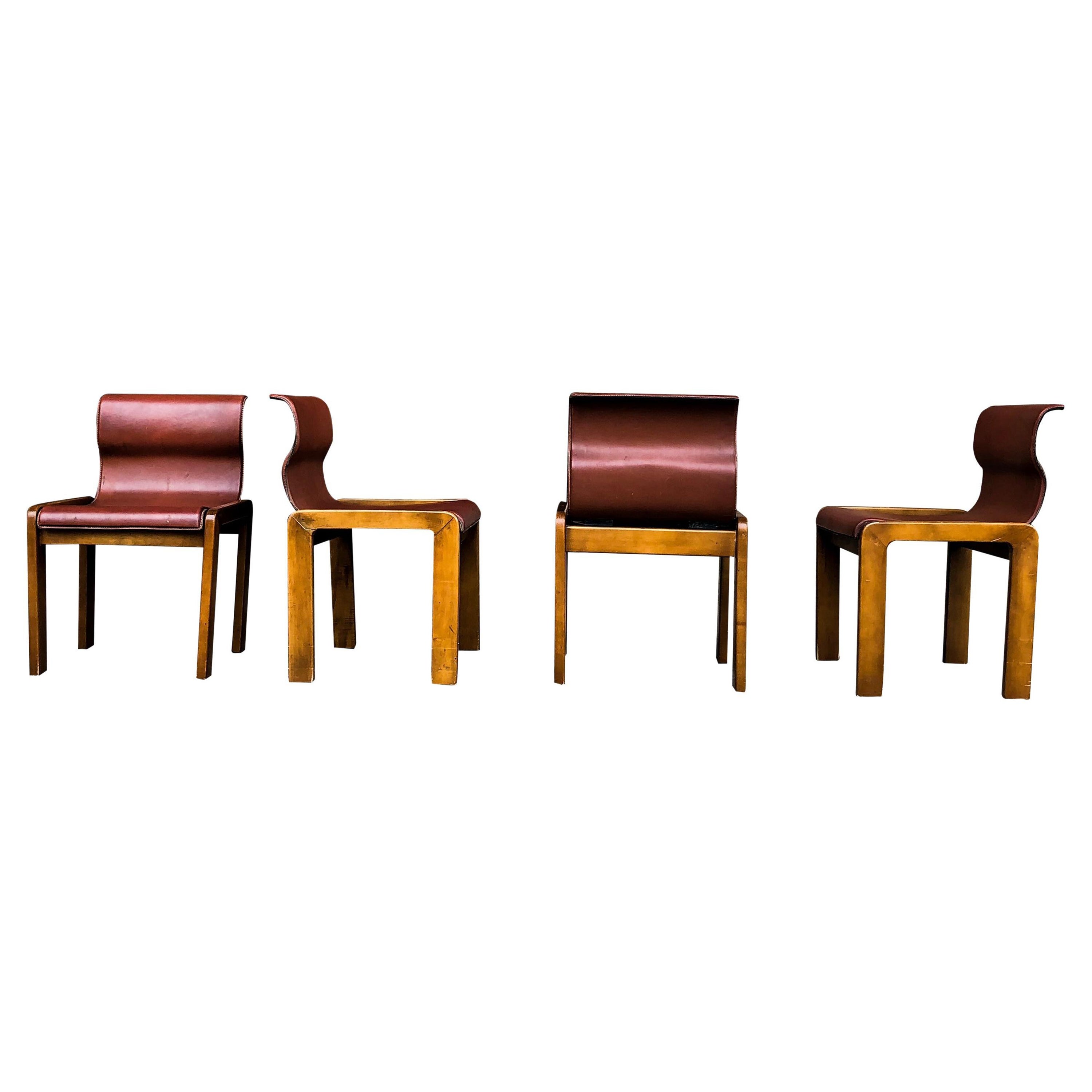
Set of Four Dining Chairs in the Manner of Tobia & Afra Scarpa, Italy, 1970
By Afra & Tobia Scarpa
Located in Almelo, NL
Set of Four Dining Chairs in the Manner of Tobia & Afra Scarpa, Italy, 1970s A beautifully crafted set of four dining chairs, designed in the refined and sculptural style associated...
Leather, Walnut
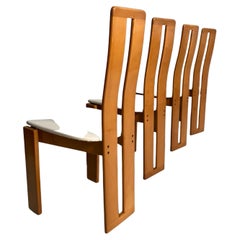
Set of four chairs by Mario Marenco, Mobil Girgi, Italy, 1970s
By Mario Marenco, Tobia Scarpa, Afra & Tobia Scarpa
Located in Argelato, BO
Set of four chairs by Mario Marenco, Mobil Girgi, Italy, 1970s Four 70s design solid wood chairs, made by the well-known Italian company Mobil Girgi The chairs have a solid beech wo...
Wood
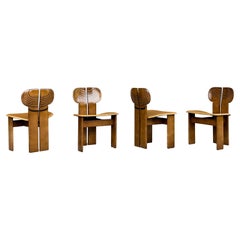
Afra and Tobia Scarpa Africa Dining Chair for Maxalto, 1976, Set of 4
By Maxalto, Afra & Tobia Scarpa
Located in Vicenza, IT
Set of four Africa dining chairs, designed by Afra and Tobia Scarpa and produced by the Italian manufacturer Maxalto in 1976. They feature a clear walnut briar structure and a cognac leather seat. Fully restored in Italy. The main protagonist of the Africa Maxalto...
Brass
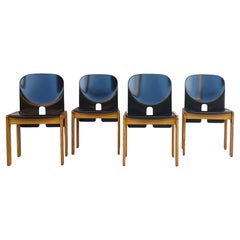
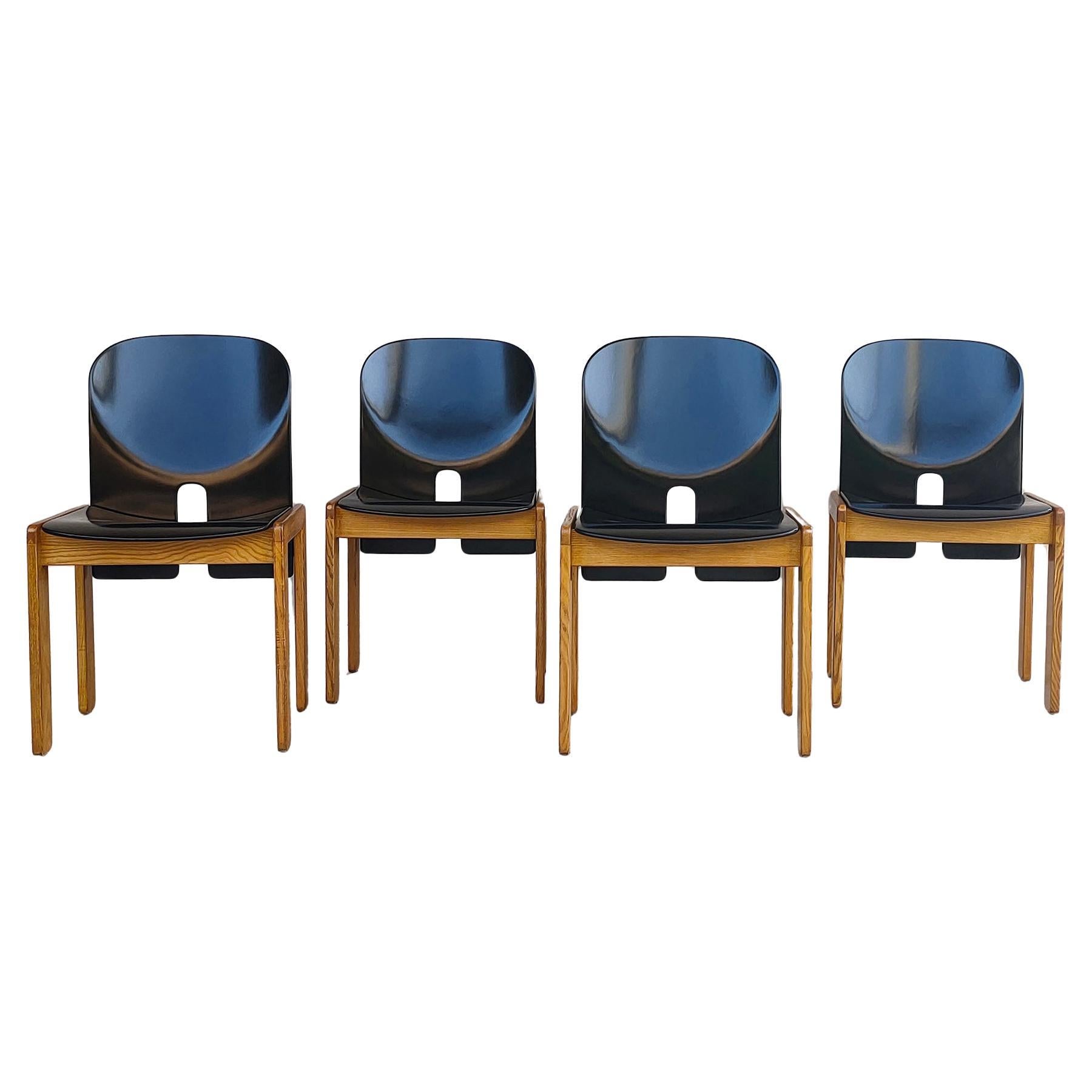
Afra & Tobia Scarpa Set of Four 121 Chairs by Cassina 1960s Italy
By Afra & Tobia Scarpa, Cassina
Located in Cascina, Pisa
From 1963 to 1966 the architects Afra and Tobia Scarpa collaborated with the Italian company Cassina, designing a series of furniture characterized by the use of solid wood, the stud...
Ash, Plywood