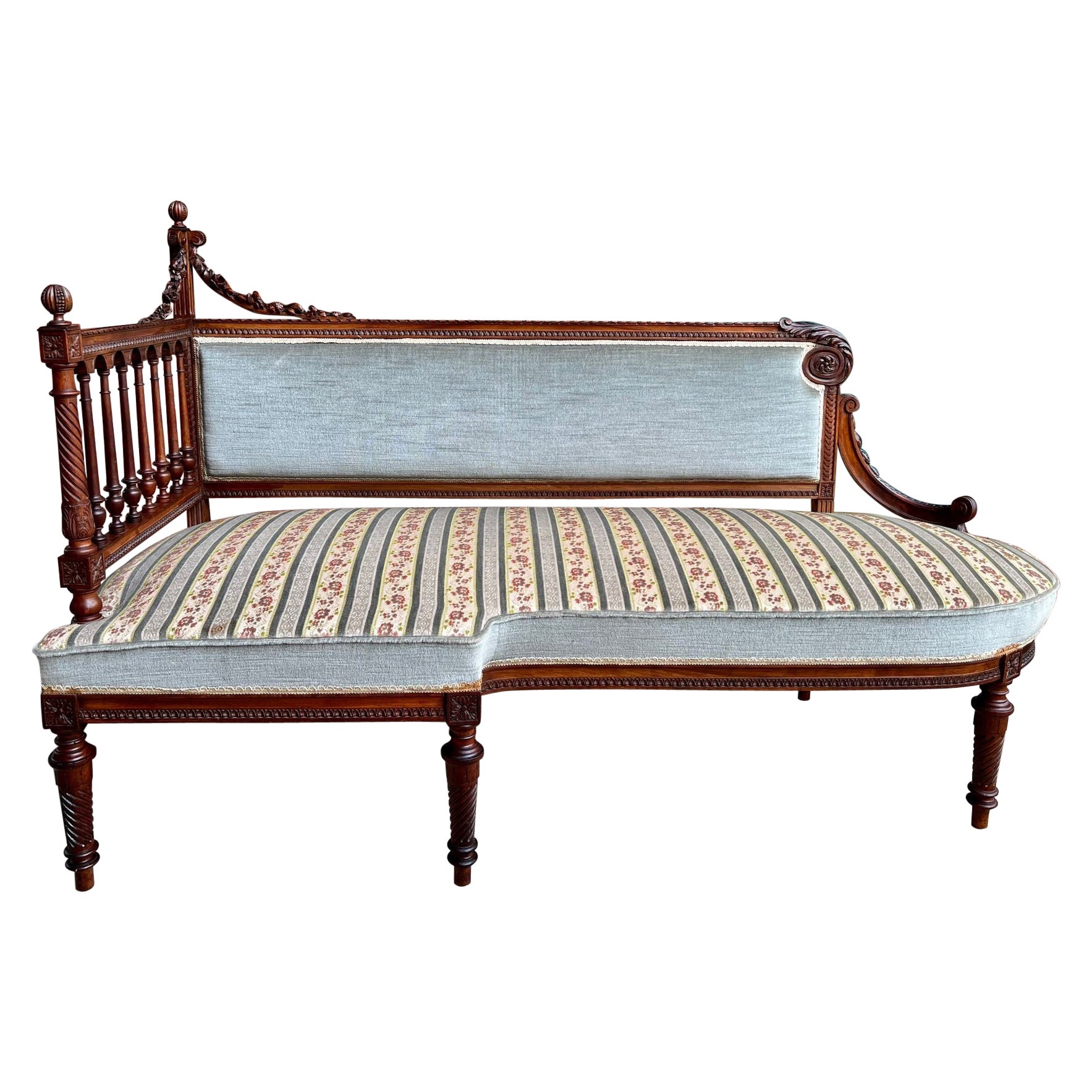
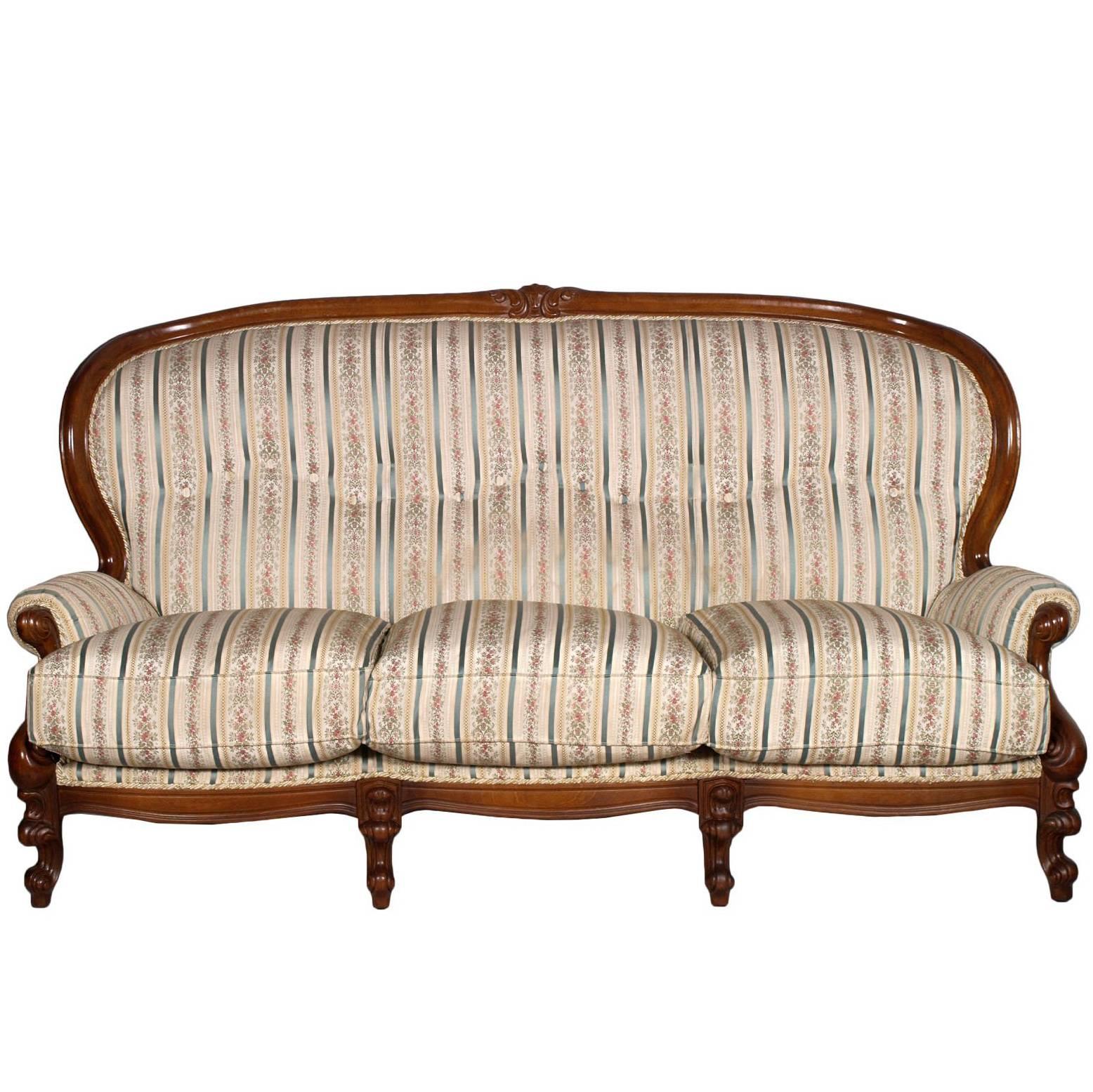
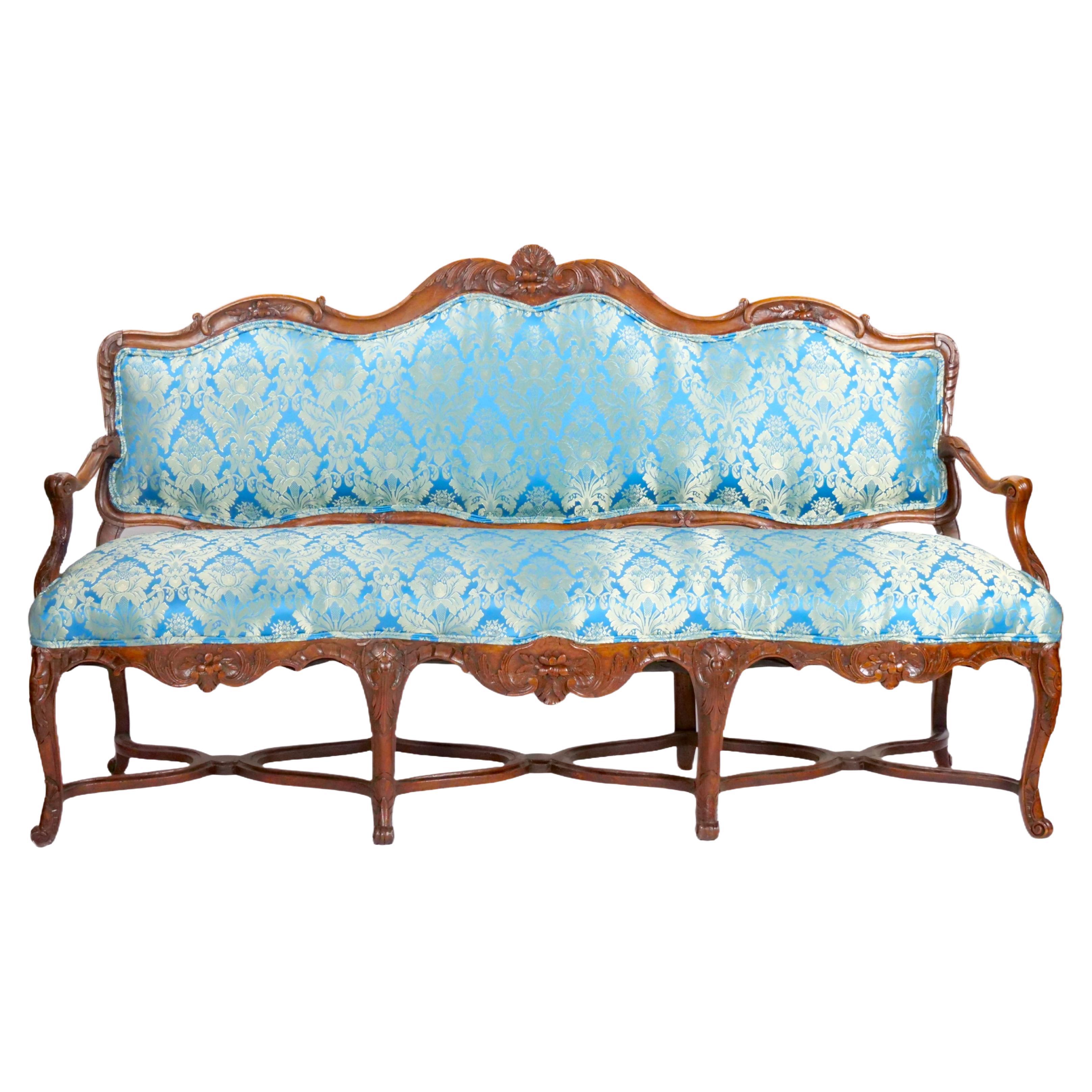
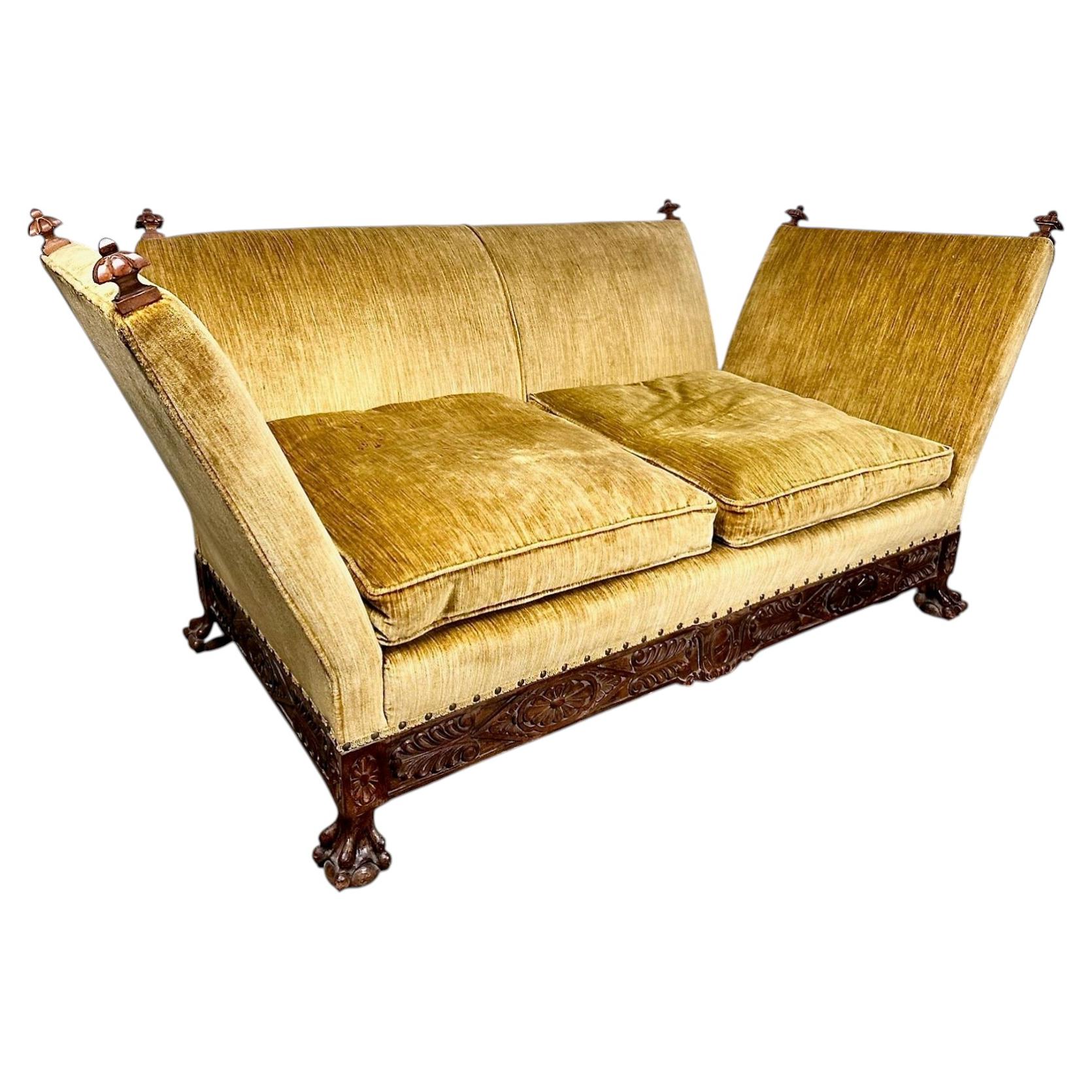
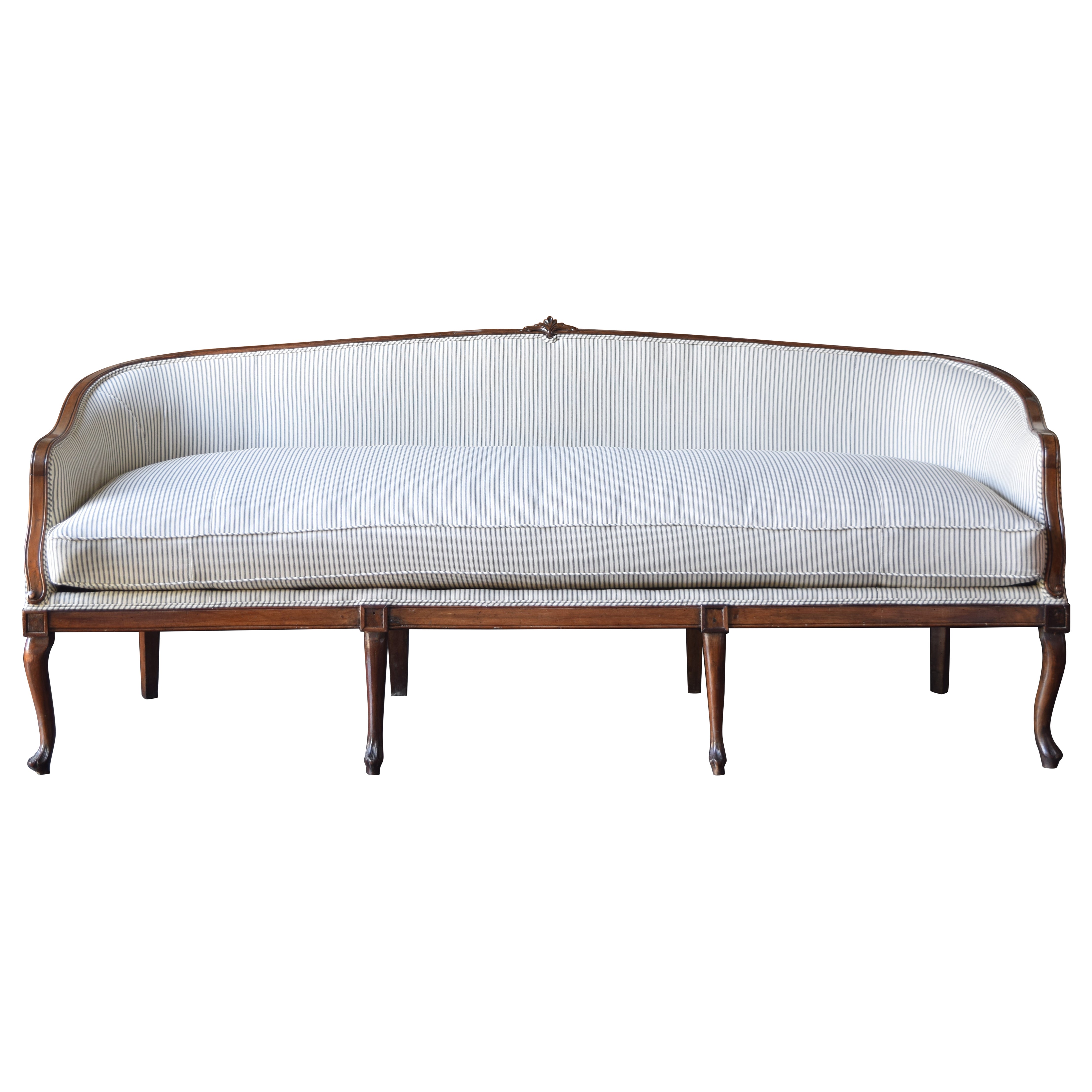
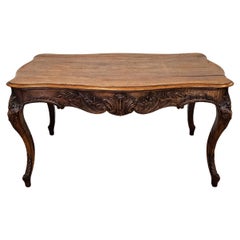
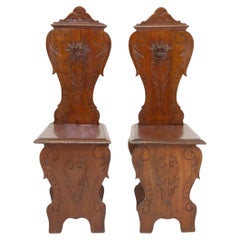
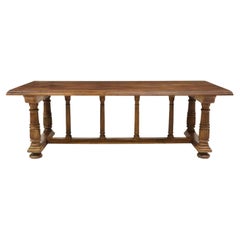
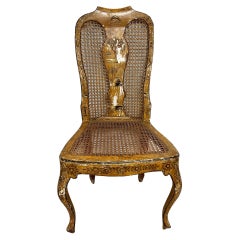
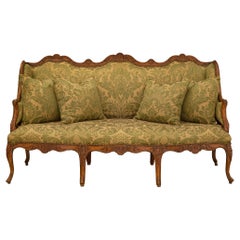
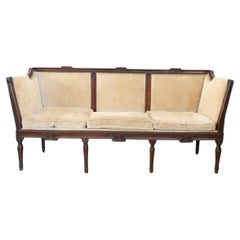
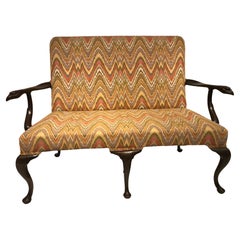
An exceptionally executed antique, circa 1880s, French Renaissance Revival figural settee / sofa.
Hand-crafted in Southern France in the late 19th century, featuring warm, rich, beautifully carved solid walnut frame, the arms terminating in finely detailed hand sculpted crouching atlas figure over winged cherub mask, rising on stretcher-joined legs, upholstered in later flame stitch fabric with nailhead trim.
Very comfortable, sturdy, and suitable for everyday use. With its clean lines, sculptural form, and distinctive flame stitch pattern upholstery, this remarkable example is sure to bring a touch of timeless elegant warmth, classic comfort, and refined sophistication to any space!
Dimensions: (approx)
37.5" High, 69.5" Wide, 34" Deep
Seat height: 17.5"
In European architectural sculpture, an atlas (also known as an atlant, or atlante or atlantid; plural atlantes) is a support sculpted in the form of a man, which may take the place of a column, a pier or a pilaster. The Roman term for such a sculptural support is telamon (plural telamones or telamons).
The term atlantes is the Greek plural of the name Atlas—the Titan who was forced to hold the sky on his shoulders for eternity.
The caryatid is the female precursor of this architectural form in Greece, a woman standing in the place of each column or pillar.
Atlantes express extreme effort in their function, heads bent forward to support the weight of the structure above them across their shoulders, forearms often lifted to provide additional support, providing an architectural motif. Atlantes and caryatids were noted by the Roman late Republican architect Vitruvius, whose description of the structures, rather than surviving examples, transmitted the idea of atlantes to the Renaissance architectural vocabulary.
---
Great condition overall. Presents well. Strong, sturdy, stable, and structurally sound. May have minor age appropriate wear.
Delivered cleaned, waxed, polished hand rubbed French patina finish, ready for immediate use and generational enjoyment!