Want more images or videos?
Request additional images or videos from the seller
1 of 10

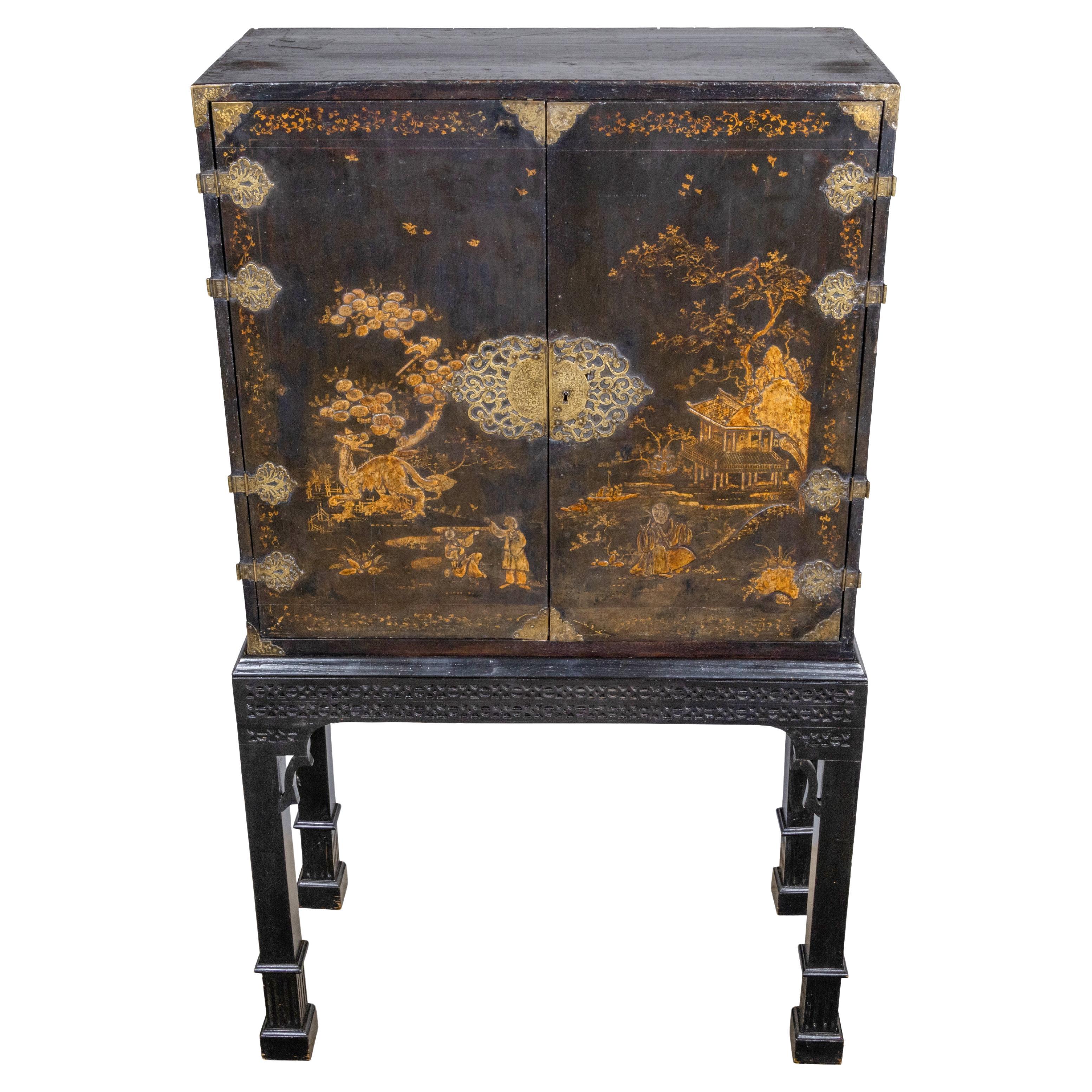
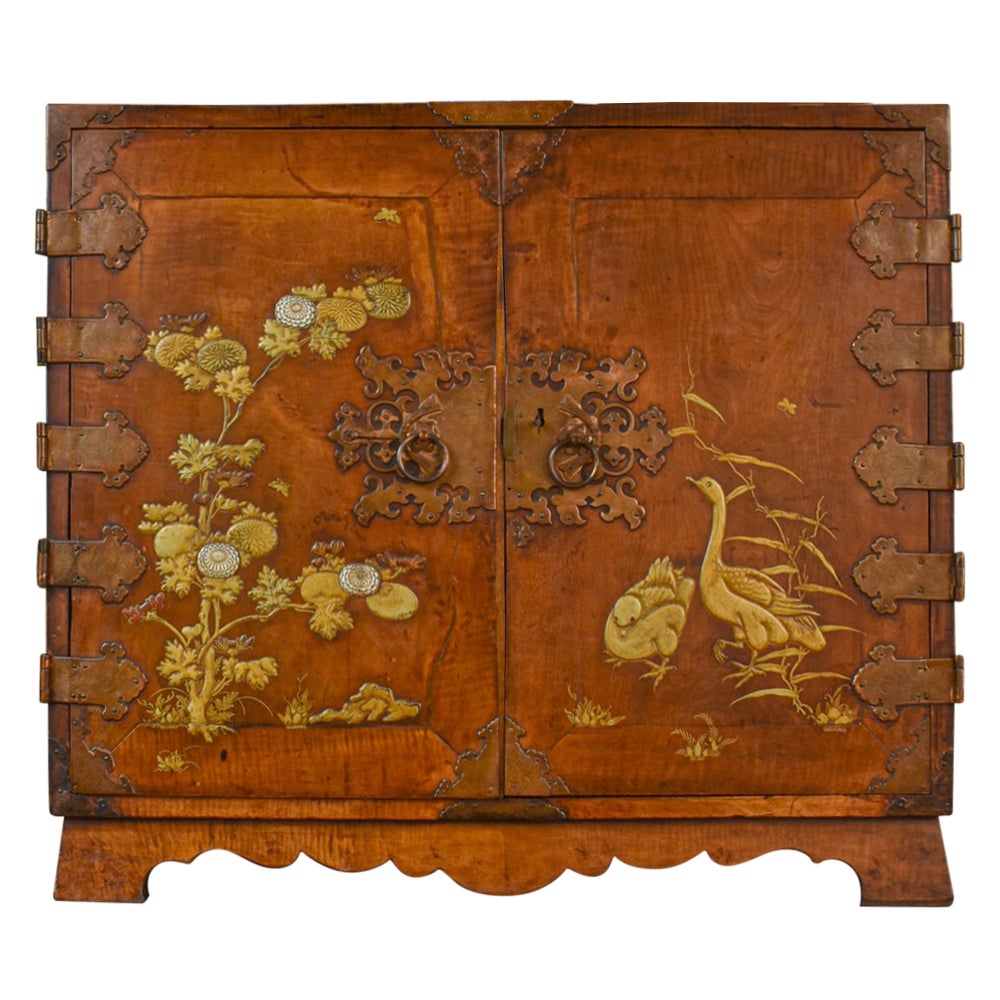
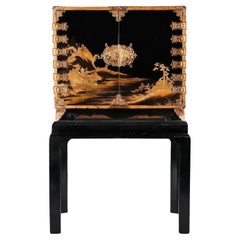
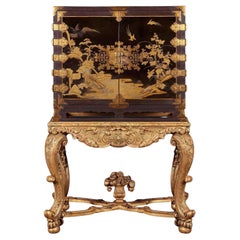
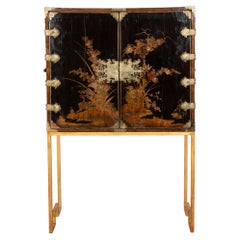
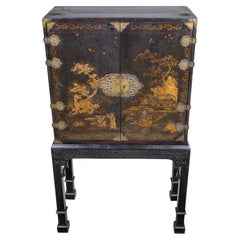
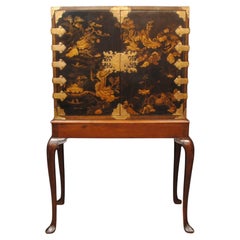
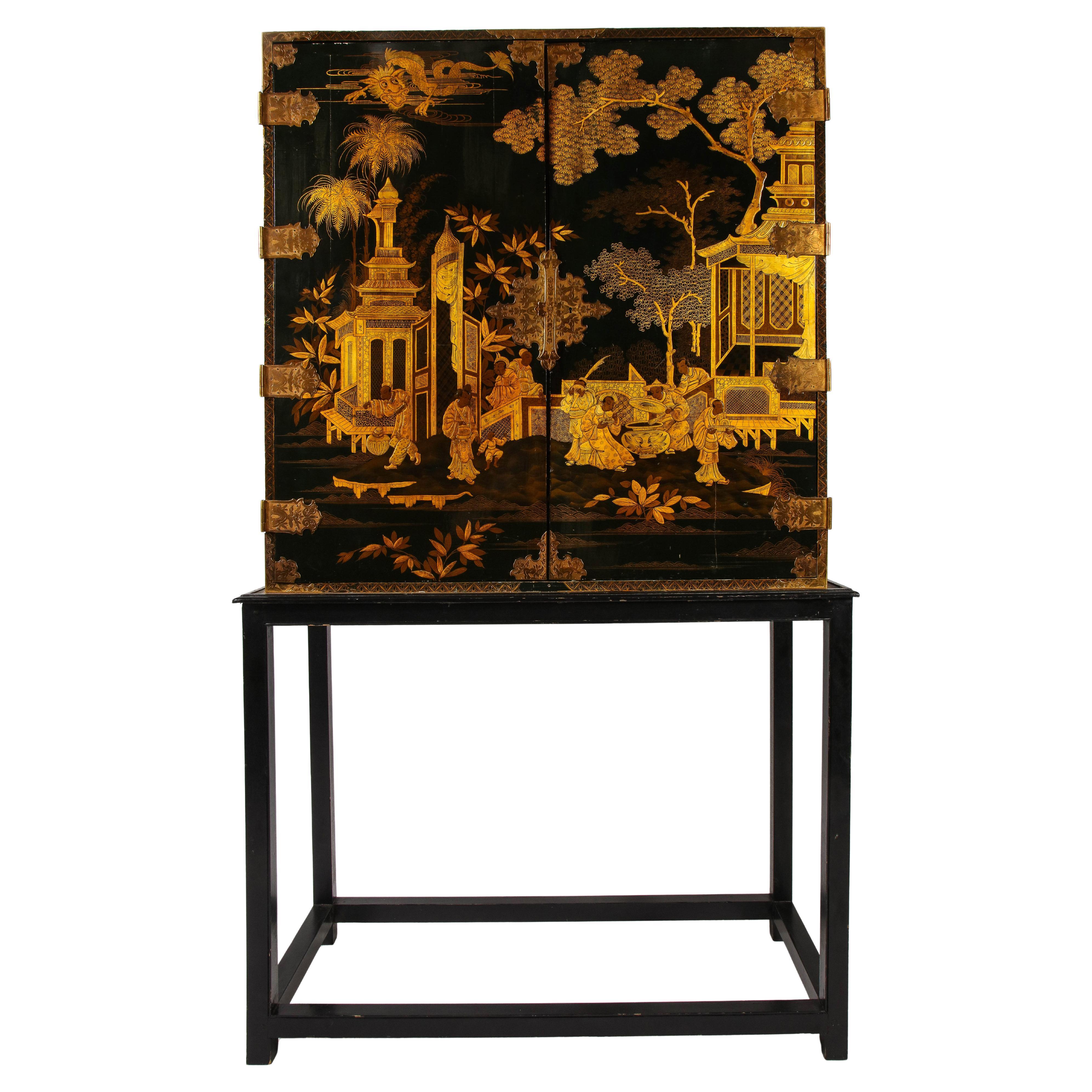
Early 18th century Japanese Lacquer Cabinet on Stand

$23,856.47
£17,482.81
€24,200VAT Included
CA$32,842.48
A$33,407.74
CHF 19,076.30
MX$404,085.01
NOK 222,439.67
SEK 225,847.87
DKK 152,504.95

About the Item

Rectangular cabinet has nine drawers inside. Hinges, corner mounts and lock plates in gilt brass. Decorated with river landscapes, insects, birds and animals in pairs. The stand is in later European style. Patina consistent with age and use, cracks, lacquer missing in some places. Worn but in pleasant condition The fashion for oriental lacquer during the baroque period led to a production of japanned furniture in Northen Europe and England.
  • Dimensions:
    Height: 61.03 in (155 cm)Width: 42.52 in (108 cm)Depth: 21.66 in (55 cm)
  • Style:
    George III (Of the Period)
  • Materials and Techniques:
  • Place of Origin:
  • Period:
  • Date of Manufacture:
    circa 1750
  • Condition:
    Wear consistent with age and use.
  • Seller Location:
    Rīga, LV
  • Reference Number:
    1stDibs: LU10440244981332

More From This Seller

View All
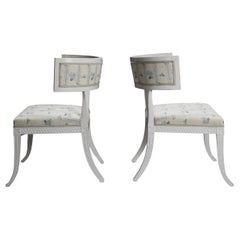
Late 19th Century Swedish Gustavian Klismos Chairs

Late 19th Century Swedish Gustavian Klismos Chairs

By Erik Öhrmark

Located in Rīga, LV

An elegant pair of 19th Century Gustavian Klismos chairs are very comfortable and have wonderful proportion. The chairs have robust frame and s...

Category

Antique Early 19th Century Swedish Gustavian Lounge Chairs

Materials

Fabric, Wood

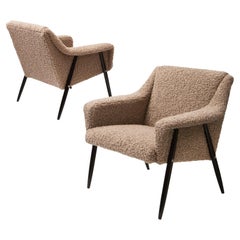
Mid-Century Lounge Chairs in faux Sheepskin

Mid-Century Lounge Chairs in faux Sheepskin

Located in Rīga, LV

Fully restored Mid-Century Armchairs: new upholstery in faux sheepskin, legs are refinished and repainted

Category

Mid-20th Century Mid-Century Modern Armchairs

Materials

Fabric, Wood

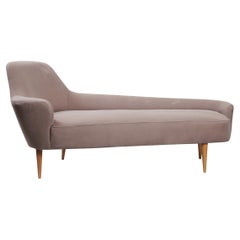
Singoalla Chaise Lounge

Singoalla Chaise Lounge

By IKEA

Located in Rīga, LV

Upholstery of this compact and comfortable chaise lounge is in beautiful pale rose color (probably cotton) and has some minor stains Literature: Svenska Möbler, Andreas Siesing.

Category

Mid-20th Century Swedish Mid-Century Modern Chaise Longues

Materials

Fabric, Wood

Mid-Century Modern Brass Vase by Pierre Forsell for Skultuna

Mid-Century Modern Brass Vase by Pierre Forsell for Skultuna

By Skultuna, Pierre Forsell

Located in Rīga, LV

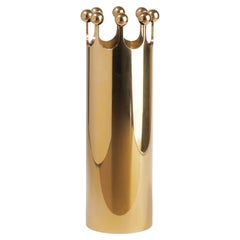
Solid crown vase of brass by Pierre Forsell for Skultuna The item has maker's mark - see the pictures

Category

Vintage 1960s Swedish Scandinavian Modern Vases

Materials

Brass

Farmor Lounge Chair by Carl Malmsten for O.H. Sjogren

Farmor Lounge Chair by Carl Malmsten for O.H. Sjogren

By Carl Malmsten, O.H. Sjögren

Located in Rīga, LV

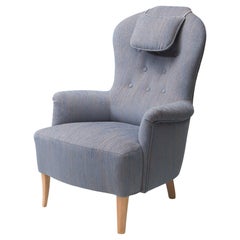
Fully restored “Farmor” Armchairs by Carl Malmsten for O.H. Sjögren: new upholstery in Zimmer+Rohde fabric, wood legs are refinished, new lacquer. The head pillow is new (made by ori...

Category

20th Century Swedish Mid-Century Modern Armchairs

Materials

Fabric, Wood

PK-31 (PK31) Armchairs by Poul Kjærholm for E. Kold Christensen

PK-31 (PK31) Armchairs by Poul Kjærholm for E. Kold Christensen

By Poul Kjærholm, E. Kold Christensen

Located in Rīga, LV

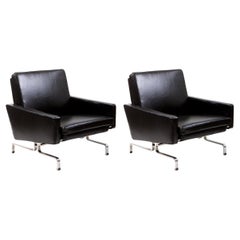
Pair of Poul Kjærholm PK-31 (PK31) lounge chairs are fully restored: new black leather upholstery, metal frames details are refinished. One under seat metal bar has maker's mark, the...

Category

Mid-20th Century Danish Mid-Century Modern Armchairs

Materials

Steel

You May Also Like

An Important Late 17th Century Japanese Lacquered Cabinet Edo Period on Stand

An Important Late 17th Century Japanese Lacquered Cabinet Edo Period on Stand

Located in Benington, Herts

An extremely fine, elegant and rare late 17th Century Japanese lacquer cabinet, from the Eco period, on later lacquered black stand. Japanese circa 1690 Provenance A private Scottish collection This outstanding cabinet is a fascinating fusion of east and west. The cabinet itself would have been made in Japan, c.1690, and is decorated to the outside with hiramaki-e lacquer. This technique involves the use of sprinkled gold powder which adheres to the lacquer surface. On the best pieces, as with this example, many layers are added in order to create areas of high relief and give depth to the surface decoration. The taste of the Japanese workshops in this period was often for quite restrained pieces with plenty of the black background visible, unlike some of the busier Chinese lacquer or European japanned examples produced around the same time. The Japanese makers seemed content to rely on the outstanding quality of the lacquer itself, regarded by most experts as the finest lacquer ever produced, and did not see the need to cover every surface believing that less was more in this respect. The lacquer here is used to produce a mountainous scene with buildings on the bank of a river, the other side of the river with more buildings and a contrasting flatter and forested landscape. The fine perspective achieved is the result of the clever use of raised and flatter areas in the lacquer itself in combination with the drawing of the design itself. Another remarkable aspect of this piece is the fine metalware throughout, but particularly the lockplate / hasp, hinges and foot mounts to the front. This is all beautifully cast and engraved contrasting against the black background. Interestingly another cabinet on stand with near identical metalwork was advertised in the Burlington Magazine, November 1913, with the dealer W. Williamson and Sons of Guildford. The lacquer on that piece is similarly refined and it seems likely that both pieces came from the same workshop. The European influence in our piece can be seen in both the later ebonised stand and in the japanned decoration which has been applied to the inside of the doors and is also very fine indeed. This consists of two panels with birds of prey perched on branches in colours set against a golden background. The cabinet has a recent Scottish provenance and so it is likely that the ebonised stand was made in Britain though such pieces were made throughout Europe as a way of quite literally elevating these imported pieces of eastern lacquer as in Japan these would have been used on the floor. Inside the cabinet there is a combination of more Japanese lacquer and lock plates and European drawer handles. Most of the lacquer drawer fronts incorporate mountainous scenes and birds in combination, with a few purely one or the other of the two subjects. Again the lacquer is in excellent condition and is of exceptional quality with multiple layers of relief used in one single scene in many cases. As mentioned above, Japanese lacquer is the most technically brilliant of the eastern lacquers and, as such, was highly prized by collectors and connoisseurs throughout Europe when this piece was made. The acquisition of such pieces would only have been possible for a small group of incredibly wealthy individuals, largely royal or high ranking courtiers or merchants connected with the East India trade...

Category

Antique 1690s Japanese Edo Cabinets
Materials

Lacquer

17th Century Japanese Lacquer Cabinet On French Giltwood Regence Stand

17th Century Japanese Lacquer Cabinet On French Giltwood Regence Stand

Located in Benington, Herts

An Extremely Fine and Very Important 17th Century Japanese Lacquer Cabinet on French Giltwood Stand of Regence Period circa 1680-1690 Provenance Likely acquired by Herman Willem ...

Category

Antique 17th Century Japanese Edo Cabinets
Materials

Giltwood, Lacquer

Late 17th Century Charles II Chinoiserie Lacquered Cabinet

Late 17th Century Charles II Chinoiserie Lacquered Cabinet

Located in Gloucestershire, GB

Late 17th Century Charles II Chinoiserie lacquered cabinet. With beautifully lacquered drawers inside. Circa 1680.

Category

Antique 17th Century English Cabinets

Materials

Lacquer

English 18th Century Chinoiserie Japanned Cabinet on 19th Century Stand

English 18th Century Chinoiserie Japanned Cabinet on 19th Century Stand

Located in Atlanta, GA

An English 18th century chinoiserie lacquer cabinet, raised on a later 19th century black lacquer stand in the Chinese taste. The cabinet retains its original form with twin doors op...

Category

Antique 18th Century English Chinoiserie Cabinets

Materials

Brass

18th Century Queen Anne Lacquer cabinet on stand.

18th Century Queen Anne Lacquer cabinet on stand.

Located in Brighton, Sussex

A beautifully decorated Queen Anne period lacquer cabinet on stand. Having pierced, fretted brass hinges and lock plates. Chinoiserie scenes to the doors, opening to reveal ten fitte...

Category

Antique 18th Century English Cabinets

Materials

Lacquer