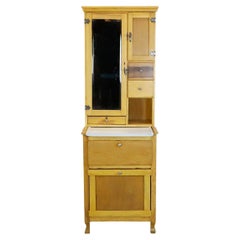
Early 1900's Kitchen Cabinet
Located in Mexico City, CDMX
Circa 1920. We offer this Kitchen Cabinet, made in maple wood. Recently restored.
Category
Vintage 1920s Mexican Industrial Cabinets
Materials
Maple
Early 1900's Kitchen Cabinet
Located in Mexico City, CDMX
Circa 1920. We offer this Kitchen Cabinet, made in maple wood. Recently restored.
Maple
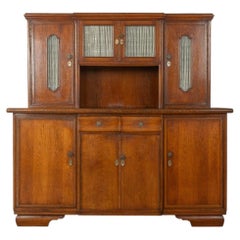
1920s Art déco kitchen cabinet
Located in Neuss, NW
Wonderful two-part kitchen cabinet from the 1920s. High-quality corpus made of plywood with walnut veneer featuring four doors, four glass doors, two solid wood drawers, four shelves...
Wood
$3,198
H 54.73 in W 45.28 in D 27.96 in
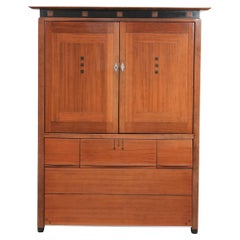
Art Deco design cabinet / audio / TV furniture with beautiful details
Located in Harderwijk, NL
This beautiful Art Deco design cabinet by Schuitema from the Decoforma series is in good condition with normal signs of use. Schuitema is known for their quality and unique designs. ...
Wood
$4,900Sale Price|50% Off
H 75 in W 30.5 in D 19.625 in
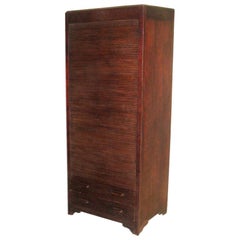
French Art Deco Mahogany Roll Top Cabinet / Storage / Armoire , 1930
Located in New York, NY
A rare French Art Deco Colonial roll top / armoire / cupboard / storage / linen press / bookcase with three internal shelves and one lower storage drawer. The piece shows the influen...
Mahogany
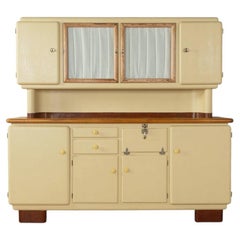
1920s Art Déco kitchen cabinet, Vintage
Located in Neuss, NW
Wonderful two-piece Art Deco kitchen cabinet from the 1920s. High-quality corpus made of plywood with six cabinet doors, two glass doors, two shelves, two drawers, four large and three small glass dispensers...
Glass, Plywood
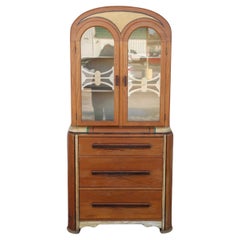
Sellers Art Deco Kitchen Cabinet
Located in Pasadena, TX
This is one beautiful kitchen cabinet! Sellers Furniture constructed this cabinet of walnut with brass accents, pinstripes and decals. It has 3 drawers for below for storage, as well...
Wood
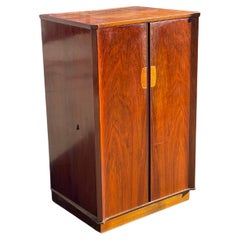
Beautiful Art Deco Cabinet from 1930s
Located in Copenhagen, DK
Introducing a piece of history - an Art Deco cabinet from the 1930's that has been repurposed as a bar/fridge, but with endless possibilities for customization. This unique piece of ...
Mahogany
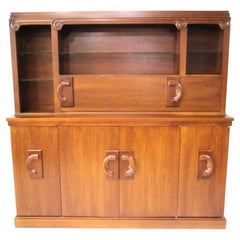
Early Mid-Century Art Deco Regency Styled 2 pc. Large Bar Cabinet
By Art Decor
Located in Cincinnati, OH
An exceptionally well-crafted walnut toned two-piece bar cabinet with pull down center door exposing a copper topped platform for serving and mixing. The upper piece with elegant car...
Copper
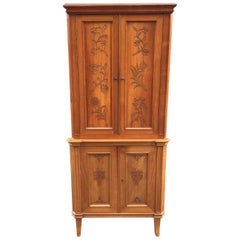
Art Deco Cherrywood Corner Cabinet, circa 1940
Located in Saint-Ouen, FR
Art Deco cherrywood corner cabinet, circa 1940.
Cherry
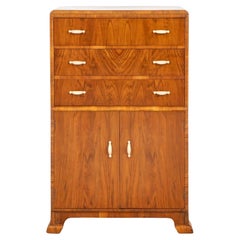
Art Deco Compactum, Vintage 1930s Cabinet Chest
Located in Potters Bar, GB
Art Deco ladies walnut Compactum. Standing on typical art deco feet. circa 1930 The lower section having 2 opening doors which offer generous cupboard storage space. The mahogany lined drawers above having typical art deco timbers. This piece retains its original art deco handles...
Walnut
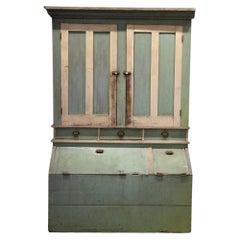
Early 19th Century American Country Mercantile Cabinet
Located in Forney, TX
Patina Perfection!! A rare, likely one-of-a-kind monumental sized antique Pennsylvania general store cupboard / mercantile cabinet. Born in PA in...
Metal
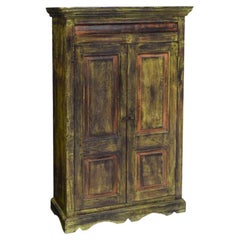
19th Century Dutch Colonial Polychrome Teak Cabinet
Located in Forney, TX
This Dutch Colonial kitchen cabinet is from the 19th century, and has a corniced top, over two-door cabinet, with iron hardware, shelves to interior, ...
Teak, Paint
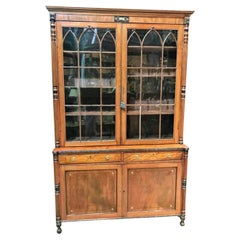
19th Century English Sheraton Bookcase Cabinet
Located in Forney, TX
Elegant sophistication at its finest, an outstanding, very fine quality, monumental sized, early 19th century English Sheraton two piece bookcase cabinet. The exquisitely handcrafted...
Bronze, Ormolu
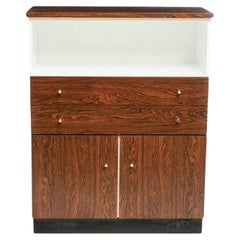
Mid-Century Deco Modern Formica Rosewood Cabinet
Located in Forney, TX
An impressive, very good quality mid-century cabinet, Art Deco Moderne taste, finished in stunning rosewood with white formica. Two cupboard doors open to spacious interior fitted wi...
Formica, Rosewood
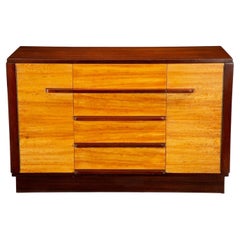
Art Deco Wolfgang Hoffmann Romweber World's Fair Century of Progress Sideboard
By Romweber Furniture Co., Wolfgang Hoffmann
Located in Forney, TX
A rare and important American Art Deco Century of Progress Sideboard by iconic designer Wolfgang Hoffmann (Austrian, 1900-1969) for Romweber Company, Batesville, Indiana. circa 1933-1936 Created for the 1933 Chicago World's Fair, fine quality craftsmanship and construction, having a rectangular exotic rosewood veneered top over conforming solid wood case fitted with four drawers affixed with horizontal pulls, the top drawer opening to reveal felt lined divided interior for silverware, flanked by cabinet doors opening to shelved interior, subtle geometric lines add interest. Rosewood, mahogany, richly figured blonde - golden birch or primavera. Signed, top drawer interior, featuring 1933 World's Fair mark impressed. **Please note, at the time of writing this, a matching display case - vitrine cabinet (shown in last photo) is currently available separately** Provenance / Acquisition: Property from the important and iconic Collection of Mr. James I. Rafftesaeth Jr., Dallas, Texas Acquired from highly reputable auction house, Heritage Auctions, Dallas, Texas. 2022 Design Signature Auction catalog #8091 History: Wolfgang Hoffmann was born in Vienna, Austria in 1900. He is the son of famous architect, pedagogue and Wiener Werkstatte cofounder, Joseph Hoffmann (1870-1956). Early on, following his father’s s interests, he was trained in the decorative arts and design. Wolfgang Hoffmann once reminisced, “I spent eight years at the Realschule, then three years went to a special architectural school, where I perfected my technical knowledge of architecture and general construction. From this school, I was graduated to the Kunstgewerbeschule [Studying under Oskar Strnad and Josef Frank in Vienna]. After finishing this school, I had one and a half years of practical in a well known architect’s office. Thereafter I worked in my Father’s office for two years”. Hoffmann met his future wife, Polish immigrant Pola (1902-1984) when they were both studying at the Kunstgewerbeschule. Joseph Urban (1872-1933) was needing an assistant for his architectural business in New York and contacted his friend and colleague, Joseph Hoffmann in Vienna. Hoffmann recommended his son Wolfgang. Urban hired him and sent a first class passage ticket to Vienna for Wolfgang to travel to New York. Wolfgang married Pola and traded his ticket for two tickets to America in steerage, arriving in New York City in December of 1925. Leaving the Urban office after nine months, Wolfgang and Pola formed an independent design practice with offices on Madison Avenue in Manhattan with the purpose of creating contemporary interiors and industrial designs. Early work included theaters, stores, and apartments mostly in New York City. During the late 1920’s and early 1930’s the Hoffmanns designed custom furniture for private clients. Some of these examples were shown in the February 1929 issue of House and Garden. Curiously, the examples’ design was attributed to Urban and the production to Pola Hoffmann, Inc. Established in the fall of 1928, the American Designers’ Gallery was “devoted exclusively to showing objects and interiors for practical use… by fourteen American architects and designers”. Its members included the Hoffmans and Urban as well as ceramist Henry Varnum Poor (1888-1971), architect Raymond Hood (1881-1934), artist designer Winold Reiss (1886-1953), graphic designer Lucien Bernhard (1896-1981), decorator Donald Deskey (1894-1989), and architect Ely Jacques Kahn (1884-1972). The Hoffmanns’ work was included in the American Designers’ Gallery’s two showcase events, its 1928 and 1929 exhibitions. Their dining alcove at the 1929 event featured a bench with a dinette table and two chairs in American walnut designed by Wolfgang and a rug by Pola. Lucien Bernhard, fellow Austrian immigrant who settled in New York a year before the Hoffmanns, operated the gallery and decorating service Contempora with Munich resident Bruno Paul (1874-1968). The Hoffmanns, occasionally participating with Contempora, designed a number of outstanding interiors, including the constructivist living room of 1930 for Mrs. O.R. Sommerich at 40 East 66th street. In 1934, Donald Deskey commissioned Wolfgang to design birchwood furnishings for the eclectic apartment at 625 Park Avenue belonging to Helena Rubinstein. In 1931, Wolfgang exhibited his work at the Pennsylvania Art Museum and the Museum of Modern Art in New York City. The same year, with Kem Weber (1889-1963) he organized the second and final exhibition of AUDAC- “Modern Industrial and Decorative Arts”- at the Brooklyn Museum. At this event, the Hoffmanns showed the dining room previously included in the American Designer’s Gallery’s 1929 exhibition in the Chase Bank Building lobby at 145 West 57th Street in Manhattan. In 1932 Wolfgang was asked to assist Urban in developing the color scheme for the 1933-34 Chicago World’s Fair “A Century of Progress”. He was also commissioned to design the interior and furniture for the fair’s lumber industries house. There he executed its living and dining rooms furnished by Kroehler Manufacturing Company of Chicago; the boys’ room by Shower Brothers...
Birch, Mahogany, Rosewood
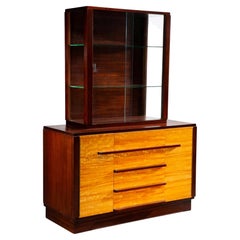
Art Deco Signed Wolfgang Hoffmann for Romweber World's Fair Display Cabinet
By Romweber Furniture Co., Wolfgang Hoffmann
Located in Forney, TX
A rare and important Art Deco period Century of Progress Display Cabinet designed by Wolfgang Hoffmann (Austrian, 1900-1969) for Romweber Company, Batesville, Indiana, United States of America. circa 1933-1936 Created for the 1933 Chicago World's Fair, one piece design, having a rectangular showcase top with glass panel sides and a pair of sliding glass doors, over solid wood chest fitted with four drawers affixed with horizontal pulls, flanked by cabinet doors, opening to shelved interior. Rosewood, mahogany, richly figured blonde - golden birch or primavera, and glass. Signed, original label to drawer interior, featuring 1933 World's Fair mark impressed. **Please note, at the time of writing this, a matching sideboard - buffet (shown in last photo) is currently available separately** Provenance / Acquisition: Property from the important and iconic collection of Mr. James I. Rafftesaeth Jr., Dallas, Texas Acquired from highly reputable auction house, Heritage Auctions, Dallas, Texas. 2022 Design Signature Auction catalog #8091 History: Wolfgang Hoffmann was born in Vienna, Austria in 1900. He is the son of famous architect, pedagogue and Wiener Werkstatte cofounder, Joseph Hoffmann (1870-1956). Early on, following his father’s s interests, he was trained in the decorative arts and design. Wolfgang Hoffmann once reminisced, “I spent eight years at the Realschule, then three years went to a special architectural school, where I perfected my technical knowledge of architecture and general construction. From this school, I was graduated to the Kunstgewerbeschule [Studying under Oskar Strnad and Josef Frank in Vienna]. After finishing this school, I had one and a half years of practical in a well known architect’s office. Thereafter I worked in my Father’s office for two years”. Hoffmann met his future wife, Polish immigrant Pola (1902-1984) when they were both studying at the Kunstgewerbeschule. Joseph Urban (1872-1933) was needing an assistant for his architectural business in New York and contacted his friend and colleague, Joseph Hoffmann in Vienna. Hoffmann recommended his son Wolfgang. Urban hired him and sent a first class passage ticket to Vienna for Wolfgang to travel to New York. Wolfgang married Pola and traded his ticket for two tickets to America in steerage, arriving in New York City in December of 1925. Leaving the Urban office after nine months, Wolfgang and Pola formed an independent design practice with offices on Madison Avenue in Manhattan with the purpose of creating contemporary interiors and industrial designs. Early work included theaters, stores, and apartments mostly in New York City. During the late 1920’s and early 1930’s the Hoffmanns designed custom furniture for private clients. Some of these examples were shown in the February 1929 issue of House and Garden. Curiously, the examples’ design was attributed to Urban and the production to Pola Hoffmann, Inc. Established in the fall of 1928, the American Designers’ Gallery was “devoted exclusively to showing objects and interiors for practical use… by fourteen American architects and designers”. Its members included the Hoffmans and Urban as well as ceramist Henry Varnum Poor (1888-1971), architect Raymond Hood (1881-1934), artist designer Winold Reiss (1886-1953), graphic designer Lucien Bernhard (1896-1981), decorator Donald Deskey (1894-1989), and architect Ely Jacques Kahn (1884-1972). The Hoffmanns’ work was included in the American Designers’ Gallery’s two showcase events, its 1928 and 1929 exhibitions. Their dining alcove at the 1929 event featured a bench with a dinette table and two chairs in American walnut designed by Wolfgang and a rug by Pola. Lucien Bernhard, fellow Austrian immigrant who settled in New York a year before the Hoffmanns, operated the gallery and decorating service Contempora with Munich resident Bruno Paul (1874-1968). The Hoffmanns, occasionally participating with Contempora, designed a number of outstanding interiors, including the constructivist living room of 1930 for Mrs. O.R. Sommerich at 40 East 66th street. In 1934, Donald Deskey commissioned Wolfgang to design birchwood furnishings for the eclectic apartment at 625 Park Avenue belonging to Helena Rubinstein. In 1931, Wolfgang exhibited his work at the Pennsylvania Art Museum and the Museum of Modern Art in New York City. The same year, with Kem Weber (1889-1963) he organized the second and final exhibition of AUDAC- “Modern Industrial and Decorative Arts”- at the Brooklyn Museum. At this event, the Hoffmanns showed the dining room previously included in the American Designer’s Gallery’s 1929 exhibition in the Chase Bank Building lobby at 145 West 57th Street in Manhattan. In 1932 Wolfgang was asked to assist Urban in developing the color scheme for the 1933-34 Chicago World’s Fair “A Century of Progress”. He was also commissioned to design the interior and furniture for the fair’s lumber industries house. There he executed its living and dining rooms furnished by Kroehler Manufacturing Company of Chicago; the boys’ room by Shower Brothers...
Glass, Mahogany, Rosewood