Want more images or videos?
Request additional images or videos from the seller
1 of 17

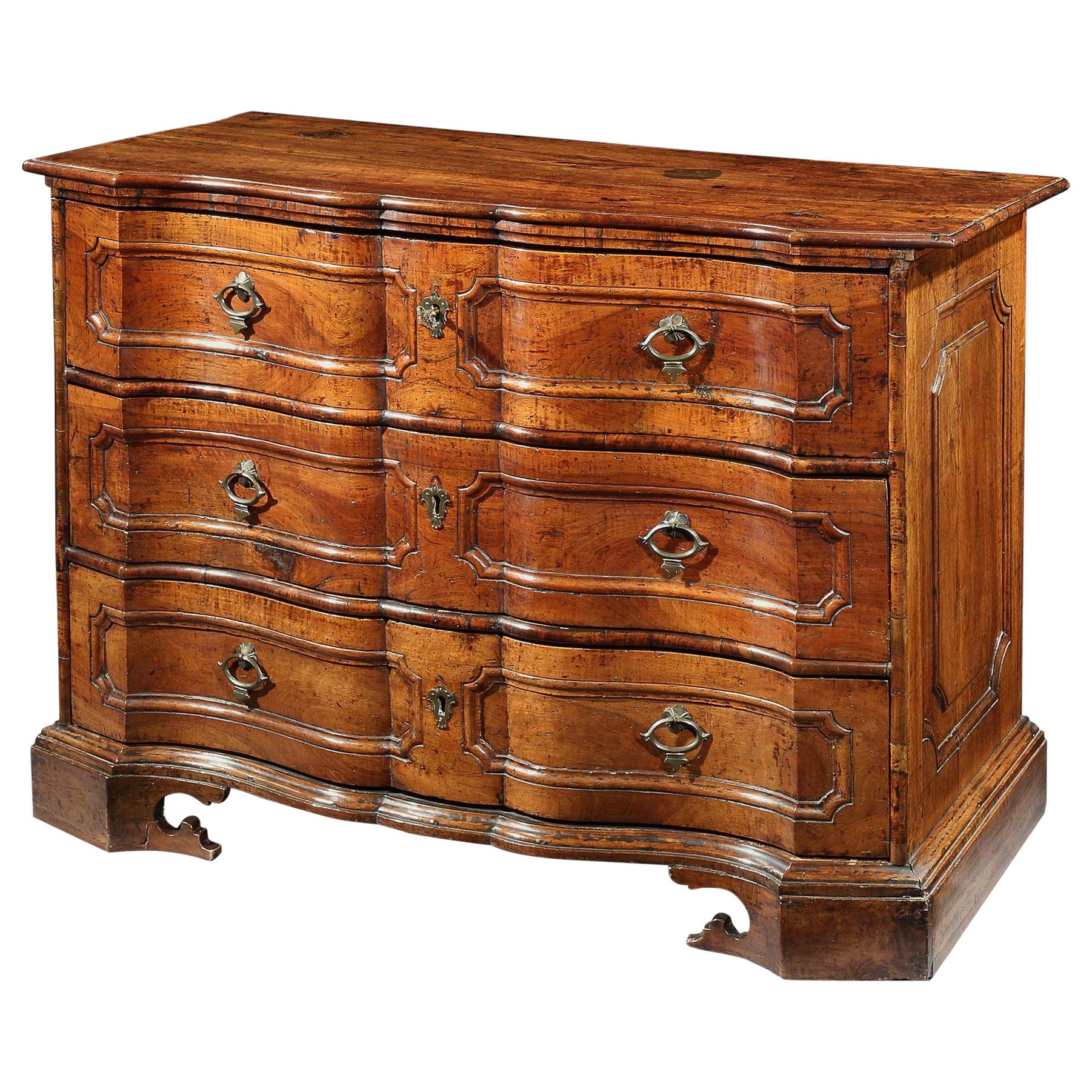
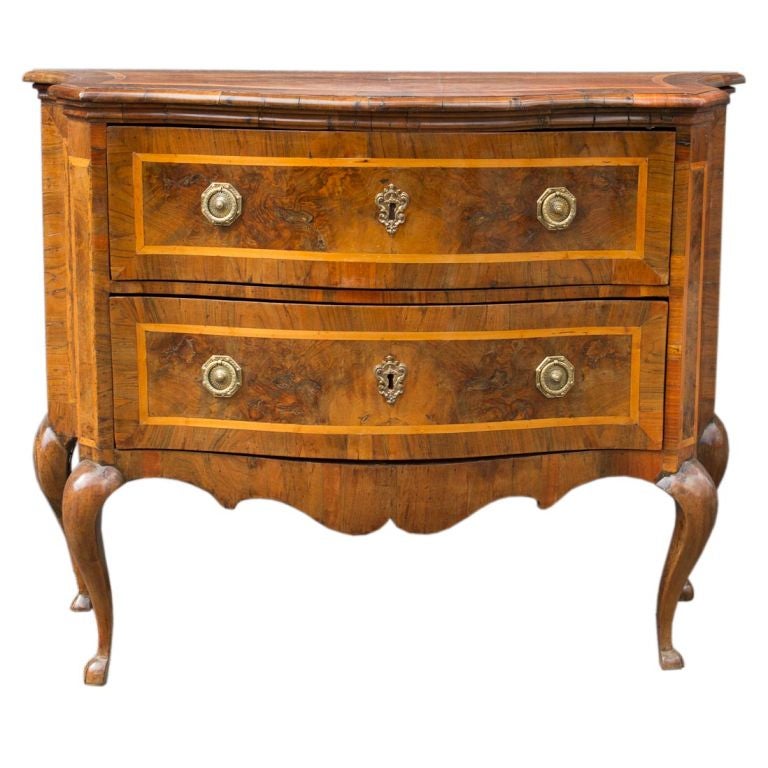
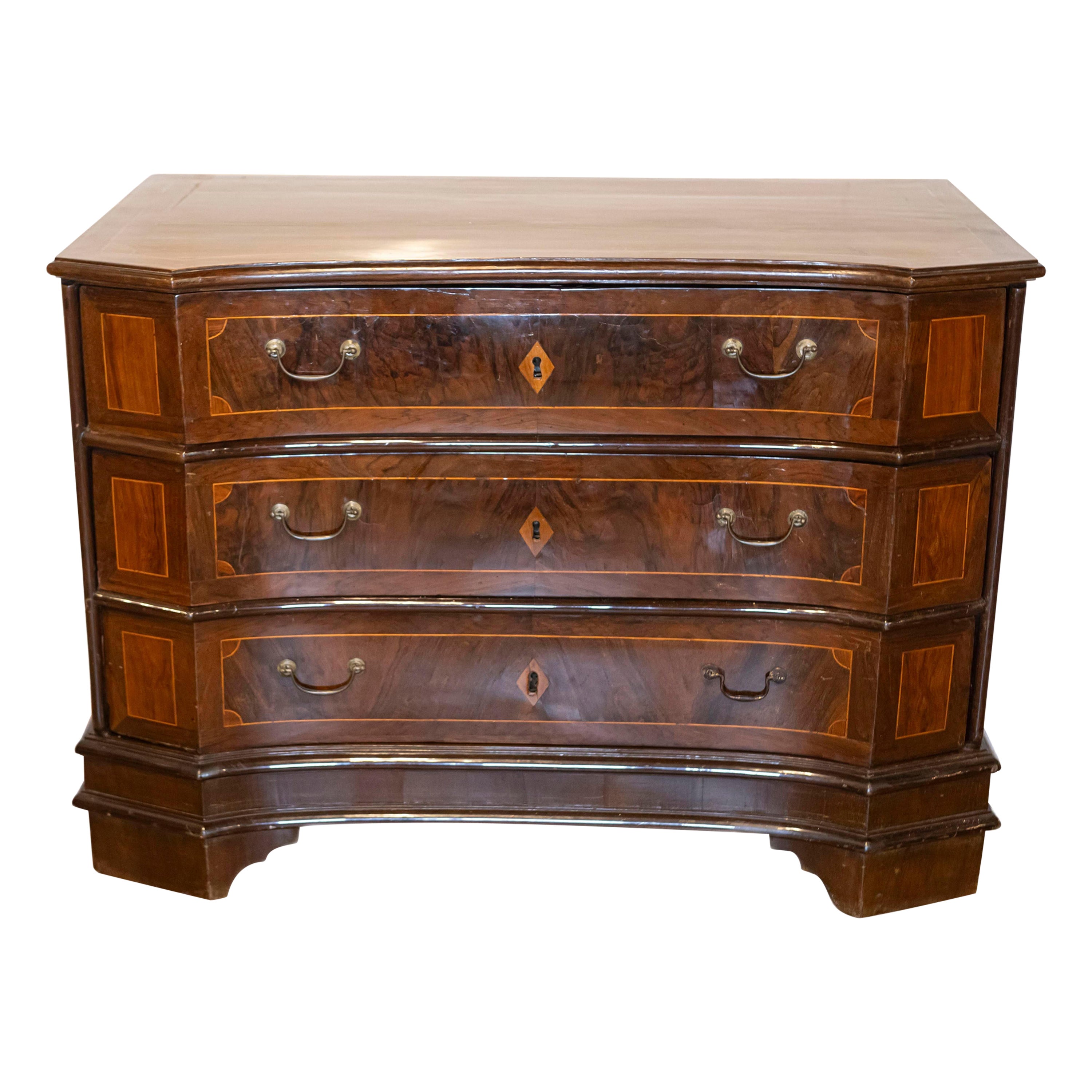
Large Venetian canterano in briarwood, late 17th - early 18th century

$8,111.20
£5,944.15
€6,800VAT Included
CA$11,166.44
A$11,358.63
CHF 6,485.94
MX$137,388.90
NOK 75,629.49
SEK 76,788.28
DKK 51,851.68

About the Item

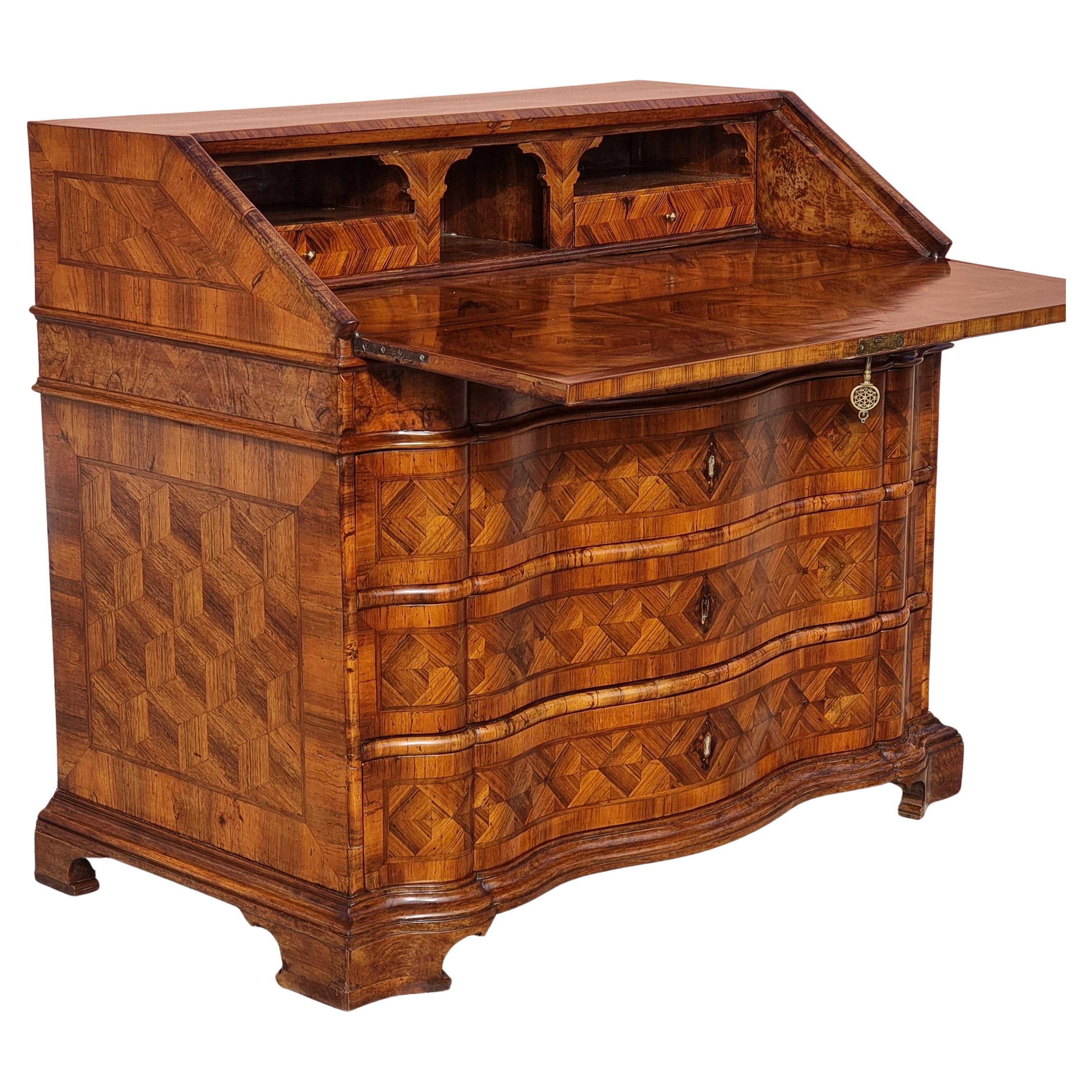
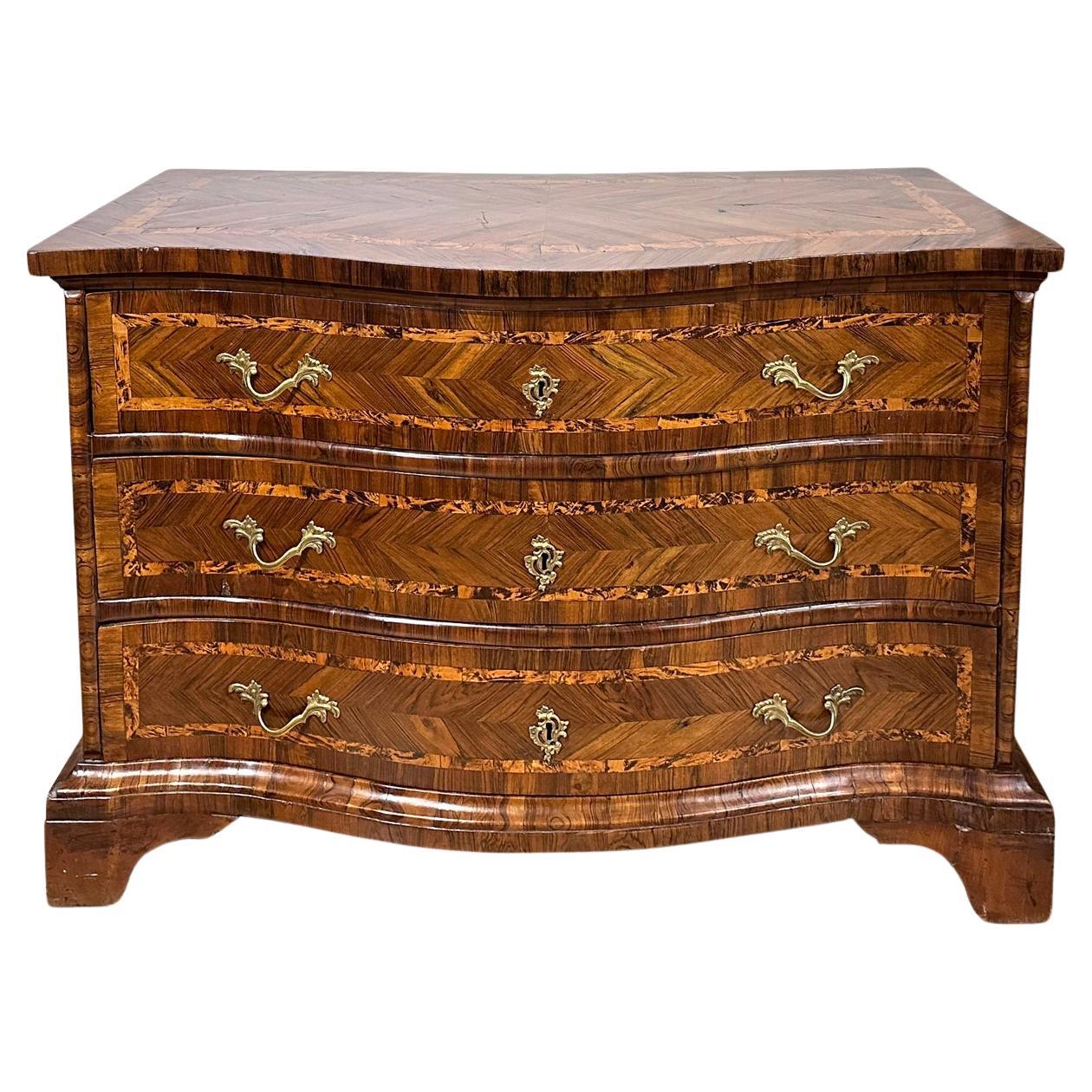
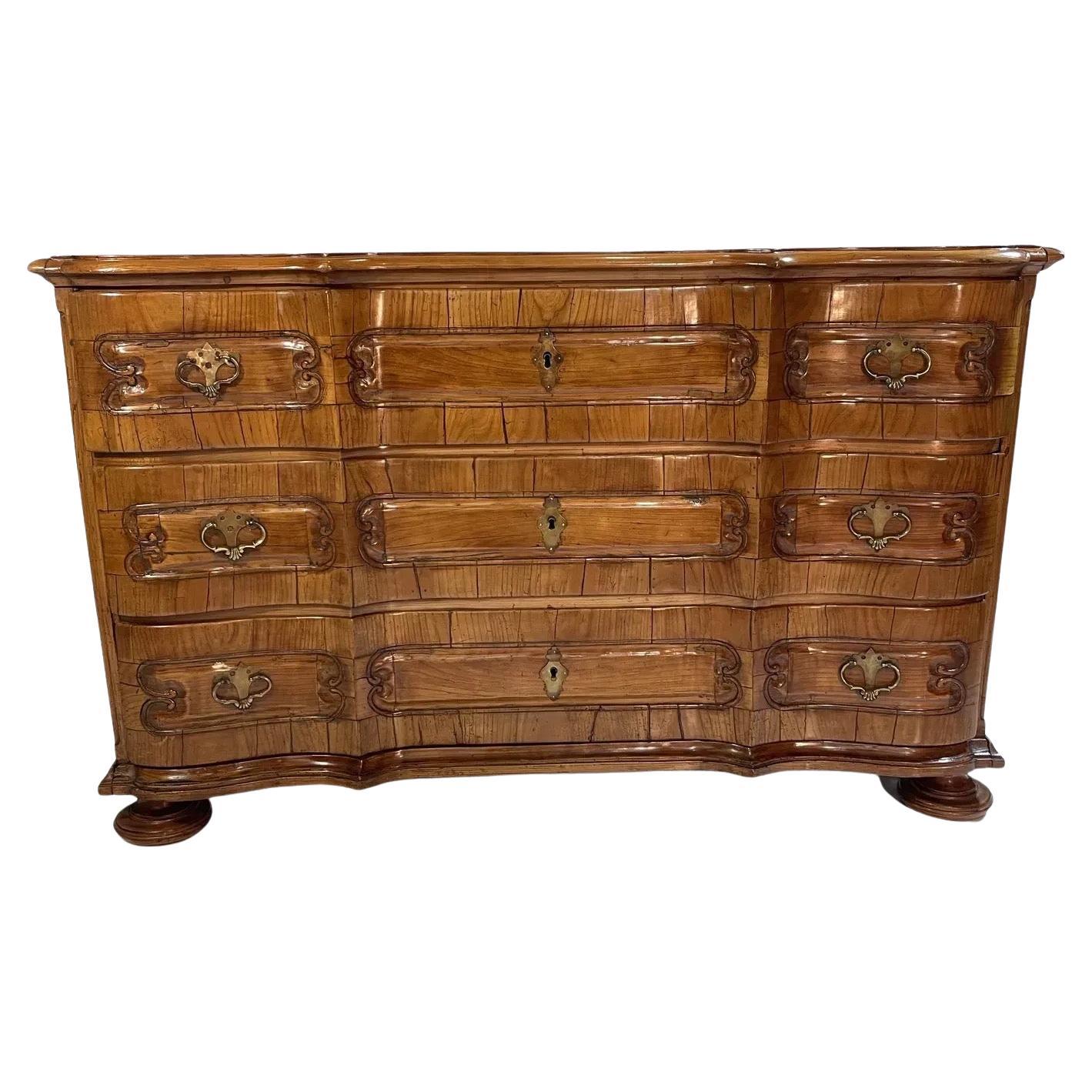
Imposant canterano vénitien de grandes dimensions, réalisé entre la fin du XVIIe et le début du XVIIIe siècle, probablement destiné à un palais ou à une demeure noble.Avec son imposante façade galbée et ses côtés droits, il mesure 145 cm de large, 71 cm de profondeur et 99 cm de hauteur, et se distingue par son élégance, ses proportions harmonieuses et la finesse de son exécution. Entièrement plaqué en ronce de noyer et autres bois précieux, il présente un travail raffiné : corniches moulurées également plaquées, marqueterie en chevrons sur les tiroirs, plateau chantourné avec bord mouluré. Les poignées d'origine, en bronze finement ciselé, représentent deux lions affrontés - un motif rare et expressif. Le système intérieur est également d'époque. Les serrures sont d'origine, mais les clés sont manquantes. Très bon état de conservation avec une belle patine ancienne. Une œuvre d'ébénisterie vénitienne de haut niveau, idéale pour les intérieurs raffinés ou les collectionneurs exigeants. Expédition dans le monde entier sur demande. Pour toute information complémentaire ou photos détaillées, n'hésitez pas à nous contacter.
  • Dimensions:
    Height: 38.98 in (99 cm)Width: 57.09 in (145 cm)Depth: 27.96 in (71 cm)
  • Style:
    Baroque (Of the Period)
  • Materials and Techniques:
  • Place of Origin:
  • Period:
    1680-1689
  • Date of Manufacture:
    1680
  • Condition:
    Wear consistent with age and use.
  • Seller Location:
    Vicenza, IT
  • Reference Number:
    1stDibs: LU10469245211972

More From This Seller

View All
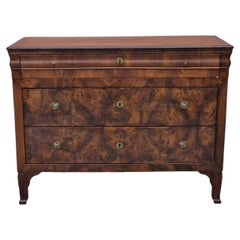
Venetian walnut-root canter, 18th century

Venetian walnut-root canter, 18th century

Located in Vicenza, IT

Elegant Venetian three-drawer canter, made in the 18th century. The cabinet has a solid solid wood frame, with ebonized wood sides and top, while the drawer fronts are veneered in a ...

Category

Antique 18th Century European Baroque Credenzas

Materials

Wood

Ribalta veneta in noce lastronata e intarsiata, XVIII secolo

Ribalta veneta in noce lastronata e intarsiata, XVIII secolo

Located in Vicenza, IT

Elegante ribalta veneta della prima metà del Settecento, interamente lastronata e intarsiata in noce e radica di noce, con raffinati motivi geometrici continui su fronte e fianchi. I...

Category

Antique 1750s Italian Baroque Dressers

Materials

Walnut

Walnut and olive wood chest of drawers – Modena, first half of the 18th century

Walnut and olive wood chest of drawers – Modena, first half of the 18th century

Located in Vicenza, IT

An elegant, rounded-shaped chest of drawers, part of the refined 18th-century Emilian furniture tradition, most likely from the Modena area and dating to the first half of the 18th c...

Category

Antique 18th Century Italian Louis XV Commodes and Chests of Drawers

Materials

Wood, Nutwood, Olive, Walnut

Charles X - Luigi Filippo chest of drawers in walnut and burl walnut, Italy, circa 1830

Charles X - Luigi Filippo chest of drawers in walnut and burl walnut, Italy, circa 1830

Located in Vicenza, IT

Important Italian dresser from the transitional period between Charles X and Louis Philippe, made around 1830 in solid walnut and burl walnut. The cabinet presents a sober and elegan...

Category

Antique 19th Century Italian Louis Philippe Commodes and Chests of Drawers

Materials

Wood, Nutwood, Walnut

Ribalta parmigiana Luigi XV, metà XVIII secolo

Ribalta parmigiana Luigi XV, metà XVIII secolo

Located in Vicenza, IT

Elegante ribalta emiliana di manifattura parmigiana, databile alla metà del Settecento, pieno periodo Luigi XV. Mobile in legno massello scolpito, interamente intagliato a mano, con ...

Category

Antique 18th Century European Louis XV Secretaires

Materials

Wood

Ferrarese walnut console dresser, 18th century

Ferrarese walnut console dresser, 18th century

Located in Vicenza, IT

Rare 18th-century Italian console chest of drawers from the Ferrara area.Strongly distinctive piece of furniture, with fir internal structure and walnut burl veneer with a marked and...

Category

Antique 1730s Italian Louis XIV Commodes and Chests of Drawers

Materials

Nutwood

You May Also Like

Beautiful 18th Century Italian Baroque Commode

Beautiful 18th Century Italian Baroque Commode

Located in Montreal, QC

Beautiful Italian Baroque period walnut and fruitwood veneered serpentine front chest of drawers on cabriole legs.

Category

Antique 18th Century and Earlier Italian Commodes and Chests of Drawers

Materials

Walnut

Art Decò Venetian Baroque Commode attributed Gaetano Borsani, Atelier di Varedo

Art Decò Venetian Baroque Commode attributed Gaetano Borsani, Atelier di Varedo

By Gaetano Borsani, Atelier Borsani Varedo

Located in Vigonza, Padua

Elegant Venetian chest of drawers from the 1930s produced by Atelier di Varedo and attributed to Gaetano Borsani, with shaped top and rounded shapes with 4 drawers, made of veneered walnut. Golden brass opening handles. Revised and wax polished. His two bedside tables published with code FP12b About Gaetano e Osvaldo Borsani Osvaldo Borsani (born 1911, Varedo, Italy–died 1985, Milano, Italy) was an Italian designer and architect, born into a family of furniture makers with along and well established artisanal tradition. His father, Gaetano Borsani, owned his own furniture shop, the Atelier di Varedo, where the 16-year-old Osvaldo received his first training. At that time, the designer of the atelier was the architect Gino Maggioni, who brought with him influences of the early 20th century Jugendstil movement from Vienna and who instilled in the young Borsani an appreciation for the arts and crafts and furniture making. Osvaldo Borsani first studied fine arts at Accademia di Belle Arti di Brera in Milan, graduating in 1931, and then pursued studies in architecture at Politecnico di Milano, where he graduated in 1936. In 1933, two years before graduating as an architect, Borsani designed the Casa Minima project for the V Triennale di Milano (Milan Triennial), along with architects Cairoli and Varisco. This project earned him a silver medal for its Rationalist code and geometries, and he received positive reviews from the critic Edoardo Persico of Casabella magazine. Villa Borsani And Other Prominent Architectural Work In 1937, Osvaldo Borsani designed Villa Presenti in Forte dei Marmi, a sea town in Tuscany where the Italian aristocracy and industrial elite would build their houses, a project that displayed the same rationalistic rigor displayed in Casa Minima, but softened by the use of mediterranean finishes and materials. Villa Borsani designed by Osvaldo Borsani. Varedo, Italy Villa Borsani. Varedo, Italy In 1943, Osvaldo designed and built his own house, the Villa Borsani, in Varedo, which, despite being conceptualized under strict Rationalist principles, incorporated objects and art of younger artists that communicate a freer approach to the human expression. The Villa Borsani project involved artists such as Adriano Spilimbergo, Fausto Melotti, Lucio Fontana (who made the ceramic fireplace and the ceramic Madonna), and Agenore Fabbri (who made the bronze statue in the staircase). To this day, Villa Borsani has been preserved with most of its original furniture and it remains with Osvaldo Borsani’s family along with the extensive archives of his work. Osvaldo Borsani As a Successful Product and Furniture Designer After Villa Borsani, Osvaldo continued to develop many projects for the Milanese bourgeoisie, frequently with many of the same artists whom he employed for his villa. A particularly strong relationship was the one that Osvaldo developed with artist Lucio Fontana, a close friend since the time of the Accademia de Belle Arti di Brera, and whom Borsani assigned to make a large metal balcony for the Tecno company in 1956. Osvaldo Borsani’s design work, just as his larger architectural projects, which he also considered design work, very often incorporated elements created by other artists and designers such as: Roberto Crippa, Arnaldo and Giò Pomodoro, Agenore Fabbri, Fausto Melotti, Andrea Cascella...

Category

Vintage 1930s Italian Baroque Revival Commodes and Chests of Drawers
Materials

Walnut

17th Century Italian Commode

17th Century Italian Commode

Located in Atlanta, GA

This 17th-century Italian commode is an exquisite example of Baroque design, characterized by its bold form, intricate details, and refined craftsmanship. The commode features a serp...

Category

Antique 17th Century Italian Baroque Commodes and Chests of Drawers
Materials

Walnut

Fine 18th Century Italian Commode

Fine 18th Century Italian Commode

Located in Dallas, TX

Outstanding circa 1780 Italian bombe and serpentine fronted commode with shaped burl walnut inlays on three drawers with fancy bronze pulls and escutcheons. Wonderful sleek corners f...

Category

Antique 1780s Italian Commodes and Chests of Drawers
Materials

Walnut

Inlaid marqueterie chest of drawers in different woods, third quarter 18th cent

Inlaid marqueterie chest of drawers in different woods, third quarter 18th cent

Located in Milano, IT

Inlaid marqueterie chest of drawers in different woods, Rome, third quarter 18th century, body slightly moved on front and sides, front to two drawers separated by crosspiece and pr...

Category

Antique 18th Century Dressers

Materials

Tulipwood

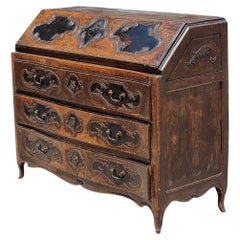
Comò intagliato Luigi XV, con due cassetti mossi e intagliati del 1700

Comò intagliato Luigi XV, con due cassetti mossi e intagliati del 1700

Located in Cesena, FC

Comò intagliato Luigi XV Epoca : Prima metà del Settecento Comò intagliato Luigi XV, con due cassetti mossi e intagliati sul massello di Noce. Di origine emiliana (Italia) della met...

Category

Antique 1720s Italian Louis XV Commodes and Chests of Drawers
Materials

Walnut