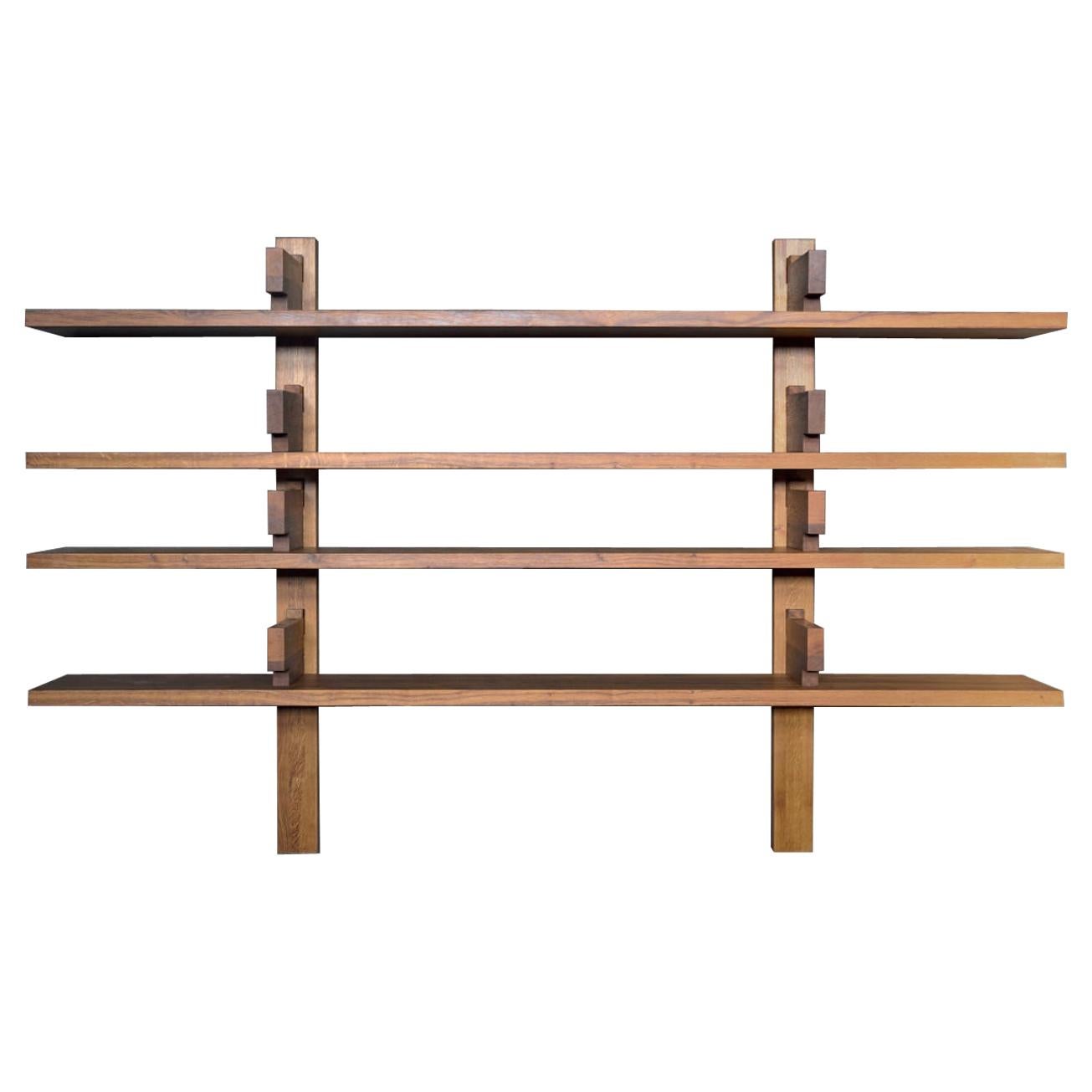
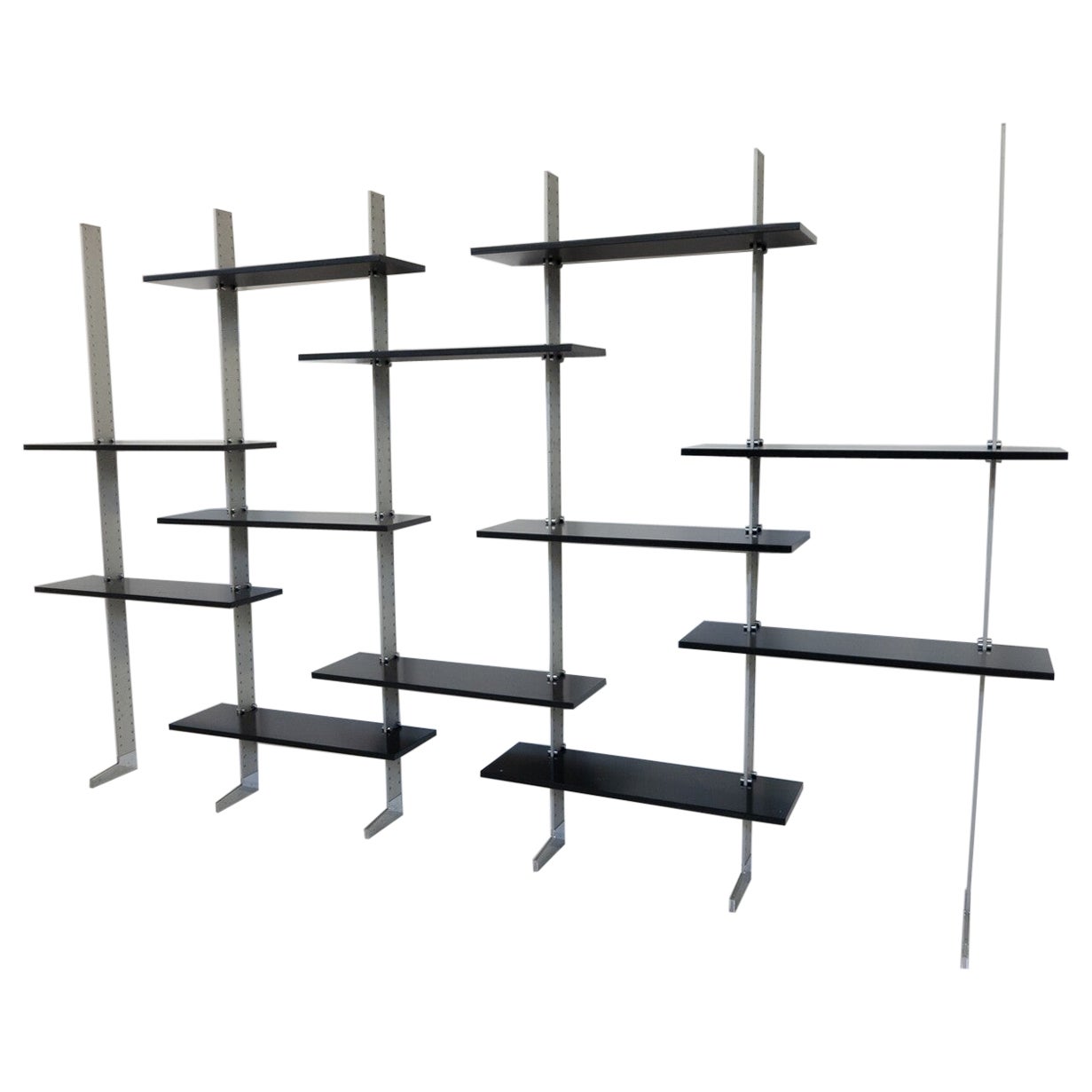
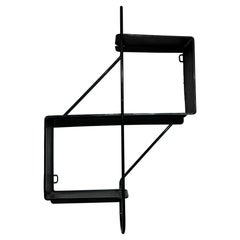
Clé de sol shelves by Mathieu Matégot
By Mathieu Matégot
Located in SAINT-OUEN-SUR-SEINE, FR
Étagère dite clé de sol par Mathieu Matégot, laqué noir d’origine.
Category
Vintage 1950s French Mid-Century Modern Shelves
Materials
Metal
With their curvaceous metal surfaces and shapes often resembling sheets of folded paper, Mathieu Matégot's inspiring furniture and lighting designs are easily recognizable and highly sought after by collectors. By working with perforated sheet metal and metal tubing, the Hungarian-born French architect, artist and designer — who is known by aficionados for his “rigitulle” technique — created tables, chairs and decorative objects that are celebrated works of French modernism and make a statement in any interior.
Matégot attended the Budapest School of Fine Arts and Architecture. He graduated in 1929 and traveled before settling in Paris in 1931, where he worked as a window dresser for department stores and as a set designer for cabaret halls.
In 1939, Matégot joined the French army in resistance to invading Nazi forces. He was soon captured and sent to work in a German factory. It was at this factory where Matégot became familiar with the materials and techniques that would inform and inspire his trademark rigitulle method.
After the war ended, Matégot opened a workshop in Paris and began to create handcrafted furniture that didn't conform to established styles of the time. Matégot explored merging traditional and non-traditional materials — he worked with formica, glass and natural materials such as rattan — and engaged in other forward-looking experiments. Matégot soon patented his career-defining rigitulle technique and material, which saw the designer working with metal tubing and perforated metal sheets and producing thin, airy folds into the metal as if he were manipulating fabric or paper.
Many of Matégot’s designs for table lamps, pendants, tables and more are reflective of the rigitulle technique, but the best-known work that exemplifies this process is his elegant three-legged Nagasaki chair, which he exhibited in 1954 at the Salon des Artistes Décorateurs. The original Nagasaki chair gave way to a collection that included a stool and an armchair. Matégot’s Nagasaki dining chair has been reissued by Gubi and is part of the permanent collection at the Vitra Design Museum, which is home to one of the world’s most important furniture collections.
Matégot created a range of smaller items for the home — serveware, side tables and magazine racks, each distinctive in their fluid and organic forms — but halted his career in design and moved to Angers in the early 1960s in order to turn to creating art. Today he is known for his abstract tapestries as well as his furnishings.
Find vintage Mathieu Matégot furniture on 1stDibs.
Clé de sol shelves by Mathieu Matégot
By Mathieu Matégot
Located in SAINT-OUEN-SUR-SEINE, FR
Étagère dite clé de sol par Mathieu Matégot, laqué noir d’origine.
Metal
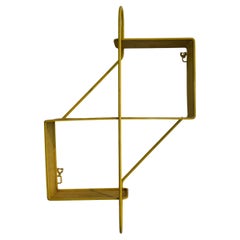
Étagère clé de sol par Mathieu Matégot
By Mathieu Matégot
Located in SAINT-OUEN-SUR-SEINE, FR
Étagère clé de Sol par Mathieu Matégot, rare en cette version de couleur. Couleur d’origine.
Metal
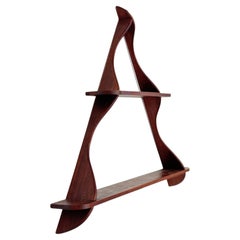
Beautiful shelve attributed to Peder Moos
By Peder Moos
Located in SAINT-OUEN-SUR-SEINE, FR
Communément attribué à Peder MOOS (1906-1991) Le modèle conçu vers 1956-1962 Petite étagère d'appoint en teck de forme triangulaire à deux niveaux, les montants légèrement mouvementé...
Wood
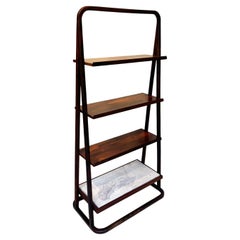
Scarce shelves by Joaquim Tenreiro
By Joaquim Tenreiro
Located in SAINT-OUEN-SUR-SEINE, FR
Rarissime bibliothèque par Joaquim Tenreiro.
Marble
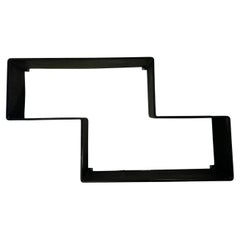
Original Dédal Shelves by Mathieu Matégot
By Mathieu Matégot
Located in SAINT-OUEN-SUR-SEINE, FR
Jolie étagère dite Dedal par Mathieu Matégot, Jolie patine.
Metal
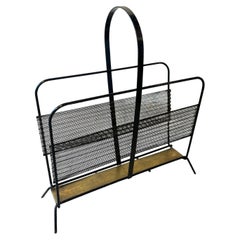
Nice magazine Rack by Mathieu Matégot
By Mathieu Matégot
Located in SAINT-OUEN-SUR-SEINE, FR
Jolie porte revu en rigidulle et laiton par Mathieu Matégot vers 1950.
Metal, Brass
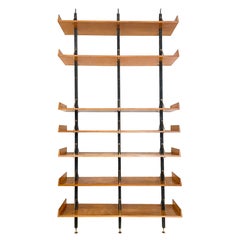
Mid-Century Modern Bookshelf by Angelo Mangiarotti and Bruno Morassutti, Italy
Located in Brussels, BE
Mid-Century Modern Bookshelf by Angelo Mangiarotti and Bruno Morassutti, Italy, 1950s Height is modular.
Wood
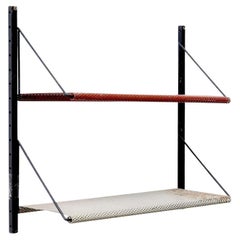
Mid-Century Modern Shelves by Mathieu Matégot, Metal, France, 1950
By Mathieu Matégot
Located in Barcelona, ES
Shelves in the style of Mathieu Matégot Manufactured in France, circa 1950. In good condition, with minor wear consistent with age and use, preserving a beautiful patina. Math...
Metal
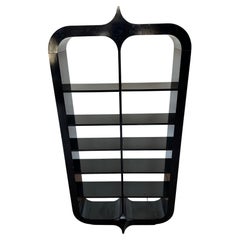
Roberto Fallani Bookshelf for Pierre Cardin, Italy, 1970s
By Roberto Fallani
Located in Padova, IT
Glossy black lacquered wood bookcase designed by Roberto Fallani for Pierre Cardin in the 1970s. High quality hand made product and exceptional stage presence. Roberto Fallani, Thro...
Wood
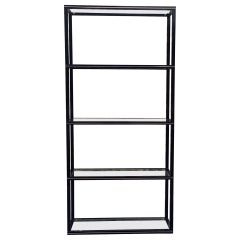
Pierre Vandel 1970’s Shelving
By Pierre Vandel
Located in London, Lambeth
A Pierre Vandel black lacquered shelving unit, with five glass shelves Cc1970’s French Dimensions: 90cm wide 37cm deep 190cm high...
Aluminum
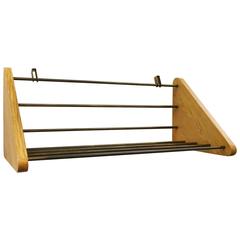
Bookshelf in the Style of Carl Aubock
By Werkstätte Carl Auböck
Located in Vienna, AT
Softwood with brass rods made in Austria in the 1950s.
Brass
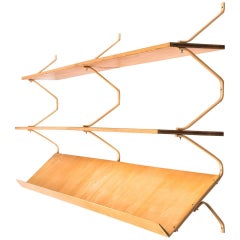
Bruno Mathsson Wall-Mounted Bookcase by Karl Mathsson in Sweden
By Bruno Mathsson
Located in Limhamn, Skåne län
Rare wall-mounted bookcase designed by Bruno Mathsson. Produced by Karl Mathsson in Värnamo, Sweden.
Birch, Pine