Want more images or videos?
Request additional images or videos from the seller
1 of 7

Louis Süe - Rare Vitrine en Fer Forgé et Placage de Merisier (vers 1948)

$10,577.68
£7,840.89
€10,800VAT Included
CA$14,754.33
A$15,007.85
CHF 8,612.97
MX$180,411.94
NOK 100,470
SEK 101,415.83
DKK 68,628.85

About the Item

Rare Vitrine en Fer Forgé et Placage de Merisier (vers 1948) Type : Vitrine en fer forgé et placage de merisier Date de création : Vers 1948 Dimensions : H : 169 cm L : 104 cm P : 28 cm Caractéristiques : Piètement similaire aux modèles créés pour les salons des coiffeurs Guillaume, avenue Matignon Bibliographie : Les Décorateurs des Années 40, Bruno Foucart et Jean-Louis Gaillemin - Norma Éditions, p. 282 Cette rare vitrine en fer forgé et placage de merisier, réalisée vers 1948, se distingue par son piètement finement travaillé, rappelant les modèles conçus pour les salons des coiffeurs Guillaume, avenue Matignon. Son design élégant s'inscrit parfaitement dans le renouveau du mobilier décoratif d’après-guerre, où l’association du métal et du bois noble était particulièrement prisée. Contexte Historique : La Compagnie des Arts Français, fondée en 1919, connaît des difficultés financières et est rachetée en 1922 par Gaston Monteux, un industriel et fabricant de chaussures. Ce dernier, grand habitué de la Closerie des Lilas, fréquente les cercles artistiques de l’époque aux côtés de Claude Debussy, André Gide, Pierre Bonnard, André Mare, et Roger de La Fresnaye. De nombreux artistes, notamment Dunoyer de Segonzac, Charles Dufresne et Paul Véra, s’associent à ce mouvement et marquent l’Exposition Internationale des Arts Décoratifs et Industriels Modernes de 1925. André Mare et Louis Süe, figures majeures de cette période, participent activement à la création de pavillons et décors prestigieux, notamment pour : La Maison de l’Art Contemporain, Les décors de la pièce Robert et Marianne à la Comédie-Française en 1925, La décoration du théâtre du Palais de Chaillot en 1937. Influence et Héritage : En tant qu’architecte et décorateur influent, Louis Süe travaille également pour des grandes maisons comme Jean Patou, pour lequel il dessine des flacons de parfum, et la cosméticienne Helena Rubinstein, pour qui il conçoit l’immeuble du 24, quai de Béthune à Paris entre 1934 et 1937. En 1928, il s’installe au 22, avenue de Friedland à Paris, poursuivant ses collaborations artistiques. Associé à son neveu Gilbert Olivier Süe, il participe à de nombreux projets d’architecture et de design. ---------- Rare Wrought Iron and Cherry Veneer Display Case (circa 1948) Type: Wrought iron and cherry veneer display case Creation Date: Circa 1948 Dimensions: H: 169 cm W: 104 cm D: 28 cm Features: Legs similar to models designed for the salons of hairdresser Guillaume, avenue Matignon Bibliography: The Decorators of the 1940s, Bruno Foucart and Jean-Louis Gaillemin - Norma Editions, p. 282 This rare display case, crafted in wrought iron and cherry veneer around 1948, stands out for its delicately worked legs, reminiscent of models created for the salons of hairdresser Guillaume, avenue Matignon. Its elegant design reflects the post-war decorative furniture revival, where the combination of metal and fine wood was particularly sought after. Historical Context: The Compagnie des Arts Français, founded in 1919, faced financial difficulties and was acquired in 1922 by Gaston Monteux, an industrialist and shoe manufacturer. Monteux, a regular at Closerie des Lilas, mingled with leading artistic figures of the time, including Claude Debussy, André Gide, Pierre Bonnard, André Mare, and Roger de La Fresnaye. Numerous artists, such as Dunoyer de Segonzac, Charles Dufresne, and Paul Véra, became part of this artistic movement and played a key role in the 1925 International Exhibition of Modern Decorative and Industrial Arts. André Mare and Louis Süe, major figures of this period, contributed to prestigious designs, including: The House of Contemporary Art, The stage set for Robert et Marianne at the Comédie-Française in 1925, The foyer decoration of the Palais de Chaillot theater in 1937. Influence and Legacy: As a prominent architect and decorator, Louis Süe also worked for Jean Patou, designing perfume bottles, and for cosmetics magnate Helena Rubinstein, for whom he designed the building at 24, quai de Béthune in Paris (1934-1937). In 1928, he settled at 22, avenue de Friedland in Paris, continuing his artistic collaborations. Later, he partnered with his nephew Gilbert Olivier Süe, engaging in numerous architectural and design projects.
  • Creator:
    Louis Sue (Artist)
  • Dimensions:
    Height: 66.54 in (169 cm)Width: 11.03 in (28 cm)Depth: 40.95 in (104 cm)
  • Materials and Techniques:
  • Place of Origin:
  • Period:
  • Date of Manufacture:
    1948
  • Condition:
    Wear consistent with age and use.
  • Seller Location:
    NEUILLY-SUR-SEINE, FR
  • Reference Number:
    1stDibs: LU9892240411162

More From This Seller

View All
Vitrine exceptionnelle par Léon Jallot – 1910

Vitrine exceptionnelle par Léon Jallot – 1910

By Léon Jallot

Located in NEUILLY-SUR-SEINE, FR

Vitrine exceptionnelle par Léon Jallot – 1910 Magnifique vitrine en bois de hêtre signée Léon Jallot, datant de 1910. Modèle "Fleurs et feuilles de cerisier stylisées", présenté au ...

Category

Vintage 1910s French Mid-Century Modern Vitrines

Materials

Wood

Cabinet, Buffet of Maurice Dufrêne

Cabinet, Buffet of Maurice Dufrêne

By Maurice Dufrêne

Located in NEUILLY-SUR-SEINE, FR

Maurice Dufrêne (1876-1955) Important 3-door cabinet in pommelé mahogany with wood marquetry and mother-of-pearl decoration French designer, Circa 1925, H: 181 cm D: 50 cm W: 174 cm ...

Category

Vintage 1920s French Art Deco Cabinets

Materials

Wood

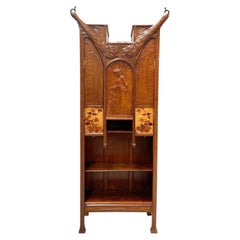
Rare sculptural cabinet Henry Ernest Anaclet Parayre (1879–1970)

Rare sculptural cabinet Henry Ernest Anaclet Parayre (1879–1970)

By Henry Parayre

Located in NEUILLY-SUR-SEINE, FR

Henry Ernest Anaclet Parayre (1879–1970) Rare sculptural cabinet with an mechanism, carved and inlaid in walnut. Woman with a chignon and a house in the forest surrounded by two pe...

Category

Antique Early 1900s French Art Nouveau Cabinets

Materials

Walnut

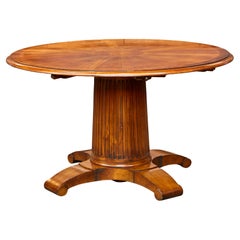
Dining Table in the style of Alfred Porteneuve

Dining Table in the style of Alfred Porteneuve

By Alfred Porteneuve

Located in NEUILLY-SUR-SEINE, FR

In the style of Alfred Porteneuve (1896–1949) a Rare round dining table, Veneered and lacquered Walnut wood, extension mechanism Dimentions : Diameter: 135 cm (without extension) 200...

Category

Vintage 1940s French Art Deco Dining Room Tables

Materials

Walnut

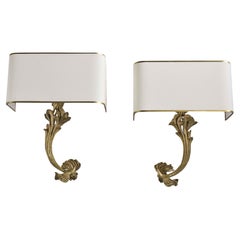
Sylva Bernt - Paire Exceptionnelle d'Appliques en Bronze Patiné (circa 1950)

Sylva Bernt - Paire Exceptionnelle d'Appliques en Bronze Patiné (circa 1950)

Located in NEUILLY-SUR-SEINE, FR

Sylva Bernt - Paire Exceptionnelle d'Appliques en Bronze Patiné (circa 1950) Type : Paire d’appliques en bronze patiné Date de création : Vers 1950 Dimensions : H : 39 cm L : 36 cm Décor : Colombes en vol Marque du fondeur : "Bisceglia" Cette paire exceptionnelle d’appliques en bronze patiné, réalisée vers 1950, est décorée de colombes en vol, motif cher à Sylva Bernt, une artiste reconnue pour son inspiration antique et son travail sur les formes épurées et symboliques. Biographie de Sylva Bernt (1910-1995) Sylva Bernt est une sculptrice et designer italienne, née en 1910 à Gorizia, près de Trieste, et décédée en 1995. Artiste rare et reconnue, elle se distingue par ses créations et commandes publiques en Italie et en France, où elle s’installe vers 1950. En 1952, après avoir rencontré André Arbus chez le peintre Guido Cadorin à Venise, elle reçoit ses premières commandes françaises. À l’invitation du décorateur, elle participe à la construction du paquebot Bretagne, créant un grand autel en pierre pour la chapelle du navire. Cette collaboration marque le début d’une relation artistique étroite avec Arbus. Installée Avenue du Maine à Paris, elle devient praticienne d’Arbus, réalisant des éléments décoratifs intégrés à son mobilier. Ensemble, ils répondent à des commandes prestigieuses, tant publiques que privées : Décoration des paquebots transatlantiques Vietnam (1952) et Pasteur (1961) Décoration de la villa de Jean-Marie Terrin à Aix-en-Provence (1955), où elle réalise des panneaux monumentaux en pierre de Chassagne rose, inspirés de la mythologie antique, dans un style néo-assyrien. Son inspiration antique lui permet de livrer certaines des plus belles interprétations modernes des mythes gréco-romains. Sa parfaite connaissance de la statuaire antique se traduit dans des créations en marbre, calcaire, plomb, plâtre, terre et bronze. Parmi ses œuvres notables, on retrouve Le Centaure (1961), une étude en encre démontrant fluidité et spontanéité du trait. En 1955, elle conçoit une longue frise historique sur l’épopée viking, destinée au Grand Salon du Palais des Consuls de la Chambre de Commerce de Rouen. ------------ Sylva Bernt - Exceptional Pair of Patinated Bronze Sconces (circa 1950) Type: Pair of patinated bronze sconces Creation Date: Circa 1950 Dimensions: H: 39 cm W: 36 cm Decoration: Flying doves Founder’s Stamp: "Bisceglia" This exceptional pair of patinated bronze sconces, created around 1950, features flying doves, a motif emblematic of Sylva Bernt, an artist known for her antique inspiration and her mastery of simplified and symbolic forms. Biography of Sylva Bernt (1910-1995) Sylva Bernt was an Italian sculptor and designer, born in 1910 in Gorizia, near Trieste, and passed away in 1995. A rare yet recognized artist, she was renowned for her public commissions in Italy and France, where she settled around 1950. In 1952, after meeting André Arbus at painter Guido Cadorin’s studio in Venice, she received her first French commissions. At Arbus’ invitation, she contributed to the construction of the Bretagne ocean liner, creating a large stone altar for the ship’s chapel. This collaboration marked the beginning of a close artistic relationship with Arbus. Settling in Avenue du Maine, Paris, she became Arbus’ practitioner, creating decorative elements that he incorporated into his furniture designs. Together, they worked on prestigious projects, both public and private: Decoration of the ocean liners Vietnam (1952) and Pasteur (1961) Creation of monumental panels for Jean-Marie Terrin’s villa in Aix-en-Provence (1955), carved in pink Chassagne stone, inspired by ancient mythology in a neo-Assyrian style. Her classical inspiration led her to produce some of the most refined modern interpretations of Greco-Roman myths. With extensive knowledge of antique statuary, she mastered materials such as marble, limestone, lead, plaster, terracotta, and bronze. Among her key works, Le Centaure (1961) stands out, showcasing her fluid and spontaneous linework. In 1955, she designed a long historical frieze depicting the Viking epic...

Category

Vintage 1950s French Art Deco Wall Lights and Sconces
Materials

Bronze

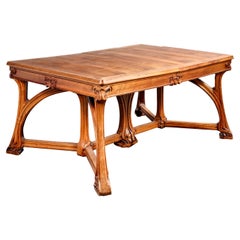
Spectacular dining table by Eugène Gaillard ca.1900

Spectacular dining table by Eugène Gaillard ca.1900

By Eugène Gaillard

Located in NEUILLY-SUR-SEINE, FR

Eugène Gaillard (1862–1933) Rectangular dining table in molded and carved walnut, decorated with vegetal motifs around the apron. It rests on four cabriole legs, molded, ribbed, an...

Category

Antique Early 1900s French Art Deco Dining Room Tables

Materials

Walnut

You May Also Like

20th Century Transition Style French Vitrine after Paul Sormani

20th Century Transition Style French Vitrine after Paul Sormani

By Paul Sormani

Located in Berlin, DE

French Vitrine according to Paul Sormani in transition style. Delicate French cabinet according to Paul Sormani in transition style Bois-Satiné veneer, all-round surface-covering mi...

Category

20th Century Vitrines

Materials

Bronze

French Vernis Martin Style Vitrine

French Vernis Martin Style Vitrine

Located in SAINTE-COLOMBE, FR

French Vernis Martin style vitrine / display cabinet in walnut and sapele mahogany. A very pretty vitrine / display cabinet in the style of Vernis Martin, this piece is constructe...

Category

Mid-20th Century French Vitrines

Materials

Ormolu

Charles Dudouyt Style Glass Vitrine

Charles Dudouyt Style Glass Vitrine

By Charles Dudouyt

Located in Beverly Hills, CA

Charles Dudouyt style vitrine with glass upper sliding doors and interior mirror with 2 glass shelves. Lower doors are carved with signature Dudouyt style pattern and open to revea...

Category

Vintage 1940s French Vitrines

Materials

Metal

French Late 19th Century Vitrine Cabinet

French Late 19th Century Vitrine Cabinet

Located in Los Angeles, CA

A traditional vitrine cabinet made in France in the late 19th century, having a rich mahogany frame and brass inlaid trims all around and beveled glass doors. The doors include a loc...

Category

Antique Late 19th Century French Vitrines

Materials

Brass

20th Century Transition Style French Vitrine

20th Century Transition Style French Vitrine

Located in Berlin, DE

Majestic French vitrine in transition style. Root veneer on solid conifers. High-angled, one-door, cambered and three-sided glazed body on tall, slanting, curly feet in sabots. Thre...

Category

20th Century Vitrines

Materials

Bronze

19th Century French Vitrine

19th Century French Vitrine

By François Linke

Located in Brighton, Sussex

A fine quality French kingwood, marble topped vitrine having shaped glass to the front and sides. Beautiful ormolu mounts and raised on cabriole legs. The the manner of 'Linke.'.

Category

Antique 1890s French Vitrines

Materials

Ormolu