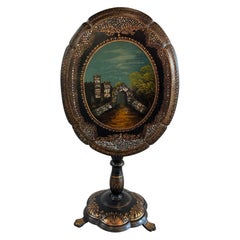
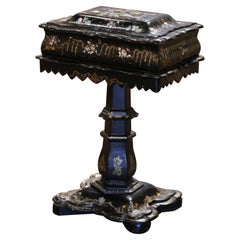
Victorian Papier-Mâché Tilt-Top Table with Japanned and Nacre Inlay, England, c. 1850
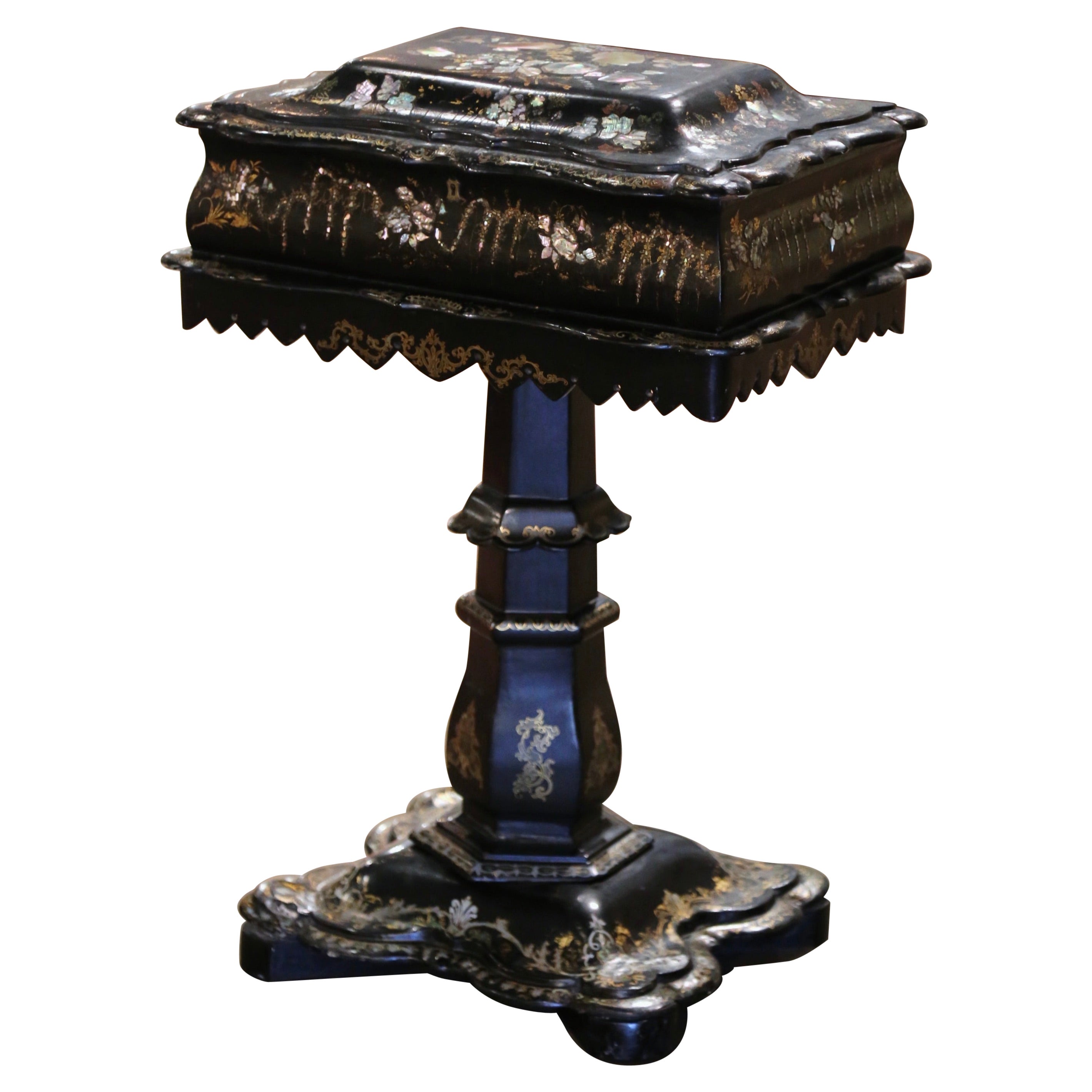
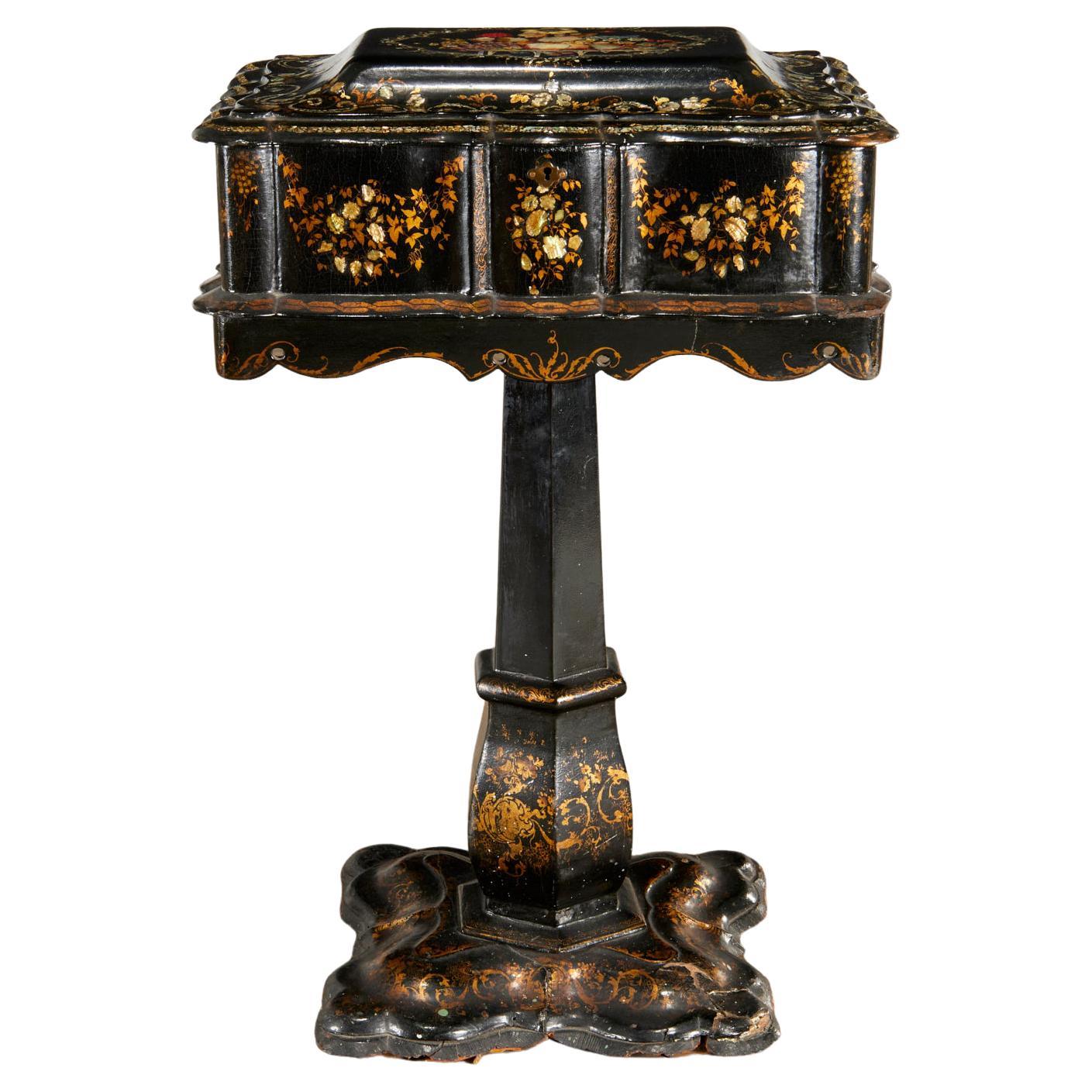
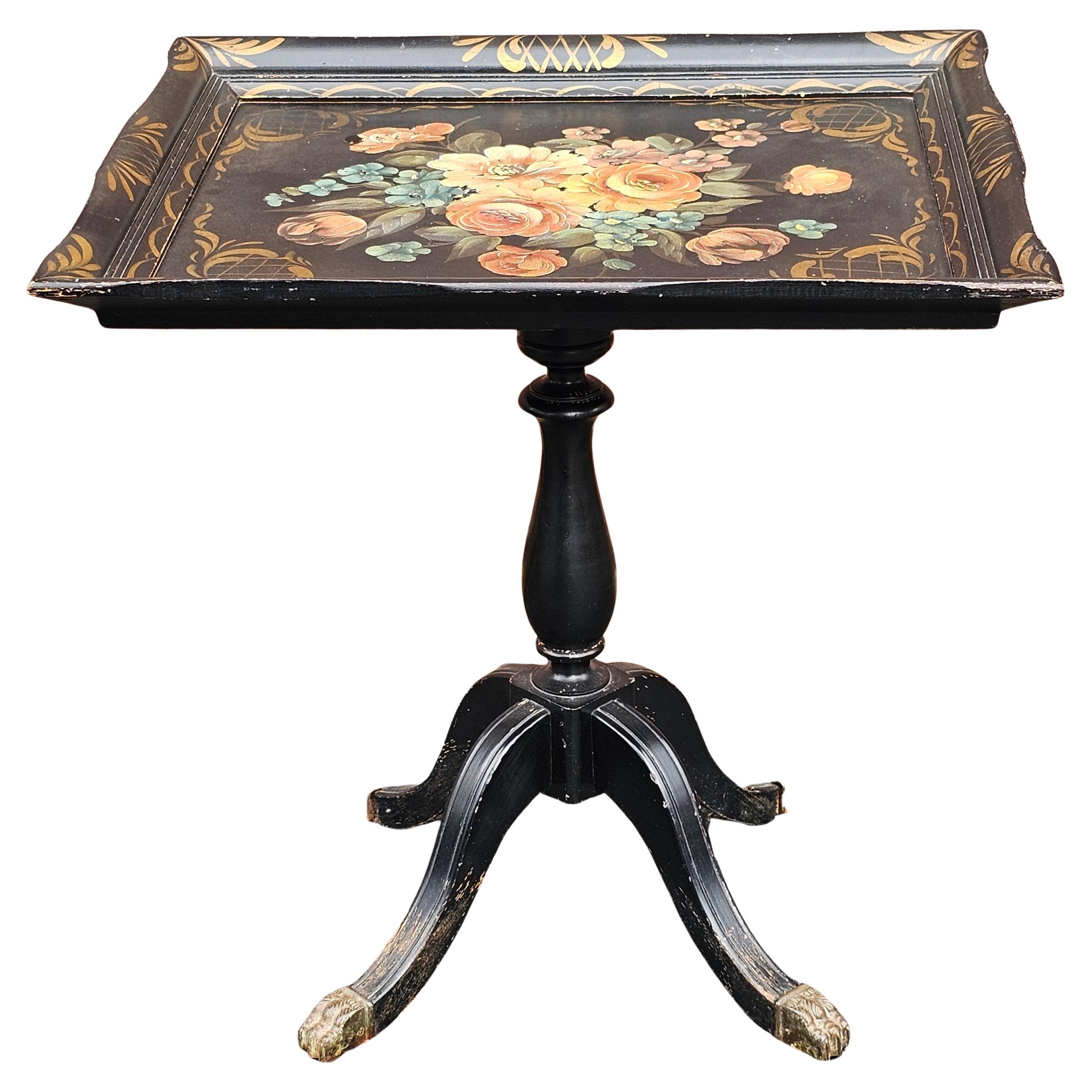
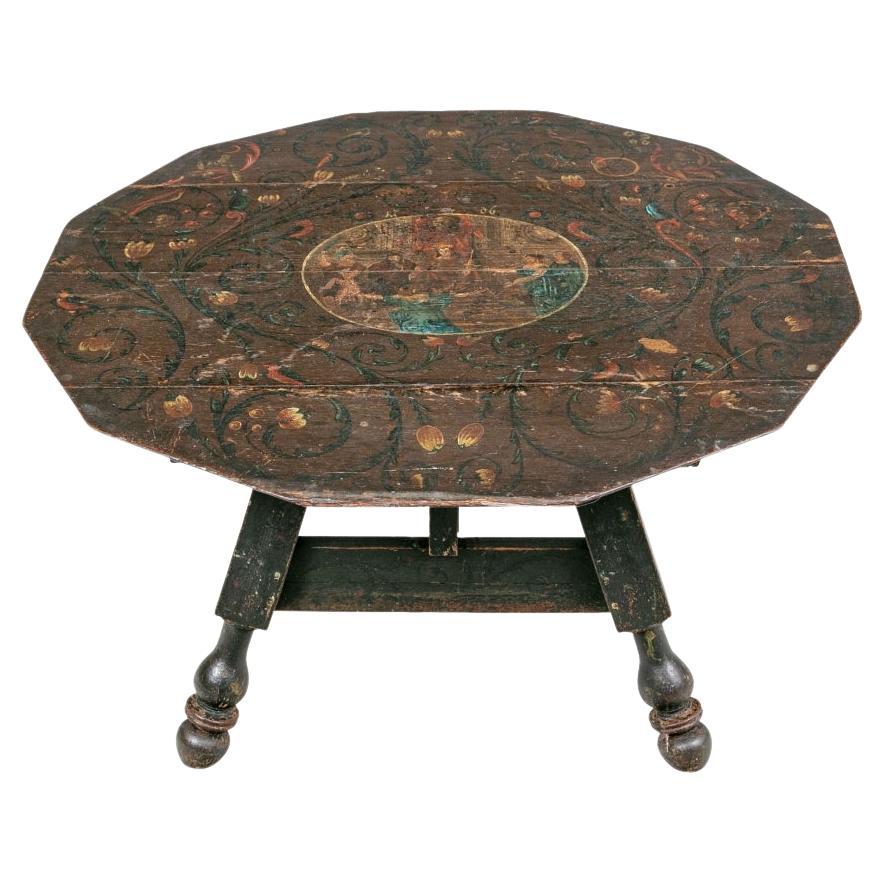
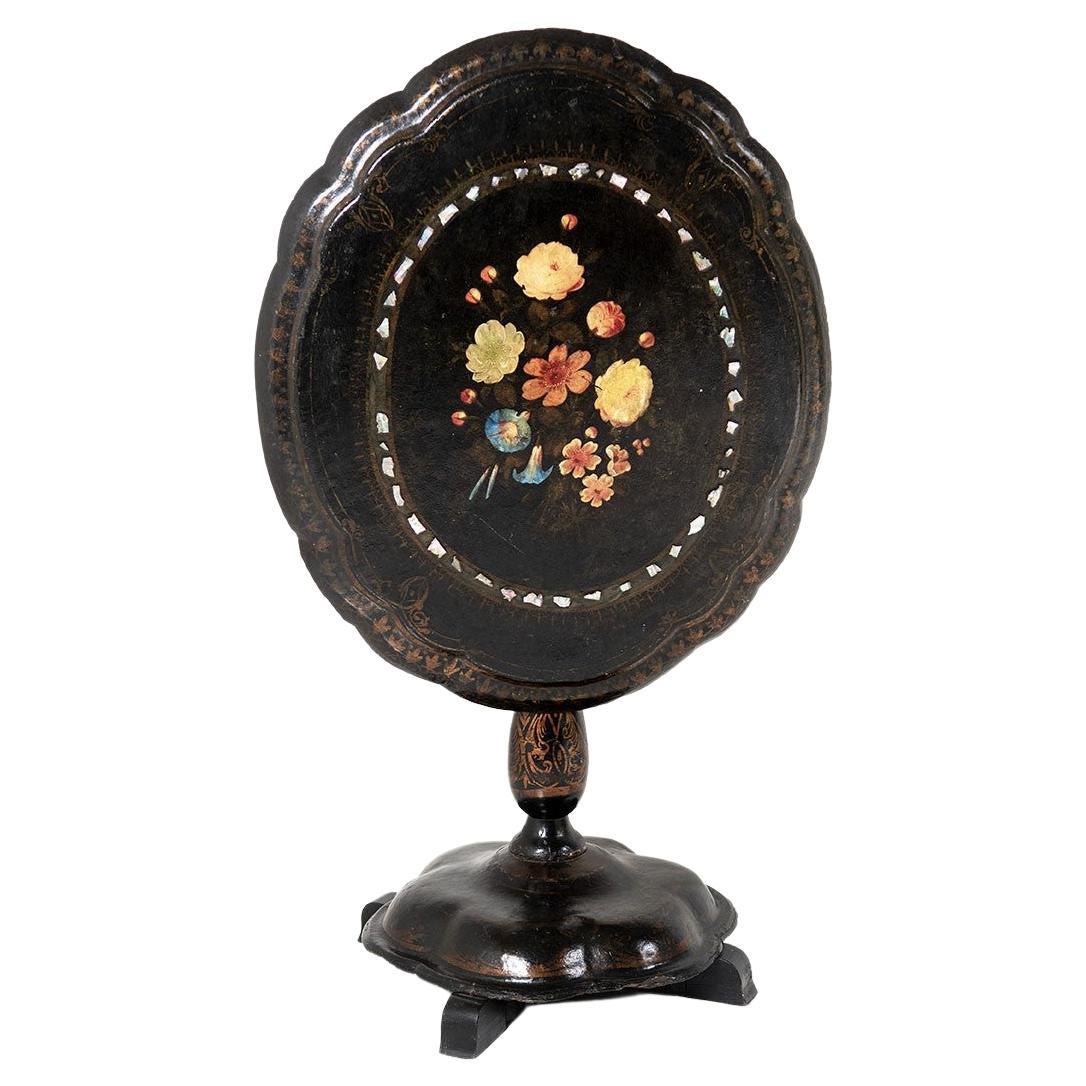
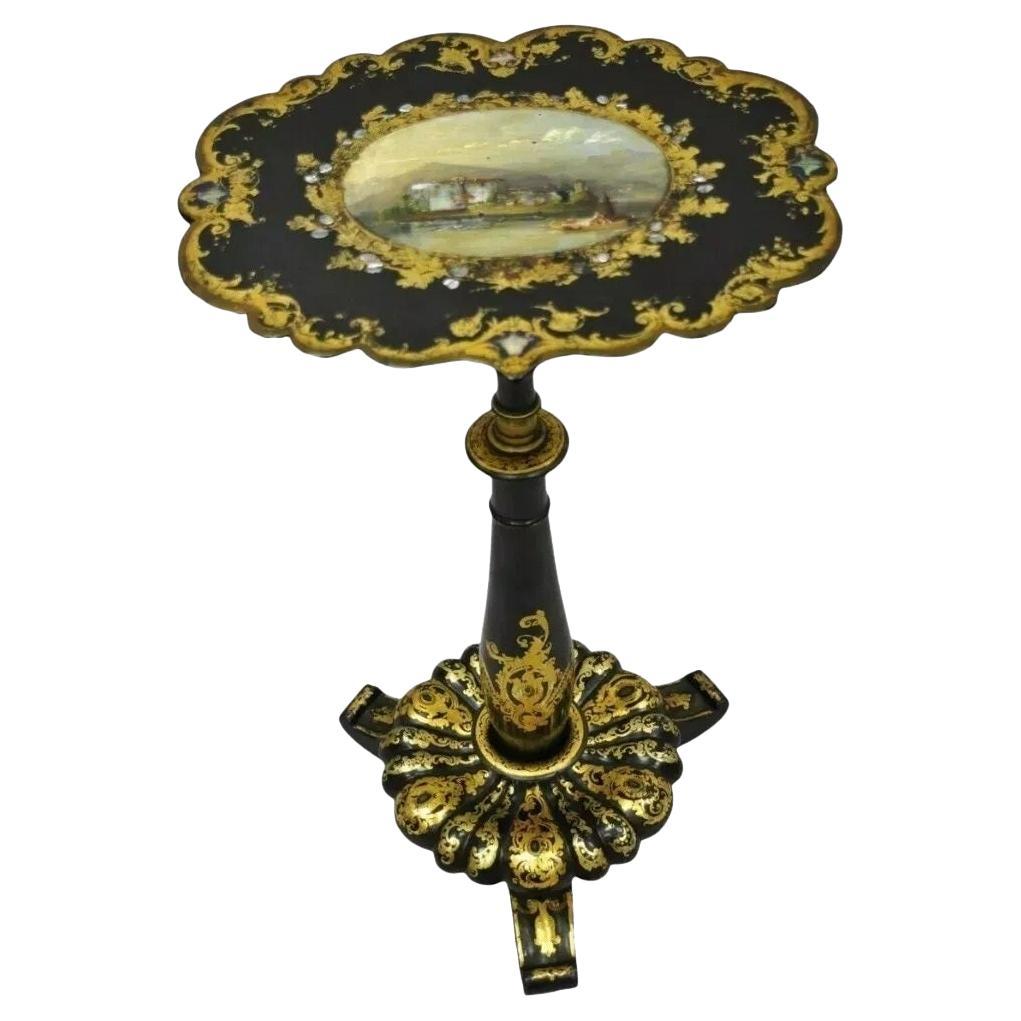
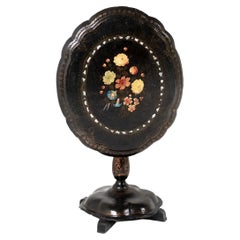
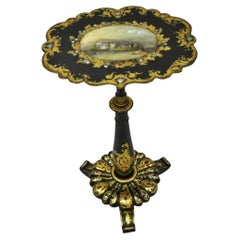
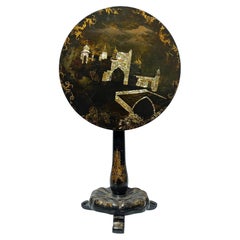
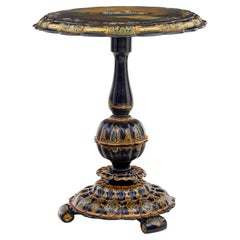
A striking mid-19th century English tilt-top table, masterfully crafted in papier-mâché with japanned decoration and shimmering nacre inlay. This table exemplifies the height of Victorian fascination with East Asian lacquerware, its black japanned surface adorned with intricate floral and landscape motifs including a peacock and swans, beautifully accented with iridescent nacre.
The circular top is mounted on a turned and japanned pedestal with a scalloped, florally decorated tripod base. The tabletop features its original brass catch allowing it to tilt upright for display or storage, a practical and elegant innovation of the era.
About Nacre
Nacre, often known as “mother-of-pearl”, is the iridescent inner layer of mollusc shells. Valued for centuries, it displays a luminous, multicoloured surface that reflects light with a soft, natural glow. In Victorian decorative arts, nacre was widely used as inlay to enhance japanned and lacquered furniture, adding subtle opulence and exotic appeal. Its presence on this table highlights the 19th-century English tradition of combining locally crafted forms with globally inspired materials and finishes.
About Papier-Mâché Furniture
Papier-mâché, from the French for “mashed paper,” has roots in Asian craft traditions, later adopted and refined in England during the 18th and 19th centuries. The process involved layering or moulding paper pulp to create a strong, versatile substrate that could be carved, lacquered, and inlaid like wood. Its lightness and adaptability made it ideal for decorative objects and furniture, and by the Victorian period, it was considered a fashionable medium for luxurious interiors.
Henry Clay’s 1772 Birmingham patent pioneered pasteboard furniture production, and by the mid-1800s, English papier-mâché makers were celebrated for their technical excellence. At the 1851 Great Exhibition, jurors praised papier-mâché pieces for their durability and refined finish, superior in many respects to wood or metal japanned ware inspired by Japanese lacquer techniques.
Condition & Patina
This table retains its original japanned decoration with areas of age-commensurate wear, craquelure, and losses, notably to parts of the nacre inlay, enhancing its authenticity and evocative charm. The base shows surface scuffs and historic repairs, structurally sound and stable for display or gentle use.
Why We Love It
This table is more than furniture; it is a testament to Victorian ingenuity and the era’s poetic engagement with Japanese lacquer traditions. Its peacock and floral motifs, highlighted with glowing nacre, speak of a time when global craft traditions intertwined to create objects of refined beauty and worldly sophistication.
⸻
Dimensions: Diameter 81cm x Height 67cm
Origin: England
Period: Circa 1850
Materials: Papier-mâché, japanned lacquer, nacre inlay, brass catch
⸻
We invite you to explore our storefront for further 19th and 20th century design pieces curated with the same discerning eye.
Please note: Shipping quotes provided by 1stdibs are indicative only. Contact us directly with your shipping requirements so we can source the most competitive and tailored shipping solution for you fully insured.