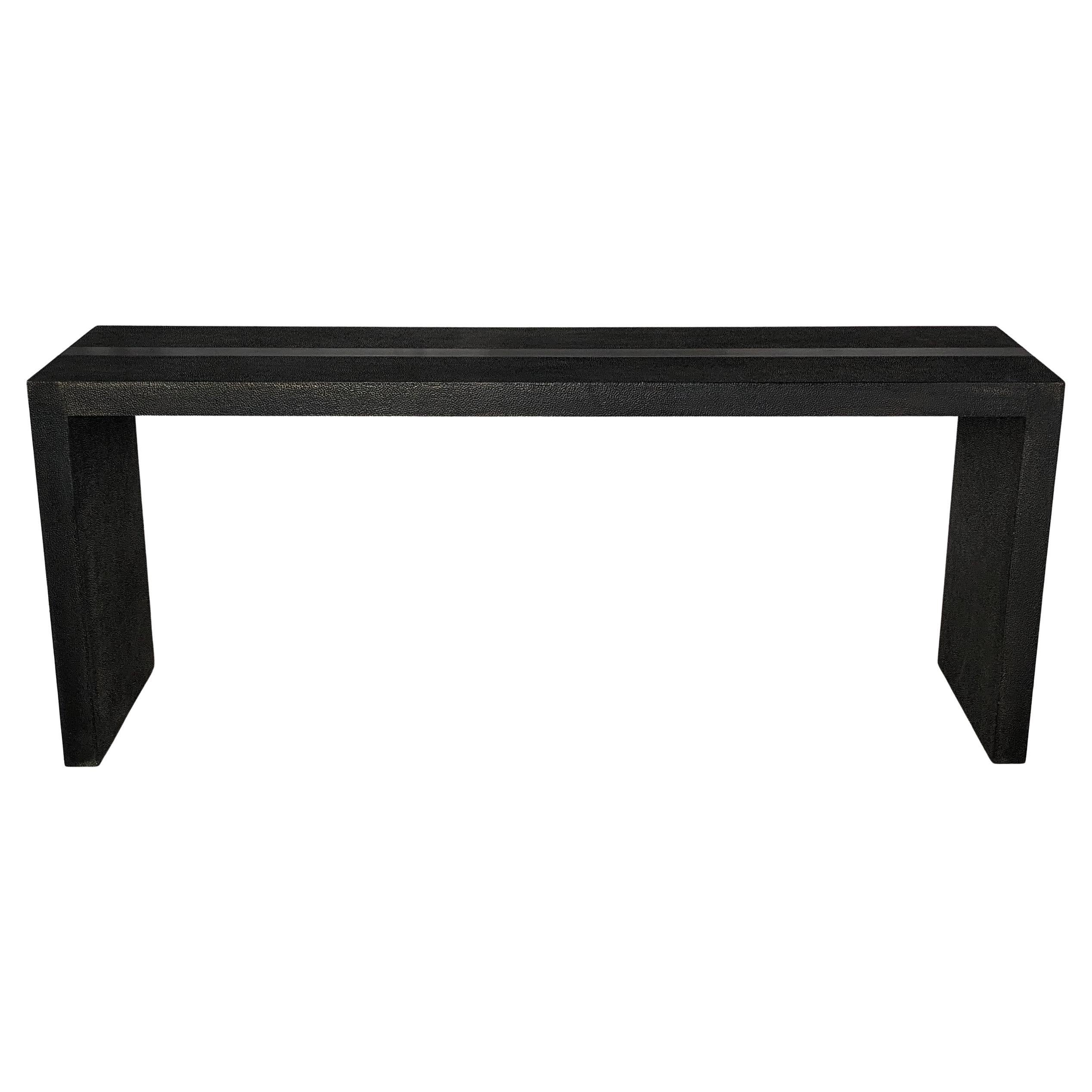
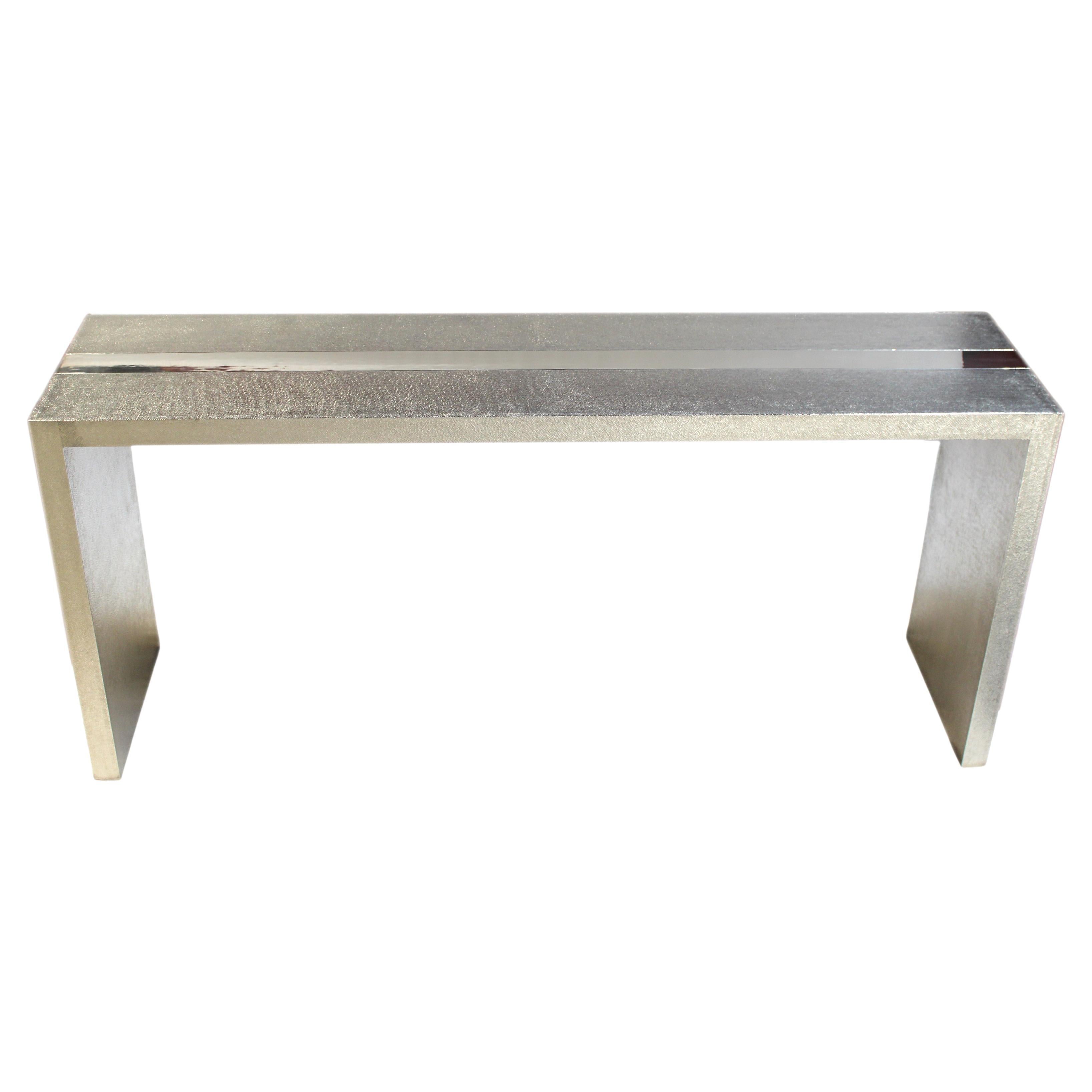
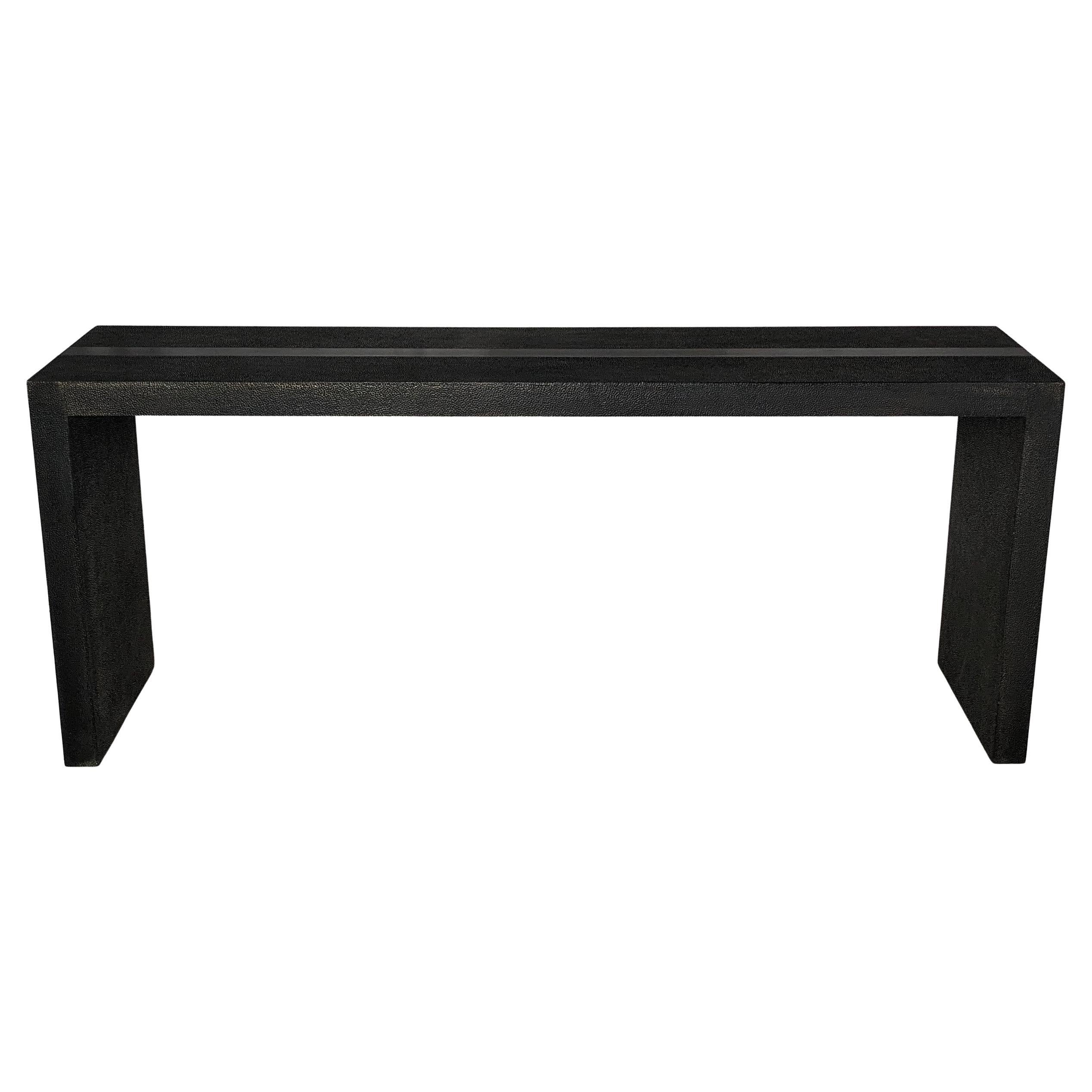
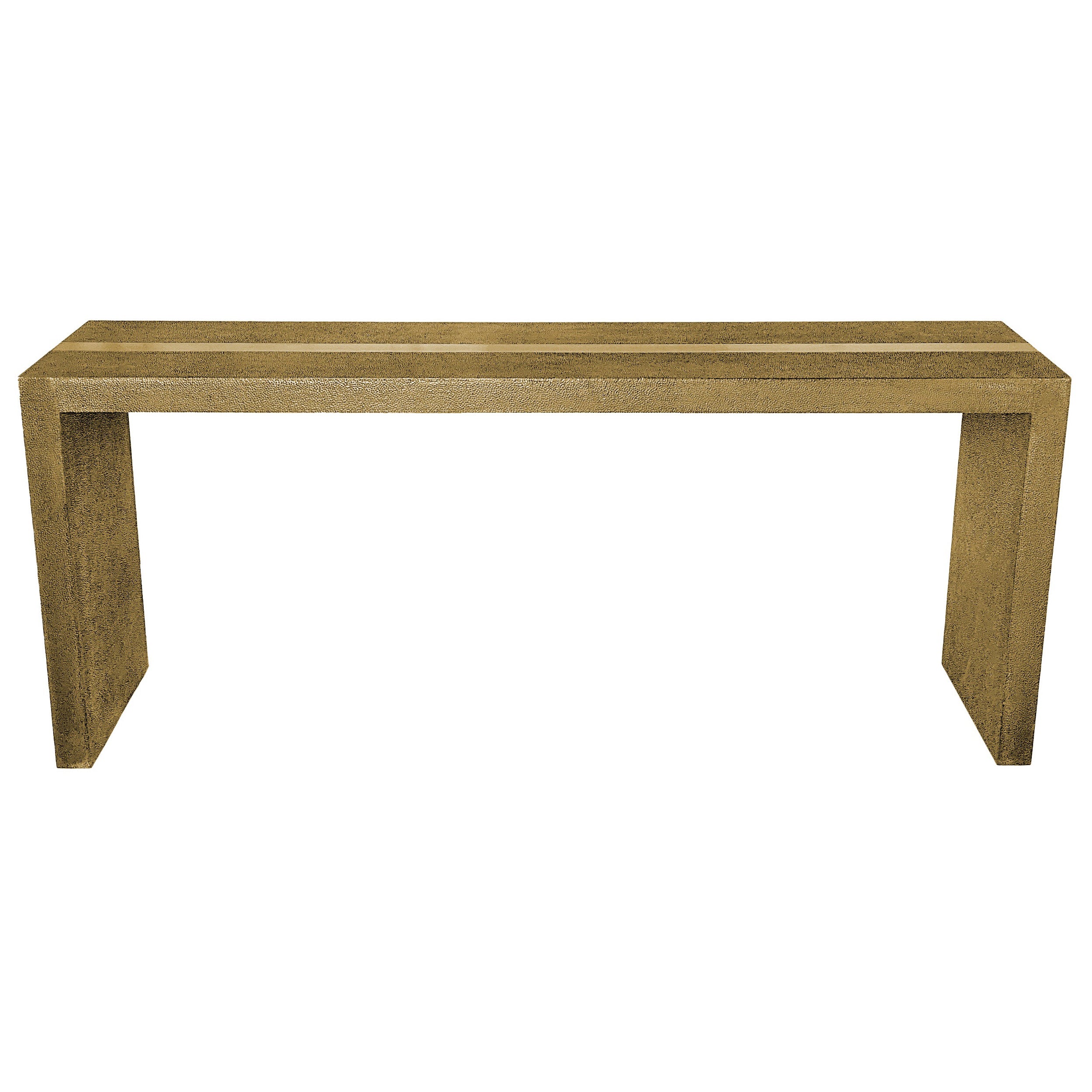
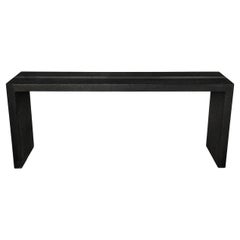
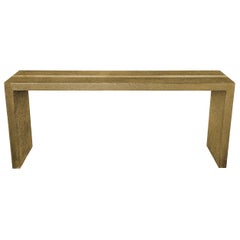
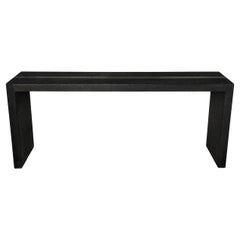
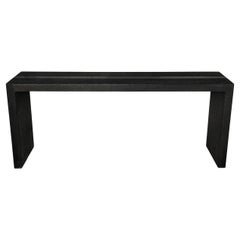
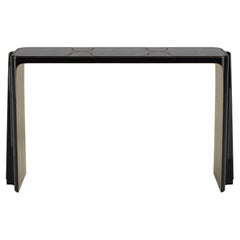
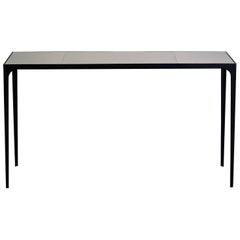
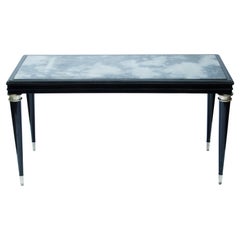
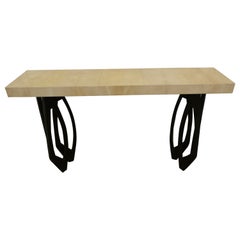
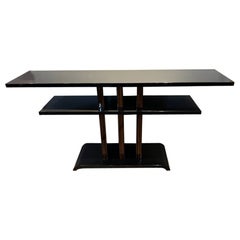
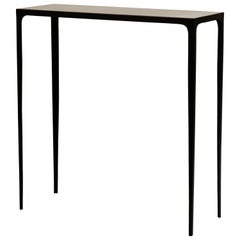
The Rectangular Console Table is a piece of pure architectural restraint. The form is a simple rectangular frame: two vertical side panels that extend to the floor, connected by a flat top, all clad in Medium Hammered Antiqued White Bronze metal. There are no legs, no curves, no applied ornament. What gives the surface its character is the Medium Hammered Antiqued White Bronze hammering itself, and a deliberate smooth strip that runs along the centre of the top and continues down both sides, creating a band of contrast that catches light differently from the hammered surface surrounding it.
The wooden structure is clad in Medium Hammered Antiqued White Bronze metal sheets pattern-cut and fitted by hand to each surface. On the hammered finishes, the craftsmen work the metal surface in two distinct textures within the same piece: the Medium Hammered Antiqued White Bronze hammering across the broad surfaces, and a smooth polished band running through the centre. The seam lines and flush-set nails at the corners and edges are the only surface detail beyond the texture contrast itself. The result is a table that looks as though it was designed by an architect, because it was.
The table measures 72 inches wide, 16 inches deep, and 30 inches tall. The rectangular parsons-style form works as a console table, entry table, hall table, or sofa table. The clean geometric outline reads well against both plain and richly detailed walls. Available in medium and fine hammered finishes across all four metals. Custom sizing available. Made entirely to order.
Designed by Alison Spear for Stephanie Odegard Collection. Alison Spear, AIA, is an award-winning New York architect and interior designer whose work has been recognised with multiple AIA Awards of Excellence. She designed this table during a visit to Rajasthan with Stephanie Odegard, directing the craftsmen to work two different hammering textures into the same metal surface. The piece reflects her architectural approach: form defined by proportion and material rather than ornament. Produced in Udaipur.
Made to order, each piece may show slight variations that are a natural result of handmade metal-clad production. The Medium Hammered Antiqued White Bronze surface will gradually mellow in tone over time, which is part of the material's natural character.
The images shown in this listing may be photographed in different lighting conditions or may include 3D illustrations created to represent the available finishes. We warmly encourage customers to request an individual sample or a complete sample set of all twelve finishes to experience the surface, tone, and character firsthand.
Please note that moisture in the air, seasonal climate shifts, and the natural movement of wood over time may cause the metal surface to develop slight wrinkles or occasional bubbling. We use well-seasoned reclaimed teak and high-quality marine-grade MDF wherever technically possible to minimise these natural effects, but complete stability of metal cannot be guaranteed.
None of our metal-clad pieces are sealed with a permanent protective coating. This allows the metal to age naturally and beautifully over time. We polish every piece carefully before packing. A clear PU coat can be applied on request.
The antiqued white bronze finish will react with natural elements the fastest in the beginning, but it too will stop reacting and settle into a stable state like copper after 6-12 months. Since it is already antiqued and looks intentionally tarnished, this early reaction does not change the overall appearance. In that way, this surface is the most forgiving.
The antiqued white bronze finish is done by applying an acidic chemical over the white bronze to recreate a natural patination. Like the aging of silver, copper, or brass, the final result and colour uniformity cannot be guaranteed. The goal of this finish is to achieve rainbow-like tones with dull, shiny, cloudy, and lightly streaked patches to give an illusion of antiquing.
As a default practice, we offer a protective wipe-on PU coat only on this finish. If a designer prefers the natural, uncoated aging, we can leave it untreated just like the other finishes. A PU coat helps keep the surface looking the same as when shipped, but it does not create a fully uniform patina; natural variation will always remain part of this finish.