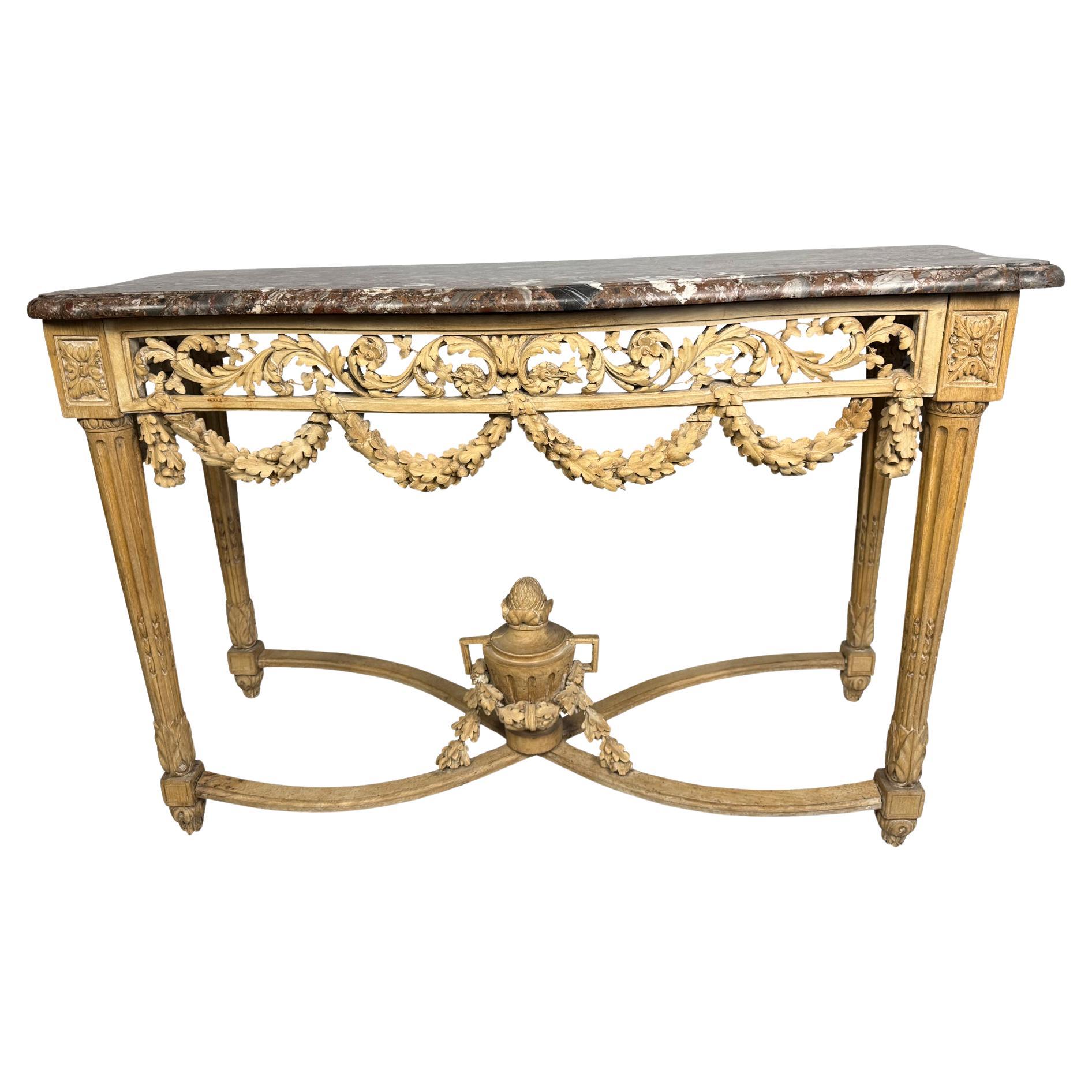
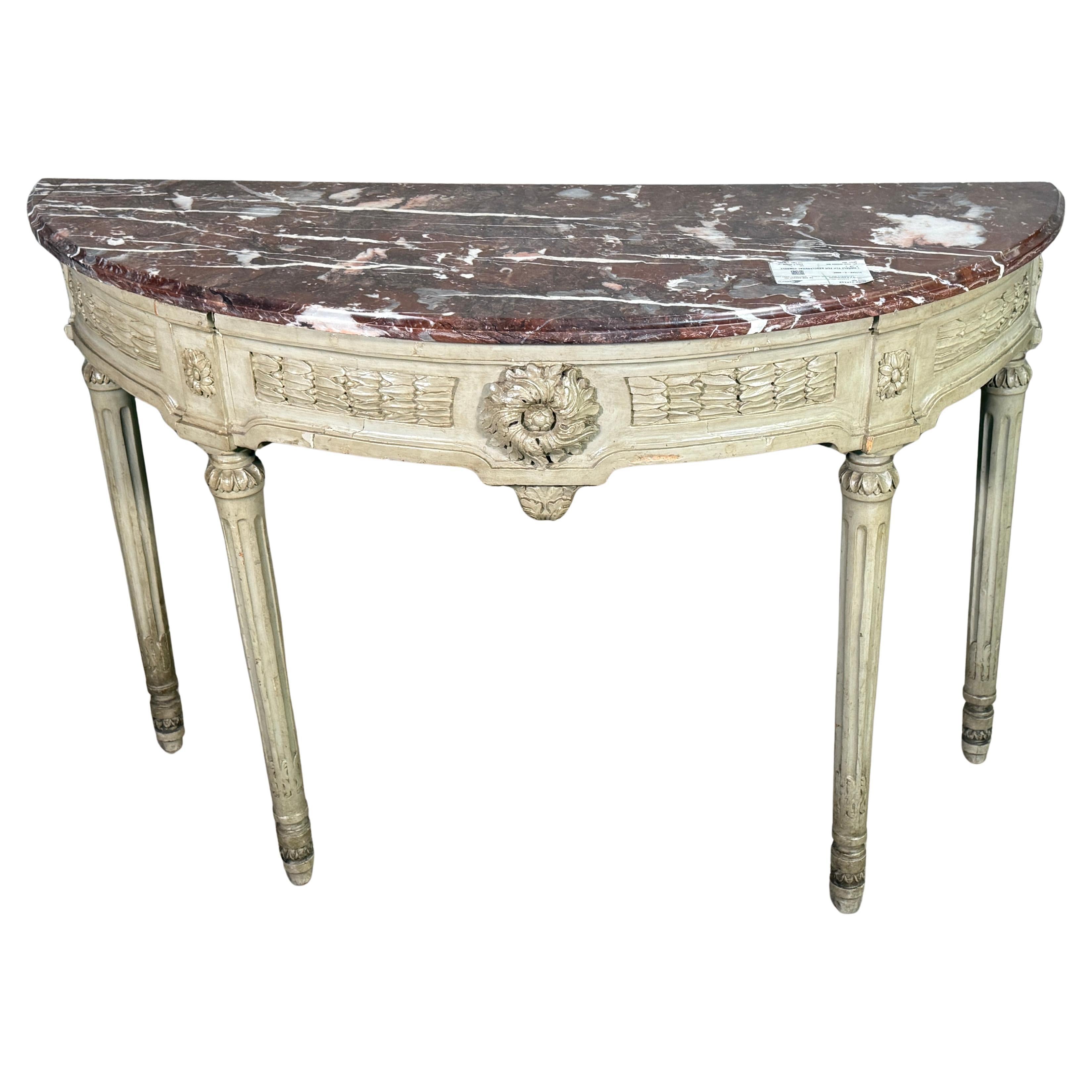
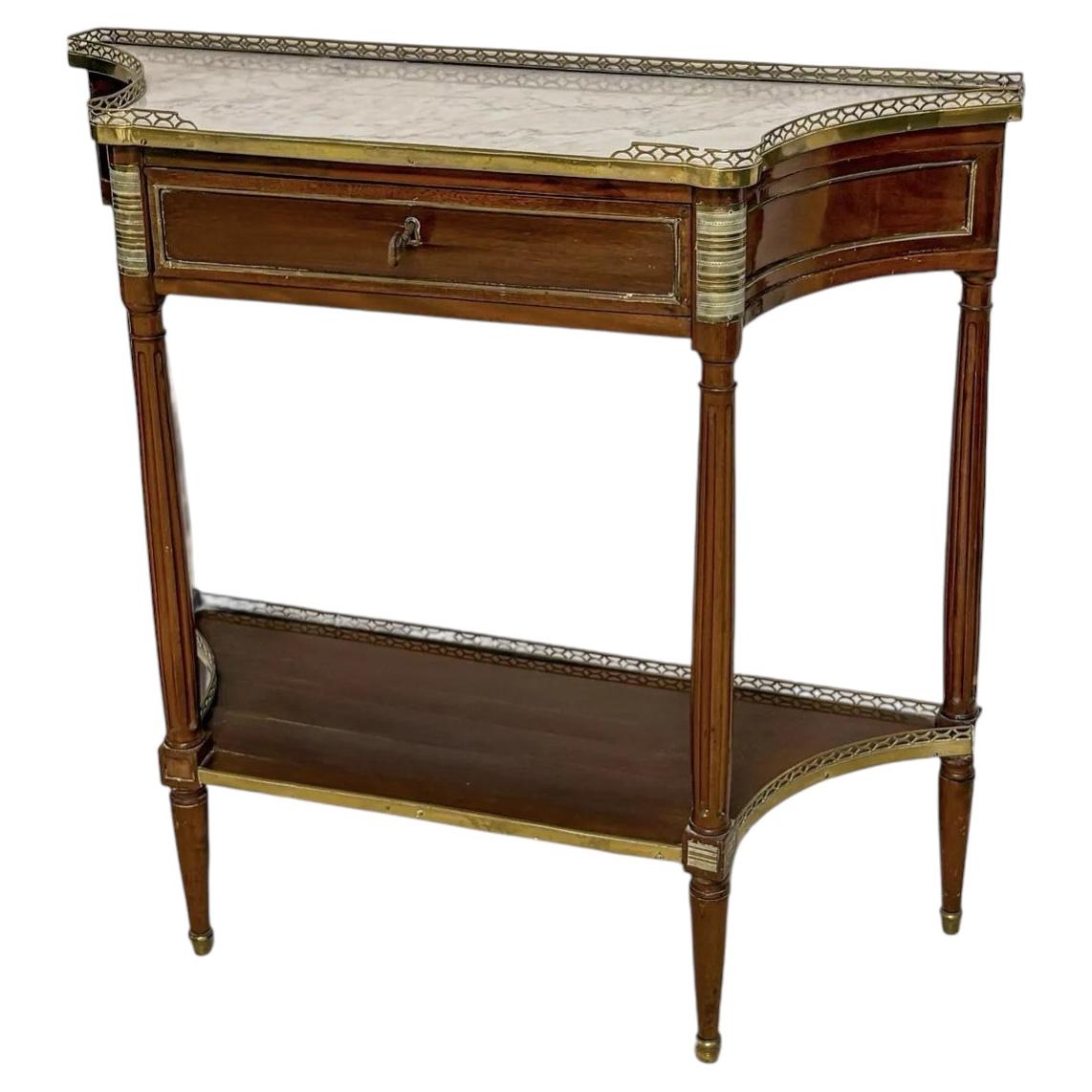
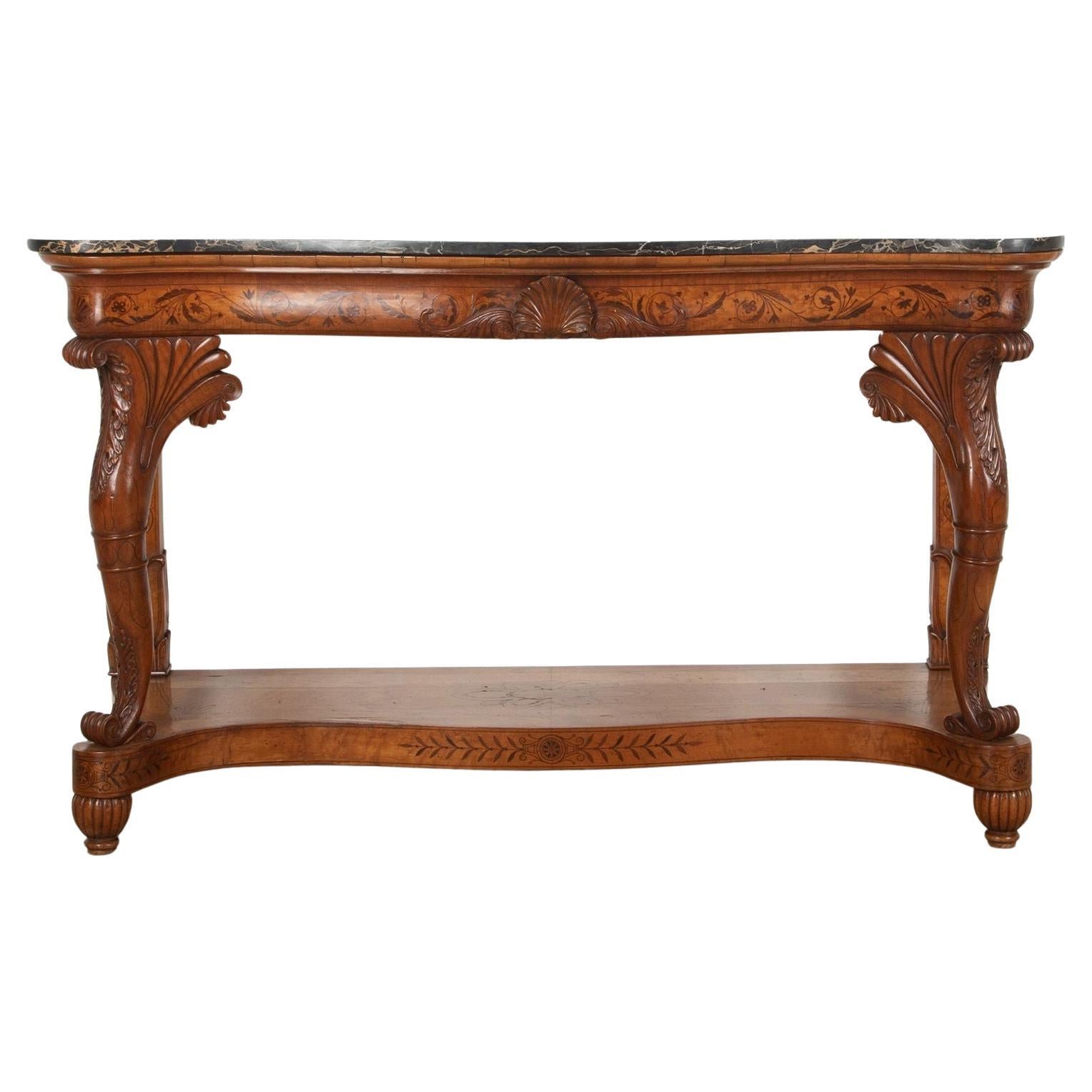
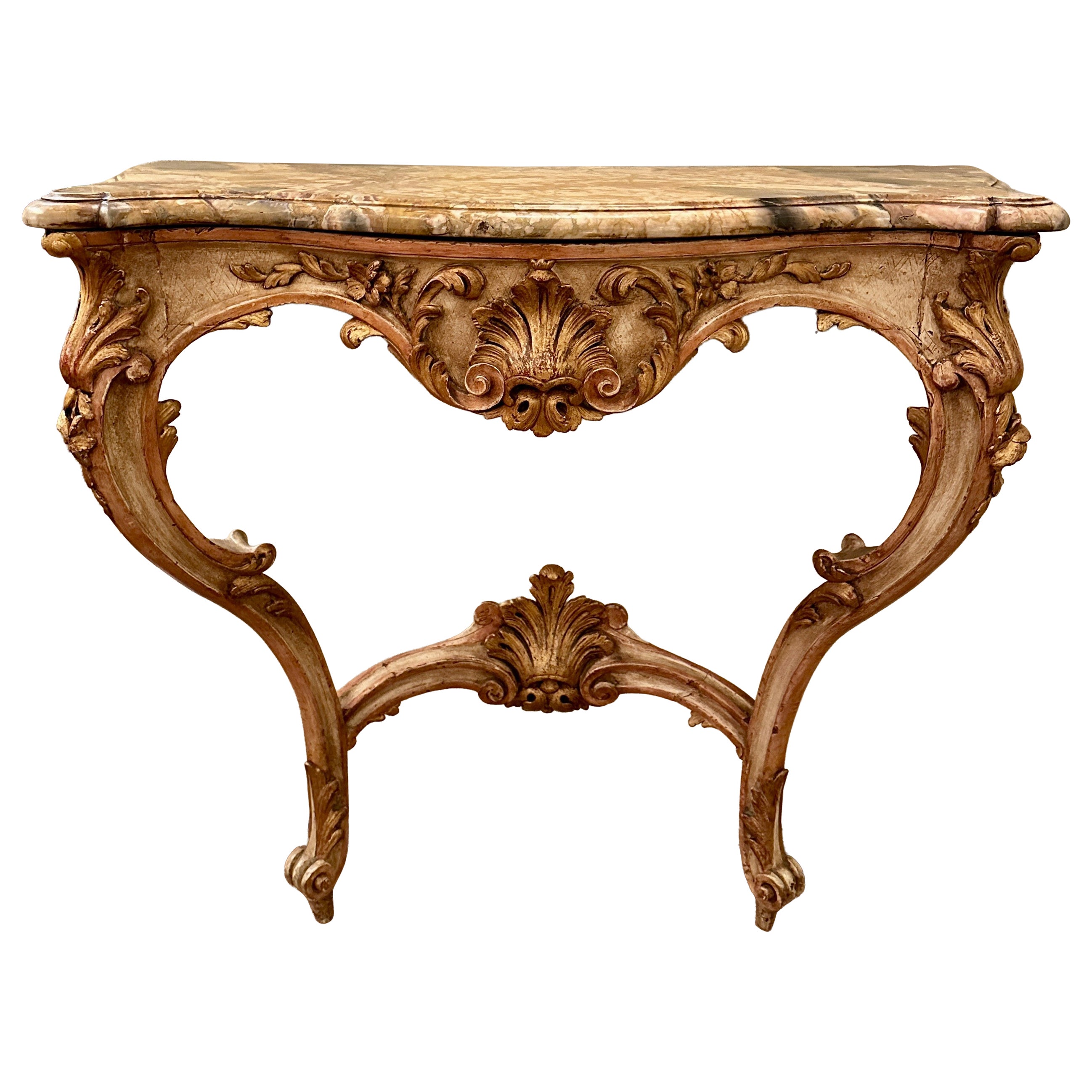
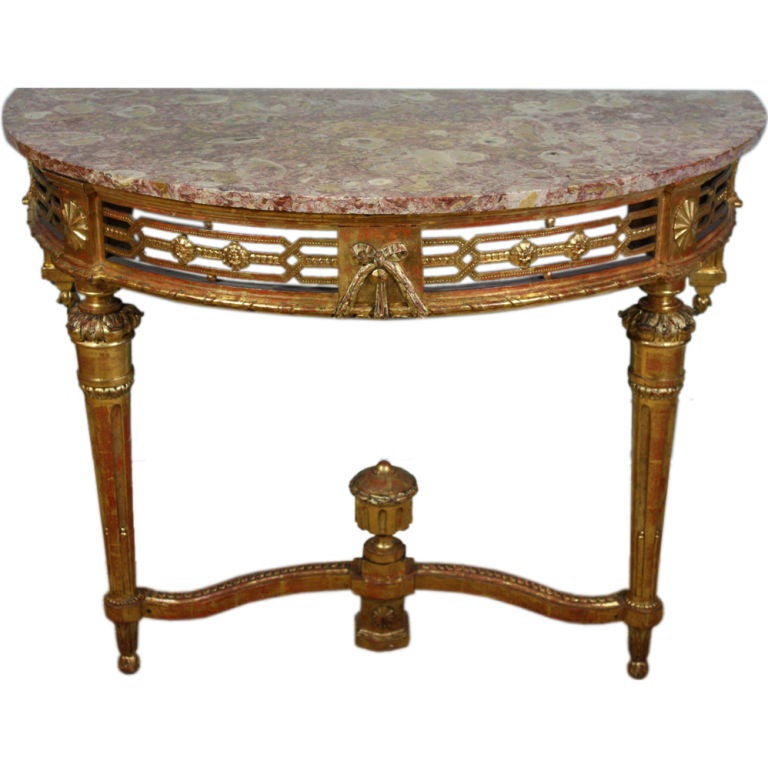
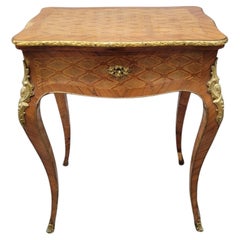
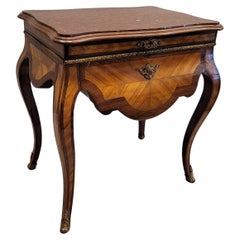
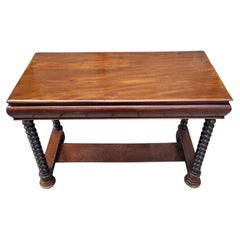
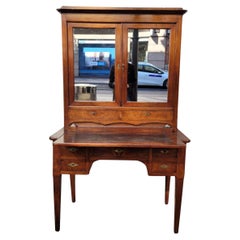
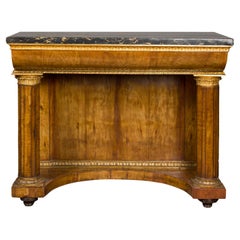
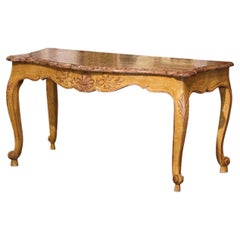
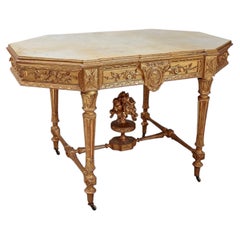
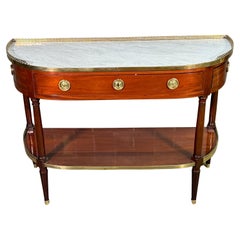
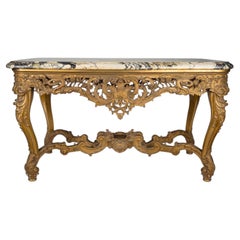
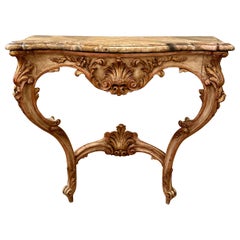
One of a kind and very refined French Napoleon III console table in rosewood and marble. Tall, slender, and lightweight piece with a wavy silhouette. Beneath the marble top, three small horizontally arranged registers are outlined with marquetry. Tall, narrow legs, straight but with a cabriole finish. Ornamented with ironwork and sablots. The marble top on the upper part features molded edges, while the lower one serves as an additional low shelf. Both are in earth tones, ranging from reddish to beige. The sides are open, and a large mirror occupies the back of the piece, providing visual lightness and helping to visually enhance the lighting in the space where it is placed. Perfect for an entryway, as a hall piece, or for the living room.
Signed and numbered "H 4535", from a prestigious cabinetmaking workshop located on the Rue du Faubourg Saint-Honoré, an emblematic area of Paris. Historically considered one of the most elegant streets in the world, it has housed some of the most exclusive workshops, headquarters, and shops. Some examples: at number 55 is the Élysée Palace, originally the Hôtel d'Évreux, completed and decorated in 1722; Used by Napoleon's government since 1808, it is currently the official residence of the President of France. At number 24, the Hermès flagship store, founded in 1837 and located at this address since 1880. At number 56, the offices of the French edition of Vogue magazine in the Condé Nast Publications Building, as well as several luxury hotels and renowned brands.
Style and Period: Napoleon III or Second Empire
The Napoleon III or Second Empire style is so named because it emerged in France at that time. Strictly speaking, the Second Empire was proclaimed in 1852 and ended in 1870, led by Louis-Napoleon Bonaparte as Emperor of the French, although in the artistic sense it extended a few years longer (until 1880). This style was very popular among the French bourgeoisie. The emperor himself was involved in the artistic development of the time, although more closely linked to architecture. However, it is Empress Eugénie who is credited with the evolution of the decorative arts.
Although inspired by styles of the past, beginning with Classical Antiquity, the Renaissance, and even Louis XVI, much beloved by Eugénie, the style's most representative characteristic is sumptuousness and ostentation, always aspiring to display wealth and opulence.
It is not a style designed specifically for the Second Empire, but rather a recovery of the various great French styles of previous centuries, a sort of compilation of French decorative trends. Special reference is made to Louis XIV, Louis XV, Baroque, and Rococo, and gradually to Louis XVI, based on eclecticism. In short, these are the decorative styles that had positioned France at the forefront of interior and furniture design in Europe, both for quality and for originality and beauty.
Technical Data
Workshop: Faubourg St. Honoré
Style: Napoleon III
Materials: Rosewood, marble, mirror, and hardware
Period: Late 19th century
Country of Origin: France
Good condition commensurate with age and use / Marble top with minor damage that does not affect the overall appearance of the piece
Dimensions: 100 x 138 x 47 cm