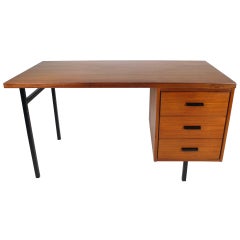
Three Drawer Danish Desk with Teak Wood Construction
Located in Dallas, TX
Three drawer Danish desk. Desk constructed of teak with square metal legs. Good original condition.
Category
Vintage 1950s Danish Mid-Century Modern Desks
Materials
Metal
Architect, designer, and writer George Nelson was a central figure in the mid-century American modernist design movement; and his thoughts influenced not only the furniture we live with, but also how we live.
Nelson came to design via journalism and literature. Upon receiving his bachelor’s degree in architecture from Yale in 1931, he won the Prix de Rome fellowship, and spent his time in Europe writing magazine articles that helped bring stateside recognition to Ludwig Mies van der Rohe, Gio Ponti, Le Corbusier and other canonical modernist architects.
In the 1940s, Nelson wrote texts that suggested such now-commonplace ideas as open-plan houses, storage walls and family rooms. D.J. De Pree, the owner of the furniture maker Herman Miller, was so impressed by Nelson that in 1944 — following the sudden death of Gilbert Rohde, who had introduced the firm to modern design in the 1930s — he invited Nelson to join the company as its design director. There Nelson’s curatorial design talents came to the fore.
To Herman Miller he brought such eminent creators as Charles and Ray Eames, Isamu Noguchi, and the textile and furniture designer Alexander Girard. Thanks to a clever contract, at the same time as he directed Herman Miller he formed a New York design company, George Nelson & Associates, that sold furniture designs to the Michigan firm. Nelson's studio also sold designs for clocks to the Howard Miller Clock Company, a manufacturer that was initially part of Herman Miller before it became an offshoot that was helmed by Howard Miller, D.J. De Pree's brother-in-law.
Nelson’s New York team of designers (who were rarely individually credited) would create such iconic pieces as the Marshmallow sofa, the Coconut chair, the Ball clock, the Bubble lamp series and the many cabinets and beds that comprise the sleek Thin-Edge line.
For dedicated collectors, as well as for interior designers who look beyond “the look,” there is a “cool factor” inherent to vintage pieces from George Nelson and others. Nelson was in on it from the start, and it’s valuable to have a piece that was there with him.
But still, as is evident from the offerings from dealers on 1stDibs, in any of the designs, in any iteration whose manufacture Nelson oversaw and encouraged, there are shining elements of lightness, elegance, sophistication — and a little bit of swagger. George Nelson felt confident in his ideas about design and didn’t mind letting the world know.
No other business of its kind did more than the Herman Miller Furniture Company to introduce modern design into American homes. Working with legendary designers such as Charles and Ray Eames, George Nelson and Alexander Girard, the Zeeland, Michigan-based firm fostered some of the boldest expressions of what we now call mid-century modern style. In doing so, Herman Miller produced some of the most beautiful, iconic and, one can even say, noblest chairs, sofas, tables and other furniture ever.
Founded in 1923, Herman Miller was originally known for grand historicist bedroom suites: heavily ornamented wood furniture that appealed to a high-minded, wealthier clientele. The company — named for its chief financial backer — began to suffer in the early 1930s as the Great Depression hit, and D.J. De Pree, the company’s CEO, feared bankruptcy. In 1932, aid came in the form of Gilbert Rohde, a self-taught furniture designer who had traveled widely in Europe, absorbing details of the Art Deco movement and other modernist influences. After persuading De Pree that the growing middle class required smaller, lighter household furnishings, Rohde set a new course for Herman Miller, creating sleek chairs, tables and cabinetry that were the essence of the Streamline Moderne style.
Rohde died suddenly in 1944. The following year, De Pree turned to George Nelson, an architect who had written widely about modern furniture design. Under Nelson’s leadership, Herman Miller would embrace new technologies and materials and audacious biomorphic forms.
Some of the pieces the company produced are now emblems of 20th century American design, including the Eames lounge chair and ottoman and Nelson’s Marshmallow sofa and Coconut chair. Such instantly recognizable furnishings have become timeless — staples of a modernist décor; striking, offbeat notes in traditional environments.
Find a range of vintage Herman Miller office chairs, desks, coffee tables and other furniture on 1stDibs.
Three Drawer Danish Desk with Teak Wood Construction
Located in Dallas, TX
Three drawer Danish desk. Desk constructed of teak with square metal legs. Good original condition.
Metal
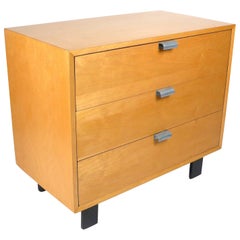
George Nelson for Herman Miller Mid Century Modern Chest of Drawers 1955 Maple
By George Nelson
Located in Dallas, TX
A stunning example of mid-century modern craftsmanship, this George Nelson three-drawer cabinet from the Basic Cabinet Series embodies timeless elegance. Designed in the 1950s, it sh...
Birch, Lacquer
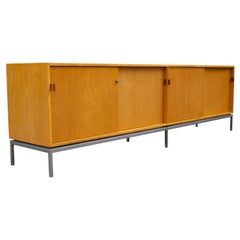
Florence Knoll Maple Credenza with Leather Pulls and Oak Drawers Early 1950s
By Florence Knoll
Located in Dallas, TX
Early and rare credenza in maple by Florence Knoll for Knoll International. This classic modern icon is absolutely amazing and was constructed with a beautiful maple, oak drawers, na...
Steel
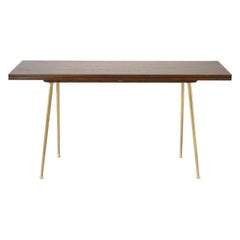
T.H. Robsjohn Gibbings Flip-Top Convertible Console Table for Widdicomb 1950s
By T.H. Robsjohn-Gibbings, Widdicomb Furniture Co.
Located in Dallas, TX
This console table has a deep espresso-finished mahogany top that sits upon four slender and graceful solid brass legs. It was designed in 1953 for Widdicomb Furniture by TH Robsjohn...
Brass
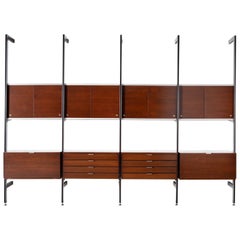
Comprehensive Storage System by George Nelson for Herman Miller
By Herman Miller, George Nelson
Located in Dallas, TX
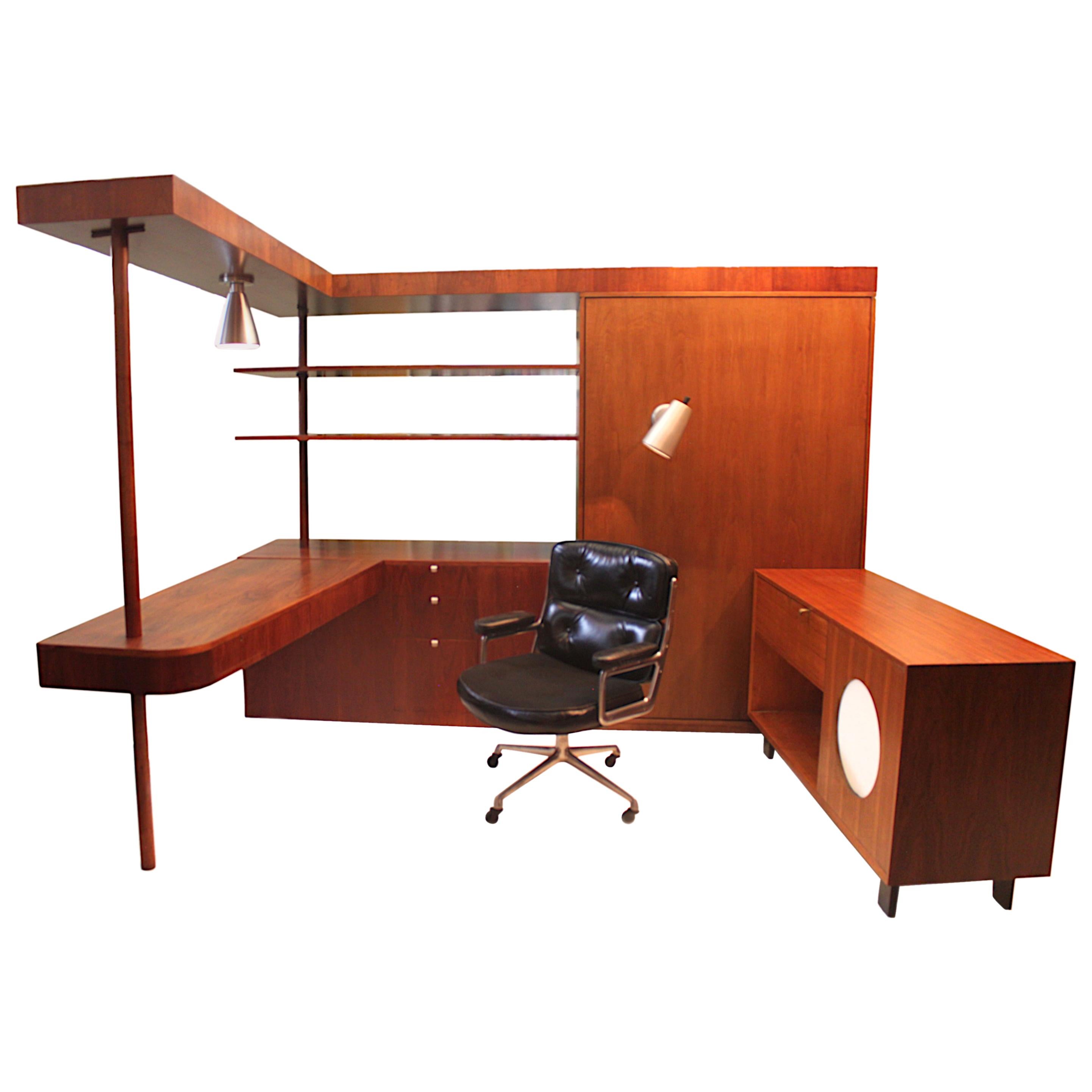
Early production 'CSS" - Comprehensive Storage System designed by George Nelson for Herman Miller, 1959. This system is in excellent condition with the early Herman Miller lable cons...
Aluminum
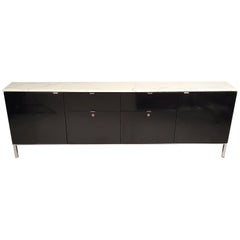
Florence Knoll Style Credenza with Matching File Cabinet by by Giacomo Buzzitta
By Stow Davis
Located in Dallas, TX
Beautiful credenza with matching file cabinet designed by Giacomo Buzzittan for Stow Davis. The matching set is constructed of Carrara marble, black lacquer with chromed steel legs a...
Marble, Steel
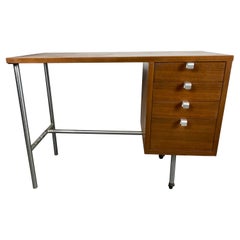
Early George Nelson Desk / Return, Child's Desk, Modernist, Herman Miller
By George Nelson, Herman Miller
Located in Buffalo, NY
Early George Nelson desk / return, child's desk, Modernist, Herman Miller, Retains original Herman Miller foil label, 4 drawers, pencil dividers, steel frame, minor pitting (lower right side bottom). Original designed for larger desk, return, typewriter desk...
Aluminum, Steel
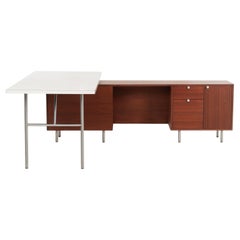
George Nelson for Herman Miller Executive Office desk and Return 1955
By Herman Miller, George Nelson
Located in Chicago, IL
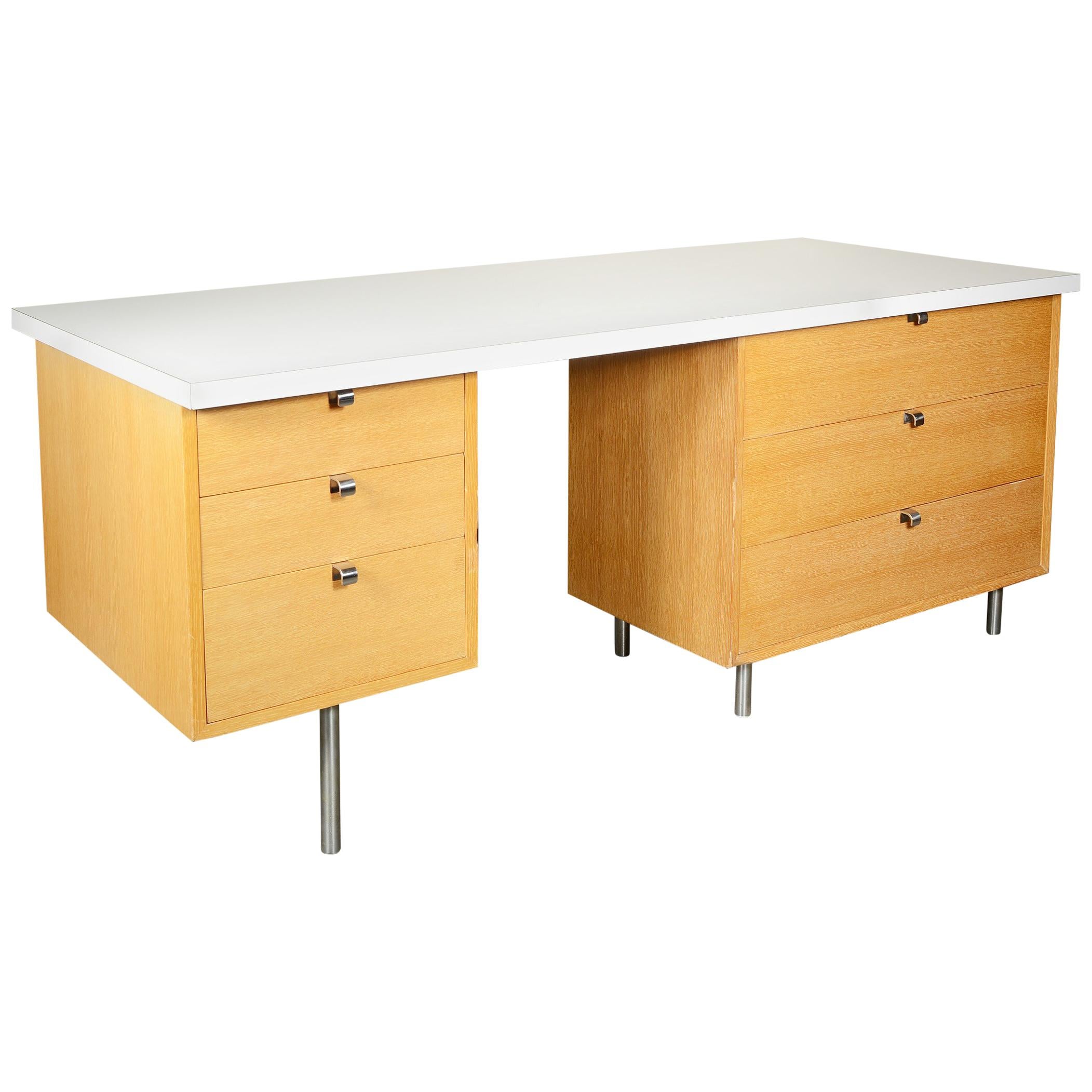
George Nelson for Herman Miller Executive Office Desk and Return, 1955 Walnut case with laminate top and aluminum “H” base legs. The long cabinet is finished on all sides, featuring ...
Aluminum
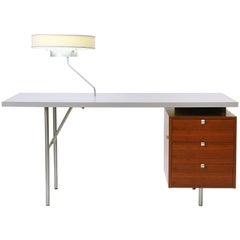
Writing Desk by George Nelson for Herman Miller
By George Nelson, Herman Miller
Located in Sagaponack, NY
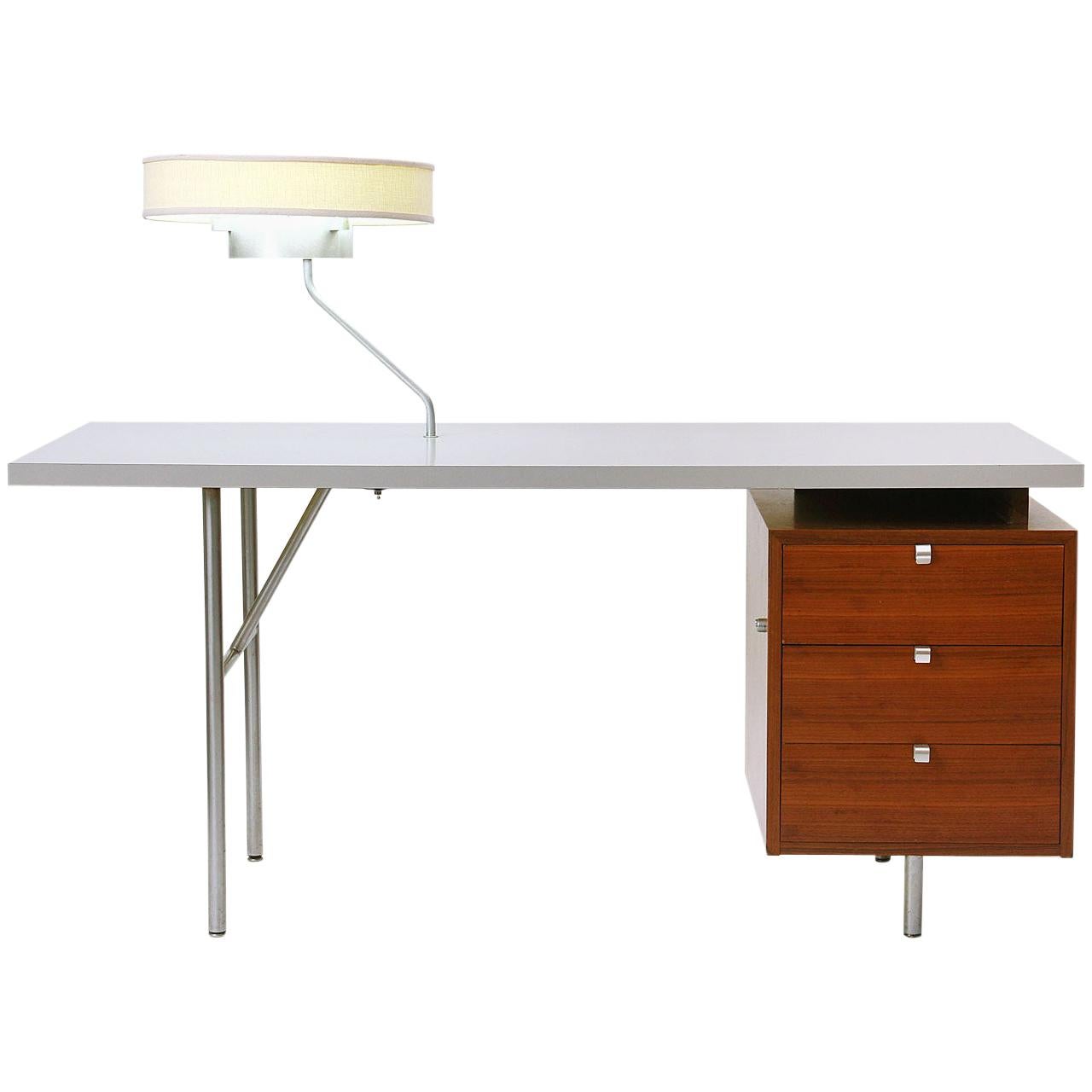
A single pedestal writing desk by George Nelson for Herman Miller with a built-in pivoting lamp. Lamp is 18" H.
Steel
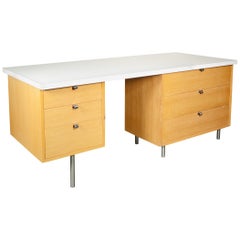
George Nelson Desk for Herman Miller
By Herman Miller, George Nelson
Located in San Mateo, CA
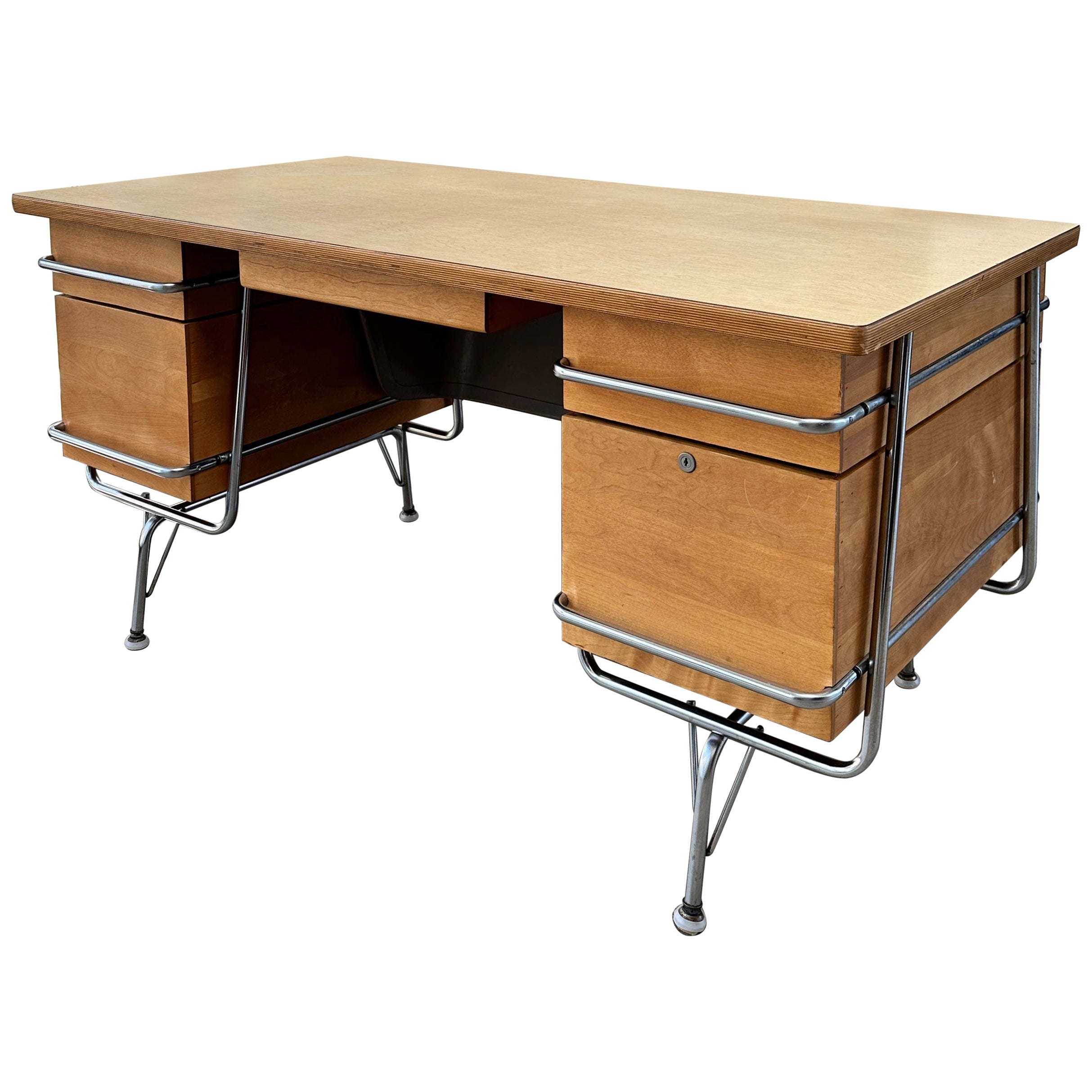
Double pedestal desk by Herman Miller. This desk was probably a custom order. There are three wide drawers and three small drawers. The top small drawer has a sliding pencil...
Chrome
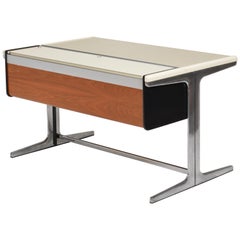
George Nelson for Herman Miller 'Action Office 1' Desk
By George Nelson, Herman Miller
Located in Los Angeles, CA
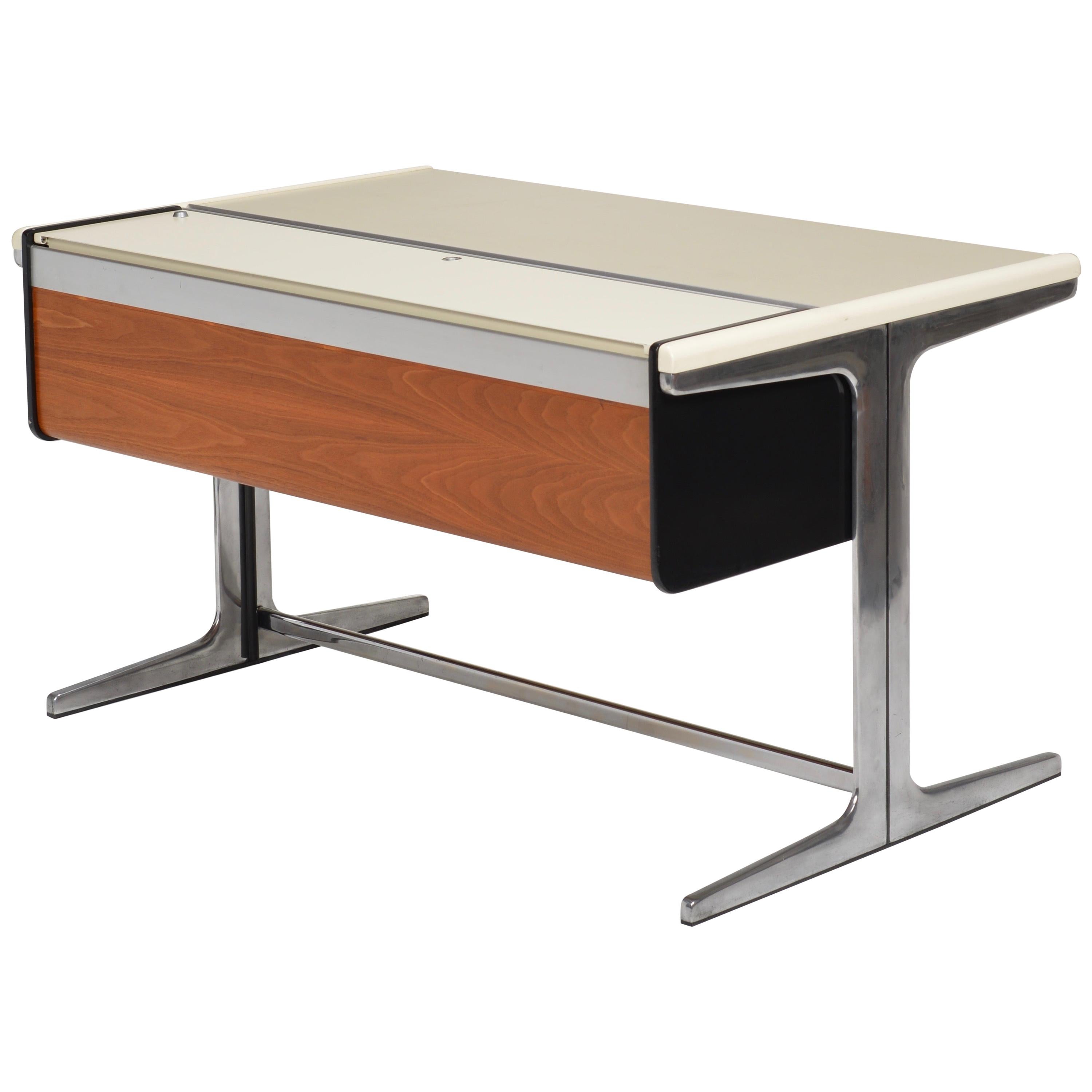
Early George Nelson Action Office 1 desk in original condition with minor wear. George Nelson for Herman Miller, polished aluminum, plastic laminate, w...
Metal
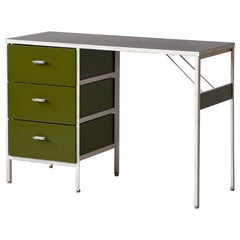
Steelframe Desk by George Nelson for Herman Miller
By George Nelson, Herman Miller
Located in Chicago, IL
c. 1960s. USA. Laminate top with newly refinished avocado green drawers. Original pulls. Remnants of a table in one drawer.
Steel
The prolific manufacturer has partnered with many of the world’s top designers since opening its doors in 1923. Here are some of the company’s greatest hits, which helped transform the American home and office.
Maggie and Anne Genovese, of Forsyth, teamed up with fashion designer Nikki Kule to reimagine some classic pieces.