Material and Time
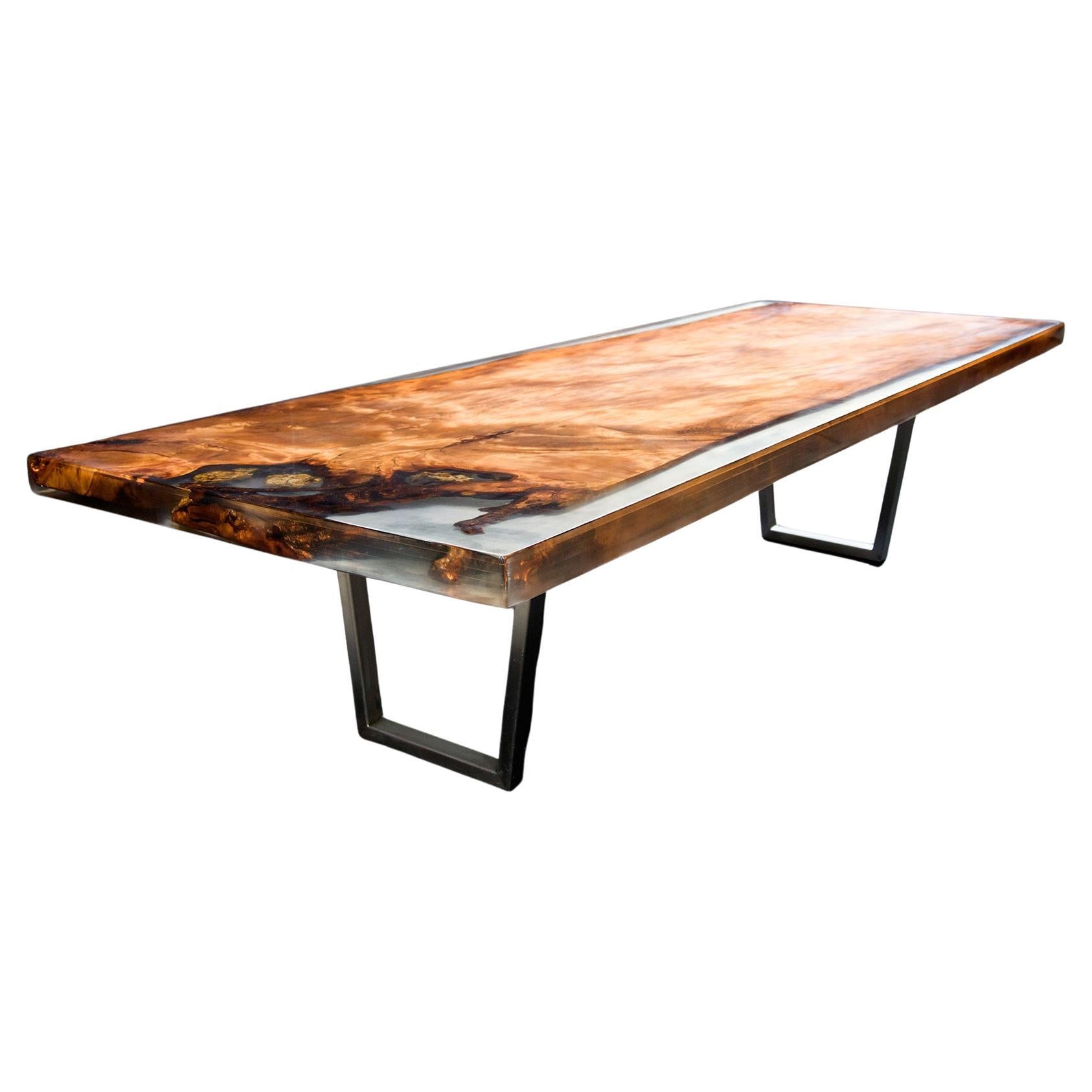
This singular work was created from a monumental one-piece Ancient Kauri structure recovered from the swamplands of New Zealand. The subfossil wood was preserved for thousands of years in oxygen-poor conditions and scientifically radiocarbon dated to approximately 41,000 years old. Within this extraordinary span of time, a material substance has survived that still reads clearly through its depth, density, and quiet presence.
Form and Sculptural Presence
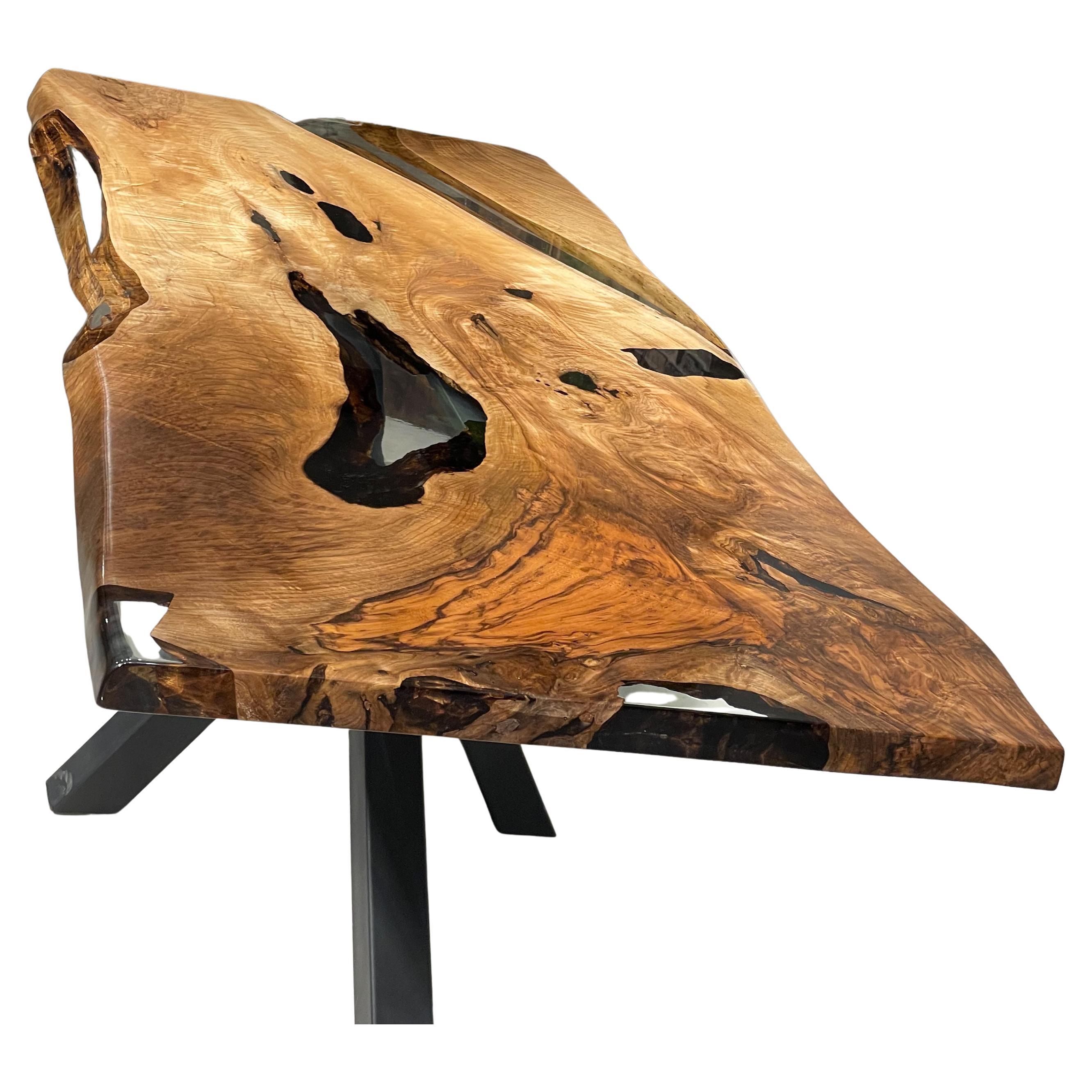
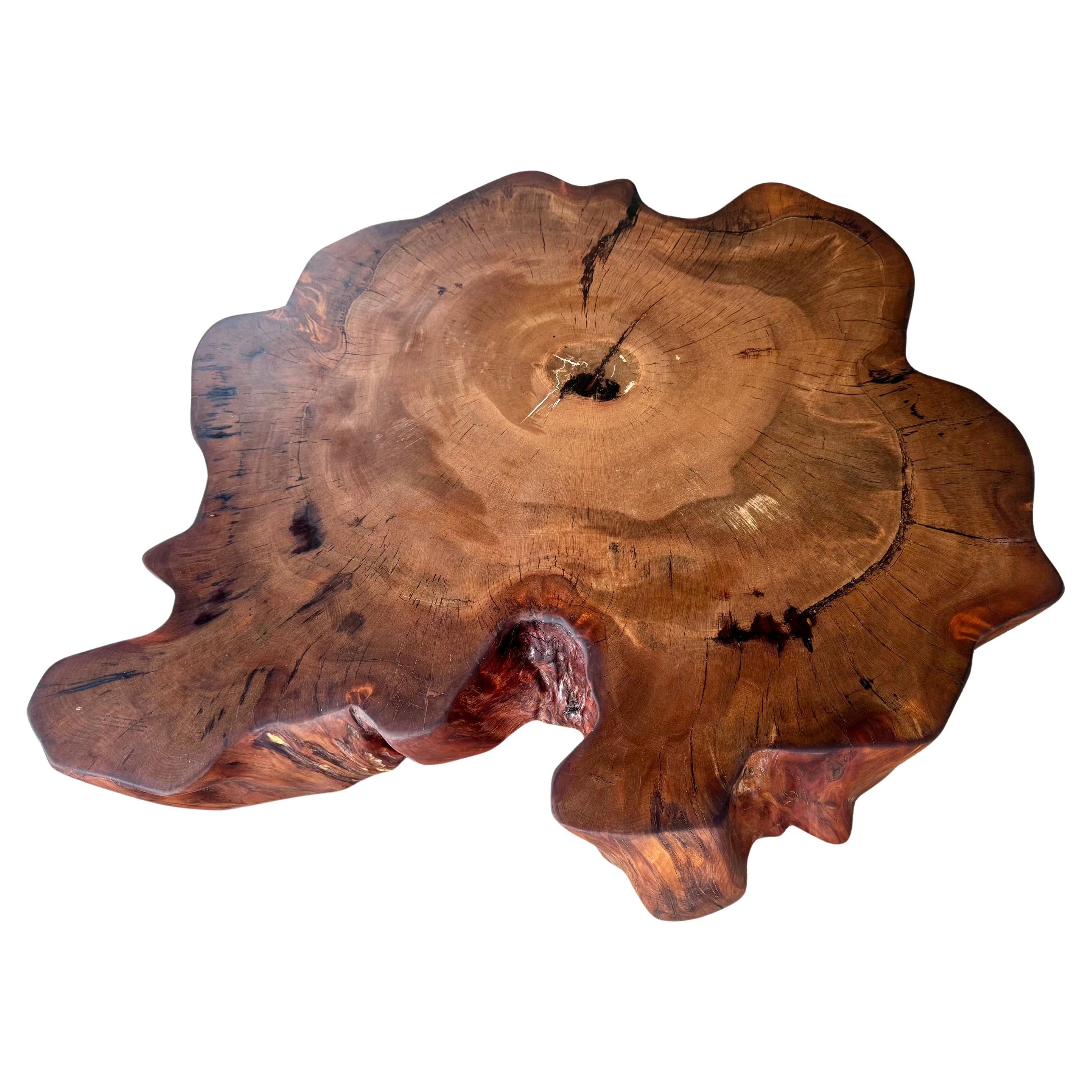
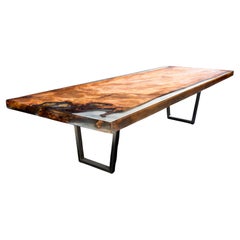
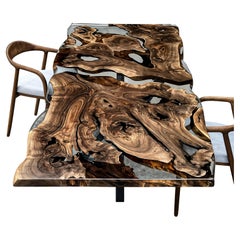
At 350 cm long, the slab combines a broad root section measuring 170 cm across with a trunk line that narrows from 100 cm to 72 cm. This preserves the complete tree-like silhouette: root, transition, and trunk remain readable in one continuous organic flow. The form does not follow a later design idea, but rather the original structure of the ancient Kauri wood itself.
Amber, Tree Edges, and Material Depth
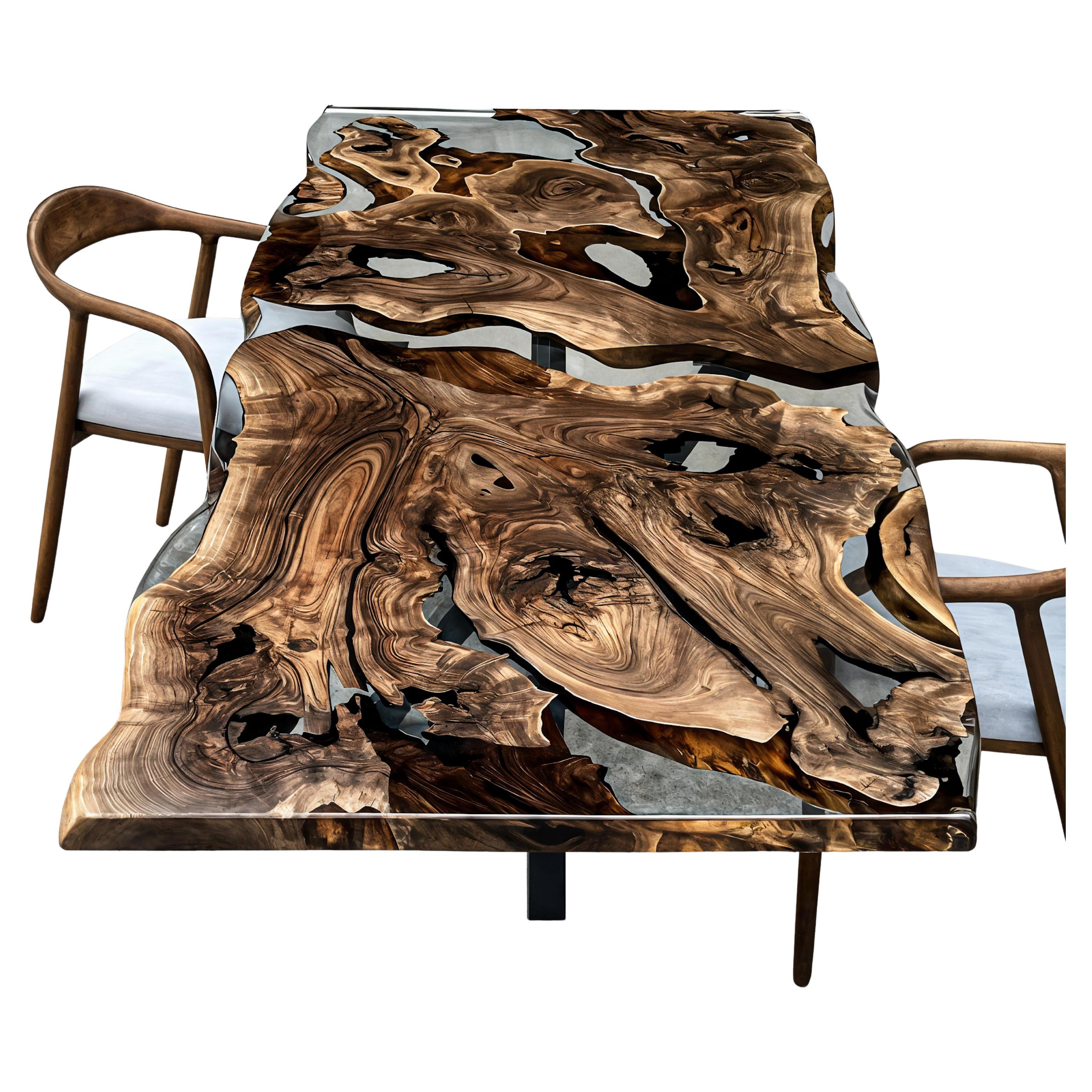
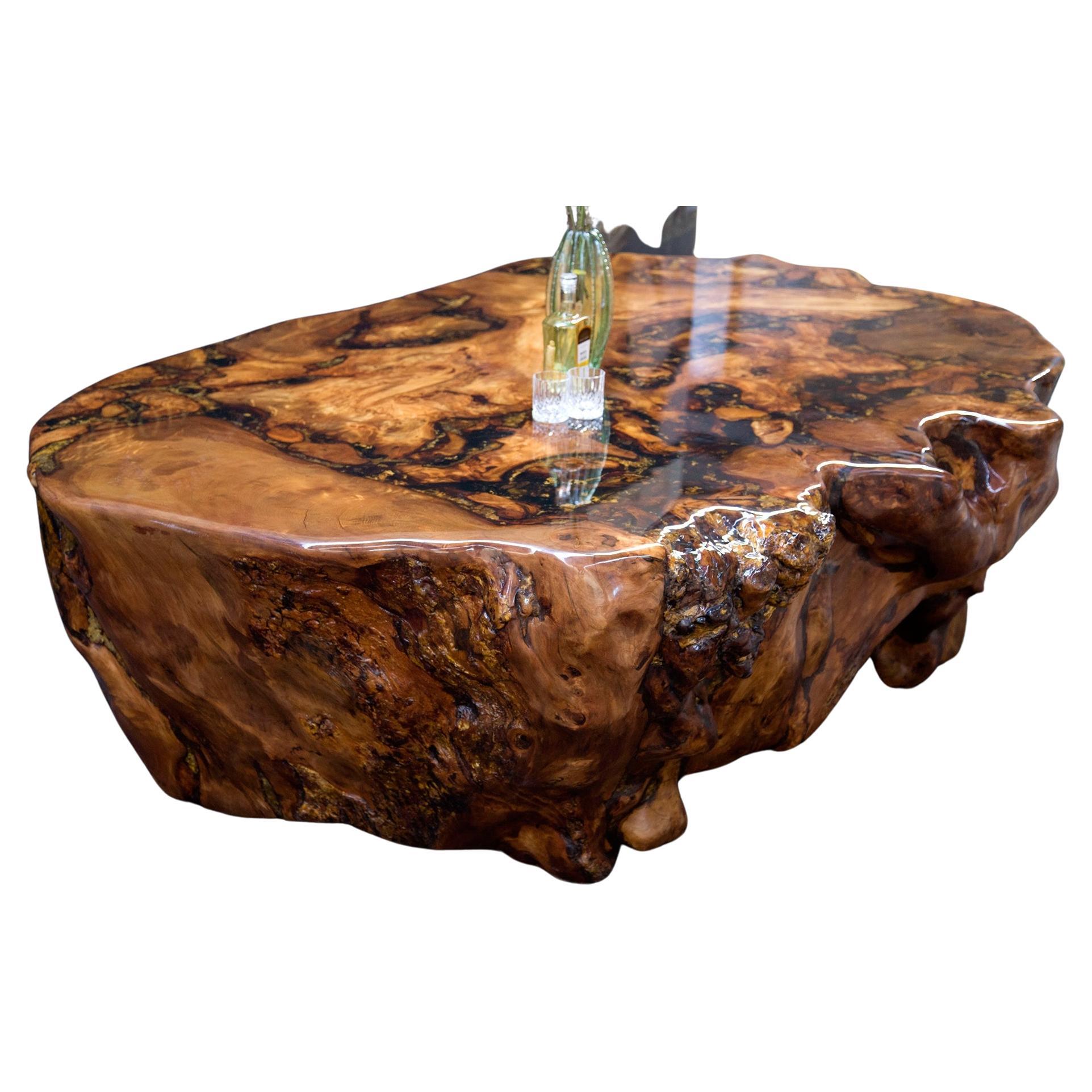
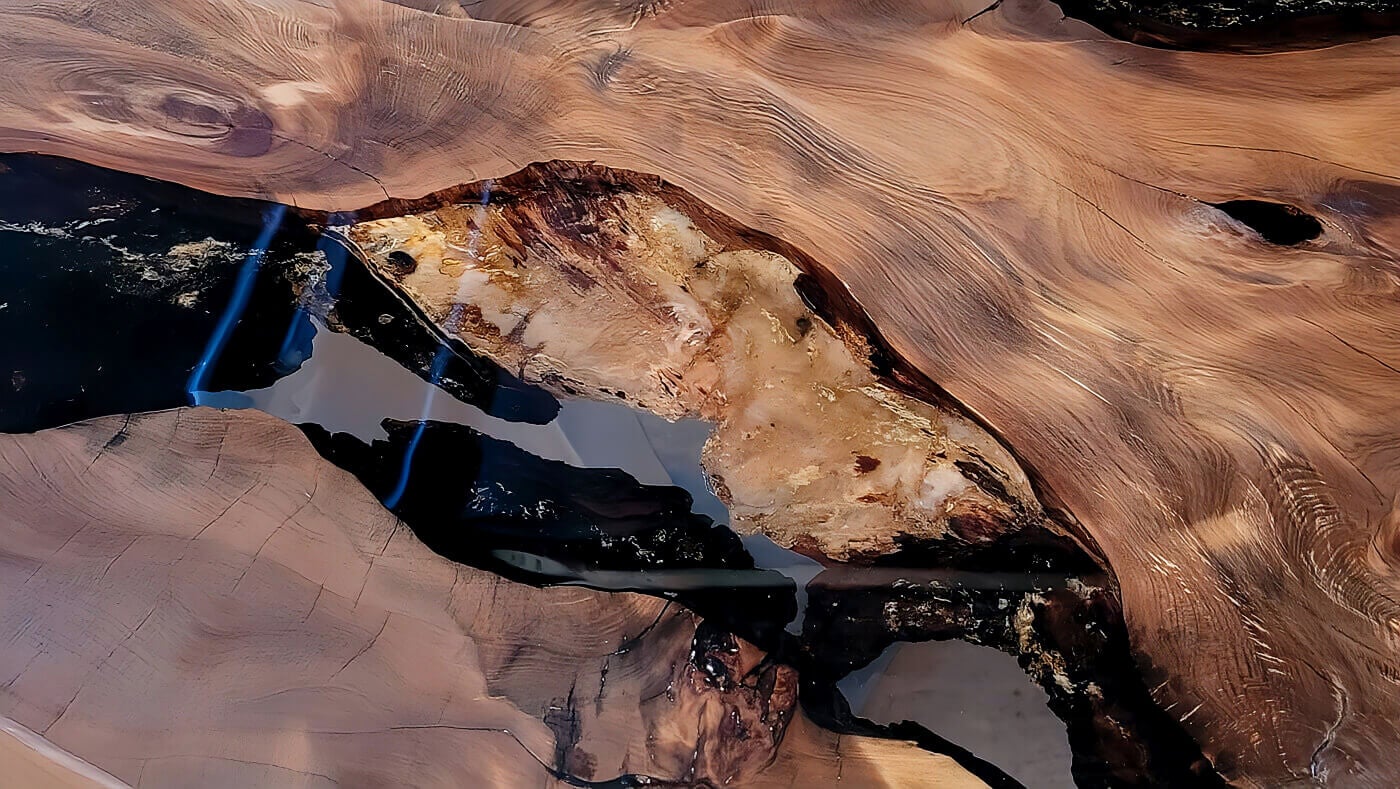
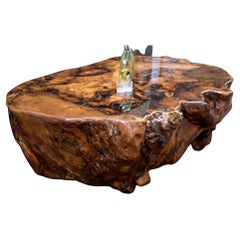
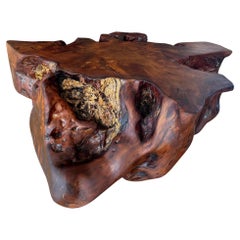
The surface shows a rare material constellation that is hardly possible with other woods: golden amber inclusions, mineral-like depth, and organic tree edges. In the root area especially, the wood forms landscape-like structures shaped by growth, erosion, and preserved time. This combination of large root structure and visible amber gives the work its quiet, monumental presence.
Use and Spatial Effect
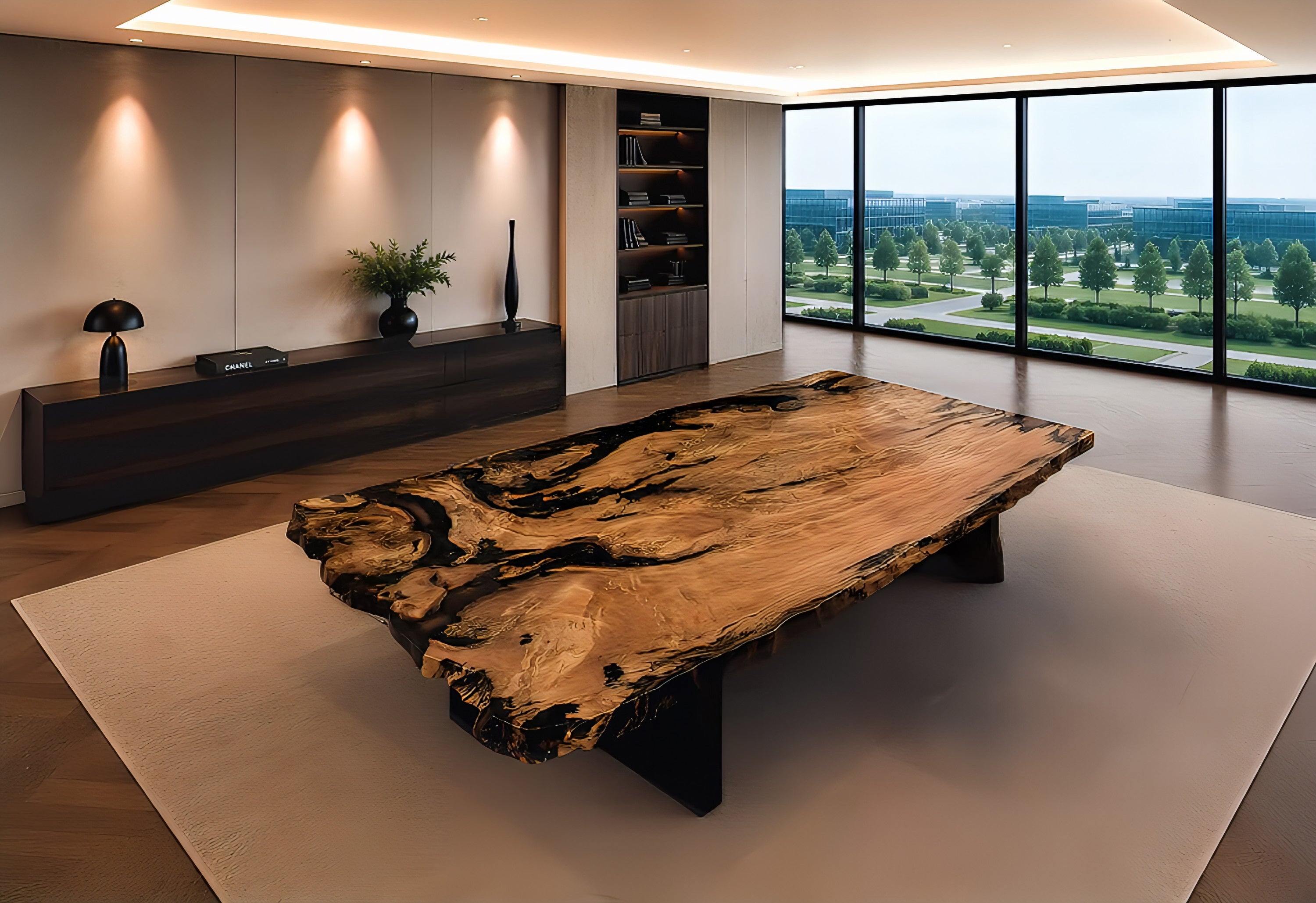
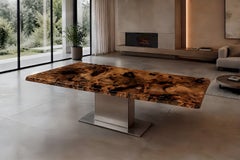
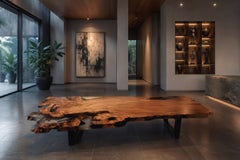
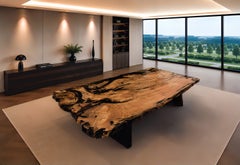
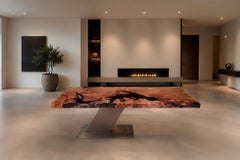
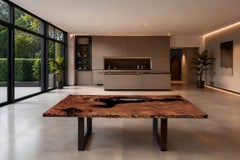
Depending on how it is placed, the piece can function as a dining table, a free-standing sculpture, or a vertical wall and room sculpture. In a spacious, architecturally calm room with high ceilings, clear wall surfaces, and generous negative space, it can appear as a monumental witness to earlier geological and historical time periods. Suitable settings might include a gallery space, a collector’s room, a reduced atrium, a private library, or a large living space with a museum-like clarity, where the object remains visible from both sides. In the center of such a room, the tree body is not only seen, but experienced spatially: as an upright presence, as preserved material history, and as a sculptural one-of-a-kind work that brings the stillness and permanence of Ancient Kauri into the present.
Work Character and Origin
Unique Piece No. 194 combines documented provenance, scientifically dated material, and handcrafted execution into an independent work between functional art, sculpture, and collectible design. The Ancient Kauri wood was personally selected by Beaupoil in New Zealand and then hand-worked in Germany in his atelier as a master cabinetmaker into a singular piece.
Through his stock of art-oriented raw slabs, he is also able to carry out custom commissions.
Only a few unique, non-repeatable pieces each year he creates.
Selected interior images are digital visualizations showing possible architectural placements of the work.
Michael Beaupoil - Atelier Germany