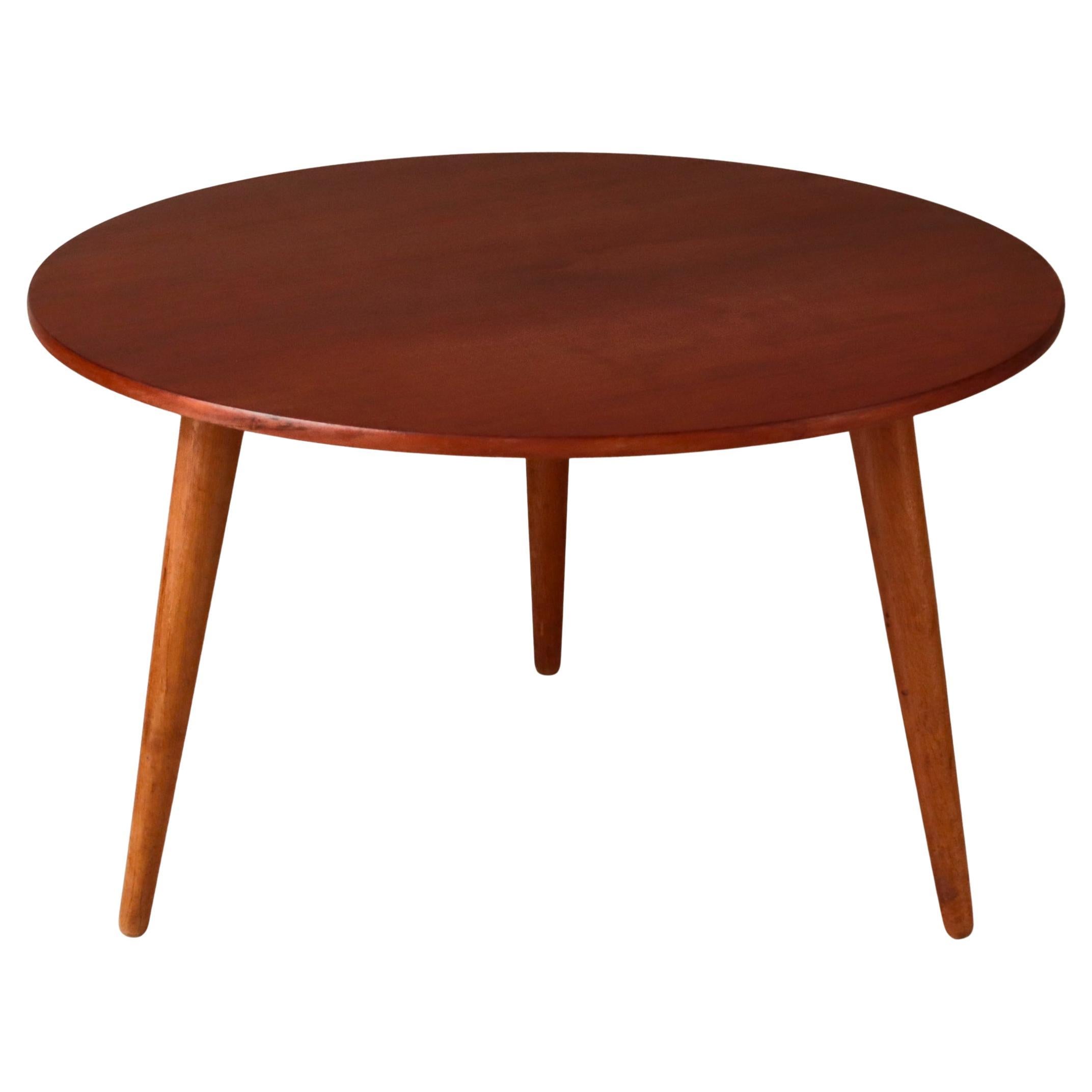
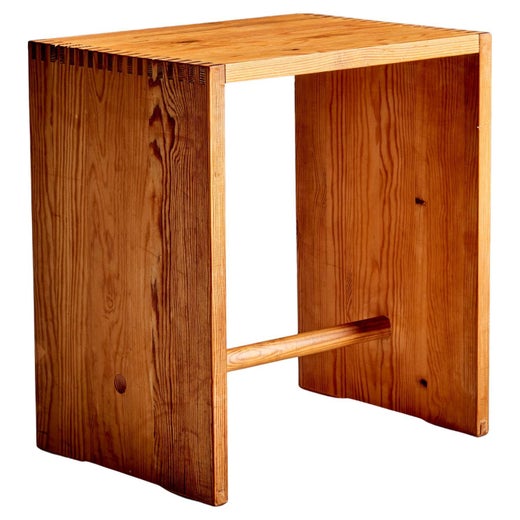
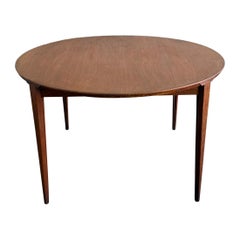
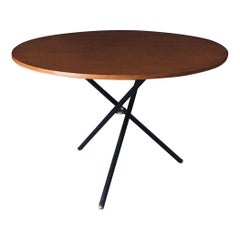
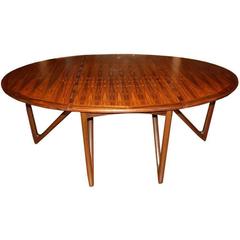
Mid-Century Modern Coffee Table Model "Dreirundtisch" by Max Bill, Swiss 1949
By Max Bill
Located in Brussels, BE
Mid-Century Modern Coffee Table Model "Dreirundtisch" by Max Bill, Swiss 1949
Vintage 1940s Unknown Coffee and Cocktail Tables
Wood
Max Bill was born in Winterthur, Switzerland. After an apprenticeship as a silversmith during 1924–27, he took up studies at the Bauhaus in Dessau under many teachers including Wassily Kandinsky, Paul Klee and Oskar Schlemmer from 1927 to 1929, after which he moved to Zurich.
After working on graphic designs for the few modern buildings being constructed, Bill built his first work, his own house and studio (1932–3) in Zurich-Höngg. From 1937 onward he was a prime mover behind the Allianz group of Swiss artists.
Bill is widely considered the single most decisive influence on Swiss graphic design beginning in the 1950s with his theoretical writing and progressive work. His connection to the days of modernism gave him special authority. As an industrial designer, his work is characterized by a clarity of design and precise proportions. Examples are the elegant clocks and watches designed for Junghans, a long-term client. Among Bill's most notable product designs is the Ulmer Hocker of 1954, a stool that can also be used as a shelf element, a speaker's desk, a tablet or a side table. Although the stool was a creation of both Bill's and Ulm School designer Hans Gugelot's, it is often called "Bill Hocker" because the first sketch of it on a cocktail napkin was Bill's work.
As a designer and artist, Bill sought to create forms which visually represent the New Physics of the early 20th century. He sought to create objects so that the new science of form could be understood by the senses: that is as a concrete art. Thus Bill is not a rationalist – as is typically thought – but rather a phenomenologist. He made spare geometric paintings, prints and spherical sculptures, some based on the Möbius strip, in stone, wood, metal and plaster. His architectural work included an office building in Germany, a radio studio in Zurich, and a bridge in eastern Switzerland.
Bill continued to produce architectural designs, such as those for a museum of contemporary art (1981) in Florence and for the Bauhaus Archive (1987) in Berlin. In 1982 he also entered a competition for an addition to the Neue Nationalgalerie in Berlin, built to a design by Ludwig Mies van der Rohe. Pavillon-Skulptur, a large granite sculpture, was installed adjacent to the Bahnhofstrasse, Zürich in 1983. As is often the case with modern art in public places, the installation generated some controversy. Endlose Treppe, a sculpture made of North American granite, was designed for the philosopher Ernst Bloch.
In 1982 he was awarded the Sir Misha Black award and was added to the College of Medallists.
Bill executed many public sculptures in Europe and exhibited extensively in galleries and museums, including a retrospective at the Kunsthaus Zürich in 1968–69. He was the subject of retrospectives at the Albright-Knox Art Gallery in Buffalo and the Los Angeles County Museum of Art in 1974, and the Solomon R. Guggenheim Museum in New York City in 1988.
Find vintage Max Bill stools, lighting, and other furniture on 1stDibs.
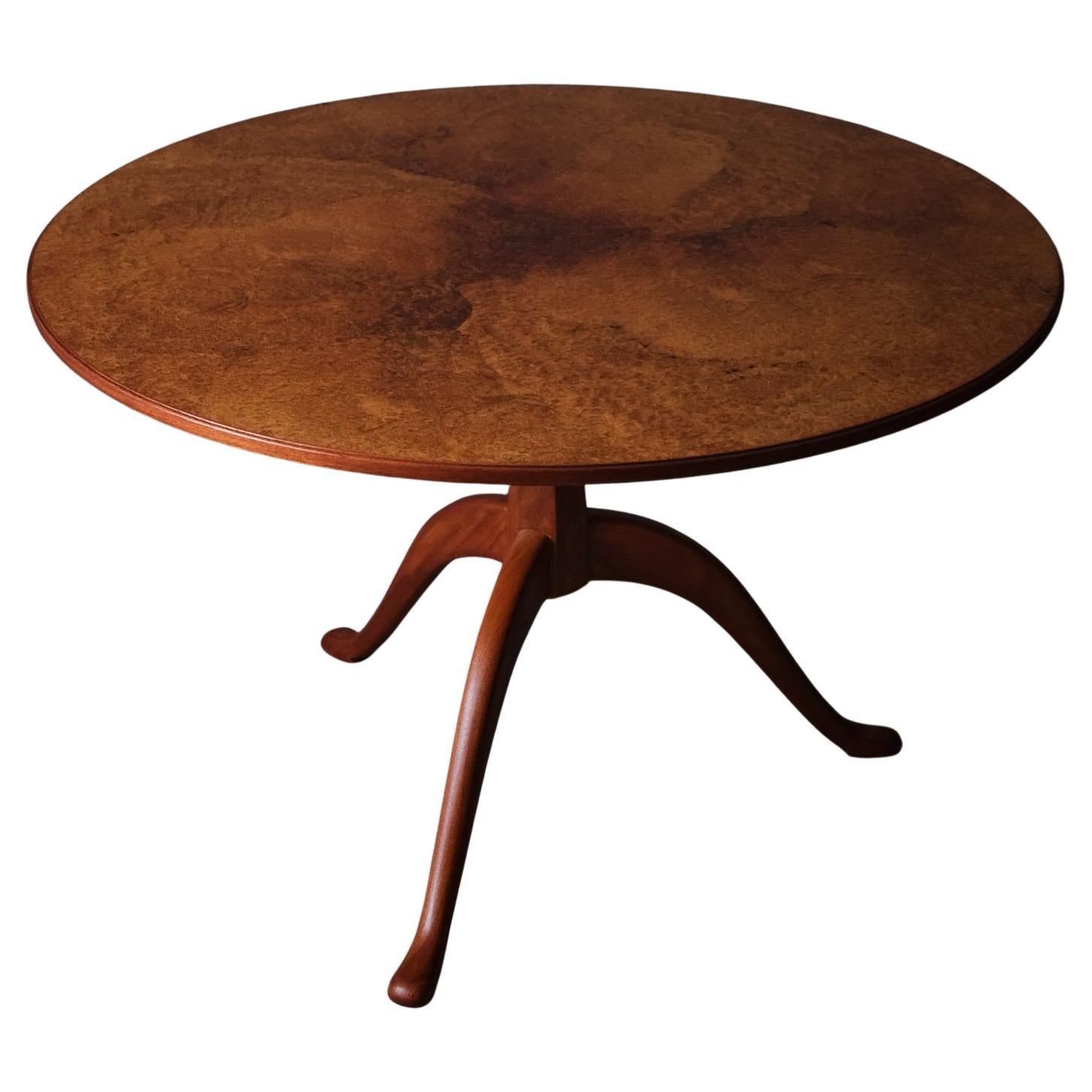
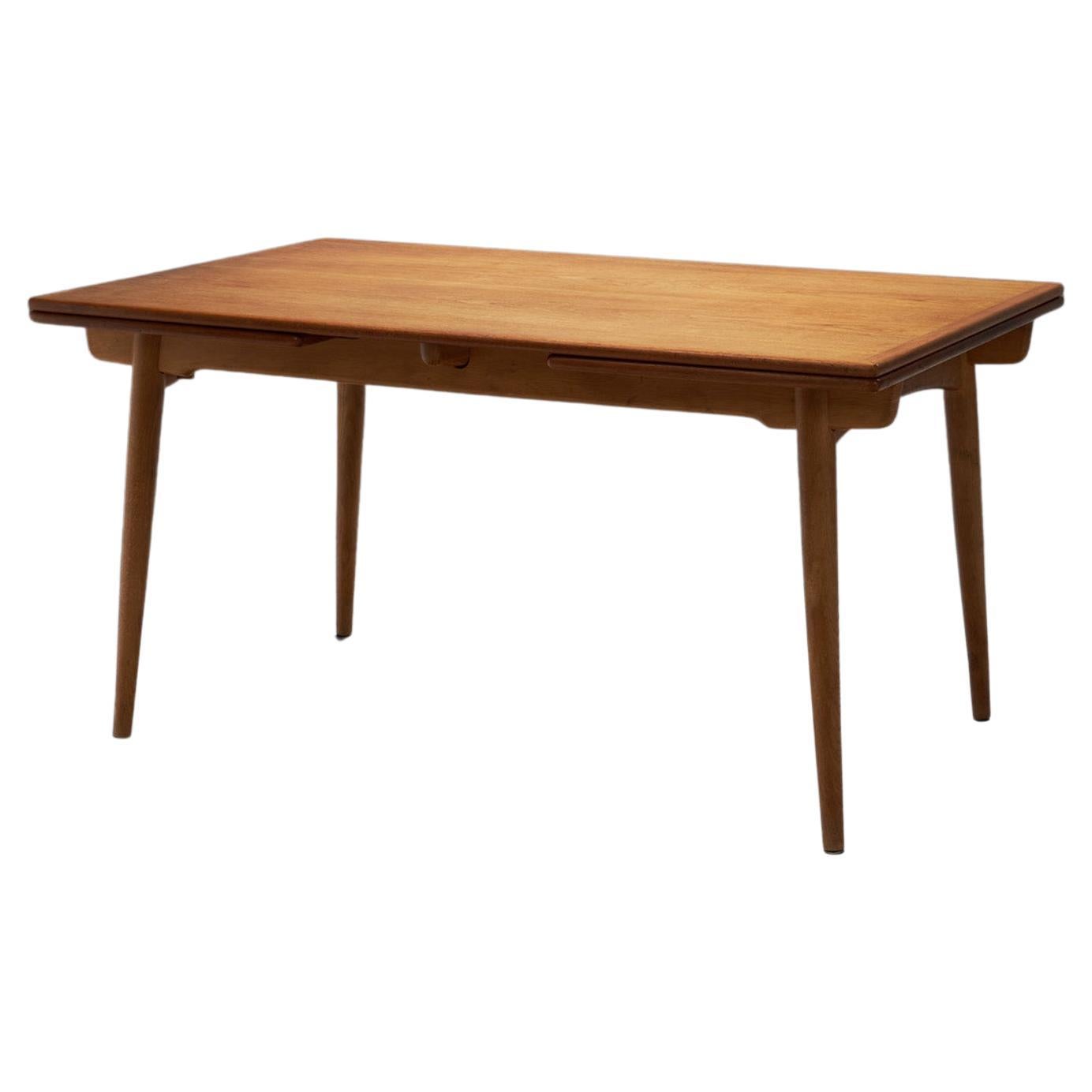
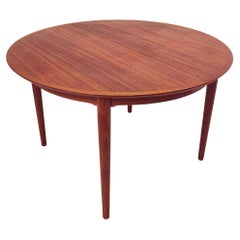
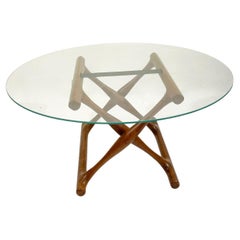
Mid-Century Modern Dining Table By Fritz Hansen, Denmark
By Fritz Hansen
Located in Brussels, BE
Mid-Century Modern Dining Table By Fritz Hansen, Denmark Fritz Hansen, also known as Republic of Fritz Hansen, is a Danish furniture design company. Designers who have worked for Fr...
Wood
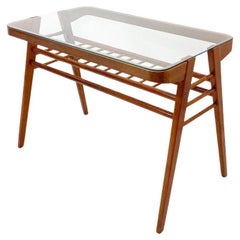
Mid-century Modern Table by Frantisek Jirak, Czech
By Frantisek Jirak
Located in Brussels, BE
Mid-century Modern Table by Frantisek Jirak, Czech Born in Prague in 1913, František Jirák was a Czech architect and designer who studied at both the School of Master Carpenters (Mistrovská škola stolarská) and the Special School of Interior Design and Architecture (Specialna skola pre vnutornu architekturu). Under the guidance and leadership of Jindřich Halabalou, one of the Czech Republic's most celebrated and influential designers, Jirák spent eleven years working at the renowned United Arts & Crafts, or United UP (Spojene UP zavody), factory in Brno. Jirák, left United UP in 1948 to move to the Slovak part of what was then Czechoslovakia. Expert in furniture design, especially in wood, he became the Head of the Development Department at the Regional Directorate of Woodworking Companies. His skills as both a designer and a carpenter were highly prized in a rapidly evolving industry. From the late 1960s until his retirement, he also worked as a product designer for a national company called New House (Nový domov) in Spisska Nova Ves. It is during this period that Jirák designed the Lollipop chair...
Glass, Wood

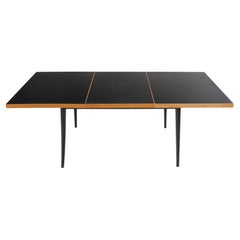
Dining table by Fred Ruf for Wohnbedarf Switzerland 1955
By Wohnbedarf, Fred Ruf
Located in Renens, CH
In 1955, Swiss designer Fred Ruf designed this minimalist dining table for Wohnbedarf Switzerland. Thanks to an extension leaf that fits between the two tops, the table can be exten...
Wood

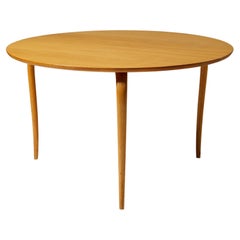
'Annika' Table Designed by Bruno Mathsson for Karl Mathsson, Sweden, 1936
By Karl Mathsson, Bruno Mathsson
Located in Stockholm, SE
Table Annika designed by Bruno Mathsson for Karl Mathsson, Sweden. 1936. Elm top and birch legs. Measurements: H: 65 cm / 2' 2" D: 95 cm / 3' 1 7/8" This round “Annika” occasional table was manufactured in 1967 and designed in 1936; it is made of birch with a smooth Oregon pine top. Bruno Mathsson created various iterations of his “Annika” model — they come in three shapes with different wood combinations and various heights. They can be round with three legs, square with four legs, or rectangular with six legs, allowing exciting and contrasting combinations when grouped. While the design aesthetic is delicate, the table is very well-made because of the strong plywood. Bruno Mathsson’s love for nature pervades all his designs — he frequently slept outside in the forest or his garden on a specially designed foldable bed. His furniture shapes, particularly the legs, bring bull's horns or insects to mind. Mathsson was one of the most important Swedish designers of the 20th century. He was a contemporary of Alvar Aalto and Marcel Breuer, all of whom had already experimented with bent plywood during the 1930s. Karl Mathsson, Bruno Mathsson's father, was the fifth generation in a family of master cabinet makers. He owned a furniture manufacturing company that produced the earlier pieces; later, they founded "Mathsson International”. The stamp indicates the manufacturing date and, sometimes, the design date. Bruno Mathsson often gave his furniture Swedish woman...
Birch, Elm

Rosengren Hansen Dining Table, Denmark 1960s
By Henry Rosengren Hansen
Located in Wien, AT
Extraordinary dining table from one of Denmark's finest cabinet makers, Brande Mobelindustri. Designed with an elegant, restrained note by Henry Rosengren Hansen. In its condensed fo...
Teak

MCM Design Multifunctional Table by Jürg Bally for Arform, Italy 1950's
By Arform
Located in Oud-Turnhout, VAN
Vintage Midcentury Modern Italian Design very rare and multifunctional table by Jürg Bally for Arform. Made in Italy, 1950's period. The table has it's original label that has a seri...
Steel

Dining Table by Kurt Östervig for Jason Möbler, Denmark, 1950s
By Kurt Østervig
Located in New York, NY
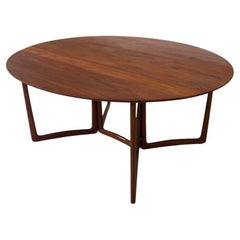
Exquisite oval drop-leaf dining table designed by Kurt Östervig for Jason Möbler, Denmark, 1950s. Dramatic V-shaped mahogany gatelegs an...
Mahogany, Rosewood
Vintage 1970 Dining Table by Benze Sitzmöbel, Wood & Formica
Located in Lemmer, NL
vintage dining table table dining room Benze period 70s design Benze Sitzmöbel Germany condition good light signs of use size 75.5 x 120 x 80 (hxbxd) details wood; formi...
Formica, Wood