Video Loading
Want more images or videos?
Request additional images or videos from the seller
1 of 25

Max Sauze-Style Minimalist Pedestal Plant Stand (France 1970s)

$950
£716.87
€834.34
CA$1,341.14
A$1,346.02
CHF 784.91
MX$16,363.70
NOK 9,019.36
SEK 9,275.95
DKK 6,236.58

About the Item

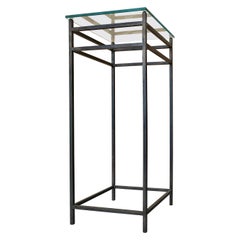
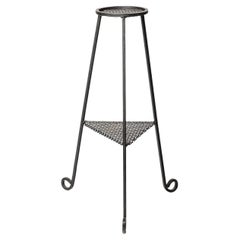
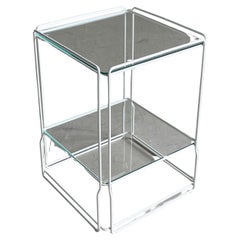
Max Sauze-style plant stand or display pedestal.. 10 13/16”W c 10 13/16”D x 36”H 16.88”H lower open space 16.75”H upper open space A powder-coated steel frame in black with three clear glass shelves. This is a wonderfully slim piece, perfect for a lamp, some books, a plant, all of which get vertically displayed and stored. Max Sauze is a French industrial designer who was born in 1933 in Algiers. He studied at the École Supérieure des Beaux-Arts in Algiers and the École Camondo in Paris before establishing his eponymous aluminum company. Sauze’s work was deeply influenced by the theories of Nikolaus Pevsner, and the designer’s most famous pieces are named after constellations. He lived and worked in Éguilles, France, on the outskirts of Aix-en-Provence, where his sculpture garden, the Garden of Éguilles, was open to the public.
  • Similar to:
    Max Sauze (Designer)
  • Dimensions:
    Height: 36 in (91.44 cm)Width: 10.81 in (27.46 cm)Depth: 10.81 in (27.46 cm)
  • Style:
    Minimalist (In the Style Of)
  • Materials and Techniques:
    Glass,Steel,Hand-Crafted,Powder-Coated,Welded
  • Place of Origin:
  • Period:
  • Date of Manufacture:
    circa 1970s
  • Condition:
    Wear consistent with age and use. Excellent condition.
  • Seller Location:
    Round Top, TX
  • Reference Number:
    1stDibs: LU9779247216822

More From This Seller

View All
Minimalist Welded Steel Pedestal / Plant Stand, circa 1990s

Minimalist Welded Steel Pedestal / Plant Stand, circa 1990s

By Max Sauze

Located in Round Top, TX

Minimalist welded steel plant or display stand featuring a thick, clear glass top with a green tint. The top is a substantial piece of glass with flat polished edges that simply lift...

Category

Late 20th Century American Minimalist Pedestals

Materials

Steel

Flos Ipnos Outdoor Floor Lamp by Nicoletta Rossi & Guido Bianchi

Flos Ipnos Outdoor Floor Lamp by Nicoletta Rossi & Guido Bianchi

By Flos, Nicoletta Rossi & Guido Bianchi

Located in Round Top, TX

The Ipnos Outdoor Floor Lamp, made with a bronzed extruded aluminum frame and transparent polycarbonate diffuser. The lamp was designed by Nicoletta Rossi and Guido Bianchi and produ...

Category

21st Century and Contemporary Italian Minimalist Table Lamps

Materials

Aluminum

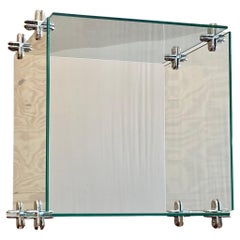
1980s Modular Minimalist Glass Vitrine with Chrome Accents

1980s Modular Minimalist Glass Vitrine with Chrome Accents

Located in Round Top, TX

Whether for rolled fluffy white towels and a beautiful array of custom fragrances and toiletries, or stacks of books, or fresh, healthy plants, this modular glass vitrine is the leas...

Category

Late 20th Century American Minimalist Vitrines

Materials

Chrome

Minimalist Glass and Chrome Display Cube, Hand-Crafted, USA, 1980s

Minimalist Glass and Chrome Display Cube, Hand-Crafted, USA, 1980s

By Donald Judd

Located in Round Top, TX

Great way to lift and put focus on a special object. The interior as well as the top of this piece are great for displaying anything that deserves a little extra attention. We all lo...

Category

Late 20th Century American Minimalist Pedestals

Materials

Chrome

Hertha Bengtson Minimalist Floor Vase, Mid-Century Modern, Sweden

Hertha Bengtson Minimalist Floor Vase, Mid-Century Modern, Sweden

By Herta Bengtson, Hertha Bengtson

Located in Round Top, TX

Large Hertha Bengtson floor vase for the Swedish company Rörstrand, circa 1950s. This partly glazed, signed piece is heavyweight, in excellent condition and has an earthy presence and coloration that is an inherent character of Ms. Bengtson's work. Hertha Bengtson (1917-1993) was born in the southern Sweden province of Blekinge. Early in life, she developed an interest in drawing, though her family lacked the financial means to support full-time studies. When she reached 18, Hertha finally pursued her interest in art at an evening school for porcelain painting. Only two years later, in 1939, she became employed as a pattern designer at Hackefors porcelain factory in Linkoping. Despite having only two years of evening courses in porcelain painting to back her up, Hertha had unwavering faith in her ability. After three weeks of trial work, Hertha was offered permanent employment, starting with pattern design and decor. Soon, she had a hand in most of the factory’s production. Beyond her design interests, she took on responsibilities including the management of production costs and payroll. In 1939, World War II broke out; the factory’s supervisor was called to duty. At 22 years-old, Hertha was appointed the head of her department. Two years later, Rorstrand’s Porcelain Factory in Lidkoping was in need of new talent. Hertha quickly seized the opportunity. Though she was hired to work with decor, Hertha’s curiosity steered her towards work in design. At that time, there were many accomplished artists established at the company, including Gunnar Nylund and Carl-Harry Stålhane. The level of camaraderie was equal to that of the competition for resources. Hertha had a strong interest in porcelain service, which was not considered particularly inspiring by her fellow designers. In the mid-1940s, Hertha set out to design the porcelain service of her dreams. The realization of this vision required four toilsome years engaged in the hard work of procuring quality materials, designing, firing, and glazing, all with Hertha’s characteristic persistence. When "Bla eld" (Blue Fire) was released in 1950, Hertha proved in no uncertain terms that even everyday service items can be an expression of artistic integrity. Blue fire was a sales success both in Sweden and abroad. Bolstered by the success of Blue fire, Hertha was given near full freedom at the Rorstrand to bring her artistic vision to life. Over the course of twenty-three years at Rörstrand, Hertha designed a total of six service sets, including the popular "Koka" (Cook), the refined tea service, "Ceylon", and the classically beautiful "Rosmarin" (Rosemary). Hertha also undertook small-production, experimental art works. At the same time, Hertha became something of an informal spokesperson for the factory. She was unwaveringly knowledgeable, dedicated, and eloquent. Being an energetic and ambitious professional in the 1940s and 1950s came at a cost to a woman. The possibility for work-life balance was limited, and it was no simple task to combine a career as a designer with normal family life. Hertha Bengston lived alone throughout her adult life, but maintained rich interactions with friends and colleagues. In 1964, Hertha’s surprise decision to leave Rorstrand was met with protest and disbelief. But Hertha wished to broaden her horizons by working with stoneware. She reached out to Hoganas...

Category

Mid-20th Century Swedish Mid-Century Modern Vases
Materials

Pottery

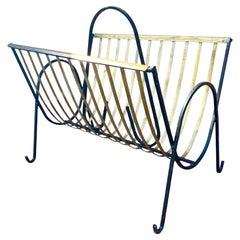
Mid-Century Modern Magazine Stand, Iron & Brass, 1960s, Umanoff

Mid-Century Modern Magazine Stand, Iron & Brass, 1960s, Umanoff

By Tony Paul, Arthur Umanoff

Located in Round Top, TX

A striking mid-century iron and brass magazine stand, designed in the distinctive style of Tony Paul and Arthur Umanoff. This piece boasts a sculptural, open framework composed of sl...

Category

Mid-20th Century American Mid-Century Modern Magazine Racks and Stands

Materials

Brass, Iron

You May Also Like

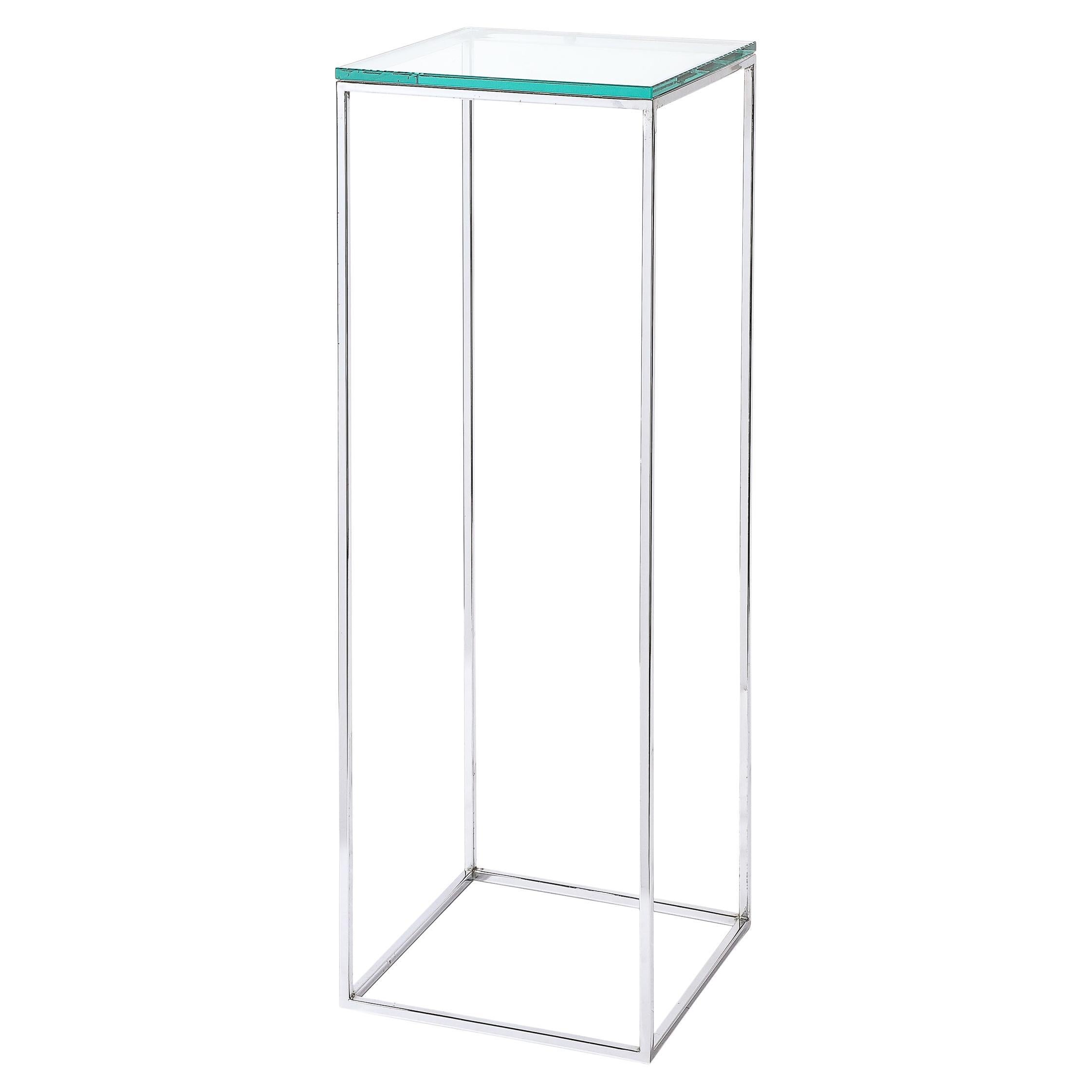
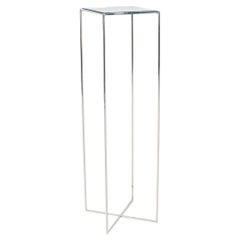
Mid-Century Modernist Minimal Rectilinear Chrome Pedestal with Glass Top

Mid-Century Modernist Minimal Rectilinear Chrome Pedestal with Glass Top

Located in New York, NY

This minimal and sleek Mid-Century Modernist Minimal Rectilinear Chrome Pedestal with Glass Top originates from the United States, Circa 1970. Features a minimal construction in narr...

Category

Vintage 1970s American Mid-Century Modern Pedestals

Materials

Chrome

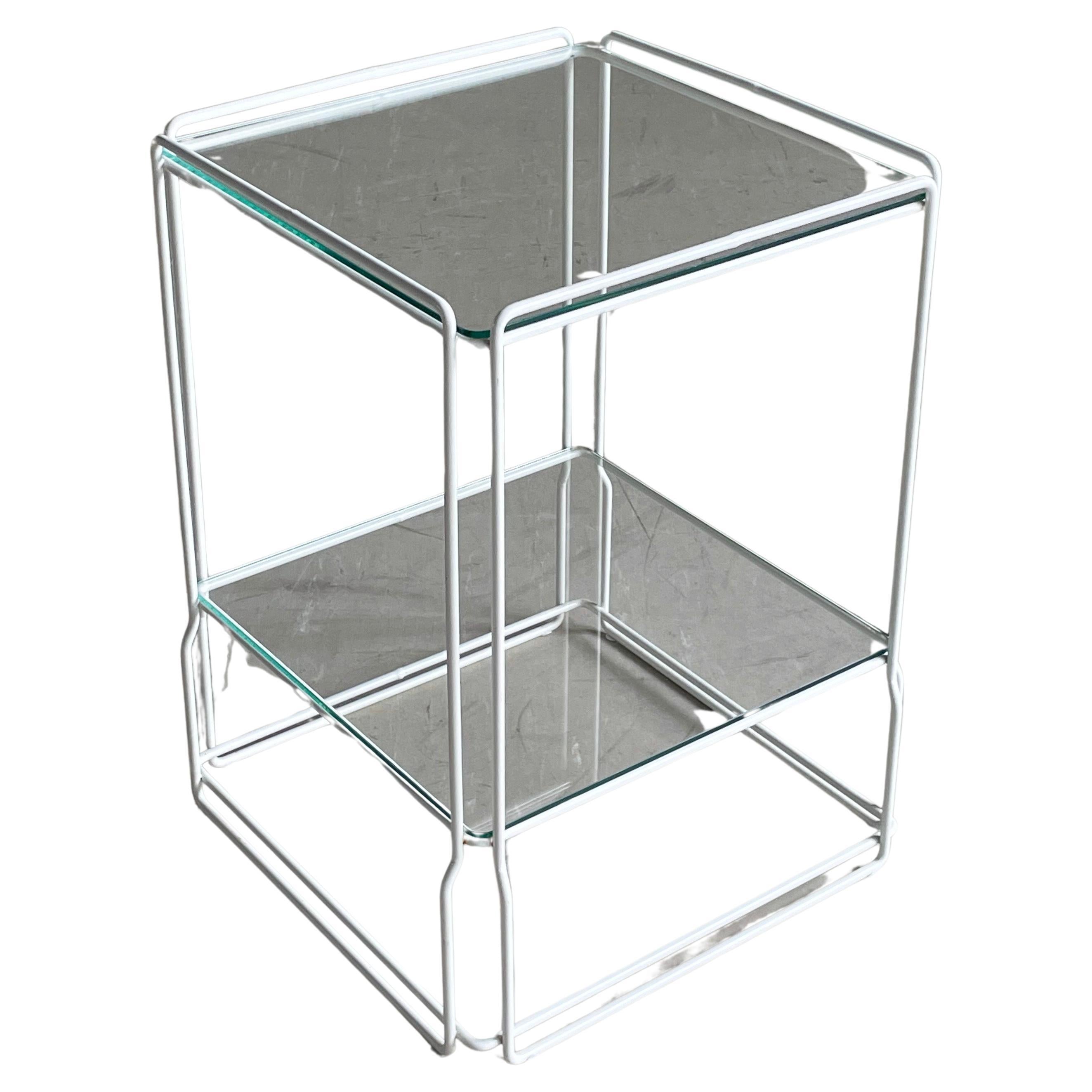
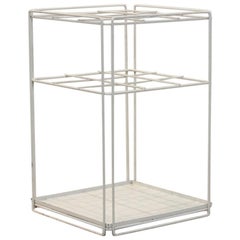
Minimalist Umbrella Stand by Max Sauze for Atrow, 1970s

Minimalist Umbrella Stand by Max Sauze for Atrow, 1970s

By Max Sauze

Located in Voorburg, NL

This umbrella stand originates from France and was manufactured in the ‘70’s by Atrow. Made of a white wire steel frame with square spaces for umbrell...

Category

Mid-20th Century French Mid-Century Modern Umbrella Stands

Materials

Steel

1970s Glass and Chromed Steel Pedestal 14x52"

1970s Glass and Chromed Steel Pedestal 14x52"

Located in Philadelphia, PA

This is a minimalist pedestal table produced in the 1970s. The table consists of a square clear glass top resting on a chromed steel pedestal base. The table measures approximately ...

Category

Vintage 1970s Unknown Modern Pedestals

Materials

Steel

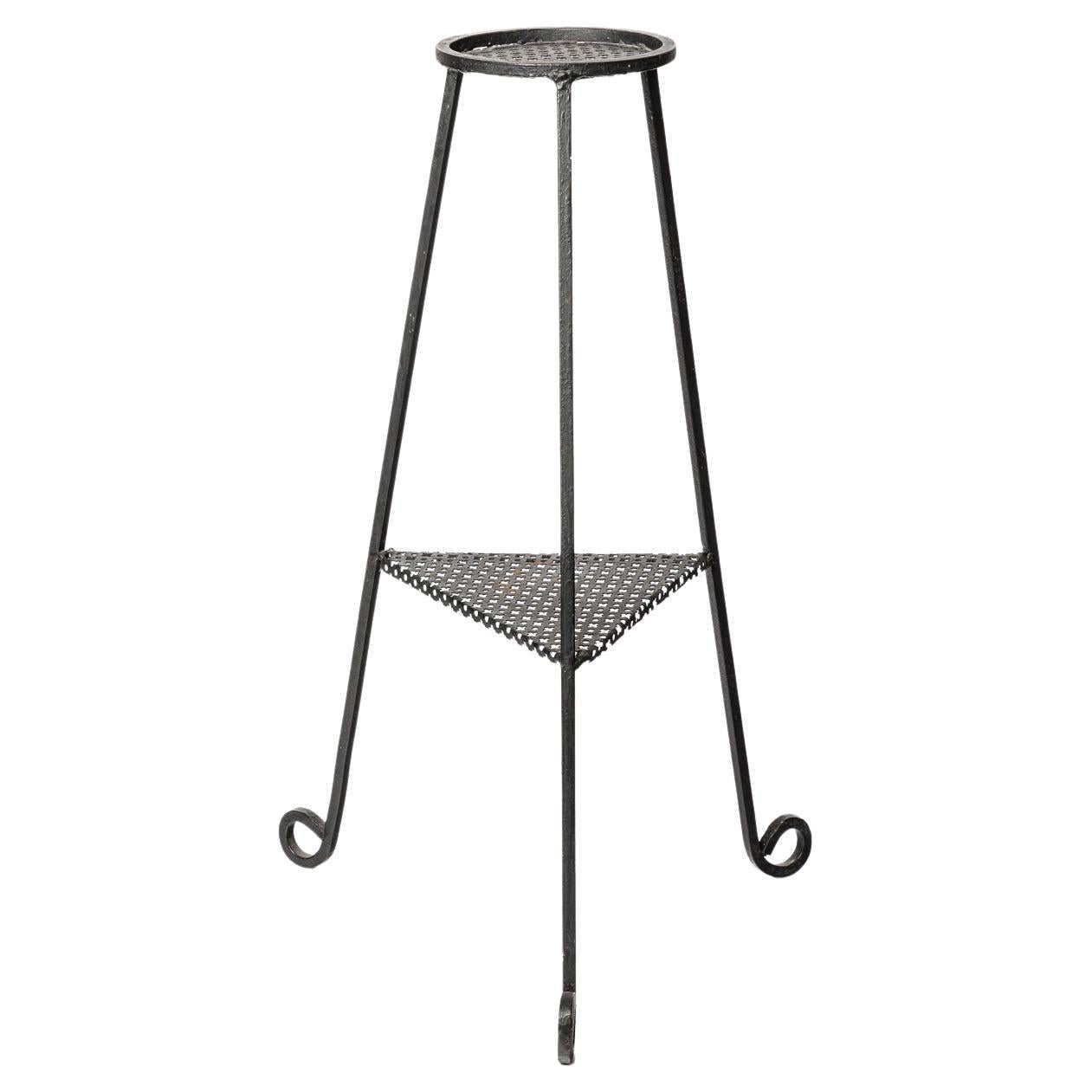
Black 20th century design metal pedestal or plant holder att. to Mategot Mathieu

Black 20th century design metal pedestal or plant holder att. to Mategot Mathieu

By Mathieu Matégot

Located in Neuilly-en- sancerre, FR

Attributed to Mathieu Mategot 20th century design black metal table - plant holder or pedestal Original perfect condition Height 72 cm Large at the base 42 cm

Category

Mid-20th Century French Mid-Century Modern Pedestals

Materials

Metal

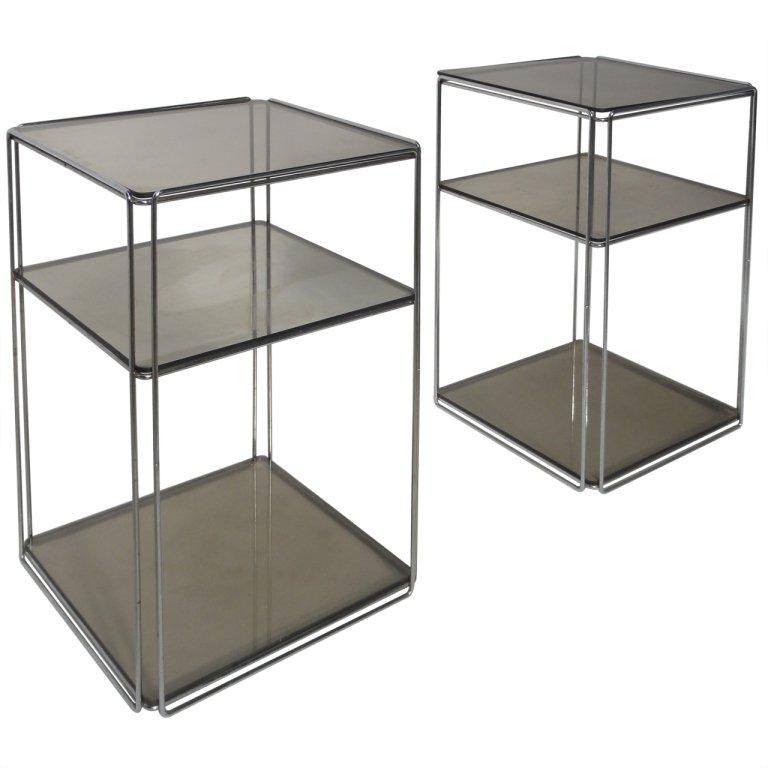
1970’s Max Sauze 'ISOCELE' side table - Atrow

1970’s Max Sauze 'ISOCELE' side table - Atrow

By Max Sauze, Atrow

Located in Bern, BE

1970’s Max Sauze 'ISOCELE' side table. Glass tabletops with tubular metal frame (rare form). Produced by Atrow, France, 1970 Designer: Max Sauze, 1970 Producer: Atrow, France, 1970 M...

Category

Vintage 1970s French Post-Modern Side Tables

Materials

Metal