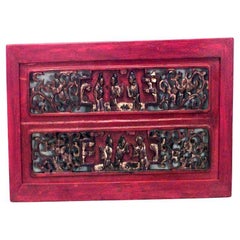
19th Century Chinese Lacquered Cornice with Dragon Carving
Located in Queens, NY
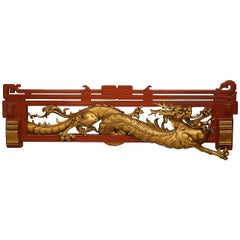
Asian Chinese (19th Century) red and gold lacquered cornice (valence) with dragon carving.
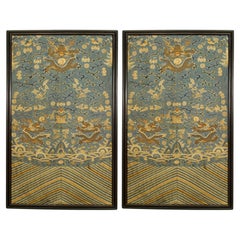
Antique Late 19th Century European Chinoiserie Architectural Elements
Wood

19th Century Chinese Lacquered Cornice with Dragon Carving
Located in Queens, NY
Asian Chinese (19th Century) red and gold lacquered cornice (valence) with dragon carving.
Wood

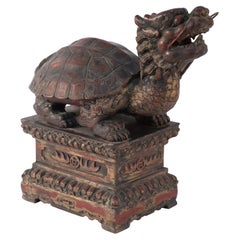
Antique Chinese Carved Wooden Longgui Dragon Turtle Sculpture
Located in Queens, NY
Antique Chinese carved wooden sculpture of a Longgui or (dragon turtle) holding a coin in its mouth on an ornately carved wooden base.
Wood
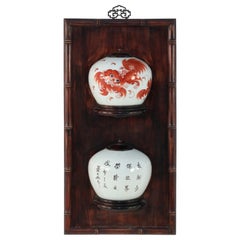
Chinese Porcelain Foo Dog Split Vase Wooden Wall Plaque
Located in Queens, NY
Antique Chinese (Late 19th Century) wall plaque framing a bisected porcelain lidded jar painted with orange foo dogs and characters in wood with a decorative faux bamboo edge.
Porcelain, Wood

Large Framed Japanese Embroidery Dragon Tapestry
Located in Atlanta, GA
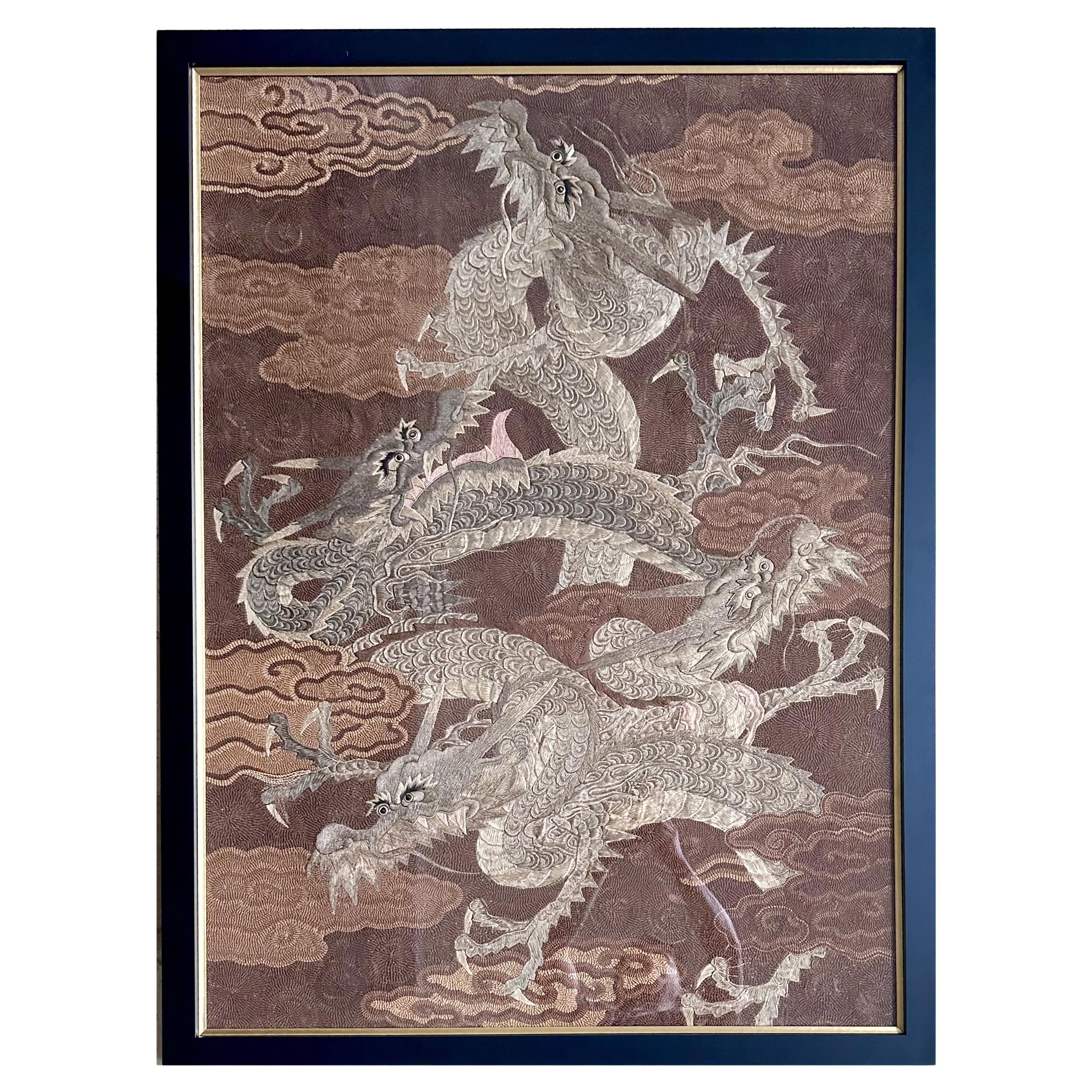
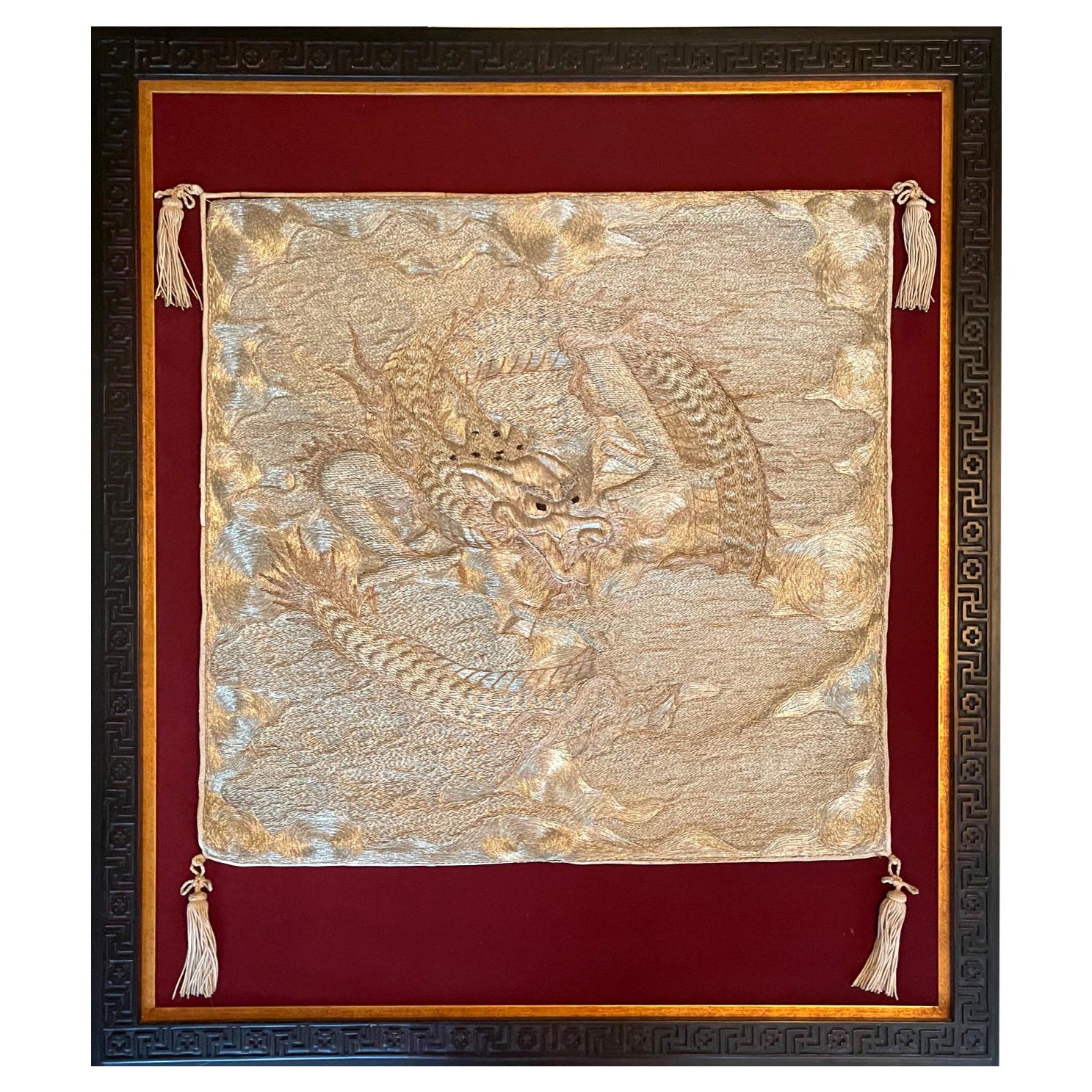
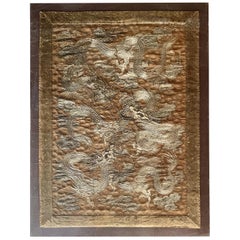
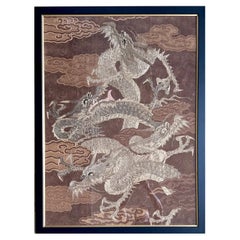
An impressive Japanese embroidery tapestry circa 1890s Meiji period, presented with brocade border on linen canvas in a Lucite shadow box. The stunning design features three dragons coiling and flying in the clouds. The high relief technique used to render the dragons using mostly the silver threads gives this piece a tremendous sense of motion. The most auspicious mythological creature in Japan and China, dragons were a very popular motif in textile art. In this particular piece, it is the impressive size, the superb craftsmanship, the profuse use of silver threads and near perfect condition that set it apart. Japanese Meiji textiles were widely exhibited in the west during turn of the 20th century at the international exposition. It was used to showcase the Japanese aesthetics with the techniques at their pinnacle. These expositions solidified the country's images overseas and felled the Japanese craze in the west, which turned out to be a long-lasting influence on the western art. Many pieces were purchased and stayed in the west. It is likely this estate piece was from one of the expositions based on its high quality. For two similar dragon tapestries...
Textile, Lucite

Post War Embroided Silk Art Imperial Chinese Dragon in Bamboo Frame
Located in Van Nuys, CA
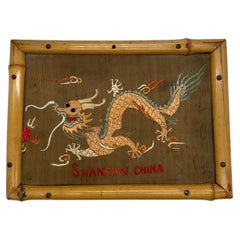
Post War II Chinese silk embroidery of a five-clawed imperial dragon in rendered orange thread against a green background. The words "Shanghai China" are embroidered below the dragon...
Silk, Bamboo

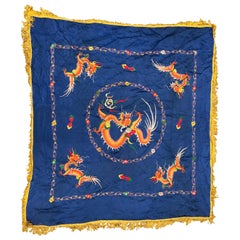
Beautiful Vintage silk and metal Chinese Embroidery dragon design
Located in Saint Ouen, FR
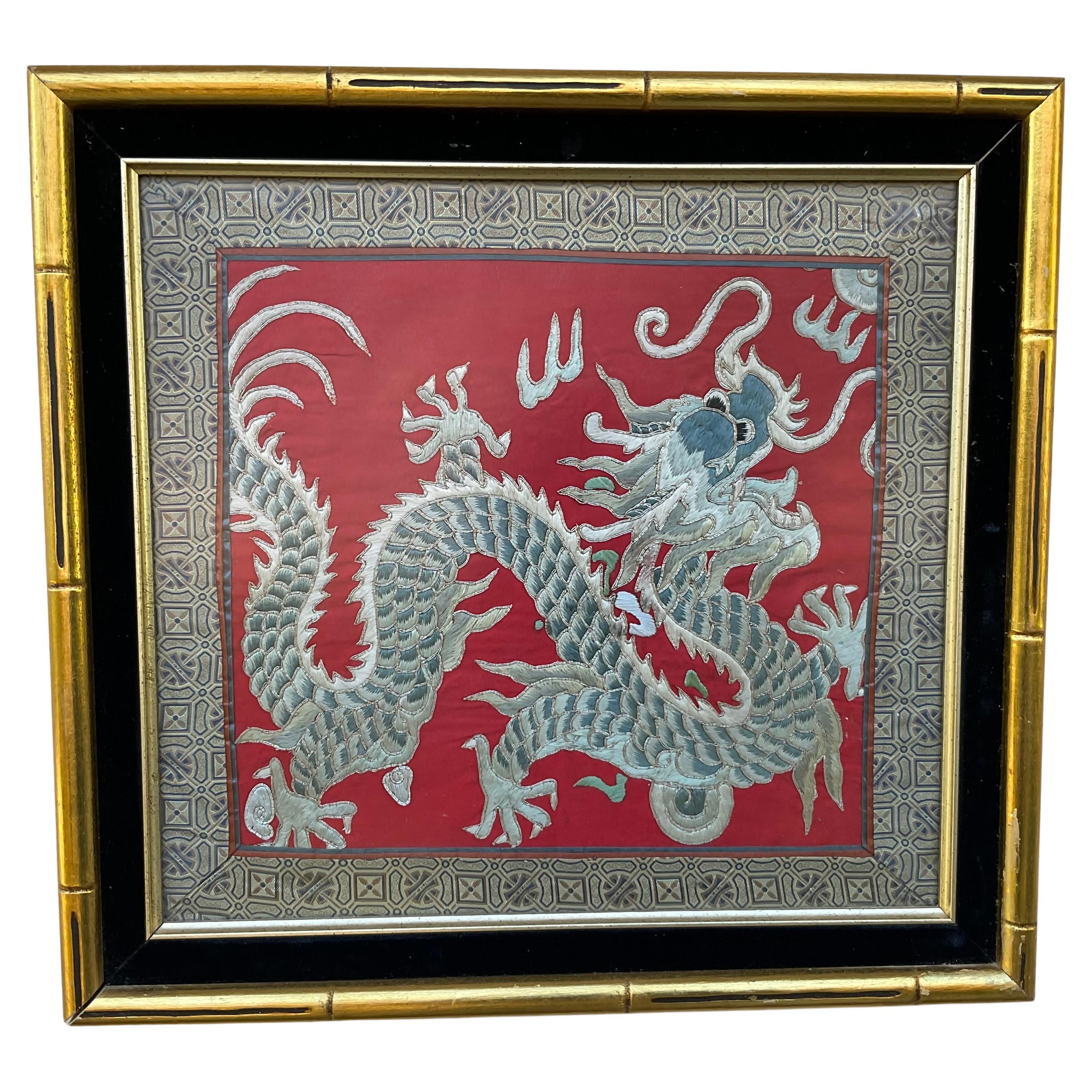
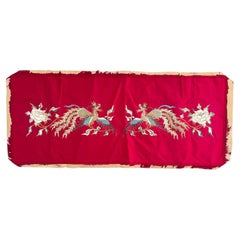
Nice mid century Chinese silk embroidery with beautiful design with two dragons and nice colours with a red background, entirely hand embroidered with silk and metal on silk foundati...
Silk

Five Clawed Dragon Chinese Silk and Metallic Thread Embroidered Textile
Located in Ferrara, IT
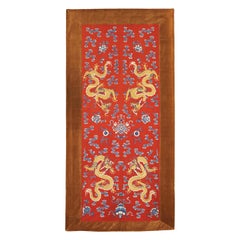
In this amazing textile, dragons with five claws are flying among the clouds and seem to be protecting a very special diamond. In the past, the dragon was a symbol of power and luck....
Metallic Thread

Framed Japanese Embroidery Dragon Tapestry Meiji Period
Located in Atlanta, GA
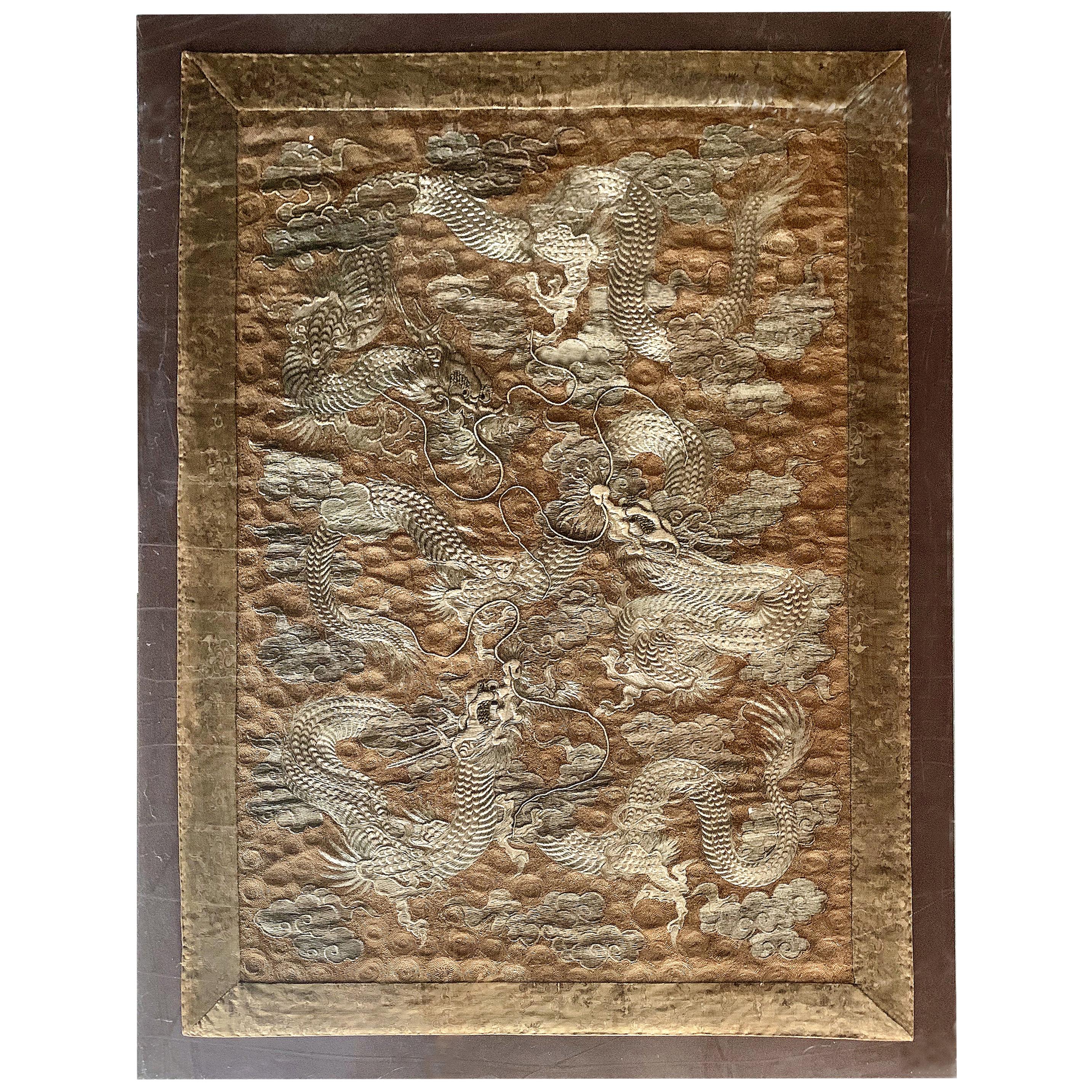
A striking Japanese embroidery tapestry circa 1890s Meiji period presented in a gilt wood frame under glaze. The design features four dragons coiling and slithering in the clouds. The most auspicious mythological creature, dragon was a very popular motif in Japanese textile art. Viewing this particular piece, one is struck by the superb craftsmanship with the profuse use of silver threads in satin stitches and complex chain stich coiling that create the background. The slight relief technique was also used on parts of the dragon heads, rendering the piece a strong sense of dimension and motion. The textile itself measures about 32.5"x46". Japanese Meiji textiles were widely exhibited in the west during turn of the 20th century at the international exposition. It was used to showcase the Japanese aesthetics with the techniques at their pinnacle. These expositions solidified the country's images overseas and felled the Japanese craze in the west, which turned out to be a long-lasting influence on the western art. Many pieces were purchased and stayed in the west. As there is no brocade border present, the piece is likely the main part with the central motifs of a larger tapestry and was later framed for display. For two similar dragon tapestries...
Textile, Wood