Want more images or videos?
Request additional images or videos from the seller
1 of 19

Large Italian Micromosaic Plaque of St. Peter’s Basilica, Rome, circa 1860

$48,000List Price

You May Also Like

More From This Seller

View All
Placido Zuloaga, an Extremely Rare Spanish Gold and Silver Damascened Frame

Placido Zuloaga, an Extremely Rare Spanish Gold and Silver Damascened Frame

By Plácido Zuloaga 1

Located in Long Island City, NY, NY

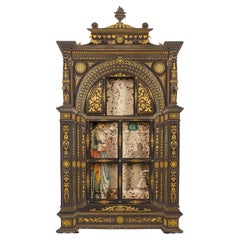
Placido Zuloaga, An extremely rare Spanish gold and silver damascened window frame, in the Alhambra / Islamic taste, circa 1880. The interior is lined and fitted with an orientalist artwork throughout. Signed PZ on the reverse. Placido Zuloaga was a renowned Spanish metalworker and damascene artist known for his exceptional skills in working with gold and silver and for creating intricate and ornate designs on metal surfaces using a technique called damascening. One of Zuloaga's works is this rare gold and silver damascened frame that he created in the late 19th century. The frame is decorated with intricate designs in silver and gold, creating a stunning contrast that is characteristic of Zuloaga's work. The frame is a remarkable example of Zuloaga's artistry and skill, as well as his mastery of the damascening technique. The technique involves inlaying silver or gold wire into the surface of the metal, creating intricate and detailed designs that are both beautiful and durable. Zuloaga's work was highly sought after during his lifetime and is still highly valued today. His pieces are considered to be some of the finest examples of damascene artistry in the world, and his legacy continues to inspire and influence metalworkers and artists today. His works are in private collections and in museums worldwide. Comparative Literature: James D. Lavin, The Art and Tradition of the Zuloagas, Spanish Damascene...

Category

Antique 19th Century Spanish Islamic Picture Frames

Materials

Steel, Iron

Palatial and Opulent Belle Epoque Giltwood & Oil on Canvas Three-Panel Screen

Palatial and Opulent Belle Epoque Giltwood & Oil on Canvas Three-Panel Screen

By Ferdinand Wagner II 1

Located in Long Island City, NY, NY

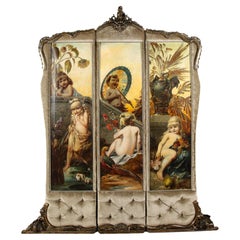
A Palatial and Opulent Belle epoque giltwood & oil on canvas three-panel screen, circa 1890. "Allegory of Youth" Comprising of three exquisite hand-painted triptych oil on canvas panels of cherubs and putti amongst a peacock, all by Ferdinand Wagner II (German, 1847-1927). Each panel depicting different playful and joyous scenes of putti and cherubs. All three-in-one panels within individually carved giltwood and upholstered frames. One panel signed at the lower left: Ferd.Wagner. A truly magnificent and one of a kind piece, perfect for any room in the home. Overall: 101" high 85" wide x 5" deep Very good condition. Ready to place. Ferdinand Wagner II (German, 1847-1927) was the son of Passau Ferdinand Wagner Senior, a teacher at a vocational art school who began training him professionally at a young age. After traveling to Italy in 1867-1868, he continued with his art studies at The Munich Academy of Arts led by Peter Von Cornelius and Julius Schnorr Von Carolsfeld. Wagner II was influenced by the Munich School of master painters and by his art teacher, Karl von Piloty, who had been teaching at the Munich Art Academy since 1856. Piloty’s approach to historical paintings was influenced by the French art academic Paul Delaroche and by the fine artworks by Rubens and the Venetians. After his return to Germany he was commissioned to decorate the former the Tenormayer Wine Tavern in Munich, subsequently he received numerous other commissions as a decorator. Ferdinand Wagner II wall paintings and ceiling frescos...

Category

Antique 19th Century German Belle Époque Screens and Room Dividers

Materials

Canvas, Upholstery, Giltwood, Paint

Rare Monumental Italian Carved Carrara Marble Model of a Cathedral

Rare Monumental Italian Carved Carrara Marble Model of a Cathedral

Located in Long Island City, NY, NY

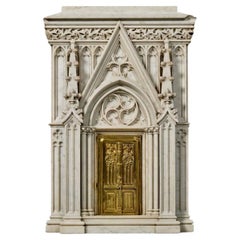
A Rare and Monumental Italian Carved Carrara Marble Model of a Cathedral, Rome, 19th century, circa 1840. Possibly a representation of Cathedral of Santa Maria del Fiore in Florence Italy. The Italian Renaissance is renowned for its magnificent works of art and architecture, which are admired to this day for their grandeur and intricate details. Among the most impressive examples of this era are the rare and monumental carved Carrara marble models of cathedrals...

Category

Antique 19th Century Italian Gothic Architectural Elements

Materials

Carrara Marble

Important, Rare French Ormolu Sevres Style Porcelain Jewelry Box on Bronze Table

Important, Rare French Ormolu Sevres Style Porcelain Jewelry Box on Bronze Table

Located in Long Island City, NY, NY

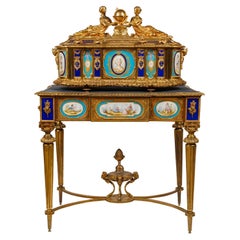
A rare and important French ormolu/bronze and Sevres style turquoise porcelain jewelry box casket on matching French ormolu/bronze table with Sevres style porcelain plaques. Of palatial / monumental size! "The Marie Antoinette Jewelry...

Category

Antique Late 19th Century French Napoleon III Jewelry Boxes

Materials

Bronze, Enamel, Ormolu

An Exquisite and Rare French Louis XVI Style Ormolu-Mounted Bloodstone Inkwell

An Exquisite and Rare French Louis XVI Style Ormolu-Mounted Bloodstone Inkwell

Located in Long Island City, NY, NY

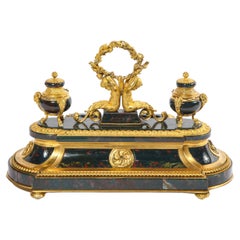
An Exquisite and Rare French Louis XVI Style Ormolu-Mounted Bloodstone Inkwell, circa 1875. A truly exceptional and jewel like quality inkwell encrier, made with the finest ormolu, mounted on bloodstone. A true collectors and one of a kind piece. Revival of the ancient régime in the late 19th century was paramount to the French furniture and bronze casting firms of the Belle Epoque. Imitation in the highest regard and replication of those tastes and styles was prevalent throughout the Paris Faubourg, where the most talented bronziers and ébénistes established their workshops. The present inkwell encrier recalls the late 18th century's obsession with hardstones - a taste expounded above all by the duc d'Aumont and, subsequently Marie-Antoinette. Such hardstone-mounted pieces, reminiscent of Renaissance schatzkammer objects, enjoyed a revived popularity at the end of the 18th century through the impetus of both the marchands-mercier and, more importantly, the hôtel des Menus-Plaisirs, where the duc d'Aumont himself established a workshop in 1770 specializing in the cutting and polishing of precious hardstones. This exceptional inkwell encrier, sumptuously-mounted with finely chased gilt-bronzes, incorporates a highly-prized material such as bloodstone. Sometimes called the Sunstone, the meaning of Bloodstone comes entangled in fascinating history. The Ancient Greeks held the Bloodstone as a gem with glorious powers. They referred to it as Heliotrope, which directly translates to Sunstone. It was believed to have heavenly healing powers gifted by the gods and most certainly when it came to healing all things related to the blood. Even as we move forward into the Middle Ages, the Bloodstone takes another mystical story under its wing. It was believed to be formed from Christ's blood. It was said that during the Crucifixion, a few red spots of his blood dripped...

Category

Antique 19th Century French Napoleon III Inkwells

Materials

Bronze, Ormolu