Want more images or videos?
Request additional images or videos from the seller
1 of 7

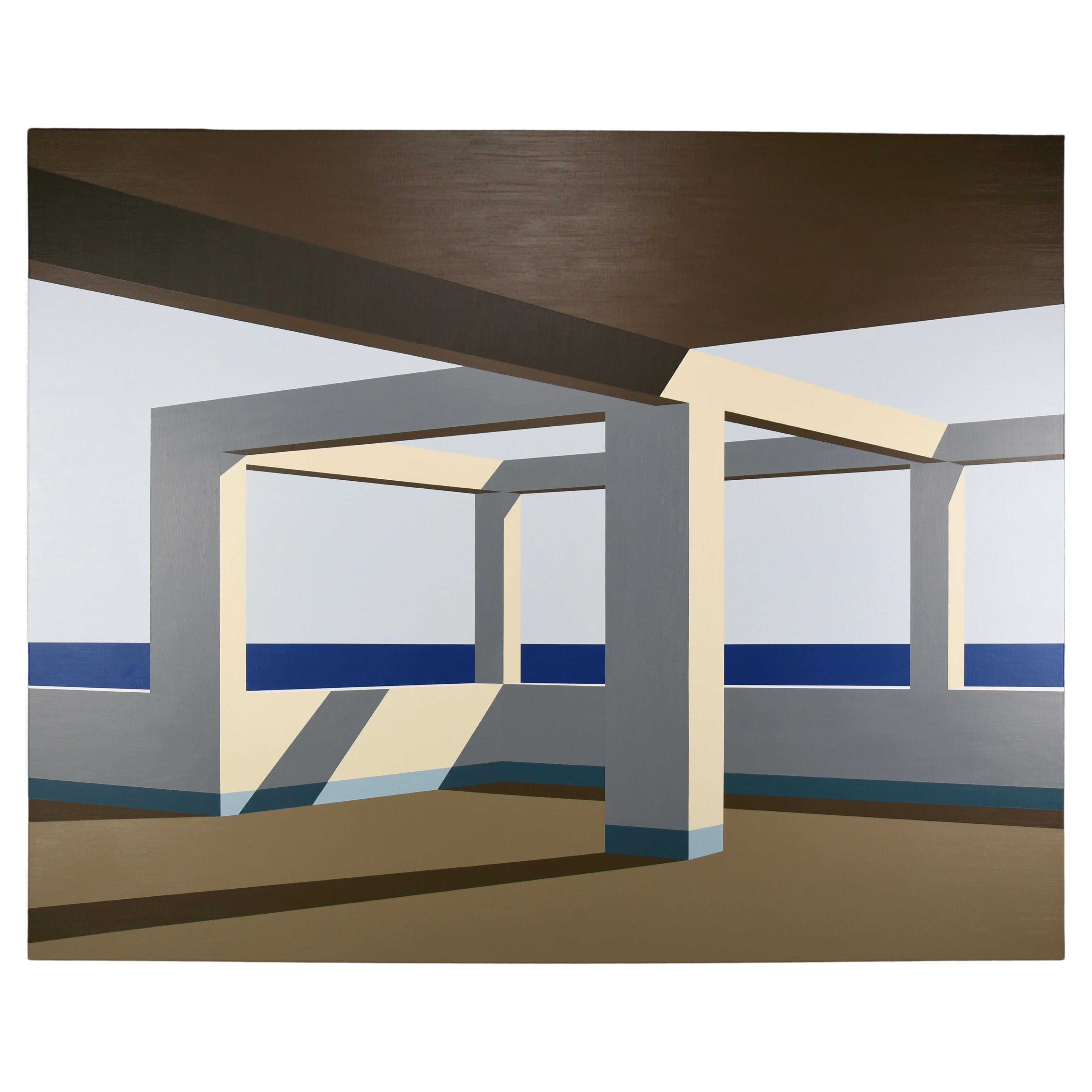
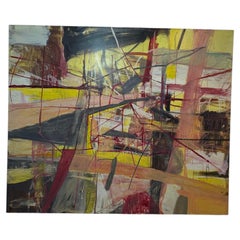
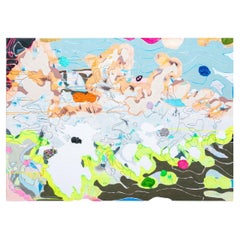
Changha Hwang (Korean, b. 1969) “Super, ” 2005 Acrylic on Canvas 40” H × 60”W

$7,800
£5,854.37
€6,831.29
CA$11,019.85
A$11,048.23
CHF 6,402.37
MX$135,000.65
NOK 74,194.34
SEK 75,764.85
DKK 51,061.98

About the Item

Changha Hwang (Korean, b. 1969) “Super,” 2005 Acrylic on Canvas 40 H × 60 W in. An exceptional large-scale acrylic on canvas by acclaimed Korean-born contemporary artist Changha Hwang, titled Super and executed in 2005. Signed, titled, and dated on the reverse, the painting is an outstanding example of Hwang’s sophisticated visual language, in which layered geometric structures, architectural grids, and expressive painterly passages merge into a richly textured abstraction. Organized through an intricate network of intersecting lines and translucent planes, the composition evokes the rhythm of an urban landscape or architectural blueprint while remaining entirely abstract. Areas of crisp linear precision are balanced by gestural monochromatic passages, creating a compelling dialogue between order and spontaneity. A refined palette of olive green, ochre, cobalt blue, charcoal, ivory, and muted earth tones gives the work both depth and remarkable visual energy. Created during a significant period in Hwang’s career, Super reflects the artist’s ongoing investigation of structure, memory, and spatial perception. Hwang studied at Parsons School of Design and Hunter College in New York and has exhibited internationally, with solo exhibitions in New York, Paris, Brussels, Madrid, Geneva, and Seoul. His work is recognized for transforming the vocabulary of architecture and mapping into complex, lyrical abstractions. At 40 by 60 inches, this painting possesses a commanding presence, making it equally suited for a serious contemporary art collection or as a focal point in a sophisticated residential or commercial interior. Its scale, complexity, and refined composition exemplify the intellectual rigor and visual elegance that distinguish Hwang’s work. Signed, titled, and dated “Super – Changha Hwang – 2005” on the reverse. Condition: Excellent vintage condition. The canvas presents beautifully with no apparent repairs or restoration observed. Minor wear consistent with age.
  • Dimensions:
    Height: 40 in (101.6 cm)Width: 60 in (152.4 cm)Depth: 1.5 in (3.81 cm)
  • Style:
    Modern (Of the Period)
  • Materials and Techniques:
  • Place of Origin:
  • Period:
  • Date of Manufacture:
    2005
  • Condition:
    Wear consistent with age and use.
  • Seller Location:
    Round Top, TX
  • Reference Number:
    1stDibs: LU10902250769792

More From This Seller

View All
Tom Van Horne (American, Oregon) “Wildwood Composition ” 2008-2009

Tom Van Horne (American, Oregon) “Wildwood Composition ” 2008-2009

Located in Round Top, TX

Tom Van Horne (American, Oregon), “Wildwood Composition,” 2007–2008 A monumental abstract expressionist painting by Oregon artist Tom Van Horne, titled Wildwood Composition. Executed...

Category

21st Century and Contemporary American Modern Paintings

Materials

Canvas

Acrylic Painting on Canvas, Modern Style, Hand-Painted, 21st Century

Acrylic Painting on Canvas, Modern Style, Hand-Painted, 21st Century

Located in Round Top, TX

Ananias's artistic career began with sculpture and drawing under the guidance of his mother as his principal mentor, following in the footsteps of his family's long tradition of opera singers, musicians, classical dancers, painters, writers, and other artists. She owns "The House of Nymphs," an exquisite oceanfront artist retreat in Peru with a very unique private collection of artists, including friends, relatives, and Omar's earliest works.


Omar has also trained as a professional contemporary dancer and a yoga/mindfulness teacher since he was fifteen years old and, as a result, sought accreditation as an art therapist.

His work with sexual workers, the disabled, indigenous populations living in the Amazon Rainforest, prisons, and orphanages has brought him well-known recognition. He has worked for more than 20 years with various governments and organizations all over the world.


Techniques and inspiration used by Ananias:

His artwork has drawn inspiration from various sources including: the natural world, his personal encounters with marginalized communities, and the indigenous knowledge of the rain forest. Additional inspiration is drawn from Kris Gebhardt, Viviana Quea, Gam Klutier, Hideaki Yamanobe, and Carola Kastman.


Omar Ananias's love of the natural world also inspires him to create landscape designs and live plant sculptures made of clay, glass, and wood, in addition to his digital portraits and mixed-media abstract paintings on canvas.

He uses many self-made and unconventional instruments/materials for his paintings such as condor feathers, Peruvian gold...

Category

21st Century and Contemporary American Modern Paintings
Materials

Acrylic

Abstract Oil on Canvas by Irma Palacios, Mid-Century Modern, 1987

Abstract Oil on Canvas by Irma Palacios, Mid-Century Modern, 1987

Located in Round Top, TX

A striking abstract composition by Mexican artist Irma Palacios, signed and dated 1987. Executed in oil on canvas, the work reflects Palacios’s refined exploration of surface, atmosp...

Category

20th Century Mexican Mid-Century Modern Paintings

Materials

Canvas

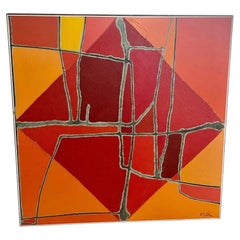
Vibrant Abstract Acrylic Painting, Mid-Century Modern, Signed

Vibrant Abstract Acrylic Painting, Mid-Century Modern, Signed

By Brother Mel Meyer

Located in Round Top, TX

A vibrant and architectonic abstract composition by Mel Meyer (1928–2013), a prolific American artist and member of the Marianist order, whose output of nearly 10,000 works reflects ...

Category

20th Century American Mid-Century Modern Paintings

Materials

Paint

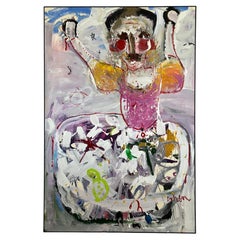
Untitled Expressionist Portrait, Miami School, 1990s

Untitled Expressionist Portrait, Miami School, 1990s

Located in Round Top, TX

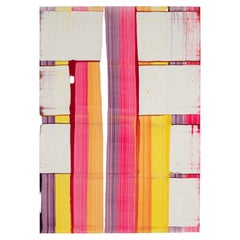
Untitled Expressionist Portrait, Miami School, 1990s A large-scale mixed-media portrait distinguished by its visceral energy and emotionally charged abstraction. Executed in a highly...

Category

20th Century Expressionist Paintings

Materials

Other

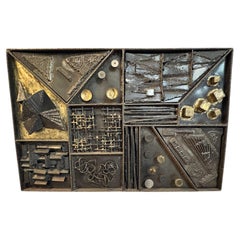
1970s Brutalist Welded Steel Wall Sculpture in the Manner of Paul Evans

1970s Brutalist Welded Steel Wall Sculpture in the Manner of Paul Evans

Located in Round Top, TX

1970s Brutalist Welded Steel Wall Sculpture in the Manner of Silas Seandel and Paul Evans An exceptional vintage Brutalist welded steel wall sculpture dating from the 1970s. Execute...

Category

20th Century American Brutalist Wall-mounted Sculptures

Materials

Steel

You May Also Like

Clément Rosenthal - "Empreintes" 1992, Oil on Canvas, Abstract Painting

Clément Rosenthal - "Empreintes" 1992, Oil on Canvas, Abstract Painting

Located in New York, NY

Clément Rosenthal (b. 1956) is a distinguished Paris-born artist whose profoundly evocative work sits at the vanguard of contemporary French abstraction. Raised in an environment ste...

Category

1990s French Post-Modern Paintings

Materials

Canvas, Acrylic, Paint

Laurel Sparks 'Am., 21st C.' Contemporary Mixed Media on Canvas, Abstract

Laurel Sparks 'Am., 21st C.' Contemporary Mixed Media on Canvas, Abstract

Located in Bridgeport, CT

A colorful and dynamic artwork by Laurel Sparks. Signed, dated 2008 and titled "Christmas in July" on the stretcher. A large canvas with large sections in textured white, pale blue a...

Category

21st Century and Contemporary Mid-Century Modern Contemporary Art

Materials

Textile, Canvas, Wood, Beads

Arteaga IV by Jurriaan Molenaar Acrylic on linen 120 × 150 cm - 47.2 × 59.1 in.

Arteaga IV by Jurriaan Molenaar Acrylic on linen 120 × 150 cm - 47.2 × 59.1 in.

Located in Weesp, NL

Jurriaan Molenaar — Arteaga IV Acrylic on linen Dimensions: 120 × 150 cm (approx. 47.2 × 59.1 in) Year: 2024 Arteaga IV is the most commanding work in Jurriaan Molenaar’s acclai...

Category

2010s Dutch Modern Paintings

Materials

Linen, Acrylic

Untitled (Study), by Kazuo Yamada, Large Japanese Painting 2015

Untitled (Study), by Kazuo Yamada, Large Japanese Painting 2015

Located in Debrecen, HU

Untitled (Study), 2015 by Kazuo Yamada Oil on canvas, framed Exhibited work – 68th Chūshin Art Exhibition, Japan (F100) A fully documented, large-scale exhibited painting by Japanes...

Category

2010s Japanese Modern Paintings

Materials

Canvas

Mixed Media Painting, Acrylic on Canvas, Kinetic Expression, 2010+

Mixed Media Painting, Acrylic on Canvas, Kinetic Expression, 2010+

By John Byard

Located in New York City, NY

Steven Colucci’s iconoclastic approach to performance and the visual arts have not only long blurred the boundaries between these disciplines, but have challenged its most basic assumptions. The title of this show references a most rudimentary dance move --the plié --and our assumptions of what to expect in relation to this. Also the suggestion that we can simply press a button and a preconceived outcome will be courteously delivered --a form of prefabricated belief in itself. Steven Colucci’s artwork turns such basic assumptions on their heads. Finding early inspiration in the New York school of abstract expressionists such as Jackson Pollock with his action painting, and then further by his professor --a then young Vito Acconci while studying at the School of Visual Arts, Steven Colucci went from exploring the raw existentialist experimentation of New York’s early painting and performance scenes, to investigating the other end of the spectrum --the rigorously measured and controlled disciplines of pantomime and ballet; studying in Paris under the tutelage of world-famous Marcelle Marceau, and engaging with the concepts of dramatic movement pioneer and intellectual Etienne Decroux. Colucci has explained the difference between the extremes of pantomime and dance as being that pantomime forces movement via an internal capacity --movement directed inward to the core of one’s self --a source requiring extreme mental and physical control. Dance by contrast is an external expression; likewise requiring great precision, although instead an extension of self or sentiment that projects outwardly. While such historical ‘movement’ disciplines serve as foundation blocks for Steven’s artistic explorations, it is the realm in between that he is best known for his contributions --an experimental movement and performance art that simultaneously honors, yet defiantly refutes tradition; rejecting a compartmentalization regarding art and movement, yet incorporating its elements into his own brand of experimental pastiche. Colucci’s performance works manifest as eerily candy-coated and familiar, yet incorporate unexpected jags of the uncanny throughout, exploiting a sort of coulrophobia in the viewer; an exploration of a cumulative artifice that binds human nature against its darker tendencies; highlighting traditions of artifice itself - the fabricated systemologies that necessitate compartmentalization in the first place. It is evident in Steven Colucci’s paintings that he has established a uniquely distinctive pictorial vocabulary; a strong allusion to --or moreso an extension of --his performance works. Colucci’s paintings depict a sort of kinetic spectrum, or as he refers to them “a technical expression of physicality and movement”. Whereas the French performance and visual artist Yves Klein used the human body as a “paint brush” to demarcate his paintings and thereby signify a residue of performance, Colucci’s utilization of nonsensical numbers and number sequences taken from dance scores, as well as heat- induced image abstraction depicting traces of movement likewise inform his vocabulary. In the strand of the choreographed, yet incorporating moments of chance, Colucci’s paintings represent an over arching structure; a rhythm of being and state, yet detail erratic moments --moments that denote a certain frailty --the edge of human stamina. Colucci’s paintings dually represent a form of gestural abstraction --and also the reverse of this --a unique anthropomorphization of varying states of movement – that sometimes present as a temperature induced color field, at others are juxtapositions of movement and depictions of physical gestural images themselves. Colucci’s use of vernacular and found materials such as cardboard evoke his mastery of set design, and also reference a sort of collective experience of urbanity and the ephemeral. Such contradictions seem to permeate not only Steven Colucci’s artwork, but also are reflected in his person – one who grew up in New York’s Bronx during a zeitgeist moment in visual and performing arts in the 1960s – one who shifts with ease from happenings and experiments in New York City, to his meticulously choreographed megaproductions at Lincoln Center or starring in the Paris ballet...

Category

2010s Paintings

Materials

Acrylic