Want more images or videos?
Request additional images or videos from the seller
1 of 10

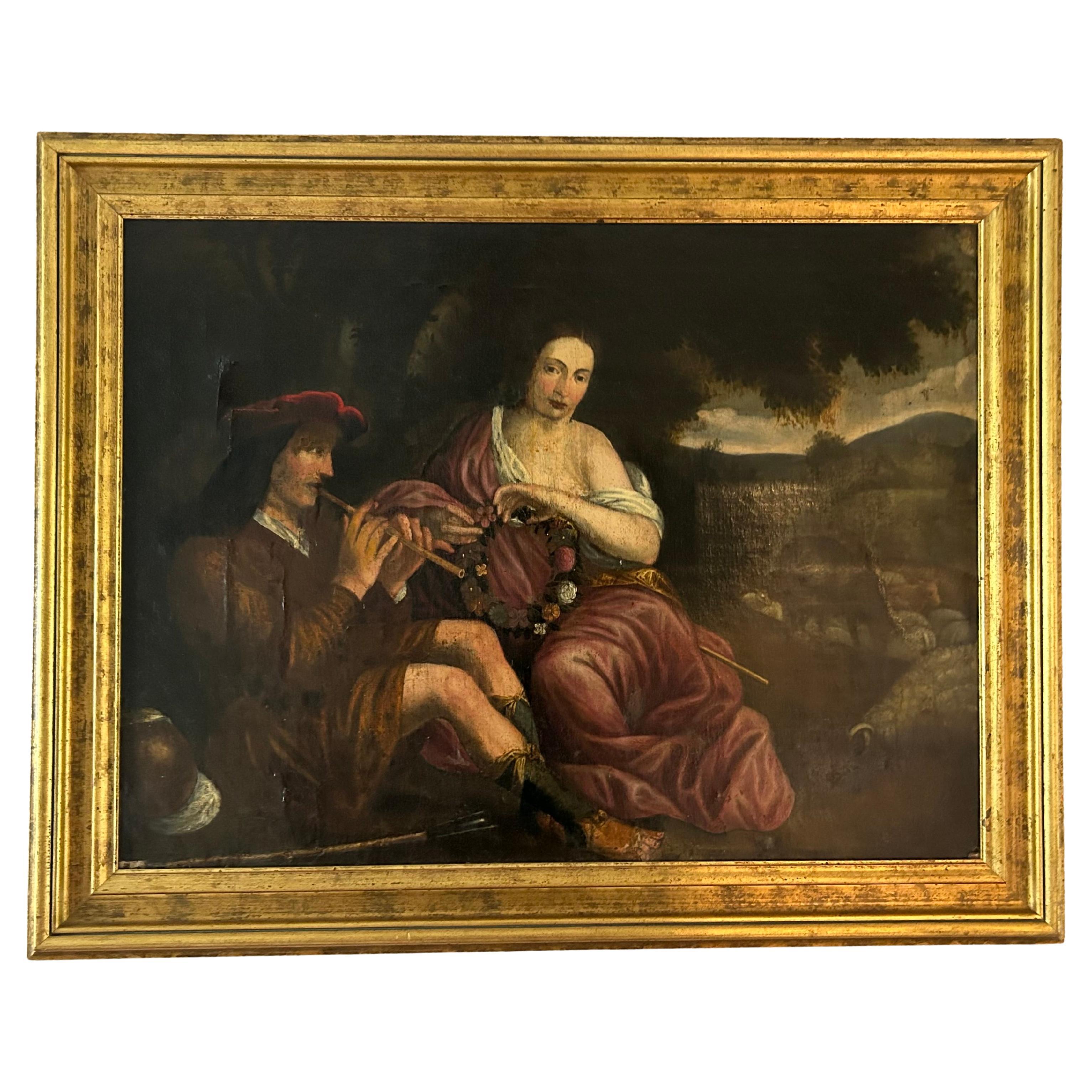
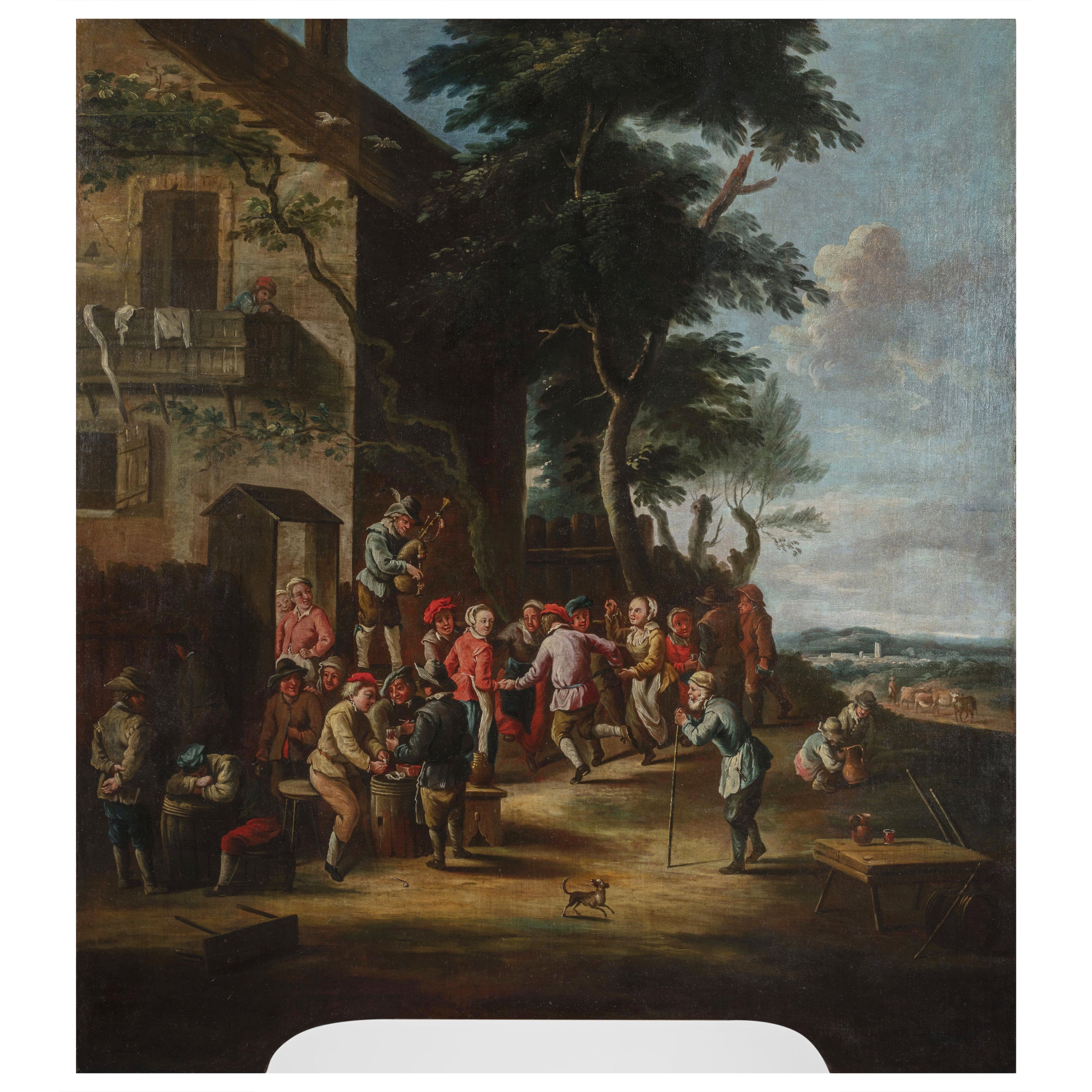
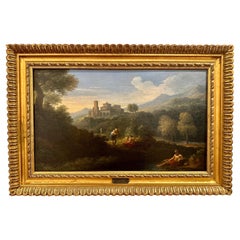
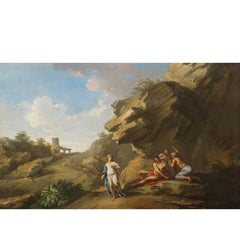
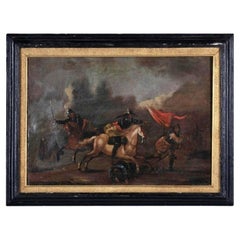
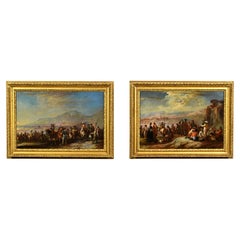
Francesco Graziani, Called Ciccio Napoletano, 17th Century

$3,500
£2,646.32
€3,098.28
CA$4,979.63
A$5,065.19
CHF 2,906.90
MX$60,889.58
NOK 33,908.93
SEK 34,228.15
DKK 23,162.45

About the Item

Francesco Graziani, called Ciccio Napoletano Active in Naples and Rome, second half of the 17th century Francesco Graziani, known as Ciccio Napoletano, was an Italian painter active during the Baroque period, particularly in Naples and Rome in the latter half of the 17th century. His work reflects the strong influence of the Neapolitan and Roman schools of painting, which were characterized by dramatic lighting, vivid coloration, and dynamic compositions. Although biographical information about Graziani remains limited, his paintings are noted for their expressive realism and skilled handling of chiaroscuro. He is known to have executed religious and mythological subjects, often marked by a lively naturalism typical of Neapolitan Baroque art. Active period: ca. 1650–1700 Regions of activity: Naples and Rome, Italy
  • Creator:
    Francesco Graziani (Artist)
  • Dimensions:
    Height: 7 in (17.78 cm)Width: 9 in (22.86 cm)Depth: 1 in (2.54 cm)
  • Style:
    Baroque (Of the Period)
  • Materials and Techniques:
  • Place of Origin:
  • Period:
    Late 17th Century
  • Date of Manufacture:
    circa 1670
  • Condition:
    Wear consistent with age and use.
  • Seller Location:
    CH
  • Reference Number:
    1stDibs: LU977814694562

More From This Seller

View All
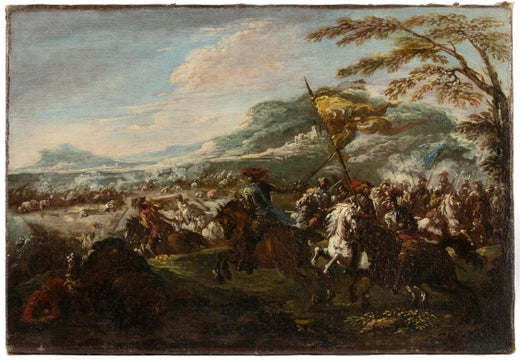
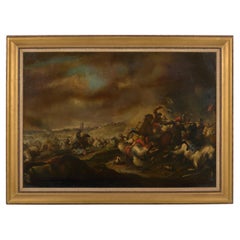
Italian Francesco or Pietro Graziani Neapolitan battle scene, 17th/18th Century

Italian Francesco or Pietro Graziani Neapolitan battle scene, 17th/18th Century

Located in CH

Francesco or Pietro Graziani (active Naples/Rome, 17th–18th Century) Neapolitan Battle Scene, 17th/18th Century Oil on Canvas An atmospheric battle scene attributed to Francesco or ...

Category

Antique Late 17th Century Italian Baroque Paintings

Materials

Canvas

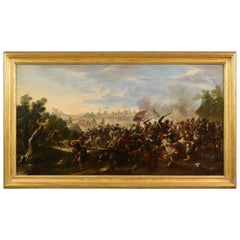
Francesco Graziani, Italian Oil on Canvas "Battle Scene on a Bridge"

Francesco Graziani, Italian Oil on Canvas "Battle Scene on a Bridge"

Located in CH

Francesco Graziani, called Ciccio Napoletano (active Naples, late 17th–18th century) Battle Scene on a Bridge, Late 17th Century Oil on Canvas A dramatic late 17th-century Italian o...

Category

Antique Late 17th Century Italian Baroque Paintings

Materials

Canvas

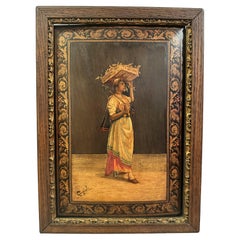
Italian Pen work and Intarsia fruitwood plaque signed Gargiulo, Late 19th Cent.

Italian Pen work and Intarsia fruitwood plaque signed Gargiulo, Late 19th Cent.

Located in CH

Late 19th-Century Italian Pen-Work Intarsia Plaque Signed Gargiulo (Sorrento, Italy, 1843–1912) A finely crafted late 19th-century Italian pen work, intarsia, ebony, and stained fru...

Category

Antique Late 19th Century Italian Paintings

Materials

Fruitwood

You May Also Like

A Late 17th Century Painting Depicting A Cavalry Battle

A Late 17th Century Painting Depicting A Cavalry Battle

Located in ARMADALE, VIC

A Late 17th Century Painting Depicting A Cavalry Battle Height: 115 cm Width: 75 cm Depth: 6 cm. Provenance: Private Australian Collection.

Category

Antique Late 17th Century Italian Baroque Paintings

Materials

Canvas

French School 18th Century "Battle"

French School 18th Century "Battle"

By France"

Located in Madrid, ES

French achool 18th century "Battle". 46cm x 67cm. Oil on canvas. Good condition.

Category

Antique Early 18th Century French Baroque Paintings

Materials

Paint

17th Century, Italian Painting with Battle Between Christian and Turkish Cavalry

17th Century, Italian Painting with Battle Between Christian and Turkish Cavalry

Located in IT

17th century, Italian oil on canvas painting with battle between Christian and Turkish cavalry The oil on canvas painting depicts a battle between Christian and Turkish cavalry. C...

Category

Antique Mid-17th Century European Baroque Paintings

Materials

Canvas

17th Century, Italian Painting with Battle attributed to Marzio Masturzo

17th Century, Italian Painting with Battle attributed to Marzio Masturzo

Located in IT

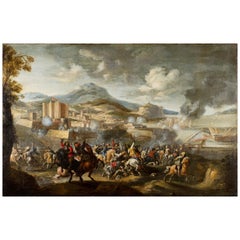
Marzio Masturzo, attributed (Active in Italy - in Naples and Rome- in the second half of the 17th century) "Battle between cavalry and vessels with fortified city on the left" ...

Category

Antique Late 17th Century Italian Baroque Paintings

Materials

Canvas

18th Century, Italian Pair of Oil on Canvas Paintings by Francesco Simonini

18th Century, Italian Pair of Oil on Canvas Paintings by Francesco Simonini

By SIMONINI

Located in IT

Francesco Simonini (Parma, 16 June 1686 - Parma, 1766) “The rest of the soldiers” and “The march of soldiers” oil on canvas cm 40 x 58 and 40 x 60 ; frame: h 52,5 x W 70,5 x D 6 an...

Category

Antique Early 18th Century Italian Baroque Paintings

Materials

Canvas

18th Century Italian Oil on Canvas Painting with Battle by Antonio Calza

18th Century Italian Oil on Canvas Painting with Battle by Antonio Calza

By Antonio Calza

Located in IT

Antonio Calza (Italy, Verona, 1653-18th April 1725) "Battle between Christian and Turkish cavalry with castle" The painting depicts a bloody battle between Christian and Turkish cavalry. Characterized by dynamism, intensity of color and light, the main scene occupies the lower horizontal section of the canvas, optically interrupted by the black fumes of the shots from which emerge, on the left, the towers of a fortress. On the right, in the distance you can see the combat in progress in the countryside, beyond which you can see the pale presence of hills that create a fifth, marking the horizon. To frame the scene contributes to the left, against light and in the foreground, a portion of the wall. The painter, however, introduces a horse on the ground, of which we see only the back, a ruse to involve the observer making him become active and participate in the scene. In the foreground, lifeless bodies, wounded horses and, scattered on the ground, weapons and a drum enhance the drama of the clash. The excitement and expressive force, the intense chromatic range attentive to the conditions of light and the fine brushstrokes, decisive and dramatic, suggests the attribution to Antonio Calza, one of the most important painters of battles of the seventeenth century, excellent student and continuator of the greatest interpreter of the genre, Jacques Courtois called il Borgognone (Saint-Hyppolite 1621 - Rome 1676). Il Borgognone, although not having had a real school or direct students, places itself as a primary reference point by the Italian and foreign "battaglisti". The genre of battle painting found great success in the collections of the Italian and European nobility of the seventeenth and eighteenth centuries. The battles of the Italian Renaissance, in which the scene converged towards a precise protagonist, evolve towards a type of combat "without hero". The bloody realism of the details and the dynamic development of the narrative confuse the figure of the protagonist, when present, to give importance to the swirl of horses and armed fighters, among which, moreover, does not emerge a winner. The certain documents relating to the life and movements of Antonio Calza are scarce; it was equally difficult to reconstruct, from the critics, a catalogue of autograph works. Through paintings in private collections, in museums and paintings passed on the antiques market it has been possible to identify a copious corpus of works that can be traced back to his hand. The work of art historians, together with that of antique dealers, in conferring proper attributions in order to best outline the figure of Calza, continues but studies are still in progress. In this sense, the work of Giancarlo Sestieri should certainly be noted, who investigated the artistic production of the battaglisti and Calza, thus allowing the comparison of the numerous photographic works reported, to identify and recognize the stylistic qualities that distinguish the corpus of paintings assigned to him today. Antonio Calza was born in 1653 in Italy, in Verona and in 1664 he entered the school of Carlo Cignani in Bologna, dedicating himself to painting battles and landscapes. He then perfected in Rome, where he knew the works of the then undisputed head of the sector, Jacques Courtois called the Burgundian. In 1675 he returned to Verona and married an 88-year-old widow who, dying, left him a rich inheritance. Much appreciated by the nobility and the bourgeoisie, he received numerous commissions. Bartolomeo Dal Pozzo (Le Vite de' pittori, de gli scultori et architetti veronesi, 1718) praises "three great paintings of battles...

Category

Antique Late 17th Century Italian Baroque Paintings
Materials

Canvas