19th-Century Lithograph of Pine Marten, Beech Marten, and Ermine in Nature
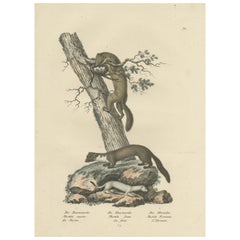
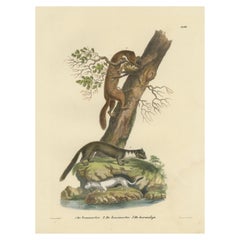
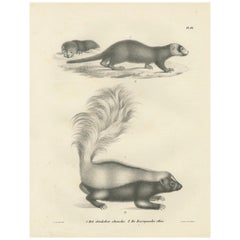
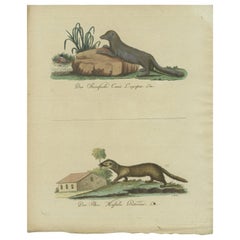
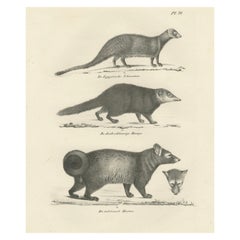
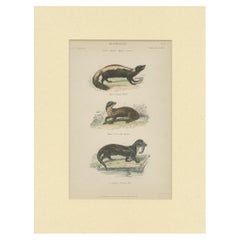
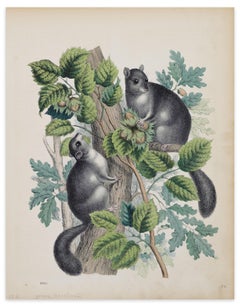
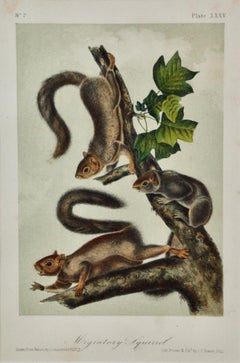
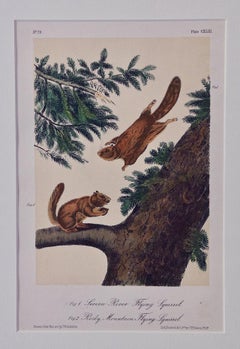
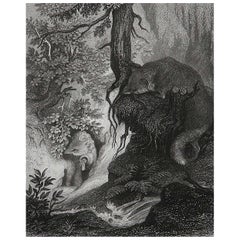
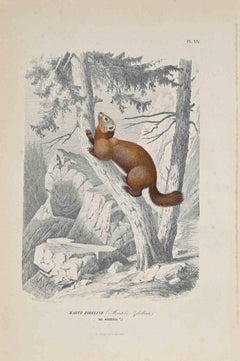
This beautifully detailed 19th-century lithograph depicts three members of the mustelid family in a natural setting: the pine marten (De boommarter), the beech marten (De huismarter), and the ermine (De hermelyn). Originally published in *De Zoogdieren: afgebeeld en in hunne levenswijze geschetst*, this illustration is a fine example of early zoological artwork, combining scientific accuracy with artistic composition.
The pine marten, found in forests across Europe and parts of Asia, is an agile climber, often seen in trees hunting for birds, as depicted in this scene. The beech marten, also widespread in Europe and western Asia, is a more terrestrial species, often found near human settlements. The ermine, or stoat, is a small predator with a distinctive winter coat that turns white in colder climates, making it well-adapted to regions in Europe, North America, and northern Asia.
Created by C.C. G. Zool. and printed by La Haye & J. L. G. V., this lithograph is an excellent addition to collections of antique zoological prints, wildlife studies, and early scientific illustrations, offering insight into the behavior and habitat of these fascinating species.
Keywords: 19th Century, Lithograph, Natural History, Zoology, Pine Marten, Beech Marten, Ermine, Scientific Illustration, Antique Print, Animal Engraving, Wildlife Art, Taxonomy, Netherlands, La Haye, J.L.G.V.
---
Condition: The print is in good condition, with mild age-related toning and minor foxing visible along the margins. The lithographic details remain crisp, preserving the depth and realism of the scene. The edges show some irregularities from historical binding, but there are no major tears or folds. The overall quality of the artwork remains well-preserved and suitable for display.
---
Framing Tips: To best highlight this lithograph, use an acid-free mat in a light neutral shade to complement the print’s natural aging. A dark wooden or black frame will contrast beautifully with the fine detailing of the animals. UV-protective glass is recommended to prevent fading and discoloration. If displayed alongside other lithographs from the same series, consider uniform framing for a cohesive and elegant presentation.